Bangkok condo comfort is not defined by air-conditioning alone. Sun exposure, glazing, room depth, shade, airflow, humidity and equipment condition all influence how a home feels through the day. Expat buyers should test thermal comfort before committing, especially if they work from home or travel frequently.
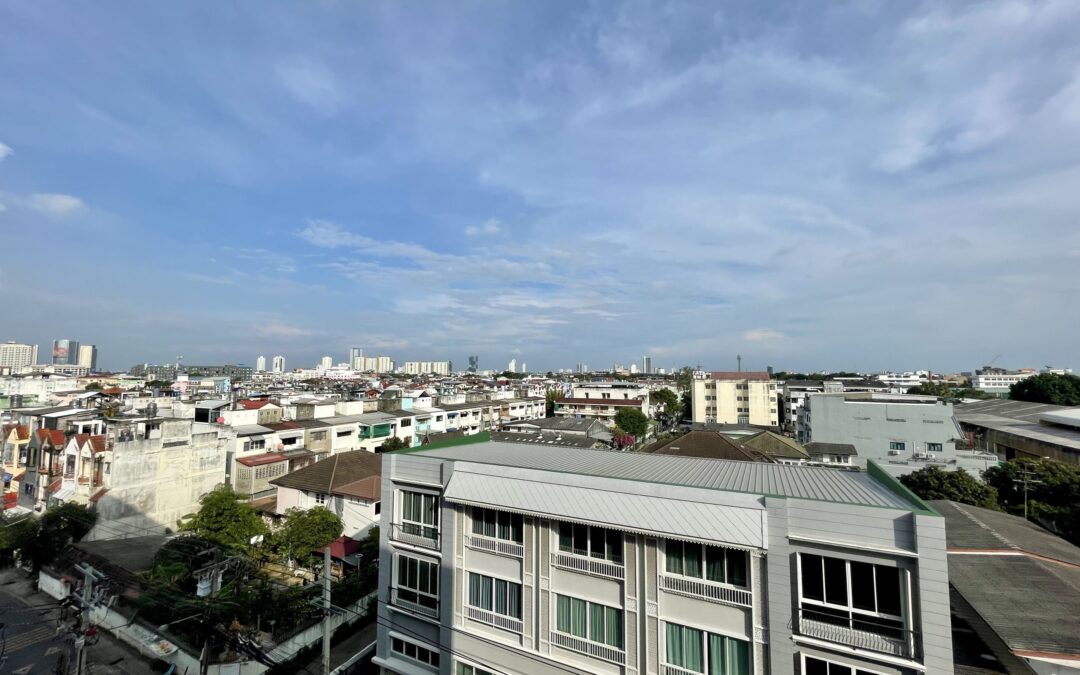
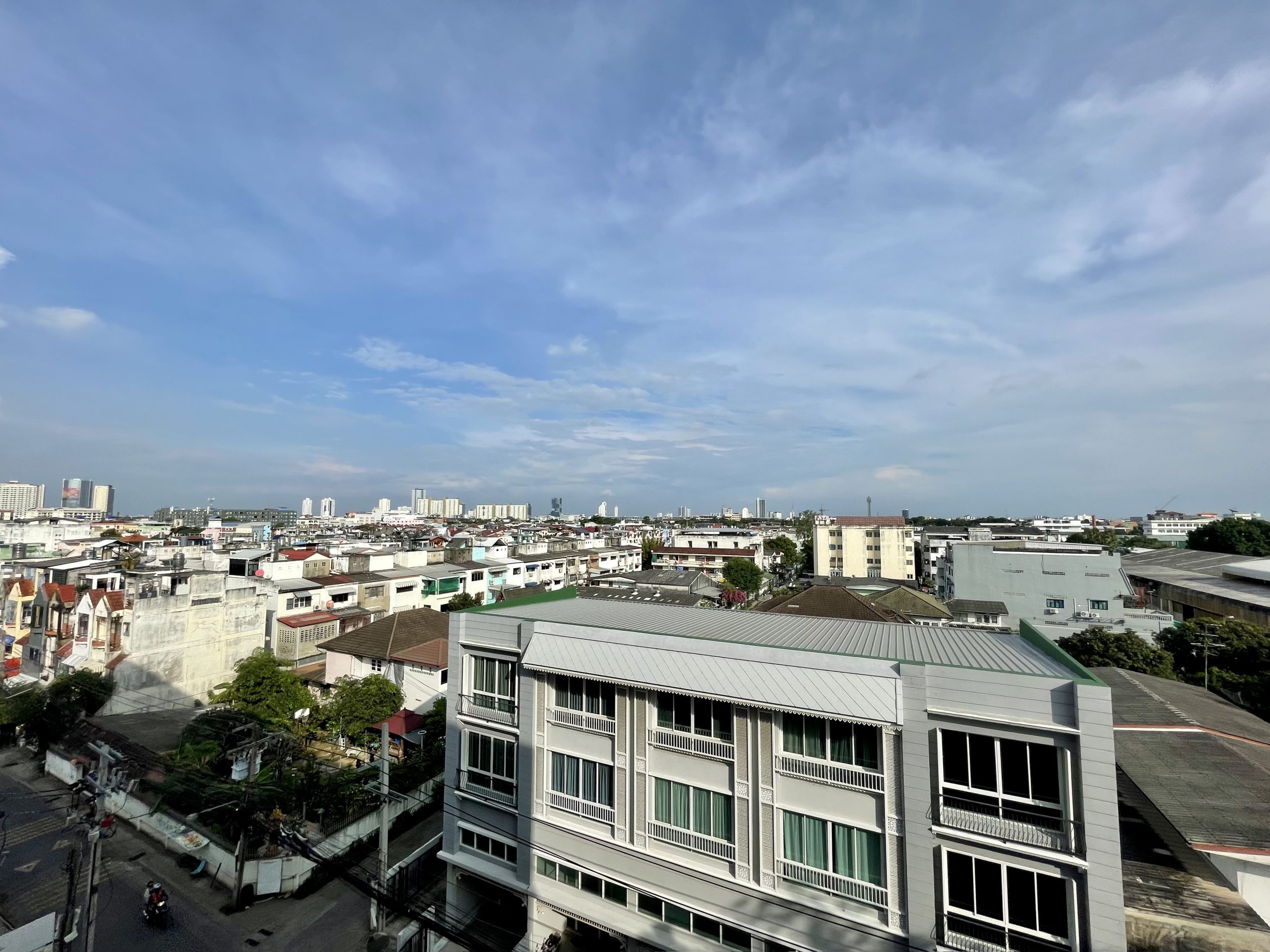
Direction, surrounding buildings and exposed glass can change how heat reaches a unit through the day.
A cool five-minute viewing proves very little when the system has been running before arrival. The aim is to understand how the exact unit gains and loses heat, how efficiently occupied rooms can be cooled and what happens when the home is closed for several days.
Visit when heat exposure is visible
Ask which direction the main windows face and return when direct sun is likely to affect them. Observe warm glass, heated walls, glare and rooms that remain uncomfortable after cooling starts. Nearby towers, balconies and fixed shading can change exposure floor by floor.
Do not judge orientation from a compass label alone. A corner unit may receive sun from more than one direction, while a recessed window may be protected. Note where curtains or blinds are essential and whether they reduce the natural light that attracted you.
Test the whole layout
Stand in the kitchen, bedroom, work area and bathroom, not only under the living-room air conditioner. Long plans, closed doors and poorly placed equipment can create uneven temperatures. Check whether cooling one occupied zone requires conditioning the entire unit.
Room use matters. A sunny space may work as an occasional dining area but become tiring as a daily office. A bedroom that cools slowly can affect sleep even when the living room feels comfortable.
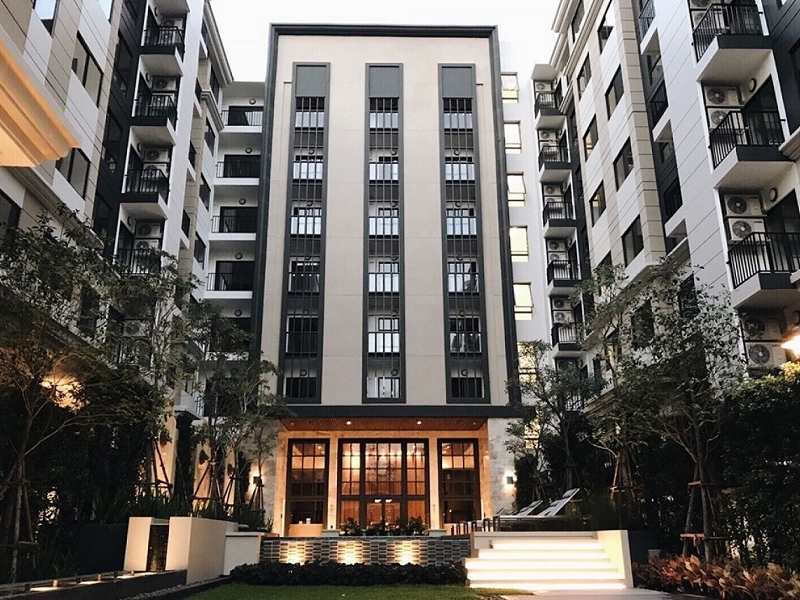
Room depth, doors and air-conditioning positions determine whether cooling reaches the spaces people actually use.
Inspect air-conditioning condition
Ask for maintenance history where available and operate each unit with permission. Listen for unusual noise, check airflow and look for staining, dripping or damaged insulation. A professional inspection can assess performance and installation more reliably than a short viewing.
Confirm who maintains equipment during a tenancy and how condensate lines are accessed. Replacement cost and disruption should be included in the ownership plan, particularly where outdoor units or service routes are difficult to reach.
Understand airflow without making unsafe changes
Openable windows and balcony doors may help at suitable times, but outdoor heat, rain, pollution, insects and security affect when natural ventilation is practical. Check screens, seals, door operation and the building’s facade rules before planning alterations.
Internal airflow should not depend on propping open fire doors or changing common areas. Fans can improve perceived comfort in some rooms, but placement, noise and electrical access need to suit the layout.
Look for humidity and moisture clues
Inspect wardrobes, window edges, bathroom ceilings, cabinets and walls behind furniture. Odour, swelling, discolouration or repeated repainting can indicate a condition that deserves closer investigation. Do not assume that strong cooling has resolved the underlying issue.
Ask how the unit is managed when empty. Sensitive clothing, leather, paper and electronics may need a considered plan. Any equipment left operating during absence should be used in accordance with safety, insurance and manufacturer guidance.
Shade and a comfortable walking approach can matter as much as indoor cooling for everyday life.
Assess the journey beyond the front door
Thermal comfort includes the walk to transport and daily services. Shade, covered routes, trees, road crossings and waiting areas influence whether the location feels manageable in hot or wet conditions.
Check corridor and lift-lobby ventilation, car-park access and pickup points. A comfortable unit can still feel inconvenient if every daily journey begins with a long exposed walk.
Compare comfort with running cost
Request unit-specific electricity history where the owner can lawfully provide it, but interpret past use carefully. Household size, thermostat choices, occupancy and equipment condition can create very different bills in similar units.
Compare glazing area, ceiling height, appliance efficiency, shading and cooling zones. Build a conservative monthly allowance rather than relying on a salesperson’s estimate. Comfort and cost should be tested together.
Consider landlords and future residents
A thermally difficult unit can generate complaints, maintenance calls and shorter tenancies. Landlords should document equipment condition, provide clear operating information and respond promptly to leaks or failures.
Neutral window treatments, maintained seals and accessible equipment can support a wider tenant group. Avoid irreversible work before checking juristic rules and obtaining suitable technical advice.
Thermal comfort viewing checklist
Visit during the unit’s likely sun exposure.
Test every occupied room and cooling zone.
Inspect equipment, drainage and service access.
Check glazing, seals, blinds and fixed shade.
Look for moisture and humidity clues.
Walk the route to transport in realistic conditions.
Compare unit-specific use rather than generic bill estimates.
Confirm building rules before altering windows or facade elements.
A comfortable Bangkok condo is one whose climate can be managed without fighting the layout every day. Explore IBP’s expat living guides and buyer checklists, or contact IBP Real Estate for a comfort-led viewing shortlist.
Thailand’s engagement with European business leaders intensified in Bangkok in mid-July 2026. The meetings matter to property investors because sustained corporate activity can influence skilled employment, executive mobility and confidence in Bangkok as a regional operating base.
A three-day European business mission brought corporate leaders into direct talks with Thai policymakers in Bangkok.
That connection should be treated carefully. A policy meeting does not create immediate condo demand, and an active trade negotiation is not a completed agreement. The useful signal is that government and business are discussing the practical conditions needed for longer-term investment.
What happened in Bangkok
On 16 July, Thailand’s Prime Minister met executives from more than 40 European companies, according to the government’s official account. The meeting formed part of a three-day EU-ASEAN Business Council mission to Bangkok involving senior Thai officials and European corporate representatives.
The discussions covered trade, investment and the business environment. European participants represented areas including manufacturing, healthcare, consumer industries, financial services and the digital economy. The delegation also held meetings touching on customs, energy, public health, commerce and monetary policy.
FTA momentum is one part of the story
Both Thai officials and European business representatives expressed support for progress on the Thailand-EU Free Trade Agreement. The EU Council was still describing negotiations with Thailand as ongoing at its May 2026 trade meeting, so investors should not treat the July dialogue as completion.
The business case extends beyond tariffs. Participants highlighted market access, customs efficiency, investment protection and cooperation in green and digital activity. Those operating details can influence whether companies expand teams, add facilities or deepen regional functions in Thailand.
The discussions covered investment conditions, regulation and opportunities in green and digital industries.
Thailand presented an investment reform agenda
The government’s account highlighted digital infrastructure, artificial intelligence, clean energy, transport and logistics. It also referred to the Thailand FastPass programme, OECD accession and a plan to update outdated laws and regulations.
For investors, implementation matters more than the length of the agenda. Useful future evidence would include clearer procedures, project approvals turning into operating activity, local hiring, training, supplier contracts and expansion by established companies.
Why Bangkok remains central
Bangkok concentrates corporate headquarters, professional services, embassies, international schools, private healthcare, air links and a large urban labour market. When international businesses assess Thailand, many decision-makers and specialist teams pass through or base themselves in the capital.
This can support diverse housing needs, from centrally located rental condos to larger homes suited to relocating families. Demand is not uniform. Office location, travel policy, assignment length, school choices and employer budgets determine which districts and buildings benefit.
Policy dialogue is an early signal; property investors should look for implementation, hiring and operating activity over time.
Green and digital investment can reshape demand
European businesses emphasised low-carbon manufacturing, digital infrastructure, healthcare, life sciences, sustainable food systems and resilient supply chains during the mission. Growth in these areas can add technical, managerial and professional roles across Thailand.
Some employees may live near established Bangkok business districts; others may prioritise airport or motorway access to industrial locations. Investors should map real workplace patterns instead of assuming that every new project creates demand in the city centre.
Signals foreign property buyers can monitor
Concrete progress in the Thailand-EU negotiation process.
Published regulatory changes and faster operating approvals.
New European regional offices or expanded local teams.
Hiring in digital, healthcare, engineering and professional services.
Office take-up and relocation activity in relevant Bangkok districts.
Residential leasing evidence from comparable units.
Infrastructure delivery that improves real commuting patterns.
These indicators should be reviewed as a sequence. A memorandum or meeting may be followed by approvals, capital expenditure, recruitment and only later by sustained housing demand. Property decisions made before that chain is visible require a wider margin of safety.
The July meetings strengthen the evidence that Thailand is actively courting high-quality international business and listening to operational concerns. They do not guarantee an investment outcome or a property cycle. For condo buyers, the disciplined approach is to connect national policy with observed company activity and building-level rental evidence.
Sutthisan sits on Bangkok’s MRT Blue Line in the broader Ratchada corridor. For foreign buyers, its appeal is practical rather than ceremonial: rail access, established neighbourhood routines and a range of condominium ages. The investment case still depends on the exact street and building.
The useful measure is the complete home-to-platform journey at the times a resident normally travels.
A station name is only the beginning of the search. Sutthisan includes busy roads, quieter residential lanes and routes whose comfort changes with traffic and weather. Buyers should walk the complete journey and compare buildings with the resident profile they genuinely intend to serve.
Place Sutthisan in the wider network
The Blue Line connects the area with major interchange and employment districts across Bangkok. That can support residents whose routines span offices, education, retail and services in different parts of the city. It does not make every nearby condo equally convenient.
Test the direction of travel, interchange burden and late-evening return. A resident who works north of the station may value different access from one commuting towards central business areas. Verify current rail information before relying on a particular route.
Measure the real station walk
Map distances can hide crossings, narrow pavements, slopes, construction, poorly lit sections and the position of station entrances. Walk from lobby to platform during a weekday morning, after dark and, if possible, in rain.
Note whether the route passes useful shops or creates extra errands. A slightly longer walk with lighting, shade and simple crossings may feel better than a short but uncomfortable route. Ask how residents handle the final stretch when carrying groceries or luggage.
Street crossings, lighting, drainage and daily services shape whether a short map distance feels convenient.
Read each micro-location
Properties on a main road may offer direct movement but face traffic, dust or noise. Units deeper in a soi can feel more residential but depend on motorcycle taxis, walking conditions or a building shuttle. Visit at several times before deciding which trade-off suits the target resident.
Check nearby food, supermarkets, pharmacies, clinics, exercise options and everyday services. Local convenience can support long-term liveability, but investors should avoid assuming that every tenant wants the same mix of street activity and privacy.
Compare condominium generations
The district search may include newer towers, established mid-rise buildings and older projects. Newer does not always mean better, while a lower asking price in an older building can conceal future work. Compare condition, layout, management and total ownership cost.
Inspect lifts, corridors, parking, security, water systems, fire-safety arrangements and shared facilities with suitable professionals where needed. Review juristic records and planned expenditure through proper due diligence. Fresh decoration should not replace operational evidence.
Choose the unit for a defined resident
A compact unit may suit a single commuter who prioritises rail access. A larger one-bedroom may appeal to a couple or home worker but compete at a different rent and purchase budget. Write the likely resident profile before accepting an agent’s broad demand claim.
Test kitchen storage, laundry space, working area, natural light, heat, noise and furniture placement. In a competitive rental market, functional differences can matter more than a long amenity list.
Project age, management, unit efficiency and nearby competition matter more than the district label alone.
Examine rental competition building by building
Collect current comparable listings in the same project and nearby alternatives. Separate asking figures from documented transactions where evidence is lawfully available. Note how long listings remain visible and whether many owners present almost identical units.
Model rent after common fees, management, repairs, furnishing, vacancy and leasing costs. Do not transfer a yield assumption from another Ratchada station without adjusting for the exact building, unit and tenant segment.
Protect the resale path
Future buyers will compare station access, building condition, unit efficiency and price against a changing set of projects. Prefer characteristics that can be demonstrated: a workable plan, maintained common areas, clear documents and a route people are comfortable using.
Ask how many similar units exist in the building, whether the foreign ownership quota is relevant to the intended transaction and who is likely to buy next. A low entry price is less useful if the eventual buyer pool is narrow.
Consider car and road access separately
Rail convenience does not remove the need to understand road movement. Check parking entitlement, visitor parking, pickup points, taxi access and congestion around the building. Residents who travel across Bangkok for work may combine MRT, taxis and driving.
Observe service access for deliveries and moves. A lobby beside a busy road can create different practical issues from a building deep inside a lane. These details affect daily comfort and landlord operations.
Use a disciplined viewing shortlist
Walk the complete route in several conditions.
Compare main-road and inner-soi trade-offs.
Define the target resident and unit size.
Inspect building operations and maintenance evidence.
Review competing listings within the same project.
Model net income with unit-specific costs.
Check resale competition and likely buyer groups.
Confirm current legal, quota and transfer details independently.
Before making an offer, revisit the preferred building without the first viewing’s sales momentum. Recheck the route, lobby activity, unit noise and surrounding streets, then compare the notes with the original investment criteria.
Sutthisan can suit buyers who value an established MRT-connected neighbourhood and are prepared to choose carefully at street and building level. Explore more Bangkok district guides, or contact IBP Real Estate for a criteria-led Sutthisan viewing plan.
Mail is easy to overlook when a foreign owner spends much of the year outside Thailand. Yet building notices, bank correspondence, service documents and parcels can continue arriving at a Bangkok condo. A clear handling plan reduces missed deadlines, privacy problems and confusion between owner, tenant and juristic office.
A controlled address record helps owners know which organisations still send important correspondence to the condo.
The right system depends on the building and the legal importance of each item. A reception desk that accepts ordinary parcels may not be authorised to accept registered correspondence or formal notices. Confirm the position rather than assuming that a familiar face at reception solves every issue.
Create an address register
List every organisation that uses the condo address: juristic person, utilities, bank, insurer, internet provider, government office where applicable, property manager, contractors, online retailers and any company connected to the unit. Note which communications are digital and which may still arrive physically.
Keep the register with the property file and update it after a sale, tenant change, account closure or new service. This makes it easier to redirect correspondence and prevents an old address from remaining active simply because nobody remembers where it was used.
Confirm the building’s procedure
Ask the juristic office how ordinary letters, registered items, courier parcels and oversized deliveries are handled. Check identification requirements, storage time, notification method, collection hours and what happens when an item is unclaimed.
Request the current written rule where available. Some buildings use lockers or an app; others maintain a reception log. Owners should also ask whether staff will contact an overseas number, email an alert or communicate only through a local channel.
Collection, storage and notification practices differ by building and should be confirmed in writing.
Separate convenience from legal significance
Do not treat reception acceptance as proof that a legally important document has been properly received by the owner. Service rules, contract notice clauses and government processes can have specific requirements. Obtain qualified advice when a communication may affect rights, payment, insurance, tax or a deadline.
Tell any authorised helper to escalate official-looking correspondence immediately without deciding its importance alone. The owner should receive a clear image of the envelope, sender, arrival date and any collection receipt before the item is opened or forwarded.
Use a narrow written authority
If a property manager, lawyer, trusted contact or tenant will collect items, define the role in writing. State what the person may collect, whether envelopes may be opened, how images are shared, how originals are stored and when they must be couriered.
Avoid handing over broad powers for a simple administrative task. The building may require its own authorisation form or identification copy. Confirm the current requirement and limit personal data to what is reasonably needed.
Protect privacy and account security
Mail can reveal names, account numbers, signatures, travel patterns and ownership details. Use a secure sharing channel and restrict access to the smallest practical group. Sensitive pages should not remain in an informal chat history or an unlocked reception tray.
Agree how unwanted documents are destroyed. Shredding is safer than placing financial or identity material in ordinary waste. If a scan is retained, give it a clear filename, store it securely and remove duplicate copies that no longer serve a purpose.
Any person authorised to handle correspondence needs a narrow role, a clear record and secure disposal instructions.
Plan for parcels and failed deliveries
Before ordering, check size limits, refrigeration needs, restricted items and the building’s policy on cash-on-delivery. A juristic office may decline bulky, valuable or perishable deliveries. Delivery riders may also be restricted from residential floors.
Use tracking and a reachable local contact. For furniture, appliances and contractor materials, book the service lift and delivery window if required. Parcel convenience should not bypass move-in deposits, protective covering or contractor registration rules.
Define the landlord and tenant boundary
When the unit is rented, the tenant should receive private correspondence addressed to them without owner inspection. The owner should redirect personal mail and explain which property-related notices need to be shared under the lease and applicable rules.
At handover, record mailbox keys, access cards, locker access and the agreed contact method. When a tenancy ends, ask both parties to update addresses promptly. Do not rely indefinitely on the next occupant to forward private material.
Prepare for periods when the unit is empty
Vacant units still need a named contact. Give the juristic office current owner details and a defined local contact where appropriate. Arrange periodic checks at a sensible interval and require the helper to report correspondence without removing unrelated property.
Combine mail handling with a wider absence plan covering utilities, leaks, air-conditioning, insurance conditions and emergency access. The goal is a documented routine, not constant informal monitoring.
Close the loop when selling
Before completion, change addresses with service providers and close accounts that should not transfer. Agree how correspondence arriving after handover will be treated, but do not make the buyer responsible for an open-ended forwarding service.
Remove owner details from shopping apps and saved delivery profiles. Return or transfer mailbox and locker access according to the transaction documents and juristic procedure. Keep evidence of important address changes in the sale file.
Overseas-owner mail checklist
Maintain a register of organisations using the condo address.
Confirm separate rules for letters, registered items and parcels.
Use qualified advice for legally significant correspondence.
Give any helper a limited written role.
Protect scans, identity details and disposal.
Define landlord and tenant responsibilities.
Keep a current contact during vacancy.
Redirect accounts before a sale or long absence.
A small administrative system can protect a valuable asset from avoidable confusion. Browse IBP’s foreign buyer guides and landlord guidance, or contact IBP Real Estate to discuss practical ownership support.
Foreign investors often ask whether a new-build or resale Bangkok condo is the better purchase. Neither route is automatically superior. The useful question is which option offers the stronger evidence, risk control and exit path for a particular budget and holding plan.
New-build and resale options should be compared within the same demand corridor and buyer budget.
A fair comparison keeps location, unit size, target resident and total capital broadly aligned. Comparing a compact completed unit beside an MRT station with a larger off-plan unit in an emerging district says more about the locations than about new-build and resale property.
Define what each label means
A new-build purchase may involve an off-plan contract, a building under construction or a newly completed project with developer inventory. A resale purchase normally means acquiring from an existing owner after the unit has been transferred at least once.
Those categories contain important variations. A completed developer unit has different risks from an early off-plan purchase. A lightly used resale in a recent building differs from an older unit needing renovation. Record the actual transaction structure before comparing headline prices.
Compare the all-in acquisition cost
Begin with the agreed unit price, then add every amount needed to reach a rentable or liveable condition. The list can include reservation and contract payments, transfer-related costs, furniture, appliances, inspection, legal work, repairs, curtains, connectivity and a contingency allowance.
Promotions can obscure the comparison. A developer package may include furniture or fee support but still require upgrades. A resale may appear cheaper yet need air-conditioning work, replacement appliances or a full refresh. Assign a realistic value only to items the buyer would otherwise purchase.
Use evidence appropriate to the stage
With a completed resale, the buyer can inspect the exact view, noise, light, common areas and wear. The building also has an operating history. Ask for juristic records, common-fee information, maintenance evidence and details of known major works through the appropriate professional review.
A new-build buyer relies more heavily on contractual specifications, approved information, developer capability and construction progress. Study the unit plan, dimensions, material schedule, payment milestones, completion provisions and the process for recording and correcting defects.
A completed unit offers observable condition and layout evidence, while a new-build purchase requires careful specification checks.
Separate design appeal from functional value
New projects may offer modern finishes, efficient shared amenities and presentation designed for current buyers. Resale units may offer larger rooms, established landscaping or a location where developable land is limited. Neither advantage is universal.
Test the home against daily use. Check furniture walls, storage, kitchen function, laundry position, bathroom ventilation, work space and circulation. A photogenic show unit can be inefficient, while an older plan can remain highly practical after sensible maintenance.
Measure the route to rental income
A completed resale can potentially enter the leasing market sooner, subject to transfer, preparation and building rules. It also allows the investor to examine comparable listings and, where lawfully available, documented leasing history. That evidence still needs careful interpretation.
An off-plan unit creates a period before possession when no rent is available and the future competitive set can change. Model the holding plan from actual payment dates, not only from completion. Include furnishing, defects, marketing and vacancy after handover before assuming normal occupancy.
Study building competition
At launch, many similar units may be sold with the same marketing story. At completion, owners can list comparable layouts together. A resale building may already show how often units become available, how listings differ and whether maintained homes command better attention.
Count competing units within the building and nearby projects that target the same resident. Compare floor, orientation, condition, furniture, view and asking history. The relevant competition is rarely every condo in the district.
Building records, competing listings and ongoing maintenance can materially change the resale case.
Assess management and maintenance risk
For a resale, inspect how the juristic person handles cleaning, security, plant, lifts, water systems and repairs. Review records with qualified advisers and understand planned expenditure. Visible presentation is useful, but financial and operational documents can reveal different issues.
For a new-build, the future management culture is not yet observable. Examine the proposed common budget, handover arrangements, warranty process and developer record without assuming that every earlier project will perform identically.
Plan the exit before choosing
A new-build buyer should consider what will distinguish the unit once it becomes a resale competing with developer stock and other owners. A resale buyer should consider the building’s future age, maintenance trajectory and likely buyer pool at the intended exit date.
Ask who may buy next: an owner-occupier, local investor, foreign buyer or landlord seeking a ready tenant. Ticket size, foreign-quota availability, transfer documentation and the ease of viewing can all influence the practical exit.
Build a matched comparison sheet
Keep district, budget, size and target resident comparable.
Calculate total cash required through rental readiness.
Record what can be inspected and what remains contractual.
Model the period before income and a realistic vacancy allowance.
Compare actual competing units, not marketing averages.
Review building management, maintenance and planned expenditure.
Stress-test completion, repair, furnishing and exit scenarios.
Use independent legal and technical professionals where appropriate.
The better purchase is the one whose risks the investor can understand, finance and manage. Explore IBP’s investment analysis and resale strategy guides, or contact IBP Real Estate for a matched new-build and resale shortlist.