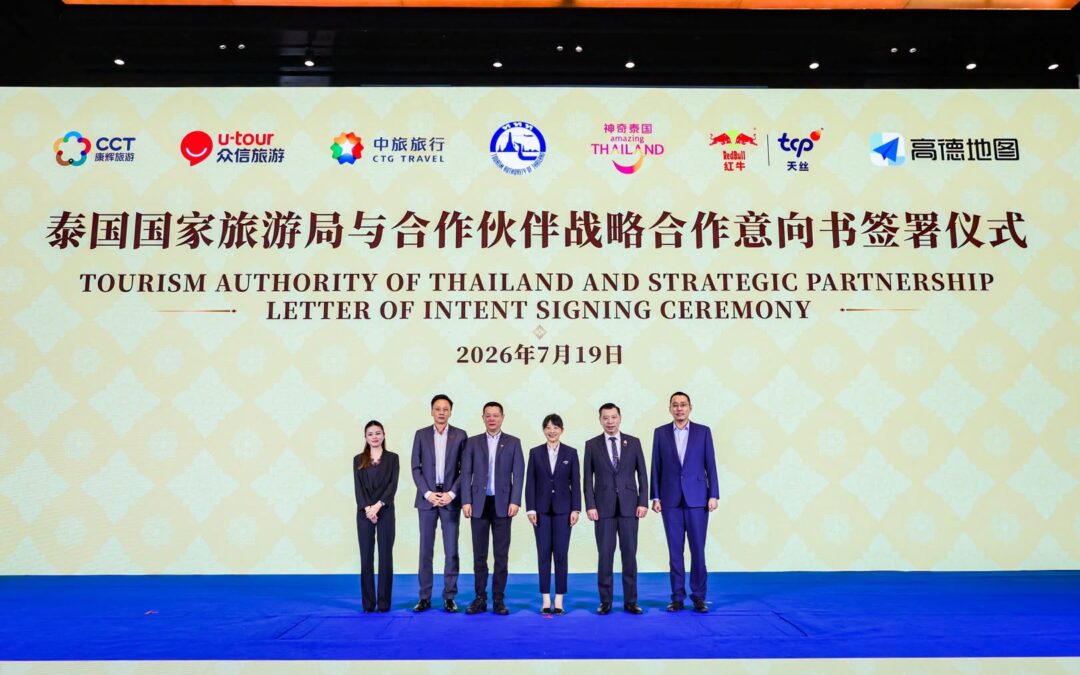
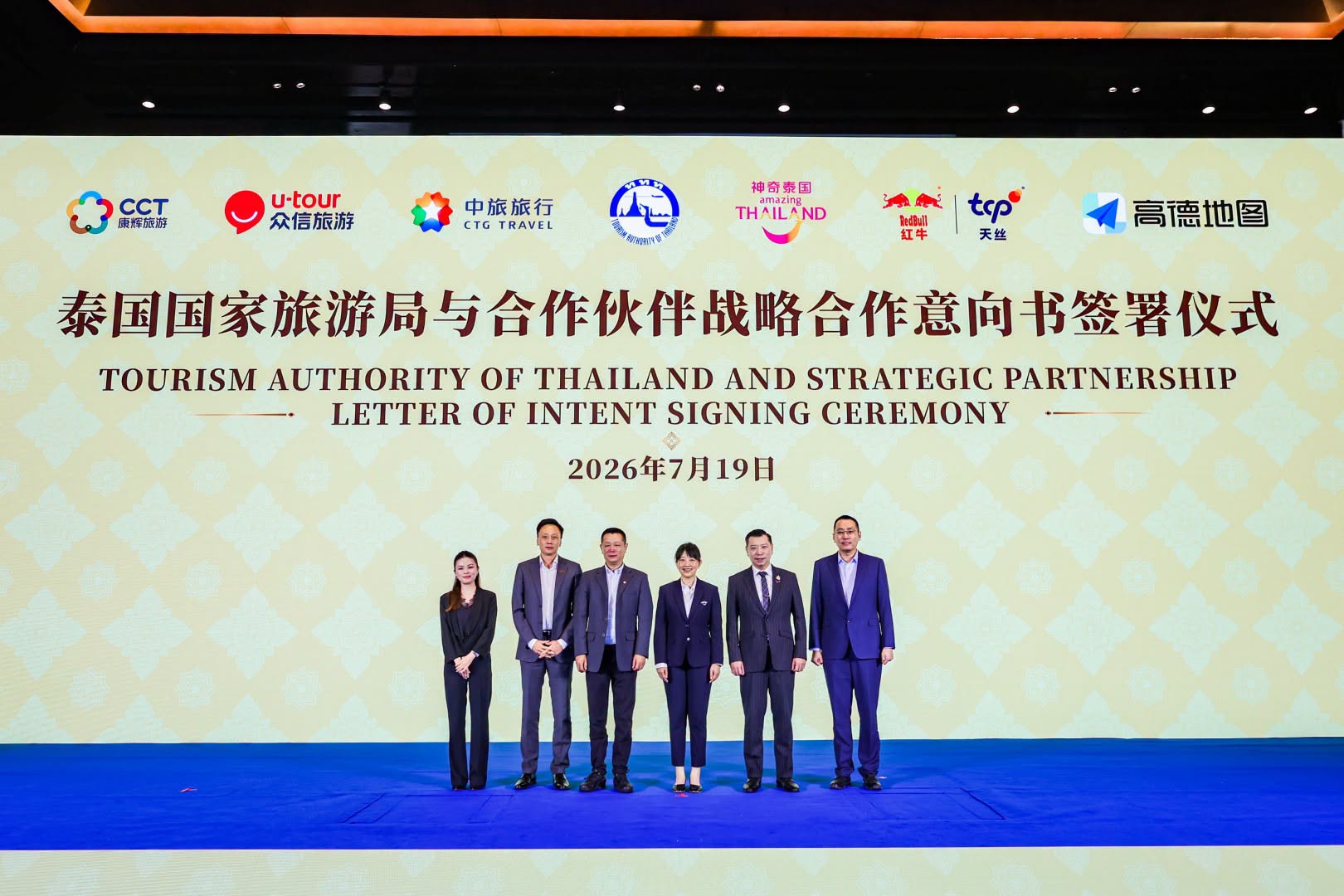
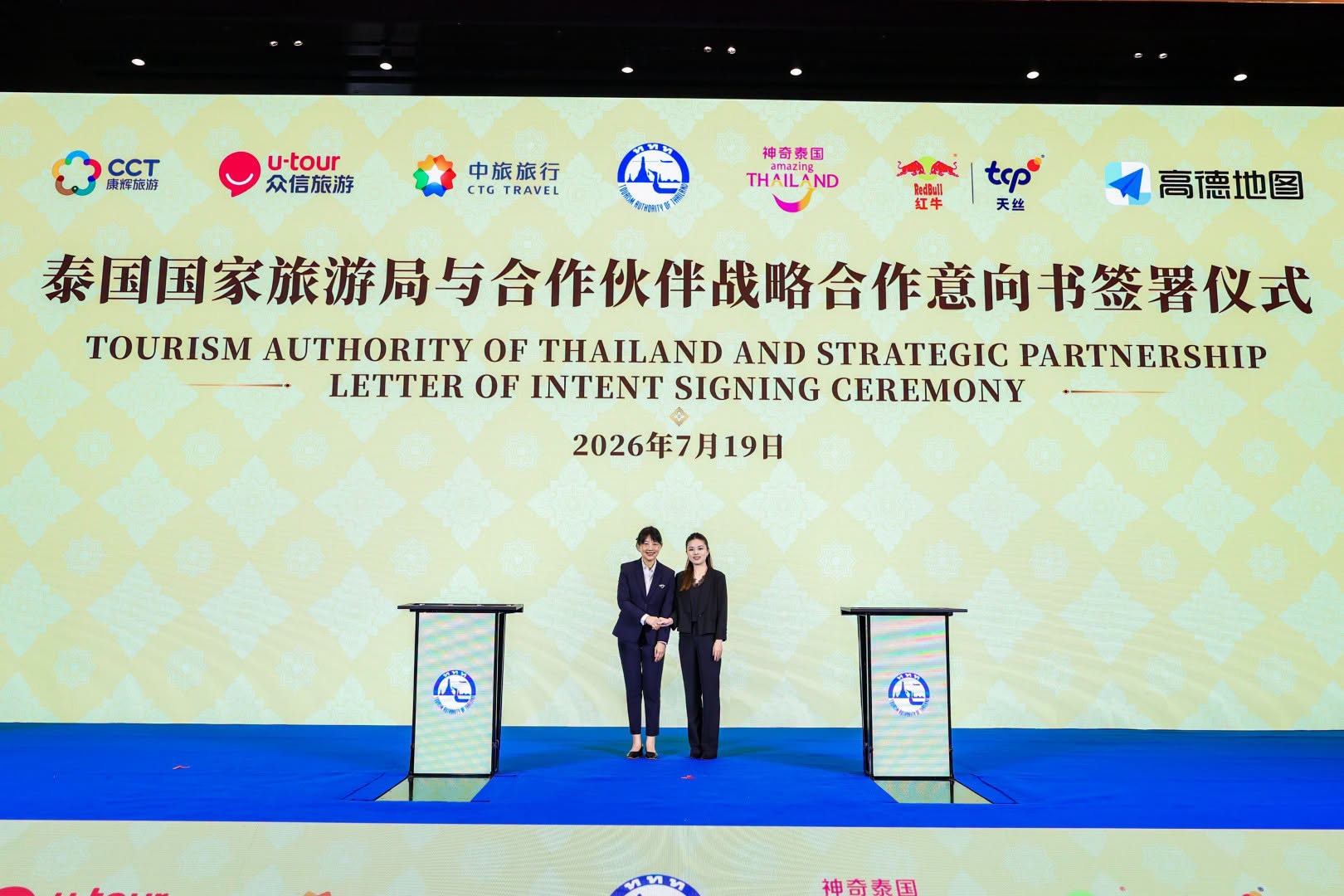
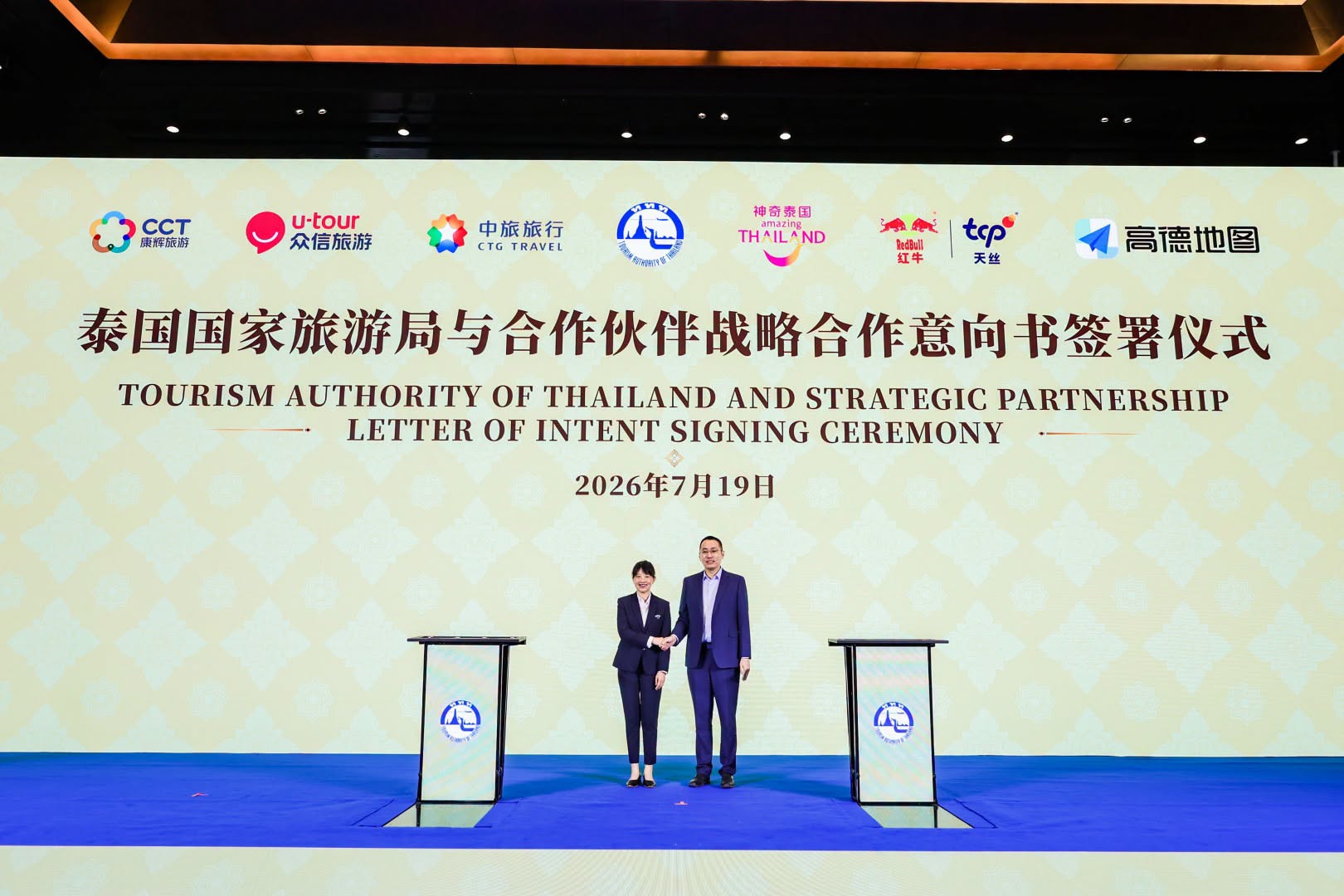
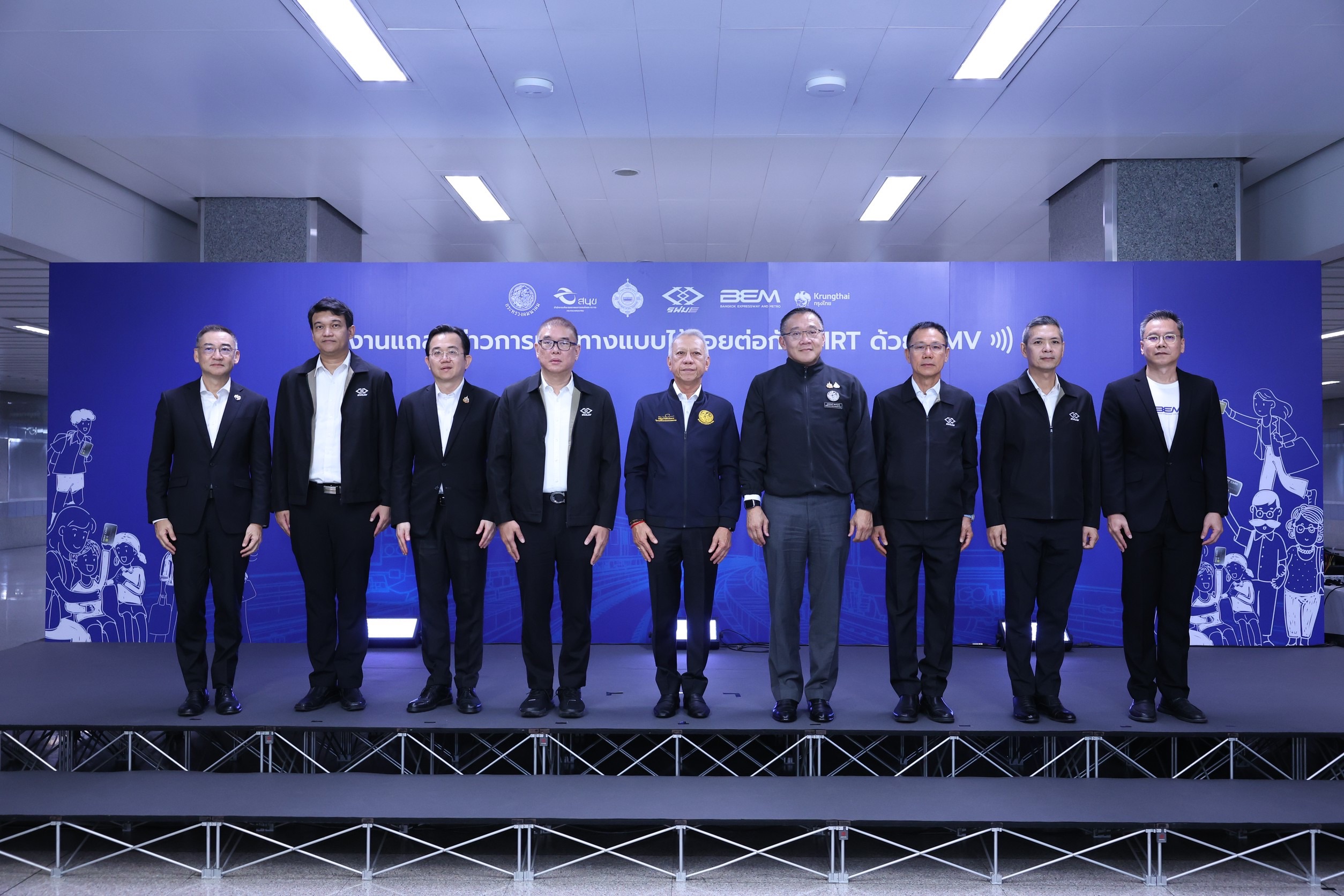
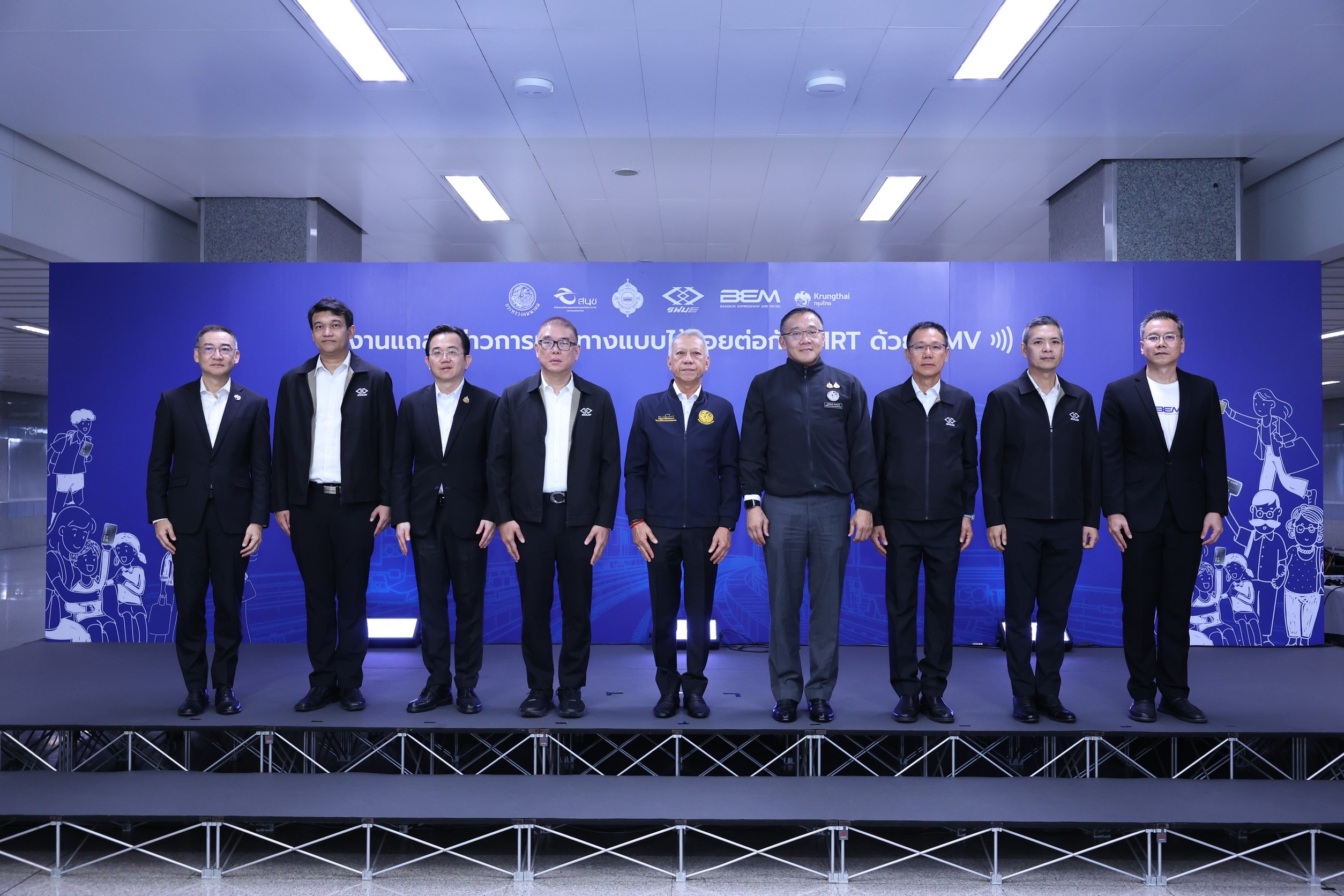
Thailand’s tourism relationship with China moved from broad policy dialogue to five practical partnership frameworks in July 2026. The Tourism Authority of Thailand announced Letters of Intent with three travel groups, a digital-map platform and a Thai consumer brand, covering multiple stages of the visitor journey.
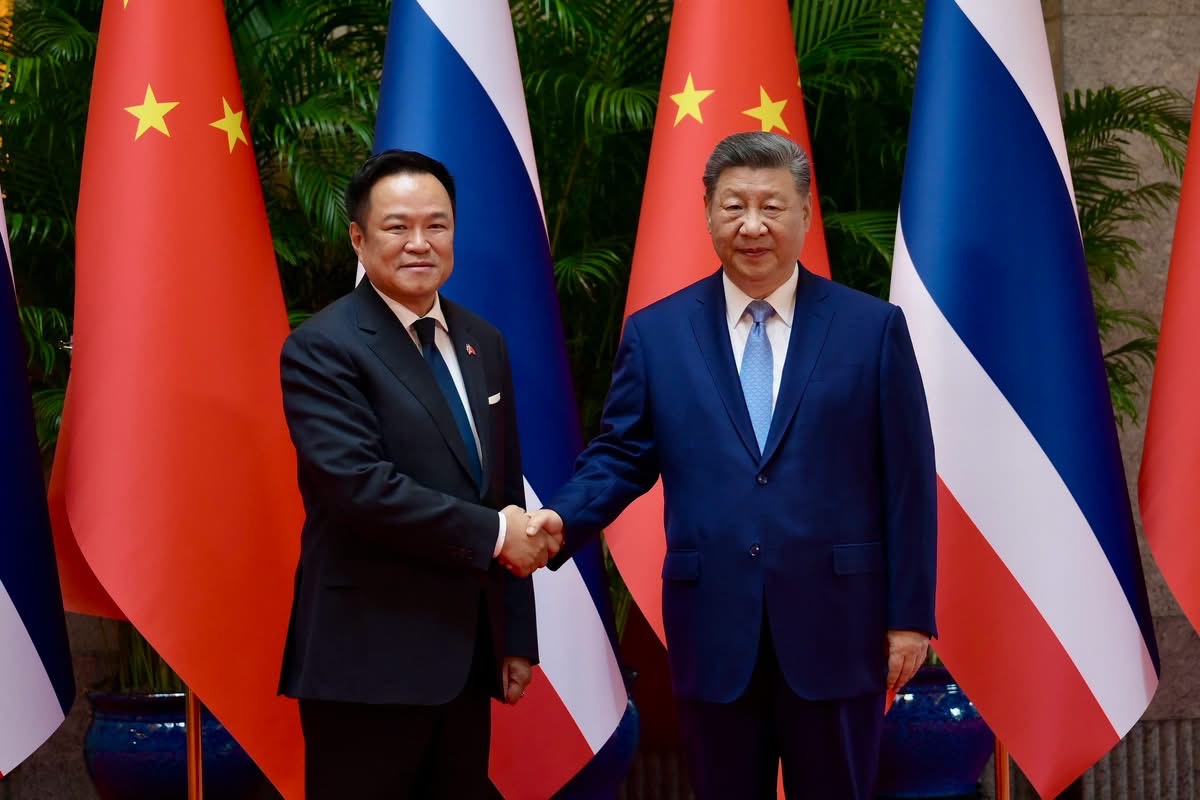
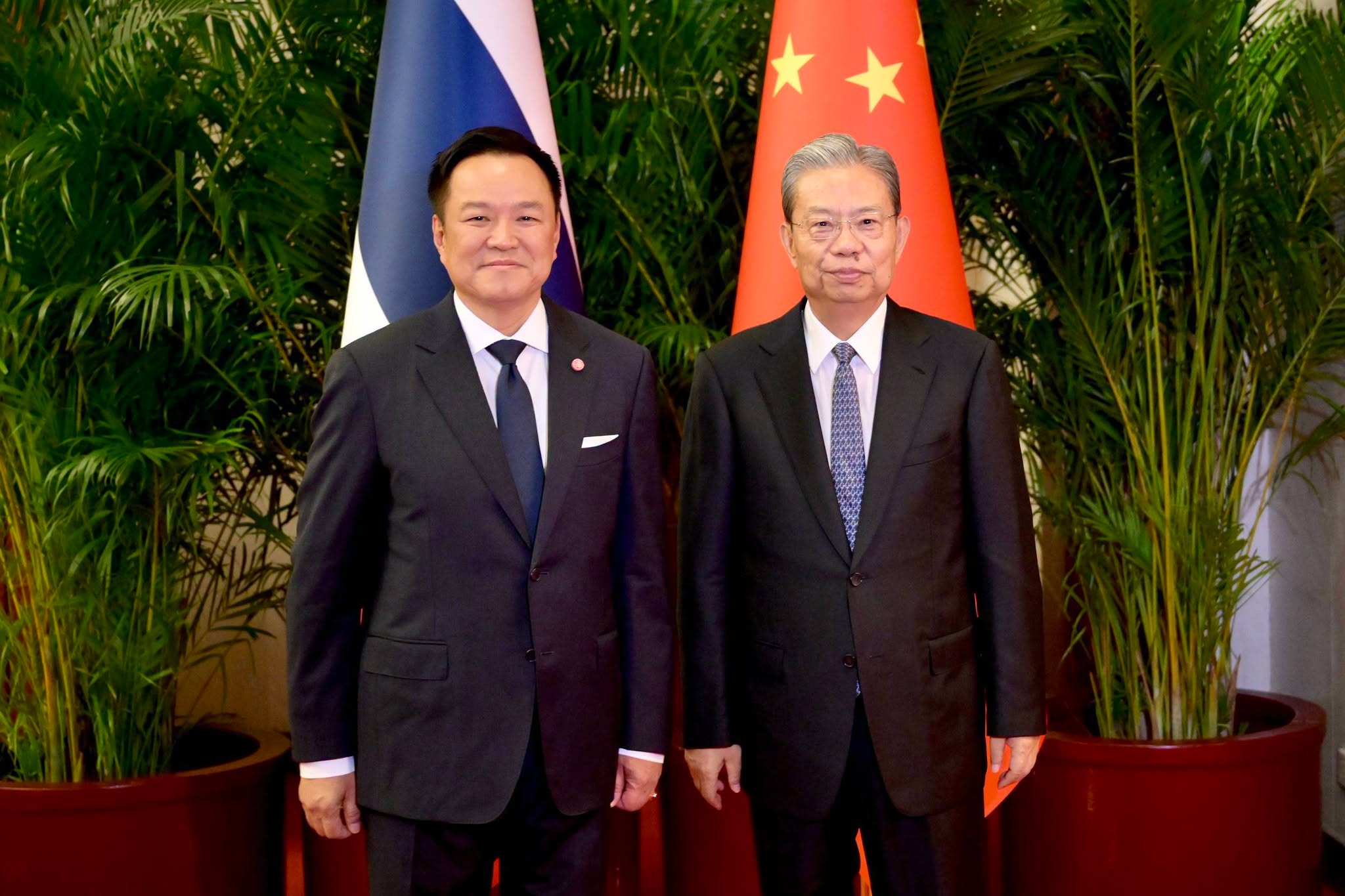
TAT signed five Letters of Intent in Beijing during the Thai Prime Minister’s official visit to China.
For foreign Bangkok property buyers, the announcement is relevant as a confidence signal rather than a direct demand forecast. International travel supports hotels, retail, restaurants, transport and business services. The property question is whether better visitor planning and higher-quality experiences contribute to repeat stays, corporate links and durable city activity.
What TAT announced
TAT said the agreements were signed on 19 July in Beijing during Prime Minister Anutin Charnvirakul’s official visit to China from 16 to 20 July. The five partners are China Tourism Group, Utour Group, China Comfort Travel Group, Amap and TCP Group.
The frameworks cover tour operations, smart travel, digital services, brand marketing and experiences in Thailand. That breadth matters because tourism confidence is not created by promotion alone. Travellers also need useful information, reliable booking, convenient movement and experiences that justify returning or staying longer.
Different partners cover different decisions
China Tourism Group is expected to help promote quality Thai tourism products through an integrated travel network. Utour Group’s framework includes leisure, wellness, honeymoons, weddings, study visits and cultural festivals, distributed through agents, retail outlets, online channels and social media.
China Comfort Travel Group’s cooperation includes destination promotion, group travel, business events, special-interest segments, service standards, safety, tourism intelligence and training. Amap is focused on smart travel, destination discovery and Thai-Chinese information for independent visitors. TCP Group’s Energetic Thailand concept connects sport, music, health and lifestyle experiences with brand communications and workforce development.
The agreements connect tour operations, digital promotion, mobility information and visitor experiences.
Why the connected visitor journey matters
A traveller may discover Bangkok online, compare routes in a mapping service, book through a travel group, navigate the city independently and join a branded event. When those steps are easier, Thailand can compete on confidence and experience rather than price alone.
This is consistent with a quality-tourism approach. Higher-value travel does not necessarily mean only expensive holidays. It can include longer stays, reliable services, wellness, learning, events, culture and repeat visits. Bangkok is well placed because it combines regional air access with hotels, hospitals, shopping, dining, offices, universities and extensive urban transport.
The Bangkok property connection
Tourism affects property through several channels, but they should not be confused. Visitor spending supports the city’s service economy. Business events and study visits can introduce professionals to Thailand. Wellness, weddings and lifestyle travel can deepen familiarity with Bangkok as a place to return, work or keep a second home.
These are city-level effects. They do not guarantee that a particular condominium will rent faster or rise in value. Long-stay residential demand still depends on employment, visas, schools, corporate movement, building rules, unit quality and sensible pricing. Daily or hotel-style letting should never be assumed for a normal condominium.
The practical test will be whether cooperation improves planning, confidence, service and repeat travel to Thailand.
What investors should watch next
The useful evidence will come from implementation: new products offered through the partner networks, improved Chinese-language travel information, business-event activity, service training and the mix between group and independent visitors. Buyers can also watch whether engagement produces more repeat travel and stronger links with Thai businesses.
At property level, focus on districts that work for ordinary residents as well as visitors. Airport access, rail connectivity, healthcare, retail and professional services can strengthen a location, but the unit still needs credible long-stay tenant demand and a clear resale audience.
Avoid turning tourism news into a price promise
One set of agreements should not be capitalised into a condo offer price. Tourism can be affected by consumer confidence, aviation capacity, currency, policy and international events. Partnership announcements need time and measurable delivery.
The more defensible use is to add the news to Bangkok’s broader international-connectivity case. Thailand is actively building channels with a major travel market, while Bangkok already has the infrastructure and service depth to receive many kinds of visitor. That supports long-term confidence without removing unit-level risk.
Property takeaway
TAT’s five China partnerships show practical work across travel distribution, digital navigation, visitor service and lifestyle experiences. For Bangkok property investors, the announcement strengthens the city’s connected-destination narrative, but it should remain one input among employment, infrastructure, tenant demand and building evidence.
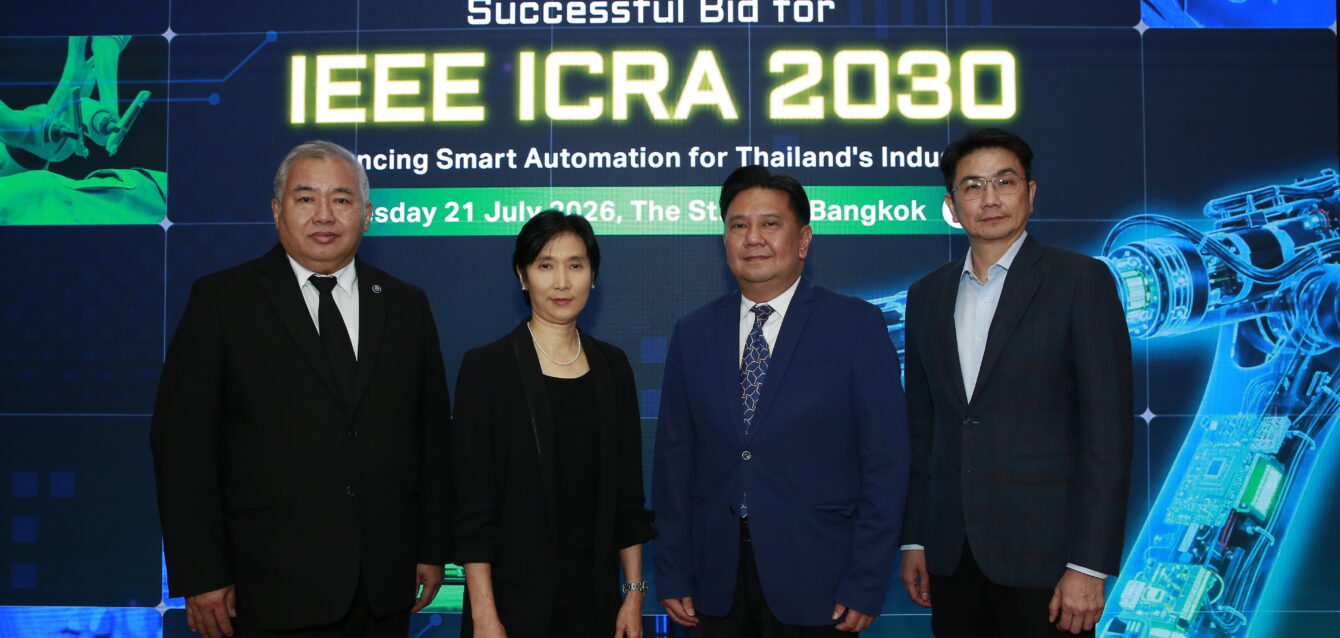
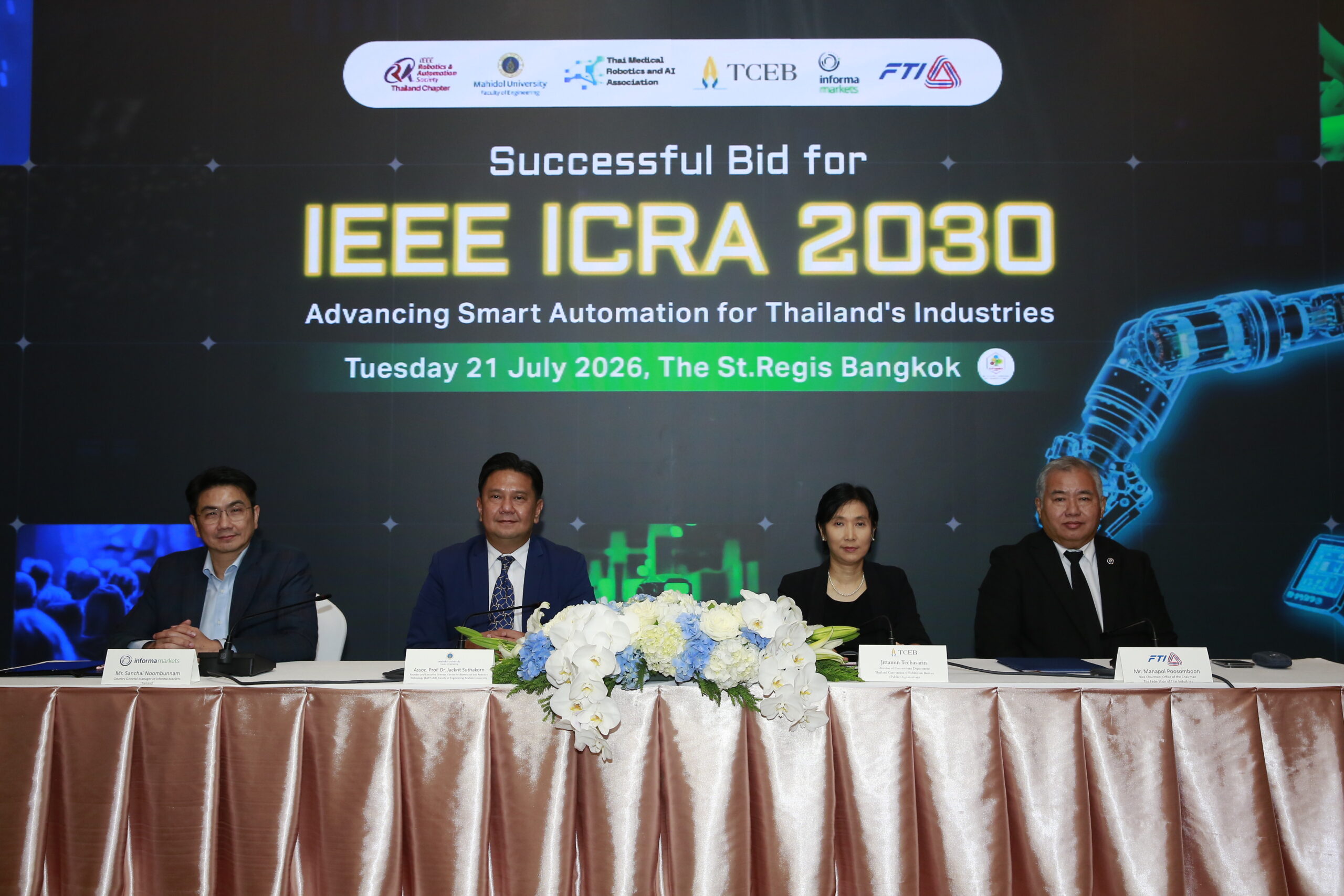
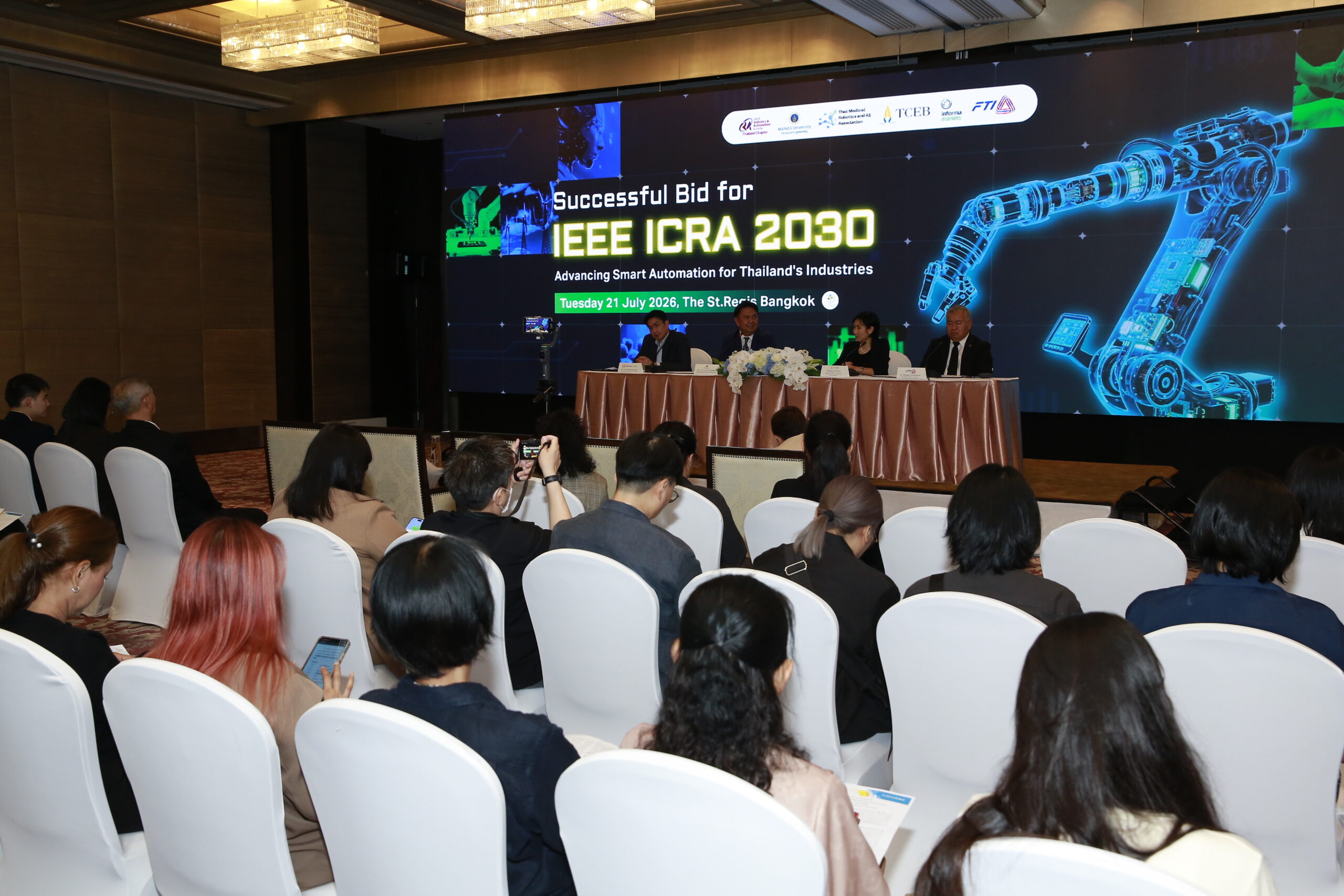
Bangkok has secured a future place on the global robotics calendar. On 22 July 2026, the Thailand Convention and Exhibition Bureau announced that Thailand had won the bid to host the IEEE International Conference on Robotics and Automation in 2030.
Thailand’s successful bid places Bangkok on the future calendar of the global robotics and automation community.
The event is scheduled for 13–17 June 2030 at Queen Sirikit National Convention Center. TCEB expects approximately 10,000 delegates, including 8,000 international participants. For Bangkok property buyers, the immediate value is not a rent forecast. It is another piece of evidence that the city can win and deliver high-level international gatherings tied to advanced industries.
What the ICRA win represents
ICRA brings together robotics and automation researchers, engineers, academics, innovators and industry participants. The successful Thai bid was led through a partnership involving Mahidol University’s engineering and robotics community, IEEE bodies, Thai robotics organisations and TCEB.
That partnership matters. It connects Bangkok’s convention infrastructure with the country’s research institutions and advanced-manufacturing ambitions. Winning the bid requires more than a large venue; it signals confidence in transport, hospitality, event operations, academic networks and the host city’s international accessibility.
Why business events matter to Bangkok
Large congresses create demand across hotels, serviced residences, restaurants, retail, transport and professional services. More importantly, specialist conferences can introduce global participants to local universities, companies and investment networks. Some relationships continue through research, hiring, regional offices or repeat visits after the event ends.
Bangkok is well positioned for this role because it combines air connectivity, a large hospitality base, established convention venues and extensive urban services. These advantages help the city compete not only for tourists but also for people travelling to exchange knowledge and make business decisions.
The bid joined convention expertise with Thailand’s universities, engineering community and robotics institutions.
The Queen Sirikit convention corridor
The choice of Queen Sirikit National Convention Center places the event in an established central corridor served by MRT, hotels, offices, retail, Benjakitti Park and surrounding Sukhumvit and Rama IV districts. Delegates can reach the venue while remaining close to major residential and commercial areas.
Property investors should interpret this locally but carefully. Proximity to a major venue can support visibility and convenience, yet it does not make every nearby condo a strong investment. Building quality, street route, layout, price, management and long-stay tenant demand remain essential.
A signal for Thailand’s innovation profile
TCEB presents the conference as part of Thailand’s ambition to become a regional advanced-manufacturing and innovation hub. Mahidol University’s official announcement also highlights the wider network of Thai universities and research organisations supporting the bid.
This is useful for property confidence because knowledge-intensive growth can broaden the types of people who spend time in Bangkok. Researchers, technology executives, engineers, investors and students use housing differently from short-stay leisure visitors. A more varied international economy can support the city’s resilience, although the effect should be measured over years rather than assumed from one event.
The long-term value of the win lies in networks, research visibility and business activity rather than a one-off property forecast.
What foreign property buyers should watch
The next useful evidence will come from implementation. Buyers can watch how Thailand builds the conference programme, how international institutions participate, whether related industry events expand and whether robotics and automation investment creates sustained corporate or research activity.
At district level, investors should track office occupancy, long-stay leasing, transport improvements and the quality of residential demand around established business and convention corridors. Event attendance alone is temporary; durable employment and institutional networks matter more to a property thesis.
Avoid the event-premium trap
A future international conference should not be used to justify an inflated condo price. By 2030, buildings will have aged, new supply may have entered the market and resident preferences may have changed. Investors need a unit that works before, during and after the event.
The safer approach is to treat the ICRA win as part of a wider confidence file. It supports Bangkok’s case as a globally connected centre for business events and advanced-industry dialogue. It does not remove the need for unit-level due diligence or conservative rental assumptions.
Property takeaway
Bangkok winning ICRA 2030 strengthens the city’s international business-events and innovation narrative. The announcement demonstrates that Thai institutions can assemble a credible bid around research, convention capability and urban infrastructure. For foreign property buyers, that is a positive city-level signal, best combined with disciplined location and building analysis.
IBP helps investors translate Thailand’s economic and infrastructure news into property decisions without overreading headlines. Explore our Thailand economy and investment coverage or contact IBP Real Estate for a Bangkok market brief.
Thailand’s investment applications rose strongly in the first half of 2026, led by digital infrastructure and artificial-intelligence data centres. The official figures strengthen the case for watching Thailand as a regional business platform, but Bangkok property investors should read them as a pipeline signal rather than immediate proof of housing demand.
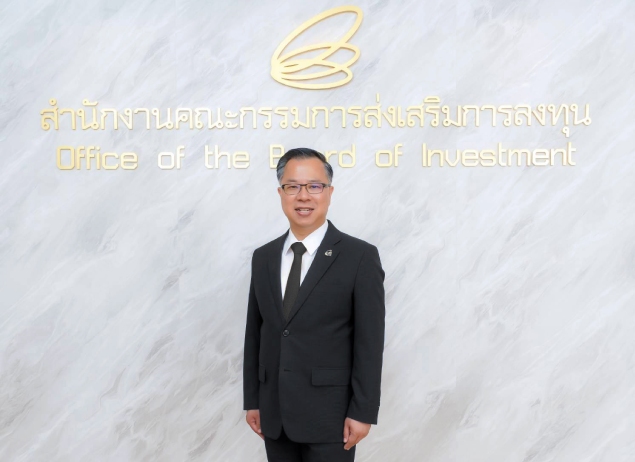
The BOI reported a sharp rise in investment applications during the first half of 2026, led by digital infrastructure.
The Board of Investment reported on 23 July that foreign and domestic applications reached about 1.47 trillion baht across 1,299 projects, up 37% from the same period a year earlier. Digital-sector applications accounted for about 1.12 trillion baht, making the composition as important as the headline total.
FDI drove most of the increase
According to the BOI release, foreign direct investment applications rose 80% year on year to about 1.37 trillion baht across 877 projects. Singapore submitted the largest value, followed by the United Kingdom, China, Taiwan and Japan.
Those origin rankings need context. Corporate structures, project size and sector concentration can produce large swings. The more useful takeaway is that investors from several major markets continue to evaluate Thailand for digital, electronics, automotive, food, logistics and advanced-industry activity.
Digital infrastructure dominated the pipeline
Data centres, hosting and cloud services were central to the first-half surge. This fits Thailand’s effort to build digital capacity for companies serving domestic and regional markets. Related demand extends beyond server buildings to power, cooling, networks, engineering, security and professional services.
The concentration also creates questions. Data centres require significant infrastructure and can be capital intensive without employing as many people per baht as some labour-heavy industries. Property buyers should therefore focus on the mix of headquarters, technical teams, suppliers and service companies that develops around the investment, not the capital value alone.
Digital projects dominated the value of first-half applications, but investors should distinguish approvals and applications from completed operations.
Other sectors broaden the story
The BOI also reported applications in electrical appliances and electronics, agriculture and food processing, logistics and high-value services, automotive production, materials, chemicals and automation. This breadth matters because a resilient economy is less dependent on one project type.
Energy investment accompanied the digital pipeline. The BOI counted 198 clean-energy initiatives within the first-half energy and utilities applications. Reliable, cleaner power and grid capacity will be important if Thailand is to convert digital interest into operating assets over time.
Applications are not completed investment
The BOI figures include several distinct stages. Applications indicate interest, while promotion approvals represent another point in the process. The agency separately reported approvals for 1,300 projects valued at about 1.31 trillion baht in the first half.
Neither figure means that every baht has already been spent. Projects still require land, permits, utilities, financing, construction, equipment and hiring. For property analysis, announcements should be followed by implementation milestones and evidence of sustained business activity.
Employment is the bridge to housing demand
The BOI said projects approved in the first half are expected to generate more than 82,000 jobs. The property relevance depends on where those jobs are located, the skills and incomes involved, and whether employees choose central Bangkok, suburban nodes or locations near industrial estates.
Bangkok can benefit as the country’s headquarters, finance, legal, consulting, education and international-services hub even when physical projects sit elsewhere. Senior staff, regional teams, vendors and visiting specialists may support rental and owner-occupier demand, but the effect will vary sharply by district and transport corridor.
For Bangkok property, the durable signals are implementation, skilled hiring, supplier activity and sustained international business presence.
What Bangkok property buyers should monitor
First, look for confirmed office expansion and sustained hiring rather than treating a national application total as a city-wide rent forecast. Second, watch infrastructure delivery, especially power, digital networks and transport. Third, identify districts that connect efficiently to major employment and airport routes.
Buyers should also follow actual leasing conditions. Comparable rents, vacancy, tenant profiles and competing completions remain more reliable for a particular condo than macroeconomic headlines. Strong national investment interest can support confidence while a poorly selected unit still underperforms.
A positive signal, not an investment guarantee
The first-half figures show that Thailand remains capable of attracting substantial project interest during a period of global uncertainty. The digital share points to a more technology-intensive investment cycle, while the broader sector mix provides supporting depth.
For foreign Bangkok property buyers, the disciplined conclusion is constructive but measured: follow the pipeline into operations, jobs and recurring corporate activity, then connect that evidence to specific residential markets. Do not substitute national capital applications for property-level due diligence.
Thailand’s government has placed transport connections back at the centre of its economic programme. In July 2026, the Ministry of Transport set out a direction covering 262 projects, while the Prime Minister later emphasised faster work on missing road and rail links as the wider southern Land Bridge approach is reviewed.
Rail plans matter to property buyers only when funded projects improve a resident's complete door-to-door journey.
For Bangkok property buyers, this is a signal to watch implementation rather than a reason to chase speculative maps. Better-connected infrastructure can support business activity and daily mobility, but the value of a condominium still depends on the exact station, street, building and purchase price.
What the July transport direction says
The ministry’s programme describes rail as a core network, supported by roads, waterways and aviation. Bangkok-related priorities include missing rail connections between Bang Sue, Phaya Thai, Makkasan, Hua Mak and Hua Lamphong, together with suburban Red Line extensions and other national transport projects.
Road priorities include motorways, expressways, ring roads and links intended to reduce bottlenecks. National rail and port projects are designed to improve passenger and freight movement beyond Bangkok. The common policy theme is connection: extracting more value from networks by closing gaps between them.
The Land Bridge is being reviewed, not a condo sales claim
On 22 July, the government said agencies should review the proposed southern Land Bridge approach while accelerating infrastructure that can be implemented sooner, particularly missing road and rail links. Buyers should avoid treating preliminary policy language as a completed investment decision.
The prudent distinction is between a strategic idea, an approved project, a funded contract, construction progress and an operating service. Each stage has a different level of certainty and a different time horizon. Property pricing should not assume that every announced benefit arrives on schedule.
The July transport direction puts greater emphasis on completing connections between existing networks.
Why national logistics can matter to Bangkok
Bangkok is Thailand’s principal corporate, financial and service centre. More efficient national transport can support trade, tourism, supply chains and business formation that use the capital for headquarters, professional services and regional management. That is the broad confidence channel relevant to housing demand.
The effect is indirect. A logistics announcement does not guarantee condominium appreciation or rent. Employment must be created, companies must occupy space and residents must choose particular neighbourhoods. Investors should look for evidence in office activity, hiring, household formation and actual transport use.
Bangkok rail gaps deserve close attention
Missing links inside the capital could improve interchange options and reduce fragmented journeys if they proceed as described. Stations that connect several systems may become more convenient for residents travelling between business districts, airports and suburban employment centres.
However, proximity measured on a map can mislead. Access depends on entrances, walking conditions, platform changes, service frequency and the complete journey. A project several years from operation should be discounted for delay, disruption and design change.
Construction can create short-term costs
Infrastructure work may bring noise, dust, traffic diversions and difficult pedestrian routes before benefits arrive. Some units face works directly while others gain accessibility with less disturbance. Buyers should inspect active sites and ask how construction logistics affect the exact frontage.
Future access can also attract new condominium supply. That may improve neighbourhood services but create rental and resale competition. An investor should examine planned projects, developable land and unit mix rather than assuming every home near a transport scheme becomes scarce.
Buyers should distinguish an operating station from a study, policy statement, tender or construction programme.
A practical infrastructure checklist for buyers
Identify the responsible agency and current project stage.
Separate policy, study, approval, tender, construction and operation.
Use conservative timing and allow for change.
Walk the exact route to existing and proposed access points.
Assess construction disturbance and future competing supply.
Test rent and resale without the infrastructure upside.
Track official updates instead of relying on sales graphics.
Monitor delivery through official agency updates, budget decisions, procurement notices and construction milestones. Repeated marketing claims without a traceable project stage should not be priced into a purchase.
Thailand’s transport direction supports a long-term case for connectivity, but disciplined buyers still begin with present-day usability. The strongest purchase is one that works now and may improve later—not one that depends entirely on an unbuilt line or a national headline.
Thailand’s engagement with European business leaders intensified in Bangkok in mid-July 2026. The meetings matter to property investors because sustained corporate activity can influence skilled employment, executive mobility and confidence in Bangkok as a regional operating base.
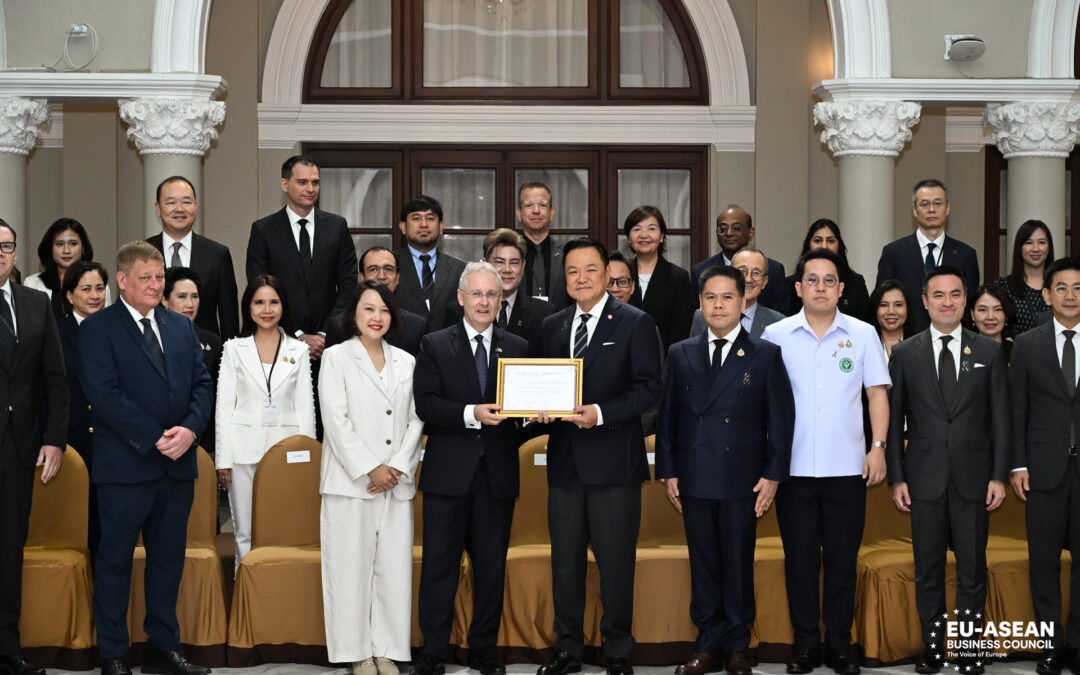
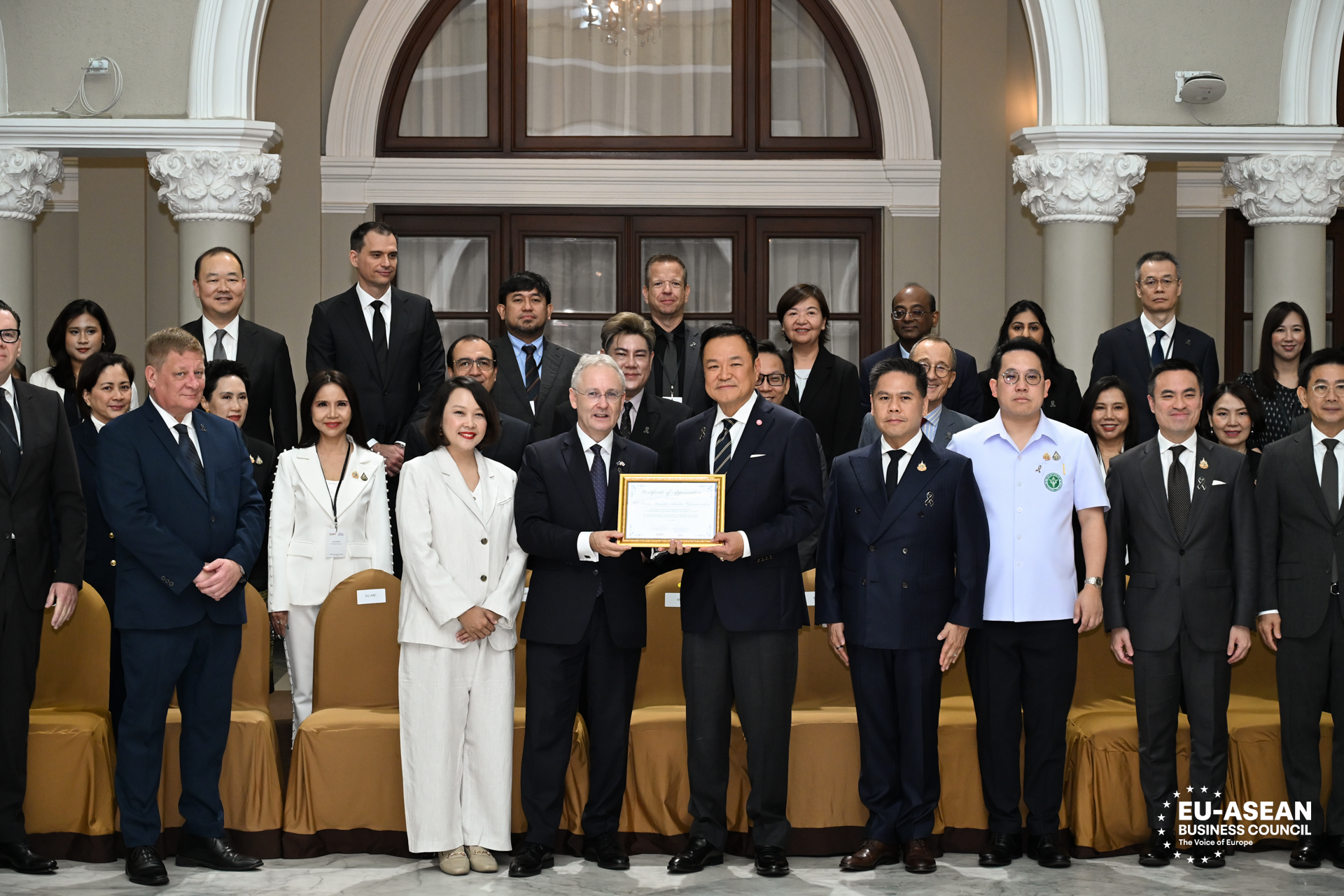
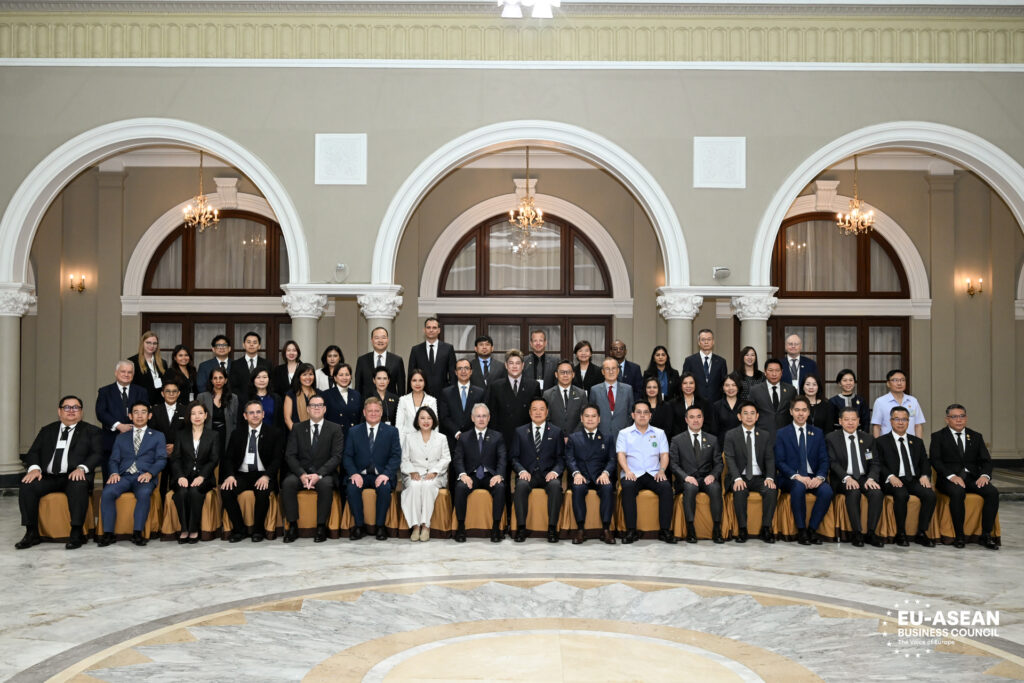
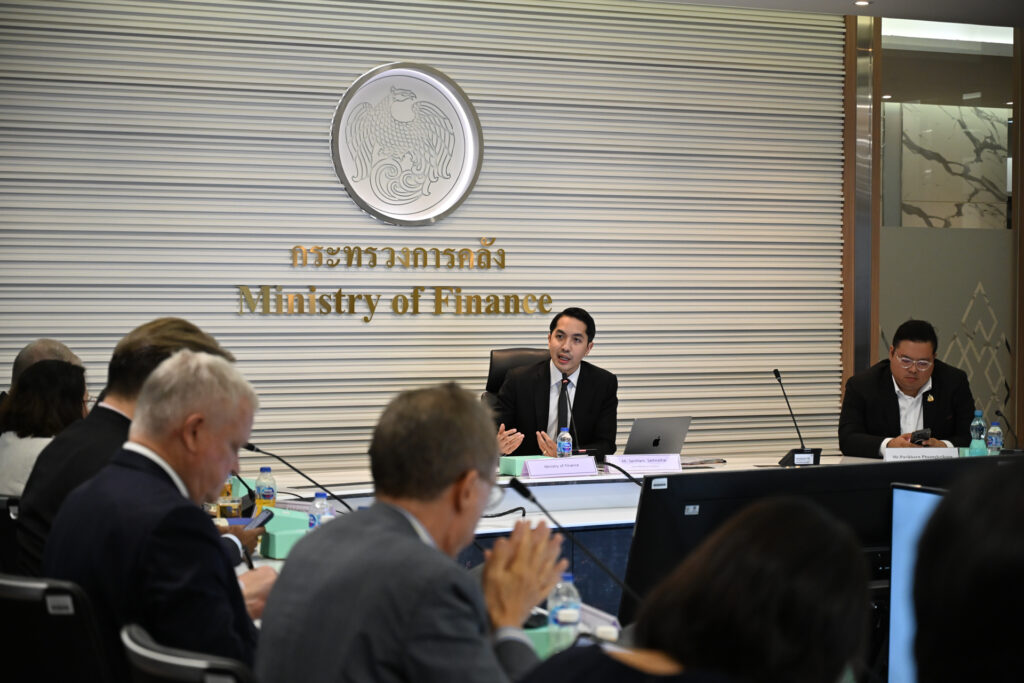
A three-day European business mission brought corporate leaders into direct talks with Thai policymakers in Bangkok.
That connection should be treated carefully. A policy meeting does not create immediate condo demand, and an active trade negotiation is not a completed agreement. The useful signal is that government and business are discussing the practical conditions needed for longer-term investment.
What happened in Bangkok
On 16 July, Thailand’s Prime Minister met executives from more than 40 European companies, according to the government’s official account. The meeting formed part of a three-day EU-ASEAN Business Council mission to Bangkok involving senior Thai officials and European corporate representatives.
The discussions covered trade, investment and the business environment. European participants represented areas including manufacturing, healthcare, consumer industries, financial services and the digital economy. The delegation also held meetings touching on customs, energy, public health, commerce and monetary policy.
FTA momentum is one part of the story
Both Thai officials and European business representatives expressed support for progress on the Thailand-EU Free Trade Agreement. The EU Council was still describing negotiations with Thailand as ongoing at its May 2026 trade meeting, so investors should not treat the July dialogue as completion.
The business case extends beyond tariffs. Participants highlighted market access, customs efficiency, investment protection and cooperation in green and digital activity. Those operating details can influence whether companies expand teams, add facilities or deepen regional functions in Thailand.
The discussions covered investment conditions, regulation and opportunities in green and digital industries.
Thailand presented an investment reform agenda
The government’s account highlighted digital infrastructure, artificial intelligence, clean energy, transport and logistics. It also referred to the Thailand FastPass programme, OECD accession and a plan to update outdated laws and regulations.
For investors, implementation matters more than the length of the agenda. Useful future evidence would include clearer procedures, project approvals turning into operating activity, local hiring, training, supplier contracts and expansion by established companies.
Why Bangkok remains central
Bangkok concentrates corporate headquarters, professional services, embassies, international schools, private healthcare, air links and a large urban labour market. When international businesses assess Thailand, many decision-makers and specialist teams pass through or base themselves in the capital.
This can support diverse housing needs, from centrally located rental condos to larger homes suited to relocating families. Demand is not uniform. Office location, travel policy, assignment length, school choices and employer budgets determine which districts and buildings benefit.
Policy dialogue is an early signal; property investors should look for implementation, hiring and operating activity over time.
Green and digital investment can reshape demand
European businesses emphasised low-carbon manufacturing, digital infrastructure, healthcare, life sciences, sustainable food systems and resilient supply chains during the mission. Growth in these areas can add technical, managerial and professional roles across Thailand.
Some employees may live near established Bangkok business districts; others may prioritise airport or motorway access to industrial locations. Investors should map real workplace patterns instead of assuming that every new project creates demand in the city centre.
Signals foreign property buyers can monitor
Concrete progress in the Thailand-EU negotiation process.
Published regulatory changes and faster operating approvals.
New European regional offices or expanded local teams.
Hiring in digital, healthcare, engineering and professional services.
Office take-up and relocation activity in relevant Bangkok districts.
Residential leasing evidence from comparable units.
Infrastructure delivery that improves real commuting patterns.
These indicators should be reviewed as a sequence. A memorandum or meeting may be followed by approvals, capital expenditure, recruitment and only later by sustained housing demand. Property decisions made before that chain is visible require a wider margin of safety.
The July meetings strengthen the evidence that Thailand is actively courting high-quality international business and listening to operational concerns. They do not guarantee an investment outcome or a property cycle. For condo buyers, the disciplined approach is to connect national policy with observed company activity and building-level rental evidence.
Thailand’s July 2026 engagement with China combined government diplomacy, corporate meetings and a new investment-promotion presence in western China. For Bangkok property buyers, the relevance is not a direct price prediction. It is the longer-term link between international investment networks, skilled employment, business travel and the capital’s role as Thailand’s main corporate gateway.
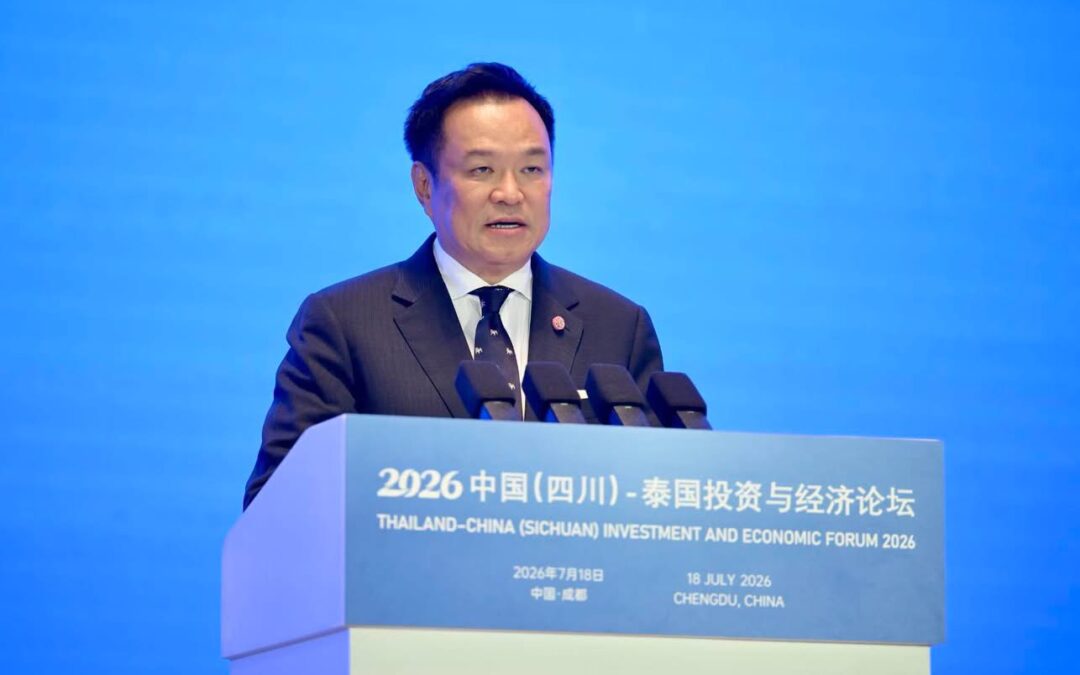
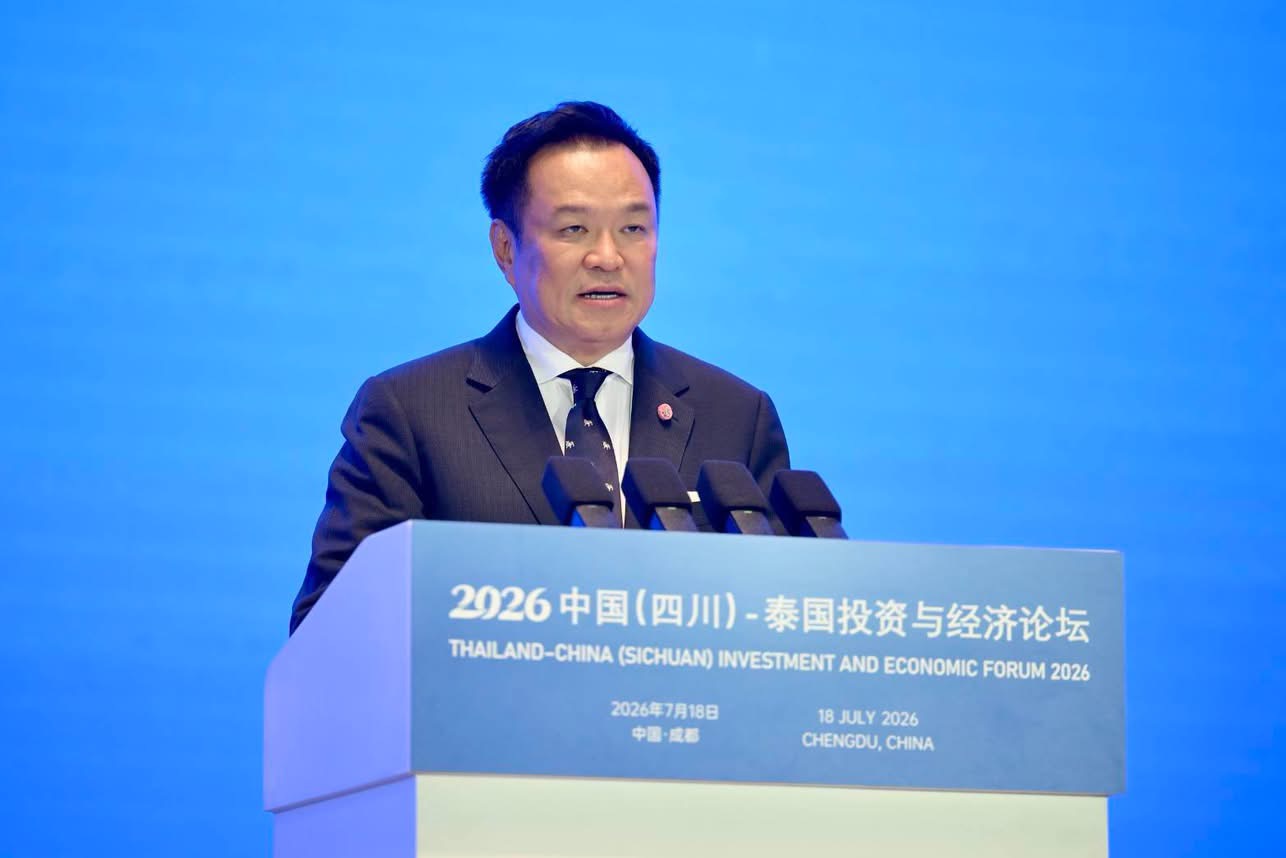
The Prime Minister opened the forum and the new BOI section in Chengdu on 18 July 2026.
The useful investor response is to separate completed institutional steps from future ambition, then watch whether company interest becomes operating activity. National investment momentum can support Bangkok, but individual condo performance still depends on entry price, building quality and a real resident market.
What happened in Chengdu
Thailand’s Government Public Relations Department reported that the Prime Minister opened the Thailand-China (Sichuan) Investment and Economic Forum and a new Board of Investment section in Chengdu on 18 July 2026. The event was held at the Tianfu International Convention Center.
The official account says more than 750 people attended, including over 150 representatives from Thai private businesses. Sectors represented included food, clean energy, healthcare and wellness, chemicals, automotive, industrial estates and banking.
Corporate engagement focused on target industries
The Prime Minister also met executives from companies including Xiaomi, ChangAn Automobile, InnoLight Technology and Eoptolink Technology. The announcement describes discussions around Thailand’s target industries rather than confirmed projects from every participant.
The official visit included talks on green, digital and technology cooperation alongside wider bilateral ties.
That distinction matters. Meetings and forums can open channels, clarify policy and identify opportunities, but buyers should wait for company announcements, regulatory approvals, construction, hiring and operating evidence before assuming a local property effect.
The new BOI presence expands the investment network
Opening a BOI section in Chengdu gives Thailand a dedicated investment-promotion point in western China. The region contains significant technology, manufacturing, consumer and tourism activity, while Thailand presents itself as an ASEAN production and services base.
The government framed its approach around faster procedures, stronger business and workforce capability, and domestic economic development. Those priorities indicate the intended direction. Their impact should be judged through implementation and measurable investment outcomes over time.
Wider talks included future industries
Separate official accounts of the visit describe cooperation discussions covering the green economy, science, digital technology and artificial intelligence. Talks in Beijing also included electric vehicles, healthcare, environmental protection and clean energy.
The two sides also discussed trade, future industries, technology and sustainable development.
These fields matter to Bangkok because the capital concentrates headquarters, finance, professional services, international education, healthcare and air connectivity even when a factory or energy project is located elsewhere. Executives and specialist teams often use Bangkok as a regional operating base.
How economic links can reach the property market
Corporate investment can influence housing through employment, relocations, supplier activity and business travel. The effect is strongest where a project creates sustained jobs and where a district offers suitable transport, services and homes for the relevant workforce.
However, national investment announcements do not make every Bangkok condo investable. A unit far from the resident’s routine, priced above comparable stock or poorly managed may not benefit. The property connection must be demonstrated at district and building level.
Bangkok’s gateway role is broad but uneven
International firms often need legal, banking, consulting, technology, logistics and recruitment support. Bangkok concentrates many of these services, together with airports, hotels, meeting venues and international schools. This can reinforce the city’s usefulness even when new industrial capacity is developed in another province.
The housing effect will still vary by company and worker. Senior executives, project teams, local specialists and visiting partners may choose different districts and housing formats. Investors should identify a credible resident route from business activity to the exact building rather than assume all foreign investment creates premium-condo demand.
What foreign buyers should monitor next
Named investment applications and approvals tied to the engagement.
Company announcements on Thai facilities, offices or hiring.
Implementation evidence from faster investment procedures.
Growth in skilled employment and business-service activity.
Transport and service districts used by the relevant workforce.
Achieved rents and vacancy in shortlisted buildings.
Use the news as context, not a shortcut
The forum strengthens Thailand’s institutional and corporate links with a major economic partner. It also supports Bangkok’s narrative as a connected base for international business. Those are constructive signals, but they should sit beside conservative property underwriting.
For a shortlisted unit, ask what employment or service cluster supports demand today, how much competing stock serves the same residents and whether achieved leasing evidence confirms the story. Revisit those checks as investment announcements progress from meetings to approvals, construction and hiring.
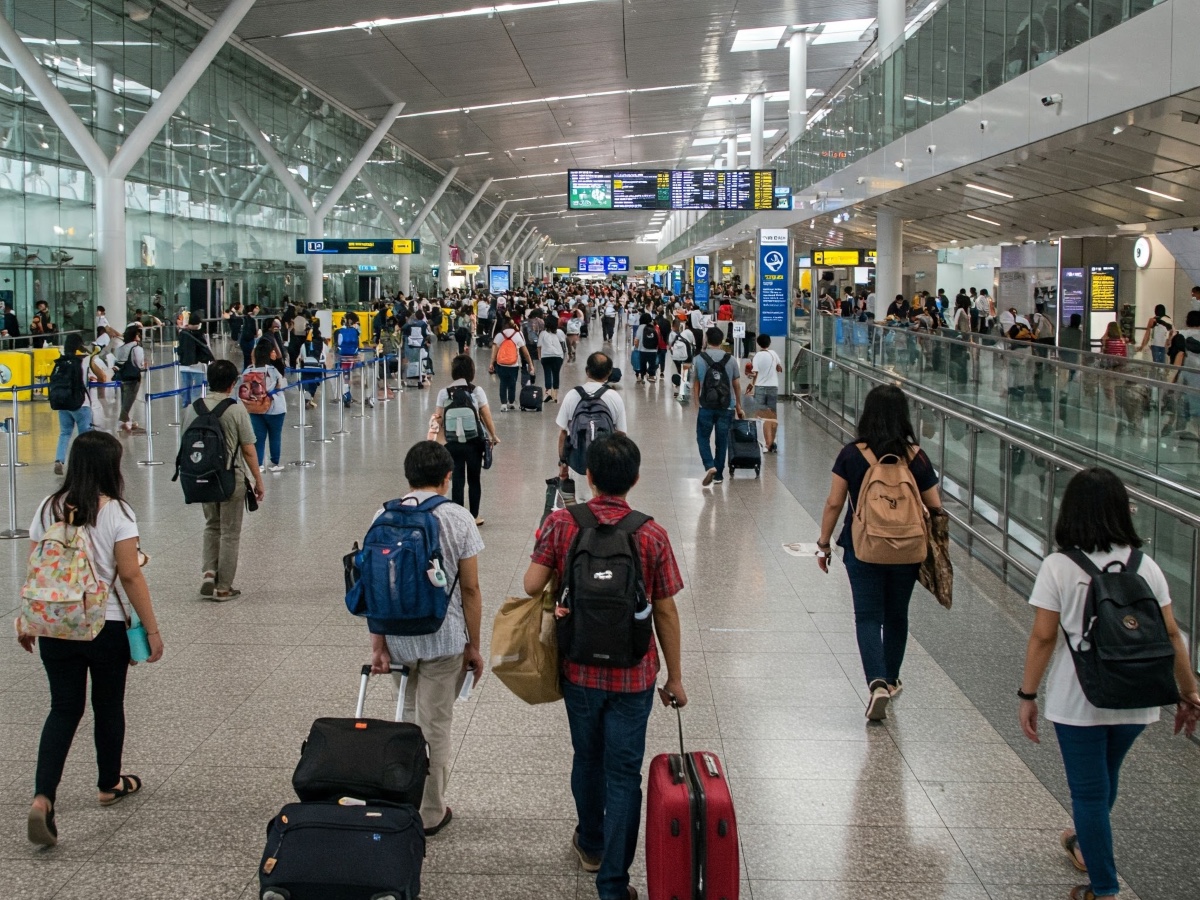
Thailand is accelerating operational improvements at Suvarnabhumi Airport, with passenger flow, inter-agency data sharing and immigration technology at the centre of a review announced by the Tourism Authority of Thailand on 17 July 2026.
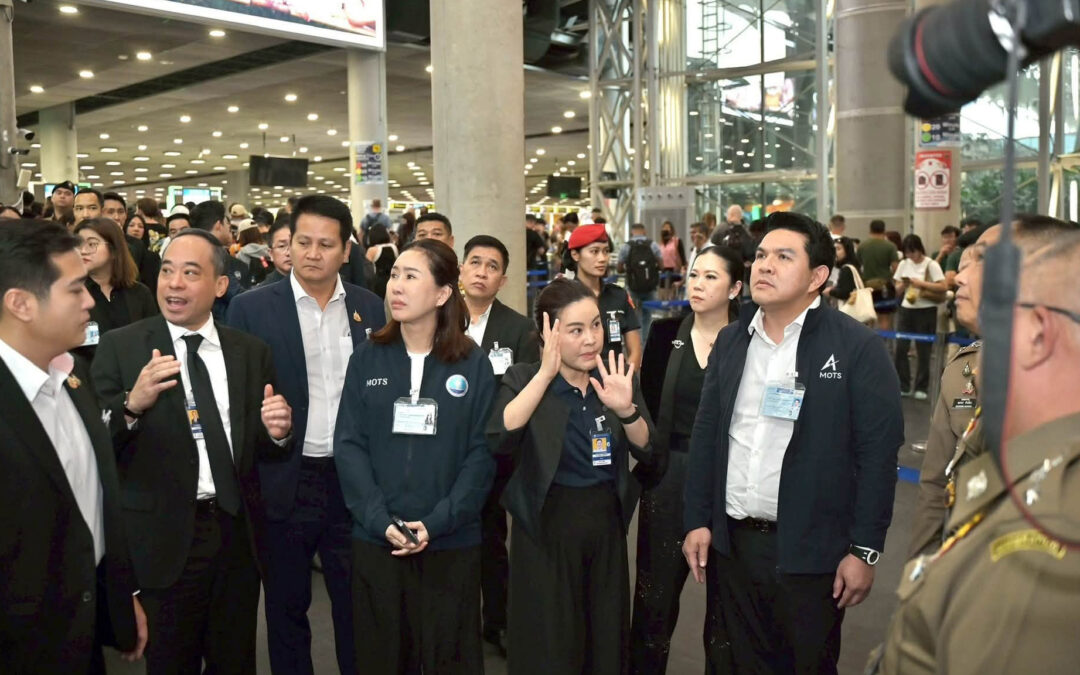
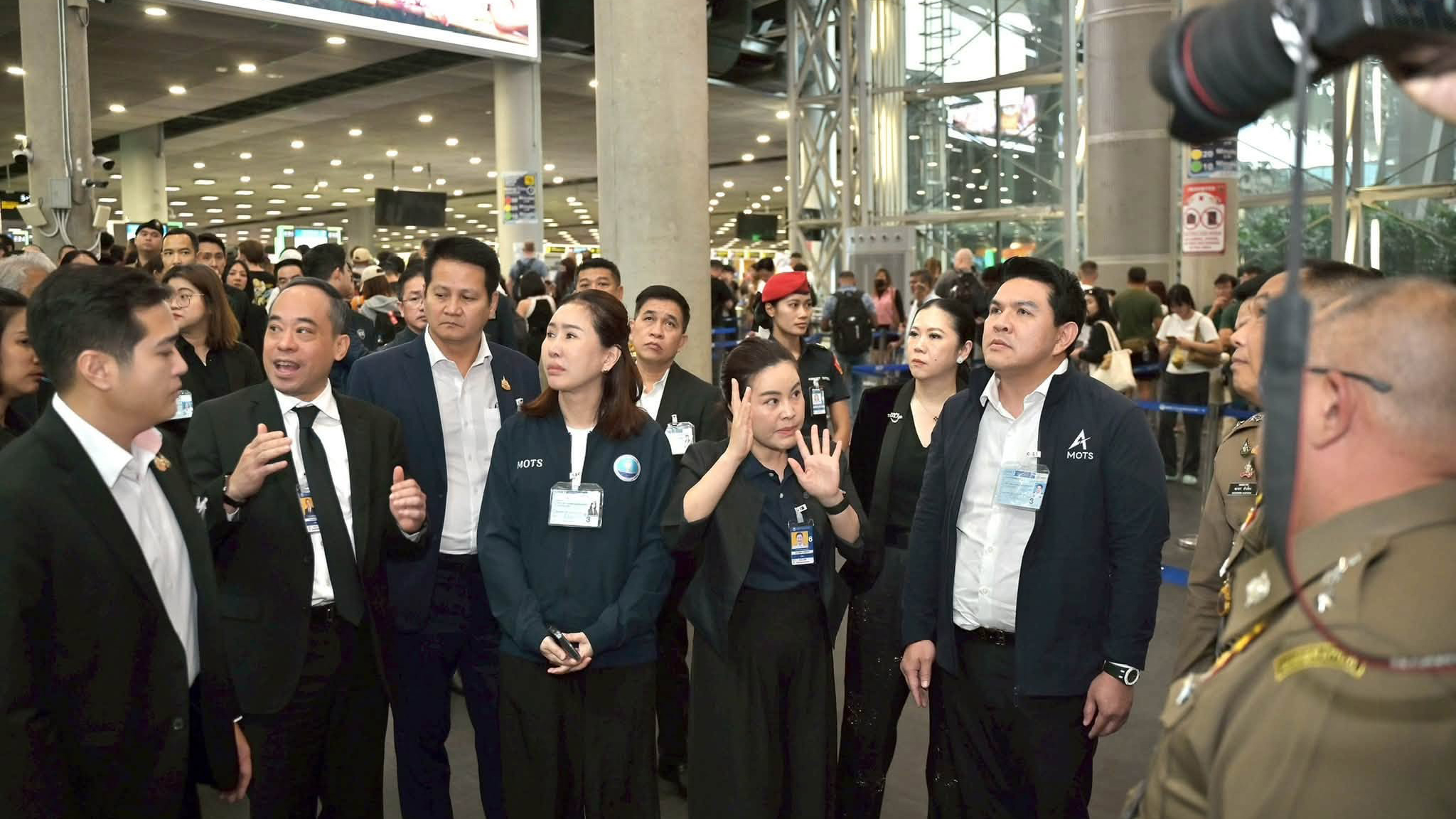
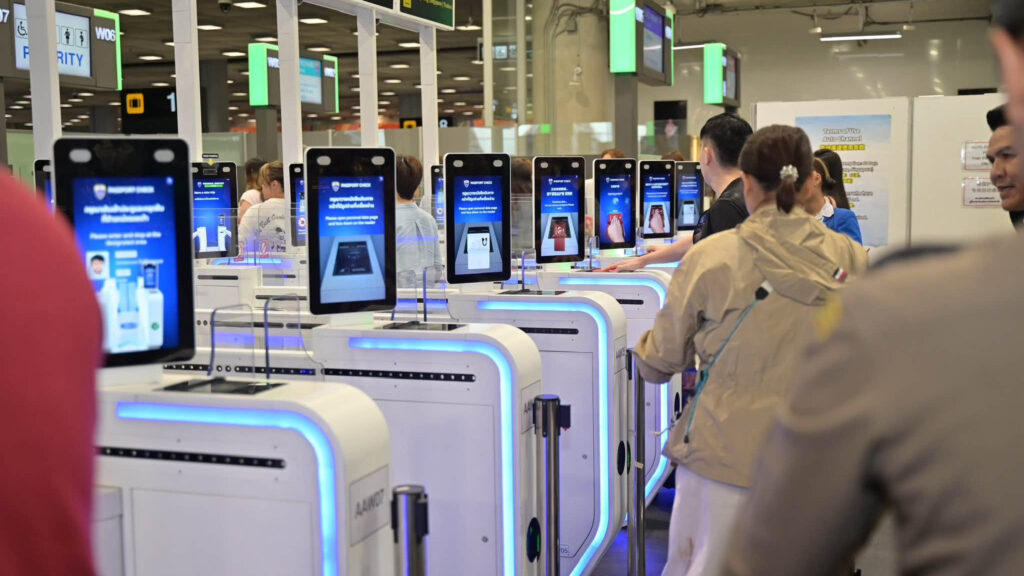
A multi-agency review on 16 July 2026 focused on passenger flow, coordination and service standards.
The programme matters to Bangkok property as part of the city’s international-connectivity story. A smoother gateway can support visitor confidence, business travel and Thailand’s premium positioning. It is not, by itself, a reason to expect higher condominium prices, and investors still need evidence for the exact district and unit.
What the official announcement covers
TAT said the Tourism and Sports Minister led a strategic review and operational inspection at Suvarnabhumi on 16 July. The Ministry of Transport, TAT, Department of Tourism, Tourist Police Bureau, Immigration Bureau and Airports of Thailand participated.
The agencies reviewed congestion management, passenger movement and service coordination. The stated approach builds on existing work rather than presenting a new terminal or rail project. Its focus is how the gateway operates for travellers now and through the next technology phase.
Data sharing is part of the capacity response
The release says agencies will strengthen real-time exchange of flight schedules and passenger-volume information. Better data can help staffing respond to peaks and allow airport, immigration and tourism services to coordinate more quickly when pressure builds.
Operational capacity is not only a question of floor area. Queue design, staff deployment, temporary waiting space and timely information can affect how effectively existing facilities handle demand. The review also covers passenger movement through immigration and other busy points.
The programme includes stronger data sharing, queue management and operational coordination at busy points.
Biometrics and automated channels are expanding
Technology is a central element. TAT reports that biometric identity checking will be expanded and automated passport-control capacity increased. At the time of the announcement, those channels were available to eligible passport holders from Singapore and Hong Kong.
The second phase is scheduled to begin in September 2026, and authorities will consider eligibility for travellers from other lower-risk markets. The official release says expanded automated-channel capacity is expected to reduce congestion in immigration areas by more than 50 per cent. That is an operational expectation to watch, not a completed result.
Why gateway quality matters to Bangkok
For an international buyer, the airport is often the first and last experience of the city. Predictable arrival, immigration and baggage processes make short business visits, viewing trips and repeat travel easier to plan. They also matter to executives, tourists, conference delegates and families moving between Bangkok and overseas markets.
Bangkok’s global appeal rests on a network: air services, airport access, urban rail, roads, hospitality, healthcare, retail and professional services. Improving one part can strengthen the whole journey, although the benefit will vary by traveller and location.
Expanded biometric and automated passport-control capacity is central to the announced improvements.
The property connection is indirect
Airport service improvements can reinforce confidence in Bangkok as a connected regional city. They may support hospitality, meetings, retail and corporate activity that feed the wider urban economy. However, an airport announcement does not establish rental demand for a particular condominium.
Investors should ask which tenant groups genuinely value frequent air access, how they travel to the airport and whether the unit also works for everyday life. A home still needs a defensible price, suitable layout, maintained building and realistic rent.
Different districts use connectivity differently
Residents near the Airport Rail Link may value a rail-led journey, while others choose expressways, taxis or private transport. Central business districts can benefit from broad international connectivity even when they are not geographically closest to Suvarnabhumi. East-Bangkok locations may offer road access but require careful peak-time testing.
Buyers should make the actual trip from a shortlisted building with luggage at a relevant time. Include the first and last mile, transfers, waiting and resilience when one route is disrupted. A map distance is not a complete connectivity measure.
What foreign buyers should monitor
First, watch whether the September phase begins as scheduled and which travellers become eligible. Second, look for measured changes in queue performance rather than relying only on targets. Third, track how flight schedules, passenger demand and ground transport interact with the service programme.
For property decisions, compare these gateway signals with leasing evidence, employment anchors and resident services. Connectivity is most valuable when it complements a neighbourhood that already works on ordinary weekdays.
A disciplined way to use the news
Treat the announcement as operational infrastructure context.
Distinguish scheduled measures from completed outcomes.
Test the real airport journey from a shortlisted building.
Identify tenants or residents who genuinely value air access.
Verify unit economics independently of the airport narrative.
Monitor the September technology phase and measured results.
Suvarnabhumi’s service programme supports Bangkok’s long-term case as an accessible international city, while careful property selection remains decisive. Read IBP’s infrastructure coverage and Thailand economy and investment news, or contact IBP Real Estate to connect citywide signals with a defensible shortlist.
Thailand’s tourism authorities are preparing a 2027 direction centred on value over volume. The Government Public Relations Department reported that the Tourism and Sports Minister opened the Tourism Authority of Thailand Action Plan 2027 meeting in Bangkok on 13 July 2026, setting out a push for higher-value, balanced and more resilient tourism growth.
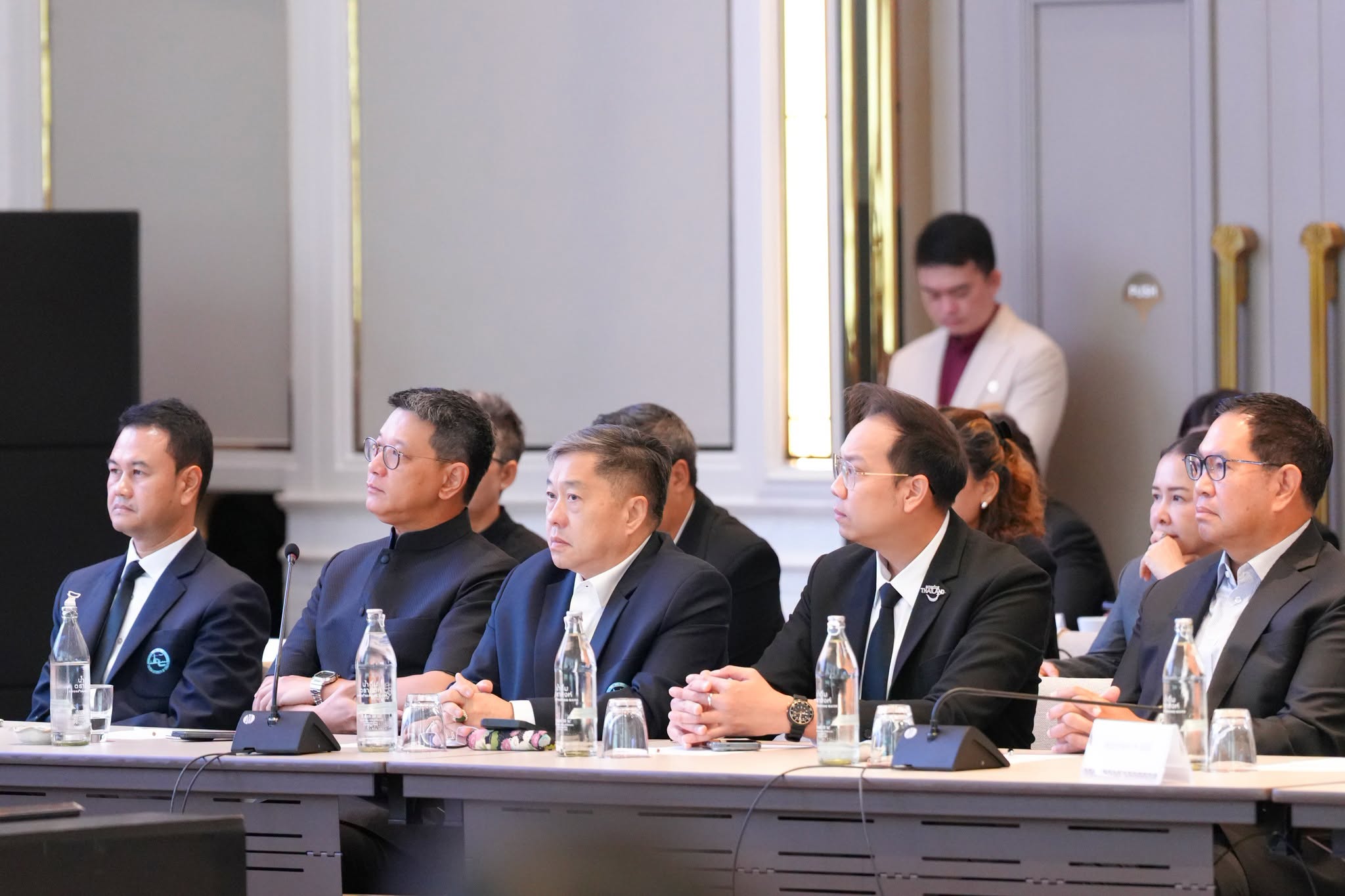
Thailand’s tourism leadership met in Bangkok to set a value-over-volume direction for 2027.
This is relevant to Bangkok property because tourism supports a wide urban economy: hotels, restaurants, retail, wellness, culture, transport, events and professional services. It is not a forecast that condominium prices will rise. Foreign buyers should treat the plan as a confidence and positioning signal, then return to evidence for the exact district and building.
What the official direction says
The government release describes four broad strategic themes for TAT. “Shape market portfolio” focuses on high-value target markets. “Shape experience platform” moves from selling travel commodities towards value-driven experiences throughout the year. “Shape new growth engine” includes life economy, creative culture, subculture and sustainable tourism. The fourth theme concerns TAT’s own transformation into a high-performance organisation.
The announcement also emphasises information, technology, innovation, competitiveness and cooperation across the sector. TAT is expected to announce its 2027 marketing promotion plan in August 2026. Buyers should therefore understand the July statement as direction-setting; detailed campaigns and measurable outcomes will require later evidence.
The official direction combines high-value markets, year-round experiences, innovation and resilience.
Why value over volume matters
A volume-led tourism story counts arrivals. A value-led approach asks how visitors spend, how long they stay, which experiences they use and whether growth supports durable businesses and communities. For Bangkok, that can reinforce premium hospitality, dining, wellness, design, retail and cultural sectors that also shape resident liveability.
Higher-value visitors often expect reliable transport, quality accommodation, strong healthcare, safe public environments and internationally legible service. Investment in those capabilities can benefit residents as well as travellers. The property link is indirect but meaningful: a city that works well for demanding visitors can become easier to understand for executives, entrepreneurs, long-stay residents and regional families.
Bangkok is central to the premium-city story
Bangkok concentrates gateways, corporate offices, major hotels, restaurants, shopping, medical services, convention space and cultural venues. It can serve as both a destination and the first point of contact with Thailand. A visitor who returns for business, healthcare, events or lifestyle reasons may develop a deeper relationship with the city than a one-off leisure traveller.
That does not mean every tourist becomes a tenant or buyer. The more defensible property connection comes through employment, business formation, repeat travel and long-stay demand around real urban anchors. Districts with transport depth, established services and maintained public environments are better placed to translate a national strategy into everyday relevance.
For property buyers, the relevance lies in sustained business activity and premium city positioning, not a guaranteed price effect.
Year-round experiences can support steadier activity
The official plan’s 365-day experience theme aims to reduce reliance on a narrow seasonal proposition. Bangkok already has an advantage here because dining, shopping, wellness, healthcare, culture and events can operate across the year. Seasonal campaigns can add another reason to visit without requiring the city to depend only on weather.
For landlords and investors, steadier urban activity may be more useful than a short visitor spike. Yet ordinary residential condominiums should be underwritten on lawful, building-compatible rental demand rather than hotel-style occupancy assumptions. A strong tourism environment supports confidence; it does not override lease rules or due diligence.
Creative culture and wellness strengthen liveability
The life-economy and creative-culture themes matter beyond tourist spending. Wellness services, food, design, music, craft and cultural programming help make Bangkok attractive for residents who could choose among regional cities. They also give neighbourhoods a recognisable identity and can widen the reasons people stay longer.
Foreign buyers should look for genuine ecosystems rather than slogans. Check whether a district offers accessible healthcare, parks, dining, daily retail, transport and community life. Premium positioning is most resilient when these elements are already used by residents, not only planned for future visitors.
How property buyers should use the announcement
First, treat the plan as national context. It shows that tourism policy is prioritising quality, innovation, year-round experiences and resilience. Second, identify which Bangkok sectors and locations have a credible connection to those themes. Third, verify unit-level economics: purchase price, rent evidence, common costs, management, tenant audience and resale competition.
A buyer should not pay a premium simply because a project uses words such as wellness, culture or luxury. Inspect the service model, operating cost and real neighbourhood. If the unit works only when tourism targets are fully achieved, the investment case is too dependent on one policy narrative.
Signals to watch next
The detailed TAT 2027 marketing promotion plan expected in August 2026.
Campaigns aimed at high-value and repeat visitors.
Evidence of year-round events and experience development.
Business investment in hospitality, wellness, retail and culture.
Transport and public-realm improvements supporting city use.
Actual long-stay, employment and leasing evidence in relevant districts.
Thailand’s high-value tourism direction strengthens Bangkok’s case as a premium, globally connected city, but careful property selection remains essential. Read IBP’s Thailand economy and investment news and investment analysis, or contact IBP Real Estate to connect macro signals with a defensible Bangkok shortlist.
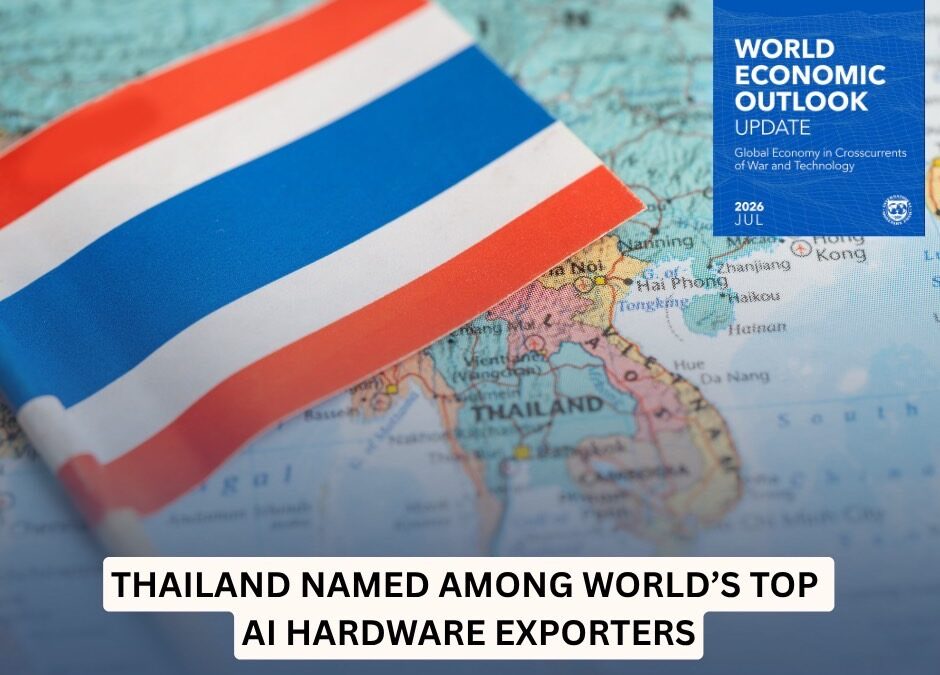
Thailand has been identified by the International Monetary Fund as one of four leading exporters of hardware linked to artificial intelligence, alongside Korea, Malaysia and Taiwan Province of China. The finding appears in the IMF’s July 2026 World Economic Outlook Update and places Thailand inside a technology investment cycle that extends beyond consumer electronics.
Thailand’s government highlighted the country’s place in the IMF’s group of four leading AI-hardware exporters.
For foreign buyers of Bangkok property, the relevance is indirect but important. Advanced manufacturing, data infrastructure and technology services can support skilled employment, corporate activity and long-term demand for a well-connected capital. The ranking is not a promise of condo price growth, and buyers should resist turning a national trade signal into a guaranteed return for a particular building.
What the IMF classification means
The IMF groups Thailand with the other three economies using a defined set of trade codes covering computing equipment, storage and components used in semiconductor production and advanced electronics. In its July update, the IMF noted that economies closely integrated into the global technology value chain had received some support from strong AI-hardware exports.
This is a narrower statement than saying every Thai technology company is an AI business. It shows that Thailand participates materially in the physical supply chain enabling data centres, computing and related equipment. The distinction matters because durable economic benefit depends on how much value, expertise, local procurement and workforce development are built around that production.
Government policy is aimed at a deeper ecosystem
On 12 July 2026, Thailand’s Government Public Relations Department highlighted the IMF finding and linked it to work on digital and energy infrastructure, skills, research, innovation and investment facilitation. It also referred to the National Semiconductor Policy Committee and the aim of moving from an established electronics base towards higher-value AI and semiconductor activity.
The direction is credible only if implementation keeps pace with investment. Power availability, clean-energy access, water management, logistics, technical education and regulatory clarity are all part of the proposition. For property investors, these conditions matter more than a single promotional slogan because they influence whether projects become operating businesses with lasting jobs.
Recent BOI approvals show investment moving across data hosting and advanced-electronics supply chains.
Recent BOI approvals add practical detail
The Thailand Board of Investment said on 8 July that nine approved projects totalled USD 1.99 billion, or 66.3 billion baht, across AI, advanced electronics, aviation, clean energy and food. The technology approvals included GPU server infrastructure for data hosting in Bangkok and Pathum Thani, as well as materials used in printed circuit boards in Samut Prakan, Chonburi and Chachoengsao.
The same announcement described a strengthened screening framework for data-centre investment, with attention to resource use, environmental impact and clean-energy sourcing. This is significant. Technology investment can strengthen Thailand’s economy, but infrastructure-heavy projects need transparent resource planning if their benefits are to remain sustainable.
Why Bangkok remains central
Even when factories are located in surrounding provinces, Bangkok acts as a centre for management, finance, legal work, professional services, international education, healthcare and transport. Regional headquarters and senior teams often choose the capital because it offers depth across these functions and direct connections to the wider metropolitan economy.
The BOI announcement also names Bangkok and Pathum Thani for data-hosting investment, showing that the digital economy is not only an industrial-estate story. Over time, a broader technology cluster can support housing demand among engineers, managers, consultants and entrepreneurs. That demand will still be selective, favouring locations with reliable transport, liveability and buildings that suit long-stay residents.
The property relevance comes through durable employment and business formation, not a simple export-ranking headline.
What property buyers should monitor
First, track whether announced projects reach construction and operation. Approval value is not the same as completed investment. Second, watch the quality and location of jobs created. A project that develops technical capability and local management may influence housing demand differently from a highly automated facility with limited staffing.
Third, follow infrastructure constraints and responses, particularly electricity, clean-energy procurement and water. Fourth, look for business formation around the main investments: suppliers, professional services, training and regional offices. Finally, connect any economic thesis to the exact condo. Transport, building management, unit layout, purchase price and competing supply remain decisive.
A useful confidence signal, with limits
Thailand’s position in AI-related hardware exports adds evidence that the country is participating in an important global investment theme. Combined with recent advanced-electronics and data-infrastructure approvals, it supports a more diversified story than tourism or traditional manufacturing alone.
Yet the prudent conclusion is measured. Global technology cycles can change, trade policy can shift and large projects can be delayed. Foreign buyers should treat the news as one input into long-term confidence, not as a shortcut around property due diligence or a reason to accept an inflated price.
Nestlé’s newly announced Thailand coffee investment is a useful confidence signal for foreign buyers assessing the country’s economic depth. On 9 July 2026, Thailand’s Board of Investment said it had approved a USD 688 million, or 23 billion baht, smart factory and distribution-centre project by Nestlé (Thai). The approval was made on 8 July.
Nestlé says the new facility will use advanced automation and AI-enabled systems for production and logistics.
The project is not a Bangkok condominium development, and it should not be used to predict property prices. Its relevance is broader. A major multinational is committing long-term capital, advanced production, regional logistics and skilled employment to a location within the Bangkok metropolitan economy. That supports the case for Thailand as more than a tourism destination.
What the investment includes
BOI says the greenfield facility will be located at Araya Industrial Estate in Samut Prakan province and is scheduled to start operations in the fourth quarter of 2028. It is planned to produce soluble coffee, coffee mixes and ready-to-drink beverages, with annual capacity of 170,000 metric tonnes.
Nestlé’s own announcement describes CHF 563 million of investment and says operations are expected in the latter part of 2028. The company says the site will include an advanced distribution centre intended to improve delivery times, inventory management and agility. Both releases emphasise technology, automation and AI-enabled systems.
Thailand’s BOI approved the large Nestlé smart-factory and distribution-centre investment on 8 July 2026.
Why skilled jobs and supply chains matter
BOI expects the project to create more than 520 jobs for Thai engineers and technical specialists. Nestlé gives the broader figure of more than 500 employees. For property buyers, the important point is not that every worker will live in central Bangkok. It is that internationally connected manufacturing creates layers of demand across engineering, management, logistics, suppliers and professional services.
Bangkok remains the country’s main corporate and services centre. Large investments in the surrounding metropolitan and industrial economy can support business travel, executive mobility, regional offices and demand for a city that offers housing, schools, healthcare, retail and international connectivity.
Local sourcing deepens the economic link
BOI says Nestlé plans to source USD 130 million, or 4.3 billion baht, of local agricultural inputs and raw materials each year. Nestlé’s global release describes more than CHF 100 million of local ingredients and raw materials annually. Coffee beans, sugar and fresh milk are among the inputs identified by BOI.
This makes the announcement more than an imported equipment story. It connects a multinational factory with farms, suppliers, transport, packaging, skills and exports. Nestlé also says it has supported Thai coffee farmers for decades through plantlets and programmes related to regenerative agriculture and climate resilience.
Coffee sourcing and farmer support connect Nescafé production with the wider agricultural value chain.
Technology and the BCG agenda
The project has BOI support because it aligns with Thailand’s Bio-Circular-Green economic direction. Nestlé says the plant will use next-generation coffee extraction and aroma-recovery technology, robotics and automated systems across packing, transport and inventory management. BOI frames the facility as an example of higher-value food and beverage manufacturing.
For foreign property buyers, this is a reminder to assess Thailand’s economy across several pillars. Tourism remains important, but manufacturing, agriculture, logistics, digital systems and corporate investment also shape confidence. A diversified economic story is more useful than relying on one visitor or property-market statistic.
What this means for Bangkok property
The direct property effect should be treated cautiously. The factory is in Samut Prakan, not a central Bangkok residential district, and the announcement does not establish a rent or price forecast. A buyer should still judge a condominium on entry price, location, building management, effective rent, ownership costs and resale depth.
The indirect signal is stronger. Nestlé says Thailand is one of its biggest coffee markets and notes a presence in the country exceeding 130 years. A new long-duration investment suggests continued confidence in domestic demand, regional production and Thailand’s operating environment. Bangkok benefits from being the commercial, professional and international-services hub for that wider economy.
A sensible investor reading
Treat the announcement as a macro confidence indicator, not a price forecast.
Note the combination of multinational capital, local inputs and skilled work.
Consider Samut Prakan within the wider Bangkok metropolitan economy.
Keep project timing separate from immediate condominium demand.
Use building-level rent and resale evidence for any property decision.
Buyer takeaway
The Nestlé Thailand investment adds substance to the country’s FDI and advanced-manufacturing story. It links global capital with Thai agriculture, technology, logistics and skilled employment. For Bangkok condo buyers, that supports long-term confidence in the city’s role as the service and lifestyle centre of a broader economy, while leaving the need for disciplined property selection unchanged.
Bangkok’s latest international business-event win is a useful signal for foreign property buyers watching the city’s global visibility. The Tourism Authority of Thailand said Flight Centre Global Gathering: Bangkok 2026 brought more than 2,000 high-performing travel professionals from Flight Centre Travel Group’s worldwide network to the capital from 10 to 12 July 2026.
Flight Centre Global Gathering Bangkok 2026 brought international travel professionals to the city.
For condo investors, the point is not that a single conference changes property values. It is that events of this scale demonstrate the infrastructure, hospitality, air connectivity and venue ecosystem that help Bangkok remain relevant to international travellers, companies and long-stay residents.
TAT said the gathering was projected to generate approximately 262 million baht in tourism revenue and strengthen Thailand’s visibility in long-haul markets, particularly Australia. That kind of exposure matters because overseas travel sellers influence where repeat visitors, premium travellers and event delegates go next.
Why MICE demand matters to property buyers
MICE demand – meetings, incentives, conferences and exhibitions – sits between tourism and corporate relocation. Delegates may visit for a short period, but the venues, hotels, dining areas and transport they use are the same urban systems that support expatriate living and prime condo demand.
When Bangkok hosts a large international programme, it puts districts such as Sukhumvit, Rama IV, Ratchaprasong, Sathorn, Riverside and Muang Thong Thani into practical use for global visitors. Delegates experience airport transfers, hotels, shopping centres, restaurants, event halls, riverfront venues and local tours. Some later return with family, clients or investment interest.
Property buyers should treat this as a confidence signal rather than a price forecast. A city that repeatedly handles large events is easier to explain to a foreign buyer than a market known only through holiday images.
What the event showed about Bangkok
TAT’s announcement highlighted several Bangkok strengths: air connectivity, event readiness, hospitality standards and an extensive tourism network. The programme used venues including Bangkok Marriott Marquis Queen’s Park, Hyatt Regency Bangkok Sukhumvit, UOB Live, Impact Arena and Asiatique The Riverfront.
That range is important. Bangkok is not dependent on one conference district. It can combine central hotels, large entertainment venues, riverfront spaces, cultural neighbourhoods and day tours. For property buyers, that supports the argument that Bangkok’s liveability and visitor economy are distributed across multiple high-demand zones.
Business-event readiness is part of Bangkok’s broader appeal to international markets.
Tourism quality over simple volume
TAT connected the gathering with its value-focused tourism direction and its “Healing is the New Luxury” approach. This language matters because Thailand is trying to move beyond simple visitor counts toward higher-value experiences such as wellness, culture, gastronomy, responsible travel and premium services.
For Bangkok property, higher-quality tourism can support demand for better-located residences, serviced apartments, branded residences and buildings near hospitals, wellness venues, restaurants and parks. It can also improve the city’s image among buyers who want a home base rather than a purely speculative asset.
Investors should still separate city confidence from unit selection. A strong tourism story does not make every condo a good purchase. Building quality, entry price, juristic management, tenant demand and exit liquidity remain decisive.
Long-haul visibility and the Australian link
The Flight Centre gathering is especially relevant because TAT noted the long-haul market visibility, particularly Australia. Australian visitors, executives and lifestyle buyers already understand Thailand as a holiday and retirement destination. A major travel-industry gathering deepens professional familiarity with Bangkok as an event and premium-experience city.
For property investors, long-haul confidence can support rental demand in areas used by corporate travellers, medical visitors, regional executives and lifestyle migrants. It can also increase the number of people who see Bangkok as a practical second-home city rather than a short-stay destination only.
Large travel-industry gatherings expose delegates to Bangkok venues, hospitality and urban lifestyle.
How foreign buyers should read the signal
The correct conclusion is measured optimism. Bangkok continues to attract international events, and those events use the same infrastructure that supports urban property demand. However, buyers should not use one announcement to justify overpaying or skipping due diligence.
A better response is to focus on buildings and districts that benefit from Bangkok’s global connectivity: easy airport access, strong hotel and office presence, transport links, dining, healthcare, retail and cultural amenities. These are the areas where tourism, business travel and resident liveability overlap.
Foreign buyers comparing Bangkok condos can use this news as one part of a wider confidence picture, alongside interest rates, rental evidence, project quality, legal checks and personal lifestyle fit. IBP can help shortlist buildings that align with that broader demand story. For practical next steps, explore our investment analysis and foreign buyer guides.
Thailand’s Board of Investment listed a 3 July 2026 press release titled “Thailand Secures $4.1 Billion in EV Chain Investments as Southeast Asia Auto Hub Pivots to Next-Gen Tech.” For Bangkok property buyers, the headline is not a direct condo-market forecast. It is a wider confidence signal about how Thailand is trying to position its industrial base for the next phase of regional manufacturing.
Foreign condo buyers should read this kind of announcement carefully. Industrial investment does not automatically raise rents in a specific building, and it should never replace unit-level due diligence. But it can support the broader case for Bangkok as a regional headquarters, services, finance, logistics and lifestyle base for people connected to Thailand’s corporate economy.
Corporate investment signals help buyers read the wider economy behind Bangkok housing demand.
What the BOI signal means
The verified headline points to EV-chain investment, not simply traditional vehicle assembly. That distinction matters because next-generation automotive investment can involve suppliers, engineering, logistics, software, batteries, testing, management, finance and regional coordination. Even when factories are outside Bangkok, many business decisions, professional services and international staff movements still connect back to the capital.
Bangkok is where many overseas executives arrive first, where advisers meet clients, where regional teams hold meetings, and where families often prefer to live because of schools, hospitals, international flights, shopping, dining and transport. That is why corporate investment news can be relevant to residential property, even when the physical industrial assets are in another province.
Why this matters to foreign property buyers
Most foreign buyers are not trying to predict one factory’s hiring plan. They are trying to decide whether Bangkok has enough long-term demand drivers to justify buying a condo rather than renting or waiting. A credible investment pipeline helps answer that question at a macro level. It suggests that Thailand is still competing for international capital, not relying only on tourism or domestic consumption.
This matters because Bangkok condo demand is built from several layers. There is Thai owner-occupier demand, foreign lifestyle demand, expatriate rental demand, regional business travel, medical and wellness visits, education, tourism and long-stay retirement interest. Corporate investment strengthens one of those layers by keeping skilled workers, consultants, entrepreneurs and executives connected to the city.
EV-chain investment is part of Thailand's broader push toward higher-value industry.
Do not turn macro news into a unit-level promise
The mistake is to treat national investment news as proof that any condo will perform well. Bangkok remains building-specific. A good macro story cannot rescue a weak layout, poor management, unrealistic rent, tired common areas or an entry price that already assumes perfect growth. Buyers still need to check foreign quota, title, juristic-person records, building age, tenant depth and resale competition.
Investment news is most useful as a filter for location strategy. If a buyer believes Thailand’s corporate base will keep broadening, districts with strong transport, international services and office access deserve attention. That may include established central areas, selected Sukhumvit nodes, Rama 9, parts of the riverside and locations connected to airports or mass transit. The right district depends on the buyer’s budget and holding period.
How EV investment can affect Bangkok indirectly
EV-chain investment can influence the property market through indirect channels. International suppliers may send staff to Thailand. Thai companies may expand professional teams. Banks, law firms, accounting firms, logistics groups and consultants may handle more cross-border work. Hotels, serviced apartments and condos can benefit when Bangkok remains the meeting point for those activities.
These effects are gradual. They do not appear as a sudden rent jump in every building. A sensible buyer watches for repeated signals: investment approvals, office take-up, transport improvements, airport connectivity, international school demand, healthcare growth and the ability of Bangkok districts to attract high-quality tenants. One headline is a clue, not a conclusion.
Bangkok remains the main decision-making and services hub for many regional business operations.
What buyers should watch next
Foreign buyers interested in the economic backdrop should track BOI investment updates, infrastructure progress, air connectivity, tourism quality, office market movement and major corporate location decisions. They should also compare those signals with on-the-ground property evidence: achieved rents, vacancy in the building, asking-price discounts, resale transaction depth and maintenance standards.
IBP’s Bangkok property market reports and rental yield guide can help buyers connect macro confidence with the building-level checks that actually protect capital. The strongest Bangkok property decisions combine both views: confidence in the city and discipline on the unit.
A measured confidence signal
The BOI’s July 2026 EV-chain headline is positive for Thailand’s investment narrative because it shows continued interest in higher-value industry. For Bangkok condo buyers, the useful conclusion is measured rather than speculative. A stronger corporate environment can support long-term city demand, but only a carefully chosen condo can turn that backdrop into a resilient ownership experience.
Foreign buyers should use this kind of news to stay engaged with Bangkok, then return to the practical questions: who will rent this unit, who will buy it later, how clean is the paperwork, and what happens if the holding period changes? That is where confidence becomes a defensible purchase plan.