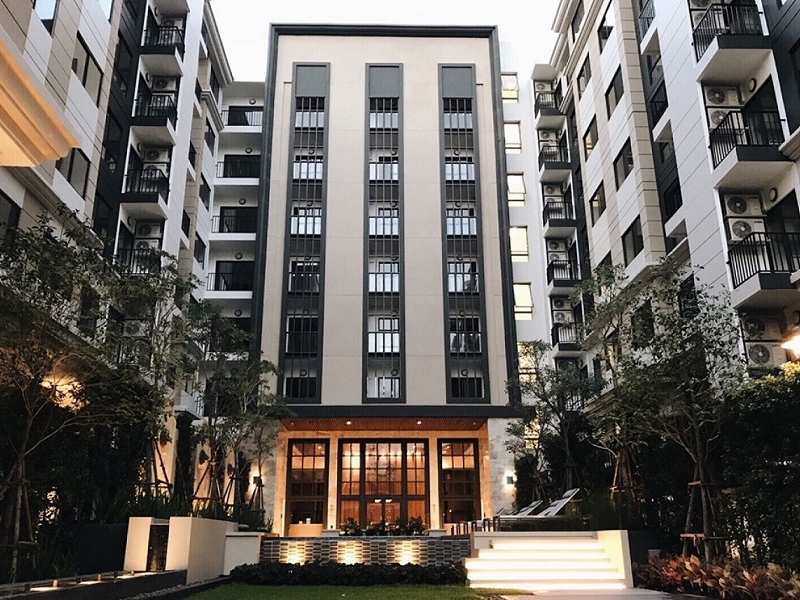
A Bangkok condo balcony can look generous in photographs yet prove too hot, wet, noisy or exposed for regular use. Expat buyers should assess it as part of the home rather than as decorative floor area, checking climate, safety, privacy, building rules and maintenance.
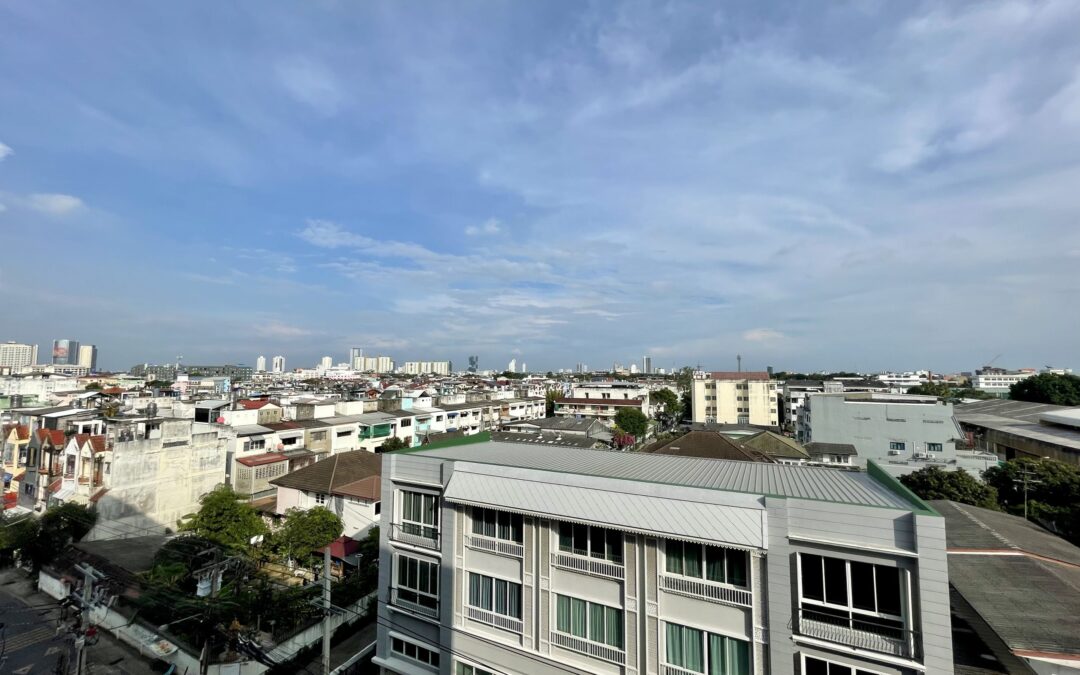
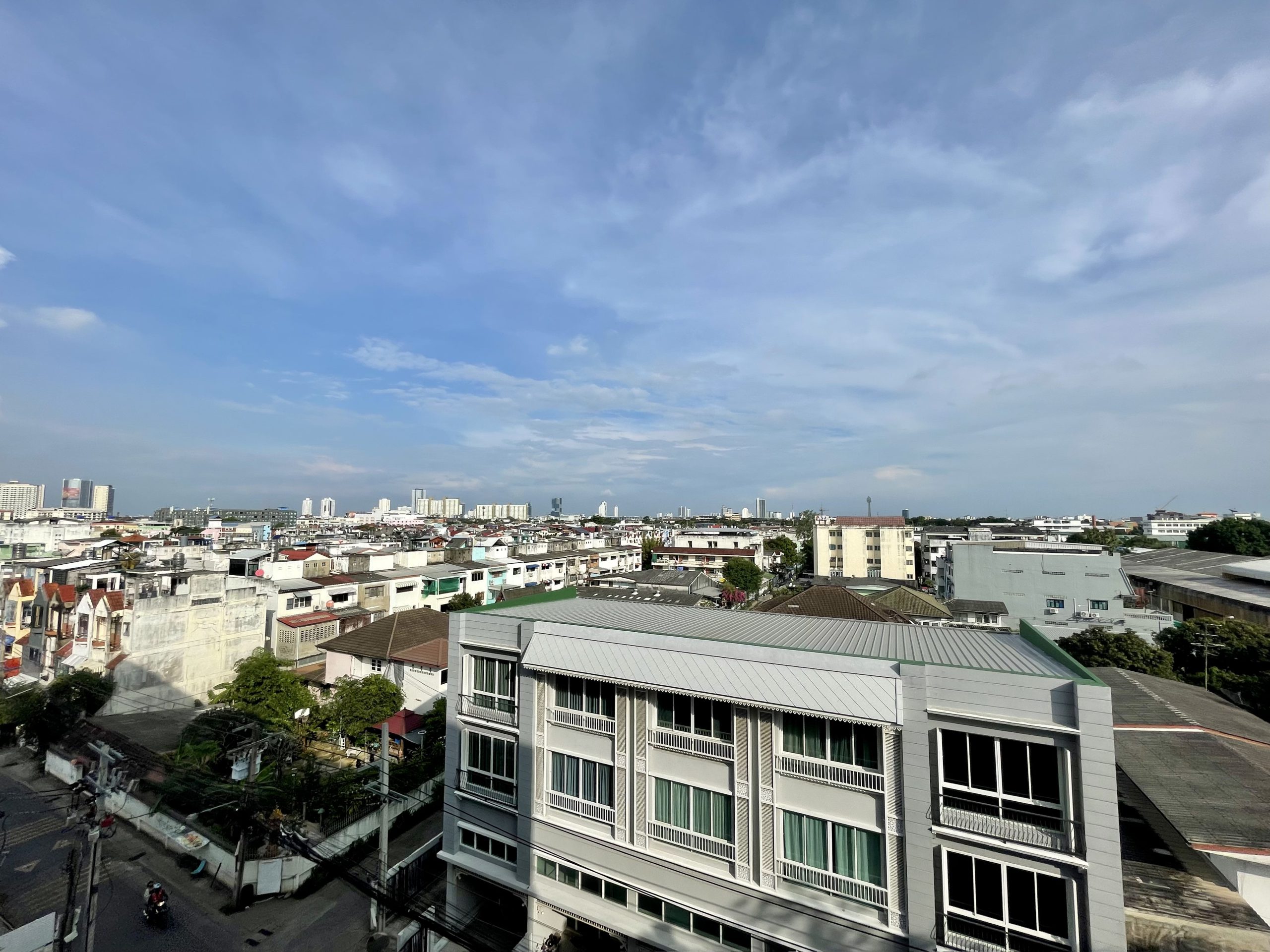
A balcony should be judged in Bangkok’s real heat, rain, wind and neighbouring context.
The right balcony depends on the resident. One person may want morning coffee and plants; another needs a utility zone or values only the outlook. Investors should also consider whether the space adds useful tenant appeal or creates an area that is difficult to maintain.
Measure usable space
Record the clear depth and width after allowing for doors, drains, air-conditioning equipment, railings and maintenance access. A balcony may appear large on a plan but accommodate little once circulation and door swing are considered.
If furniture matters, mark its dimensions and leave safe movement around it. Do not assume built-in seating, screens or storage can be added. Facade elements and visible alterations are commonly controlled by condominium rules and require confirmation.
Visit at different times
Orientation changes how the balcony feels. Morning and afternoon sun, reflected heat, prevailing rain and seasonal wind can all affect comfort. Visit at the time the resident expects to use the space and return after rain if possible.
Check whether shade comes from the building design, an overhang or a neighbouring tower. Temporary shade can disappear if nearby land changes, while deep overhangs may reduce daylight inside the unit. Balcony and interior light should be assessed together.
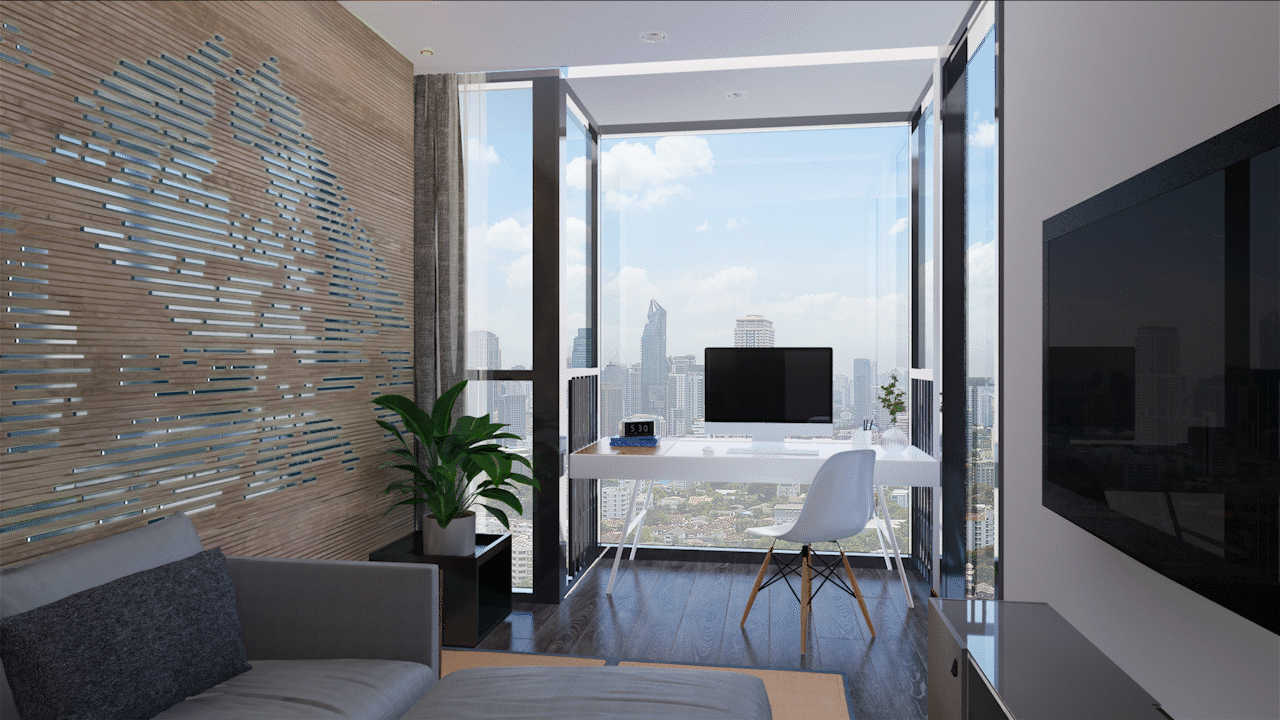
Depth, drainage, door clearance and shade determine whether outdoor space is genuinely usable.
Inspect drainage and waterproofing clues
Look for ponding, staining, cracked finishes, loose tiles, blocked drains and sealant failure around doors and thresholds. Ask how rainwater leaves the balcony and whether overflow paths could affect the unit below. Do not obstruct drains with furniture or planters.
Water marks do not diagnose the cause on their own. A professional inspection can help distinguish maintenance needs from a larger waterproofing or facade issue. Review how the juristic person manages shared exterior repairs and what is treated as an owner’s responsibility.
Check doors, levels and indoor impact
Open and close the balcony door with permission. Inspect locks, tracks, seals and the threshold. Consider whether wind-driven rain, dust or insects enter the living area and whether curtains or furniture block access.
The balcony should not compromise air-conditioning efficiency or make the interior difficult to furnish. If equipment is installed outside, listen for vibration and check that technicians can reach it safely without moving everything through the home.
An attractive outlook can improve daily enjoyment, but buyers should also investigate future obstruction and maintenance.
Treat safety as non-negotiable
Check railing condition, height, gaps, climbable elements and any changes made by a previous owner. Families with children and residents with pets need specialist advice on the exact risk. Never rely on improvised netting or screens without building approval and safe installation.
High-rise wind can move light furniture, pots and unsecured objects. Buyers should ask what the rules require during storms and whether anything may be attached to railings or the facade. A visually attractive setup is not worthwhile if it creates danger for residents or people below.
Listen and look beyond the view
A broad outlook may come with expressway, rail, construction or entertainment noise. Stand outside long enough to hear the normal background and sudden peaks. Then close the door and assess how much reaches the bedroom and living space.
Look down as well as outward. Service areas, car parks, loading zones and neighbouring balconies affect privacy and sound. Ask what can be built on adjacent plots and have a professional investigate planning and ownership information where the outlook is central to the purchase decision.
Understand permitted uses
Confirm the condominium’s current rules on plants, drying clothes, smoking, cooking, pets, storage, satellite equipment, screens and exterior furniture. Rules vary by building and can change through proper governance. A use seen on another balcony is not proof that it is permitted.
Also check whether the balcony is part of the unit’s registered area and how it is treated in the documents and sale calculation. Your lawyer can explain the transaction papers; the juristic office can explain current operating rules.
Plan plants for Bangkok conditions
Plants can add shade and enjoyment, but species, containers, drainage and wind exposure matter. Heavy pots may create load or movement concerns, while water runoff can affect neighbours. Choose a restrained arrangement that leaves drains and maintenance routes clear.
Consider how plants will be watered during travel and whether leaves or soil can blow from the balcony. Building management may have specific restrictions. A simple, well-maintained setup is usually more sustainable than a dense garden that depends on constant care.
Consider rental and resale appeal
For an investor, a balcony adds value only when the target tenant can use or appreciate it. A shaded, well-proportioned balcony may widen appeal, while an exposed ledge beside noisy equipment may add little despite being included in the floor area.
Keep maintenance and approval records for any permitted work. Avoid highly personal additions that narrow the next resident’s options. Buyers comparing units should price the balcony according to practical benefit, not simply its photographed view.
Balcony viewing checklist
Measure clear usable depth and door swing.
Visit during sun, rain and evening conditions.
Inspect drains, thresholds, tiles and staining.
Check railings, wind exposure and child or pet risk.
Listen for traffic, rail, equipment and venue noise.
Investigate neighbouring plots and privacy.
Confirm building rules for every intended use.
Compare practical benefit with the price paid.
A well-designed balcony can make Bangkok condo life more enjoyable, but only when it works safely in the city’s real climate and building context. Browse IBP’s expat living guides and district guides, or contact IBP Real Estate for a lifestyle-led property shortlist.
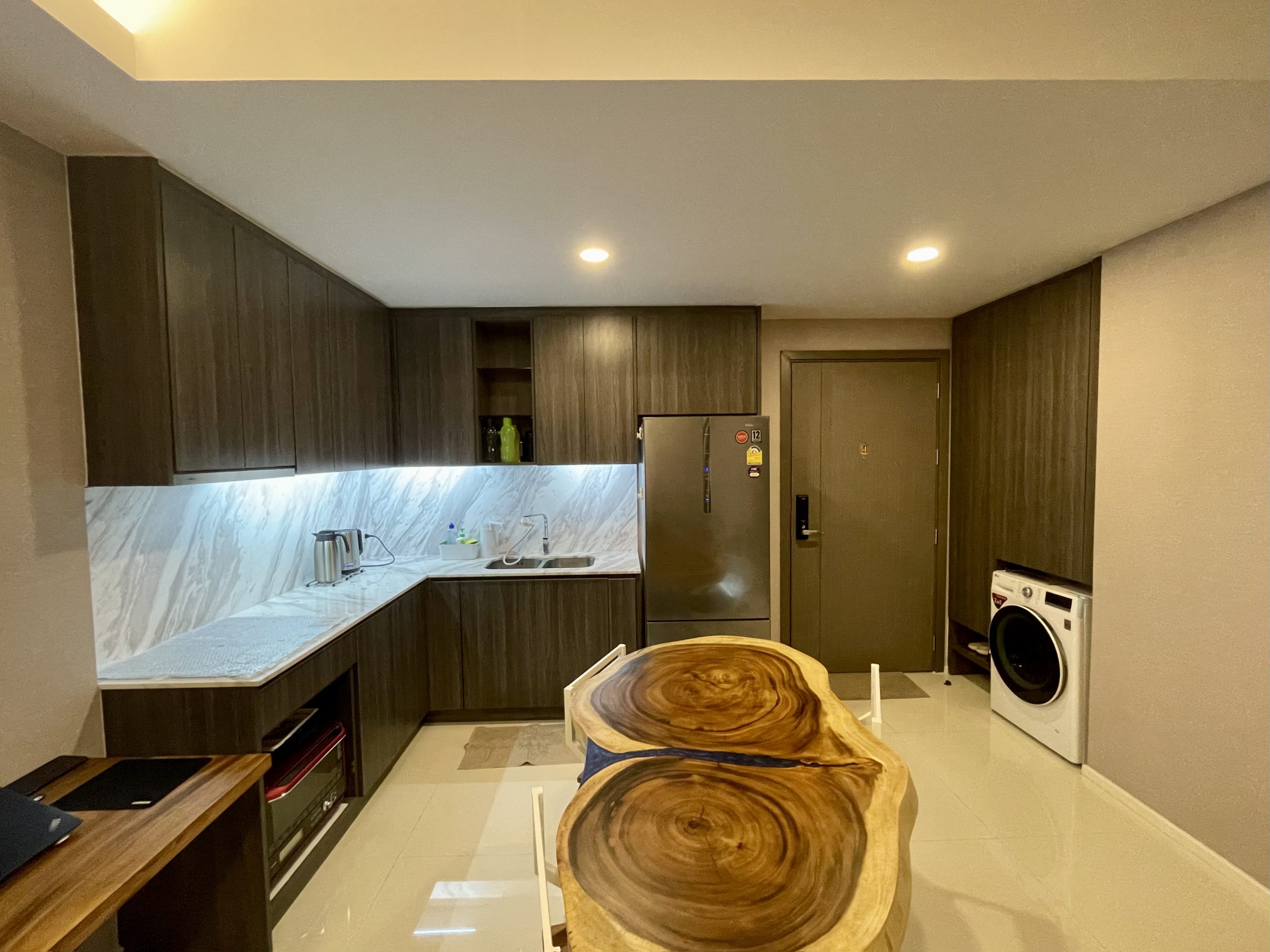
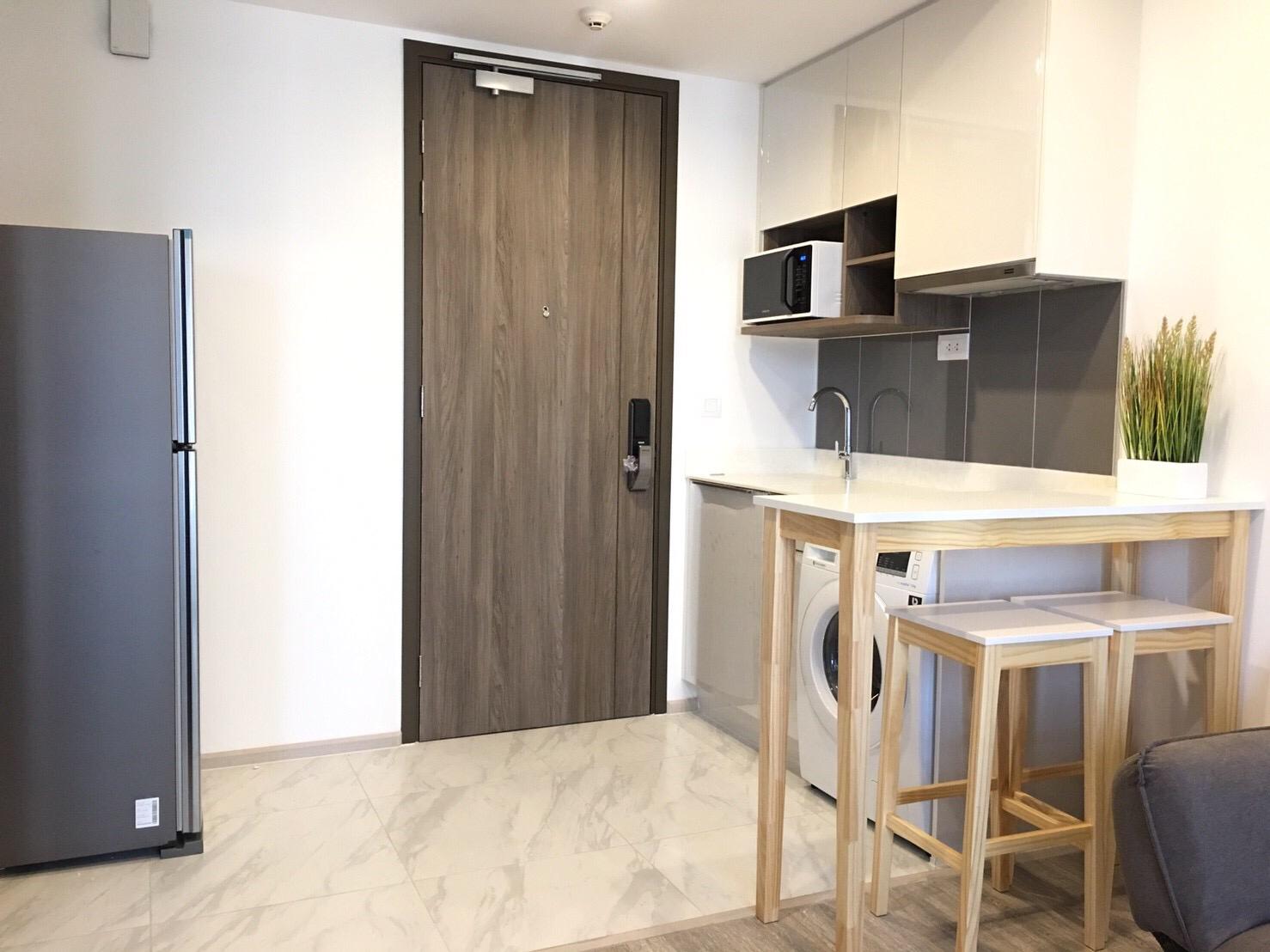
A Bangkok condo kitchen can be a beautiful backdrop and still be frustrating to use. Expat buyers should look beyond cabinet colour and appliance brands to ventilation, worktop space, storage, electrical capacity, cleaning and the way food actually fits into their Bangkok routine.
A kitchen should be judged by the resident’s real cooking and dining routine, not only by styling.
The right kitchen depends on the resident. Someone who mainly reheats food needs a different layout from a family cooking every day. An investor also needs to consider future tenants: a compact kitchen can be perfectly suitable when it is honest, robust and matched to the likely audience.
Start with the cooking brief
List how often the resident cooks, which appliances they use and whether meals are simple, aromatic, high-heat or prepared for several people. Check whether the kitchen must support baking, coffee equipment, a large refrigerator, water filtration or storage for imported ingredients. A clear brief stops buyers from paying for decorative features they will not use.
Also consider dining. A breakfast counter may suit one resident but become awkward for a couple working from home or a family hosting friends. Measure the table, chairs and circulation rather than trusting wide-angle photography.
Test ventilation carefully
Look at whether the kitchen is open to the living room or enclosed, where the hood vents and whether windows can be used safely. Switch on the extraction system with permission and listen to it. A hood that is too noisy may be ignored; one that only recirculates air may perform differently from an externally ducted system.
Check odour paths to bedrooms, curtains and air-conditioning returns. Buyers planning frequent high-heat or aromatic cooking may prefer an enclosed kitchen, balcony utility zone or stronger verified extraction. Any alteration to ducts, facade openings or services should be approved through the building’s proper process.
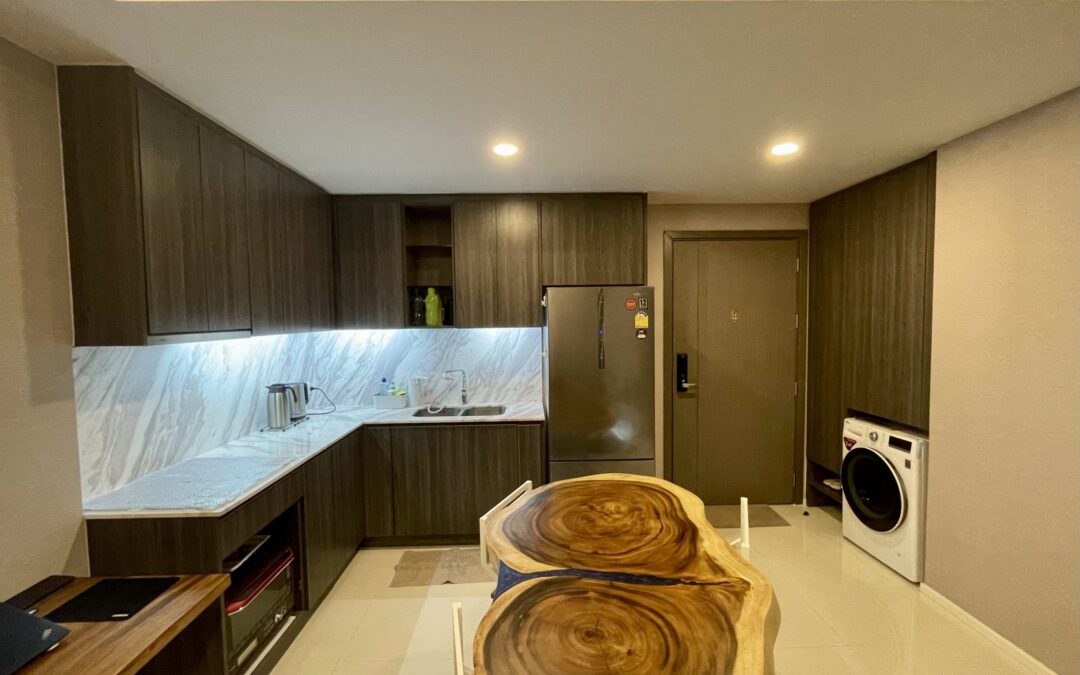
Storage, worktop depth, electrical capacity and appliance access determine how usable a compact kitchen feels.
Measure worktop and storage
Compact kitchens often lose usable worktop to a sink, hob, drying rack and small appliances. Place the expected coffee machine, kettle, rice cooker or preparation board on the plan and see what remains. Check drawer depth, corner access, overhead cabinets and space for bins, cleaning products and dry food.
Open doors and drawers with permission. Confirm that they do not collide with appliances or the main circulation route. Tall residents should check worktop and hood height, while families may care about child access and secure storage. Good design uses a small footprint efficiently without making every task sequential.
Inspect appliances as equipment
Record what is included in the sale or lease, including model, approximate age and visible condition. Open the refrigerator, oven, microwave and dishwasher where present. Check ventilation clearances and whether appliances can be removed for repair without dismantling the entire cabinet run.
Ask who services the brands in Bangkok and whether manuals or warranties remain. Imported premium equipment can be attractive but expensive or slow to repair. For a rental unit, robust, familiar appliances may be more valuable than a complicated specification the target tenant does not need.
Check power, water and drainage
Count accessible sockets and consider the load from appliances that may run together. Do not add high-load equipment or move electrical points without qualified advice and any required building approval. Look for staining, swollen cabinets, poor sealant, slow drainage and evidence of leaks around sinks and appliances.
Confirm hot-water arrangements where relevant and check access to shut-off valves. A practical kitchen allows maintenance without damaging finished joinery. In an older unit, a professional inspection can help assess concealed services and the consequences of previous alterations.
Shared facilities can add flexibility, but buyers should confirm booking, cleaning and guest rules.
Understand gas and building rules
Do not assume a preferred cooking fuel is permitted. Ask the juristic office for current rules on gas, extraction, fire safety, balcony equipment, deliveries and renovation. The rules can differ by building and may be more restrictive than the resident expects from another country.
If a condominium provides a shared cooking or dining facility, inspect how it is booked, cleaned and supervised. Ask about guest limits, charges and operating hours. Shared space can add flexibility for occasional larger meals, but it should not be treated as a substitute for a missing facility unless access is reliable.
Connect the kitchen to Bangkok food life
Part of Bangkok’s liveability is choice. Residents can combine home cooking with markets, supermarkets, food courts, restaurants and delivery. Map where groceries actually come from, how heavy shopping reaches the unit and whether parcels or food deliveries are easy to collect.
A smaller kitchen may work well when daily food options are excellent and the resident cooks lightly. A family or keen cook may value a larger refrigerator, pantry and enclosed preparation area more than an extra decorative amenity. The neighbourhood and the kitchen should be assessed together.
Consider tenants and resale
For investors, the kitchen should match the unit’s likely audience. A studio aimed at a single professional needs clean storage, a usable refrigerator and simple maintenance. A two- or three-bedroom home may be judged more critically on worktop, ventilation, dining and family storage.
Avoid highly personal alterations that reduce flexibility or are difficult to reverse. Keep approval records, appliance details and renovation invoices. A future tenant or buyer can assess the property more confidently when the kitchen is maintained and its equipment is clearly documented.
Kitchen viewing checklist
Define the resident’s real cooking routine.
Test extraction and odour paths.
Measure clear worktop and dining circulation.
Open storage and appliance doors.
Check included equipment and service access.
Inspect water, drainage and visible sealant.
Confirm power and building restrictions.
Map groceries, deliveries and waste disposal.
A well-matched kitchen can make Bangkok condo life more comfortable and sustainable, while a poor one creates friction every day. Browse IBP’s expat living guides and district guides, or contact IBP Real Estate for a lifestyle-focused property shortlist.
Condominium house rules can change whether a Bangkok property is suitable for a foreign buyer. They affect pets, guests, renovations, deliveries, parking, amenity use, noise and the practical management of a rental unit. A buyer who reads them only after transfer may discover that an intended lifestyle or ownership plan is difficult to operate.
Buyers should obtain the current written rules and identify which points affect their intended use.
Rules vary by condominium and can be updated through the building’s proper processes. This checklist is therefore a method for reviewing the exact property, not a statement that every Bangkok building follows the same policy. Obtain the current written documents, ask the juristic office about recent changes and use professional translation or legal advice where the meaning matters.
Request the complete rule set early
Ask for the registered condominium regulations where available, current resident handbook, juristic notices and any separate policies for renovations, moving, parking, pets, amenities and letting. A short welcome sheet may not contain every obligation. Compare documents from the seller, agent and juristic office so an old copy is not mistaken for the current version.
Identify how future changes are communicated and where formal records are kept. Buyers should also ask whether an English translation exists, while recognising that a translated convenience copy may not be the controlling document. Important rights and restrictions should be reviewed with the buyer’s own adviser before a binding commitment.
Match the rules to the intended use
An owner-occupier, long-term landlord and occasional-use buyer will focus on different points. The owner-occupier may care most about pets, family visits, deliveries and amenity hours. A landlord needs to understand lease registration procedures, tenant documents, move-in deposits, access cards, inventories and who may deal with the juristic office on the owner’s behalf.
Write down the proposed use before reading the rules. If the buyer expects to renovate, keep a pet, receive regular guests, employ household help or rent to a particular tenant type, test each activity explicitly. Do not rely on the fact that another resident appears to be doing the same thing.
Practical rules shape how residents, guests, deliveries and contractors use the building every day.
Check access, guests and deliveries
Understand how residents receive access cards, parking stickers and digital credentials, and what happens when a card is lost or an owner is overseas. Ask how guests register, whether overnight visitors require notice and how household staff or carers are admitted. These procedures affect daily convenience as well as security.
Delivery policies matter in a city where food, parcels and services are part of ordinary life. Some buildings use a lobby counter or parcel room; others restrict riders from residential floors. Check cold-food handling, large-item delivery, service-lift booking and collection hours. A rule that looks minor on paper may shape the resident’s routine every week.
Review letting and tenant procedures
Confirm the building’s current requirements for leases, tenant identification, owner authorisation, move-in booking and deposits. Ask who communicates with a tenant when the owner lives abroad and whether a property manager needs a letter of authority. Keep building procedures separate from wider legal, tax and immigration obligations that may also apply to the owner or occupant.
Do not buy on an assumption that short stays or hotel-like use are acceptable. The intended rental model should be checked against the law, contract documents and the condominium’s own rules. If the investment depends on a particular lease length or tenant process, obtain advice before treating projected income as reliable.
Pets need precise questions
A building described informally as pet-friendly may still limit species, size, number, lift use, common-area routes or registration. Ask about deposits, vaccination records, cleaning duties and complaint procedures. Also inspect the unit and surrounding streets to decide whether the actual environment suits the animal.
For landlords, clarify whether a tenant’s pet needs separate owner consent and how damage is handled in the lease and inventory. A permissive rule does not remove the need for sensible flooring, furnishings and neighbour consideration.
Renovation approvals, work hours, deposits and lift protection should be understood before completion.
Understand renovation controls before completion
Renovation rules can affect the cost and timetable for making a unit usable. Ask about approved working hours, contractor registration, owner deposits, lift and corridor protection, rubbish removal, noisy-work periods and drawings or engineering documents. Plumbing, electrical, structural, facade, balcony and air-conditioning changes may receive different treatment.
Show the proposed scope to the juristic office before committing to a contractor or assuming a refurbishment budget. If the seller has already altered the unit, request evidence that important work was approved where required. A beautiful renovation can still create risk if services are difficult to maintain or building procedures were ignored.
Inspect amenity and conduct rules
Check operating hours, booking systems, guest limits, dress or age conditions and any additional charges for pools, gyms, lounges, work rooms, play areas or shared kitchens. Observe whether the rules are enforced consistently. Amenities have limited value when they are difficult to book, poorly maintained or regularly disrupted.
Noise, smoking, balcony use, waste disposal and common-corridor storage deserve attention. Buyers should understand both the written standard and the complaint process. Ask how the juristic office records repeated problems and what an owner must do if a tenant causes them.
Check parking, bicycles and electric mobility
Parking may be attached, allocated, rotating or subject to registration and vehicle limits. Confirm the position through the correct documents rather than assuming a sales listing guarantees a particular bay. Ask about visitor parking, bicycle storage, motorcycle access and present procedures for electric-vehicle charging where relevant.
If these facilities are essential, inspect them at a busy time. A nominal right is less useful if access is awkward, spaces are routinely full or the vehicle does not fit the building’s limits.
Keep evidence in the ownership file
Save the version reviewed before purchase, any written answers from the juristic office and later notices of change. Give a property manager or tenant the rules relevant to their role instead of expecting them to discover procedures after a problem. Written records reduce confusion when staff change or the owner is in another time zone.
House-rules checklist
Obtain the current complete documents.
Translate important provisions professionally.
Match rules to occupation, letting and renovation plans.
Confirm guest, delivery and access procedures.
Verify pet conditions precisely.
Review amenity, parking and conduct rules.
Check how changes and complaints are recorded.
Keep the reviewed version with the ownership file.
House rules are not a minor after-sale detail. They are part of whether a condominium works for the intended resident and remains manageable for an overseas owner. Browse IBP’s foreign buyer guides and due-diligence articles, or contact IBP Real Estate to compare buildings against a practical ownership brief.
Bangkok green space is not only a weekend amenity. For a long-stay resident, access to a park, shaded route or smaller pocket of planting can change how often it feels comfortable to walk, exercise, meet friends or take a break from a high-rise home. Foreign condo buyers should therefore assess green space as part of everyday liveability, not as a decorative map feature.
Major parks can add exercise, shade and a calmer rhythm to high-density city living.
Major parks such as Lumphini, Benchakitti and Suan Luang Rama IX offer distinctive experiences, but proximity alone does not settle the property decision. Entrances, crossings, opening times, heat, rain, traffic and the route from the lobby all affect whether a resident will actually use a space. A smaller local park reached easily may add more daily value than a famous park requiring an awkward journey.
Begin with the routine you want
Define what green space needs to do for you. A runner may value a continuous loop and early access. A family may look for play areas, toilets, seating and a route suitable for a pushchair. An older resident may prioritise shade, level paths and easy taxi pickup. A dog owner must check applicable rules rather than assume every open area is pet-friendly.
Write down frequency as well as purpose. A park used five mornings a week should be tested like a commute. A destination visited once a month can justify a longer trip. This distinction prevents buyers from paying a large location premium for an amenity that does not fit their real schedule.
Walk from the condo to the entrance
Property listings often measure distance to the edge of a park. Residents need an entrance they can use. Walk the complete route and note major roads, footbridges, junction waits, pavement condition, shade, lighting and drainage. Repeat the journey when traffic is busy and consider how it feels after dark.
Check whether the route works both ways when tired, carrying shopping or returning in rain. If a taxi or motorcycle ride is normally required, include that friction in the decision. The best green-space access is the one a resident can use consistently without turning a simple walk into a logistical exercise.
Usable access depends on entrances, crossings, opening times and the journey from the condominium.
Compare large parks with local greenery
Large parks can provide long routes, varied landscapes and a stronger sense of separation from the city. They may support running, cycling, group exercise and weekend gatherings. Their scale can also make nearby districts attractive to residents who want urban convenience without giving up outdoor time.
Local parks, canalside paths, landscaped setbacks and quiet tree-lined streets play a different role. They can support a short evening walk, children’s outdoor time or a calmer route to shops. Buyers should map several layers of green space rather than letting one landmark dominate the entire location assessment.
Inspect the condo’s own outdoor provision
A well-designed garden, terrace or pool deck can complement public space, especially during very hot or wet weather. Look at usable shade, seating, airflow, noise, maintenance and whether the area feels overcrowded at peak times. A photograph taken immediately after completion may not show how planting and surfaces have aged.
Ask how outdoor areas are maintained and whether major work is planned. Review common fees and the building’s financial position because extensive landscaping and water features require ongoing care. An attractive garden adds value only when management can sustain it.
Larger destination parks may reward a longer trip, while small local spaces can support daily routines.
Test comfort across Bangkok’s seasons
Green-space routines change with heat, heavy rain and air-quality conditions. Buyers should consider early-morning and evening access, sheltered alternatives and how the building supports indoor exercise when outdoor plans are uncomfortable. Keep expectations realistic: a nearby park does not remove the need to monitor conditions and adjust activity.
Observe water, mosquitoes, slippery surfaces and drainage after rain. Check the route during the season in which you are viewing, then ask how it changes at other times. A covered connection, convenient lift and practical lobby can be as important as the park itself when weather changes quickly.
Green space can widen the resident audience
For an investor, credible access to outdoor space may appeal to professionals, couples, families and longer-stay residents. It can make a compact unit feel more liveable because recreation is not limited to the condominium amenities. The benefit should be demonstrated through the actual route and neighbourhood rather than described with a vague claim of being near nature.
Do not assume a park view will remain open or that every tenant will pay a premium. Check orientation, heat, noise, surrounding land and competing units. A well-managed building with an easy entrance route may lease more defensibly than a higher-priced unit whose main selling point is a distant view.
Use green space to compare districts
When two condos meet the basic budget and transport brief, compare the complete liveability network: public parks, small open spaces, walkable errands, healthcare, food, culture and social life. Bangkok’s premium appeal comes from combining these choices, not from any single amenity.
A central buyer may value Lumphini or Benchakitti access alongside rail and office districts. A buyer farther east may prefer a larger home and planned trips to Suan Luang Rama IX. Neither is universally better. The right balance depends on how often the resident travels centrally, how much private space they need and what they enjoy doing outdoors.
Green-space viewing checklist
Identify the exact entrance and opening arrangements.
Walk the full route at the times you expect to use it.
Check crossings, shade, lighting and drainage.
Match facilities to running, family or mobility needs.
Assess smaller local spaces as well as major parks.
Inspect the condo’s gardens and maintenance quality.
Plan indoor alternatives for heat, rain and poor air.
Verify current rules directly before relying on a facility.
Green space rarely decides a purchase on its own, but it can make Bangkok condo life healthier, calmer and easier to sustain over many years. IBP helps foreign buyers compare homes by transport, neighbourhood and long-stay practicality. Browse our expat living guides and district guides, or contact IBP Real Estate for a lifestyle-focused shortlist.
Hosting visiting family is a useful test of whether a Bangkok condominium supports real expat life. A unit may feel generous for one person or a couple, yet become difficult when parents, siblings or children arrive with luggage, different sleep schedules and unfamiliarity with the city. Buyers who expect regular visits should plan for that use before choosing the property.
Guest comfort depends on usable sleeping space, privacy, storage and a routine that works beyond the first night.
The aim is not to buy a permanently oversized condo for occasional guests. It is to understand which features reduce friction: flexible sleeping space, privacy, practical bathrooms, lift access, clear building rules, straightforward taxis and a neighbourhood where visitors can manage simple errands safely.
Match the unit to the likely guest
Start with who is most likely to visit. Older parents may care about step-free access, a proper bed, nearby bathrooms and short walking routes. Families with children may need safe windows, storage, laundry capacity and a quiet sleeping area. Adult siblings or friends may value privacy, workspace and easy independent transport.
A second bedroom is useful only if it functions as a bedroom. Check ventilation, curtains, storage, mattress size, access to a bathroom and noise from lifts or the living room. In a one-bedroom unit, decide whether a sofa bed can be used without blocking the household’s entire routine.
A guest-friendly neighbourhood makes meals, pharmacies, parks and simple outings easier to manage.
The neighbourhood should work for newcomers
Long-term residents learn shortcuts, delivery apps and local habits. Visitors do not. A guest-friendly location has an address taxis can find, visible pickup space, nearby food, a pharmacy, simple grocery options and comfortable routes to rail or major destinations. Clear landmarks can be as valuable as a short map distance.
Think about the visit as a series of ordinary days. Can a guest get breakfast without assistance? Is there somewhere pleasant to walk or sit? Can they return from a mall, hospital or attraction without changing transport several times? A central address is not automatically simple if the final street is confusing or uncomfortable.
Check building rules before guests arrive
Condominiums have their own policies for access cards, visitors, parking, overnight guests and amenity use. Owners should confirm the current rules with the juristic office rather than assume that a guest can use every facility or receive an extra card. Security should know how visitors will be registered and whom to contact.
If family members will stay while the owner is away, written authorisation may be helpful. Provide building contacts, room instructions and emergency details without sharing unrestricted owner documents. Short-term letting rules are a separate matter; hosting genuine family should not be used as a reason to ignore building or legal restrictions on transient accommodation.
Visitors may judge location by taxi access, shelter, crossings and simple connections rather than commute speed alone.
Transport comfort changes with age and weather
A resident may happily walk ten minutes to the BTS every day. A visiting parent, young child or traveller carrying bags may not. Test shade, crossings, pavement condition, rain shelter, taxi availability and the building drop-off. Visitors often judge convenience by the hardest part of the route rather than the scheduled train time.
For airport days, check where a larger vehicle can wait and whether luggage moves easily through the lobby and lifts. For routine outings, give guests the address in Thai and English, the building phone number and a simple return plan. Small preparation makes Bangkok feel much more accessible.
Prepare the condo for a shared routine
Guests need more than a place to sleep. Clear a drawer or wardrobe area, provide charging points, explain hot water and air-conditioning, and label internet details. Check spare keys or cards, lighting, balcony locks and bathroom surfaces. Keep drinking water and basic household supplies available for the arrival day.
Privacy is equally important. Residents should still be able to work, rest and use the living area. A flexible room divider, good curtains or an agreed morning routine can matter more than decorative guest furniture. If visits are long, cleaning, laundry and food-storage capacity should be tested in advance.
Health and contingency planning
Visitors should know how to contact the owner, building security and emergency services. Keep relevant insurance details, medication and personal contacts accessible to the visitor, not displayed publicly in the unit. Identify a nearby pharmacy and a practical route to appropriate healthcare without making promises about providers or treatment.
Also plan for flight delays, lost keys, heavy rain and the owner being in a meeting. A trusted local contact or property manager can help, but their authority should be clear. The best guest setup is calm because ordinary problems have already been considered.
Rental and resale relevance
Even investors can learn from the guest test. Tenants often host relatives, and a unit that accommodates occasional visitors can feel more liveable. Useful features include a sensible second bathroom, flexible study, comfortable living room, storage and visitor-friendly access. These benefits can broaden appeal without relying on extravagant amenities.
At resale, buyers may value a home that works for visiting family, especially regional professionals, retirees and second-home owners. The feature should remain proportionate to the price; a rarely used guest room is not worth sacrificing the daily layout or investment budget.
Host checklist
Test the real sleeping space, privacy and bathroom access.
Confirm visitor, card, parking and amenity rules.
Make taxis, rail and the return address easy to understand.
Prepare storage, charging, internet and household basics.
Plan for mobility, weather, health and lost-access problems.
Keep guest space proportionate to everyday ownership needs.
Buyer takeaway
Hosting family in a Bangkok condo becomes easier when the unit, building and neighbourhood support unfamiliar visitors. Foreign buyers should test sleeping flexibility, privacy, access rules and simple transport before purchasing a home intended for regular family use. A guest-friendly condo is not necessarily large; it is predictable and practical.
IBP helps foreign buyers compare Bangkok condos by lifestyle, transport and long-stay practicality. Browse our expat living guides or contact IBP Real Estate for a lifestyle-focused shortlist.
Bangkok’s riverfront has become much more than a postcard view. For foreign condo buyers, the Chao Phraya corridor can offer a distinctive daily rhythm: morning water views, hotel dining, galleries, heritage streets, mall convenience, evening markets, ferries and a slower sense of space than many inner-city roads.
Asiatique anchors Bangkok’s evening riverfront lifestyle with dining, shows and family-friendly attractions.
The lifestyle is not right for everyone. Some buyers need the fastest BTS commute to an office district; others prefer a quiet lane off Sukhumvit. But for buyers who value atmosphere, dining, culture and weekend convenience, riverfront living deserves a closer look.
The key is to judge the riverfront as a practical neighbourhood, not just a view from the balcony. A strong river condo should make daily life easier, not only photograph well at sunset.
Why the riverfront appeals to foreign buyers
The Chao Phraya gives Bangkok something many fast-growing Asian cities work hard to create: a memorable waterfront with hotels, temples, shopping, dining and cultural routes already in place. For overseas buyers, that helps the city feel legible. Visitors can understand the river quickly, and residents can build routines around it.
Riverfront condos often appeal to buyers who want a softer lifestyle than the busiest central intersections. The view can be calming, the hotel and dining scene is strong, and weekend guests have obvious places to go. That matters for part-time residents who want their Bangkok home to feel like a usable base from day one.
It can also help rental appeal. A tenant choosing between similar units may remember the river view, ferry access, ICONSIAM, Asiatique, nearby hotels or heritage streets more clearly than another tower lobby in a denser district.
ICONSIAM and the convenience test
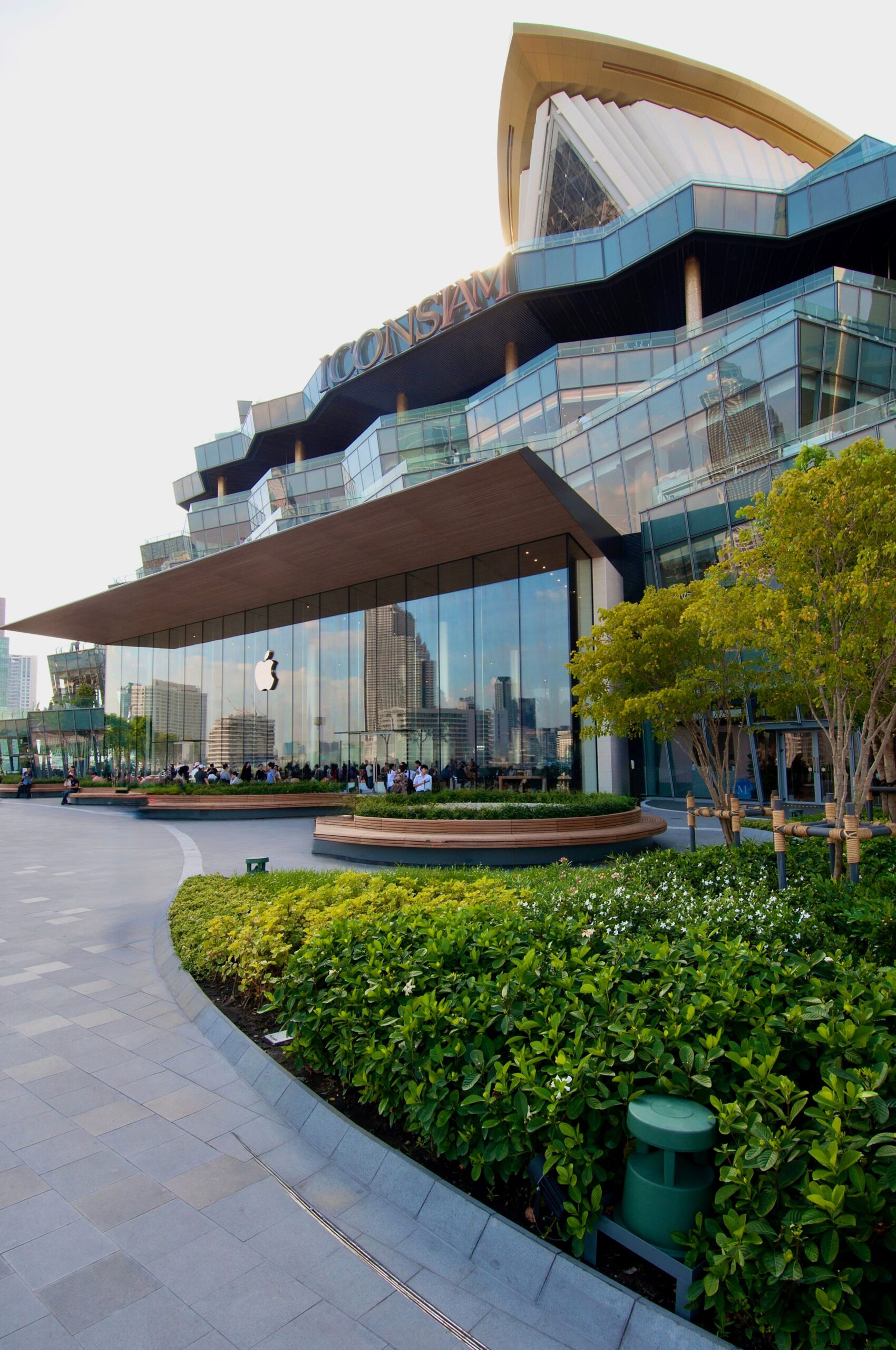
ICONSIAM is one of the clearest examples of how the riverfront has changed. Its official material presents shopping, dining, culture, attractions, event space and riverside experiences in one destination, with features such as SOOKSIAM, River Park, art and culture areas, dining and luxury retail.
For condo buyers, the question is not only whether ICONSIAM is impressive. The question is how easily the building connects to daily needs. Can residents reach groceries, restaurants, banking, transport, healthcare and schools without fighting traffic every time? Is there a safe walk, shuttle, ferry or rail connection that works in real life?
ICONSIAM adds retail, dining, culture and riverside public space to daily life on the Chao Phraya.
A riverfront condo near major amenities can feel very convenient. A tower with a beautiful view but poor access may feel isolated after the novelty fades. Buyers should test both weekday and weekend movement before deciding.
Asiatique and evening life
Asiatique The Riverfront shows another side of the corridor. The venue highlights restaurants, street food, a lifestyle market, shows and attractions, including Asiatique Sky, described by the venue as a 60-metre Ferris wheel. Its river promenade and evening format make it useful for families, visiting friends and casual dining.
This matters because liveability is partly about what happens after work. A condo may have a good gym and pool, but the surrounding district should also offer places to walk, eat and meet people. Riverfront venues can make Bangkok feel more social and less car-dependent, especially for newcomers.
Foreign buyers should still check noise, event traffic and weekend crowds. Living near a popular destination is different from visiting it. Some owners love the energy; others prefer to be one or two transport stops away.
Transport is the deciding factor
Riverfront living works best when transport options are layered. Look for practical access to BTS or MRT, reliable road routes, ferry piers, hotel boats, mall shuttles and ride-hailing pick-up points. A beautiful tower can become frustrating if every trip begins with a traffic bottleneck.
Also check how transport feels in rain, late at night and with luggage. A weekend ferry ride may be charming, while a weekday school run or airport transfer may require a different plan. Buyers who travel often should test the route to both Suvarnabhumi and Don Mueang airports during realistic traffic periods.
Riverfront living is strongest when evening dining, transport and everyday errands work together.
Which buyers may fit the riverfront
The riverfront can suit lifestyle buyers, frequent visitors, retirees, families who like weekend activities, hospitality-sector executives and tenants who want memorable surroundings. It may also suit buyers who value larger views and hotel-style neighbourhoods more than being directly in the CBD.
It may be less suitable for buyers whose daily life is concentrated around Asoke, Ploenchit, Ari or Rama 9. In those cases, a riverfront home can still work, but only if the commute is acceptable and the buyer genuinely values the lifestyle trade-off.
What to inspect before buying
Inspect the unit at different times of day. Watch boat traffic, road noise, afternoon heat, lift waiting times, parking flow and the view corridor. Ask whether any future project may affect the view. Check flood management, drainage, insurance, shuttle arrangements, juristic finances and how the building manages guests or short visits.
For rental investors, compare achievable rent against competing riverfront and inner-city units. A strong view can help, but tenants also compare commute, furnishing, building age and management quality. Do not pay for a river premium unless the unit can defend it through lifestyle and practical convenience.
A calm way to decide
Spend a full day in the district before reserving. Start with a normal morning errand, move through lunch, test the route to a key work or school destination, return during evening traffic and finish with dinner nearby. If the lifestyle still feels natural, the riverfront may be a strong fit.
IBP can help foreign buyers compare Bangkok riverfront condos with Sukhumvit, Silom-Sathorn and park-adjacent alternatives. For broader lifestyle planning, read our private hospital access guide and our Bangkok lifestyle articles.
Insurance is easy to overlook when buying a Bangkok condominium. The transfer, foreign quota, funds remittance and rental plan usually receive more attention. Yet insurance can determine how quickly an owner recovers after water damage, fire, tenant damage, injury claims or a dispute over responsibility between the unit owner and the juristic person.
Shared facilities and landscaped areas make insurance questions more practical than they first appear.
Foreign owners should not assume that the building policy protects everything inside their apartment. A condominium commonly has insurance arranged at building level, but that may not cover the owner’s contents, improvements, loss of rent, personal liability or tenant-related issues. The safest approach is to understand each layer before completion, then keep the documents accessible after handover.
This guide is a practical checklist rather than legal or insurance advice. Policy wording, exclusions and claims handling vary, so foreign buyers should ask their lawyer, broker, property manager and insurer to confirm the position for the specific unit and building.
Separate building cover from owner cover
The first check is whether the condominium juristic person maintains building insurance and what that policy actually covers. A buyer should ask for the insurer name, policy period, sum insured, broad categories of cover, deductible or excess, and the process for claims that affect individual units.
Building-level cover may focus on the structure and common property. It does not automatically mean the owner’s furniture, appliances, fitted wardrobes, loose items, artwork, personal belongings or landlord fixtures are protected. If the unit has been renovated, the owner should ask whether improvements are treated as part of the insured building or as the owner’s separate responsibility.
This distinction matters because water leakage, electrical faults and fire damage can cross boundaries. A burst pipe may affect the owner’s unit, the unit below and common areas. Without clear cover and a clear claims process, the owner may face delay while the building, neighbours and insurers decide responsibility.
Check contents, fixtures and fit-out value
Many foreign owners furnish a Bangkok condo for rental or for part-time personal use. The replacement cost of furniture, curtains, appliances, mattresses, televisions, kitchenware and work-from-home equipment can be higher than expected. A contents policy should be based on realistic replacement value, not a rough guess made at purchase.
Owners should photograph the unit after furnishing, keep invoices where possible and list higher-value items. This is useful for insurance and for property management. If a claim arises while the owner is overseas, clear records make it easier for the manager to deal with the insurer and contractors.
Also check whether the policy treats fitted furniture differently from loose contents. Built-in wardrobes, kitchen cabinets and bathroom upgrades may sit in a grey area unless the policy wording is clear.
Foreign owners should separate building-level cover from their own unit, contents and liability needs.
Include public liability and tenant risk
Public liability cover is important for owners who rent out their unit. A guest, tenant, contractor or neighbour may suffer loss or injury connected with the unit. Even where the owner is not at fault, the practical cost of responding to a claim can be significant.
Ask whether the policy covers liability arising from tenant use, short visits by family and friends, contractors entering for repairs, and damage spreading to neighbouring units. If the owner plans to use a rental agent, the lease and management agreement should be consistent with the insurance position.
Landlords should also ask whether malicious damage by tenants, accidental tenant damage, loss of rent after an insured event and legal expenses are available or excluded. These items are not always standard, but they can be relevant for an overseas landlord who depends on local rental income to support holding costs.
Look at exclusions before the claim
Insurance problems often arise from exclusions rather than the headline cover. Common areas to review include vacant periods, unoccupied-unit rules, wear and tear, gradual leakage, mould, defective workmanship, illegal use, unapproved renovations and commercial use of a residential unit.
If the owner will be outside Thailand for long periods, unoccupied-unit conditions deserve careful attention. Some policies require inspections, water shut-off, security measures or prompt notice if the unit is vacant beyond a certain period. A property manager can help, but the owner should know the rule before a claim occurs.
Renovation is another important issue. If contractors work in the unit, ask what insurance they carry, whether the building requires deposits or permits, and whether the owner’s policy remains valid during the works. Do not rely only on verbal assurances.
Coordinate insurance with building rules
The condominium juristic office may have rules on contractors, water systems, air-conditioning drainage, balcony use, pets, smoking, short-term stays and deliveries. These rules can affect risk and claims. An owner who ignores building rules may weaken their practical position if damage occurs.
For example, an unauthorised alteration to plumbing or electrical systems can create difficulties if it contributes to a loss. A rental arrangement that conflicts with building rules may also complicate responsibility between owner, tenant, agent and juristic person.
Foreign buyers should review building rules as part of due diligence, not after a tenant has moved in. If the unit is intended for rental, the lease should require the tenant to follow building rules and notify problems promptly.
Insurance review should include how guests, tenants and contractors use shared and private spaces.
Keep claims readiness simple
The best insurance plan is easy to activate. Keep copies of policies, receipts, photos, juristic contacts, property manager details, emergency repair contacts and lease documents in one shared folder. Give the property manager authority to take urgent protective steps, such as stopping water leakage or arranging emergency access, while preserving evidence for the claim.
Owners should also decide who will communicate with the insurer. If the owner is abroad, the manager may need a power of attorney or written authorisation. It is better to prepare this before a problem than during a late-night emergency.
Questions to ask before completion
Before transfer, ask the seller, juristic office and your adviser these questions: What building insurance is in place? What is excluded? Are recent claims or recurring defects known? Does the unit have any renovations that need approval? What contents and liability cover should the owner buy separately? What documents will a property manager need to handle an urgent claim?
The answers will not make every risk disappear, but they will give the foreign owner a cleaner operating plan. That is the point of good due diligence: not perfection, but fewer surprises.
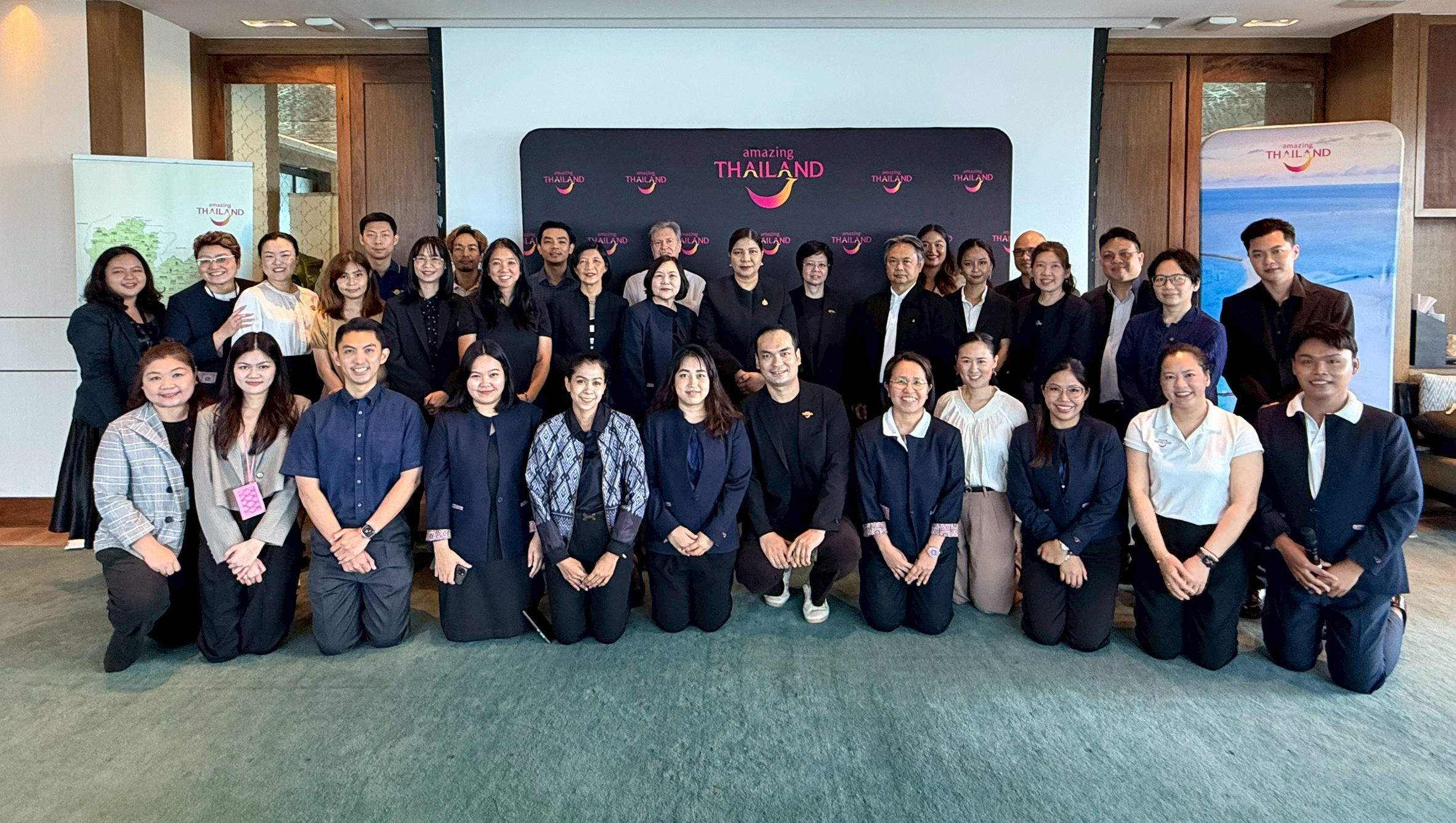
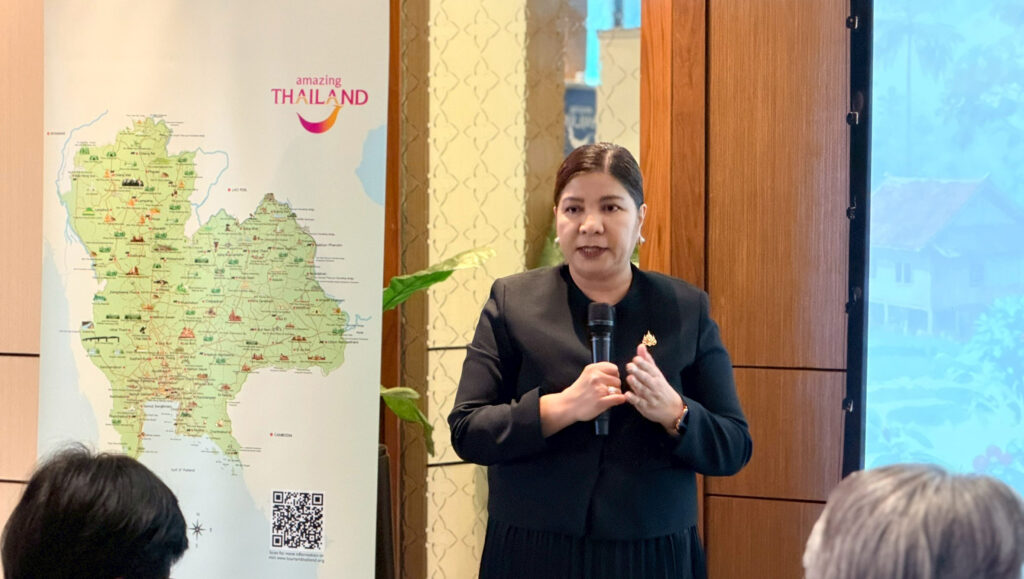
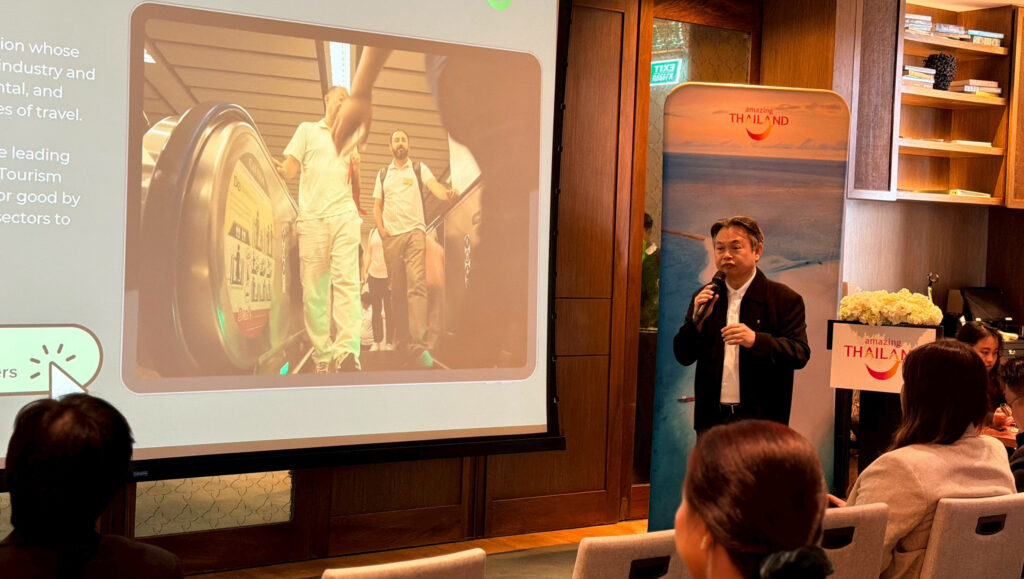
The Tourism Authority of Thailand organised “TAT x DMCs: Communities ConNext” on 2 July 2026 at Hyatt Regency Bangkok Sukhumvit, bringing destination management companies together around 55 community destinations for long-haul travel programmes. For a Bangkok condo buyer, this may sound far removed from unit selection. In practice, it says something useful about the kind of country Bangkok sits within.
Foreign buyers do not buy a condo only for four walls. They buy access to a city, and in Thailand that city is connected to food culture, craft, temples, weekend travel, community experiences, wellness, beaches, mountains and regional identities. When Thailand invests in packaging local experiences for international travellers, it strengthens the lifestyle case for using Bangkok as a home base.
TAT's Communities ConNext workshop highlighted local experiences for long-haul travel programmes.
What the TAT workshop signals
TAT’s July 2026 workshop focused on making community destinations more ready for long-haul markets, including Europe, the Americas, the Middle East and Africa. The programme connected public-sector teams, private travel partners and local tourism networks so that community routes can be better presented to international tour operators and travel agents.
The important phrase for property buyers is not just tourism. It is quality of experience. Thailand is trying to move beyond volume alone by highlighting responsible travel, local conservation, community lifestyles and meaningful spending. That direction supports Bangkok’s premium positioning because the capital becomes a gateway to a deeper, more varied country rather than a stand-alone stopover.
Local identity is becoming a more deliberate part of Thailand's visitor appeal.
Why local experiences matter to liveability
Bangkok can feel easy for foreigners because it has international hospitals, airports, shopping centres, English-speaking services, dining and mass transit. But the city becomes more liveable when residents also feel connected to Thai culture beyond the most familiar attractions. Weekend markets, old neighbourhoods, craft communities, temple districts, food routes and short domestic trips make ownership feel less transactional.
This matters for investors as well as lifestyle buyers. A tenant choosing between regional cities may value the ability to host family, explore Thailand and enjoy a distinctive cultural life. A future buyer may see Bangkok as more than a work posting if the city gives them access to the rest of the country. Local experiences add emotional depth to the practical case for living here.
Sukhumvit as a gateway, not the whole story
The TAT workshop took place in Sukhumvit, which is fitting. Sukhumvit is often where new residents first understand Bangkok: BTS access, hotels, restaurants, hospitals, international schools and serviced apartments. Yet the best version of Bangkok living usually expands outward. Residents use Sukhumvit for convenience, then explore riverside culture, old-town food, creative districts, parks, galleries, community markets and weekend trips.
A condo buyer should therefore judge location by both convenience and curiosity. Can the resident reach daily services easily? Can visitors move around without confusion? Is there enough neighbourhood character to make repeated stays enjoyable? Does the building make it easy to leave for the airport, a train station or a weekend route? The strongest Bangkok addresses support routine and discovery at the same time.
For condo owners, a richer visitor economy adds depth to Bangkok's lifestyle story.
What to check before buying for lifestyle use
Buyers who plan to use a Bangkok condo personally should test more than commute time. Stay in the district if possible. Walk in the morning and evening. Try the nearest supermarket, pharmacy, park, cafe, hospital route and BTS connection. Check whether the building feels comfortable after a long flight. Ask whether guests can find it easily and whether taxis or ride-hailing drivers understand the entrance.
For owners who may rent the unit, think about how the district reads to tenants. A foreign tenant often wants a simple story: close to work, easy for visitors, good food, reliable building, safe access and enough culture nearby to make Bangkok feel special. Local experiences nearby or within easy reach can help a district stand out from a purely functional rental location.
Bangkok as a base for a richer Thailand
Bangkok’s investment appeal is strongest when buyers see both sides of the city. It is a globally connected capital with airports, hospitals, finance, retail and professional services. It is also the most practical base for exploring Thailand’s regional identities. TAT’s Communities ConNext direction reinforces that second point by making local travel experiences easier to understand for long-haul audiences.
For foreign condo buyers, the lesson is straightforward. Choose a building that works operationally, then choose a district that keeps life interesting. IBP’s buying process guide and due diligence checklist can help balance lifestyle appeal with the paperwork, building and resale checks that make ownership safer.
Private hospital access is one of Bangkok’s practical advantages for many foreign condo buyers. It may not be the first feature shown in a property brochure, but it often matters once a buyer thinks beyond the viewing day. Expats, retirees, families, frequent visitors and second-home owners all benefit from knowing how quickly they can reach reliable healthcare when needed.
Healthcare access is a practical liveability factor for expats, retirees, families and repeat visitors.
This is not a medical recommendation and it is not a ranking of hospitals. It is a liveability check. A Bangkok condo should be assessed by how it supports real life: routine appointments, prescriptions, health screenings, family needs, insurance paperwork, emergencies, follow-up visits and transport during traffic or rain.
Why healthcare access affects liveability
Foreign residents often choose Bangkok because it combines city convenience with international services. Hospital access can reduce anxiety for families with children, older residents, people with regular medication, frequent travellers and buyers planning longer stays. It also matters for visiting parents, guests or tenants who may need English-language support and clear appointment processes.
A condo does not need to sit beside a hospital to be practical. It does need a realistic route. Buyers should understand taxi times, rail access, traffic patterns, ambulance access, nearby clinics and how easily a resident can manage follow-up appointments without disrupting the whole day.
Routine appointments, follow-ups and pharmacy access should be considered alongside commute and lifestyle.
Match the district to the household
Different buyers need different healthcare routines. A young professional may care about quick access to clinics and pharmacies. A family may prioritise paediatric services, school proximity and weekend urgent-care options. Retirees may value specialist appointments, international patient support, easy taxis and calm building access. Investors may consider whether healthcare access broadens the tenant pool.
Districts such as Sukhumvit, Ploenchit, Chit Lom, Langsuan, Silom, Sathorn, Rama 9 and parts of the riverside can offer different healthcare routes. The correct choice depends on the buyer’s daily pattern, not only the name of the nearest hospital.
Transport matters during stressful moments
Healthcare access should be tested in practical terms. How long does the journey take in morning traffic? Can taxis find the lobby easily? Is there a sheltered drop-off? Is the route manageable during heavy rain? Is there a nearby BTS or MRT option for routine visits? Can a family member reach the hospital from work or school?
For older buyers or families with small children, the building itself also matters. Lifts, lobby seating, parking, ramp access, security responsiveness and clear address instructions can make appointments easier. A premium unit can feel less livable if the building is awkward during a health-related trip.
The best location is the one that works during normal weeks and during urgent health or family situations.
Insurance and paperwork planning
Foreign owners should keep health insurance, passport copies, emergency contacts, allergies, medication lists and hospital registration details organised. If the condo is used by family members or tenants, make sure important contacts are easy to find. Overseas owners should also decide who can help locally if they are not in Bangkok.
Landlords should avoid making medical promises to tenants, but they can still provide practical neighbourhood information: nearby clinics, pharmacies, transport options and emergency building contacts. This is part of professional property preparation, especially for expatriate tenants.
What to inspect around the condo
Taxi and ride-hailing access from lobby to hospital areas.
Nearby clinics, pharmacies and routine health services.
Traffic patterns at appointment times, not only weekends.
Rail options for non-urgent visits.
Building access for older residents, children and visitors.
Emergency contacts, address clarity and security desk communication.
Rental and resale angle
Healthcare access can support rental appeal, especially for families, retirees, international staff and long-stay tenants. It is rarely the only reason someone rents a unit, but it can strengthen the overall decision when combined with schools, transport, retail, parks and good building management.
At resale, buyers may value a location that feels safe and convenient for real life. A condo near strong services is easier to explain than one that depends only on lifestyle buzz. The strongest locations give residents confidence on ordinary days and during urgent ones.
Buyer takeaway
Bangkok private hospital access is a quiet but important liveability factor. Foreign buyers should test healthcare routes, building access and neighbourhood services before choosing a condo for long stays, family use or rental investment. The right property is not only attractive; it is practical when life becomes less predictable.
IBP helps foreign buyers compare Bangkok condos by healthcare access, transport, schools, amenities and daily liveability. Browse our expat living guides or contact IBP Real Estate for a lifestyle-focused shortlist.
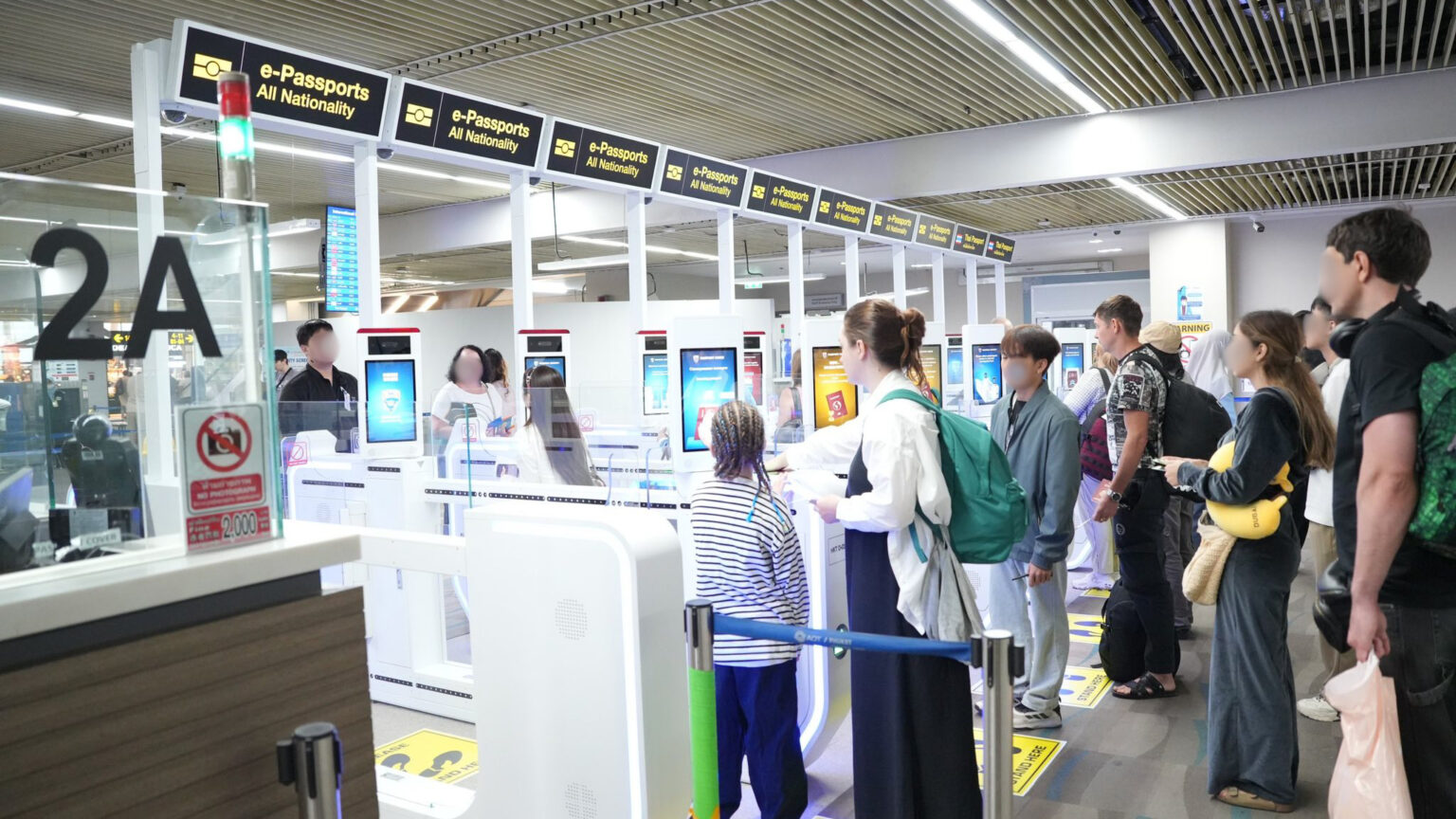
Thailand’s latest proof-of-funds reminder is a practical travel notice, but it also matters for foreign buyers who treat Bangkok property ownership as part of a wider Thailand plan. On 6 July 2026, TAT Newsroom said foreign visitors should keep evidence of sufficient funds ready for possible immigration screening. TAT also stated that the notice does not introduce a new measure.
TAT described the proof-of-funds notice as a travel-preparation reminder, not a new measure.
For property buyers, the point is not alarm. The point is planning discipline. A serious Bangkok condo buyer may enter Thailand for viewings, bank meetings, transfer appointments, family visits, medical care or longer stays. Clear entry preparation reduces friction and supports confidence in the country as a repeat-visit destination.
What TAT clarified
TAT said the proof-of-funds requirement has been part of Thai immigration rules since 1980 under a Ministry of Interior announcement, with current amounts updated under a later announcement in 2000. Depending on entry category, visitors may be asked to show funds in Thai baht, an equivalent amount in another currency, or documents evidencing payment of an equivalent amount.
The amounts listed by TAT include 10,000 baht per person or 20,000 baht per family for Visa on Arrival and certain transit or visa-exempt cases under immigration regulations. For Tourist Visa and Non-Immigrant Visa categories, TAT lists 20,000 baht per person or 40,000 baht per family. TAT also says the requirement does not apply to children under 12.
Clear entry processes help repeat visitors and property buyers plan Thailand trips with fewer surprises.
Why this matters for Bangkok property buyers
Foreign condo buyers often make several trips before and after purchase. A first trip may involve neighbourhood orientation and shortlisting. Later trips may involve reservation, due diligence, bank processes, transfer, furnishing, tenant setup or family relocation planning. Entry preparation should be treated as part of that project plan.
The reminder is especially relevant for buyers who assume property interest alone will make entry formalities automatic. It will not. Visitors still need valid travel documents, visa or visa-exemption eligibility, accommodation details, onward-travel evidence where required and the ability to follow Immigration Bureau instructions at the checkpoint.
Confidence comes from predictable rules
Rules can feel inconvenient, but clear reminders can also support confidence. Investors and residents prefer countries where procedures are visible and can be prepared for. When official agencies explain requirements, visitors can organise documents before flying rather than discovering them at the counter.
For Bangkok property, this fits a wider buyer mindset. The same discipline applies to remittance records, foreign quota checks, title documents, lease files, tax advice and property management authority. Thailand is attractive to many foreign buyers, but ownership still rewards organised paperwork.
Airport and immigration readiness form part of Thailand’s wider visitor-confidence story.
Do not confuse visitor entry with ownership rights
The proof-of-funds reminder is an entry-screening matter. It does not change Thailand’s condominium foreign freehold rules, transfer process or land ownership restrictions. Buyers should keep those topics separate. A person may be eligible to buy a foreign-freehold condominium and still need to meet normal immigration requirements each time they enter the country.
Foreign buyers should therefore plan both sides: property legality and travel eligibility. A lawyer can advise on purchase documents. Immigration guidance should be checked with official channels, the Immigration Bureau, the Ministry of Foreign Affairs or the relevant Royal Thai Embassy or Consulate-General.
Practical preparation checklist
Check visa, visa-exemption or visa-on-arrival eligibility before travel.
Keep proof of sufficient funds or equivalent documents accessible.
Carry accommodation details and onward-travel evidence where relevant.
Keep property-viewing, hotel, hospital or meeting plans organised.
Confirm current guidance with official immigration or embassy channels.
Separate travel requirements from condo purchase due diligence.
Buyer takeaway
Thailand’s proof-of-funds reminder should be read as a planning prompt, not a property-market shock. Foreign buyers who prepare entry documents, purchase records and ownership logistics carefully are better placed to move through Bangkok property decisions calmly. Confidence comes from knowing what has to be checked before each step.
IBP helps foreign buyers connect Thailand policy, travel and ownership requirements with Bangkok property planning. Read more in our Thailand economy and investment news archive or contact IBP Real Estate for a Bangkok buyer brief.
Bangkok heritage walks can change how a foreign buyer understands the city. The most obvious condo checks are transport, price, rent and building quality, but liveability also depends on whether the surrounding city feels interesting, layered and easy to enjoy. Heritage streets, river routes, museums, galleries, temples, shopfronts and old communities can make a Bangkok base feel richer than a purely functional address.
Neighbourhood heritage gives residents a reason to explore Bangkok beyond malls and work commutes.
This does not mean every buyer should live in an old-town district. It means cultural access should be part of neighbourhood due diligence, especially for owner-occupiers, long-stay expats and investors targeting tenants who want more than a short commute. Bangkok’s strongest locations often combine daily convenience with a sense of place.
Why heritage access supports liveability
Foreign residents settle faster when they can build routines that include culture, food, walking, learning and weekend exploration. A condo near heritage districts or easy rail and river connections can offer more than a place to sleep. It gives residents somewhere to take guests, spend slow mornings, understand Thai history and feel connected to the city.
Heritage access can also make repeat visits more appealing. A buyer using a Bangkok condo as a second home may value neighbourhood character, not only square metres. The ability to walk through Talat Noi, visit riverside galleries, reach old markets or spend an afternoon around museums can make the property feel like a personal base rather than a hotel substitute.
The strongest cultural districts mix history, food, art, river access and ordinary daily services.
Look for ordinary services as well as atmosphere
Historic areas can be charming, but buyers still need practical daily life. A beautiful street is less useful if grocery access, taxis, pharmacies, hospitals, parking, rail links or drainage are difficult. When comparing cultural neighbourhoods, test both the weekend walk and the weekday routine.
Ask simple questions. Can you reach the area comfortably in heat or rain? Is there a safe route home after dinner? Are pavements manageable? Can visiting family use taxis easily? Are cafes, convenience stores and daily services nearby? Does the building itself provide the quiet, security and maintenance standard you need?
Heritage routes are wider than one district
Bangkok offers several versions of cultural liveability. Talat Noi and Charoen Krung mix street art, river history, cafes, galleries and old shopfronts. The old town offers temples, museums, government-era architecture and river piers. The riverside connects hotels, galleries, dining, ferry routes and landmark views. Siam and National Stadium offer art, museums and easy central rail access.
Foreign buyers should choose based on routine. Some want to live beside the heritage area. Others prefer a modern condo district with easy access for weekends. Both can work. The important point is whether the chosen building makes cultural life easy enough to be used regularly.
Cultural access can make a Bangkok base feel richer for residents, guests and repeat visitors.
Rental and resale angle
Heritage access can help a rental listing when it is paired with practical transport and a well-managed building. Tenants may respond to a neighbourhood story that includes cafes, galleries, river walks, museums and food. This is especially useful for residents who work remotely, host visitors or want Bangkok to feel distinctive.
However, atmosphere should not replace fundamentals. Investors still need evidence of rent demand, sensible pricing, layout quality, building maintenance and exit liquidity. A cultural neighbourhood can support appeal, but it cannot fix a weak unit or an inconvenient building.
Viewing checklist
Walk the route between the condo, rail, river pier and cultural streets.
Visit during the day and evening to test noise, lighting and comfort.
Check grocery, pharmacy, clinic, taxi and delivery practicality.
Assess whether heritage access is usable in rainy and hot months.
Compare the building’s quietness and security with the surrounding street energy.
Ask whether the neighbourhood story matches the likely tenant or owner profile.
Buyer takeaway
Bangkok heritage walks can strengthen condo liveability when they are connected to real daily routines. Foreign buyers should look for a balance: cultural richness, practical services, transport access and a building that remains comfortable after the weekend charm has worn off. The best locations make Bangkok’s history part of everyday life without making ownership harder.
IBP helps foreign buyers compare Bangkok condos by lifestyle fit, neighbourhood character and practical ownership risk. Browse our Bangkok lifestyle guides or contact IBP Real Estate for a liveability-focused shortlist.
Renovating a Bangkok condominium can be simple when the work is minor and the building process is clear. It can also become stressful when a foreign owner assumes that private ownership means unrestricted work inside the unit. In practice, the juristic office, building rules, contractors, neighbours and sometimes specialist advisers all matter.
Renovation planning should begin with the condominium rules, owner authority and written contractor process.
For overseas owners, renovation rules should be checked before buying if the investment case depends on upgrades. A unit that needs repainting, appliance replacement or furnishing is different from a unit that needs plumbing, electrical, flooring or layout changes. The deeper the work, the more important the approval process becomes.
Start by defining the scope
Owners should separate cosmetic refresh, repair work and structural or systems-related work. Cosmetic refresh may include repainting, loose furniture, curtains, lighting replacement or basic cleaning. Repair work may include air-conditioning servicing, water-heater replacement, appliance repairs, cabinet fixes or minor bathroom works. More serious work may involve walls, floors, plumbing, drainage, electrical systems, balcony areas or anything that could affect common property or another unit.
The scope affects approval, budget, timing and risk. A contractor may describe work as minor, but the building may still require registration, deposits, noise controls, lift protection and work-hour limits. If in doubt, ask the juristic office before the contractor starts.
The juristic office usually controls work hours, lift use, deposits, contractor access and common-area protection.
What the juristic office may require
Every condominium has its own procedures. Common requirements can include an owner request form, contractor identification, work schedule, refundable damage deposit, lift padding, service-lift booking, rubbish removal plan, parking instruction, noisy-work hours and proof that the contractor accepts building rules. Some buildings may ask for drawings or technical details for more complicated work.
Foreign owners should request the current building rules in writing and have them translated if needed. A verbal assurance from a contractor is not enough. If the contractor damages common areas, works outside permitted hours or creates a leak affecting another unit, the owner may still be pulled into the dispute.
Check what cannot be changed
Some elements may be private to the unit but still restricted by building rules or technical constraints. Balcony appearance, windows, facade elements, drainage lines, load-bearing walls, fire-safety equipment, main pipes, air-conditioning placement and external condensers may have limits. A buyer should not assume that a preferred design can be installed simply because it fits inside the room.
This matters before purchase. If the unit only works after a wall is moved, a bathroom altered or a balcony enclosed, the buyer should verify feasibility before relying on that plan. A renovation idea that cannot be approved can change the entire investment case.
A pre-work inspection helps separate defects, repairs, tenant damage and owner upgrade choices.
Pre-work inspection protects the owner
Before contractors enter, photograph the unit, corridors, lift, lobby route and any shared areas that will be used. Record existing wall marks, floor damage, bathroom condition, air-conditioning condition, leaks, cracks, balcony drainage and appliance status. This creates a baseline if later disputes arise about damage.
Owners should also decide who supervises the work. If the owner is overseas, a property manager, agent or trusted representative may need authority to meet contractors, approve minor changes, send photographs and confirm completion. That authority should be written and limited, especially where money is involved.
Budget for timing as well as cost
Renovation timelines in a condominium are affected by building approval, contractor availability, material delivery, lift bookings, permitted work hours and neighbour complaints. A two-day repair can stretch if forms are incomplete or a required part is delayed. This can affect rental start dates, owner trips and handover promises.
Investors should avoid assuming rent can begin immediately after transfer if the unit needs work. A conservative plan includes approval time, cleaning, final inspection, photography and marketing. It is better to model a short vacancy period than to promise a tenant a unit that is not ready.
Contractor control
Choose contractors who understand condominium work, not only house renovation. They should protect lifts and corridors, register staff, respect work hours, remove waste properly and provide invoices or receipts. For electrical, plumbing, air-conditioning or safety-related work, owners should use qualified technicians and keep records.
Payment terms should be clear. Avoid paying everything upfront without milestones, evidence or completion checks. If the owner is abroad, require dated photos and brief progress notes. For larger works, consider whether professional inspection is needed before final payment.
Common mistakes to avoid
Assuming the contractor can start before juristic approval.
Ignoring noisy-work hours, lift protection and waste rules.
Changing plumbing, drainage or electrical systems without proper checks.
Failing to document the unit and common areas before work starts.
Letting renovation timelines collide with tenant move-in dates.
Approving upgrades that do not match the likely tenant or resale audience.
Buyer takeaway
Bangkok condo renovation rules are manageable when foreign owners define the scope, confirm building procedures and supervise contractors properly. The safest renovation is not always the most ambitious. It is the one that improves rent or liveability without creating approval, neighbour or resale problems.
IBP helps foreign buyers assess renovation feasibility, handover risk and ownership logistics before purchase. Explore our foreign buyer guides or contact IBP Real Estate for practical ownership support.