Laundry is a small part of a Bangkok condo viewing, but a large part of living in the unit. Expat residents quickly notice whether the washer is easy to use, damp clothes have somewhere sensible to dry, household linen can be stored and nearby services fit the working week.
A workable laundry routine depends on space, ventilation, equipment and the household’s normal week.
For buyers, laundry planning is also an investment check. An awkward utility corner can create humidity, noise, maintenance calls and clutter. A practical setup helps residents settle into the unit and can make a furnished rental easier to manage.
Start with the household routine
A single professional, a couple, a family and a frequent traveller will use the space differently. Estimate how often clothes, towels and bedding need washing, whether workwear requires pressing, and whether residents prefer home washing, self-service machines or collection and delivery.
Do not design around an ideal quiet week. Consider gym clothing, rainy days, guests, children, larger bedding and the periods when a resident returns from travel with several loads at once.
Inspect the washer position
Check the available width, depth and door clearance before assuming a preferred appliance will fit. Look at water supply, drainage, electrical connection, floor condition and access for repairs. A machine squeezed under a counter may be difficult to remove when servicing is needed.
Operate the existing washer with permission and ask about age or maintenance history where available. Listen for vibration and consider whether it sits beside a bedroom, desk or neighbouring wall. The most attractive cabinet arrangement is not always the easiest to maintain.
Washer position, storage and drying space should be tested before furniture and luggage fill the unit.
Plan drying for Bangkok conditions
Balcony drying may be useful, but building rules, rain, dust, road exposure, privacy and heat affect how practical it is. Confirm what can be placed on the balcony and whether rails, facade elements or common views are subject to restrictions.
Indoor racks need airflow and a position that does not block circulation. A combined washer-dryer or separate dryer may suit some households, but buyers should check ventilation, electrical capacity, heat and manufacturer requirements. Avoid creating moisture problems by drying repeatedly in a closed room without a suitable plan.
Look for storage and work surfaces
Laundry needs space for detergent, baskets, hangers, an iron, cleaning cloths and spare linen. Check whether these items can be stored safely away from food and children. A shallow cupboard may look neat in photographs but fail once normal supplies are added.
A small folding surface and a place for clean items can prevent the dining table or sofa from becoming the permanent laundry station. In compact units, furniture that supports more than one task can help, provided it does not obstruct exits or ventilation.
Use services strategically
Bangkok offers laundries, dry cleaners, pressing services and pickup or delivery options across many districts. Residents should compare convenience, garment handling, communication, turnaround and building access rather than choosing only on headline price.
Walk the neighbourhood to see what is genuinely close, and ask how deliveries are received. Some condos allow easy lobby collection; others have specific vendor access or parcel procedures. A nearby reliable service can compensate for a compact unit, particularly for workwear, bedding or occasional large loads.
Building rules, delivery access and nearby services can make laundry noticeably easier for residents.
Check building facilities and rules
Some condominiums have shared laundry rooms, while others rely entirely on in-unit equipment and outside services. Inspect any shared facility for access, cleanliness, security, payment method, opening hours and machine condition. Confirm whether residents can leave items unattended and how faults are reported.
Owners should also ask about water leaks, drainage complaints and contractor access for appliance repair. Clear procedures matter when the owner is overseas or the unit is tenanted.
Landlord considerations
A furnished rental should state which appliance is provided, its condition and who handles routine care or repairs under the lease. Keep the model information and instructions, and photograph the machine at handover. A tenant should know how to report a leak quickly and where the water can be isolated if appropriate.
Choose equipment that fits the target tenant and can be serviced without dismantling half the kitchen. A premium resident may expect stronger capacity or drying convenience, while a compact urban unit needs simple, durable operation and nearby service support.
Laundry viewing checklist
Measure appliance space, door swing and service access.
Check supply, drainage, power and signs of past leakage.
Test noise and vibration with permission.
Confirm balcony and facade rules for drying.
Identify a ventilated indoor option for wet weather.
Find storage for supplies, linen and cleaning equipment.
Inspect shared facilities and nearby services.
Record appliance condition in a rental inventory.
Liveability takeaway
A well-planned laundry setup will not sell a Bangkok condo on its own, but a poor one can make daily life unnecessarily difficult. Foreign buyers should test the appliance, drying route, storage, building rules and local services as part of the real household routine.
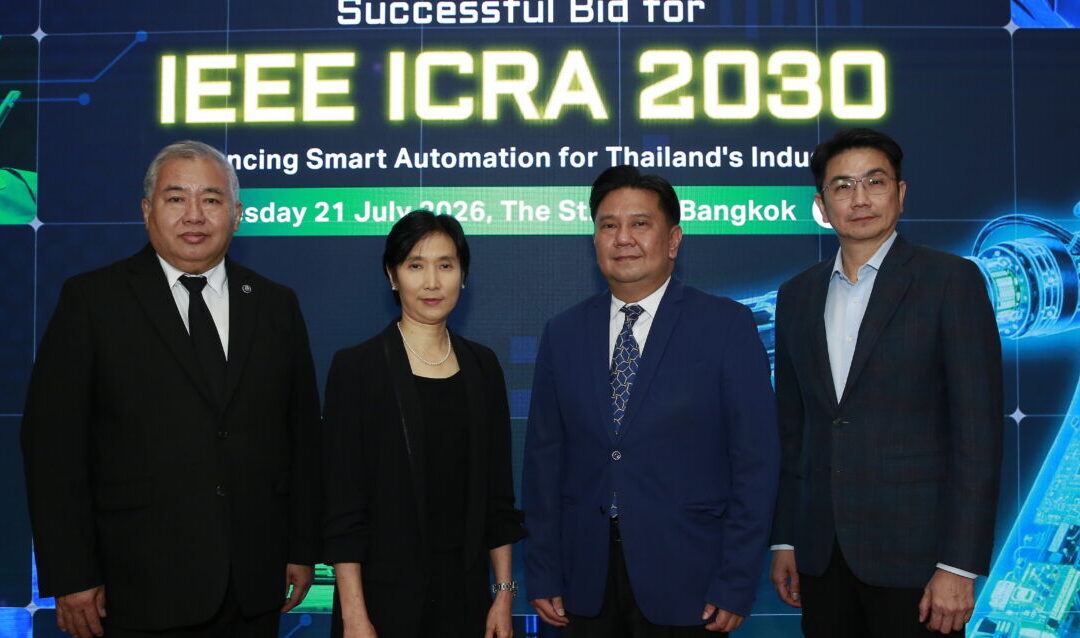
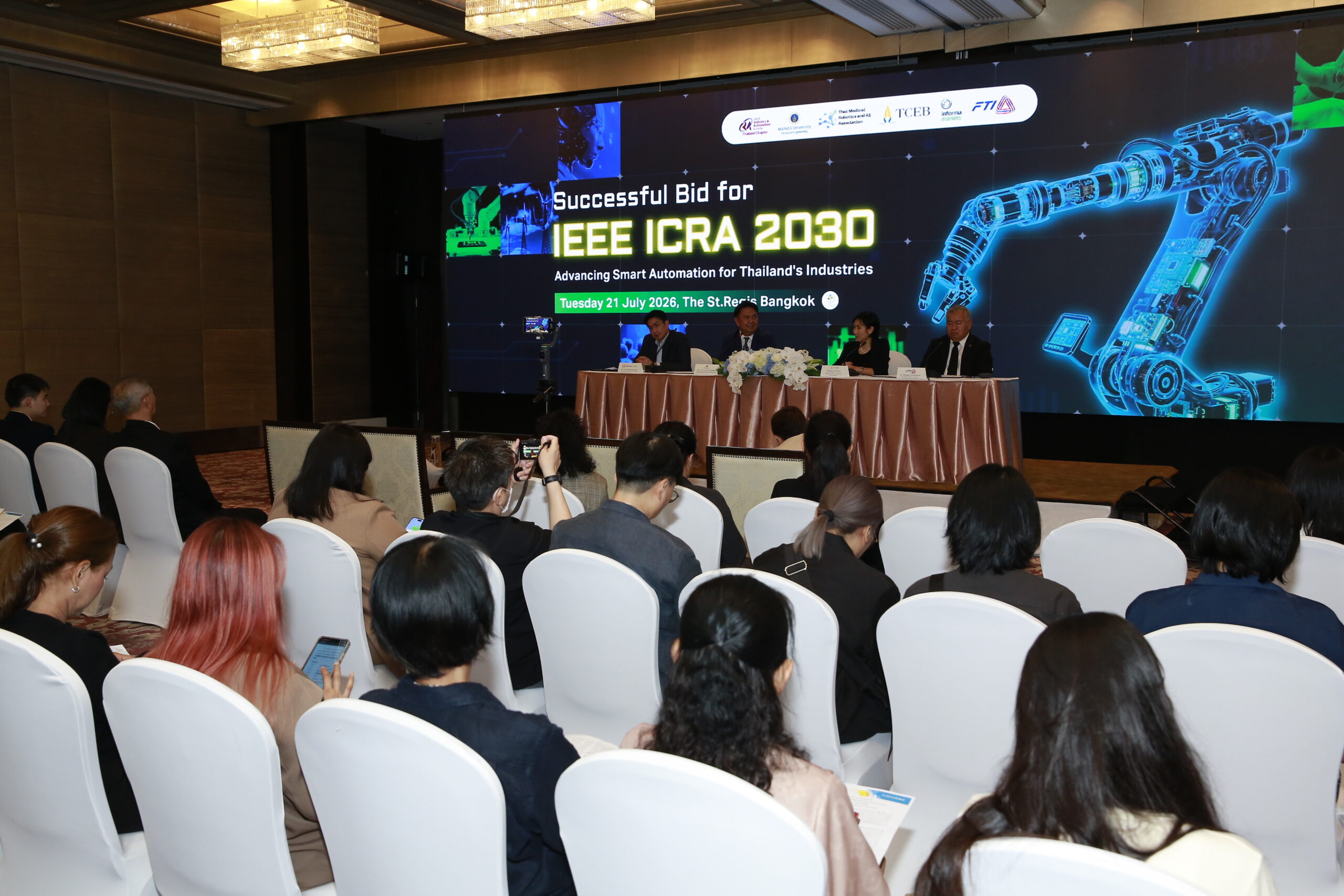
Bangkok has secured a future place on the global robotics calendar. On 22 July 2026, the Thailand Convention and Exhibition Bureau announced that Thailand had won the bid to host the IEEE International Conference on Robotics and Automation in 2030.
Thailand’s successful bid places Bangkok on the future calendar of the global robotics and automation community.
The event is scheduled for 13–17 June 2030 at Queen Sirikit National Convention Center. TCEB expects approximately 10,000 delegates, including 8,000 international participants. For Bangkok property buyers, the immediate value is not a rent forecast. It is another piece of evidence that the city can win and deliver high-level international gatherings tied to advanced industries.
What the ICRA win represents
ICRA brings together robotics and automation researchers, engineers, academics, innovators and industry participants. The successful Thai bid was led through a partnership involving Mahidol University’s engineering and robotics community, IEEE bodies, Thai robotics organisations and TCEB.
That partnership matters. It connects Bangkok’s convention infrastructure with the country’s research institutions and advanced-manufacturing ambitions. Winning the bid requires more than a large venue; it signals confidence in transport, hospitality, event operations, academic networks and the host city’s international accessibility.
Why business events matter to Bangkok
Large congresses create demand across hotels, serviced residences, restaurants, retail, transport and professional services. More importantly, specialist conferences can introduce global participants to local universities, companies and investment networks. Some relationships continue through research, hiring, regional offices or repeat visits after the event ends.
Bangkok is well positioned for this role because it combines air connectivity, a large hospitality base, established convention venues and extensive urban services. These advantages help the city compete not only for tourists but also for people travelling to exchange knowledge and make business decisions.
The bid joined convention expertise with Thailand’s universities, engineering community and robotics institutions.
The Queen Sirikit convention corridor
The choice of Queen Sirikit National Convention Center places the event in an established central corridor served by MRT, hotels, offices, retail, Benjakitti Park and surrounding Sukhumvit and Rama IV districts. Delegates can reach the venue while remaining close to major residential and commercial areas.
Property investors should interpret this locally but carefully. Proximity to a major venue can support visibility and convenience, yet it does not make every nearby condo a strong investment. Building quality, street route, layout, price, management and long-stay tenant demand remain essential.
A signal for Thailand’s innovation profile
TCEB presents the conference as part of Thailand’s ambition to become a regional advanced-manufacturing and innovation hub. Mahidol University’s official announcement also highlights the wider network of Thai universities and research organisations supporting the bid.
This is useful for property confidence because knowledge-intensive growth can broaden the types of people who spend time in Bangkok. Researchers, technology executives, engineers, investors and students use housing differently from short-stay leisure visitors. A more varied international economy can support the city’s resilience, although the effect should be measured over years rather than assumed from one event.
The long-term value of the win lies in networks, research visibility and business activity rather than a one-off property forecast.
What foreign property buyers should watch
The next useful evidence will come from implementation. Buyers can watch how Thailand builds the conference programme, how international institutions participate, whether related industry events expand and whether robotics and automation investment creates sustained corporate or research activity.
At district level, investors should track office occupancy, long-stay leasing, transport improvements and the quality of residential demand around established business and convention corridors. Event attendance alone is temporary; durable employment and institutional networks matter more to a property thesis.
Avoid the event-premium trap
A future international conference should not be used to justify an inflated condo price. By 2030, buildings will have aged, new supply may have entered the market and resident preferences may have changed. Investors need a unit that works before, during and after the event.
The safer approach is to treat the ICRA win as part of a wider confidence file. It supports Bangkok’s case as a globally connected centre for business events and advanced-industry dialogue. It does not remove the need for unit-level due diligence or conservative rental assumptions.
Property takeaway
Bangkok winning ICRA 2030 strengthens the city’s international business-events and innovation narrative. The announcement demonstrates that Thai institutions can assemble a credible bid around research, convention capability and urban infrastructure. For foreign property buyers, that is a positive city-level signal, best combined with disciplined location and building analysis.
IBP helps investors translate Thailand’s economic and infrastructure news into property decisions without overreading headlines. Explore our Thailand economy and investment coverage or contact IBP Real Estate for a Bangkok market brief.
Sanam Pao offers a central Bangkok address with a quieter residential character than the busiest interchange districts nearby. It sits on the BTS Sukhumvit Line between Ari and Victory Monument, giving residents a direct rail connection while keeping much of the immediate neighbourhood lower key.
Sanam Pao buyers should measure the complete lobby-to-platform journey at the times they normally travel.
For foreign condo buyers, the appeal is not a single landmark. It is the combination of central access, established offices and institutions, nearby dining districts and side streets that can feel calmer than major commercial nodes. The investment question is whether a particular building turns that location into an easy daily routine.
Understand Sanam Pao’s position
Sanam Pao should be viewed as part of the wider Phahonyothin corridor. Ari lies one stop north with a stronger cafe and neighbourhood identity. Victory Monument lies one stop south with intensive transport and everyday services. Phaya Thai and Siam are further along the line, connecting residents to major employment, retail and airport-transfer routes.
This position can suit residents who want central movement without living directly above the busiest retail or nightlife zones. It can also appeal to people whose work or study takes them across north-central Bangkok. Buyers still need to test the exact journey rather than treating every address near the station as equally convenient.
Walk the full station route
Measure from the unit door to the platform, including lifts, lobby exit, pavements, crossings and station access. A short map distance can feel longer in heat or rain, particularly where a route has limited shade, uneven surfaces or heavy traffic. Visit during a normal weekday commute and again after dark.
Buildings deeper in side streets may offer greater quiet or larger plots, but residents may rely on motorcycle taxis, ride-hailing or shuttle services. Check whether that arrangement remains comfortable for the intended resident, including visitors, older family members and people carrying work bags or groceries.
Assess the neighbourhood as a weekly routine
Sanam Pao is less retail-saturated than Siam, Asoke or Phrom Phong. That can be a benefit for residents seeking calm, but it makes the immediate service check more important. Map groceries, pharmacies, cafes, casual food, laundry, clinics, fitness, parcel services and evening transport from the exact building.
Side-street character, daily services and comfortable walking routes shape the district’s residential appeal.
Many residents will use nearby Ari and Victory Monument for a wider choice. The question is whether those trips feel like useful optional variety or a requirement for every basic errand. A strong residential location should handle ordinary weekdays without unnecessary friction.
Compare Sanam Pao with nearby districts
Ari usually carries a more recognisable lifestyle story and can attract buyers who prioritise restaurants and neighbourhood atmosphere. Victory Monument offers broader transport intensity and everyday services but can feel busier. Phaya Thai adds Airport Rail Link relevance and stronger interchange logic.
Sanam Pao can win for a buyer who values balance: direct BTS access, a central location and a less commercial immediate environment. It can lose when a building is too far inside a soi, lacks useful nearby services or is priced as though it offers Ari’s lifestyle depth or Phaya Thai’s interchange advantage.
Match the unit to a real resident
Potential residents may include professionals, healthcare or public-sector staff, university-linked households, couples and people who want fast access to central Bangkok without a heavy nightlife environment. Each group has different expectations for size, parking, desk space, storage and building services.
Compact one-bedroom units need efficient plans and a clear rent position. Larger units need a strong reason for families or owner-occupiers to choose Sanam Pao over Ari, Phaya Thai or quieter residential areas elsewhere. Do not assume that centrality automatically creates demand for every unit type.
Building management, unit efficiency and competing stock matter more than the station name alone.
Inspect building quality closely
The area contains buildings of different ages, scales and management standards. Review lifts, lobby control, corridors, facade, pool and gym condition, water systems, fire safety information, parking, parcel handling and juristic communication. Older stock may offer more space, while newer stock may present better but contain many similar units.
Ask how many comparable units are currently marketed in the building and nearby. If several one-bedroom units compete, furniture, light, view, condition and asking rent can decide which one receives enquiries. A station label is not enough differentiation.
Check noise, privacy and orientation
Phahonyothin Road, the elevated railway, institutional activity, schools, construction and side-street movement can create different sound patterns. Visit with windows open and closed, stand quietly in the bedroom and check the corridor and lift position. Higher floors are not automatically silent.
Orientation also affects afternoon heat, glare and outlook. Look at neighbouring plots and low-rise buildings that could change over a long holding period. A pleasant current view should be valued conservatively unless its protection is clear.
Rental and resale strategy
Landlords should compare live alternatives across Sanam Pao, Ari, Victory Monument and Phaya Thai using the same budget and unit size. Allow for furnishing, vacancy, management, common fees, repairs and the time required to prepare a unit between tenancies.
For resale, the listing needs a simple explanation. The strongest story may be a genuinely short BTS walk, a quiet position, an efficient plan or good building management. If the explanation relies only on “central Bangkok”, future buyers may find many substitutes.
Sanam Pao buyer checklist
Walk the exact lobby-to-platform route at realistic times.
Map daily services within a comfortable radius.
Compare Ari, Victory Monument and Phaya Thai alternatives.
Define the likely tenant or owner-occupier before choosing a layout.
Inspect building management, lifts, parking and common areas.
Check road, rail, corridor and neighbouring-property noise.
Review live rental and resale competition in the same budget.
Complete legal and foreign-ownership due diligence on the exact unit.
Buyer takeaway
A Sanam Pao BTS condo can suit foreign buyers who want central access with a more residential feel than nearby transport and lifestyle hubs. The best choices make the station walk easy, the weekly routine practical and the unit competitive on its own merits.
IBP can help buyers compare Sanam Pao with Ari, Victory Monument, Phaya Thai and other rail-connected districts. Browse our Bangkok district guides or contact IBP Real Estate for a location-led shortlist.
Contractors are part of ordinary Bangkok condo ownership. An air-conditioner may need servicing, a leak may require investigation, furniture may need installation or a unit may need repair between tenancies. For overseas owners, the main risk is often not the work itself but uncontrolled access, unclear authority and a weak record of what happened.
Written scope, worker details and building approvals should be organised before access is granted.
A good contractor-access process protects the private unit, common areas, neighbours and the owner. It begins before anyone arrives at the lobby and ends only when keys, cards, deposits, waste and completion evidence have been accounted for.
Confirm the building procedure first
Ask the condominium juristic office for its current written requirements. Buildings may control worker registration, identification, work hours, noisy activity, lift protection, parking, deliveries, deposits, waste removal and advance notice in different ways. Do not rely on rules remembered from a previous project.
Clarify whether the owner must sign the application, whether an authorised representative can do so and how long approval normally takes. Emergency repairs may follow a separate process, but the juristic office should still know who is entering and why.
Define the scope in writing
A quotation should identify the unit, work areas, materials, labour, exclusions, dates, payment stages and the person responsible on site. Photographs or marked plans can reduce ambiguity. If the job may affect plumbing, electrical systems, waterproofing, structure, facade elements or common services, obtain appropriate technical and legal advice before approval.
Owners should not allow a vague instruction such as “fix the bathroom” to become open-ended access. Break the job into inspection, diagnosis, priced recommendation, approval and completion. This gives an overseas owner decision points without forcing them to supervise every movement remotely.
Check identity, responsibility and insurance
Keep the contractor’s business details, lead contact, worker list and emergency number. Ask what insurance or professional credentials the building and the nature of the work require, then verify documents rather than accepting a verbal assurance. Regulated work should be handled by appropriately qualified people.
Record who is responsible for damage to lifts, corridors, neighbouring units and the owner’s property. A building deposit does not necessarily cover every loss, and paying a deposit does not remove the contractor’s responsibilities.
Every condominium controls deliveries, lifts, noisy work and common areas through its own procedures.
Control keys and access cards
Use the narrowest practical access. If the building offers temporary contractor cards, prefer them to handing over a resident’s full access set. Record card numbers, keys, parking passes and the date and person receiving each item. Avoid labelling a key with a complete address where a lost set could identify the unit.
For occupied rentals, access must be coordinated with the tenant and the lease. Give reasonable notice, agree the time window and explain who will attend. An owner or contractor should not assume that a repair request creates unrestricted entry rights.
Appoint a local representative carefully
An overseas owner may use a property manager, trusted representative or professional inspector. Their authority should be written and limited. State whether they can admit workers, approve variations, release payments, collect keys, sign building forms or accept completion.
Set a financial threshold for minor decisions and require approval above it. Ask for dated photographs, short progress notes and immediate reporting of any unexpected condition. The representative should not be placed in a position where speed depends on making unlimited commitments for the owner.
Protect common areas and neighbours
Confirm the permitted route from loading area to unit, service-lift arrangements, floor and wall protection and rules for tools, dust and odour. Materials should not block corridors, fire exits or shared facilities. Waste should leave through the approved route rather than being placed in residential rubbish rooms without permission.
Noise and vibration can travel further than expected in a high-rise. Keep disruptive work within approved hours and ensure the contractor has a contact who can respond if the juristic office or a neighbour reports a problem.
Keep the unit secure during work
Before access, remove or secure passports, title documents, banking records, jewellery, spare cards, medicines and tenant information. Photograph the relevant rooms and valuable fixtures. Decide whether workers may enter bedrooms, storage cupboards or balconies that are outside the agreed scope.
Internet routers, smart-home devices and camera systems also need attention. Do not share permanent passwords when a temporary code or supervised access will do. Any monitoring must respect privacy, building rules and applicable law, especially when a tenant occupies the unit.
A recorded inspection and controlled handback reduce disputes about damage, keys and unfinished work.
Inspect before final payment
Completion should be checked against the written scope. Test the repaired item where practical, inspect finishes, photograph the result and note any remaining work. For technical jobs, use a suitable independent professional where the risk justifies it.
Collect invoices, warranties, model numbers, manuals and maintenance instructions. Confirm that waste has been removed, common areas are undamaged and building deposits can be released under the juristic procedure. Retrieve every key and card, or change access where control is uncertain.
Create an access record
Juristic approval and current building rules.
Written scope, quotation and approved variations.
Contractor identity, worker list and contact details.
Insurance or qualifications required for the work.
Keys, cards, passes and who holds each item.
Before, progress and completion photographs.
Invoices, warranties and maintenance information.
Final inspection, handback and deposit status.
Owner takeaway
Bangkok condo contractor access should be a controlled ownership process, not an informal favour at the lobby. Clear scope, building approval, narrow access, local supervision and a complete handback record make repairs easier to manage from abroad and reduce avoidable disputes.
“Scarce freehold” is one of the most persuasive phrases in Bangkok property marketing. It can describe a genuine investment advantage, but it can also compress several untested assumptions into two words. Foreign buyers should ask what is scarce, who values it and whether the specific unit will remain competitive when it is time to rent or sell.
Scarcity begins with the precise location and the alternatives a future buyer can realistically consider.
Freehold tenure alone does not create scarcity. Many condominiums are freehold, and buyers usually compare several locations, buildings and unit types. A defensible scarcity case needs a limited substitute set, durable resident demand, sound building management and a purchase price that does not already overcharge for the story.
Define the claim precisely
Start by rewriting the sales claim in plain language. Is developable land limited within a short walk of a particular BTS or MRT station? Is the building one of few options with a certain unit size, outlook or residential character? Is the wider district tightly supplied, or is only one sales phase nearly sold out?
These are different propositions. A sold-out project may still face many resale competitors. A rare large layout may appeal to families but have a smaller buyer pool. A tightly held central address may be genuinely difficult to reproduce, yet an inefficient unit in that address can still be slow to sell.
Map realistic substitutes
Scarcity should be tested from the future buyer’s perspective. List the buildings and districts that someone with the same budget could reasonably choose. Include resale stock, completed developer inventory, nearby launches and locations one or two rail stops away. Buyers rarely restrict themselves to the boundary used in a brochure.
Compare total ticket size, usable area, station route, building age, common areas, ownership cost and the likely work required after transfer. A project can look unique until the search is widened to include an older but larger building or a newer project with a better daily routine.
Separate land scarcity from product scarcity
Central Bangkok land can be difficult and expensive to assemble, but land scarcity does not automatically make every unit on that land desirable. The building may contain many similar compact units, face weak views or offer layouts that date quickly. The property product still needs its own reason to win.
A scarce address cannot compensate for weak management, ageing systems or an undifferentiated building.
Product scarcity is more specific. It might come from a practical three-bedroom plan, a genuinely protected outlook, unusually low residential density, strong privacy, direct park access or a building quality that has been maintained over time. Each point should be observable and compared with alternatives.
Test whether demand is broad enough
A scarce asset has limited supply, but an investable scarce asset also needs buyers or tenants who care. Define the likely audience: local owner-occupiers, regional families, foreign executives, retirees, professionals or collectors of prime residences. Then ask what that group prioritises and whether the unit meets those priorities without explanation.
For example, a large unit can be rare but expensive to furnish and hold. A high-floor view can be distinctive but exposed to afternoon heat. A boutique building can feel private but have fewer owners sharing major maintenance costs. Scarcity is useful only when the trade-offs remain acceptable to the target market.
Inspect the building’s ability to preserve value
A rare address can lose appeal if the building is poorly managed. Review juristic-person records through suitable professional due diligence, common-fee collection, planned major work, sinking-fund position where relevant, lift and facade condition, security, fire systems and the quality of resident communication.
Buyers should also study the owner mix and resale environment. If many comparable units appear at once, the building can become its own largest competitor. If owners maintain units to very different standards, future buyers may use the weakest listings to negotiate against the strongest.
Do not pay twice for the same story
The most important investment question is price. A property can be genuinely scarce and still be a poor purchase if the asking price assumes flawless future demand. Compare the unit with documented live alternatives and, where available through appropriate advisers, relevant transaction evidence. Adjust for condition, floor, orientation, view, size, furnishing and transfer structure.
Build at least three scenarios: the intended holding case, a slower resale case and a case in which competing supply improves. The unit should not depend on rapid appreciation to cover an aggressive entry price, high ongoing costs or a narrow exit audience.
The unit itself must remain easy to understand, occupy, rent and resell even when the wider location is tightly supplied.
Check foreign-buyer relevance
Foreign purchasers also need to confirm that the transaction structure, ownership eligibility, foreign-quota position and fund-transfer evidence suit their circumstances. Marketing language about freehold does not replace legal due diligence on the precise unit and condominium.
Liquidity may differ between local and foreign buyer segments. A future foreign buyer may value English-language records, transparent management, an easy transfer file and a location that can be understood remotely. An owner should preserve those practical strengths throughout the holding period.
A simple scarcity scorecard
State exactly what is limited and within what geographic boundary.
List realistic new-build, resale and neighbouring-district substitutes.
Identify the resident group that values the scarce feature.
Test building management and future capital-work exposure.
Compare the unit’s layout, orientation and condition with direct rivals.
Check whether the entry price already captures an excessive premium.
Model a slower resale without relying on appreciation.
Confirm the foreign-ownership and transaction file independently.
Investor takeaway
Bangkok condo freehold scarcity can support value, but only when the scarce feature is precise, useful and difficult to replace. The strongest investment case combines a defensible location, a practical unit, a well-run building, broad enough demand and a price that leaves room for uncertainty.