
Laundry is a small part of a Bangkok condo viewing, but a large part of living in the unit. Expat residents quickly notice whether the washer is easy to use, damp clothes have somewhere sensible to dry, household linen can be stored and nearby services fit the working week.

For buyers, laundry planning is also an investment check. An awkward utility corner can create humidity, noise, maintenance calls and clutter. A practical setup helps residents settle into the unit and can make a furnished rental easier to manage.
Start with the household routine
A single professional, a couple, a family and a frequent traveller will use the space differently. Estimate how often clothes, towels and bedding need washing, whether workwear requires pressing, and whether residents prefer home washing, self-service machines or collection and delivery.
Do not design around an ideal quiet week. Consider gym clothing, rainy days, guests, children, larger bedding and the periods when a resident returns from travel with several loads at once.
Inspect the washer position
Check the available width, depth and door clearance before assuming a preferred appliance will fit. Look at water supply, drainage, electrical connection, floor condition and access for repairs. A machine squeezed under a counter may be difficult to remove when servicing is needed.
Operate the existing washer with permission and ask about age or maintenance history where available. Listen for vibration and consider whether it sits beside a bedroom, desk or neighbouring wall. The most attractive cabinet arrangement is not always the easiest to maintain.
Plan drying for Bangkok conditions
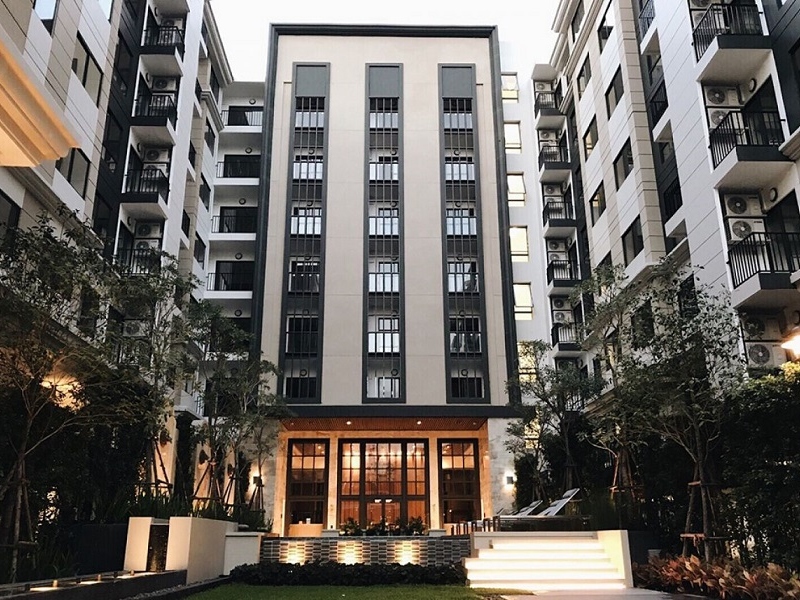
Balcony drying may be useful, but building rules, rain, dust, road exposure, privacy and heat affect how practical it is. Confirm what can be placed on the balcony and whether rails, facade elements or common views are subject to restrictions.
Indoor racks need airflow and a position that does not block circulation. A combined washer-dryer or separate dryer may suit some households, but buyers should check ventilation, electrical capacity, heat and manufacturer requirements. Avoid creating moisture problems by drying repeatedly in a closed room without a suitable plan.
Look for storage and work surfaces
Laundry needs space for detergent, baskets, hangers, an iron, cleaning cloths and spare linen. Check whether these items can be stored safely away from food and children. A shallow cupboard may look neat in photographs but fail once normal supplies are added.
A small folding surface and a place for clean items can prevent the dining table or sofa from becoming the permanent laundry station. In compact units, furniture that supports more than one task can help, provided it does not obstruct exits or ventilation.
Use services strategically
Bangkok offers laundries, dry cleaners, pressing services and pickup or delivery options across many districts. Residents should compare convenience, garment handling, communication, turnaround and building access rather than choosing only on headline price.
Walk the neighbourhood to see what is genuinely close, and ask how deliveries are received. Some condos allow easy lobby collection; others have specific vendor access or parcel procedures. A nearby reliable service can compensate for a compact unit, particularly for workwear, bedding or occasional large loads.

Check building facilities and rules
Some condominiums have shared laundry rooms, while others rely entirely on in-unit equipment and outside services. Inspect any shared facility for access, cleanliness, security, payment method, opening hours and machine condition. Confirm whether residents can leave items unattended and how faults are reported.
Owners should also ask about water leaks, drainage complaints and contractor access for appliance repair. Clear procedures matter when the owner is overseas or the unit is tenanted.
Landlord considerations
A furnished rental should state which appliance is provided, its condition and who handles routine care or repairs under the lease. Keep the model information and instructions, and photograph the machine at handover. A tenant should know how to report a leak quickly and where the water can be isolated if appropriate.
Choose equipment that fits the target tenant and can be serviced without dismantling half the kitchen. A premium resident may expect stronger capacity or drying convenience, while a compact urban unit needs simple, durable operation and nearby service support.
Laundry viewing checklist
- Measure appliance space, door swing and service access.
- Check supply, drainage, power and signs of past leakage.
- Test noise and vibration with permission.
- Confirm balcony and facade rules for drying.
- Identify a ventilated indoor option for wet weather.
- Find storage for supplies, linen and cleaning equipment.
- Inspect shared facilities and nearby services.
- Record appliance condition in a rental inventory.
Liveability takeaway
A well-planned laundry setup will not sell a Bangkok condo on its own, but a poor one can make daily life unnecessarily difficult. Foreign buyers should test the appliance, drying route, storage, building rules and local services as part of the real household routine.
IBP can help expat buyers compare Bangkok condos through the details that shape long-term comfort. Explore our expat living guides and Bangkok lifestyle coverage, or contact IBP Real Estate for a liveability-led shortlist.