Bangkok libraries and reading spaces give expats more than a quiet place with books. They can provide cultural orientation, children’s routines, community events, study areas and an alternative to spending every free hour in a café or shopping mall.
Bangkok City Library combines reading areas with exhibitions and learning spaces for residents and visitors.
For condo buyers, access to these spaces is a useful liveability test. A home may be close to work yet feel disconnected from the activities that make a long stay rewarding. Libraries, bookshops and learning venues help reveal whether a neighbourhood supports curiosity, family life and time away from the unit.
Bangkok offers several kinds of reading space
The city’s options range from public libraries and historic membership institutions to university collections, art-centre libraries and book-led retail spaces. They serve different needs. Some prioritise borrowing and research, while others combine reading with exhibitions, talks, food or informal work.
Before choosing a regular venue, check current access conditions, identification or membership requirements, language coverage, opening arrangements and policies for laptops, calls and children. These details can change, and a beautiful room is not automatically suitable for every routine.
Bangkok City Library: a civic learning space
Bangkok City Library stands on Ratchadamnoen Klang Road in the historic centre. Official government information describes reading, magazine, children’s, exhibition and foreign-language areas, making it relevant to adults, students and families exploring the city.
Its location encourages visitors to combine reading with an understanding of older Bangkok, nearby civic architecture and cultural sites. For residents farther east, the trip may be a planned weekend activity rather than a daily walk, so the full transport route matters more than district prestige.
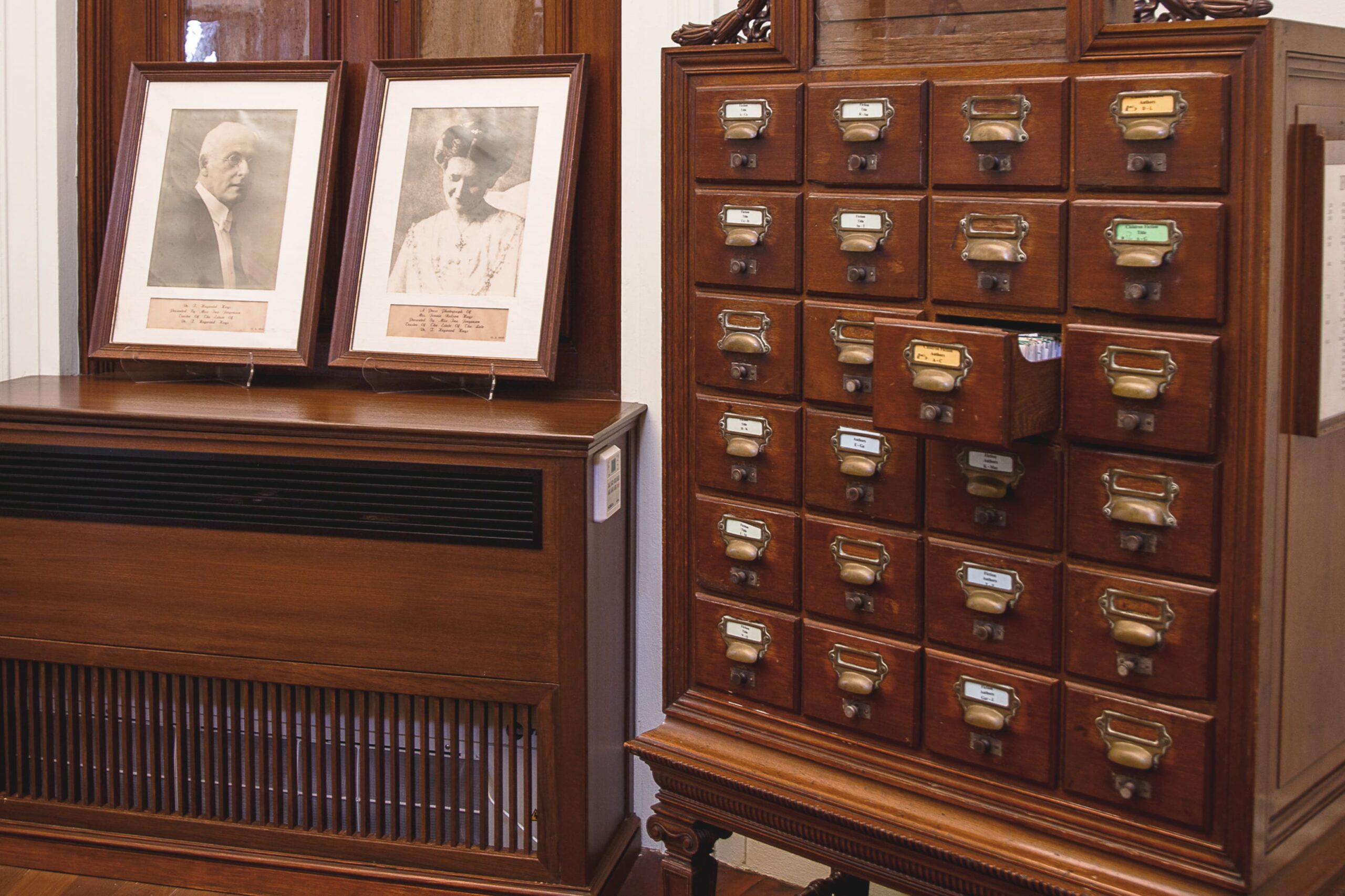
Neilson Hays Library: books, heritage and community
Neilson Hays Library on Surawong Road has served Bangkok’s English-reading community since the nineteenth century, with its present neoclassical building opening in 1922. The institution’s own history presents it as both a library and a continuing cultural hub.
For expats in Bang Rak, Silom and Sathorn, it demonstrates how a neighbourhood amenity can combine international accessibility with local heritage. Membership, events, children’s activities and exhibitions can turn a reading habit into a social connection rather than an isolated pursuit.
Neilson Hays Library adds English-language reading, heritage architecture and community programmes to the Surawong area.
Open House: reading inside a mixed-use destination
Open House at Central Embassy combines a bookshop and co-thinking areas with dining, art and other leisure uses. It is not the same as a public lending library, yet it can suit residents who want books, informal work and meetings in one centrally connected environment.
This kind of retail-led space also illustrates a Bangkok strength: useful third places can sit directly above rail connections and beside offices, hotels and homes. The trade-off is that atmosphere, seating and noise may vary by time, event and visitor volume.
Open House at Central Embassy shows how bookshops, co-thinking areas, dining and retail can share one premium urban setting.
Match the venue to your real routine
A family may prioritise children’s collections, toilets, food options and an easy journey home. A remote worker may care about dependable seating, power, quiet and call rules. A researcher needs collection depth and access permissions, while a casual reader may value atmosphere and nearby errands.
Visit at the time you are most likely to use the space. Test the door-to-seat journey, including the walk from rail or bus, shade, road crossings and evening return. A venue that requires several inconvenient transfers may remain an occasional pleasure rather than a weekly habit.
Use reading access to compare condo locations
Add cultural and learning access to the normal location scorecard beside commute, food, healthcare, green space and total housing cost. The aim is not to buy beside one favourite venue, which may change, but to choose a district with several workable options.
A rail-connected condo can widen the practical cultural radius of home. Conversely, a short map distance can be misleading when crossings, heat or limited pavements make the journey uncomfortable. Test the route rather than relying on a property brochure’s list of nearby landmarks.
Why this matters to landlords
Libraries and reading spaces will not determine rent by themselves, but they can strengthen the lived experience around a home. They may appeal to families, educators, students, creative professionals and long-stay residents who value more than nightlife and shopping.
Landlords should describe such access accurately and avoid promising membership, seats or opening hours. The stronger rental proposition remains a suitable unit with good management and transport, supported by a neighbourhood that offers varied reasons to stay.
Reading-space liveability checklist
Identify public, membership and retail-led options.
Confirm present access and programme information directly.
Check language coverage and children’s facilities.
Visit at the hour you expect to use the venue.
Test rail, bus and walking connections both ways.
Compare quiet, seating, power and call policies.
Look for several alternatives rather than one landmark.
Score cultural access alongside essential daily needs.
Thailand’s investment applications rose strongly in the first half of 2026, led by digital infrastructure and artificial-intelligence data centres. The official figures strengthen the case for watching Thailand as a regional business platform, but Bangkok property investors should read them as a pipeline signal rather than immediate proof of housing demand.
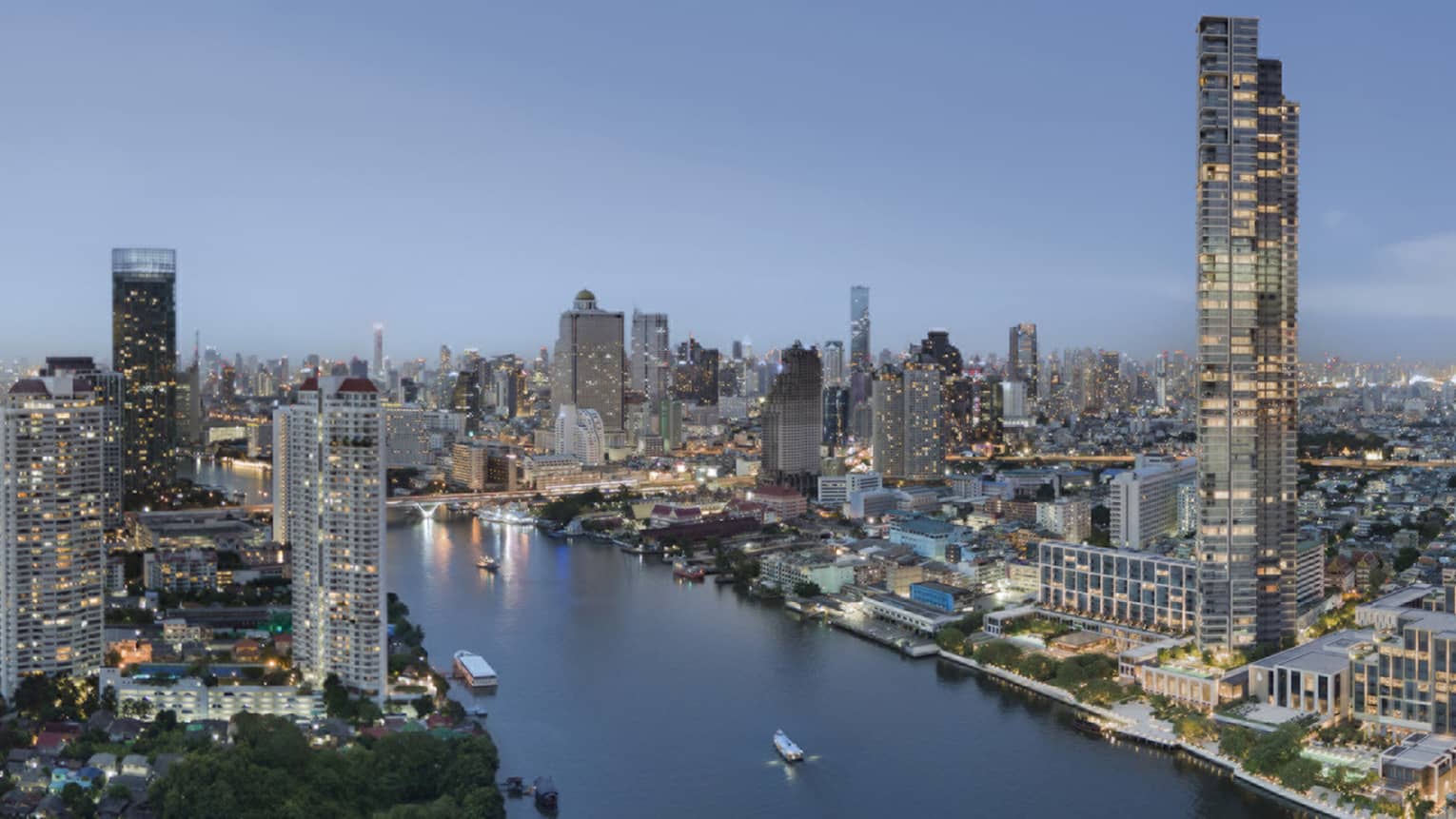
The BOI reported a sharp rise in investment applications during the first half of 2026, led by digital infrastructure.
The Board of Investment reported on 23 July that foreign and domestic applications reached about 1.47 trillion baht across 1,299 projects, up 37% from the same period a year earlier. Digital-sector applications accounted for about 1.12 trillion baht, making the composition as important as the headline total.
FDI drove most of the increase
According to the BOI release, foreign direct investment applications rose 80% year on year to about 1.37 trillion baht across 877 projects. Singapore submitted the largest value, followed by the United Kingdom, China, Taiwan and Japan.
Those origin rankings need context. Corporate structures, project size and sector concentration can produce large swings. The more useful takeaway is that investors from several major markets continue to evaluate Thailand for digital, electronics, automotive, food, logistics and advanced-industry activity.
Digital infrastructure dominated the pipeline
Data centres, hosting and cloud services were central to the first-half surge. This fits Thailand’s effort to build digital capacity for companies serving domestic and regional markets. Related demand extends beyond server buildings to power, cooling, networks, engineering, security and professional services.
The concentration also creates questions. Data centres require significant infrastructure and can be capital intensive without employing as many people per baht as some labour-heavy industries. Property buyers should therefore focus on the mix of headquarters, technical teams, suppliers and service companies that develops around the investment, not the capital value alone.
Digital projects dominated the value of first-half applications, but investors should distinguish approvals and applications from completed operations.
Other sectors broaden the story
The BOI also reported applications in electrical appliances and electronics, agriculture and food processing, logistics and high-value services, automotive production, materials, chemicals and automation. This breadth matters because a resilient economy is less dependent on one project type.
Energy investment accompanied the digital pipeline. The BOI counted 198 clean-energy initiatives within the first-half energy and utilities applications. Reliable, cleaner power and grid capacity will be important if Thailand is to convert digital interest into operating assets over time.
Applications are not completed investment
The BOI figures include several distinct stages. Applications indicate interest, while promotion approvals represent another point in the process. The agency separately reported approvals for 1,300 projects valued at about 1.31 trillion baht in the first half.
Neither figure means that every baht has already been spent. Projects still require land, permits, utilities, financing, construction, equipment and hiring. For property analysis, announcements should be followed by implementation milestones and evidence of sustained business activity.
Employment is the bridge to housing demand
The BOI said projects approved in the first half are expected to generate more than 82,000 jobs. The property relevance depends on where those jobs are located, the skills and incomes involved, and whether employees choose central Bangkok, suburban nodes or locations near industrial estates.
Bangkok can benefit as the country’s headquarters, finance, legal, consulting, education and international-services hub even when physical projects sit elsewhere. Senior staff, regional teams, vendors and visiting specialists may support rental and owner-occupier demand, but the effect will vary sharply by district and transport corridor.
For Bangkok property, the durable signals are implementation, skilled hiring, supplier activity and sustained international business presence.
What Bangkok property buyers should monitor
First, look for confirmed office expansion and sustained hiring rather than treating a national application total as a city-wide rent forecast. Second, watch infrastructure delivery, especially power, digital networks and transport. Third, identify districts that connect efficiently to major employment and airport routes.
Buyers should also follow actual leasing conditions. Comparable rents, vacancy, tenant profiles and competing completions remain more reliable for a particular condo than macroeconomic headlines. Strong national investment interest can support confidence while a poorly selected unit still underperforms.
A positive signal, not an investment guarantee
The first-half figures show that Thailand remains capable of attracting substantial project interest during a period of global uncertainty. The digital share points to a more technology-intensive investment cycle, while the broader sector mix provides supporting depth.
For foreign Bangkok property buyers, the disciplined conclusion is constructive but measured: follow the pipeline into operations, jobs and recurring corporate activity, then connect that evidence to specific residential markets. Do not substitute national capital applications for property-level due diligence.
Branded residences and luxury condos in Bangkok can occupy the same premium streets, offer impressive amenities and target similar international buyers. The distinction is not simply that one carries a famous name. It lies in the operating model, service promise, contracts, ongoing cost and buyer audience.
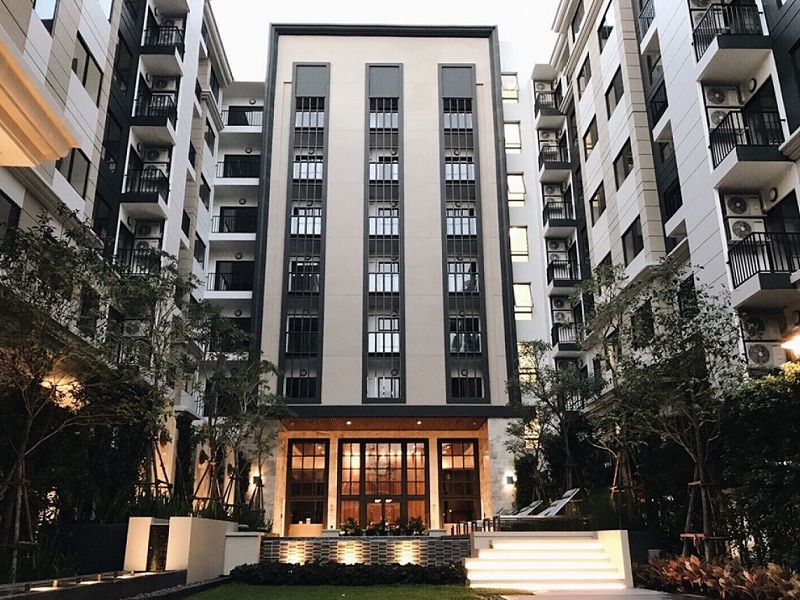
A recognised hospitality brand can shape service expectations, but buyers still need to assess the residence as property.
A foreign buyer should compare both formats as long-term homes and assets rather than as showroom experiences. The stronger choice is the one whose location, unit, management and cost structure match the buyer’s actual use, holding period and exit strategy.
Define the product before comparing it
A branded residence usually operates under an agreement involving a hotel, hospitality, design or lifestyle brand. The brand may influence design standards, resident services, operating procedures and marketing. The exact role varies, so the name alone does not explain the product.
A luxury condominium can deliver premium architecture, large units, concierge-style staffing and extensive facilities without an international residential brand. Some are developed and managed by highly experienced Thai groups. Compare what is contractually and operationally provided rather than assuming one label guarantees superiority.
Understand who does what
Identify the developer, landowner, sales entity, condominium juristic person, property manager and brand operator. Ask how responsibilities change after completion and which organisation residents will deal with day to day. A strong launch team does not necessarily remain the long-term operating team.
For a branded project, have independent counsel review the agreements and disclosures relevant to the brand relationship. Understand its term, renewal arrangements, standards, fees and consequences if the relationship changes. Buyers should not assume a brand name remains attached forever under every circumstance.
Compare service you will actually use
Branded residences may offer hotel-informed concierge, housekeeping coordination, dining access, wellness support or other personalised services. Ask which services are included, which are charged separately, operating hours, booking rules and whether availability depends on an adjacent hotel.
A luxury condo may provide fewer named services but still offer efficient reception, security, engineering and resident support. For many owners, prompt maintenance and consistent management are more valuable than a long service menu. Rank services by realistic frequency of use.
Location, outlook and mixed-use connections can be as important as the brand attached to a residence.
Analyse recurring cost, not just purchase price
Request a clear schedule of common charges, reserve or sinking-fund contributions, service fees and pay-per-use items. Check how budgets can change and which facilities the residence is responsible for maintaining. Mixed-use shared areas require particular clarity.
Compare cost per year and over the intended holding period. A higher operating charge may be reasonable where staffing and service genuinely support the owner’s lifestyle and preserve the building, but it reduces net rental income and affects the pool of future buyers.
Study the exact unit
Premium shared spaces cannot correct an unsuitable home. Measure room proportions, furniture walls, storage, kitchen function, privacy, service access, laundry, lift journey and parking. Test light, heat, noise and the likelihood that the view remains protected.
Large branded residences may target owner-occupiers and long stays, while smaller luxury units may serve a broader leasing market. These are tendencies, not rules. Compare the exact floor plan with the household or tenant profile rather than relying on project positioning.
Test hotel and mixed-use relationships
An adjacent hotel, retail centre, office or park can add dining, security, convenience and destination value. It can also create traffic, events, shared access and operating complexity. Walk all routes between the residence, arrival areas, parking and public realm.
Ask which facilities are exclusive, shared or merely nearby. A marketing illustration can make separate components appear seamlessly connected. Legal rights, access rules, hours and future operating decisions determine how the relationship works after purchase.
Model rental fit carefully
A recognised brand can help an overseas tenant understand service expectations, yet rent still depends on unit size, location, supply, lease rules and affordability. Do not convert a brand premium automatically into a yield premium.
Check minimum lease terms, management requirements, furnishing standards, pet rules and any restrictions on rental activity. Estimate agency costs, vacancy, service charges, maintenance and replacement before comparing net outcomes with an unbranded luxury condo.
Wellness and hotel-style amenities need to be tested against actual use, operating cost and long-term maintenance.
Plan for resale from the start
Ask who is likely to buy the unit later. A distinctive branded residence may appeal to a focused international and domestic luxury audience, while a well-located luxury condo may have a broader pool. Neither is automatically more liquid.
Review competing inventory, developer-held units, future phases and the number of similar layouts. Consider how a buyer will judge the building after the launch period: management quality, condition, resident experience and transparent operating cost become more important than early publicity.
Review the brand and developer separately
The hospitality or lifestyle brand and the property developer contribute different capabilities. Research the developer’s completion record, build quality, defect handling and after-sales process. Separately, understand the brand’s experience in residences and the scope of its role in Bangkok.
Independent legal, tax, technical and financial review remains necessary in both formats. A global name does not replace title, foreign-quota, contract, remittance or physical checks, and an established local luxury developer should be assessed with the same discipline.
Comparison checklist
Identify every party and its long-term role.
Read the terms governing the brand relationship.
Price included and optional services separately.
Compare recurring charges over the full holding period.
Inspect the exact unit and access routes.
Clarify shared and exclusive mixed-use facilities.
Bangkok condo fire safety deserves attention before purchase, after move-in and whenever a unit is rented out. A polished lobby or new interior does not by itself show how well residents can detect a problem, leave the building or receive help during an emergency.
Fire safety should be assessed at building level as well as inside the unit.
Foreign owners should treat safety as a whole-building issue. The unit, corridor, stairways, equipment, management procedures and resident behaviour all interact. This guide provides practical questions to raise, but it does not replace inspection by qualified professionals or advice on Thai building requirements.
Walk the escape route from the exact unit
Start at the front door and follow the designated route to a safe exit. Note the number and position of stairways, direction signs, emergency lighting, fire doors and any level changes. The route should be understood without assuming that lifts will be available.
Repeat the walk at night and consider how smoke, low visibility or a power interruption could affect it. Check whether corridor storage, decorative furniture, bicycles or renovation materials obstruct movement. Ask the juristic office how obstructions are reported and removed.
Understand alarms and resident notifications
Identify detection and alarm equipment inside the unit and in shared areas. Ask how the building communicates an incident, whether announcements are made in languages residents understand and how management contacts owners who are overseas.
An alarm is useful only if residents recognise it and know what to do. Request the building’s emergency instructions, save relevant contact numbers and discuss the procedure with every household member. Tenants should receive the same information at handover rather than discover it during an emergency.
Check fire doors and stairways
Fire doors and protected stairways are part of the escape strategy, not ordinary convenience features. Observe whether doors close correctly, are damaged, are held open or are difficult to use. Do not alter shared safety components or prop doors open for deliveries.
Look at the route all the way to ground level or the building’s designated discharge point. A stairwell that appears clear near the unit may have a problem on another floor. Any concern should be recorded and raised with management for professional assessment.
Residents should know the usable route from the unit to a safe exit without relying on a lift.
Review in-unit electrical and cooking risks
Overloaded extensions, damaged plugs, poor-quality chargers and unsuitable adapters can create avoidable risk. Have the unit’s electrical condition checked where age, renovation history or visible workmanship creates concern. Use equipment appropriate to the local supply and replace damaged items promptly.
Cooking needs similar discipline. Keep combustible items away from heat, do not leave active cooking unattended and clean grease from appliances and extraction areas. Confirm which cooking equipment the building permits, especially before buying or installing high-load appliances.
Treat renovations as a safety event
Renovation can affect wiring, detectors, sprinklers, doors, partitions and access routes. Obtain written building approval where required and use properly qualified contractors. The cheapest proposal is not good value if it bypasses permissions or leaves undocumented changes.
Before work begins, agree how alarms, dust controls, hot work, material storage and waste removal will be handled. After completion, keep invoices, approvals, drawings and test records in the ownership file. A later buyer, tenant or insurer may need to understand what changed.
Ask for building-level records
Through the appropriate legal and management channels, ask about inspection, testing, drills, maintenance and known defects affecting safety systems. The purpose is not to collect certificates without reading them, but to understand whether the building follows a consistent maintenance programme and closes identified issues.
Minutes and notices may reveal recurring concerns such as blocked routes, failed equipment, access problems or delayed repairs. Have important Thai-language material translated accurately and let a qualified adviser explain anything that affects the purchase decision.
Plan for children, older residents and pets
Households differ in mobility, hearing, vision and language. Decide who assists children or an older family member and how essential medication, mobility aids or pet carriers can be reached without delaying evacuation. Keep routes clear inside the unit.
Do not create a plan that depends on one person always being home. Guests, domestic staff and short-term visitors should know the basics. If a household member needs specific assistance, discuss realistic arrangements with building management rather than assuming they are already in place.
Clear management procedures, maintenance records and resident communication support a safer building.
Coordinate insurance and documentation
Building insurance and an owner’s own cover may protect different interests. Ask an insurance professional to explain the scope, exclusions, declared use, contents, liability, temporary accommodation and claim requirements. A landlord should disclose the actual tenancy arrangement accurately.
Photograph important contents, retain purchase and renovation records and keep policy details securely accessible outside the unit. Overseas owners should nominate a reliable local contact within a clearly documented authority while keeping control of personal and financial information.
Give tenants a proper safety handover
A rental handover should identify the escape route, alarms, emergency contacts, building rules and permitted appliances. Demonstrate relevant equipment where appropriate and record that information was provided. Avoid presenting safety as a page of rules that the tenant is unlikely to read.
Schedule periodic checks through an agreed management process and provide a simple way to report faults. Safety-related repairs should be distinguished from cosmetic requests and escalated promptly to the responsible party.
Foreign-owner fire-safety checklist
Walk the full escape route from the unit.
Identify alarms and resident notification methods.
Inspect visible doors, signs, lighting and obstructions.
Review electrical, cooking and renovation risks.
Ask about testing, drills, maintenance and open defects.
Bangkok condo rent growth can improve an investment outcome, but it should never be the figure that rescues a weak purchase. Foreign buyers are better served by underwriting today’s achievable rent carefully and treating future increases as a scenario to test, not an entitlement.
Rent growth needs support from real tenant demand, income and mobility within the exact employment corridor.
The city contains many separate rental markets. A new office cluster, improved transport connection or stronger international hiring may support one corridor while an oversupply of similar units limits another. The useful analysis therefore begins with the likely tenant, the exact building and current competing stock.
Start with an evidence-based current rent
Before forecasting growth, establish the rent a normal tenant would pay now. Use recent completed leases where credible evidence is available, then compare current asking rents in the same building and genuinely competing projects. Deduplicate listings that show the same unit through several agents.
Record unit size, layout, floor, view, condition, furnishing, parking, lease date and inclusions. A high advertised figure for a renovated corner unit should not automatically set the baseline for an ordinary interior-facing home. If the starting rent is overstated, every later forecast compounds the error.
Define the tenant and affordability ceiling
Write down who is expected to rent the unit, where they work or study, the household size and which transport routes matter. Corporate expatriates, internationally mobile professionals, local managers, students and families can respond differently to changes in rent and building quality.
Rent cannot rise indefinitely because tenants can move, renegotiate, reduce space or switch districts. Compare the proposed rent with credible alternatives that offer a similar commute and lifestyle. An investor should understand the point at which the target resident gains too many better-value choices.
Separate market growth from unit improvement
A higher rent after replacing appliances, improving storage or refreshing furniture does not necessarily prove that the market grew. Part of the change may be a return on capital expenditure or simply the removal of a condition discount. Keep these effects separate in the model.
List any work required to achieve the improved rent and include downtime, contractor costs, delivery, management and future replacement. A modest rent increase may be worthwhile, but only after the full cost and remaining useful life of the upgrade are understood.
Building management, ageing and competing units influence whether higher asking rents can be sustained.
Measure competing supply inside the building
Tenants often compare several units during one visit. Count similar homes advertised in the building, note how long they remain available and identify repeated price reductions or incentives. A large pool of near-identical inventory can hold rents down even when the wider district is popular.
Future supply matters as well. New completions can introduce fresh amenities and launch promotions, while ageing buildings may require stronger management and refurbishment to remain competitive. Compare the likely handover dates and unit mix of nearby projects without assuming every announced unit will target the same resident.
Use renewals as a separate decision
A rent review for a reliable existing tenant is not identical to pricing an empty unit for the open market. Renewal preserves occupancy and may avoid agency fees, cleaning, repairs, marketing and a vacant period. Those savings should be considered before demanding the highest visible asking rent.
Ask how the tenant values continuity, whether the unit still matches alternatives and what service issues need resolving. A smaller evidence-led increase with a dependable tenant may produce a stronger net result than a larger target followed by turnover and vacancy.
Model three rent paths
Build a conservative, central and upside case. The conservative path can hold rent flat for a period and include normal vacancy. The central path should reflect the best available building and tenant evidence. The upside path should require identifiable drivers such as proven demand, limited competing supply or a completed improvement.
Do not apply one annual percentage mechanically across a long holding period. Rent changes are often uneven: a lease may remain unchanged during occupancy, move at renewal or reset after refurbishment. Model the actual lease cycle so cash-flow timing is visible.
Keep gross rent and net income apart
Higher rent does not flow entirely to the owner. Allow for agency fees, common charges where owner-paid, repairs, insurance, taxes, management, furnishing replacement and vacancy. Overseas owners should also budget for currency movement and the cost of sending or retaining funds.
Track net operating cash flow beside gross rent. If costs rise faster than rent, the owner can receive less despite an apparently stronger market. This is why a durable building, efficient layout and sensible maintenance plan matter to the investment case.
A better-finished unit may defend its position, but improvements should be tested against the rent tenants will actually pay.
Look for evidence before each increase
Refresh the comparison set before marketing, renewal and any major refurbishment. Ask agents for recently completed transactions, not only current listings, and record what was included. Review tenant feedback, days on market and concessions so the effective rent is not hidden by headline pricing.
For an off-plan purchase, rerun the analysis before handover because the original sales forecast may be several years old. Competing buildings, resident preferences and operating costs can change during construction. The first lease should be based on conditions at completion, not the launch brochure.
Rent-growth underwriting checklist
Establish an achievable current rent before forecasting.
Define the likely tenant and realistic alternatives.
Separate market movement from money spent on the unit.
Count similar available units inside the building.
Model renewals differently from new tenancies.
Use conservative, central and upside paths.
Track net income after vacancy and operating costs.
Refresh the evidence before every leasing decision.