
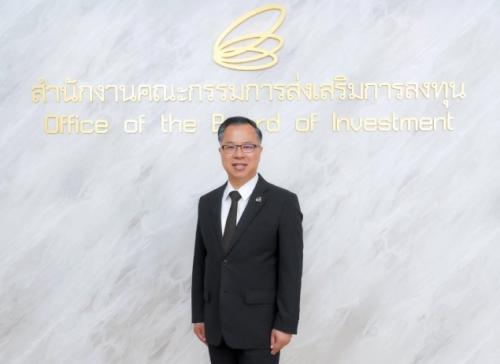
Nestlé’s newly announced Thailand coffee investment is a useful confidence signal for foreign buyers assessing the country’s economic depth. On 9 July 2026, Thailand’s Board of Investment said it had approved a USD 688 million, or 23 billion baht, smart factory and distribution-centre project by Nestlé (Thai). The approval was made on 8 July.
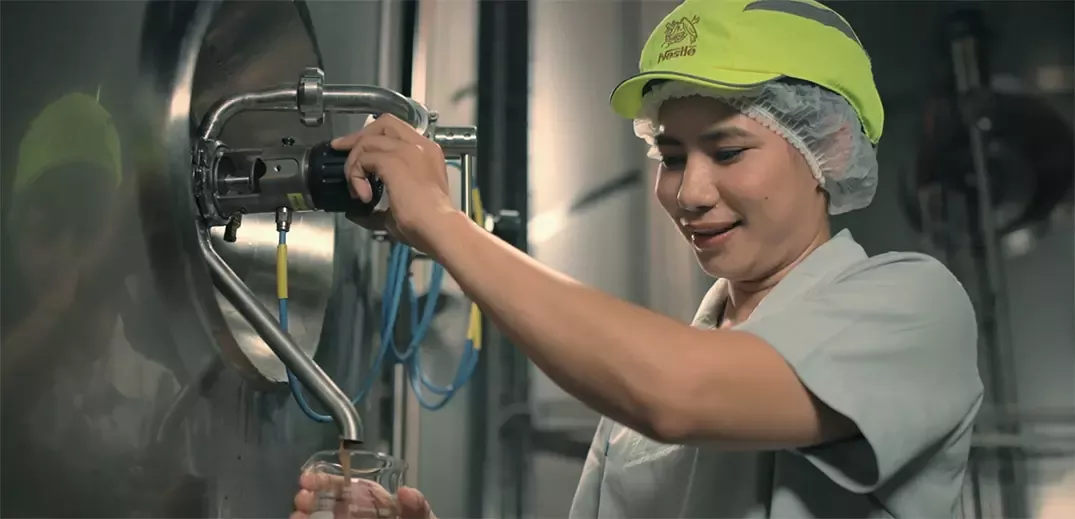
The project is not a Bangkok condominium development, and it should not be used to predict property prices. Its relevance is broader. A major multinational is committing long-term capital, advanced production, regional logistics and skilled employment to a location within the Bangkok metropolitan economy. That supports the case for Thailand as more than a tourism destination.
What the investment includes
BOI says the greenfield facility will be located at Araya Industrial Estate in Samut Prakan province and is scheduled to start operations in the fourth quarter of 2028. It is planned to produce soluble coffee, coffee mixes and ready-to-drink beverages, with annual capacity of 170,000 metric tonnes.
Nestlé’s own announcement describes CHF 563 million of investment and says operations are expected in the latter part of 2028. The company says the site will include an advanced distribution centre intended to improve delivery times, inventory management and agility. Both releases emphasise technology, automation and AI-enabled systems.
Why skilled jobs and supply chains matter
BOI expects the project to create more than 520 jobs for Thai engineers and technical specialists. Nestlé gives the broader figure of more than 500 employees. For property buyers, the important point is not that every worker will live in central Bangkok. It is that internationally connected manufacturing creates layers of demand across engineering, management, logistics, suppliers and professional services.
Bangkok remains the country’s main corporate and services centre. Large investments in the surrounding metropolitan and industrial economy can support business travel, executive mobility, regional offices and demand for a city that offers housing, schools, healthcare, retail and international connectivity.
Local sourcing deepens the economic link
BOI says Nestlé plans to source USD 130 million, or 4.3 billion baht, of local agricultural inputs and raw materials each year. Nestlé’s global release describes more than CHF 100 million of local ingredients and raw materials annually. Coffee beans, sugar and fresh milk are among the inputs identified by BOI.
This makes the announcement more than an imported equipment story. It connects a multinational factory with farms, suppliers, transport, packaging, skills and exports. Nestlé also says it has supported Thai coffee farmers for decades through plantlets and programmes related to regenerative agriculture and climate resilience.

Technology and the BCG agenda
The project has BOI support because it aligns with Thailand’s Bio-Circular-Green economic direction. Nestlé says the plant will use next-generation coffee extraction and aroma-recovery technology, robotics and automated systems across packing, transport and inventory management. BOI frames the facility as an example of higher-value food and beverage manufacturing.
For foreign property buyers, this is a reminder to assess Thailand’s economy across several pillars. Tourism remains important, but manufacturing, agriculture, logistics, digital systems and corporate investment also shape confidence. A diversified economic story is more useful than relying on one visitor or property-market statistic.
What this means for Bangkok property
The direct property effect should be treated cautiously. The factory is in Samut Prakan, not a central Bangkok residential district, and the announcement does not establish a rent or price forecast. A buyer should still judge a condominium on entry price, location, building management, effective rent, ownership costs and resale depth.
The indirect signal is stronger. Nestlé says Thailand is one of its biggest coffee markets and notes a presence in the country exceeding 130 years. A new long-duration investment suggests continued confidence in domestic demand, regional production and Thailand’s operating environment. Bangkok benefits from being the commercial, professional and international-services hub for that wider economy.
A sensible investor reading
- Treat the announcement as a macro confidence indicator, not a price forecast.
- Note the combination of multinational capital, local inputs and skilled work.
- Consider Samut Prakan within the wider Bangkok metropolitan economy.
- Keep project timing separate from immediate condominium demand.
- Use building-level rent and resale evidence for any property decision.
Buyer takeaway
The Nestlé Thailand investment adds substance to the country’s FDI and advanced-manufacturing story. It links global capital with Thai agriculture, technology, logistics and skilled employment. For Bangkok condo buyers, that supports long-term confidence in the city’s role as the service and lifestyle centre of a broader economy, while leaving the need for disciplined property selection unchanged.
IBP helps foreign buyers connect Thailand’s investment story with practical Bangkok property decisions. Follow our Thailand economy and investment news or contact IBP Real Estate for a buyer brief.