
Thailand’s investment applications rose strongly in the first half of 2026, led by digital infrastructure and artificial-intelligence data centres. The official figures strengthen the case for watching Thailand as a regional business platform, but Bangkok property investors should read them as a pipeline signal rather than immediate proof of housing demand.
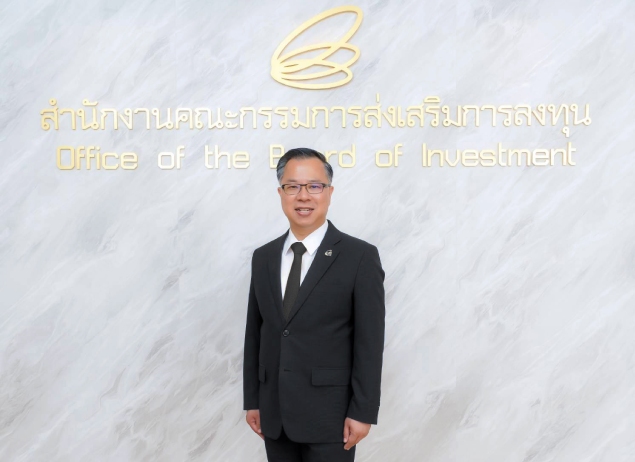
The Board of Investment reported on 23 July that foreign and domestic applications reached about 1.47 trillion baht across 1,299 projects, up 37% from the same period a year earlier. Digital-sector applications accounted for about 1.12 trillion baht, making the composition as important as the headline total.
FDI drove most of the increase
According to the BOI release, foreign direct investment applications rose 80% year on year to about 1.37 trillion baht across 877 projects. Singapore submitted the largest value, followed by the United Kingdom, China, Taiwan and Japan.
Those origin rankings need context. Corporate structures, project size and sector concentration can produce large swings. The more useful takeaway is that investors from several major markets continue to evaluate Thailand for digital, electronics, automotive, food, logistics and advanced-industry activity.
Digital infrastructure dominated the pipeline
Data centres, hosting and cloud services were central to the first-half surge. This fits Thailand’s effort to build digital capacity for companies serving domestic and regional markets. Related demand extends beyond server buildings to power, cooling, networks, engineering, security and professional services.
The concentration also creates questions. Data centres require significant infrastructure and can be capital intensive without employing as many people per baht as some labour-heavy industries. Property buyers should therefore focus on the mix of headquarters, technical teams, suppliers and service companies that develops around the investment, not the capital value alone.
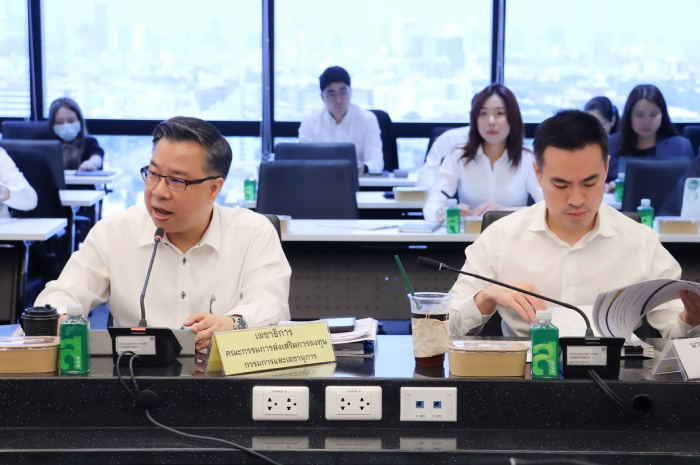
Other sectors broaden the story
The BOI also reported applications in electrical appliances and electronics, agriculture and food processing, logistics and high-value services, automotive production, materials, chemicals and automation. This breadth matters because a resilient economy is less dependent on one project type.
Energy investment accompanied the digital pipeline. The BOI counted 198 clean-energy initiatives within the first-half energy and utilities applications. Reliable, cleaner power and grid capacity will be important if Thailand is to convert digital interest into operating assets over time.
Applications are not completed investment
The BOI figures include several distinct stages. Applications indicate interest, while promotion approvals represent another point in the process. The agency separately reported approvals for 1,300 projects valued at about 1.31 trillion baht in the first half.
Neither figure means that every baht has already been spent. Projects still require land, permits, utilities, financing, construction, equipment and hiring. For property analysis, announcements should be followed by implementation milestones and evidence of sustained business activity.
Employment is the bridge to housing demand
The BOI said projects approved in the first half are expected to generate more than 82,000 jobs. The property relevance depends on where those jobs are located, the skills and incomes involved, and whether employees choose central Bangkok, suburban nodes or locations near industrial estates.
Bangkok can benefit as the country’s headquarters, finance, legal, consulting, education and international-services hub even when physical projects sit elsewhere. Senior staff, regional teams, vendors and visiting specialists may support rental and owner-occupier demand, but the effect will vary sharply by district and transport corridor.

What Bangkok property buyers should monitor
First, look for confirmed office expansion and sustained hiring rather than treating a national application total as a city-wide rent forecast. Second, watch infrastructure delivery, especially power, digital networks and transport. Third, identify districts that connect efficiently to major employment and airport routes.
Buyers should also follow actual leasing conditions. Comparable rents, vacancy, tenant profiles and competing completions remain more reliable for a particular condo than macroeconomic headlines. Strong national investment interest can support confidence while a poorly selected unit still underperforms.
A positive signal, not an investment guarantee
The first-half figures show that Thailand remains capable of attracting substantial project interest during a period of global uncertainty. The digital share points to a more technology-intensive investment cycle, while the broader sector mix provides supporting depth.
For foreign Bangkok property buyers, the disciplined conclusion is constructive but measured: follow the pipeline into operations, jobs and recurring corporate activity, then connect that evidence to specific residential markets. Do not substitute national capital applications for property-level due diligence.
Read more in IBP’s Thailand economy and investment coverage and Bangkok property analysis. To assess districts positioned for durable international demand, contact IBP Real Estate.