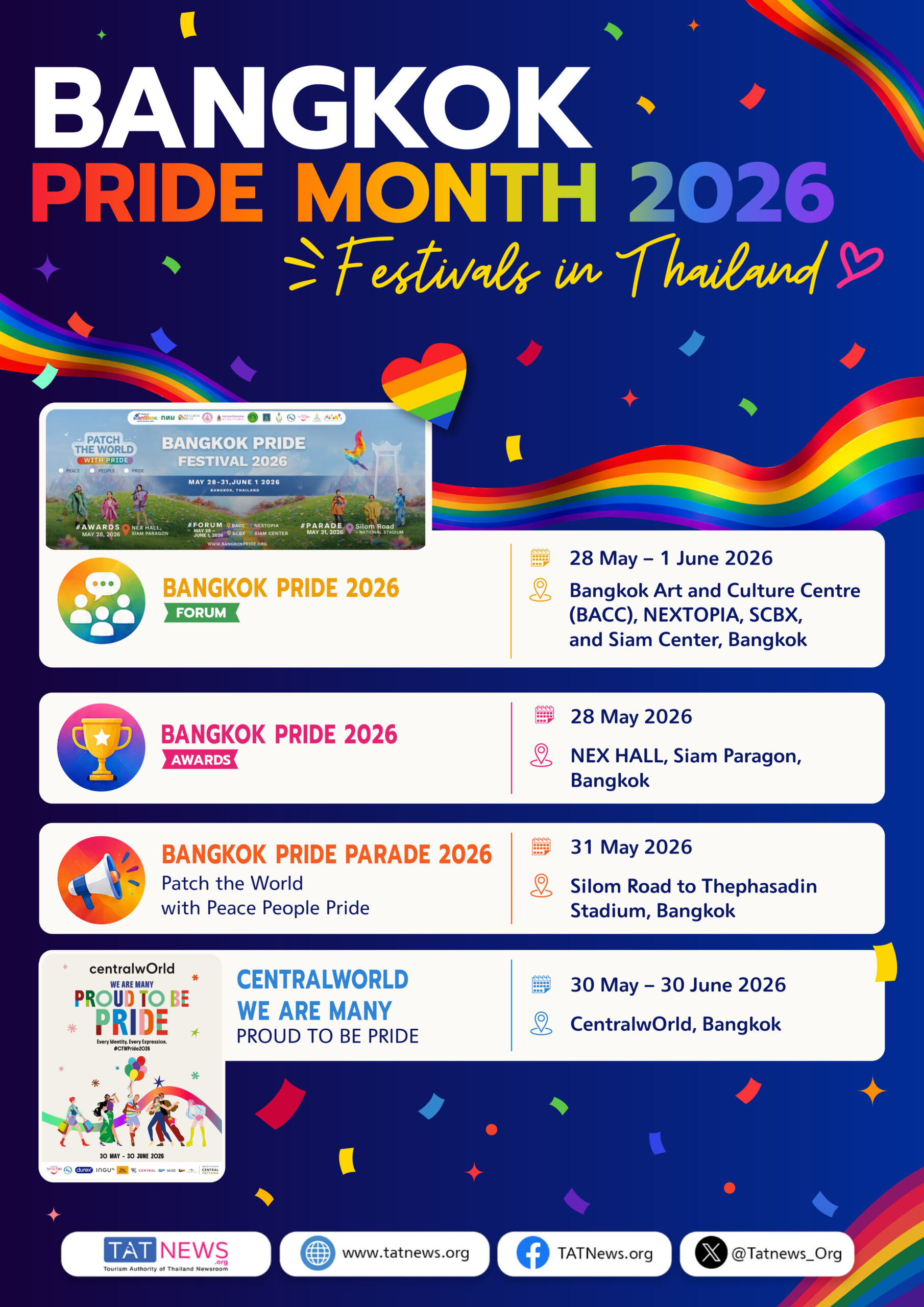
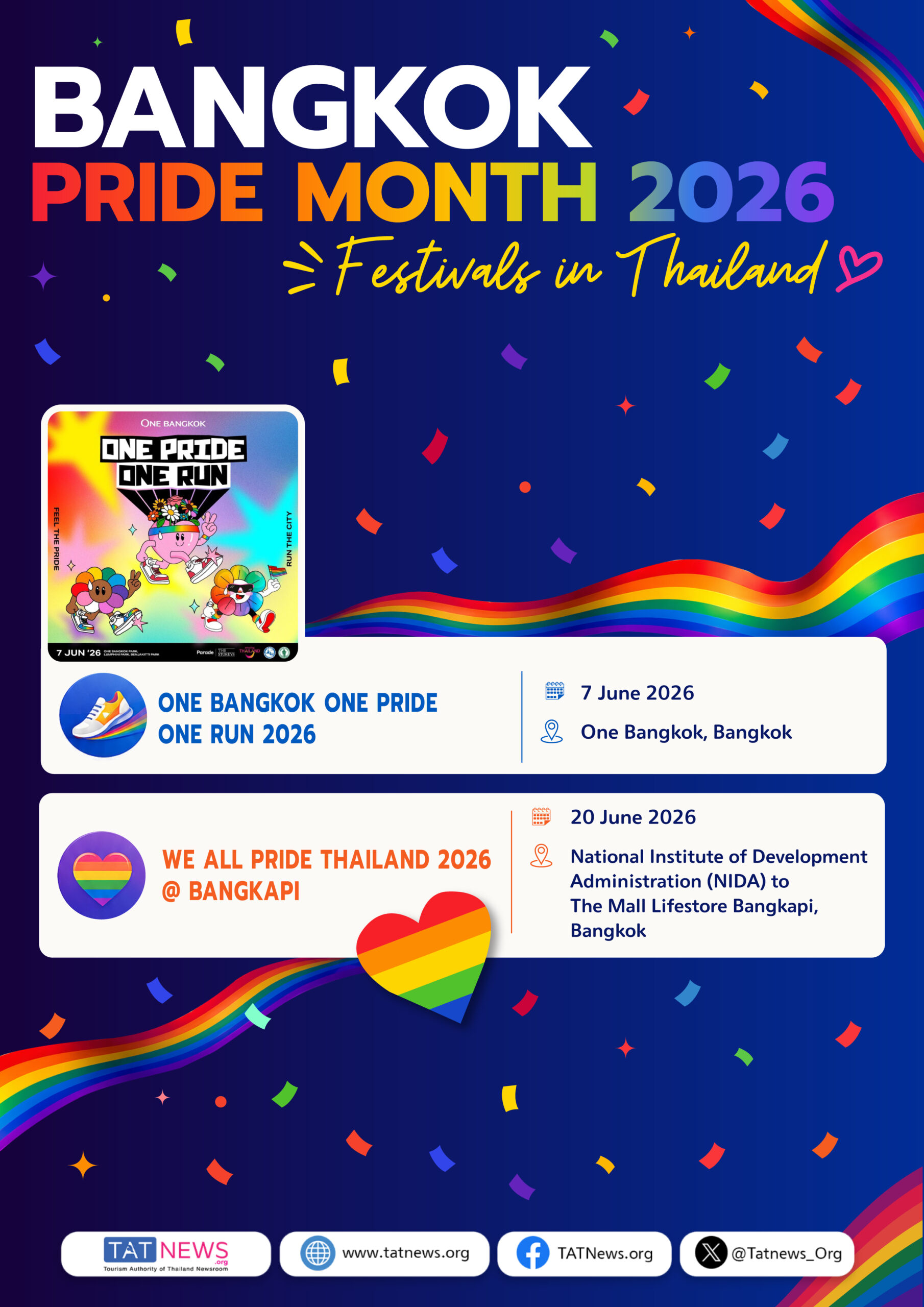
Bangkok Pride Month is useful evidence for foreign buyers because it shows the city as a lived environment, not only an investment market. TAT’s Pride Month Festivals 2026 calendar lists several Bangkok events, including Bangkok Pride 2026 awards at NEX HALL, Siam Paragon on 28 May, the Bangkok Pride Parade from Silom Road to Thephasadin Stadium on 31 May, a forum from 28 May to 1 June, CentralwOrld’s WE ARE MANY programme from 30 May to 30 June, and One Bangkok One Pride One Run 2026 on 7 June.
Pride Month programming adds another layer to Bangkok’s international city life.
For property buyers, this is not simply an events diary. Pride Month shows how Bangkok’s central districts handle identity, culture, public space, retail, mobility and social life. Those qualities influence whether a foreign resident feels comfortable using the city, inviting friends, staying longer and treating Bangkok as more than a short-term investment location.
Liveability is a property fundamental
Foreign buyers often begin with price per square metre, BTS distance and rental yield. Those are necessary, but they are not enough. A city that feels open, active and socially varied can support deeper residential demand. Events, parks, galleries, malls, dining districts and community programming all help residents build routines outside the building.
Bangkok’s Pride Month calendar touches several key zones: Siam, Silom, BACC, Siam Centre, CentralwOrld, Bangkapi and One Bangkok. This spread matters. It shows that lifestyle energy is not confined to one road. Buyers should look at how their target district connects to these civic and cultural nodes by BTS, MRT, walking routes and ride-hailing practicality.
Events along central corridors help buyers understand how neighbourhoods are used beyond office hours.
What Pride tells buyers about districts
Silom has long carried an international, office, nightlife and community identity. Siam and Ratchaprasong show the power of retail-led public programming. One Bangkok points to the newer integrated-district model, where offices, homes, retail, parks, hotels and events are planned together. Bangkapi reminds buyers that Bangkok liveability also extends beyond the most expensive central addresses.
A buyer does not need to purchase beside a parade route. The practical point is to judge whether the condominium connects to the Bangkok life the buyer wants. Some owners want a quiet building with quick access to events. Others want to be in the middle of activity. A good decision starts with that lifestyle fit before comparing unit finishes.
How to use events as neighbourhood due diligence
Visit the district during an event and on a normal weekday evening.
Check whether BTS, MRT, taxis and walking routes remain comfortable when crowds gather.
Look for restaurants, parks, supermarkets and services that work outside event periods.
Ask whether tenants in the building value culture, offices, schools, healthcare or nightlife most.
Balance private facilities with the public life available around the building.
Events can make a neighbourhood look exciting for one day, but buyers need to know what remains afterwards. The strongest liveability comes from repeated use: grocery shopping, coffee, exercise, commuting, healthcare, dinner, weekend culture and simple safety. Pride Month is a helpful lens because it makes public space and connectivity visible.
Inclusive public events can make Bangkok feel more open, social and globally connected for residents.
Why inclusion supports confidence
International buyers compare Bangkok with other regional cities. They think about property law, price, schools, healthcare, visas, transport and rental demand, but they also ask whether the city feels globally connected. Inclusive public programming helps answer that question. It signals that Bangkok can host residents and visitors with different identities, backgrounds and lifestyles.
This supports the city’s premium positioning when paired with practical strengths: airport access, private hospitals, international schools, retail depth, hospitality and established expat networks. A condominium in a well-connected district benefits when the wider city gives residents reasons to stay engaged year after year.
Buyer takeaway
Bangkok Pride Month 2026 is a liveability signal. It shows a city with public energy, cultural confidence and international reach. Foreign buyers should use events like these to test neighbourhood fit, transport comfort and lifestyle depth before choosing a condominium.
IBP can help overseas buyers compare Bangkok neighbourhoods by lifestyle, commute, tenant demand and investment logic. Browse our Bangkok lifestyle guides or contact IBP Real Estate for a neighbourhood-led shortlist.
Thailand’s data-centre investment wave matters to Bangkok property buyers because it points to the kind of economy the country is trying to build. On 6 May 2026, the Board of Investment, through the One Start One Stop Investment Center, reported that Thailand had approved six major projects worth a combined 958 billion baht, or about USD 29 billion, led by data infrastructure expansion by TikTok System (Thailand) Co., Ltd.
BOI approvals show how digital infrastructure has become a major Thailand investment theme.
For foreign property buyers, this is not a direct instruction to buy a condominium. It is a confidence signal. Large digital-infrastructure commitments can support employment, supply chains, professional services, power planning, data, cloud services and regional business activity. Bangkok, as the main corporate, financial, legal and international-services base, is likely to remain closely connected to that activity even when some facilities sit outside the central city.
What BOI said was approved
BOI said three of the six approved projects were in data centre and data-hosting services, with a combined investment value of 913 billion baht. The largest was a TikTok System (Thailand) project valued at 842 billion baht, covering additional servers and expanded data storage and processing infrastructure across Bangkok, Samut Prakan and Chachoengsao. BOI also referred to a 46 billion baht Skyline Data Center and Cloud Services project in Chachoengsao with an IT load of 200 megawatts.
Those details matter because they show digital infrastructure is not a small side story. It is tied to regional cloud demand, AI-related services, power availability, clean energy access and speed of investment facilitation. These are the same factors multinational companies consider when choosing where to operate, hire and place regional functions.
Power readiness, clean energy access and faster facilitation are now central to the digital investment cycle.
Why Bangkok property buyers should care
Bangkok property confidence is strongest when it is supported by more than tourism. Tourism remains important, but a more resilient city has multiple demand engines: corporate offices, embassies, hospitals, universities, international schools, retail, logistics, finance, technology and professional services. Data-centre investment can add to that broader platform by attracting vendors, engineers, consultants, compliance specialists and regional management activity.
The effect on condominiums is indirect and selective. A data centre in Chachoengsao does not automatically lift rent in every Bangkok tower. The more realistic link is through Bangkok’s role as the living and working base for executives, service providers and regional decision-makers. Well-connected districts with strong transport, healthcare, schools, retail and office access are better positioned to benefit from this kind of economic confidence.
Watch power and clean-energy execution
BOI’s release did not treat approvals as the end of the story. It highlighted electricity readiness, clean-energy options, skilled talent, deeper supply chains and faster facilitation. Foreign buyers should pay attention to those execution points. If Thailand can support major digital projects with reliable power, cleaner procurement options and predictable approvals, the investment story becomes stronger.
This is relevant to real estate because cities compete on operating confidence. A buyer choosing Bangkok over another regional city is influenced by infrastructure quality, business confidence, airport links, healthcare and policy continuity. Property assets become more attractive when the surrounding economy can support diverse, long-term demand.
Large-scale digital projects can reinforce Bangkok’s role as a regional business base.
How to translate the news into property strategy
Focus on districts connected to offices, hospitals, schools, retail and mass transit.
Avoid treating national investment headlines as proof for a weak building.
Track where corporate tenants and service firms are expanding, not only where infrastructure is announced.
Model rental demand from real tenant groups rather than assuming all FDI becomes condo demand.
Prefer buildings with strong management, usable layouts and credible resale audiences.
This approach keeps the macro story useful without making it exaggerated. BOI approvals can support national confidence, but a condominium still needs its own case. The best Bangkok assets usually combine city-level momentum with building-level discipline.
Investor takeaway
Thailand’s latest BOI data-centre approvals strengthen the country’s technology and investment narrative. For Bangkok property buyers, the signal is positive but indirect: digital infrastructure can support the economy, corporate services and confidence, while the actual purchase decision should still depend on location, building quality, tenant demand and holding costs.
IBP can help buyers connect Thailand economy signals with specific Bangkok districts and condominium choices. Read our Thailand economy and investment news or contact IBP Real Estate for a data-led buying discussion.
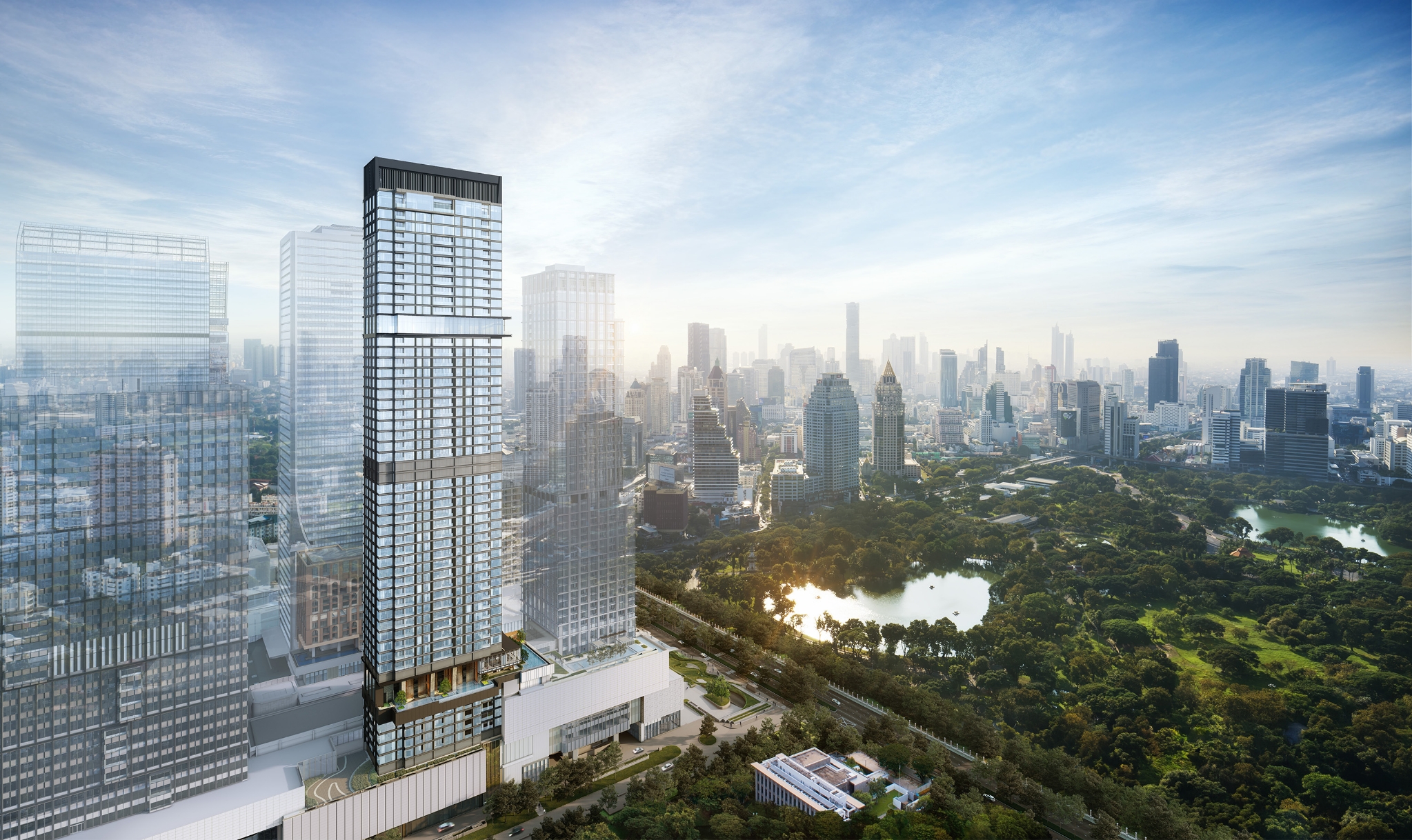
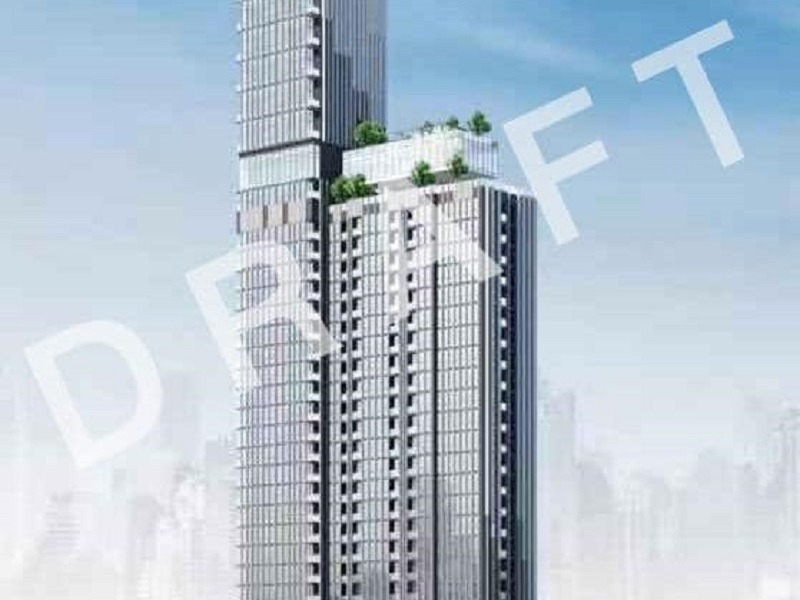
EI8HTEEN SEVEN Wireless is one of the more visible luxury-residence stories for foreign buyers watching Bangkok’s premium core. The official project site places it within Residences at One Bangkok, describing an address in the heart of Bangkok, infused with arts and cultural programmes, and supported by an inclusive, people-centric ecosystem. For buyers, the appeal is not only the tower. It is the wider Wireless Road and One Bangkok context.
EI8HTEEN SEVEN sits within the wider One Bangkok address story on Wireless Road.
This buyer note looks at the project as a decision framework rather than a sales brochure. EI8HTEEN SEVEN may attract attention because of its design language, facilities and location, but foreign buyers still need to check ownership structure, contract terms, payment schedule, completion position, common-area obligations, ongoing costs and future resale audience before committing.
The project is also a useful case study in how Bangkok luxury is changing. Premium buyers are no longer comparing only address and unit size. They are comparing complete ecosystems: park access, cultural programming, retail, hospitality, offices, wellness, mobility and neighbourhood prestige. That can support demand, but it also means buyers should be clear about what they are paying for.
Why the One Bangkok setting matters
One Bangkok is designed as a large integrated district at Wireless Road and Rama IV, with residences, retail, workplaces, hospitality, green space, art and cultural components. For a foreign buyer, this means the district can offer daily convenience and a stronger sense of arrival than a standalone tower. It also gives the residence a broader identity that may be easier to explain to future tenants or buyers.
The location connects several Bangkok demand drivers. Lumphini Park, Wireless Road, Rama IV, embassies, offices, luxury hotels, retail, MRT and the wider Sukhumvit-Silom-Sathorn axis all matter to different buyer groups. A premium project in this setting is likely to appeal to owner-occupiers, executives, regional families, long-stay expatriates and buyers who value Bangkok as a second-home city.
Facilities should be judged by management
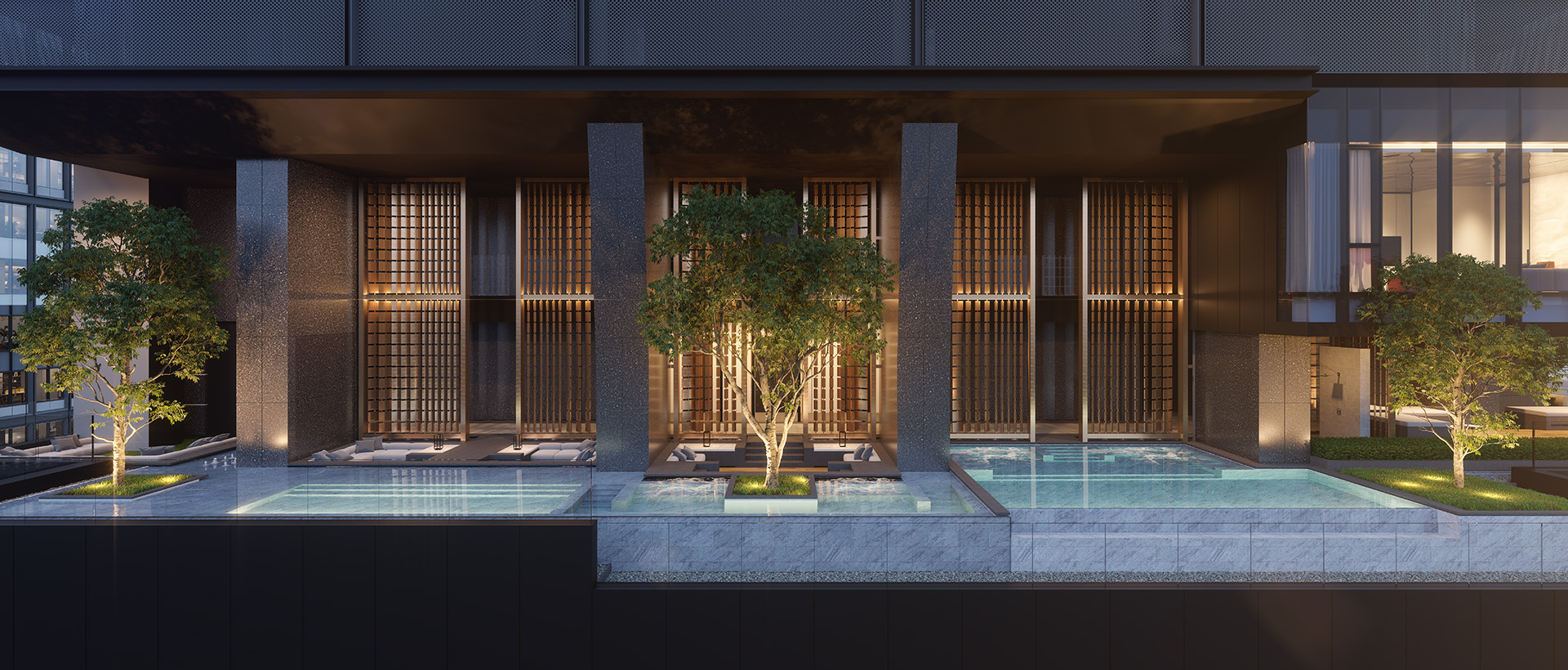
The EI8HTEEN SEVEN website highlights club and lifestyle facilities including a social table, bar, culinary studio, spa, kids’ playroom, gym and swimming pool with jacuzzi. These are meaningful only if management standards remain high after handover. In luxury condominiums, buyers should ask how facilities will be staffed, maintained, booked, funded and renewed as the building ages.
Amenities can help a building stand out, but they also create operating costs. Foreign buyers should review projected common fees, sinking fund arrangements, house rules and any service model carefully. A buyer who lives abroad needs confidence that the building can maintain standards without repeated owner friction or unexpected capital calls.
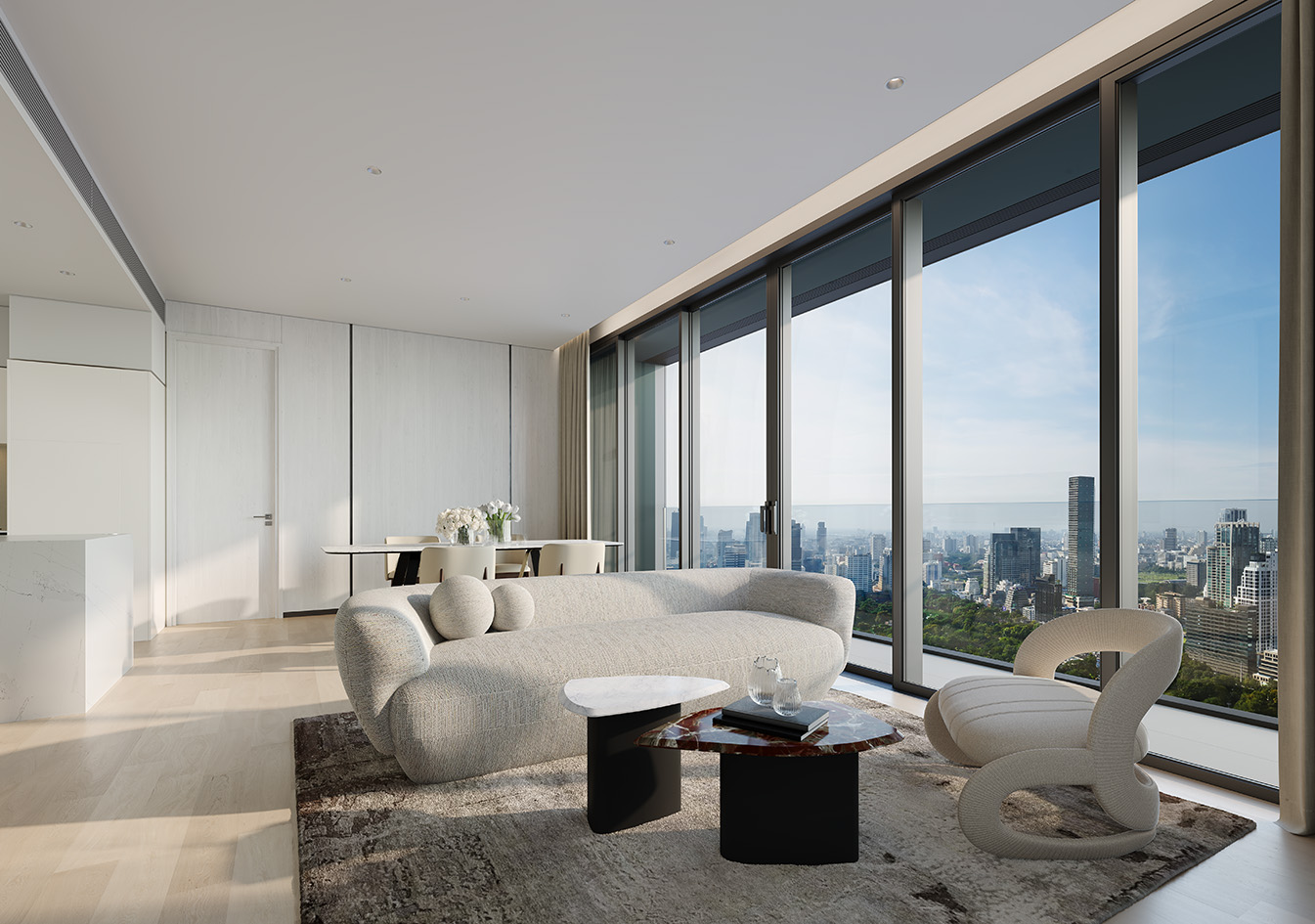
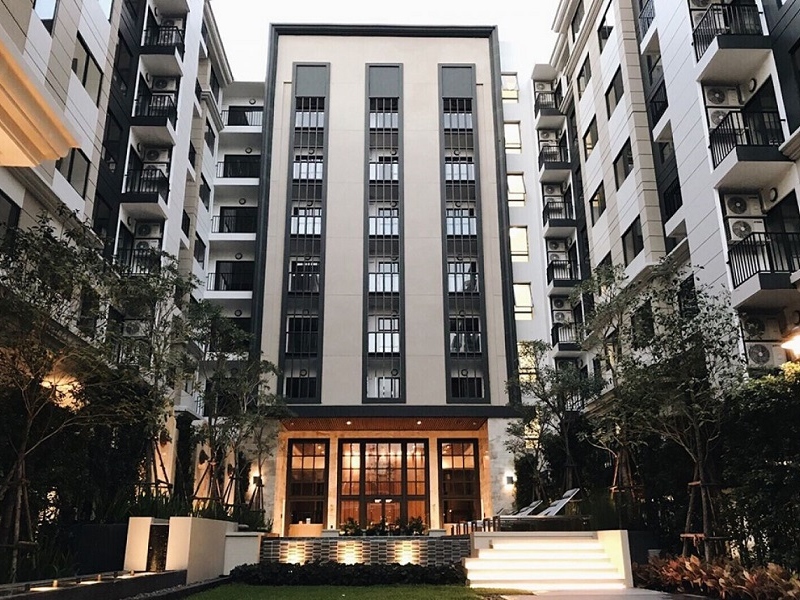
Interior planning should be tested against the buyer profile, not only against presentation quality.
Interior appeal and practical use
Luxury presentation images are useful for understanding tone, but the buyer’s own use case matters more. Is the unit intended as a second home, family base, rental asset or future retirement foothold? Each answer changes the due diligence. A family may care about storage, kitchen function, school routes and guest parking. A landlord may care about furnishing durability, tenant profile and maintenance access. An owner-occupier may care more about light, privacy and acoustics.
Buyers should compare layouts against real furniture placement and service access. Large-looking rooms can become awkward if columns, doors, air-conditioning placement or balcony proportions reduce usability. A high-quality address does not remove the need to test floor plan efficiency.
Questions foreign buyers should ask
What is the precise ownership and tenure structure for the selected unit?
What payments are due before transfer or handover, and what happens if timelines change?
How are common fees, sinking funds and special assessments calculated?
Which facilities are included for residents and which may carry separate usage rules?
What is the expected profile of residents, tenants and future resale buyers?
How does the selected unit compare with ONE89 Wireless and other top Wireless Road alternatives?
These questions are not hostile. They are normal luxury-buyer questions. A premium project should be able to answer them clearly. Foreign buyers should also review the contract with independent advice, especially where the project structure differs from a familiar freehold condominium purchase in another market.
Club-style facilities can support lifestyle appeal when long-term management quality is credible.
Investment logic, not just address prestige
Wireless Road prestige is real, but investment value still depends on entry price, holding cost and exit audience. A foreign buyer should decide whether the project is primarily a lifestyle purchase with capital preservation goals, a rental asset, or a long-term trophy holding. Those are different strategies. A trophy purchase may justify a lower yield if scarcity and personal use are central. A rental-led purchase must be more disciplined about net income.
The strongest case for EI8HTEEN SEVEN is likely to be the combination of district identity, integrated amenities and One Bangkok’s wider destination effect. The main risk is paying for a story without confirming the specific unit economics. Buyers should compare not only other new luxury stock, but also established buildings with proven resale records.
Buyer takeaway
EI8HTEEN SEVEN Wireless deserves attention because it sits at the intersection of luxury residential design, One Bangkok’s mixed-use district and the long-standing prestige of Wireless Road. For foreign buyers, the right approach is to treat it as a serious due-diligence exercise: understand the structure, inspect the unit logic, model the costs and compare the resale audience.
IBP can help overseas buyers compare EI8HTEEN SEVEN with other Wireless Road, Lumphini and Sukhumvit luxury options. Browse our project reviews or contact IBP Real Estate for a luxury-condo shortlist.
Foreign buyers planning a Bangkok condo viewing trip should now watch Thailand’s entry rules more carefully. TAT advised on 21 May 2026 that Thailand’s Cabinet had approved a revision of the 60-day visa exemption scheme, with revised entry conditions to take effect 15 days after publication in the Royal Gazette. TAT also noted that until the revised measures take effect, current entry conditions remain in force and visitors should monitor official updates.
Visa timing, funds evidence and viewing appointments should be planned together.
This is not a reason to cancel a property search, but it is a reason to plan with less wasted time. Many foreign buyers treat the viewing trip as a relaxed holiday with a few property tours added. That can still work for a casual first look. It works less well when entry duration, bank paperwork, transfer timing and legal review all need to fit into a tighter schedule.
The practical rule is simple: do not rely on yesterday’s stay allowance for tomorrow’s purchase plan. Check your nationality, passport validity, airline requirements, visa or exemption category, and any official updates before booking flights. Then design the property itinerary around confirmed time on the ground, not around assumptions.
Start with the purpose of the trip
A Bangkok condo trip can have different purposes. Some buyers are exploring districts for the first time. Others are choosing between shortlisted units, negotiating a reservation, checking a completed building, signing documents or preparing for transfer. Each purpose needs a different schedule. A buyer who only wants orientation can see more neighbourhoods and fewer legal documents. A buyer who may reserve a unit should leave time for document review and banking checks.
If the visit is connected to an imminent purchase, the buyer should prepare before arriving. Ask agents to send floor plans, title basics where available, common fee information, foreign quota status, estimated transfer costs, juristic contact details and recent photos. Remove unsuitable units before landing. Bangkok traffic and building-access arrangements can consume more time than expected.
A shorter trip window makes pre-screening more important before a buyer lands in Bangkok.
Documents to organise before flying
Passport validity and confirmed entry category for your nationality.
Proof of funds and banking route for any intended foreign-currency transfer.
A shortlist of buildings, not only online listing links.
Questions for the juristic person, including fees, sinking fund and debt-free letter timing.
A lawyer or adviser who can review documents quickly if a serious unit appears.
Clear authority if a spouse, company officer or family member must approve the purchase.
The buyer does not need to carry every purchase document on a first trip, but the serious-buyer basics should be ready. If a good resale unit appears and the seller wants a quick answer, the buyer should know whether they can reserve, what the deposit means, whether the funds can be remitted correctly and who will review the agreement. A rushed yes without process is usually more dangerous than missing one unit.
Do not confuse visa stay with ownership rights
Thailand’s visa or visa-exemption rules affect how long a buyer can stay in the country. They do not, by themselves, create or remove the legal framework for foreign condominium ownership. Foreigners can generally buy freehold condominium units within the foreign quota, provided the purchase and transfer requirements are met. However, buyers should not use a short-stay trip to bypass proper ownership, tax or due-diligence advice.
This distinction matters because property conversations often mix immigration, ownership and investment issues together. A buyer may be allowed to enter Thailand for a certain number of days but still need separate planning for long-stay visas, tax residence, rental management, bank accounts, insurance and future resale. Entry permission is only one part of the ownership plan.
Build a realistic Bangkok viewing schedule
For a focused trip, group viewings by district. Do not schedule Rama IX, Riverside, Phrom Phong, Sathorn and Ari on the same afternoon unless the purpose is only a surface tour. A serious buyer should spend enough time in each building to check access, lobby, lifts, parking, noise, common areas, unit condition, view and surrounding daily life. This is especially important for buyers who may not return before transfer.
A good schedule also includes unstructured walking time. Visit the nearest BTS or MRT station, supermarket, hospital route, park, school road, restaurant street and late-evening access. A condominium can look strong online but feel inconvenient in daily use. Foreign buyers should test the life around the unit, not only the unit itself.
Viewing trips should leave time for inspection, legal review and practical neighbourhood checks.
If the rules change before you travel
If revised entry conditions are published before departure, re-check the official requirements for your passport and adjust the itinerary. That may mean fewer districts, a clearer shortlist or using remote pre-screening before the flight. It may also mean applying for the appropriate visa rather than relying on visa exemption if the trip includes extended due diligence, family planning or relocation preparation.
Buyers already in Thailand before any revised measures take effect should follow official advice on their authorised stay. Do not assume that informal comments from agents, forums or social media override immigration notices. For property decisions, use the official entry date and permitted-stay date as the planning base.
Buyer takeaway
Thailand’s pending visa-exemption revision is a reminder that property buyers should plan travel, documents and due diligence together. A Bangkok condo viewing trip can still be productive, but it should be structured around verified entry rules, pre-screened buildings and enough time for careful decisions.
IBP can help foreign buyers prepare a Bangkok viewing route, pre-screen buildings and coordinate practical due diligence before arrival. Read our foreign buyer guides or contact IBP Real Estate before booking a property trip.
Bangkok condo buyers are entering the middle of 2026 with a quieter domestic credit backdrop. On 29 April 2026, the Bank of Thailand’s Monetary Policy Committee voted unanimously to maintain the policy rate at 1.00 percent and noted that credit growth was projected to remain subdued. For foreign buyers who can fund a condominium purchase with offshore cash, this is an important signal. It may create room for negotiation, but it also asks buyers to be more disciplined about demand, resale and holding period.
A slower credit cycle changes negotiating power, but it does not remove building-level risk.
Cash buyers often assume that being less dependent on Thai mortgage conditions gives them a simple advantage. In one sense, it does. A seller, developer or agent may value a buyer who can transfer foreign currency clearly, meet payment milestones and avoid financing uncertainty. Yet cash is only a tool. If it is used to buy a weak unit in an oversupplied building, the advantage disappears after transfer.
The better question is how to use liquidity in a market where local buyers may be cautious and lenders may be selective. Foreign buyers should not read subdued credit growth as a reason to rush. They should read it as a reason to compare more carefully, negotiate with evidence and avoid projects where the resale audience depends too heavily on easy domestic credit.
Why credit conditions matter to condo pricing
Bangkok condominium prices are shaped by more than interest rates. Land cost, construction cost, developer balance sheets, completed supply, tenant demand, foreign quota, project age and location all matter. Still, credit conditions influence how quickly local buyers can absorb stock and how confidently investors can move. When domestic credit is tight, developers and resale sellers may need to work harder to convert interest into actual transfers.
That can help a foreign cash buyer, especially in completed buildings where a seller wants certainty. However, it can also signal weaker end-user demand in some segments. If many Thai buyers in a particular price band struggle to secure finance, a foreign owner may face a smaller future resale pool. A discount is useful only if the buyer understands why it exists.
Where cash can create a cleaner negotiation
Cash is most valuable when it solves a seller’s practical problem. A resale owner may need a firm transfer date. A developer may want to clear selected completed units. An investor may prefer a buyer who can move without loan approval delays. In those situations, foreign buyers can negotiate on price, furniture, transfer cost sharing, repair items or payment timing.
The buyer should still document the process carefully. Foreign funds for a condominium purchase need to be remitted correctly and supported by bank evidence for transfer. Cash does not mean informal. It means the buyer can present a cleaner source-of-funds and transfer plan, ideally with legal and banking checks completed before signing documents.
Completed buildings let buyers test management, maintenance and resale competition directly.
Use liquidity to buy evidence, not hope
A cash-funded buyer can often move faster than a financed buyer, but speed should be used after due diligence, not before it. The best Bangkok condo purchase case should include a tested location, a credible tenant profile, a clear building condition review, foreign quota confirmation, ownership documents, common fee status and realistic exit logic.
In a slower credit cycle, foreign buyers should be especially careful with projects that depend on future area transformation. Infrastructure plans, new retail districts and office clusters can support confidence, but the unit still has to work during the holding period. If the buyer needs rent soon after transfer, the building must compete in today’s market, not only in a sales brochure’s future map.
A cash buyer checklist for 2026
Compare at least three completed alternatives before reserving a new or resale unit.
Ask whether current buyers in the project are mostly cash, financed, Thai or foreign.
Model rent after vacancy, common fees, agent fees, repairs and furnishing.
Check whether the future resale audience includes owner-occupiers, landlords and foreign buyers.
Confirm foreign quota and foreign-currency transfer evidence before the transfer date.
Keep some cash aside for furnishing, tax, insurance, repairs and periods without rent.
This checklist keeps cash from becoming overconfidence. A foreign buyer who can transfer quickly may be welcomed by sellers, but the buyer still lives with the asset after completion. The unit’s plan, orientation, management, noise, access and common areas will matter more over five years than the speed of the initial negotiation.
Cash strength is most useful when it is paired with conservative rent, cost and exit modelling.
What to watch in the next quarter
Investors should watch whether developers continue to limit launches, whether completed inventory is discounted selectively, whether prime rental demand remains stable, and whether Thai household credit conditions improve or stay cautious. Buyers should also track tourism, office leasing, healthcare demand and international school areas because these affect tenant depth in specific districts.
The strongest opportunities are unlikely to be the loudest. They are more likely to be well-managed buildings near daily-use infrastructure, with realistic pricing and a clear tenant or owner-occupier audience. For foreign cash buyers, the goal is not simply to buy when local credit is cautious. The goal is to buy an asset that remains easy to explain when the next buyer asks the same hard questions.
Buyer takeaway
Thailand’s 1.00 percent policy-rate hold and subdued credit comments are useful market context for Bangkok condo buyers. They suggest patience, selectivity and careful negotiation. Foreign cash buyers may have practical leverage, but only if they use it to secure quality rather than chase a headline discount.
IBP can help overseas buyers compare completed stock, foreign quota, rental assumptions and district risk before funds move. Read our Bangkok investment analysis or contact IBP Real Estate for a disciplined buyer shortlist.