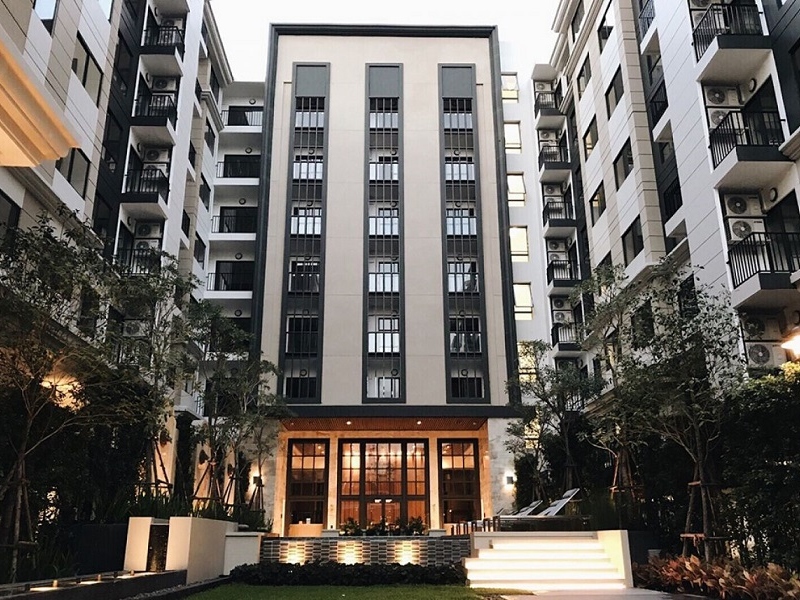
Sutthisan sits on Bangkok’s MRT Blue Line in the broader Ratchada corridor. For foreign buyers, its appeal is practical rather than ceremonial: rail access, established neighbourhood routines and a range of condominium ages. The investment case still depends on the exact street and building.
The useful measure is the complete home-to-platform journey at the times a resident normally travels.
A station name is only the beginning of the search. Sutthisan includes busy roads, quieter residential lanes and routes whose comfort changes with traffic and weather. Buyers should walk the complete journey and compare buildings with the resident profile they genuinely intend to serve.
Place Sutthisan in the wider network
The Blue Line connects the area with major interchange and employment districts across Bangkok. That can support residents whose routines span offices, education, retail and services in different parts of the city. It does not make every nearby condo equally convenient.
Test the direction of travel, interchange burden and late-evening return. A resident who works north of the station may value different access from one commuting towards central business areas. Verify current rail information before relying on a particular route.
Measure the real station walk
Map distances can hide crossings, narrow pavements, slopes, construction, poorly lit sections and the position of station entrances. Walk from lobby to platform during a weekday morning, after dark and, if possible, in rain.
Note whether the route passes useful shops or creates extra errands. A slightly longer walk with lighting, shade and simple crossings may feel better than a short but uncomfortable route. Ask how residents handle the final stretch when carrying groceries or luggage.
Street crossings, lighting, drainage and daily services shape whether a short map distance feels convenient.
Read each micro-location
Properties on a main road may offer direct movement but face traffic, dust or noise. Units deeper in a soi can feel more residential but depend on motorcycle taxis, walking conditions or a building shuttle. Visit at several times before deciding which trade-off suits the target resident.
Check nearby food, supermarkets, pharmacies, clinics, exercise options and everyday services. Local convenience can support long-term liveability, but investors should avoid assuming that every tenant wants the same mix of street activity and privacy.
Compare condominium generations
The district search may include newer towers, established mid-rise buildings and older projects. Newer does not always mean better, while a lower asking price in an older building can conceal future work. Compare condition, layout, management and total ownership cost.
Inspect lifts, corridors, parking, security, water systems, fire-safety arrangements and shared facilities with suitable professionals where needed. Review juristic records and planned expenditure through proper due diligence. Fresh decoration should not replace operational evidence.
Choose the unit for a defined resident
A compact unit may suit a single commuter who prioritises rail access. A larger one-bedroom may appeal to a couple or home worker but compete at a different rent and purchase budget. Write the likely resident profile before accepting an agent’s broad demand claim.
Test kitchen storage, laundry space, working area, natural light, heat, noise and furniture placement. In a competitive rental market, functional differences can matter more than a long amenity list.
Project age, management, unit efficiency and nearby competition matter more than the district label alone.
Examine rental competition building by building
Collect current comparable listings in the same project and nearby alternatives. Separate asking figures from documented transactions where evidence is lawfully available. Note how long listings remain visible and whether many owners present almost identical units.
Model rent after common fees, management, repairs, furnishing, vacancy and leasing costs. Do not transfer a yield assumption from another Ratchada station without adjusting for the exact building, unit and tenant segment.
Protect the resale path
Future buyers will compare station access, building condition, unit efficiency and price against a changing set of projects. Prefer characteristics that can be demonstrated: a workable plan, maintained common areas, clear documents and a route people are comfortable using.
Ask how many similar units exist in the building, whether the foreign ownership quota is relevant to the intended transaction and who is likely to buy next. A low entry price is less useful if the eventual buyer pool is narrow.
Consider car and road access separately
Rail convenience does not remove the need to understand road movement. Check parking entitlement, visitor parking, pickup points, taxi access and congestion around the building. Residents who travel across Bangkok for work may combine MRT, taxis and driving.
Observe service access for deliveries and moves. A lobby beside a busy road can create different practical issues from a building deep inside a lane. These details affect daily comfort and landlord operations.
Use a disciplined viewing shortlist
Walk the complete route in several conditions.
Compare main-road and inner-soi trade-offs.
Define the target resident and unit size.
Inspect building operations and maintenance evidence.
Review competing listings within the same project.
Model net income with unit-specific costs.
Check resale competition and likely buyer groups.
Confirm current legal, quota and transfer details independently.
Before making an offer, revisit the preferred building without the first viewing’s sales momentum. Recheck the route, lobby activity, unit noise and surrounding streets, then compare the notes with the original investment criteria.
Sutthisan can suit buyers who value an established MRT-connected neighbourhood and are prepared to choose carefully at street and building level. Explore more Bangkok district guides, or contact IBP Real Estate for a criteria-led Sutthisan viewing plan.
Foreign investors often ask whether a new-build or resale Bangkok condo is the better purchase. Neither route is automatically superior. The useful question is which option offers the stronger evidence, risk control and exit path for a particular budget and holding plan.
New-build and resale options should be compared within the same demand corridor and buyer budget.
A fair comparison keeps location, unit size, target resident and total capital broadly aligned. Comparing a compact completed unit beside an MRT station with a larger off-plan unit in an emerging district says more about the locations than about new-build and resale property.
Define what each label means
A new-build purchase may involve an off-plan contract, a building under construction or a newly completed project with developer inventory. A resale purchase normally means acquiring from an existing owner after the unit has been transferred at least once.
Those categories contain important variations. A completed developer unit has different risks from an early off-plan purchase. A lightly used resale in a recent building differs from an older unit needing renovation. Record the actual transaction structure before comparing headline prices.
Compare the all-in acquisition cost
Begin with the agreed unit price, then add every amount needed to reach a rentable or liveable condition. The list can include reservation and contract payments, transfer-related costs, furniture, appliances, inspection, legal work, repairs, curtains, connectivity and a contingency allowance.
Promotions can obscure the comparison. A developer package may include furniture or fee support but still require upgrades. A resale may appear cheaper yet need air-conditioning work, replacement appliances or a full refresh. Assign a realistic value only to items the buyer would otherwise purchase.
Use evidence appropriate to the stage
With a completed resale, the buyer can inspect the exact view, noise, light, common areas and wear. The building also has an operating history. Ask for juristic records, common-fee information, maintenance evidence and details of known major works through the appropriate professional review.
A new-build buyer relies more heavily on contractual specifications, approved information, developer capability and construction progress. Study the unit plan, dimensions, material schedule, payment milestones, completion provisions and the process for recording and correcting defects.
A completed unit offers observable condition and layout evidence, while a new-build purchase requires careful specification checks.
Separate design appeal from functional value
New projects may offer modern finishes, efficient shared amenities and presentation designed for current buyers. Resale units may offer larger rooms, established landscaping or a location where developable land is limited. Neither advantage is universal.
Test the home against daily use. Check furniture walls, storage, kitchen function, laundry position, bathroom ventilation, work space and circulation. A photogenic show unit can be inefficient, while an older plan can remain highly practical after sensible maintenance.
Measure the route to rental income
A completed resale can potentially enter the leasing market sooner, subject to transfer, preparation and building rules. It also allows the investor to examine comparable listings and, where lawfully available, documented leasing history. That evidence still needs careful interpretation.
An off-plan unit creates a period before possession when no rent is available and the future competitive set can change. Model the holding plan from actual payment dates, not only from completion. Include furnishing, defects, marketing and vacancy after handover before assuming normal occupancy.
Study building competition
At launch, many similar units may be sold with the same marketing story. At completion, owners can list comparable layouts together. A resale building may already show how often units become available, how listings differ and whether maintained homes command better attention.
Count competing units within the building and nearby projects that target the same resident. Compare floor, orientation, condition, furniture, view and asking history. The relevant competition is rarely every condo in the district.
Building records, competing listings and ongoing maintenance can materially change the resale case.
Assess management and maintenance risk
For a resale, inspect how the juristic person handles cleaning, security, plant, lifts, water systems and repairs. Review records with qualified advisers and understand planned expenditure. Visible presentation is useful, but financial and operational documents can reveal different issues.
For a new-build, the future management culture is not yet observable. Examine the proposed common budget, handover arrangements, warranty process and developer record without assuming that every earlier project will perform identically.
Plan the exit before choosing
A new-build buyer should consider what will distinguish the unit once it becomes a resale competing with developer stock and other owners. A resale buyer should consider the building’s future age, maintenance trajectory and likely buyer pool at the intended exit date.
Ask who may buy next: an owner-occupier, local investor, foreign buyer or landlord seeking a ready tenant. Ticket size, foreign-quota availability, transfer documentation and the ease of viewing can all influence the practical exit.
Build a matched comparison sheet
Keep district, budget, size and target resident comparable.
Calculate total cash required through rental readiness.
Record what can be inspected and what remains contractual.
Model the period before income and a realistic vacancy allowance.
Compare actual competing units, not marketing averages.
Review building management, maintenance and planned expenditure.
Stress-test completion, repair, furnishing and exit scenarios.
Use independent legal and technical professionals where appropriate.
The better purchase is the one whose risks the investor can understand, finance and manage. Explore IBP’s investment analysis and resale strategy guides, or contact IBP Real Estate for a matched new-build and resale shortlist.
Sena Nikhom sits on the northern section of the BTS Sukhumvit Line, offering a residential alternative to Bangkok’s better-known central stations. For foreign buyers, its appeal is less about a single landmark and more about access to established neighbourhood routines, education and employment areas, and the wider Phahonyothin corridor.
Sena Nikhom buyers should test the full walk and platform journey at the times they expect to travel.
That case needs building-level discipline. Buyers should test the real station walk, compare project generations and identify who would choose the exact unit. A station name can introduce the area, but it cannot establish fair value, rent or resale demand on its own.
Understand the northern Bangkok position
Sena Nikhom is north of Bangkok’s traditional core and should be assessed as part of a connected corridor rather than as a substitute for every central district. The BTS provides a direct rail spine, while road connections and local transport shape journeys that do not follow the line.
Map the resident’s likely destinations. A buyer linked to universities, government offices, local businesses or workplaces in northern Bangkok may find the location practical. Someone who travels daily to another part of the city should test the complete peak-time journey and interchange burden.
Walk the station catchment yourself
Map pins do not show heat, rain exposure, pavement quality, crossings, lighting, traffic or the effort of carrying luggage. Walk from the station to each shortlisted entrance at the times you expect to travel. Check both directions and the correct station exits.
A slightly longer but shaded and continuous route may be more usable than a nominally shorter route with difficult crossings. Repeat the walk in the evening and, if possible, after rain. Last-mile comfort affects owner-occupiers and tenants long after the viewing day.
The wider corridor combines established residential routines with education, work, retail and rail connections.
Judge everyday convenience, not only rail access
Record where a resident would buy groceries, eat, exercise, receive deliveries, obtain healthcare and handle daily errands. Check which services are genuinely walkable and which require a motorcycle taxi, car or connection to another station.
Neighbourhood convenience is personal. A quiet lane may suit a resident who values privacy, while another tenant may prefer visible retail immediately outside the building. Visit on weekdays and weekends to understand the actual rhythm and closing times.
Separate local demand from marketing claims
Ask agents for evidence from comparable units in the same building and nearby projects. Look for achieved rents where available, vacancy periods, tenant profiles, renewal patterns and the number of similar listings. Do not rely on a single optimistic advertisement.
The most defensible units usually solve a clear resident need: efficient station access, sensible layout, manageable total rent, quiet bedrooms or practical facilities. Define that need in one sentence. If the target resident remains vague, the investment case needs more work.
Compare different building generations
The area can present buyers with projects of different ages, scales and design priorities. Newer does not automatically mean better. Compare usable layout, ceiling and window design, lift capacity, common areas, parking arrangements, maintenance condition and management quality.
Project age, management, unit design and competing supply matter more than the station name alone.
In an older building, investigate planned major works and the condition of shared systems. In a newer project, examine defect handling, early management performance and how many units are reaching the rental market together. Each stage brings a different evidence set.
Check unit orientation and urban conditions
Visit the exact unit rather than an equivalent floor plan. Assess sun, heat, outlook, privacy, traffic, rail, school, aircraft or construction noise where relevant. Open and close windows and doors with permission, and listen from the bedroom as well as the balcony.
Investigate neighbouring plots if an open view or quiet outlook supports the asking price. Present conditions are not permanent. A professional adviser can help examine planning and ownership information, while repeated visits reveal ordinary activity that a short appointment may miss.
Review building management and owner evidence
Request the condominium records that your lawyer and adviser consider relevant. Examine budgets, common fees, major repairs, meeting decisions, rules and the handling of outstanding owner payments. Good facilities are useful only when they are maintained and governed effectively.
Ask how deliveries, visitors, contractors, pets, renovations and leasing are managed. These procedures affect daily life and landlord operations. Obtain the current written rules rather than assuming practices from another condominium.
Stress-test the rental case
Build a cash-flow model from conservative rent and realistic costs. Include common fees, management, maintenance, insurance, vacancy, leasing, furnishing replacement and tax advice appropriate to your circumstances. Allow time for a new unit to build a leasing record.
Compare the result with other districts at a similar total budget. Sena Nikhom may offer a different balance of space, access and resident demand, but a lower entry price does not compensate for weak tenant fit or an inefficient unit.
Plan the resale audience
Identify who could buy the property later: local owner-occupiers, investors, families, professionals or buyers connected to the corridor. Check how the total ticket compares with competing new and resale stock. Foreign ownership eligibility should be verified for the exact transaction.
Resale depth matters more than a theoretical percentage gain. A sensibly priced, well-kept unit with clear documents and broad practical appeal may be easier to explain than a highly personalised unit dependent on one narrow story.
Sena Nikhom viewing checklist
Walk the exact door-to-platform route.
Test peak journeys to real destinations.
Map groceries, dining, healthcare and daily services.
Compare achieved leasing evidence and competing listings.
Inspect the exact unit for heat, noise and privacy.
Review management, rules and planned works.
Model full operating costs and a longer vacancy.
Define the future buyer as clearly as the tenant.
A Sena Nikhom BTS condo can suit buyers whose routines align with northern Bangkok and who value a residential rail corridor. Browse IBP’s district and station guides and foreign buyer guides, or contact IBP Real Estate for a building-by-building comparison.
Bang Chak sits on the Sukhumvit Line between On Nut and Punnawithi, offering foreign buyers a lower-Sukhumvit address with direct BTS access and a more residential character than Bangkok’s central luxury districts. Its appeal is practical rather than theatrical: everyday travel, local services and a range of condominium generations.
Bang Chak buyers should test the complete walk and platform journey at the times they expect to travel.
That does not make every Bang Chak BTS condo a sound purchase. The station label covers different walking routes, road conditions, building ages and unit types. Buyers should test the exact property against the resident they expect to live there and the audience likely to rent or buy it later.
Start with the complete BTS journey
Measure from the building entrance to the correct platform, including crossings, footpath quality, stairs, lifts and weather exposure. A short straight-line distance can become less convenient if the resident must cross Sukhumvit Road, navigate a narrow soi or wait for a shuttle.
Repeat the route during a busy morning and after dark. Check lighting, drainage and the final approach to the building. Buyers comparing several stations should use door-to-destination time, not only the number of stops shown on a rail map.
Understand the lower-Sukhumvit position
Bang Chak can suit residents whose routines run along the Sukhumvit corridor and who want rail access without paying purely for a central postcode. It also provides a comparison point between On Nut’s larger retail concentration and the Punnawithi-Bang Na business and technology direction farther east.
The best location depends on the commute. Someone working near an eastern office cluster may value the position differently from a tenant travelling daily to Asoke or beyond. Interchange time, crowding and last-mile transport should be tested in person.
Bang Chak includes different building ages and scales, so project-level comparison remains essential.
Compare building generations carefully
The district includes older condominiums, lower-rise projects and newer developments. An older building may offer a more generous layout or established management record, while a newer one may provide a modern specification and more efficient common areas. Neither age is automatically superior.
Inspect maintenance, lifts, water systems, parking, fire-safety arrangements, security and the condition of the facade and shared spaces. Review common fees, reserve planning, recent major work and meeting records with professional help. The future cost profile matters as much as the purchase price.
Judge the unit as a home
Bang Chak buyers should pay particular attention to orientation, road and rail noise, nearby construction, ventilation and privacy. Visit with windows open and closed. Check whether the balcony, bedroom and living area face traffic, another tower or land that could change.
Efficient layouts often travel better across tenant and resale markets than unusual shapes or excessive corridors. Measure furniture, storage and working space. A compact unit needs to function comfortably, not merely achieve an attractive price per square metre.
Map everyday convenience
Walk to the places a resident will use weekly: groceries, prepared food, cafes, pharmacy, laundry, banking, exercise and basic healthcare. Large destinations in nearby districts can be useful, but daily liveability is strongest when simple needs do not require a train or taxi.
Check delivery and visitor access at the building. Ask how riders are managed, where parcels wait and whether vehicles can collect passengers safely. These operational details influence both owner-occupiers and tenants.
Everyday groceries, food, services and last-mile convenience shape how the location feels to residents.
Define the likely tenant
A defensible investment case identifies a real tenant group. Possible audiences include professionals working along the BTS corridor, couples seeking a practical Sukhumvit base and residents who prefer value and space over a central nightlife address. The exact building and unit determine which group is realistic.
Compare achieved evidence where available, current competing listings, furnishing standard and time on market. Do not import rent assumptions from Thong Lo, Phrom Phong or a neighbouring new launch. Bang Chak should be underwritten on its own demand and the unit’s actual position.
Price must reflect alternatives
Buyers can compare Bang Chak with On Nut, Punnawithi, Udom Suk and other eastern-line locations. On Nut may offer broader retail and a larger rental profile. Punnawithi can appeal through specific office and lifestyle anchors. Udom Suk may suit residents looking farther towards Bang Na.
Compare total acquisition and holding cost, usable layout, walk quality and building condition. A nominal discount is not enough if the unit requires immediate renovation, faces higher operating risk or is difficult to distinguish from competing stock.
Keep resale broad
A future exit is more resilient when both Thai and foreign buyers can understand the property. Clear station access, sensible proportions, maintained common areas and documented costs widen the audience. A highly personalised fit-out or optimistic price can narrow it.
Retain juristic documents, maintenance invoices, leasing records and approved renovation papers. Evidence gives a future buyer more confidence and helps the unit stand out from listings that provide only photographs and claims.
Bang Chak viewing checklist
Walk the exact route to the correct BTS entrance.
Test common journeys at realistic times.
Inspect noise, heat, outlook and future obstruction risk.
Compare several building ages and management records.
Map groceries, food, health and daily services.
Define the credible tenant and resale audience.
Check competing units and achieved evidence.
Review common costs and planned building work.
A Bang Chak BTS condo can offer connected, practical Bangkok living when the exact unit supports the resident’s routine. Browse IBP’s district and rail guides and investment analysis, or contact IBP Real Estate for a lower-Sukhumvit comparison.
Ratchayothin offers foreign buyers a different Bangkok proposition from prime Sukhumvit or the central business districts. The area sits within the established Phahonyothin corridor and combines rail access, offices, education, retail and residential neighbourhoods. Its appeal is practical: buyers can seek a usable city base without paying only for an internationally famous postcode.
Ratchayothin buyers should test the complete door-to-platform route rather than rely on a map pin.
The district still requires careful selection. Condominiums vary in age, walking route, unit size, management and relationship to the station. Ratchayothin can work for residents whose jobs and routines are in north or central Bangkok, but it is less compelling when the buyer’s daily life is concentrated far across the city.
Begin with the real rail journey
Ratchayothin station is on the BTS Sukhumvit Line’s northern section. Buyers should map the complete journey to work, university, meetings and social destinations, including any interchange and the final walk. A station on the same line does not make every trip short or comfortable, particularly at busy times.
Walk from each shortlisted building to the station entrance you would use. Check crossings, pavement continuity, shade, lighting, drainage and traffic. A condominium can look close on a map while the most practical pedestrian route is longer. Test the journey during the hours the resident expects to travel.
Understand the wider Phahonyothin corridor
Ratchayothin forms part of a broader northern Bangkok urban corridor rather than an isolated residential pocket. Nearby office clusters, universities, government-related workplaces, retail and established communities can support several resident profiles. This is useful for investors because demand need not depend on one attraction.
However, a broad district story is not enough. Identify who would choose the exact unit: a professional with a northern commute, a student or university employee, a couple seeking more space, or an owner-occupier with family connections nearby. The furnishing, layout and rent should match that audience.
The investment case rests on real work, education, retail and transport routines in the wider north-Bangkok corridor.
Test daily convenience on foot
Map groceries, food, pharmacy, healthcare, exercise, banking, parcel collection and reliable transport for late returns. Large retail anchors are useful, but buyers should also inspect the smaller services that make a weekday easy. The best location is not necessarily beside the busiest destination if noise, traffic or an awkward entrance reduces comfort.
Visit in the morning, after work and at the weekend. Street activity and traffic patterns can change significantly. Check taxi pickup, motorcycle access and car routes as well as rail. A resident may use the BTS often while still relying on road transport for shopping, family visits or airport journeys.
Compare new and established buildings
Ratchayothin gives buyers a chance to compare several condominium generations. Newer stock may offer contemporary common areas, smart access and compact layouts. Established buildings may provide larger internal space, a proven management record and clearer evidence of how the property ages. Neither is automatically better.
For older buildings, inspect lifts, water systems, facade, parking, fire-safety arrangements and evidence of major maintenance. For newer projects, test whether the layout is genuinely usable and whether the amenities justify common costs. In both cases, review juristic records, current fees and planned work through proper due diligence.
Building quality and unit differentiation matter where buyers can compare several condominium generations.
Measure supply and unit differentiation
Where several buildings compete for similar residents, an undifferentiated unit can be difficult to lease or resell. Compare floor, orientation, noise, view, storage, kitchen, parking, furniture and condition. A small price difference may be justified when one unit has a materially better daily experience.
Search both within the building and across nearby alternatives. Ask how many similar units are available, how long listings remain active and whether achieved evidence supports the proposed rent. Avoid treating one asking price or agent estimate as a market benchmark.
Think carefully about the tenant audience
Ratchayothin may appeal to Thai professionals, regional employees, students, educators, couples and residents with family or work ties in the north of the city. Some foreign tenants will value direct rail access and better space, while others will prefer the international services and shorter central trips associated with Asoke, Phrom Phong, Thong Lo or Sathorn.
This means the rental case should be specific. A compact investment unit needs a clear reason to win against other compact units. A larger home needs a resident who values space enough to choose the location. Furnishing and marketing should present the real strengths instead of applying generic luxury language.
Compare Ratchayothin with nearby alternatives
Buyers may also consider Saphan Khwai, Ari, Chatuchak, Lat Phrao, Ha Yaek Lat Phrao and other northern-line locations. Ari can offer a more established lifestyle identity at a different price point. Chatuchak has a major transport and park story. Lat Phrao provides broader road and rail choices in selected pockets. Ratchayothin’s case is strongest when its exact work, study and retail links fit the resident.
Make the comparison using total ownership cost, unit quality and commute, not only price per square metre. A cheaper unit that adds daily travel friction may be poor value for an owner-occupier and harder to explain to a future tenant.
Plan the resale audience before buying
A future sale should not depend on foreign buyers alone. Consider whether Thai owner-occupiers and local investors can also understand the unit’s value. Efficient layouts, maintained buildings, documented costs and sensible pricing widen the audience. Highly personalised renovation or an optimistic premium can narrow it.
Keep leasing records, maintenance invoices, juristic documents and improvements organised. Evidence makes the property easier to assess and helps a future buyer distinguish the unit from a crowded online listing set.
Ratchayothin viewing checklist
Walk the exact route to the correct BTS entrance.
Test common journeys and interchange time.
Map weekday services beyond major retail.
Visit during traffic and evening periods.
Compare several building generations.
Identify the realistic tenant and resale audience.
Check competing units and achieved evidence.
Review management, fees and planned work.
A Ratchayothin BTS condo can offer connected, practical Bangkok living when the location fits the resident rather than a marketing map. IBP helps foreign buyers compare station routes, building quality and resale logic. Browse our district guides or contact IBP Real Estate for a north-Bangkok shortlist.