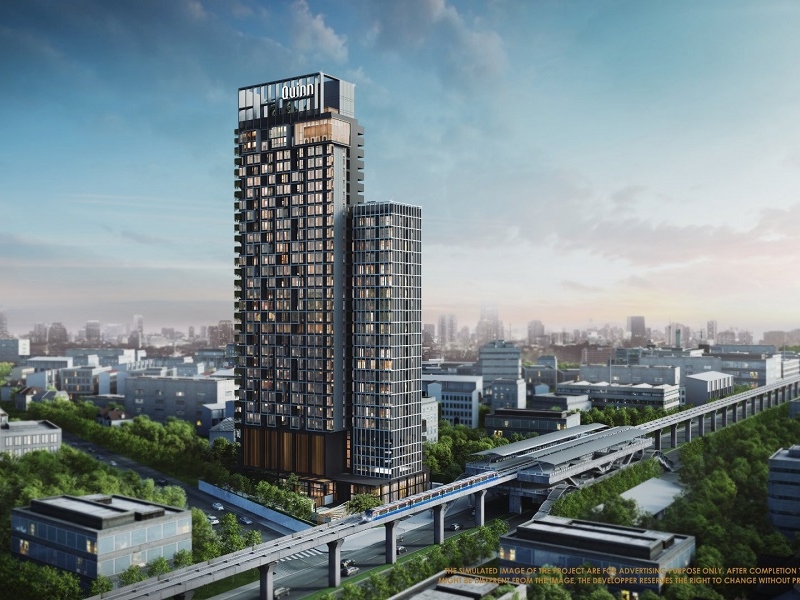
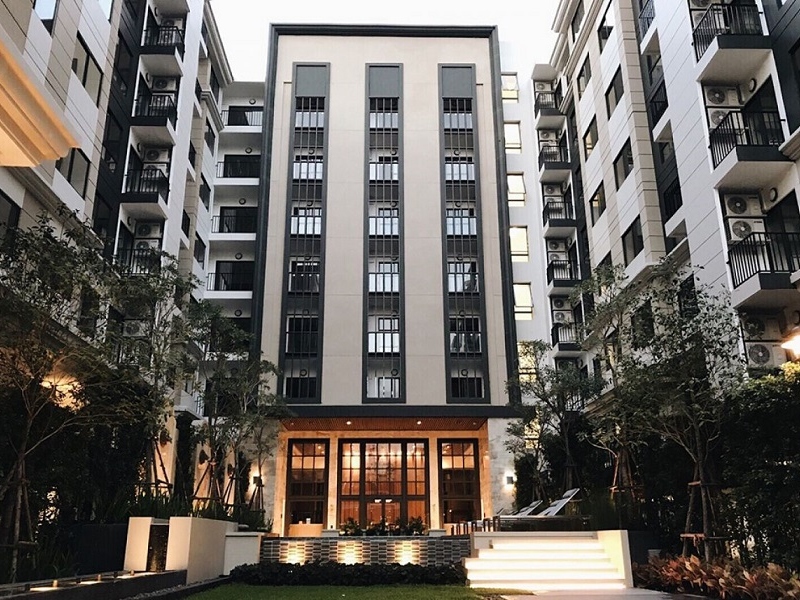
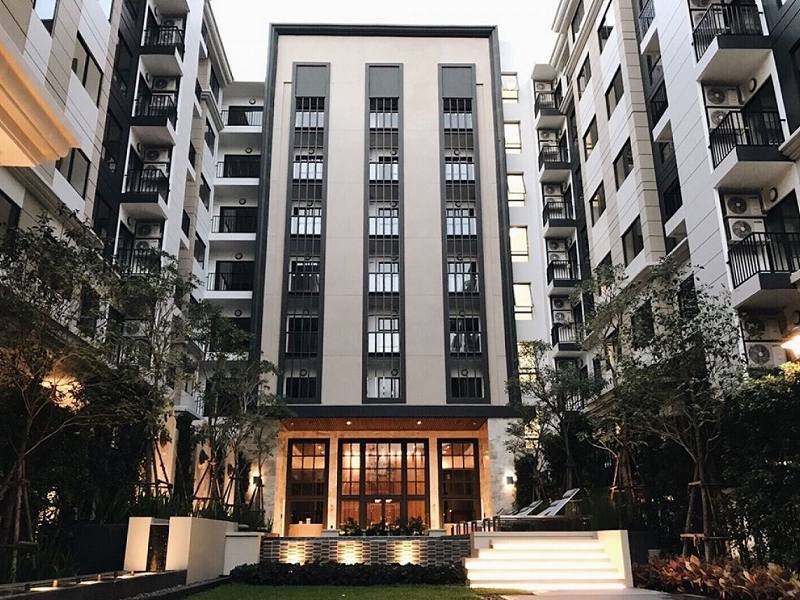
Bearing BTS sits near the eastern edge of Bangkok’s Sukhumvit Line, giving residents a direct rail connection into established employment, shopping and interchange districts. For foreign buyers, it can offer a more residential Upper Sukhumvit setting and a wider choice of budgets than prime central addresses.
Bearing belongs to a wider Upper Sukhumvit corridor, but buyers should judge the exact micro-location.
The station name alone is not an investment case. Bearing covers different street environments on both sides of Sukhumvit Road, and some buildings depend on shuttles, motorbike taxis or local driving. A strong decision therefore starts with the exact route, unit and likely resident.
Understand Bearing’s position
Bearing is on the BTS Sukhumvit Line beyond Bang Na and before Samrong. That places it within a corridor connecting central Bangkok with eastern residential and commercial areas. Rail access can be valuable for residents whose work or study fits the line, while road users can assess Sukhumvit Road and connections towards the wider east of the city.
Buyers should map real destinations rather than describe the area as generally connected. A tenant travelling to an office beside the Sukhumvit Line has a different routine from someone commuting across town, serving an industrial location or driving children to school.
Walk the station catchment
Measure the route from lobby to platform, not a marketing map’s straight line. Check pavement continuity, crossings, shade, lighting, drainage and the need to cross large roads or side-street traffic. Repeat the walk in heat, rain and the evening if those conditions matter to the household.
A short distance can still feel inconvenient when the entrance is on the wrong side of the road or the route is exposed. A slightly more distant building with a reliable shuttle, safe crossing and comfortable entrance may work better in daily life. Confirm shuttle hours and capacity rather than treating the service as permanent.
Building management and unit competition often matter more than the district label alone.
Define the likely tenant or resident
Bearing may suit professionals who use the eastern Sukhumvit corridor, residents seeking more space for their budget, couples with mixed rail and car routines, and people who value access towards Samrong or Bang Na. It will not suit every prime-city tenant, and investors should not assume demand simply moves outward when central rents rise.
Choose a target profile and test the unit against that person’s alternatives. A practical one-bedroom, family-sized layout or pet-friendly building each serves a different market. Furniture, storage, work-from-home space, parking and building rules should support the intended resident.
Compare the building, not only the district
Upper Sukhumvit contains projects of different ages, densities and management standards. Inspect the lobby, lifts, corridors, pool, gym, parking, security and service areas. Ask about common fees, sinking-fund planning, major works, insurance and the condominium juristic person’s record.
Count competing listings in the same building. If many units share the same layout and furniture package, price may become the main distinction. A better view, quieter position, useful storage or well-maintained interior can help, but only if the asking rent or sale price remains sensible.
Review retail and everyday services
Test the services residents use weekly: groceries, prepared food, cafés, pharmacy, fitness, banking, deliveries and medical access. Some needs may be beside the station; others may require a short ride or journey along the line. The right answer depends on the household, not the number of icons on a sales brochure.
Visit on a weekday morning and evening. Observe traffic, food options, taxi pickup, street comfort and how the building handles delivery riders. A district can feel convenient at midday and quite different during the commuter peak.
Daily convenience should be tested on foot and at the times a resident will actually use it.
Check rail and road resilience
BTS access is an important advantage, but a resident still needs alternatives. Examine taxi availability, parking, pickup space and routes to work, airport transfers or schools. If the investment depends on a precise journey time, test it repeatedly and allow for interchange and waiting.
For car users, review parking allocation, visitor parking, ramp design and peak traffic around the building. A unit marketed on rail access may still attract households with a car, particularly farther from the centre.
Inspect micro-location risks
Noise can come from trains, Sukhumvit traffic, side streets, nearby commercial uses or construction. Visit the exact unit with windows closed and open, and listen at different times. Check orientation, afternoon sun, outlook and nearby plots that may change.
Low-rise surroundings can provide an open view today without guaranteeing it for the holding period. Ask what is known about adjacent land and compare units whose value does not rely entirely on one view. Flood resilience, drainage and the covered route also deserve attention during wet weather.
Underwrite rent and resale conservatively
Use live competing units and credible achieved evidence where available. Separate asking rent from completed leases, and include vacancy, agent fees, common fees, repairs, furnishing replacement and management in the net-return model.
For resale, identify the next buyer. A foreign investor, Thai owner-occupier and local household may compare different features and financing. Confirm foreign quota and title details for the exact project. A lower entry price does not guarantee liquidity if many similar units are marketed at once.
Bearing viewing checklist
Time the full lobby-to-platform route in realistic conditions.
Map the target resident’s actual work and household journeys.
Compare unit layouts, furniture and competing listings.
Review juristic management, fees and planned building work.
Test groceries, food, healthcare, taxis and deliveries.
Inspect noise, heat, outlook, drainage and nearby plots.
Model net rent and a realistic resale audience.
Buyer takeaway
A Bearing BTS condo can be a practical Bangkok home or investment when rail access, building quality and resident fit align. Its appeal is strongest when a buyer values the eastern Sukhumvit corridor for real daily reasons, not merely because it appears cheaper than central Bangkok.
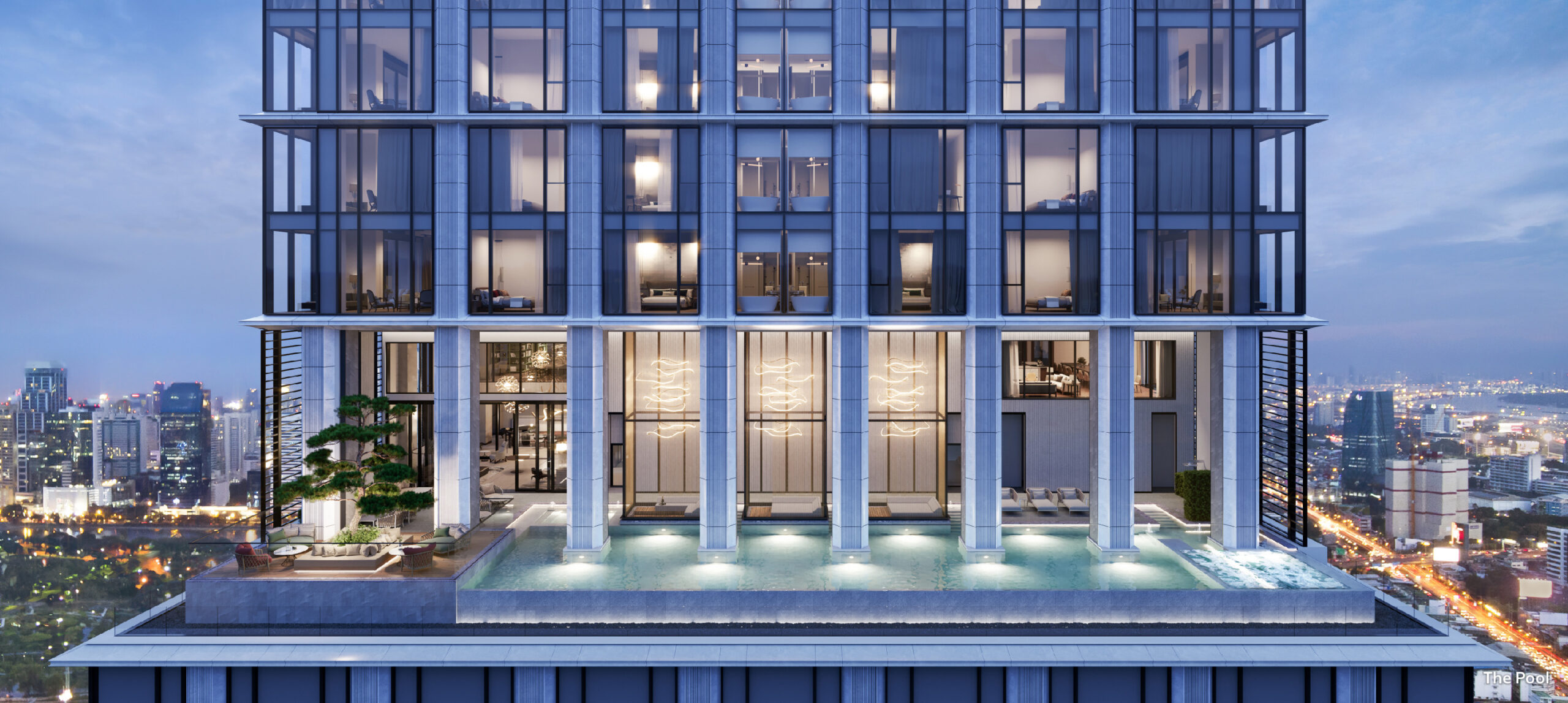
A private lift is one of the clearest signals used to position a Bangkok condominium as premium. It can create a discreet arrival, reduce corridor traffic and make a large residence feel more like a private home. It can also add service complexity, maintenance dependence and space that does not automatically improve the investment case.
A luxury purchase should be judged as one operating experience, from arrival and lifts to facilities and management.
Foreign buyers should judge the feature as part of the entire building. The useful question is not whether the brochure says private lift. It is how access, security, circulation, backup systems, service routes and long-term operating costs work for the exact unit.
Understand what is actually private
The term can describe different arrangements. A lift may open directly into one residence, serve a small group of units, stop at a controlled private foyer or be shared but programmed with access cards. Ask who can call the lift, which floors it serves and whether residents, staff, deliveries and contractors use the same car.
Inspect the space outside the apartment entrance as carefully as the living room. Is the foyer on the title area, common property or an area the owner merely uses? Who cleans it, maintains finishes and controls alterations? A lawyer should confirm title and use rights rather than relying on a floor plan label.
Test security as a complete sequence
A direct lift should not bypass good identity and visitor control. Follow the route from vehicle drop-off or parking through the lobby, access gate, lift call, floor arrival and apartment door. Ask how visitors are admitted, how deliveries are handled and whether a lost card can be disabled promptly.
The private foyer still needs a secure apartment entrance. Buyers should understand whether the lift can arrive when the residence is empty, whether doors or cameras cover the arrival area and how building staff respond to a system fault. Privacy is strongest when technology, staffing and resident procedures support each other.
Private arrival is valuable only when the whole tower delivers strong security, maintenance and resident service.
Separate resident and service movement
Luxury living involves ordinary work: housekeeping, luggage, groceries, repairs, rubbish removal and furniture delivery. A well-designed building may provide a service lift, back entrance or controlled service route so the formal arrival remains calm. If every task uses the private foyer, privacy may be more visual than operational.
Ask how cleaners and technicians are registered, where they wait and which lift they use. Test whether large items can reach the unit without damaging finishes. Overseas owners should also know how an authorised manager gains access when the resident is away.
Inspect lift capacity and waiting time
Low unit density can support short waits, but only if the number of lifts, zoning and maintenance are suitable. Visit during morning and evening periods where possible. Check travel time, ventilation, sound, card response and how smoothly the doors align with the foyer.
A private destination does not guarantee a dedicated lift car. If the same lift serves many floors, daily performance still depends on traffic and programming. Ask how many units share each lift bank and what happens when one car is out of service.
Ask about backup and emergency operation
Buyers should understand the building’s plan for power failure, fire alarms, maintenance shutdown and medical access. Confirm which stairs or alternative lifts reach the residence and how residents are notified about planned work. Never assume that direct access means the lift can be used during every emergency.
The route should suit the household. Older residents, children, staff and frequent guests may need particularly clear backup access. If the apartment occupies a high floor, lift reliability becomes a daily liveability issue rather than a decorative amenity.
Buyers should test how the lift lobby connects with the entrance, bedrooms, service route and everyday privacy.
Review the floor plan around arrival
A good private foyer creates a graceful transition without consuming excessive saleable area. Check whether guests enter into a view of the living space, a dark enclosed box or a route that exposes bedrooms and household work areas. Storage for shoes, coats, umbrellas and deliveries may be more useful than a large but empty lobby.
Consider noise and privacy at both doors. Lift machinery, door chimes, conversations and service movement may be audible. The apartment entrance should provide suitable separation, and the floor plan should allow residents to receive a visitor without opening private family areas.
Examine maintenance and cost
Lifts are shared building systems even when the arrival feels exclusive. Ask about maintenance contracts, service history, inspection routines, expected replacement planning and how costs sit within common fees and sinking-fund strategy. The juristic person’s records and meeting decisions can be more revealing than polished finishes.
In a low-density building, strong service can be expensive because fewer owners share the operating cost. That may be entirely appropriate for the target market, but an investor should include the real common fee and future capital-work risk in net-return planning.
Consider tenant and resale demand
A private lift can appeal to senior executives, families, high-profile residents and owner-occupiers who value discretion. It can improve the emotional experience of a viewing and help a large unit feel distinct. The rent or resale benefit is not automatic; tenants also compare location, view, layout, service, furnishing and total monthly cost.
For resale, ask whether the next buyer understands the feature and can support the building’s operating costs. A strong address with reliable management and scarce large-format units may defend the feature better than a project where private arrival is used to distract from weak fundamentals.
Private-lift viewing checklist
Confirm the lift, foyer and access arrangement for the exact unit.
Follow resident, visitor, delivery and service routes.
Test security, card control and apartment-door separation.
Inspect waiting time, ride quality and backup access.
Review emergency and maintenance procedures.
Check title, common-property and alteration boundaries.
Model common fees and long-term lift capital works.
Compare the feature with real tenant and resale demand.
Buyer takeaway
A Bangkok luxury condo private lift is valuable when it improves privacy, circulation and service inside a well-managed building. It is weaker when access is confusing, backup is poor or the price assumes a prestige premium that future residents may not pay.
IBP can help foreign buyers compare premium Bangkok residences through building operations as well as design. Explore our investment analysis and foreign buyer guides, or contact IBP Real Estate for a luxury-condo shortlist.
Laundry is a small part of a Bangkok condo viewing, but a large part of living in the unit. Expat residents quickly notice whether the washer is easy to use, damp clothes have somewhere sensible to dry, household linen can be stored and nearby services fit the working week.
A workable laundry routine depends on space, ventilation, equipment and the household’s normal week.
For buyers, laundry planning is also an investment check. An awkward utility corner can create humidity, noise, maintenance calls and clutter. A practical setup helps residents settle into the unit and can make a furnished rental easier to manage.
Start with the household routine
A single professional, a couple, a family and a frequent traveller will use the space differently. Estimate how often clothes, towels and bedding need washing, whether workwear requires pressing, and whether residents prefer home washing, self-service machines or collection and delivery.
Do not design around an ideal quiet week. Consider gym clothing, rainy days, guests, children, larger bedding and the periods when a resident returns from travel with several loads at once.
Inspect the washer position
Check the available width, depth and door clearance before assuming a preferred appliance will fit. Look at water supply, drainage, electrical connection, floor condition and access for repairs. A machine squeezed under a counter may be difficult to remove when servicing is needed.
Operate the existing washer with permission and ask about age or maintenance history where available. Listen for vibration and consider whether it sits beside a bedroom, desk or neighbouring wall. The most attractive cabinet arrangement is not always the easiest to maintain.
Washer position, storage and drying space should be tested before furniture and luggage fill the unit.
Plan drying for Bangkok conditions
Balcony drying may be useful, but building rules, rain, dust, road exposure, privacy and heat affect how practical it is. Confirm what can be placed on the balcony and whether rails, facade elements or common views are subject to restrictions.
Indoor racks need airflow and a position that does not block circulation. A combined washer-dryer or separate dryer may suit some households, but buyers should check ventilation, electrical capacity, heat and manufacturer requirements. Avoid creating moisture problems by drying repeatedly in a closed room without a suitable plan.
Look for storage and work surfaces
Laundry needs space for detergent, baskets, hangers, an iron, cleaning cloths and spare linen. Check whether these items can be stored safely away from food and children. A shallow cupboard may look neat in photographs but fail once normal supplies are added.
A small folding surface and a place for clean items can prevent the dining table or sofa from becoming the permanent laundry station. In compact units, furniture that supports more than one task can help, provided it does not obstruct exits or ventilation.
Use services strategically
Bangkok offers laundries, dry cleaners, pressing services and pickup or delivery options across many districts. Residents should compare convenience, garment handling, communication, turnaround and building access rather than choosing only on headline price.
Walk the neighbourhood to see what is genuinely close, and ask how deliveries are received. Some condos allow easy lobby collection; others have specific vendor access or parcel procedures. A nearby reliable service can compensate for a compact unit, particularly for workwear, bedding or occasional large loads.
Building rules, delivery access and nearby services can make laundry noticeably easier for residents.
Check building facilities and rules
Some condominiums have shared laundry rooms, while others rely entirely on in-unit equipment and outside services. Inspect any shared facility for access, cleanliness, security, payment method, opening hours and machine condition. Confirm whether residents can leave items unattended and how faults are reported.
Owners should also ask about water leaks, drainage complaints and contractor access for appliance repair. Clear procedures matter when the owner is overseas or the unit is tenanted.
Landlord considerations
A furnished rental should state which appliance is provided, its condition and who handles routine care or repairs under the lease. Keep the model information and instructions, and photograph the machine at handover. A tenant should know how to report a leak quickly and where the water can be isolated if appropriate.
Choose equipment that fits the target tenant and can be serviced without dismantling half the kitchen. A premium resident may expect stronger capacity or drying convenience, while a compact urban unit needs simple, durable operation and nearby service support.
Laundry viewing checklist
Measure appliance space, door swing and service access.
Check supply, drainage, power and signs of past leakage.
Test noise and vibration with permission.
Confirm balcony and facade rules for drying.
Identify a ventilated indoor option for wet weather.
Find storage for supplies, linen and cleaning equipment.
Inspect shared facilities and nearby services.
Record appliance condition in a rental inventory.
Liveability takeaway
A well-planned laundry setup will not sell a Bangkok condo on its own, but a poor one can make daily life unnecessarily difficult. Foreign buyers should test the appliance, drying route, storage, building rules and local services as part of the real household routine.
Sanam Pao offers a central Bangkok address with a quieter residential character than the busiest interchange districts nearby. It sits on the BTS Sukhumvit Line between Ari and Victory Monument, giving residents a direct rail connection while keeping much of the immediate neighbourhood lower key.
Sanam Pao buyers should measure the complete lobby-to-platform journey at the times they normally travel.
For foreign condo buyers, the appeal is not a single landmark. It is the combination of central access, established offices and institutions, nearby dining districts and side streets that can feel calmer than major commercial nodes. The investment question is whether a particular building turns that location into an easy daily routine.
Understand Sanam Pao’s position
Sanam Pao should be viewed as part of the wider Phahonyothin corridor. Ari lies one stop north with a stronger cafe and neighbourhood identity. Victory Monument lies one stop south with intensive transport and everyday services. Phaya Thai and Siam are further along the line, connecting residents to major employment, retail and airport-transfer routes.
This position can suit residents who want central movement without living directly above the busiest retail or nightlife zones. It can also appeal to people whose work or study takes them across north-central Bangkok. Buyers still need to test the exact journey rather than treating every address near the station as equally convenient.
Walk the full station route
Measure from the unit door to the platform, including lifts, lobby exit, pavements, crossings and station access. A short map distance can feel longer in heat or rain, particularly where a route has limited shade, uneven surfaces or heavy traffic. Visit during a normal weekday commute and again after dark.
Buildings deeper in side streets may offer greater quiet or larger plots, but residents may rely on motorcycle taxis, ride-hailing or shuttle services. Check whether that arrangement remains comfortable for the intended resident, including visitors, older family members and people carrying work bags or groceries.
Assess the neighbourhood as a weekly routine
Sanam Pao is less retail-saturated than Siam, Asoke or Phrom Phong. That can be a benefit for residents seeking calm, but it makes the immediate service check more important. Map groceries, pharmacies, cafes, casual food, laundry, clinics, fitness, parcel services and evening transport from the exact building.
Side-street character, daily services and comfortable walking routes shape the district’s residential appeal.
Many residents will use nearby Ari and Victory Monument for a wider choice. The question is whether those trips feel like useful optional variety or a requirement for every basic errand. A strong residential location should handle ordinary weekdays without unnecessary friction.
Compare Sanam Pao with nearby districts
Ari usually carries a more recognisable lifestyle story and can attract buyers who prioritise restaurants and neighbourhood atmosphere. Victory Monument offers broader transport intensity and everyday services but can feel busier. Phaya Thai adds Airport Rail Link relevance and stronger interchange logic.
Sanam Pao can win for a buyer who values balance: direct BTS access, a central location and a less commercial immediate environment. It can lose when a building is too far inside a soi, lacks useful nearby services or is priced as though it offers Ari’s lifestyle depth or Phaya Thai’s interchange advantage.
Match the unit to a real resident
Potential residents may include professionals, healthcare or public-sector staff, university-linked households, couples and people who want fast access to central Bangkok without a heavy nightlife environment. Each group has different expectations for size, parking, desk space, storage and building services.
Compact one-bedroom units need efficient plans and a clear rent position. Larger units need a strong reason for families or owner-occupiers to choose Sanam Pao over Ari, Phaya Thai or quieter residential areas elsewhere. Do not assume that centrality automatically creates demand for every unit type.
Building management, unit efficiency and competing stock matter more than the station name alone.
Inspect building quality closely
The area contains buildings of different ages, scales and management standards. Review lifts, lobby control, corridors, facade, pool and gym condition, water systems, fire safety information, parking, parcel handling and juristic communication. Older stock may offer more space, while newer stock may present better but contain many similar units.
Ask how many comparable units are currently marketed in the building and nearby. If several one-bedroom units compete, furniture, light, view, condition and asking rent can decide which one receives enquiries. A station label is not enough differentiation.
Check noise, privacy and orientation
Phahonyothin Road, the elevated railway, institutional activity, schools, construction and side-street movement can create different sound patterns. Visit with windows open and closed, stand quietly in the bedroom and check the corridor and lift position. Higher floors are not automatically silent.
Orientation also affects afternoon heat, glare and outlook. Look at neighbouring plots and low-rise buildings that could change over a long holding period. A pleasant current view should be valued conservatively unless its protection is clear.
Rental and resale strategy
Landlords should compare live alternatives across Sanam Pao, Ari, Victory Monument and Phaya Thai using the same budget and unit size. Allow for furnishing, vacancy, management, common fees, repairs and the time required to prepare a unit between tenancies.
For resale, the listing needs a simple explanation. The strongest story may be a genuinely short BTS walk, a quiet position, an efficient plan or good building management. If the explanation relies only on “central Bangkok”, future buyers may find many substitutes.
Sanam Pao buyer checklist
Walk the exact lobby-to-platform route at realistic times.
Map daily services within a comfortable radius.
Compare Ari, Victory Monument and Phaya Thai alternatives.
Define the likely tenant or owner-occupier before choosing a layout.
Inspect building management, lifts, parking and common areas.
Check road, rail, corridor and neighbouring-property noise.
Review live rental and resale competition in the same budget.
Complete legal and foreign-ownership due diligence on the exact unit.
Buyer takeaway
A Sanam Pao BTS condo can suit foreign buyers who want central access with a more residential feel than nearby transport and lifestyle hubs. The best choices make the station walk easy, the weekly routine practical and the unit competitive on its own merits.
IBP can help buyers compare Sanam Pao with Ari, Victory Monument, Phaya Thai and other rail-connected districts. Browse our Bangkok district guides or contact IBP Real Estate for a location-led shortlist.
“Scarce freehold” is one of the most persuasive phrases in Bangkok property marketing. It can describe a genuine investment advantage, but it can also compress several untested assumptions into two words. Foreign buyers should ask what is scarce, who values it and whether the specific unit will remain competitive when it is time to rent or sell.
Scarcity begins with the precise location and the alternatives a future buyer can realistically consider.
Freehold tenure alone does not create scarcity. Many condominiums are freehold, and buyers usually compare several locations, buildings and unit types. A defensible scarcity case needs a limited substitute set, durable resident demand, sound building management and a purchase price that does not already overcharge for the story.
Define the claim precisely
Start by rewriting the sales claim in plain language. Is developable land limited within a short walk of a particular BTS or MRT station? Is the building one of few options with a certain unit size, outlook or residential character? Is the wider district tightly supplied, or is only one sales phase nearly sold out?
These are different propositions. A sold-out project may still face many resale competitors. A rare large layout may appeal to families but have a smaller buyer pool. A tightly held central address may be genuinely difficult to reproduce, yet an inefficient unit in that address can still be slow to sell.
Map realistic substitutes
Scarcity should be tested from the future buyer’s perspective. List the buildings and districts that someone with the same budget could reasonably choose. Include resale stock, completed developer inventory, nearby launches and locations one or two rail stops away. Buyers rarely restrict themselves to the boundary used in a brochure.
Compare total ticket size, usable area, station route, building age, common areas, ownership cost and the likely work required after transfer. A project can look unique until the search is widened to include an older but larger building or a newer project with a better daily routine.
Separate land scarcity from product scarcity
Central Bangkok land can be difficult and expensive to assemble, but land scarcity does not automatically make every unit on that land desirable. The building may contain many similar compact units, face weak views or offer layouts that date quickly. The property product still needs its own reason to win.
A scarce address cannot compensate for weak management, ageing systems or an undifferentiated building.
Product scarcity is more specific. It might come from a practical three-bedroom plan, a genuinely protected outlook, unusually low residential density, strong privacy, direct park access or a building quality that has been maintained over time. Each point should be observable and compared with alternatives.
Test whether demand is broad enough
A scarce asset has limited supply, but an investable scarce asset also needs buyers or tenants who care. Define the likely audience: local owner-occupiers, regional families, foreign executives, retirees, professionals or collectors of prime residences. Then ask what that group prioritises and whether the unit meets those priorities without explanation.
For example, a large unit can be rare but expensive to furnish and hold. A high-floor view can be distinctive but exposed to afternoon heat. A boutique building can feel private but have fewer owners sharing major maintenance costs. Scarcity is useful only when the trade-offs remain acceptable to the target market.
Inspect the building’s ability to preserve value
A rare address can lose appeal if the building is poorly managed. Review juristic-person records through suitable professional due diligence, common-fee collection, planned major work, sinking-fund position where relevant, lift and facade condition, security, fire systems and the quality of resident communication.
Buyers should also study the owner mix and resale environment. If many comparable units appear at once, the building can become its own largest competitor. If owners maintain units to very different standards, future buyers may use the weakest listings to negotiate against the strongest.
Do not pay twice for the same story
The most important investment question is price. A property can be genuinely scarce and still be a poor purchase if the asking price assumes flawless future demand. Compare the unit with documented live alternatives and, where available through appropriate advisers, relevant transaction evidence. Adjust for condition, floor, orientation, view, size, furnishing and transfer structure.
Build at least three scenarios: the intended holding case, a slower resale case and a case in which competing supply improves. The unit should not depend on rapid appreciation to cover an aggressive entry price, high ongoing costs or a narrow exit audience.
The unit itself must remain easy to understand, occupy, rent and resell even when the wider location is tightly supplied.
Check foreign-buyer relevance
Foreign purchasers also need to confirm that the transaction structure, ownership eligibility, foreign-quota position and fund-transfer evidence suit their circumstances. Marketing language about freehold does not replace legal due diligence on the precise unit and condominium.
Liquidity may differ between local and foreign buyer segments. A future foreign buyer may value English-language records, transparent management, an easy transfer file and a location that can be understood remotely. An owner should preserve those practical strengths throughout the holding period.
A simple scarcity scorecard
State exactly what is limited and within what geographic boundary.
List realistic new-build, resale and neighbouring-district substitutes.
Identify the resident group that values the scarce feature.
Test building management and future capital-work exposure.
Compare the unit’s layout, orientation and condition with direct rivals.
Check whether the entry price already captures an excessive premium.
Model a slower resale without relying on appreciation.
Confirm the foreign-ownership and transaction file independently.
Investor takeaway
Bangkok condo freehold scarcity can support value, but only when the scarce feature is precise, useful and difficult to replace. The strongest investment case combines a defensible location, a practical unit, a well-run building, broad enough demand and a price that leaves room for uncertainty.