Living near a Bangkok fresh market can make a condominium feel connected to the city in a way a destination mall cannot. Residents gain access to seasonal produce, prepared food, household basics and familiar local routines. For buyers, the useful question is not simply whether a market appears on the map, but whether it improves everyday life.
A useful food-shopping routine may combine a local market, supermarket and convenience shop rather than depend on one destination.
Markets differ in opening hours, product mix, cleanliness, ventilation, access and surrounding traffic. A morning market may be finished before an office worker returns home, while an evening market may bring noise or blocked pavements. The right choice depends on the resident’s schedule and cooking habits.
Map the full food-shopping routine
List what the household buys weekly: fruit, vegetables, meat, seafood, prepared meals, imported ingredients, drinking water and household supplies. Then identify which items the local market handles well and which still require a supermarket, specialist shop or delivery service.
A mixed routine is often more resilient than relying on one retailer. A fresh market may cover produce and quick meals, a supermarket may provide labelled packaged goods and imports, and a convenience store may handle late-night essentials. Judge how comfortably all three fit around home and work.
Visit at the hour you would actually shop
Opening times listed online can be approximate, and individual vendors may keep different schedules. Visit early, at the intended weekday shopping time and near closing. Observe which stalls are active, how replenishment works and whether the preferred products are still available.
Repeat the journey during rain and after dark. Shade, drainage, lighting and road crossings can turn a short distance into an inconvenient trip. If carrying several bags, test the route back to the building entrance, including steps, lifts, security gates and any shuttle connection.
Use visible food-safety cues
Bangkok authorities oversee food sanitation standards, but buyers should still use ordinary judgement at each market and stall. Look for clean work surfaces, separation of raw and cooked food, suitable temperature control, protected ingredients, hand-washing arrangements and orderly waste handling.
Choose busy vendors whose turnover and practices you can observe. Ask questions where language allows and store food safely after purchase. Sensitive households may prefer a larger share of labelled supermarket products while gradually learning which market vendors suit them.
Market access adds value when the kitchen, storage and resident's cooking habits can make practical use of it.
Check whether the condo kitchen supports the habit
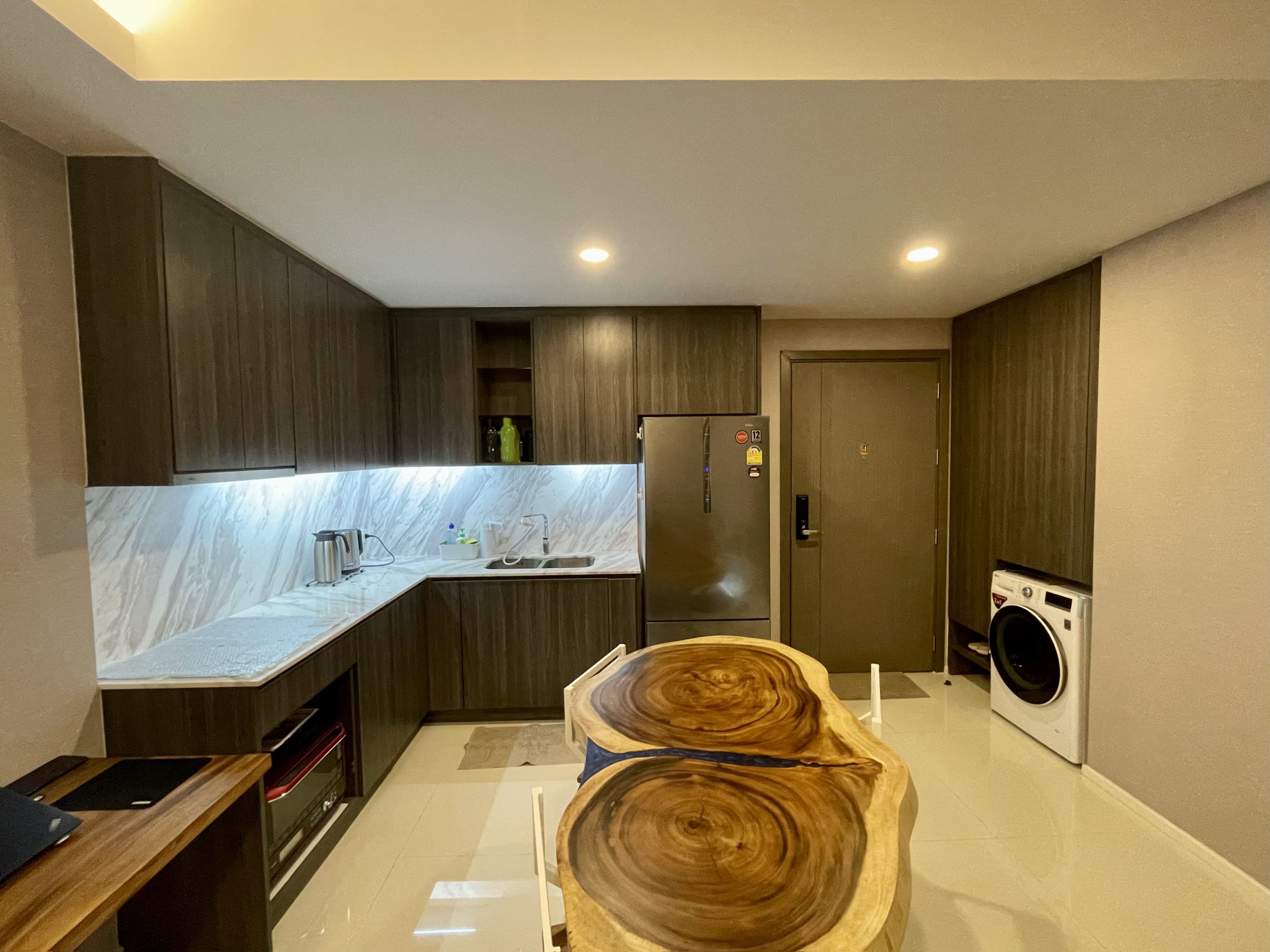
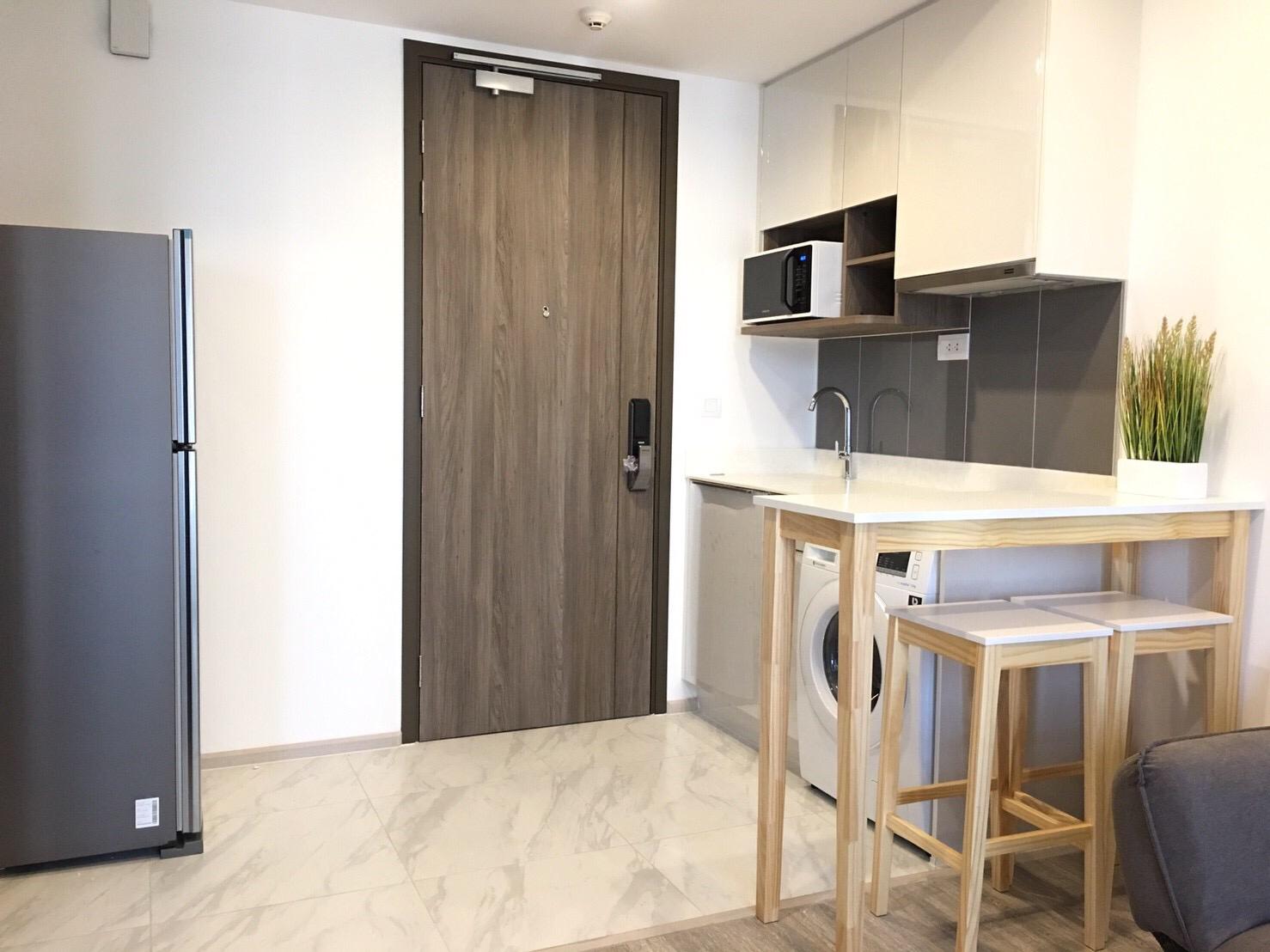
Frequent fresh shopping works best with practical refrigeration, dry storage, preparation space and easy cleaning. A beautiful compact kitchen may struggle with large produce bags, strong cooking aromas or limited waste space. Measure shelves and appliance clearances rather than judging photographs.
Review ventilation and the building’s cooking rules. Some residents mainly buy prepared food and need less equipment; others require a proper hob, extraction and freezer capacity. A buyer should not pay a market-access premium for a unit that makes the intended food routine difficult.
Balance convenience against street activity
A market can create morning deliveries, motorcycle traffic, refuse collection, smells and busy pavements. These may be part of an enjoyable urban atmosphere at street level but intrusive beside a low-floor bedroom. Visit the unit when trading, setup and cleanup are taking place.
Check pickup points and parking if vendors attract vehicles. Ask residents or building staff about recurring congestion without assuming one conversation is conclusive. A unit facing away from the street may experience the same location very differently from one directly above market activity.
Consider heat, rain and carrying distance
Fresh ingredients and prepared food need a sensible journey home in Bangkok’s climate. A covered route, quick crossing and short lift journey can matter more than a nominal distance. Residents buying chilled or frozen items may need an insulated bag and a plan to return directly.
During heavy rain, open-air routes and low-lying streets may be harder to use. Observe drainage, shelter and alternative access. The strongest location offers more than one workable option, such as a market for normal days and a covered supermarket route when conditions are difficult.
Understand how markets shape neighbourhood character
Markets create repeat encounters and a sense of local rhythm. They can help new residents learn common foods, practise everyday Thai and discover nearby services. This cultural value is real, but it should be approached respectfully: allow room for established routines and avoid treating a working market as a tourist display.
For landlords, nearby food options can support tenant appeal, especially where they complement transport and office access. Describe the convenience accurately rather than promising a universal lifestyle. Different tenants place different value on local food, premium supermarkets and delivery.
Compare the location as a whole
Do not let one attractive market outweigh poor transport, difficult walking, weak building management or an unsuitable unit. Score grocery access alongside commute, healthcare, green space, noise, flood exposure, security and total housing cost.
If buying for investment, ask whether the likely tenant can use the market at its actual opening hours. A weekday morning market may be valuable to retirees or home workers but less relevant to someone who leaves early and returns late. Practical fit is more persuasive than a generic lifestyle claim.
Fresh-market liveability checklist
Visit during the hours you expect to shop.
Check product range, cleanliness and temperature control.
Walk home carrying realistic bags.
Repeat the route in rain and after dark.
Assess setup, delivery and cleanup noise from the unit.
Confirm kitchen ventilation, storage and waste arrangements.
Identify supermarket and convenience alternatives.
Match the amenity to the likely resident or tenant.
Thailand’s government has placed transport connections back at the centre of its economic programme. In July 2026, the Ministry of Transport set out a direction covering 262 projects, while the Prime Minister later emphasised faster work on missing road and rail links as the wider southern Land Bridge approach is reviewed.
Rail plans matter to property buyers only when funded projects improve a resident's complete door-to-door journey.
For Bangkok property buyers, this is a signal to watch implementation rather than a reason to chase speculative maps. Better-connected infrastructure can support business activity and daily mobility, but the value of a condominium still depends on the exact station, street, building and purchase price.
What the July transport direction says
The ministry’s programme describes rail as a core network, supported by roads, waterways and aviation. Bangkok-related priorities include missing rail connections between Bang Sue, Phaya Thai, Makkasan, Hua Mak and Hua Lamphong, together with suburban Red Line extensions and other national transport projects.
Road priorities include motorways, expressways, ring roads and links intended to reduce bottlenecks. National rail and port projects are designed to improve passenger and freight movement beyond Bangkok. The common policy theme is connection: extracting more value from networks by closing gaps between them.
The Land Bridge is being reviewed, not a condo sales claim
On 22 July, the government said agencies should review the proposed southern Land Bridge approach while accelerating infrastructure that can be implemented sooner, particularly missing road and rail links. Buyers should avoid treating preliminary policy language as a completed investment decision.
The prudent distinction is between a strategic idea, an approved project, a funded contract, construction progress and an operating service. Each stage has a different level of certainty and a different time horizon. Property pricing should not assume that every announced benefit arrives on schedule.
The July transport direction puts greater emphasis on completing connections between existing networks.
Why national logistics can matter to Bangkok
Bangkok is Thailand’s principal corporate, financial and service centre. More efficient national transport can support trade, tourism, supply chains and business formation that use the capital for headquarters, professional services and regional management. That is the broad confidence channel relevant to housing demand.
The effect is indirect. A logistics announcement does not guarantee condominium appreciation or rent. Employment must be created, companies must occupy space and residents must choose particular neighbourhoods. Investors should look for evidence in office activity, hiring, household formation and actual transport use.
Bangkok rail gaps deserve close attention
Missing links inside the capital could improve interchange options and reduce fragmented journeys if they proceed as described. Stations that connect several systems may become more convenient for residents travelling between business districts, airports and suburban employment centres.
However, proximity measured on a map can mislead. Access depends on entrances, walking conditions, platform changes, service frequency and the complete journey. A project several years from operation should be discounted for delay, disruption and design change.
Construction can create short-term costs
Infrastructure work may bring noise, dust, traffic diversions and difficult pedestrian routes before benefits arrive. Some units face works directly while others gain accessibility with less disturbance. Buyers should inspect active sites and ask how construction logistics affect the exact frontage.
Future access can also attract new condominium supply. That may improve neighbourhood services but create rental and resale competition. An investor should examine planned projects, developable land and unit mix rather than assuming every home near a transport scheme becomes scarce.
Buyers should distinguish an operating station from a study, policy statement, tender or construction programme.
A practical infrastructure checklist for buyers
Identify the responsible agency and current project stage.
Separate policy, study, approval, tender, construction and operation.
Use conservative timing and allow for change.
Walk the exact route to existing and proposed access points.
Assess construction disturbance and future competing supply.
Test rent and resale without the infrastructure upside.
Track official updates instead of relying on sales graphics.
Monitor delivery through official agency updates, budget decisions, procurement notices and construction milestones. Repeated marketing claims without a traceable project stage should not be priced into a purchase.
Thailand’s transport direction supports a long-term case for connectivity, but disciplined buyers still begin with present-day usability. The strongest purchase is one that works now and may improve later—not one that depends entirely on an unbuilt line or a national headline.
Charoen Nakhon offers a distinctive Bangkok proposition: Chao Phraya river frontage, established local streets, major hospitality and retail, and a short Gold Line connection to the wider BTS network. For foreign buyers, the district can combine premium city living with a different rhythm from the central Sukhumvit corridor.
Branded riverside residences illustrate Charoen Nakhon's premium positioning, but buyers should compare the exact unit, service model and price.
The name, however, covers varied micro-locations. A tower beside a river pier, a condominium near Charoen Nakhon station and a lower-rise building deeper in Khlong San can deliver very different journeys, views and tenant markets. Buyers should judge the exact route and building rather than buying the district label.
Understand the transport pattern
The Gold Line has three stations—Krung Thon Buri, Charoen Nakhon and Khlong San—and connects with the Silom Line at Krung Thon Buri. This short feeder function is useful, but a resident’s real journey may include walking, waiting, interchanging and a second train before reaching work.
Test the route at the time it will be used. Note pavement continuity, shade, major-road crossings, station entrances and the distance from the platform to the Silom Line connection. A building marketed as close to rail may still require an uncomfortable or indirect walk.
Treat the river as transport and environment
Boat services can expand access to destinations on both banks, depending on the pier, timetable and operating conditions. They can also make leisure trips more enjoyable. A buyer who intends to rely on a boat should verify the exact service rather than assume every nearby pier offers the same connections.
River proximity also shapes outlook, wind, humidity, noise and building maintenance. Inspect the unit in different weather and at different times. Ask how the project manages facade care, water ingress, drainage, basement protection and emergency procedures. A dramatic view does not replace technical due diligence.
Choose the right Charoen Nakhon micro-location
Near ICONSIAM and Charoen Nakhon station, the appeal is immediate access to retail, restaurants, services and a recognised destination. The trade-off can be visitor traffic, event activity, pickup congestion and a more commercial atmosphere. Walk the surrounding streets beyond the mall to understand weekday life.
Closer to Krung Thon Buri, the Silom Line interchange can simplify commuting towards Sathorn and central Bangkok. Other parts of Khlong San may feel more residential and local, but last-mile transport becomes more important. Compare the same journey from several buildings before assigning a location premium.
The district's amenity depth adds convenience, while daily liveability still depends on groceries, transport and street access.
Match the unit to the likely resident
A compact unit aimed at a single professional needs an efficient plan, practical storage and a dependable commute. A larger riverfront home may appeal to couples, families or owner-occupiers who value views, dining and hotel-style facilities. These groups do not necessarily pay for the same features.
Check whether the unit’s furniture and room sizes support actual living. Large balconies and full-height glazing can be attractive, but heat exposure, privacy and maintenance matter. In family-oriented layouts, review kitchen ventilation, bedroom separation, laundry space and access to schools and healthcare.
Compare building generations carefully
Charoen Nakhon includes established condominiums and newer high-profile projects. Older buildings may offer larger rooms or proven management, while newer properties may provide modern amenities, efficient systems and stronger presentation. Neither age nor branding is a substitute for records and inspection.
Review common-area condition, lift capacity, fire-safety arrangements, reserve planning, common fees and major works. Ask about owner-occupier and rental patterns, competing listings and any restrictions relevant to the intended use. For a resale, investigate alterations and verify what is included.
Analyse views without overpaying
A river view can support personal enjoyment and market differentiation, but its value depends on width, orientation, permanence and the unit’s overall quality. Visit in daylight and after dark. Look across nearby land parcels and ask what could legally be developed rather than treating open space as protected.
Compare the premium with alternative units in the same building and competing river locations. A partial view from an efficient, quiet unit may have stronger rental logic than an expensive frontage with difficult heat or layout. Use completed transactions where available, not only asking prices.
Project management, flood resilience, unit efficiency and competing supply need building-level investigation.
Plan for rental and resale liquidity
For landlords, define the real tenant pool: nearby office workers, hospitality executives, families, long-stay residents or people prioritising river lifestyle. Test achievable rent against unit-specific comparables and include vacancy, agency, furnishing and maintenance costs.
For resale, ask who is likely to buy the unit later and how many similar homes may compete. Very high floors, unusual layouts and premium views can be differentiators, but a narrow buyer pool may require patience. Foreign quota availability must be checked for the specific transaction and timing.
Complete foreign-buyer due diligence
Foreign buyers should obtain independent legal advice on eligibility, title, contract, funds remittance and Land Office transfer. Confirm the condominium’s foreign ownership position through appropriate current documentation. Inspect the property technically and reconcile plans, title information and the physical unit.
Build a complete acquisition budget covering price, negotiated transfer-cost allocation, professional advice, furnishing, common fees, sinking fund where relevant, insurance and a maintenance reserve. A premium address is investable only when the numbers and ownership process remain workable.
Charoen Nakhon viewing checklist
Test the full walk, Gold Line ride and interchange.
Verify any boat service you expect to use.
Visit the street on a weekday, weekend and evening.
Inspect heat, privacy, noise and view protection.
Review drainage, maintenance and building records.
Compare unit-specific rent and resale evidence.
Confirm foreign ownership eligibility and funds documents.
Budget for operating costs and future maintenance.
A Bangkok condominium contract is not a formality to review after paying a substantial deposit. It is the document that identifies the property, controls the payment sequence and allocates risk if transfer, handover or performance does not proceed as expected. Foreign buyers should understand the commercial effect of the clauses before signing.
The reservation form, sale agreement, schedules and attachments should form one consistent transaction file.
This guide is a practical reading framework, not legal advice. Contract wording, transaction structure and facts differ. A buyer should appoint an independent Thai lawyer who acts for the buyer, can review the Thai-language documents and can explain how the proposed terms apply to the exact deal.
Confirm the parties and signing authority
The seller’s name should match the ownership or development records relevant to the transaction. If a company, representative, attorney or authorised signatory is involved, ask the lawyer to verify capacity and supporting authority. Names, identification details and addresses should be consistent across the reservation, agreement, invoices and payment instructions.
A buyer should also decide who will own the unit before the contract is finalised. Changing from an individual to another person or entity later may require consent, additional documents, cost or a new agreement. Do not assume a nomination or assignment is automatically permitted.
Identify the property precisely
The contract should clearly identify the condominium, unit number or intended unit, floor, approximate area and any parking or accessory rights included. For a new development, plans, specifications, furniture schedules and promised finishes should be attached or incorporated in a way the lawyer considers effective.
For a completed resale unit, compare the contract description with the title deed, physical inspection and inventory. Clarify which furniture, appliances, access cards, remotes and fixtures remain. Marketing images and verbal assurances are difficult to rely on when they are absent from the signed transaction record.
Address foreign ownership eligibility
Foreign buyers commonly focus on the statutory foreign-ownership limit and the evidence required for qualifying inward remittance. The contract should be reviewed for what happens if the unit cannot be transferred to the buyer as intended, which party must obtain relevant condominium documentation and when that evidence must be available.
Do not rely on a casual statement that foreign quota is available. Ask for current written confirmation at the appropriate stage and let the lawyer check the ownership route, funds documentation and Land Office requirements. The payment path should be planned with the receiving bank before money is sent.
Amounts, currency, deadlines, recipient accounts and refund rights should be clear before funds move.
Map every payment and condition
Create a schedule showing the reservation amount, contract deposit, instalments, balance at transfer and any retention or adjustment. Each entry should show the amount or calculation, due date, recipient and condition that triggers payment. Check whether tax, bank or currency movements could cause a shortfall.
Pay particular attention to refund language. A clause may treat one payment differently from another or make a refund dependent on a narrow event. Ask what happens if legal due diligence reveals a problem, financing is unavailable, foreign ownership eligibility fails, the seller misses a condition or the unit materially differs from the agreed specification.
Understand default and termination
Default clauses should not be read only as penalties for late buyer payment. Compare the remedies available to both sides, notice requirements, cure periods, interest, forfeiture, refund timing and the right to terminate. Identify which breaches are material and whether the consequences are proportionate to the risk.
Long-stop dates matter in off-plan transactions. A projected completion date may not be the same as an enforceable deadline. Ask how extensions operate, what notice must be given and what options the buyer has after the final permitted period. For resale, clarify what happens if either side is not ready at the agreed transfer appointment.
Allocate transfer costs and adjustments
The agreement should say who pays transfer fees, taxes, duties, withholding amounts, juristic charges and professional costs. The actual legal incidence and negotiated allocation are separate questions, so have the lawyer and tax adviser explain both. Avoid using an informal percentage shortcut without knowing what it covers.
For a resale, common fees, utilities, rent, deposits and other property outgoings may need to be apportioned at completion. Confirm how arrears are cleared and which certificates or receipts the seller must provide. For a new unit, identify any sinking fund, advance common fee, meter, connection or handover charges.
Set a workable inspection and handover process
New-build contracts should be checked for inspection rights, notice, defect reporting, rectification and the relationship between handover and transfer. A short inspection window can be difficult for an overseas buyer, so plan representation early. Technical inspection is different from legal review and may require a qualified specialist.
For resale, record condition close to transfer and agree how vacant possession, keys, access devices and the signed inventory will be delivered. If a tenant remains, the transaction requires additional review of the lease, deposit, rent, notices and the buyer’s intended use.
Independent advice should address the exact language presented for signature, not a generic sample contract.
Check language, attachments and the entire agreement
Where Thai and English versions are provided, ask which text prevails and obtain advice on the Thai wording. A convenient translation helps understanding but does not replace review of the operative document. Version control is essential: every page, schedule and amendment should belong to the same agreed set.
Entire-agreement and non-reliance clauses can make it especially important to capture promises in writing. If a view, furniture package, rental arrangement, completion feature or repair influenced the purchase, ask the lawyer how it should appear in the contract rather than relying on messages or a brochure.
Contract review checklist
Verify identity, ownership and signing authority.
Match the unit description to title, plans and inspection.
Confirm the intended foreign ownership and funds route.
Map all payments, conditions and refund rights.
Compare buyer and seller default remedies.
Allocate transfer costs, arrears and adjustments.
Document inspection, defects and handover.
Control Thai and English versions and every attachment.
Obtain independent legal and tax advice before signing.
A projected yield is only as dependable as the rent behind it. For a foreign investor, Bangkok condo rental comps are the bridge between an attractive listing and a realistic operating plan. The objective is not to find the highest advertised rent, but to identify what a comparable tenant is likely to pay for the exact unit in normal market conditions.
Rental evidence is most useful when it comes from the same tenant market, budget band and commute pattern.
Bangkok is not one rental market. Demand changes by station, street, building, unit type and tenant profile. A carefully built comparison set helps an investor separate genuine pricing power from optimistic marketing and makes later decisions about furnishing, negotiation and cash reserves more disciplined.
Start with the tenant, not the headline yield
Define who is likely to rent the unit and why. A compact one-bedroom near a major office cluster may serve a different market from a larger two-bedroom near international schools. Their search channels, lease budgets, commuting tolerances and expectations are not interchangeable.
Write a short tenant hypothesis before collecting listings. Include likely household size, workplace or school corridor, preferred transport, lease length, furnishing standard and essential services. This prevents unrelated high rents from entering the comparison merely because the properties share a postcode.
Build a tight comparison set
Begin inside the same condominium. Recent rentals in the same building are usually the best starting point because they share management, facilities, access and brand perception. If evidence is thin, widen the search gradually to genuinely competing buildings rather than the whole district.
Record the building, floor area, bedroom count, floor, orientation, view, condition, furniture, parking, advertised rent, known agreed rent, listing date and current status. Note where information is unverified. A simple spreadsheet is more valuable than a collection of screenshots with no dates or context.
Separate asking rent from achieved rent
Public portals show what owners hope to receive, not necessarily what tenants finally pay. Repeated listings may also represent the same unit through several agents. Deduplicate by photographs, layout, floor, size and description before treating the results as separate evidence.
Ask active local agents about recent completed deals and how long comparable units took to lease. Owners and juristic offices may offer useful context, subject to privacy and accuracy limits. Give the greatest weight to evidence with a credible leasing date, clear unit specification and confirmed transaction status.
Layout, condition, furnishing and view can explain why two units in one building achieve different rents.
Adjust for differences that tenants notice
A raw price-per-square-metre calculation can conceal important differences. Tenants experience room proportions, storage, privacy, daylight and noise rather than abstract floor area. An efficient 45-square-metre plan may compete better than a larger unit with awkward circulation.
Review view protection, afternoon heat, lift proximity, traffic noise, balcony usability, appliance quality, internet readiness and work-from-home space. Treat branded furniture cautiously: condition and functionality usually matter more than the original retail cost. Adjustments should be modest and evidence-led, not invented to justify a target rent.
Use time and availability correctly
A rent agreed eighteen months ago may not represent the market at the next handover. Record when each comparable was marketed or leased and whether it reflects a peak relocation period, an unusually urgent owner or a corporate tenancy. A small, current set can be more useful than a large collection of stale listings.
Also count competing units available now. If many similar homes are advertised in one building, a tenant can negotiate or choose the best-presented option. Scarcity can support pricing, but only when demand is real. Availability should therefore sit beside achieved rent in the analysis.
Normalise what the rent includes
Confirm whether the quoted rent includes common-area charges, parking, internet, cleaning, servicing or other benefits. Check the expected deposit, advance payment and minimum lease term. Two apparently equal rents may produce different net outcomes when the inclusions and owner obligations differ.
For a furnished unit, prepare a replacement schedule for air conditioners, appliances, mattresses, curtains and small equipment. A premium rent that requires frequent refreshes can be less attractive than a slightly lower, stable rent with simpler upkeep.
Convert the evidence into three cases
Use a conservative case, a central case and an upside case. The conservative figure should reflect slower leasing or stronger competition without assuming a crisis. The central figure should be supported by the best current comparables. The upside figure should require identifiable advantages, not general confidence about Bangkok.
Apply the same discipline to vacancy, agency fees, repairs, insurance, taxes and management. Gross rent is not distributable income. A purchase still needs to work after realistic operating costs and an allowance for periods between tenants.
A comparable becomes stronger when its condition, leasing date and included items can be checked rather than assumed.
Recheck the comps before making an offer
Rental evidence can change during a long purchase process, especially for an off-plan unit. Refresh the comparison shortly before reservation, before major non-refundable payments and again when planning the first tenancy. For a resale purchase, compare the seller’s claimed history with supporting documents where lawfully available.
Do not assume that a guaranteed or suggested rent proves open-market demand. Read the commercial terms, identify who carries vacancy and operating risk, and test the property against ordinary competing leases. Independent legal and tax advice remains important for the ownership structure and rental activity.
Rental-comparable checklist
Define the likely tenant and their practical search area.
Start with the same building and widen only to true competitors.
Deduplicate repeated listings and date every item.
Distinguish asking rents from completed leases.
Adjust for layout, condition, view, noise and included services.
Count current competing inventory and leasing time.