TAT’s Thailand Tourism Update at TTM+ 2026 is a useful confidence signal for foreign buyers watching Bangkok property. It is not a condominium market report, and it should not be treated as a direct price forecast. Its value is broader: it shows how Thailand is positioning tourism around quality, wellness, events, sustainability and international partnerships.
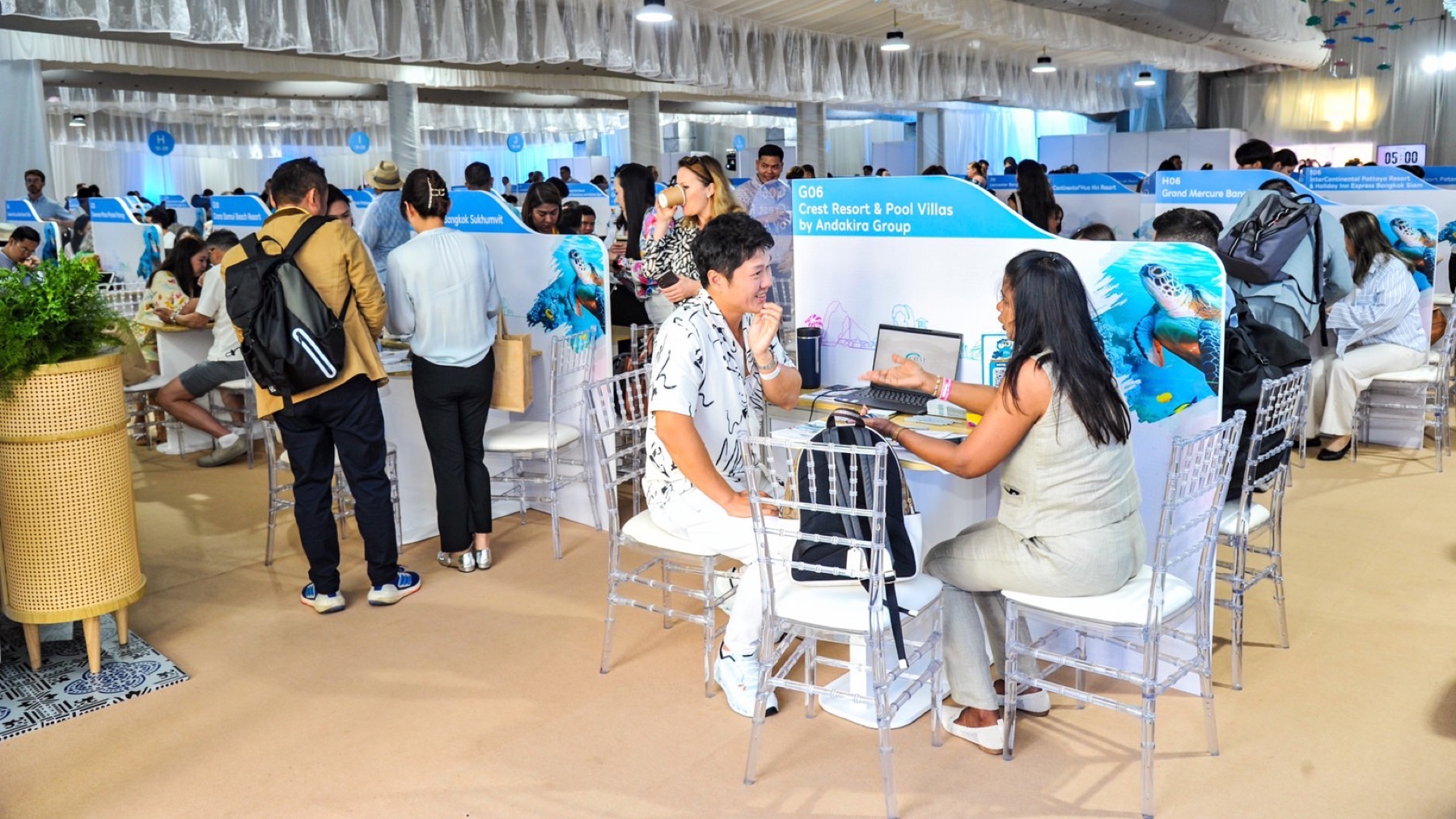
According to TAT’s 10 June 2026 release, the update was presented at Thailand Travel Mart Plus 2026 in Pattaya, held from 10 to 12 June at the NICE Pattaya Convention and Exhibition Center. TAT said Thailand had welcomed more than 14 million international visitors as of 2 June 2026, generating around 679 billion baht in tourism revenue.
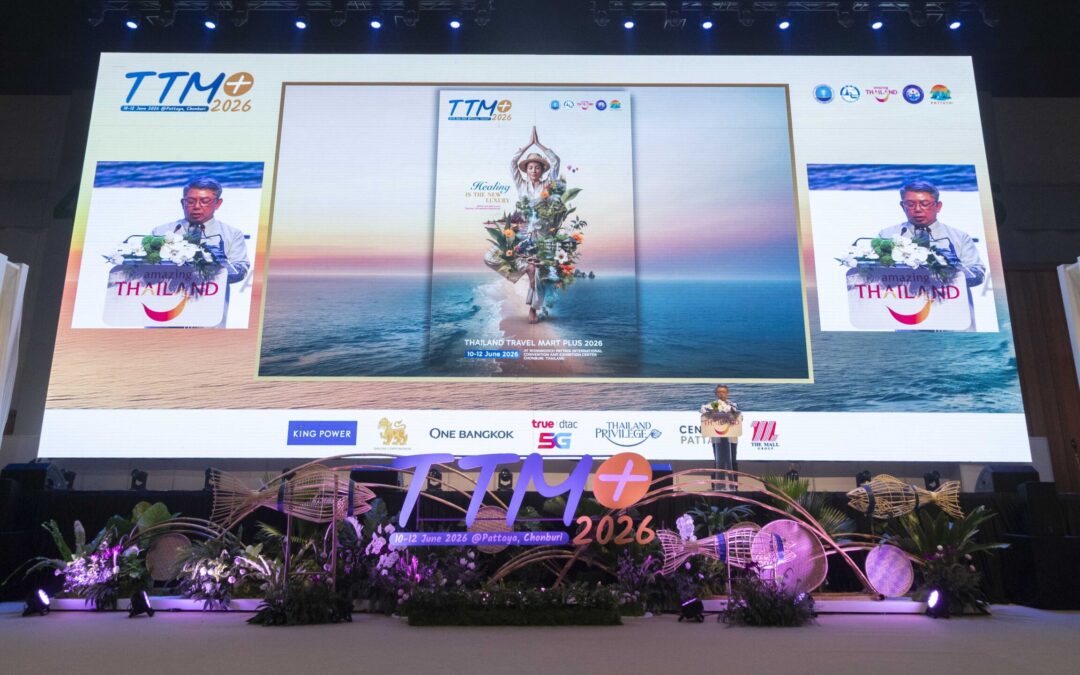
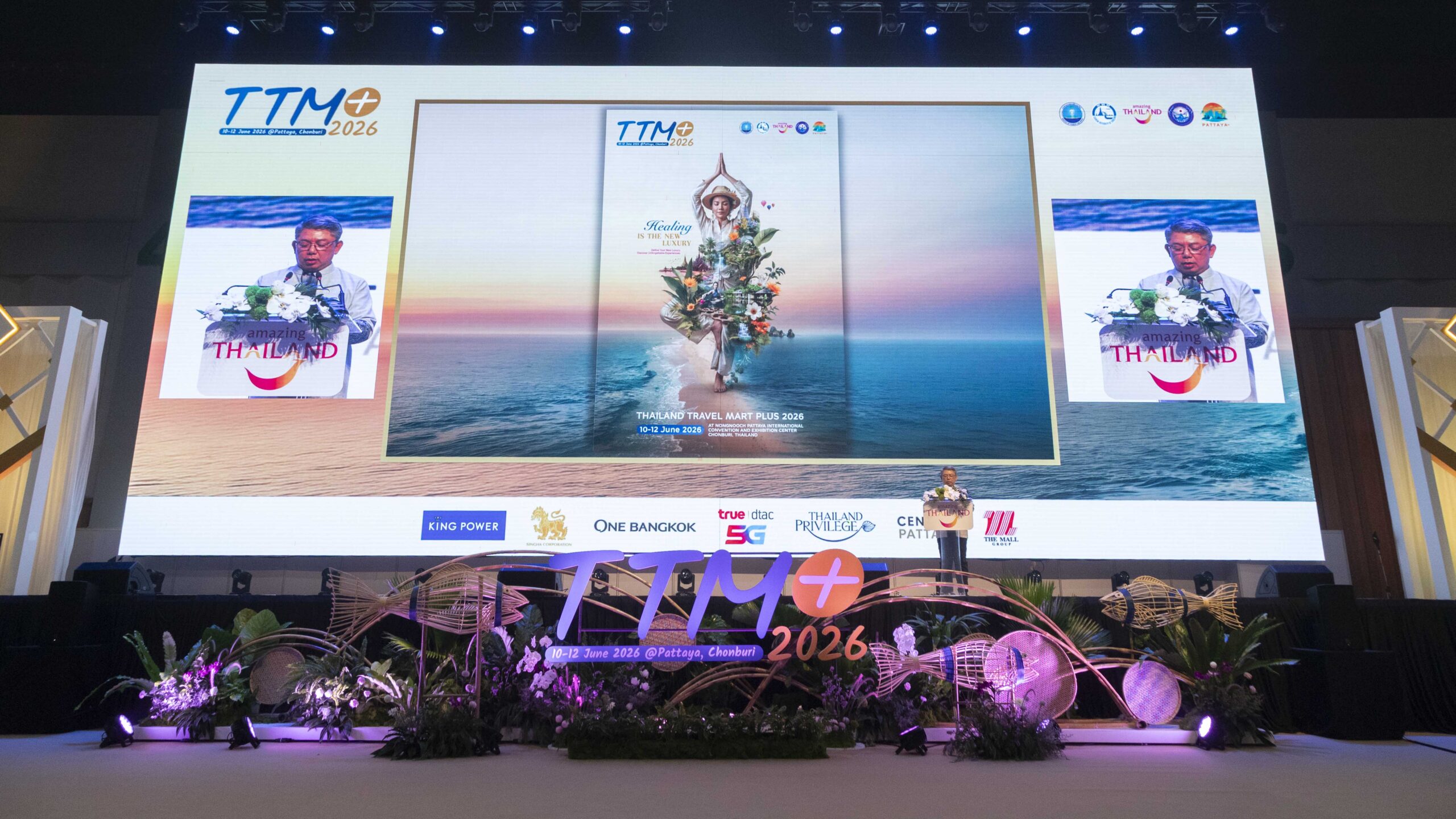
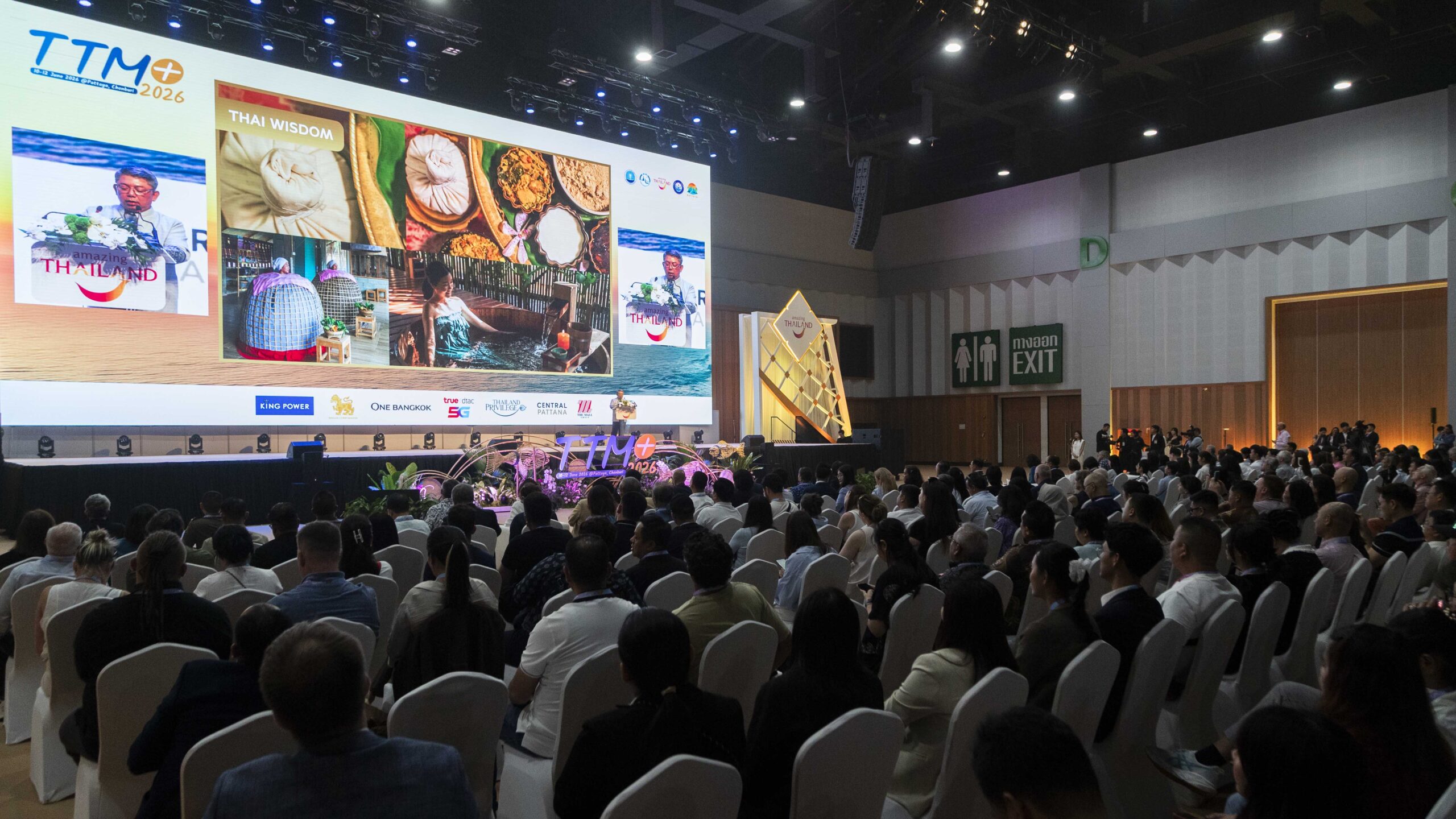
TAT presented its Thailand Tourism Update at TTM+ 2026 on 10 June 2026.
Why tourism quality matters to property
Foreign property buyers should care about tourism quality because Bangkok’s appeal is not only residential. The city sits inside a national visitor economy that supports hotels, serviced apartments, restaurants, hospitals, retail, events, transport, creative industries and business travel. When Thailand attracts higher-value visitors and repeat travellers, Bangkok often benefits as the main arrival, meeting and lifestyle hub.
TAT framed the 2026 direction as Value over Volume, linking wellness, meaningful travel, responsible tourism and stronger business partnerships. That matters for property because higher-quality demand can support longer stays, repeat visits, medical and wellness travel, executive travel and lifestyle-led relocation decisions.
Where Bangkok fits the travel chain
Bangkok is often the first and last stop for international visitors, even when the holiday is focused on beaches, wellness retreats or regional destinations. That gives the city repeated demand for airports, hotels, restaurants, shopping, hospitals, meetings and short-stay services. For condo buyers, the strongest implication is not short-term speculation; it is the long-term value of districts that remain useful to both residents and visitors.
This is why central, transport-connected and service-rich locations deserve close attention. Areas with strong rail access, private hospitals, retail clusters, international schools, parks and hotels can benefit from several demand streams at once. The buyer still needs to test the specific unit, but the surrounding ecosystem can make the rental and resale story easier to explain.
The numbers are useful, but not enough
TAT also said it is advancing projected tourism revenue of 2.65 trillion baht from domestic and international tourism, with 33 million international arrivals expected in 2026. Those figures give a broad confidence backdrop, but they do not mean every Bangkok condo will perform well. A buyer still needs to test building, price, tenant profile and exit liquidity.
The better use of the data is market framing. If tourism remains an important national growth driver, Bangkok condos near transport, hospitals, retail, event venues and lifestyle districts may have a more credible demand story than units that rely only on speculative appreciation.
The update emphasised quality-led growth, wellness, sustainability and stronger international partnerships.
Wellness and events strengthen Bangkok positioning
The TAT update highlighted wellness, gastronomy, sustainable travel and major events. It referred to highlights such as InterPride 2026, the Global Wellness Summit in Phuket, the 2026 IMF-World Bank Group Annual Meetings, Pride Show Bangkok 2026, Tomorrowland Thailand, Wonderfruit, the Amazing Thailand Marathon Bangkok 2026, HYROX and Spartan Race Thailand.
For Bangkok property, this is important because a premium city is built through repeated reasons to visit and stay. Events fill hotels and restaurants, but they also shape how regional executives, families, retirees and lifestyle buyers experience the city. A buyer comparing Bangkok with other Asian cities should look at this cultural and event depth alongside price and ownership rules.
Property questions raised by the update
Which Bangkok districts benefit from transport, hotels, hospitals, retail and event access?
Does the target building appeal to long-stay visitors, relocating families or business travellers?
Can a tenant live well without needing a car for every daily task?
Do nearby services support wellness, dining, healthcare and repeat visitor routines?
Is the purchase price supported by rent evidence, not only tourism optimism?
Can the owner hold through softer tourism periods without forced selling?
For Bangkok property, tourism confidence matters most when it supports long-stay, business and lifestyle demand.
Buyer takeaway
TTM+ 2026 reinforces that Thailand is trying to move tourism toward value, wellness and sustainable demand. For Bangkok property buyers, that supports confidence in well-connected, service-rich districts, but it does not remove the need for unit-level due diligence.
IBP Real Estate can help foreign buyers connect Thailand economy signals with Bangkok condo selection. Continue with our Thailand economy updates and infrastructure articles for more context.
Foreign buyers often ask whether a Bangkok condominium is a good investment. A sharper question is whether the unit will be liquid when the owner needs to rent, refinance, hold or sell. Liquidity is not the same as popularity. A fashionable district can still contain slow-moving units, while a quieter building can sell well if pricing, management and buyer audience are clear.
A liquidity scorecard helps turn that question into a disciplined review. It asks whether a future buyer can understand the asset quickly, whether tenants have a real reason to choose it, whether the building file is clean, and whether the price leaves enough room for transfer costs, furnishing, vacancy and negotiation. In a mixed 2026 economy, this matters more than a broad headline about Bangkok.
Liquidity depends on real buyer depth, not only a broad Bangkok growth story.
Why liquidity should come before yield
Yield is useful, but it can be fragile. A projected rent may assume a perfect tenant, no vacancy, no furnishing mistakes and no repair surprises. Liquidity asks a wider set of questions. If the tenant leaves, can the unit be re-let without a long gap? If the owner needs to sell, are there enough buyers for this size, view, age and price point? If financing conditions or local confidence soften, does the unit remain understandable?
Bangkok can be attractive because it combines regional business access, private healthcare, international schools, mass transit, tourism, hospitality and a large condominium culture. Those strengths help the market, but they do not rescue every purchase. A foreign buyer still needs to separate a genuinely liquid unit from one that simply looks attractive during a viewing.
Score the location by routine, not reputation
The first liquidity factor is daily routine. A unit near BTS, MRT, offices, hospitals, schools, supermarkets and restaurants has more possible users than a unit that depends on a single selling point. The test is practical: how would a tenant commute, buy groceries, get to healthcare, receive visitors and use weekends?
District reputation is only the starting point. Sukhumvit, Sathorn, Silom, Rama IV, Riverside, Ari and Ratchathewi all contain stronger and weaker pockets. A project may use a famous district name while sitting on a less convenient route. Walk the route yourself if possible, or ask for a street-level video at rush hour and at night. Liquidity often lives in those small details.
Building quality, management and location all affect how easy a unit may be to sell later.
Score the building as a shared business
A condominium is a private unit inside a shared financial and management structure. The building needs common fees, staff, security, insurance, repairs, lift maintenance, rules and owner cooperation. A unit can be beautiful while the building story is weak. Future buyers will notice tired corridors, unresolved leakage, poor juristic communication or facilities that no longer match the common-fee level.
Ask how the building collects fees, maintains common areas, manages renovations and communicates with owners. Read recent meeting minutes where available. If the building is older, ask what large capital items are likely: lifts, waterproofing, facade work, piping, pool systems, access control and major repainting. A buyer who understands these issues before deposit has a stronger negotiating position and a clearer holding-cost model.
Score the unit for resale audience
Some units have a wide resale audience. A well-planned one-bedroom near a station may suit an investor, an owner-occupier, a tenant, a second-home buyer or a parent buying for a child. A larger riverfront unit may suit a smaller but wealthier audience that values view and service. Neither is automatically better. The risk appears when price and buyer audience do not match.
Layout is central. Awkward columns, poor storage, dark bedrooms, difficult furniture placement, noisy exposure and unusable balconies can make resale slower. Foreign buyers should compare the exact unit with competing units in the same building and nearby buildings. A discount may be justified if the unit has a structural drawback that future buyers will also see.
A liquid unit usually has a clear tenant profile, sensible layout and a defensible resale audience.
A simple buyer scorecard
Transport: clear access to BTS, MRT, expressway, river pier or a genuine daily destination.
Tenant depth: at least two realistic tenant groups, not one narrow assumption.
Resale audience: a future buyer can understand the unit in one viewing.
Building file: quota, common fees, rules and repair planning are checkable before deposit.
Price discipline: the purchase allows for transfer costs, furnishing, vacancy and negotiation.
Exit route: the owner can sell from overseas with good records, photos and market evidence.
Use current conditions as context, not a command
The Bank of Thailand’s current public pages show that official economic and monetary reporting is active through April 2026, with the next policy meeting scheduled later in June. That is useful context because liquidity is shaped by confidence, interest rates, bank lending, consumption, tourism and business activity. It is not a command to buy or wait.
A foreign cash buyer may feel insulated from Thai mortgage conditions, but local buyers, developers and sellers are not. If domestic credit is cautious, resale timing can lengthen. If tourism or corporate demand improves, selected rental markets may feel firmer. The scorecard keeps the buyer focused on unit-level evidence rather than trying to predict every macro movement.
Buyer takeaway
A liquid Bangkok condo is usually easy to explain: strong routine, sensible layout, credible rent, clean building file and a price that leaves room for the next buyer. When those pieces line up, Bangkok’s wider strengths can support the decision. When they do not, a famous address may still become a slow exit.
IBP Real Estate can help foreign buyers compare liquidity, rental demand and resale risk before reserving. Continue with our investment analysis and resale strategy guides for more buyer-side checks.
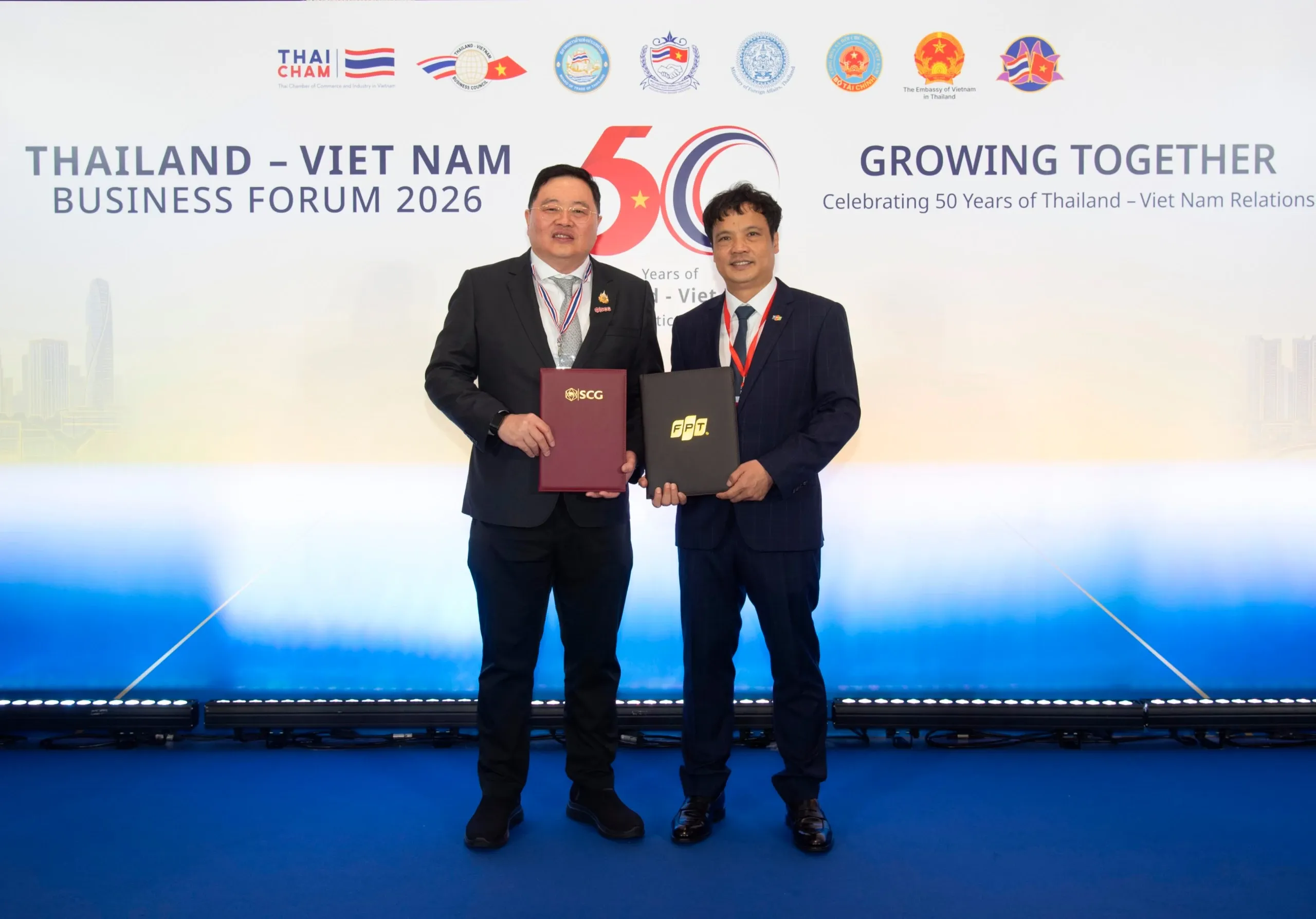
SCG and FPT’s 2 June 2026 AI and digital transformation MOU in Bangkok is not a property announcement. That is precisely why it is useful for foreign condo buyers to watch. The strongest Bangkok property case is supported by a broader city economy: regional companies, professional services, industrial groups, technology partners, banks, consultants and executives using Bangkok as a place to make decisions.
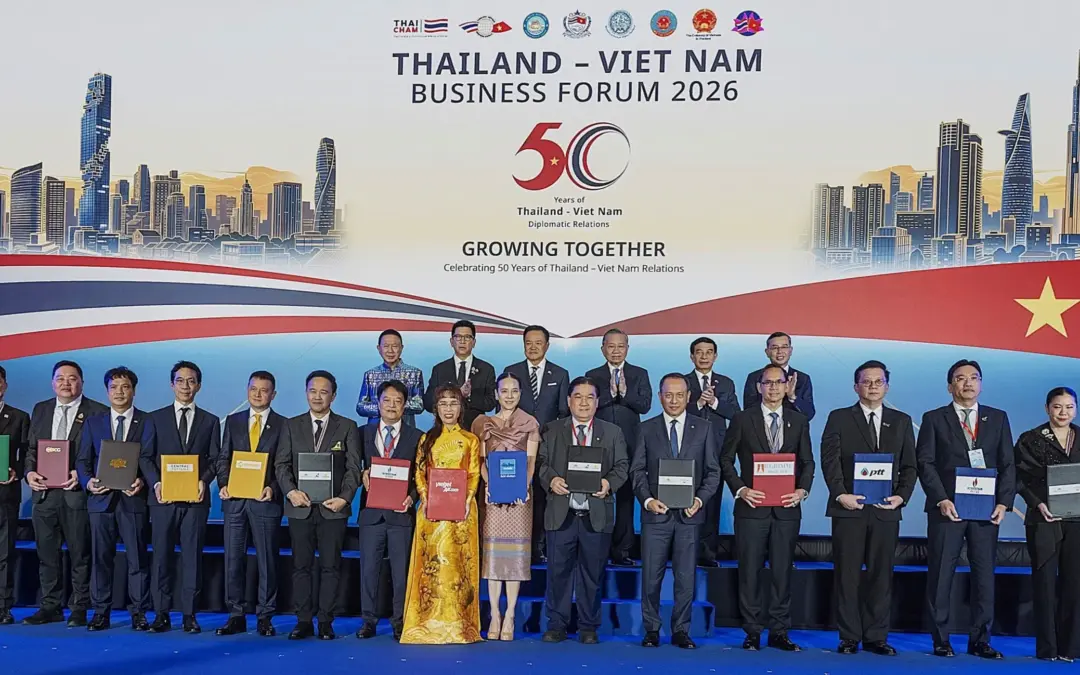
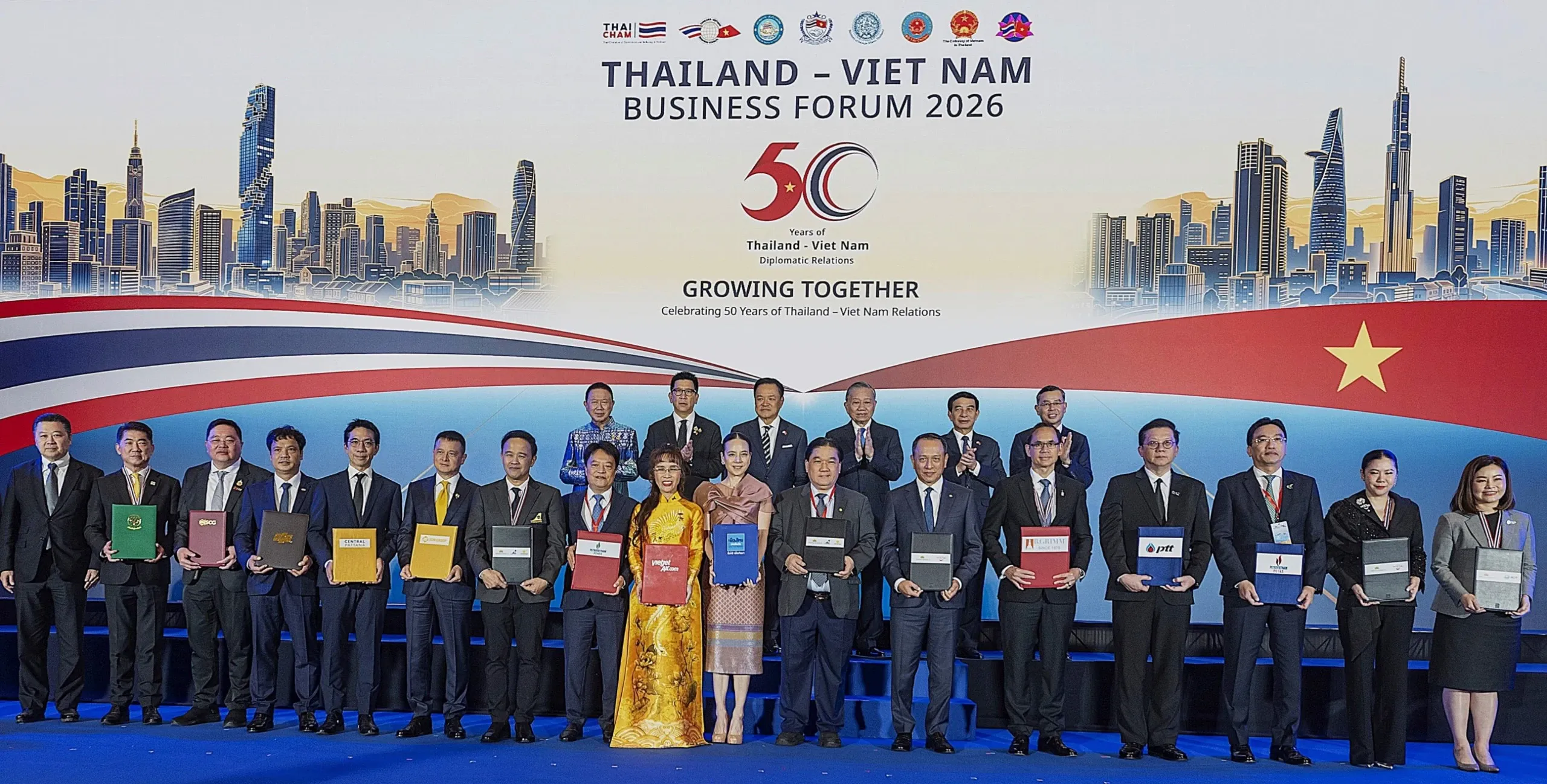
FPT’s official release said the agreement with SCG will explore AI-driven industrial transformation, integrated digital platforms, enterprise process excellence, digital infrastructure, security and governance across SCG’s business ecosystems. It also placed the signing in Bangkok during a period of strengthening Vietnam-Thailand business ties.
SCG and FPT framed the agreement as part of a wider shift toward practical AI-led business transformation.
Why this matters to property buyers
Foreign buyers sometimes look for a single headline to justify a purchase: a new mall, a new station, a new company investment or a tourism figure. A more durable reading is cumulative. Bangkok becomes more attractive when many different forms of high-value activity keep choosing the city, including board meetings, technology partnerships, regional offices, finance, logistics, healthcare, hospitality and education.
The SCG-FPT announcement points to corporate modernisation rather than tourism. That matters because Bangkok’s premium rental and resale markets need more than visitors. They need executives, specialists, consultants, project teams and internationally mobile households who can justify living close to offices, transport, hospitals, schools and lifestyle districts.
A digital economy signal, not a condo guarantee
The announcement should not be read as a promise that condo prices will rise. It does not identify a residential district, a housing programme or a tenant relocation plan. The correct property reading is more measured: Thailand’s large corporates are investing attention in AI, data, governance and process improvement, and Bangkok remains an important meeting point for that activity.
That kind of signal can support confidence in central districts with strong corporate access. Sathorn, Silom, Rama IV, Ploenchit, Chit Lom, Asok and selected riverside areas all benefit when Bangkok continues to host regional business and high-value services. Still, each building must be tested by price, rent, quota, management and exit liquidity.
Corporate technology partnerships can support Bangkok’s role as a regional business decision centre.
What investors should watch next
The next useful signs are practical rather than promotional. Are companies increasing headcount in Bangkok? Are regional teams spending more time in Thailand? Are office districts active outside peak tourist periods? Are hotels, serviced apartments and Grade A offices reporting business demand? Are developers designing units and common areas for hybrid work, meetings and long-stay executive use?
A corporate partnership alone does not answer those questions, but it belongs in the wider evidence set. Buyers should connect it with office occupancy, business travel, international schools, healthcare demand, airport connectivity and transport improvements before drawing a property conclusion.
Buyer checklist
Treat corporate investment news as confidence context, not a standalone buy signal.
Prioritise buildings with real access to business districts, not only fashionable branding.
Check whether the target tenant group works in Bangkok regularly or only visits briefly.
Compare rents achieved in comparable buildings, not only asking rents.
Ask whether the building supports hybrid work through layout, internet, quiet and services.
Keep exit strategy conservative, especially for large-ticket luxury units.
For property buyers, the value is an economic confidence signal, not a direct promise of higher condo prices.
Where the Bangkok angle is strongest
For central Bangkok, the best property implications are in districts where business, transport and lifestyle overlap. A unit near a genuine office cluster, MRT or BTS interchange, hospitals and daily retail can serve more tenant groups than a unit that depends only on one company or one project. The investment case is strongest when the building remains useful even if a specific corporate story fades.
This is also why foreign buyers should avoid overpaying for vague technology narratives. AI, cloud and digital transformation are important themes, but they do not excuse weak unit selection. The building still needs good management, realistic common fees, strong facilities, tenant-friendly rules and a defendable price per square metre.
Buyer takeaway
The SCG-FPT AI MOU is a useful signal that Bangkok remains part of Thailand’s regional corporate and digital transformation story. For property buyers, the lesson is not to chase the headline. It is to buy units that fit the professional, executive and long-stay demand that a deeper business ecosystem can support.
A Bangkok condo investor should ask a simple question before looking at yield: who is likely to rent this exact unit, and why would they renew? The answer is the tenant mix. It is more useful than a generic view of the market because it connects the building, layout, rent, commute, furnishing and management quality to real demand.
The 2026 backdrop makes that discipline important. The Bank of Thailand described the economy as expanding in the first quarter, while also reporting softer private consumption in March and a more subdued April picture, with tourism receipts and arrivals easing after a temporary acceleration. For buyers, that does not mean avoiding Bangkok. It means buying with a clearer view of which tenant groups are resilient and which units may sit vacant if demand becomes selective.
Tenant demand is strongest when the building fits a real daily routine, not only a broad district story.
Why tenant mix matters more than headline yield
Headline yield can hide weak assumptions. A broker may quote one expected rent, but a building might actually appeal to several different tenant groups: expatriate executives, Thai professionals, medical visitors, students, regional business travellers, long-stay retirees, digital workers or families. Each group has different expectations for lease length, furniture, internet, parking, pet rules, school access, hospital access and proximity to BTS or MRT.
If a unit only works for one narrow tenant type, the investor needs a larger buffer. If it can appeal to two or three realistic tenant groups, the owner has more flexibility during soft periods. This is where Bangkok can be attractive for foreign buyers. The city has deep demand drivers across offices, hospitals, education, retail, hospitality, embassies, logistics and regional business, but those drivers do not support every unit equally.
Start with the tenant, then test the unit
A practical rental review should start with a named tenant profile. For example, a compact one-bedroom near Asok may suit a single professional who values MRT and BTS interchange. A larger two-bedroom near Phrom Phong may suit a couple or small family focused on schools, parks, dining and hospital access. A riverside unit may suit a lifestyle tenant who prioritises view, quiet and hotel-style service over a short commute.
Once the profile is clear, test whether the unit really fits. Does the bedroom size work for a long lease? Is the kitchen useful or only decorative? Is the washing machine placed sensibly? Is there enough storage? Is the desk area adequate for hybrid work? Can the unit be shown quickly when vacant? Small practical details often determine whether a tenant renews or moves after one year.
A building can attract different tenant groups at different rents, lease lengths and vacancy risk levels.
Read the 2026 demand backdrop carefully
The BOT’s recent releases point to a mixed economy rather than a uniformly strong or weak market. Exports and some production categories have been supportive, while consumption and tourism have shown softer patches. That matters because Bangkok rental demand is not one thing. Office-led tenants, tourism-linked tenants, relocation families, medical visitors and domestic professionals can move at different speeds.
For investors, a mixed backdrop rewards buildings with broad appeal. A building connected to transport, daily services and credible management may hold demand even when one tenant segment slows. A building that depends on a speculative short-stay story, poor access or a single corporate tenant source can be more exposed.
Questions to ask before relying on rent
Which tenant groups have actually rented in this building during the past two years?
What rent has been achieved for comparable units after negotiation, not only advertised online?
How long do units usually stay vacant between leases?
Do tenants renew, or does the building rely on constant new demand?
Are competing buildings newer, better managed or more convenient at the same rent?
Would the unit still attract tenants if the asking rent had to be reduced by 5-10%?
Match furnishing to the tenant group
Foreign owners often under-budget furnishing because the purchase price receives all the attention. For rental performance, furnishing is part of the product. A corporate tenant may value a proper desk, blackout curtains, reliable appliances and neutral finishes. A family may care about storage, safety, an extra bed and easy cleaning. A lifestyle tenant may respond to view, lighting and a calmer furniture package.
Over-furnishing can be as weak as under-furnishing. Highly personal furniture may reduce the tenant pool. Cheap furniture can increase repairs and make the unit feel tired after one lease. The best package is usually durable, neutral and aligned with the likely tenant, with enough quality to make renewal easier.
The best rental analysis links tenant profile, layout, furnishing, management and resale audience.
Use tenant mix to protect resale
Tenant mix also affects exit strategy. A future buyer will ask whether the unit can be rented easily and whether the building has a stable resident profile. If the owner can show realistic rents, manageable vacancy and a sensible tenant pool, the resale story is easier to defend. If the unit has a patchy rental record, excessive owner use, weak management or unrealistic rent assumptions, the buyer pool narrows.
This is especially important for foreign owners who may sell from overseas. A clear rental file, good photos, service records, tenant history and realistic pricing can reduce friction. The exit should be planned when buying, not only when the owner decides to sell.
Buyer takeaway
Bangkok’s rental market remains attractive when a unit matches real tenant demand, but investors should avoid relying on a single yield number. The stronger test is tenant mix: who rents, why they stay, what they pay, how long vacancy lasts and who would buy the unit later.
IBP Real Estate can compare tenant profiles, rent evidence and resale depth before you reserve. Continue with our investment analysis and rental market articles for more buyer-side checks.
Thailand’s policy-rate cycle is not a simple buy signal for Bangkok condominiums. It is a liquidity signal. Foreign buyers, especially cash buyers, may not need a Thai mortgage, but they still buy into a market shaped by Thai bank lending, developer financing, domestic buyer confidence, seller urgency and the cost of holding unsold stock.
The Bank of Thailand’s Monetary Policy Committee cut the policy rate by 0.25 percentage points to 1.00% on 29 April 2026. The decision came with a cautious view of the economy, credit quality and external risk. For Bangkok condo buyers, the practical question is how to translate that macro information into offer discipline, timing and risk control.
Interest-rate context affects liquidity, but the buyer decision still has to work at building and unit level.
Why the policy rate matters even for cash buyers
A foreign cash buyer might assume Thai interest rates do not matter. That is only partly true. The buyer may not borrow locally, but the seller, developer, Thai buyer pool and competing landlords often do. When domestic credit is tight or cautious, some Thai buyers delay purchases, some sellers become more realistic, and some developers use promotions to convert inventory into cash. That can create negotiation room for a buyer who has clean funds, correct foreign-exchange evidence and a clear transfer plan.
The rate itself is not the full story. The BOT’s April decision noted concerns around credit quality, especially for small businesses and some retail borrowers. In property terms, that means buyers should watch not only headline interest rates but also bank approval behaviour, transfer rates, mortgage rejection stories and developer inventory strategies.
What the April 2026 macro backdrop adds
In its April 2026 economic conditions release, the BOT described private consumption as subdued compared with the previous month and said foreign tourist arrivals and receipts declined after a temporary acceleration before measures related to cross-border tensions. It also reported that private investment improved in some machinery and equipment categories, while merchandise exports rose in several sectors including electronics and automotive goods.
That mixed picture is important. Bangkok property confidence is supported by Thailand’s long-term role in tourism, services, manufacturing, logistics and regional business. But the near-term mood is not uniformly strong. Buyers should therefore avoid assuming that every district, building and unit benefits equally from lower rates or broader recovery hopes.
A softer credit cycle can change seller urgency, domestic buyer depth and negotiation room.
How to adjust your buying strategy
1. Separate macro confidence from unit evidence
A lower policy rate can support sentiment, but it cannot fix a poor layout, weak building management or unrealistic asking price. Before treating a unit as good value, compare recent resale evidence, achievable rent, vacancy risk, common fees, upcoming repairs, foreign quota and future buyer depth. The rate cycle is context, not due diligence.
2. Ask whether the seller is liquidity-sensitive
In a cautious credit cycle, some sellers are more motivated than others. An owner with a vacant unit, an upcoming transfer deadline, a loan, multiple competing listings or a slow resale history may accept a cleaner offer. A cash buyer should not simply ask for a discount. The better approach is to present certainty: proof of funds, realistic transfer timing, clear legal process and a narrow set of conditions.
3. Compare new-launch incentives with resale discounts
Developers may respond to softer demand with furniture packages, fee support, payment schedules or limited-time incentives. Resale sellers may respond with direct price reductions. Compare the net price after incentives and costs, not the brochure price. A resale discount can be stronger if the building is proven and the unit is ready to lease. A new-launch incentive can be attractive if the project has genuine scarcity and the completion risk is acceptable.
Foreign buyers should model rates, rent, vacancy, cash timing and resale liquidity together.
A practical stress test for 2026 buyers
Build three scenarios before offering. The base case assumes the target rent, a normal vacancy period and ordinary holding costs. The cautious case assumes a longer vacancy, a lower renewal rent and minor repairs. The stress case assumes slower resale, a discount to exit and extra time to find a tenant. If the unit only works in the base case, the rate-cut story is not enough.
Cash timing should also be modelled. A foreign buyer needs correct overseas remittance evidence for a freehold condominium transfer. If the buyer waits for a stronger exchange rate, they may lose the unit. If they transfer too early without a clear purchase sequence, they may create administrative friction. The best buying strategy links offer timing, lawyer review, remittance evidence and transfer date.
Where the opportunity may be
The most useful opportunities in a cautious rate environment are often specific rather than broad. Look for completed buildings with motivated sellers, strong juristic-person management, clear tenant profiles and asking prices that can be defended against both rent and resale evidence. Avoid buying a weak unit simply because the market mood feels softer.
For luxury stock, rate cuts may help sentiment, but the buyer pool can remain selective. Premium buyers pay for scarcity, service, view, address, privacy and convenience. If those elements are missing, a lower policy rate will not create lasting value.
Buyer takeaway
Thailand’s 1.00% policy rate gives foreign buyers a useful lens on liquidity and negotiation, not a guarantee of returns. The strongest Bangkok condo strategy in 2026 is to combine macro patience with precise unit-level evidence: rent, vacancy, condition, quota, costs and exit.
IBP Real Estate can prepare a buyer-side offer range and holding-cost model before you negotiate. Continue with our investment analysis and resale strategy articles for more practical checks.
A Bangkok condo price gap is not automatically a bargain. It is a clue that needs to be explained. In 2026, foreign buyers will see new-launch prices, resale asking prices, developer promotions, older-building discounts and rent evidence moving at different speeds. The opportunity is real only when the gap is supported by liquidity, tenant demand and a sensible exit route.
The right question is not simply whether one unit is cheaper than another. It is why the price difference exists. A lower price may reflect weaker views, older common areas, higher renovation costs, a larger supply of competing units, limited foreign quota, poor tenant demand or an owner who needs a fast sale. A higher price may reflect a stronger address, newer specification, better building management or simply an optimistic seller.
A Bangkok condo price gap should be tested against district demand, building quality and resale depth.
Why price gaps are more visible in 2026
CBRE reported that Bangkok’s condominium market had a slow start to 2026, with only 12 new project launches in the first quarter and buyers taking longer to decide. That cautious mood makes comparison more important. When buyers slow down, sellers and developers have to compete for attention, and headline prices can become less useful than the full package of discounts, transfer terms, furnishing and post-purchase costs.
At the same time, CBRE’s 2026 outlook pointed to more new launches in the luxury and super-luxury condominium segments, supported by a 93% sales rate for existing supply, and expected downtown asking-price growth of up to 15% year on year. That does not mean every premium unit deserves a premium. It means buyers need to separate scarce, well-located stock from units that are merely priced as luxury.
New launch price versus resale evidence
A new-launch unit often includes presentation value: fresh design, staged sales galleries, payment plans, warranties and a cleaner ownership story. A resale unit offers different evidence: existing building management, actual common-area condition, current rental competition, juristic-person budgets, occupied units and real view corridors. Both can be attractive, but they should not be compared only by price per square metre.
Foreign buyers should adjust for what is missing. A resale unit may need furniture replacement, repainting, appliance upgrades or a more realistic rent target. A new launch may carry construction timing risk, future supply risk and uncertainty about the final tenant profile. A price gap is useful only after those adjustments are made.
Comparable evidence is strongest when it narrows the field to similar buildings, views and age profiles.
The four checks before calling it value
1. Is the location demand proven?
Start with tenant and buyer depth. BTS and MRT access still matter, but not every station-adjacent unit has the same pool. Compare the building with realistic alternatives in the same micro-market: walk time, footpath comfort, supermarket access, office access, hospital access, school access and night-time taxi convenience. A cheaper unit in a less practical pocket may remain cheaper when you sell.
2. Is the building ageing well?
Building condition can explain a discount more honestly than any seller narrative. Inspect lifts, corridors, facade condition, lobby service, parking, pool, gym, waste areas, security process and delivery handling. Read AGM minutes and juristic-person budgets where available. An older building with strong management may be a better buy than a newer building with weak upkeep, but the evidence has to be checked.
3. Does the rent support the price?
Do not rely on advertised rents. Ask for achieved leases, likely vacancy period, tenant profile, furnishing standard and agent feedback. A unit that looks cheap against sale comparables can still be expensive if the rent has limited upside or if the tenant pool is thin. The best price-gap opportunities usually have both a sensible entry price and a believable rental story.
4. Can another buyer understand the same value later?
Resale is where many price-gap arguments fail. A foreign buyer may be comfortable with an unusual layout, a deep soi, a low floor or a building with limited facilities. Future buyers may not agree. Before making an offer, ask whether the same value case can be explained in one clear paragraph to a future buyer: better space, better location, better rent, better condition or better scarcity.
The best offer price is built from rent, holding cost, liquidity and future buyer appeal.
How to build an offer range
A disciplined offer range starts with the best comparable resale evidence, then adjusts for unit condition, view, floor, orientation, furniture, transfer costs, common fees and expected vacancy. It should also include a walk-away price. If the deal only works because rent is assumed at the top of the market, the price gap is not strong enough.
For off-plan and newly completed stock, compare the net price after all incentives, not the headline price. Ask how much of the discount is real cash value, how much is furniture, and how much depends on transfer timing or payment terms. A foreign buyer wiring funds from overseas should also confirm the remittance and foreign quota sequence before committing.
Where the opportunity may sit
In a cautious market, value may appear in completed buildings where an owner wants liquidity, in larger units that need a narrower buyer pool, or in older prime buildings with strong land locations but tired interiors. Newer luxury projects can still work, especially where scarcity and service quality are genuine, but buyers should prove the exit case rather than accept a prestige address as enough.
The point is not to chase the largest discount. It is to buy the most explainable discount. A small reduction on a highly liquid unit can be safer than a large discount on a unit that will be hard to lease or resell.
Buyer takeaway
Bangkok remains attractive because it combines liveability, regional connectivity, established private services and a deep condominium culture. In 2026, the smarter opportunity is not broad market timing. It is careful selection: finding a price gap that survives rent checks, building checks and resale checks.
IBP Real Estate can prepare a buyer-side comparable set and offer range before you negotiate. Continue with our Bangkok investment analysis and resale strategy guides for more practical due diligence.
Vacancy risk is the part of a Bangkok condo investment that is easiest to underestimate. A buyer may check headline yield, building reputation and asking price, then assume rent will begin quickly after transfer. In practice, vacancy is where the spreadsheet meets the real tenant market: viewings, furnishing, agent response, competing units, price reductions and the first renewal conversation.
For foreign buyers in 2026, the issue is not whether Bangkok remains attractive. The city still has strong lifestyle pull, regional connectivity, established hospitals, international schools, malls, offices and a deep rental culture. The more useful question is narrower: can this specific unit find the right tenant at the rent required, within a vacancy period the owner can afford?
Vacancy risk starts with the depth of tenant demand around the building, not only the rent advertised online.
Why vacancy deserves its own model
A quoted gross yield can look tidy because it assumes rent is received every month. Vacancy breaks that assumption. One empty month, one unfurnished repair period or one tenant who negotiates a lower renewal can change the annual return materially, especially after common fees, agent commission, maintenance, insurance and tax are included.
Vacancy also behaves differently by micro-location. A compact one-bedroom near a proven BTS station may have steady demand from young professionals, while a larger unit in the same district may depend on corporate budgets, families or diplomats. A riverfront or luxury unit may attract premium rent, but the tenant pool can be smaller and more sensitive to furnishing standard, view, building service and lease flexibility.
What the 2026 market context says
CBRE reported that Bangkok’s condominium market had a slow start to 2026, with only 12 new project launches in the first quarter and buyers taking longer to make decisions. That slower buyer rhythm matters to investors because it usually creates a more selective leasing environment too. Tenants can compare more carefully when local confidence is soft and competing units are visible.
The same Q1 report noted that Thailand recorded 9.3 million international arrivals in the quarter, while the Bank of Thailand projected more moderate full-year growth for 2026. For landlords, that mixed backdrop is important. Tourism and international movement support Bangkok’s liveability story, but rental demand still has to be proven at building level. A foreign owner should not treat broad city confidence as a substitute for a conservative vacancy allowance.
Building quality, access and management can change the vacancy profile more than a district average.
The checks that matter before buying
Start with tenant source. Ask who is likely to rent the unit: local professional, expatriate employee, medical traveller, embassy household, student, remote worker, regional executive or relocating family. Each group has different expectations on lease length, furnishing, internet, parking, pet rules, school access, hospital access, public transport and building service.
Then test competing stock. Do not compare only asking rent in the same district. Compare similar floor height, view, layout, furniture level, building age, walking distance and current availability inside the same project and nearby alternatives. If ten similar units are already listed, the landlord may need either sharper pricing or a better presentation plan.
Vacancy questions for the shortlist
How many directly comparable units are available in the same building today?
What rent has actually been achieved recently, not just advertised?
Does the unit need furnishing, appliance replacement or repainting before it can be marketed?
How long did the last similar unit sit empty before lease signing?
Will the building rules support the intended tenant, including pets, family use, corporate leases or work-from-home needs?
Can the owner cover three empty months without needing a rushed discount?
A simple vacancy stress test
A practical model should include three scenarios. The base case assumes a realistic rent, one normal leasing commission and a short gap between tenants. The cautious case assumes one to two additional empty months, a minor repair budget and a renewal at a slightly lower rent. The stress case assumes a longer vacancy, a more expensive furnishing refresh and the need to reduce rent to meet the market.
This does not make the investment pessimistic. It prevents a buyer from relying on perfect occupancy. If the property still works after a reasonable vacancy stress test, the buyer can negotiate with more confidence. If it only works when every month is occupied at a top-of-market rent, the buyer is relying on a narrow outcome.
A unit should be tested against real tenant use, holding cost and resale depth before the offer is final.
How to reduce the risk
The best vacancy protection is bought before transfer. Choose a building with strong management, clean common areas, reliable lifts, practical drop-off, clear delivery handling and a tenant profile that matches the unit. Choose a layout that photographs well and works naturally for the likely renter. Avoid paying a premium for features that buyers like in a brochure but tenants rarely pay for in monthly rent.
After purchase, move quickly on presentation. Good photos, clear floor plans, working appliances, neutral furniture, accurate rent expectations and responsive agent communication matter. A well-prepared unit can still sit empty in a slow market, but poor preparation almost always makes the vacancy longer.
Buyer takeaway
Bangkok remains a compelling rental city for foreign owners, but rental income should be modelled with patience. In 2026, cautious buyers and selective tenants reward owners who understand the exact building, not only the broad district. Vacancy is not a reason to avoid Bangkok; it is a reason to buy with sharper evidence.
IBP Real Estate can prepare a rental evidence review, vacancy stress test and building-level comparison before you make an offer. Continue with our Bangkok investment analysis and rental market guides for more buyer-side checks.
Bangkok condominium buyers have more room to think in 2026, but that does not mean every unit is suddenly a bargain. The useful question is narrower: where does a foreign buyer have genuine negotiation leverage, and where is the seller still protected by scarcity, location or a strong rental story?
CBRE reported that the overall Bangkok condominium market had a slow start to 2026, with only 12 new project launches in the first quarter. It also noted that buyers remained cautious and were taking longer to make decisions amid a weak local economy, geopolitical tension and elevated oil prices. For a foreign buyer, that combination points to a more disciplined market: fewer rushed launches, more careful buyers and a wider gap between average stock and genuinely liquid stock.
Negotiation leverage starts with market context, not just the listed asking price.
What buyer leverage means in Bangkok
Leverage is not the same as asking for a discount. It is the evidence that allows a buyer to request better terms without weakening the deal. In Bangkok, that evidence usually comes from four places: comparable resale stock in the same building, unsold developer inventory nearby, rent evidence from similar layouts, and the seller’s timing pressure.
The first lesson for overseas buyers is to separate market-wide softness from unit-level quality. A well-managed freehold unit near a proven BTS or MRT station may still attract owner-occupiers and tenants even when the broader market is slower. A compromised unit with an awkward layout, weak view or high common-fee burden may deserve a sharper negotiation even if it sits inside a fashionable district.
Read the market before reading the listing
A slower launch environment can support buyer discipline because developers and agents have fewer fresh headlines to use as urgency. Yet the absence of abundant new supply in a specific micro-location can also protect prices for completed, well-located stock. Before making an offer, compare the target unit with active listings, recent asking-price reductions and the level of furnished competition in the same rental catchment.
CBRE’s 2026 outlook also pointed to more luxury and super-luxury condominium launches, supported by a high sales rate for existing supply in that segment. That matters because prime Bangkok is not one uniform market. Downtown branded or rare-address assets can behave differently from older mass-market buildings or outer-station projects. Foreign buyers should therefore avoid using a single headline to justify every negotiation.
Building-level evidence can be more useful than broad market averages when negotiating.
Where negotiation tends to be strongest
Foreign buyers often have the most leverage where the seller wants certainty. A cash buyer with clean foreign-exchange documentation, a realistic transfer date and a lawyer already appointed can be more attractive than a buyer who is still arranging finance or has unclear remittance evidence. The strongest offer is not always the highest offer; it is the offer most likely to complete without drama.
Leverage also improves when there is visible competition inside the same building. If several similar units are listed and none has moved for months, the buyer can ask why a specific unit deserves its premium. Floor height, view, renovation quality, parking rights, furniture condition and tenant status should be priced explicitly rather than treated as vague talking points.
Common leverage points to test
Whether the unit has been listed for a long period without a serious price adjustment.
Whether similar layouts in the same building are offered at lower net prices.
Whether rent evidence supports the seller’s claimed yield after common fees, vacancy and agent fees.
Whether the seller needs a fast transfer, a delayed transfer or a clean cash settlement.
Whether furniture, repairs, tax sharing or transfer-fee sharing can improve the economics without headline price movement.
Where buyers should be careful
Some discounts are expensive. A low headline price may hide high renovation needs, a weak tenant profile, poor sinking-fund discipline, excessive common fees or a building that is losing appeal against newer projects. A buyer who focuses only on price can inherit a unit that is harder to rent, harder to resell and more costly to hold.
This is especially important for buyers who plan to rent out the condo. A unit that is ten per cent cheaper than a stronger competitor is not necessarily better if it also suffers longer vacancy or attracts tenants who negotiate aggressively every renewal. In practice, the right negotiation target is the total risk-adjusted cost of ownership, not only the purchase price.
Foreign buyers should test layout, rentability and resale depth before agreeing final terms.
A practical offer structure
A sensible offer should state the price, deposit timing, intended transfer date, who pays which transfer-related costs, what furniture and appliances are included, and what documents must be satisfactory before the deposit becomes non-refundable. If the buyer is relying on foreign freehold ownership, the offer should also depend on receiving clear foreign-quota confirmation and acceptable foreign-exchange evidence from the receiving bank.
For resale units, ask for the title deed copy, house registration copy, juristic debt-free letter process, latest common-fee statement, sinking-fund position where available, AGM minutes if relevant, tenant agreement if occupied and a list of included items. For off-plan or developer stock, focus on payment schedule, construction progress, EIA status, defect process and refund language if conditions are not met.
What foreign buyers should do next
Bangkok’s 2026 market gives disciplined buyers space to compare, but it does not remove the need for local checks. Shortlist buildings by transport, tenant demand and management quality first. Then use comparable evidence to negotiate the specific unit. The best outcome is not a dramatic discount; it is a clean acquisition at a price that still works if rent is slower, resale takes longer or the buyer’s own plans change.
For a private shortlist, pricing review or negotiation brief, speak with IBP Real Estate before making a formal offer. A buyer-side review can help separate negotiable price from non-negotiable risk.
Thailand Travel Mart Plus 2026 has become more than a tourism calendar item for property watchers. The latest Tourism Authority of Thailand update, published on 2 June 2026, confirms strong international participation ahead of the 10 to 12 June trade event in Chon Buri. For Bangkok condo buyers, the point is not that a tourism event directly changes property prices. The point is that global tourism confidence supports the wider services economy that makes Bangkok easier to live in, rent out and visit.
TTM+ 2026 is a tourism trade signal, not a direct property price forecast.
The figures that matter
TAT says TTM+ 2026 will welcome 429 global buyers, 428 Thai sellers, more than 60 international media representatives and over 15,400 expected business appointments at the NICE Pattaya Convention and Exhibition Center. The buyer mix is also useful: ASEAN represents 33 percent, East Asia 28 percent, Europe 24 percent and the Americas 15 percent. TAT notes that participation from the Americas has increased, signalling renewed long-haul interest in Thailand’s tourism sector.
For property investors, these figures should be read as confidence indicators. They show that Thailand is still working to keep international travel partners engaged, to refresh product quality and to broaden demand beyond short-stay leisure. Bangkok benefits from that national positioning because it is the main aviation, corporate, retail, healthcare and cultural gateway for many visitors.
Why tourism confidence reaches Bangkok property
Bangkok’s condo market is not a hotel market, but the two are connected through employment, services and international visibility. A healthier tourism sector supports restaurants, retail, transport, wellness, hospitals, event venues, creative businesses and regional headquarters that depend on frequent visitors. Those sectors help shape the daily city experience for residents and the rental appeal for expats.
When foreign buyers ask why Bangkok remains attractive, the answer is rarely one factor. It is a combination of transport connectivity, value versus other major Asian cities, hospital access, dining, schools, culture, retail and regional business links. Tourism trade events reinforce that ecosystem by keeping Thailand visible to travel buyers, media and operators who influence future demand.
Tourism trade activity supports the services ecosystem that makes Bangkok attractive to residents and visitors.
Wellness and quality travel are property-relevant themes
TTM+ 2026 is being presented under the theme Healing is the New Luxury, with attention on wellness tourism, Hidden Gems, sustainable travel, regional routes, digital trade support and major global events. That matters for Bangkok because premium residential demand increasingly overlaps with wellness, healthcare, private-club, lifestyle and flexible-work expectations.
Foreign buyers evaluating central Bangkok condos should think about how a building and district serve this quality-of-life demand. A unit near hospitals, parks, premium retail, fitness, dining, cultural venues and efficient transport may appeal to a wider resident profile. The theme also supports Thailand’s longer-term move away from volume-only tourism toward higher-value experiences, although investors should still test each property’s rental numbers carefully.
MICE, events and regional routes
TAT’s update highlights major global events, a Thailand Event Hub showcase, medical and wellness tourism programming, and pre- and post-tour routes across different regions. This is relevant to Bangkok because business travel and event demand often pass through the capital even when activity is distributed nationally. Visitors may arrive through Bangkok, meet partners in Bangkok, extend stays in Bangkok or use the city as a base before regional travel.
For condo investors, event-led travel can support serviced-apartment demand, executive leasing, short relocation stays and repeat personal visits. However, foreign buyers should avoid assuming that all tourism growth converts into condo rent. The better approach is to buy units that make sense for long-term tenants first, then treat tourism and event momentum as supporting context.
Wellness, events and regional routes are part of Thailand's quality-tourism positioning.
Sustainability and operating standards
TAT also says TTM+ 2026 will embed a Sustainable Event concept, including resource reduction, carbon tracking, waste separation, full-cycle management and redistribution of surplus food and reusable materials. This language may seem distant from condo buying, but it reflects a broader direction: international visitors and corporate tenants increasingly care about operating standards, not just location.
Bangkok landlords can apply the same thinking when selecting buildings. A well-managed condo with credible maintenance, efficient systems, clear waste handling, good security and reliable juristic communication is easier to defend over time. The building does not need to be the newest in the market, but it should feel professionally run.
What foreign buyers should take from TTM+ 2026
The key lesson is measured confidence. TTM+ 2026 shows active global engagement with Thailand’s tourism product at a time when many markets are competing for the same travellers. That supports Bangkok’s role as a connected, service-rich and internationally familiar city. It does not remove the need for property due diligence.
Buyers should still compare micro-locations, foreign quota, building finances, rental depth and exit liquidity. IBP’s investment analysis and condo due diligence checklist can help place macro confidence signals beside unit-level risk. Used properly, tourism news is context for a better property decision, not a substitute for one.
Bottom line
TTM+ 2026 is a positive signal for Thailand’s international tourism and service economy. For Bangkok property buyers, it supports the case for a globally connected city with strong lifestyle, healthcare and event infrastructure. The sensible investment response is to focus on condos that benefit from those strengths while still standing up to conservative rental and resale checks.
Bangkok condominium buyers often compare price per square metre first. It feels objective, easy to rank and useful across different buildings. For foreign buyers, it is a helpful starting point, but it can also mislead. A unit can look cheap per square metre while still being difficult to rent, hard to furnish, too large for the active tenant pool or too expensive for the next resale buyer.
Price per square metre is useful only when it is tested against total budget, rentability and exit depth.
The more practical question is total ticket. How much capital is tied up, how much rent can the unit realistically command, how many future buyers can afford the same ticket, and how much friction will appear at exit? In a selective Bangkok market, those questions matter more than a simple ranking of baht per square metre.
Recent market outlooks support this more careful approach. CBRE’s 2026 Thailand outlook points to more activity in luxury and super-luxury condominiums, while its Q1 2026 Bangkok figures described a slower start to the overall condominium market, with cautious buyers taking longer to decide. For overseas buyers, that combination means high-quality assets can still command attention, but weak pricing logic is less forgiving.
Why price per square metre still matters
Price per square metre helps buyers compare similar products in similar districts. It can show whether a new launch is asking a large premium over completed resale stock, whether a refurbished unit is priced above its building, or whether a larger unit is being discounted because the buyer pool is narrower. It is also useful when comparing Bangkok with other cities, because it gives a broad sense of capital intensity.
However, the number should be used inside a tight comparison set. A small Sukhumvit unit beside BTS, a large riverfront residence, a low-rise city-fringe condo and a branded luxury residence should not be ranked as if they were interchangeable. Each serves a different owner, tenant and future buyer.
A lower price per square metre can still be expensive if the total ticket narrows the resale audience.
Why total ticket can be more important
Total ticket decides liquidity. A 40 square metre unit at a high price per square metre may still be easier to sell if the final price sits inside a deep buyer budget. A 150 square metre unit may look cheaper per square metre but require a much smaller audience: families, senior executives, owner-occupiers or wealthy second-home buyers.
That does not make larger units unattractive. Some Bangkok buyers prefer space, privacy and long-term liveability. The risk is assuming that a discounted price per square metre automatically creates value. If the final ticket is high, the buyer must ask whether rents, building quality, view, management and location are strong enough to justify tying up more capital.
Rentability is not the same as size
Tenants pay for daily function. A compact unit with good storage, natural light, a proper work area and quick station access may rent faster than a larger unit with awkward corners, poor furniture planning or a difficult commute. Foreign landlords should look at the renter’s decision, not only the owner’s spreadsheet.
For one-bedroom units, the key checks are bed size, sofa space, work-from-home practicality, washing machine position, kitchen ventilation and whether the balcony is usable. For two- and three-bedroom units, check bedroom proportions, bathroom count, maid or storage space, parking, school access and whether the building attracts family tenants or mostly singles.
Layout efficiency often matters more to tenants than headline size.
Resale depth by ticket band
A foreign buyer should ask who the likely resale buyer will be. Below certain ticket bands, the pool may include Thai end-users, local investors, expatriates already living in Bangkok and regional buyers. At higher tickets, the pool may shift towards wealthy owner-occupiers, family offices, lifestyle buyers and people comparing Bangkok with Singapore, Hong Kong, Dubai or Tokyo.
The resale story should be simple. A future buyer should quickly understand why the unit deserves its price: station access, freehold title, clear view, branded service, rare size, strong building management, limited supply or a specific lifestyle district. If the explanation depends only on a low price per square metre, it may not be enough.
How to compare two shortlisted units
Compare price per square metre only against similar buildings and similar age profiles.
Model the total ticket after transfer costs, common fees, furnishing, repairs and vacancy.
Ask whether the rent per month fits the tenant pool for that district.
Check whether a larger unit has efficient usable space or just more corridor and dead area.
Review completed resale evidence, not only active listings.
Decide whether the exit audience is broad, narrow, local, foreign or mostly investor-led.
Where foreign buyers should be cautious
Be cautious when a unit is large for its district, when the building is investor-heavy, when common fees are high relative to rent, or when the floor plan makes furnishing difficult. Also be careful with projects where new-launch pricing is far above completed alternatives nearby unless the difference is justified by location, specification, services or scarcity.
A low entry price can still be useful if the building is well managed and the rent is realistic. A high price can still be rational if the asset is genuinely rare. The point is to identify what the buyer is being paid for: income, lifestyle, scarcity, future resale depth or simply a discount that may exist for a reason.
Investor takeaway
Bangkok remains attractive for many foreign buyers because it combines international services, transport, healthcare, lifestyle depth and relatively accessible condominium ownership. But the best purchase is not always the unit with the lowest price per square metre. It is the unit where total ticket, rentability, ownership documents and future resale audience fit together.
IBP can help overseas buyers compare Bangkok condominiums by price, layout, rent evidence and exit logic before reserving a unit. Read our investment analysis guides or contact IBP Real Estate for a buyer-focused shortlist.
Bangkok property buyers have a new Q1 2026 data point to read carefully. The Real Estate Information Center of Government Housing Bank reported that nationwide residential transfers rose in the first quarter, helped by policy support and still-active housing demand. The headline is constructive, but the details are more useful for foreign condominium buyers than the headline alone.
Q1 transfer data gives foreign buyers a market signal, but building and district evidence still matter most.
REIC-linked reporting put nationwide Q1 2026 property transfers at 72,583 units, up 11.2 percent year on year, with total value at 187,182 million baht, up 3.1 percent. In Bangkok, transfer units rose 11.1 percent year on year to 17,746 units, but transfer value fell 4.5 percent to 64,952 million baht. That split matters. It suggests that activity improved, while pricing power and product mix remained under pressure.
For foreign buyers, this is not a simple green light or red light. It is a reminder that Bangkok is a broad, segmented market. Some buildings and districts can still attract resilient demand, while weaker stock may need deeper negotiation, longer holding periods or more realistic rent assumptions.
Volume recovery does not mean every price is firm
A rise in transfers shows that transactions are happening. It does not prove that sellers have regained full pricing power. In Bangkok, the Q1 unit increase alongside a lower total value points to buyers becoming more price sensitive, more active in lower ticket bands or more selective about what they are willing to pay for.
That is useful for overseas buyers who are comparing new launches, completed stock and resale opportunities. A developer sales gallery may emphasise scarcity and future upside. A resale seller may point to location and replacement cost. The transfer data says buyers should ask a more practical question: what is actually clearing in this price band, and at what discount to optimistic asking prices?
Bangkok transfer volume improved in Q1, while value signals remained more selective.
Foreign condominium demand remains important
The foreign condominium data was softer. REIC-linked reporting said foreign condominium transfers in Q1 2026 reached 3,241 units, down 17.3 percent year on year, with value at 13,464 million baht, down 17.9 percent. Foreign buyers still represented 13.6 percent of total condominium transfers by unit and 23.9 percent by value. Bangkok held the highest foreign market value at 6,138 million baht, equal to 45.6 percent of the foreign condominium market value reported.
That combination is important. Foreign demand contracted, but it did not disappear. Overseas buyers remain a meaningful part of the condominium market, especially in value terms. This supports Bangkok’s role as Thailand’s deepest urban foreign-buyer market, but it also reinforces the need to avoid overpaying on the assumption that international demand will absorb every unit later.
What this means for foreign buyers
The strongest message is price discipline. Buyers should not treat weak sentiment as a reason to chase every bargain, and they should not treat a Q1 volume rebound as proof that any central Bangkok condo will perform well. The right response is to combine macro data with building-level evidence.
A foreign buyer should compare recent transactions where available, realistic rental evidence, competing listings, days on market, foreign quota availability, common fees, unit condition and likely resale audience. For new launches, check whether the price premium is justified by location, specification, completion risk, developer delivery record and future supply nearby.
The Q1 data also supports a cash-flow approach. If values are not rising broadly, the hold period becomes more important. Buyers should model vacancy, management fees, repair reserves, taxes, selling costs and currency movement. A unit that only works with fast capital growth is less attractive in a selective market than a unit that can be held comfortably.
Where buyers should be more conservative
Be cautious with units that depend on a narrow resale audience: very large layouts without clear family demand, highly personalised renovations, small units in buildings with heavy investor ownership, or projects where asking prices are far above completed resale evidence. Also be careful when foreign quota is tight but the premium for quota is not matched by rent or resale depth.
Bangkok still has strong long-term attractions for foreign buyers: regional connectivity, healthcare, schools, shopping, business services, lifestyle depth and a large rental market. Those strengths do not remove the need for careful entry pricing. In a market where volume and value send different signals, the best investors separate city confidence from unit discipline.
Foreign buyers should translate market data into unit-level price, rental and resale assumptions.
Buyer checklist
Compare the asking price with completed resale evidence, not only competing listings.
Check whether rent assumptions survive a vacancy and repair reserve.
Confirm foreign quota and transfer documents before paying a large deposit.
Review common fees, sinking fund obligations and likely building repairs.
Ask whether the future resale audience is local, foreign, investor-led or owner-occupier.
Use Q1 data as context, then make the decision building by building.
Investor takeaway
Bangkok’s Q1 2026 transfer data is constructive but selective. More units changed hands, yet Bangkok transfer value softened and foreign condominium transfers contracted. For foreign buyers, that points to a market where negotiation, due diligence and cash-flow modelling matter more than headline confidence.
IBP can help overseas buyers compare Bangkok districts, completed resale evidence and foreign-quota availability before committing capital. Read our investment analysis guides or contact IBP Real Estate for a buyer-focused consultation.
Bangkok’s role as host city for the 2026 Annual Meetings of the International Monetary Fund and the World Bank Group is more than a calendar item. For foreign property buyers, it is a useful signal of how Thailand wants the capital to be read: globally connected, capable of handling complex international events, and relevant to finance, policy and corporate decision-makers.
Global meetings test Bangkok’s ability to coordinate finance, security, hospitality and transport at scale.
The Government Public Relations Department reported that the Cabinet approved Friday, 16 October 2026, as a special official holiday in Bangkok to support traffic, travel and security arrangements for the meetings. The main programme is scheduled for 12 to 18 October 2026, with sessions at Queen Sirikit National Convention Center and around 1,000 related meetings and activities.
Why global meetings matter to property confidence
A single event does not change condo prices by itself. The importance is reputational and operational. Hosting global financial meetings requires coordination between government, security, transport, hotels, convention facilities, media, telecommunications and hospitality. When Bangkok performs well at that level, it strengthens the city’s long-term positioning as a regional base for business travel and executive mobility.
That matters to property buyers because Bangkok condominiums do not exist in isolation. Rental demand and resale confidence are influenced by the city’s ability to attract companies, institutions, conferences, expatriates and high-value visitors. A more visible Bangkok can make the city easier to explain to overseas buyers who are comparing it with Singapore, Kuala Lumpur, Ho Chi Minh City, Manila or Dubai.
It also gives buyers a useful test for neighbourhood selection. Districts that serve business visitors well usually combine hotels, transport, retail, dining, medical access and reliable building management. Those same qualities often make a condo easier to occupy, rent and explain at resale.
QSNCC gives Bangkok a central venue for international gatherings linked to business travel and city visibility.
QSNCC and the central-city lifestyle map
The Queen Sirikit National Convention Center sits close to Sukhumvit, Asoke, Rama IV, Benjakitti Park and the wider inner-city transport network. For foreign buyers, this reinforces a practical point: Bangkok’s most resilient locations are often those that connect work, conferences, hospitals, hotels, retail, parks and rail access in a compact daily radius.
Properties near major venues do not automatically become better investments. Buyers should still check building quality, walking routes, noise, traffic, flood resilience, rental evidence and future supply. But a central event and convention ecosystem can support the broader neighbourhood story, especially for tenants who travel, attend conferences or work with regional offices.
The scale of international attention
According to PRD, Thailand expects more than 15,000 participants from 190 countries, including finance ministers, central bank governors, executives of global financial institutions, thought leaders and academics. That audience is highly relevant to Bangkok’s premium positioning. Even when participants do not buy property, their experience of the city influences business perception, corporate travel patterns and future institutional confidence.
The Cabinet also called for work-from-home arrangements for certain Bangkok government agencies on selected meeting days, and for cooperation from organisations around the venue. That detail shows the scale of city management required. For property investors, it is a reminder that infrastructure is not only rail lines and buildings; it is also the ability to coordinate a dense city under pressure.
For property buyers, international visibility supports the wider Bangkok confidence story rather than a single project.
How buyers should interpret the signal
The correct reading is balanced. The IMF and World Bank meetings should not be used as a speculative price argument for any single condominium. Instead, they support the wider case that Bangkok remains on the regional stage for finance, tourism, policy, hospitality and urban services. That helps the long-term confidence story behind central-city property.
Foreign buyers should connect this signal with practical due diligence. Which districts are convenient for convention, office and airport movement? Which buildings have management standards suitable for international tenants? Which units can be rented or resold to people whose lives are linked to Bangkok’s business and travel ecosystem? These questions are more useful than simply buying near a headline.
Buyer takeaway
Bangkok hosting the 2026 IMF and World Bank Group Annual Meetings reinforces the city’s global visibility and operational ambition. For property buyers, the value is not short-term hype. It is another piece of evidence that Bangkok continues to function as a premium regional hub where business, travel, policy and lifestyle demand overlap.
IBP can help foreign buyers compare Bangkok districts by connectivity, tenant demand and long-term ownership logic. Read our Thailand economy and investment news archive or contact IBP Real Estate for a Bangkok property brief.