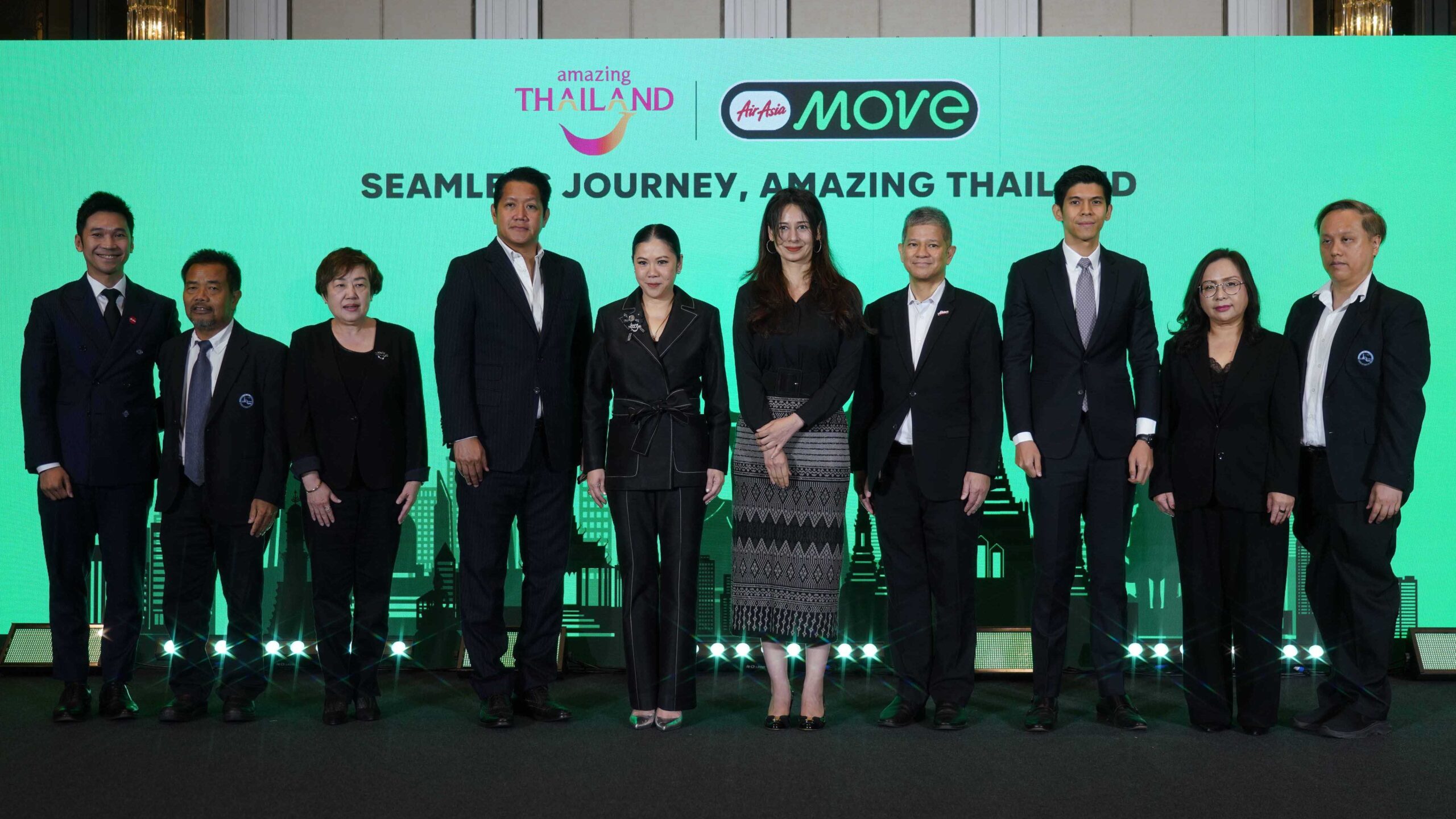
The Tourism Authority of Thailand and AirAsia MOVE announced a three-year digital travel partnership in Bangkok on 23 June 2026. The agreement sits under the TAT x MOVE: Seamless Journey, Amazing Thailand theme and is designed to connect destination marketing, traveller insights, co-branded campaigns and travel bookings across Thailand.
TAT and AirAsia MOVE announced a three-year digital travel partnership in Bangkok.
For Bangkok property buyers, the importance is not that one tourism partnership changes condo prices. It does not. The relevance is confidence: Thailand is continuing to invest in digital travel distribution, regional visitor access and better use of travel behaviour data. Those signals support Bangkok’s position as a connected base for investors, residents and frequent visitors.
What the partnership covers
TAT said the partnership covers co-branded campaigns, content promotion and joint marketing across TAT channels and the AirAsia MOVE platform. AirAsia MOVE brings a regional travel ecosystem and more than 17 million monthly active users. The stated aim is to strengthen Thailand’s position as a world-class tourism destination and use traveller insights from Asia and beyond for more focused destination marketing.
This matters because modern travel decisions often begin on digital platforms. A visitor may discover Thailand through content, compare destinations, book flights, arrange accommodation and plan domestic trips through the same ecosystem. Better distribution can help Thailand convert interest into actual travel, particularly from regional markets with repeat-visitor potential.
The partnership connects destination marketing with traveller data and booking behaviour.
Why Bangkok benefits from travel distribution
Bangkok is the natural starting point for many Thailand trips. It has airports, hotels, hospitals, retail, dining, business services, cultural sites and onward transport. When digital campaigns make Thailand easier to discover and book, Bangkok often benefits as the arrival city, meeting point, shopping stop, medical base or long-stay hub.
For property buyers, that supports the broader case for locations that connect well with airports, rail, hotels, offices, hospitals and lifestyle districts. A condo is still judged by its own fundamentals, but the city around it becomes easier to explain when travel access and destination marketing remain active.
Useful traveller signals from the announcement
TAT cited AirAsia MOVE travel behaviour and booking data for the first half of 2026. Asia remained the main inbound driver, with Malaysia, India, China and Indonesia continuing as top source markets for Thailand on the platform. The United States remained an important long-haul market, with travellers aged 50 and above accounting for 32% of US visitors on the platform and a 77% round-trip booking rate.
Those details are useful because they show Thailand’s visitor story is not limited to one country or travel style. Regional travellers, long-haul visitors, couples, older travellers and gateway users can all support different parts of the tourism economy. Bangkok property investors should not turn these figures into rent forecasts, but they can include them in a wider confidence view.
Digital travel platforms can influence how regional visitors discover and plan Thai trips.
What buyers should not overread
A travel-marketing partnership is not a reason to overpay for a weak condo. It does not solve poor building management, difficult station access, oversupply, inefficient layouts or unrealistic seller pricing. Foreign buyers still need to review comparable listings, ownership route, transfer documents, tenant demand and exit strategy.
The correct reading is city-level. Thailand is working with a major digital travel platform to improve reach, data use and campaign targeting. Bangkok remains a beneficiary when visitors use the capital as an entry point, business base, medical hub, shopping centre or second-home location.
That makes access, neighbourhood clarity and building quality the practical buyer filters.
Property takeaway
The TAT and AirAsia MOVE partnership strengthens the argument that Thailand is still actively competing for digitally connected, quality-led travel demand. For Bangkok property buyers, that supports confidence in well-located condos tied to transport, lifestyle and international access. The investment decision should still be made at unit level, with disciplined pricing and a clear tenant or owner-use story.
IBP helps foreign buyers connect Thailand tourism and economic news with practical Bangkok property choices. Read more in our Thailand economy and investment news archive or contact IBP Real Estate for a Bangkok property brief.
Silom-Sathorn is one of Bangkok’s clearest urban condo districts for foreign buyers because it combines offices, embassies, hotels, restaurants, hospitals, parks and rail links in a compact central area. It is also a district where buyers need precision. A unit can be in the right broad location but still feel inconvenient because of walking routes, traffic, building age or weak layout.
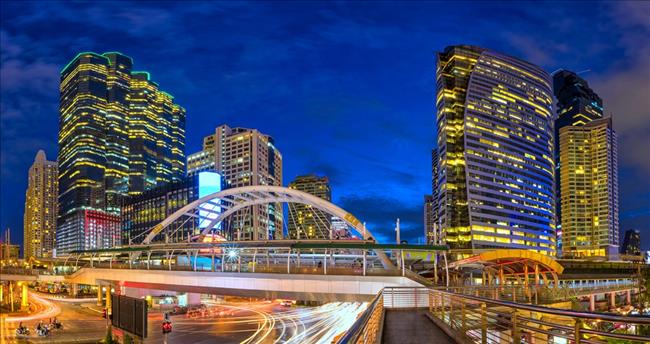
Silom-Sathorn remains one of Bangkok’s clearest office-led condo locations.
The area works best for buyers who understand the difference between being near the business district and being easy to live in. Silom, Sathorn, Sala Daeng, Chong Nonsi, Surasak, Saint Louis, Narathiwas, Rama IV and the riverside edges each create a different daily routine.
Why foreign buyers consider Silom-Sathorn
The district has a strong employment base, with offices, professional services, embassies, hotels and corporate tenants supporting weekday activity. This can help rental demand when a condo is well located and correctly priced. The area also has a mature lifestyle offer: dining, bars, gyms, supermarkets, medical access, parks, river connections and quick links into Siam, Ratchaprasong, Sukhumvit and the Chao Phraya corridor.
For owner-occupiers, Silom-Sathorn offers a central Bangkok lifestyle that feels more business-led and grown-up than some nightlife-heavy districts. For investors, the attraction is a broad tenant story, but that does not remove the need to compare buildings carefully.
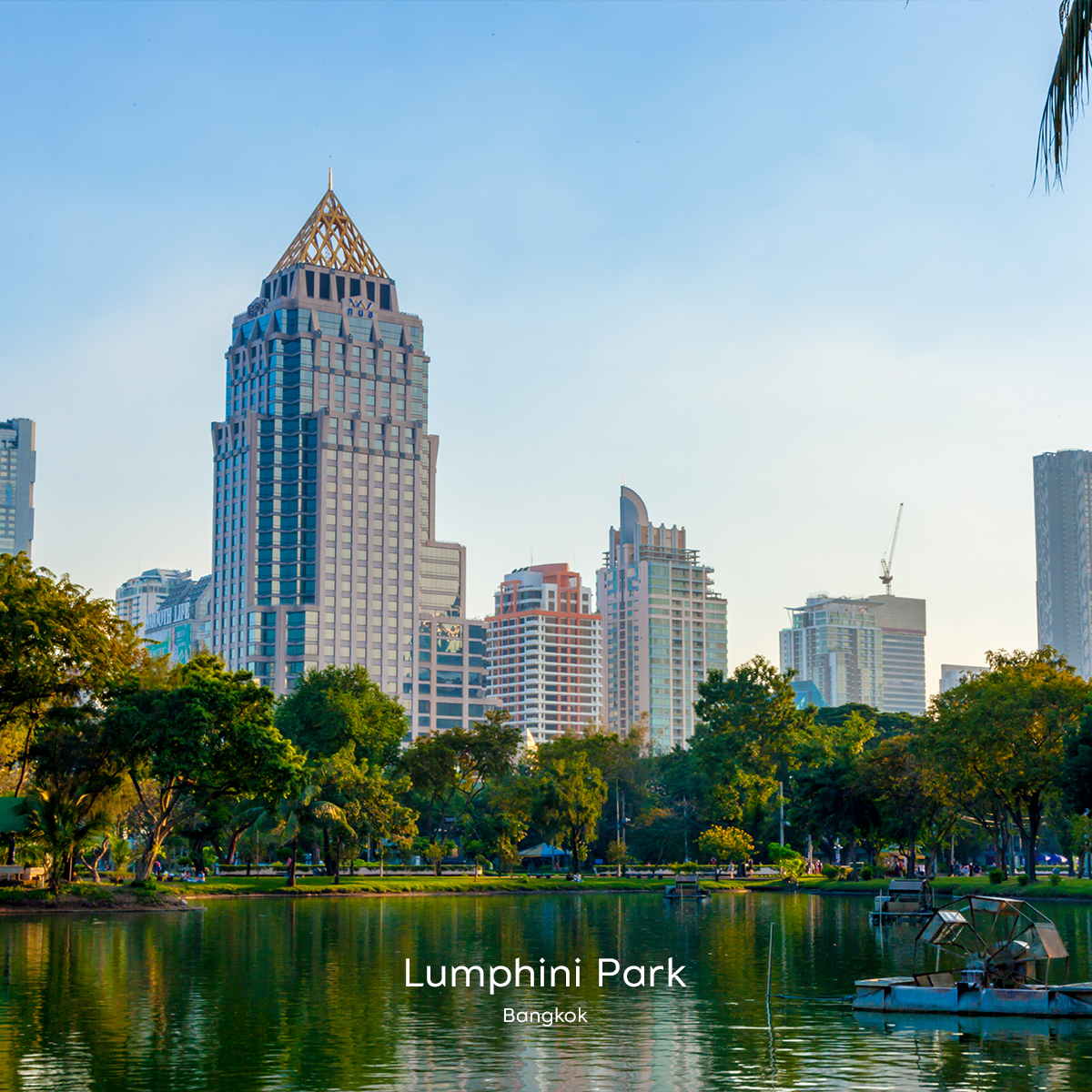
Park access can make dense office districts more liveable for long-stay residents.
Rail access needs real walking checks
BTS and MRT access can be excellent, but buyers should walk the actual route from station to lobby. Check shade, crossings, footpaths, lighting, construction, motorcycle-taxi reliance and rainy-season practicality. A building described as close to a station may still be frustrating if the final approach is awkward or exposed.
The most resilient locations are easy to explain: a clear walk to BTS or MRT, sensible road access, practical taxi pickup and useful daily services nearby. If the unit relies on a difficult side-street route, investors should be conservative about rent assumptions and resale timing.
Building age and management matter
Silom-Sathorn includes new luxury towers, established high-rises and older buildings with large layouts. Older condos can be attractive because they may offer more space or stronger locations, but buyers must assess lifts, facade condition, fire systems, common areas, sinking-fund planning, parking, juristic records and renovation rules.
A well-run older building can be more liveable than a newer tower with weak management. A poorly maintained building in a famous district can still be difficult to rent or resell. Foreign buyers should inspect the building as carefully as the private unit.
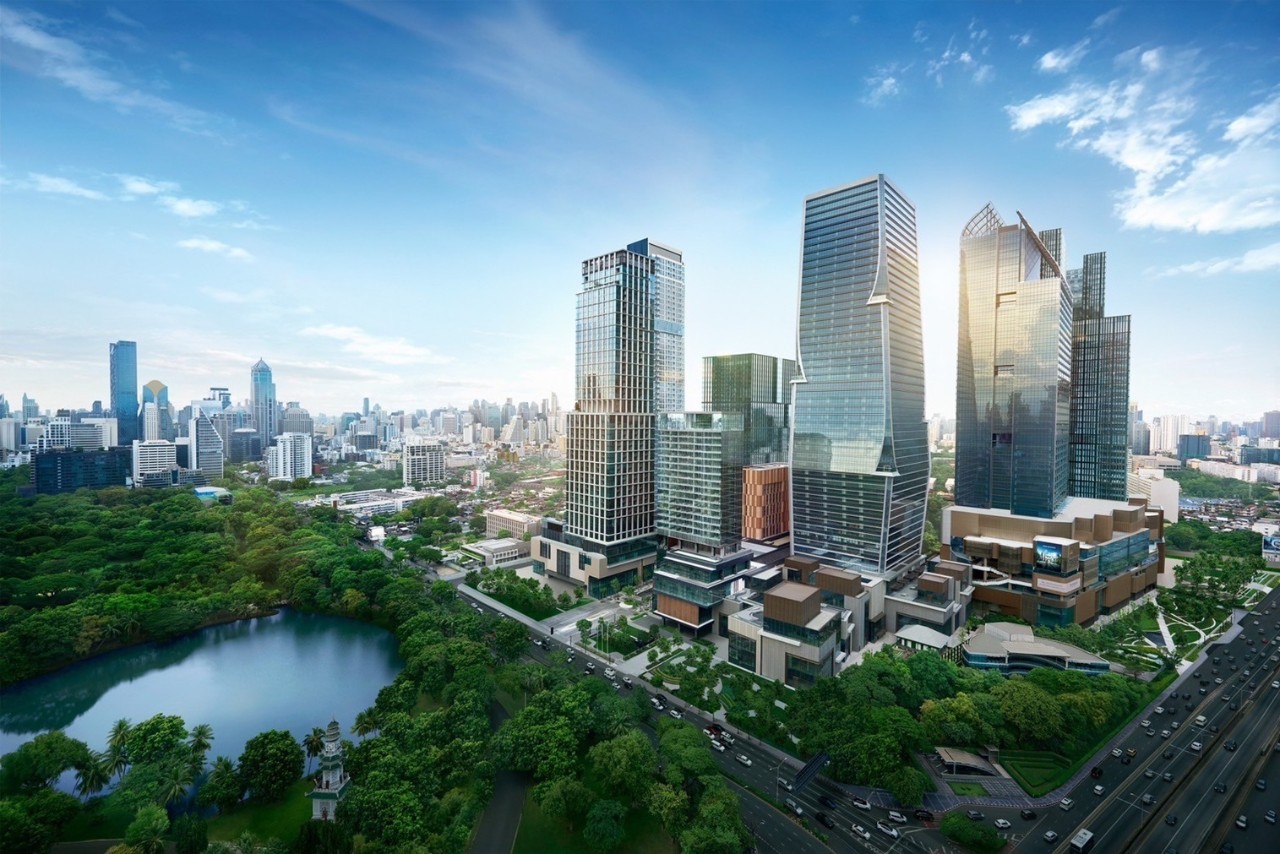
Rama IV, Langsuan and riverside links widen the district comparison for buyers.
Compare Silom, Sathorn and Rama IV separately
Silom tends to feel more retail, dining and MRT/BTS connected around Sala Daeng and Si Lom. Sathorn feels more office-led, especially around Chong Nonsi, Saint Louis and the main business corridor. Rama IV and the Lumpini edge bring park access and links towards Langsuan, Wireless and new mixed-use areas.
Those differences affect tenant fit. A corporate tenant may value a short office commute. A long-stay expat couple may want restaurants, park access and rail. A buyer planning personal use may care more about weekend walkability, hospital access and airport routes. The right unit depends on the intended user.
Luxury does not remove competition
Silom-Sathorn has premium projects and branded or hotel-style residences, but buyers should still compare value. A luxury lobby is useful only if the private unit has an efficient layout, good light, sensible maintenance costs and a clear resale audience. At higher budgets, the comparison expands to Langsuan, Wireless, Chit Lom, riverside, Phrom Phong and other premium districts.
Investors should avoid paying only for district prestige. Test whether the rent target is supported by competing listings, whether the unit photographs well, and whether the building offers a distinctive reason for tenants to choose it.
Rental and resale audiences
The rental audience in Silom-Sathorn can include corporate staff, embassy-related residents, consultants, medical visitors, long-stay professionals and couples who want a central base without living deep inside Sukhumvit. That breadth is useful, but each group values different details. Some prioritise a short walk to work. Others care more about park access, hospital routes, parking, larger layouts or a quieter side street.
For resale, the buyer pool may compare the district with Langsuan, Wireless, Riverside and Phrom Phong. A unit should therefore have a clean explanation: business-district access, park proximity, larger space, strong building management, or a distinctive lifestyle advantage. If the resale story is only that the address is central, the owner may struggle when competing listings offer newer facilities or easier rail access.
Buyer checklist
Walk the route to BTS, MRT, offices and daily services.
Visit at weekday peak, evening and weekend times if possible.
Compare building age, lifts, parking, juristic records and common areas.
Check whether the unit suits office tenants, couples, families or owner use.
Benchmark against Langsuan, Wireless, riverside and Sukhumvit alternatives.
Be conservative if many similar units are listed in the same building.
Buyer takeaway
Silom-Sathorn can be a strong Bangkok condo district for foreign buyers because it combines business demand with central lifestyle and transport. It rewards careful selection. Buy the walking route, building management, unit efficiency and tenant story, not only the address.
IBP can help foreign buyers compare Silom-Sathorn with other central Bangkok districts by budget, commute, building quality and resale plan. Browse our district guides or contact IBP Real Estate for a district shortlist.
Foreign quota is one of the most important Bangkok condo checks because it affects whether a foreign buyer can register ownership in their own name. A unit can look perfect, the price can be agreed, and the funds can be ready, but the transfer still needs the building-level quota position to support the foreign ownership route.
Foreign quota should be confirmed in the paperwork before a buyer relies on the transfer plan.
For overseas buyers, the practical point is simple: do not treat quota as a casual verbal assurance. It should be checked early, confirmed close to transfer, and kept in the transaction file alongside funds evidence, title details, seller documents and the sale and purchase agreement.
What foreign quota means in practice
Thailand’s condominium framework limits how much of a condominium building can be owned by foreigners. In day-to-day transactions, buyers and agents usually discuss whether a particular unit can transfer within the available foreign quota. The building’s juristic person and the Land Office transfer process are therefore central to the answer.
A buyer should not assume that quota remains available simply because another foreigner owns in the building, because the position can change as units are transferred. The relevant question is whether the specific unit can be registered to the foreign buyer at the time of transfer.
The juristic office is central to the building-level confirmation a foreign buyer needs.
Ask before reservation money is paid
The first quota check should happen before the buyer pays a reservation fee or signs a binding document. Ask whether the unit is being sold as foreign quota, Thai quota, leasehold, company-held, or another structure. If the intended route is foreign freehold, the buyer should ask how that status will be evidenced and who will obtain confirmation.
If the seller, agent or developer gives only a vague answer, slow down. A foreign buyer should understand whether the risk is simply administrative or whether the unit may not be transferable in the desired ownership form. This is especially important with resale units in older or popular buildings where ownership positions may have changed many times.
What to request from the transaction team
Written confirmation of the intended ownership route before reservation.
Juristic-person confirmation of quota status where applicable.
Clear responsibility for obtaining documents before transfer day.
Lawyer review of quota wording and transfer conditions.
A plan for what happens if quota status changes before completion.
Alignment between quota documents, funds evidence and buyer name.
Quota confirmation belongs in the transfer file alongside funds evidence and title checks.
Connect quota with funds evidence
Foreign quota is not the only transfer requirement. Buyers also need to organise the purchase funds evidence in the name and format required for the transaction. Quota confirmation and funds evidence should be checked together because they both support the buyer’s ability to complete in the chosen ownership structure.
A common mistake is treating the bank paperwork and quota paperwork as separate last-minute tasks. If either is incomplete, transfer day can become stressful. Foreign buyers should have the lawyer, agent and bank coordinate well before the scheduled appointment.
Resale buildings need extra caution
In a resale purchase, the seller may genuinely believe the unit can be sold to a foreigner, but the buyer still needs current confirmation. The building may have changed since the seller bought. Other units may have transferred. Documents may need updating. The safest approach is to confirm the quota position close enough to transfer that it reflects the current building record.
Buyers should also check whether there are mortgages, unpaid common fees, pending juristic issues or document errors that could delay transfer. These are separate from quota, but they can create the same practical problem: the buyer is ready to complete, while the file is not.
Off-plan purchases are different
With off-plan or newly completed projects, developers often allocate foreign quota through the sales process. Buyers should still read the reservation and sale documents carefully. Ask whether the quota position is guaranteed, conditional, or dependent on the buyer completing documents and payments by certain dates.
If the project is popular with overseas buyers, late decision-making can create pressure. If the buyer changes name, payment structure or completion timing, the developer should confirm whether that affects the quota arrangement. Keep all confirmations in writing.
Build a contingency into the timetable
Quota checks should sit inside a realistic completion timetable. Foreign buyers often travel to Bangkok for signing, inspection and transfer, so a late document problem can affect flights, accommodation and banking appointments. The purchase agreement should make clear what happens if the seller, developer or juristic office cannot provide the necessary confirmation on time.
Where possible, avoid transferring final funds, booking irreversible travel or arranging tenants until the transaction team has confirmed the practical transfer file. A short delay is manageable when everyone knows who is responsible for each document. It becomes expensive when the buyer discovers the issue only after arriving at the Land Office.
Buyer takeaway
Foreign quota is not a formality to leave until transfer morning. It is a core ownership check for Bangkok condo buyers who want foreign freehold registration. Confirm the route before reservation, coordinate the juristic and legal documents, connect the quota check with funds evidence, and make sure there is a written plan if the file changes before completion.
IBP helps foreign buyers structure Bangkok condo searches around ownership route, transfer process and practical due diligence. Read more in our foreign buyer guides or contact IBP Real Estate for transaction support.
A Bangkok condo’s unit mix can shape investment performance as much as the view, floor or headline price. Foreign buyers often compare one unit against another, but the better question is how many similar units the building contains, who those units are likely to attract, and whether the chosen type has enough rental and resale depth.
Unit mix affects how many similar homes compete for the same tenant or resale buyer.
Unit mix is the distribution of studios, one-bedroom, two-bedroom, larger family units and special layouts within a condominium. It affects competition inside the building, the tenant profile, the resale audience and the amount of pressure an owner may face when several similar units are listed at the same time.
Why unit mix matters to investors
A building with hundreds of similar compact units can be easy for tenants to compare. If many owners are competing for the same renter, the cheapest well-presented unit may set the tone. That does not make compact units bad investments, but it means the buyer must be realistic about rent, furnishing standard, vacancy risk and resale timing.
A building with a more varied mix can give certain units a clearer identity. Larger corner units, efficient two-bedroom layouts, duplexes or rare stacks may stand out if the district has the right tenant base. The challenge is liquidity. A rare unit type can command attention, but it may also require a narrower buyer or tenant audience.
A good building can still have weak investment logic if the chosen unit type is oversupplied.
Match the unit type to the district
Unit mix should be read against the surrounding demand. Near office districts, compact one-bedroom units may appeal to professionals who want an easy commute. Near international schools or hospitals, larger layouts may have more practical value. In lifestyle districts with strong dining and transport, well-furnished one-bedroom units may lease faster than oversized units with weak layouts.
The mistake is buying a unit type simply because it looks affordable. A low ticket price is useful only if there is a clear tenant and future buyer for that space. Foreign investors should ask who would live in the unit, why they would choose this building, and what alternatives they would see at the same rent or purchase budget.
Check internal competition
Before buying, review current listings in the same building. Count how many similar units are for rent or sale, then compare furnishing, view, floor, condition, asking price and time on market where information is available. If several near-identical units are listed, your rent assumption should be conservative unless your unit has a visible advantage.
Internal competition is especially important in buildings dominated by one-bedroom units. Tenants can compare photographs quickly. Small differences in furniture quality, storage, light, kitchen usability and balcony condition can decide which unit receives viewings. Investors should budget for presentation because an ordinary unit in a crowded type can become price-led.
The strongest unit mix is the one that matches real district demand, not only brochure assumptions.
Beware of false scarcity
Agents sometimes describe a layout as rare because there are not many similar units in the building. Scarcity is useful only if demand exists. A large unit may be rare because the developer built few of them, but it still needs a buyer who wants that size, location and running cost. A small unit may be common but highly liquid if it matches the strongest tenant pool.
Foreign buyers should separate rarity from liquidity. Rarity helps when the unit solves a real problem for residents. It hurts when the market sees the unit as awkward, expensive to furnish, hard to cool, difficult to rent, or too large for the neighbourhood’s usual demand.
Furnishing and operating costs vary by unit type
A larger unit usually needs a larger furnishing budget, more air-conditioning capacity, more maintenance, higher common-area fees and a broader repair plan. A compact unit may be cheaper to prepare, but it can suffer more from weak storage or poor furniture choices. Unit mix analysis should therefore include the cost of making the unit competitive, not only the purchase price.
For landlords, the expected tenant stay also matters. A compact unit aimed at short professional tenancies may need more frequent cleaning, touch-ups and relisting. A family-sized unit may have fewer tenant changes but higher expectations for appliances, curtains, beds, storage and management response.
Questions to ask before buying
How many units in the building are similar to this one?
Which tenant profile does this size and layout serve best?
Does the building have too many competing units at the same rent level?
Would the unit still stand out if several owners lowered asking rents?
Is the resale audience broad enough for the intended holding period?
Does the furnishing budget fit the unit’s likely rent ceiling?
Buyer takeaway
A sensible Bangkok condo investment starts with more than the individual unit. The building’s unit mix tells buyers who they will compete against, how visible their unit can be online, and how easy the resale story may be later. The safest choice is not always the cheapest or rarest unit. It is the unit type that matches real district demand and remains easy to explain to the next tenant or buyer.
IBP helps foreign buyers compare Bangkok condos by unit type, building mix, tenant demand and exit strategy. Explore our investment analysis archive or contact IBP Real Estate for a shortlist built around your budget and holding plan.
Child-friendly amenities can make Bangkok condo living easier for expat families, but only when they fit real routines. A playroom in a brochure is not the same as a safe, clean, well-managed family environment. Parents should assess how the building works during school mornings, rainy afternoons, deliveries, weekend downtime and visits from grandparents or carers.
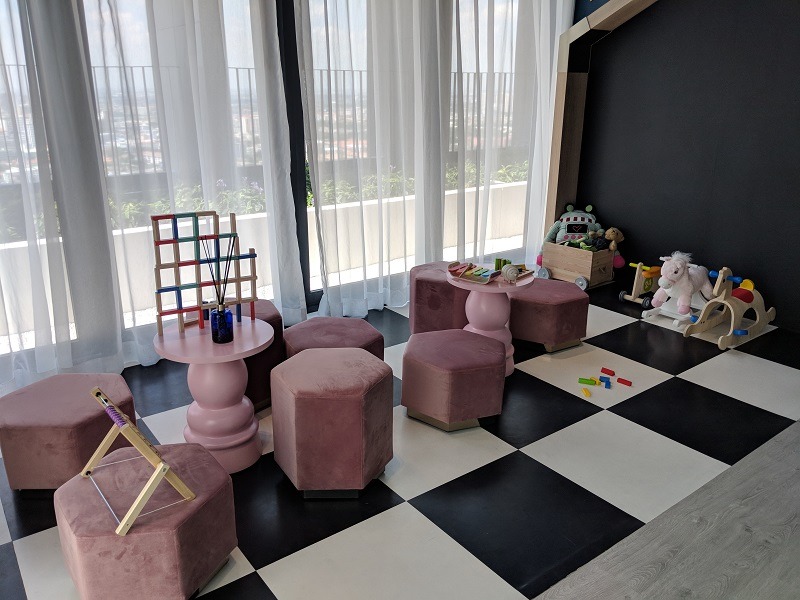
Family liveability depends on the building and the surrounding weekday routine.
For foreign buyers, the decision is often emotional and practical at the same time. A building may look sophisticated, but if children have nowhere safe to play, lifts are slow before school, the lobby is difficult for prams, or the route to daily services is awkward, the family may not settle comfortably. A good family condo reduces friction in ordinary weeks.
Start with safety, not decoration
The first check is safety. Look at balcony doors, window locks, pool fencing, lift access, corridor lighting, car-drop areas, fire exits, CCTV coverage and security procedures. Ask how the building manages guests, contractors and delivery riders. If a child can easily reach unsafe areas or wander into vehicle zones, the building may not be as family-friendly as the marketing suggests.
Pool and play areas need particular attention. Check surfaces, shade, cleanliness, staff visibility, depth changes, posted rules and whether older children and toddlers are using the same space. Families should also ask how maintenance issues are reported and how quickly the juristic office responds.
Parents should test how a condo works during school mornings, not only during a quiet viewing.
Layout matters inside the unit
A family-friendly building cannot fix an awkward private unit. Buyers should check whether bedrooms are usable, whether there is space for study, storage, toys, luggage, strollers and household help where relevant. A beautiful two-bedroom unit may still be difficult if the second bedroom is too small, the dining area is squeezed, or there is no practical place for school bags and sports equipment.
Noise separation also matters. Parents working from home may need a quiet area away from children’s activities. Babies and young children may need bedrooms away from traffic noise, lifts or neighbouring entertainment areas. Visit at different times if possible, especially around school pickup, evening traffic and weekend pool hours.
Building amenities to inspect carefully
Children’s playroom condition, cleanliness and age suitability.
Swimming pool safety, shade, seating and supervision expectations.
Garden, lawn or outdoor area usability during hot and rainy months.
Lift capacity during school and office rush hours.
Drop-off, pickup, visitor parking and taxi access.
Storage rules for bicycles, scooters, strollers and sports equipment.
A child-friendly amenity is useful only when it is safe, maintained and easy for families to use regularly.
Neighbourhood support is part of the amenity package
Families should not judge the condo alone. The surrounding area needs to support daily life. Check grocery access, pharmacies, clinics, parks, cafes, after-school activities, safe walking routes, school-bus pickup, taxis and weekend options. A building with a playroom may still be inconvenient if every errand requires a difficult car trip.
Bangkok districts vary widely. Some families prioritise school commutes and international hospitals. Others value parks, mall access, language classes, sports clubs, restaurants or quick airport routes. The right condo is the one that matches the family’s actual week, not a generic idea of luxury.
Questions for the juristic office
Ask whether the building has many family residents, how play areas are managed, whether noise complaints are common, and how move-in or renovation works are controlled. Check whether short-term stays are an issue, because heavy transient use can change the feel of common areas. Ask about pets if relevant, visitor policies, childcare helpers and rules for using amenities with guests.
Good answers do not need to be complicated. They should be clear, consistent and easy for foreign residents to follow. A family building depends on predictable management as much as physical facilities.
Rental and resale angle
For investors, family-friendly amenities can broaden the tenant pool, especially for larger units near schools, hospitals and daily services. But families are selective. They will compare layout, storage, management, noise, safety and commute convenience. A token playroom will not compensate for a poor floor plan or a difficult school route.
For resale, family appeal can help when the building has a real community feel and sensible maintenance. Buyers with children often return to buildings recommended by other families. That word-of-mouth value is difficult to see in a spreadsheet, but easy to understand after living in the building.
Buyer takeaway
A child-friendly Bangkok condo is not defined by one amenity. It is the combination of safe common areas, useful unit layout, predictable management and a neighbourhood that supports family routines. Foreign buyers should inspect the building as parents or landlords will actually use it, not only as viewers on a quiet afternoon.
IBP can help expat families compare Bangkok condos by schools, healthcare, amenities, transport and daily liveability. Browse our Bangkok lifestyle guides or contact IBP Real Estate for a family-focused shortlist.