Bangkok’s property appeal is supported by more than new rail lines and condominium launches. The city also needs a steady flow of visitors, business travellers, cultural exchange and high-value tourism activity. That is why the Tourism Authority of Thailand’s latest Bangkok wellness and culture event matters to foreign property buyers, even if it is not a real-estate announcement.
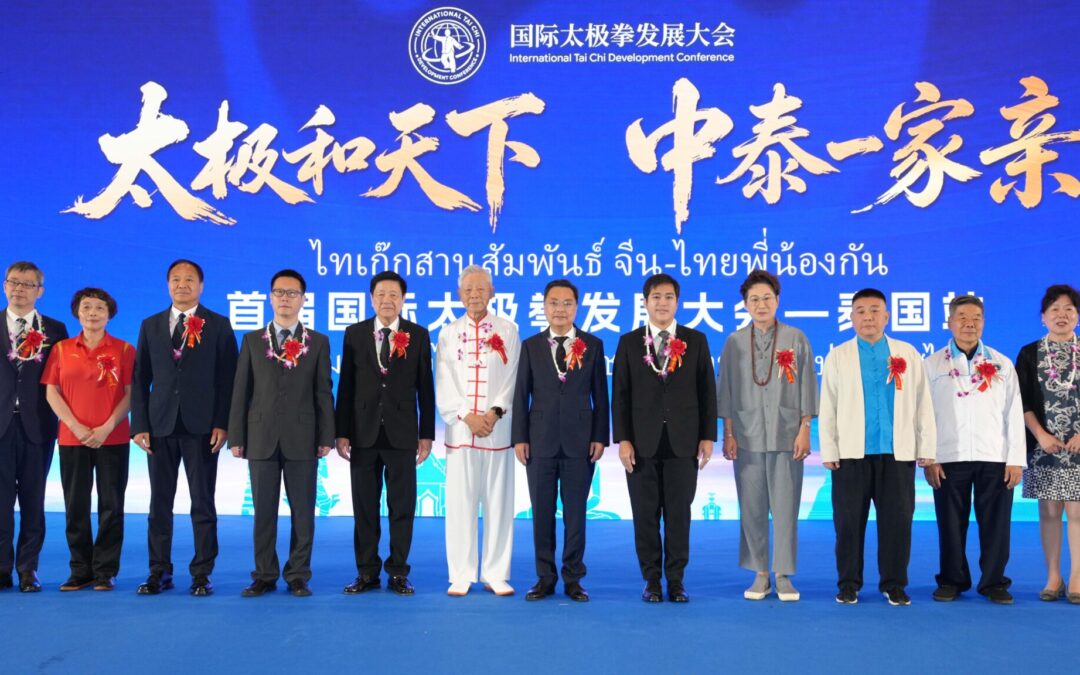
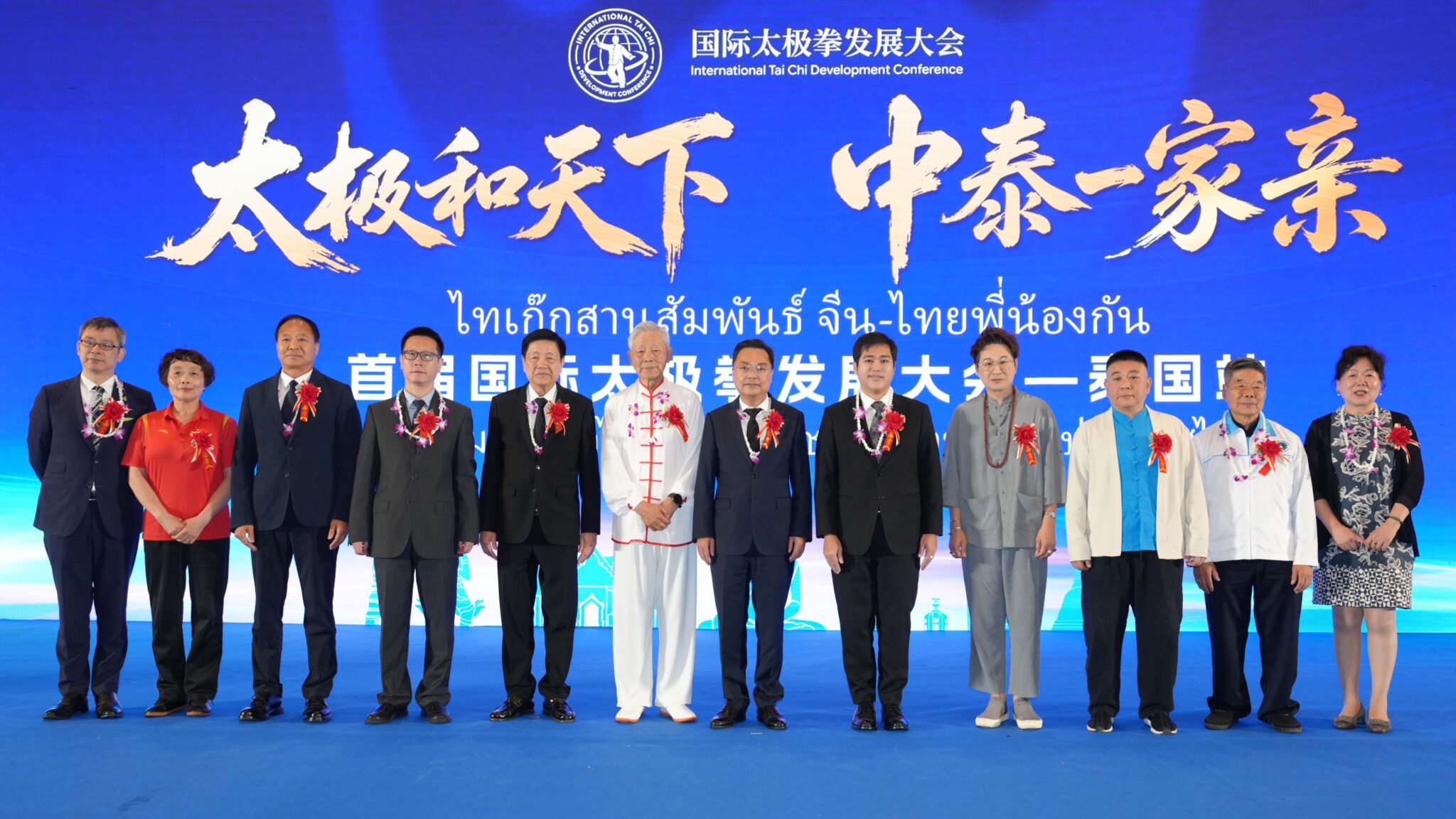
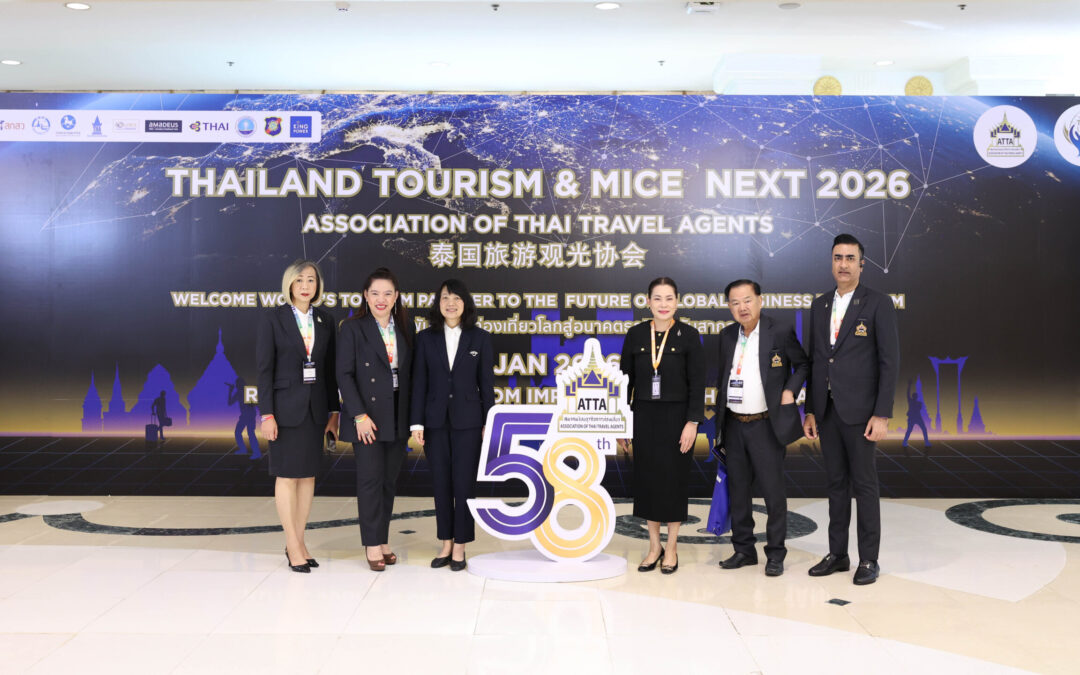
On 15 June 2026, TAT said it showcased Thai wellness at the First International Tai Chi Development Conference, held in Bangkok on 14 June. The event connected Thai massage, Tai Chi, Chinese cultural exchange and travel programmes, with TAT linking the programme to its China-market campaign.
TAT used the Bangkok conference to connect wellness, culture and China-market travel confidence.
What happened in Bangkok
The conference was organised under the theme “Tai Chi and the World, Sino-Thai Family Bond”. TAT described the event as a people-to-people exchange between Thailand and China through culture, martial arts, wellness and travel. Senior public and private representatives attended, including tourism, diplomatic and Thai-Chinese business figures.
The programme included cultural performances, cooperation signing, Tai Chi and martial arts demonstrations, exhibition activity, awards and a Thai massage demonstration. TAT also noted related travel programmes in Thailand, including a six-day sightseeing programme in Pattaya and Bangkok and a five-day familiarisation trip for Chinese key opinion leaders covering Bangkok, Rayong and Chanthaburi from 12 to 16 June 2026.
For property buyers, the important point is not the event format by itself. The signal is that Bangkok remains a useful stage for tourism diplomacy, wellness positioning and China-market engagement. These soft-power activities can support visitor confidence and reinforce Bangkok’s role as the entry point for premium Thailand experiences.
Why China-market confidence still matters
China has long been one of Thailand’s important international travel markets. Demand can fluctuate because of air capacity, consumer confidence, safety perception, currency movement and regional competition. Events that rebuild confidence and create fresh reasons to visit are therefore part of the wider demand environment that supports hotels, serviced apartments, retail, restaurants and selected rental locations.
Foreign condo investors should not treat a single event as proof of rental growth. That would be too simple. But they should watch whether Thailand continues to invest in relationships with major visitor markets, because travel confidence affects Bangkok’s economy in many indirect ways.
A healthier visitor and business-travel base can support shopping centres, medical services, restaurants, wellness operators, private clubs, event venues and hospitality employment. These sectors help make Bangkok more liveable and more internationally connected, which is one reason overseas buyers continue to compare the city with Singapore, Kuala Lumpur, Ho Chi Minh City and Hong Kong.
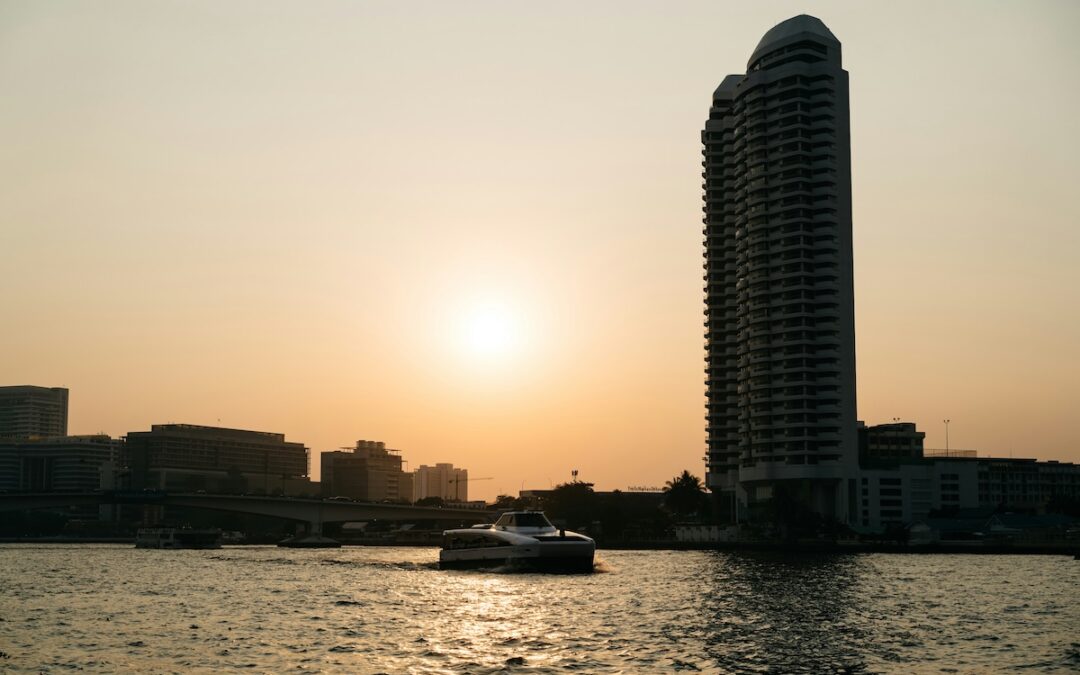
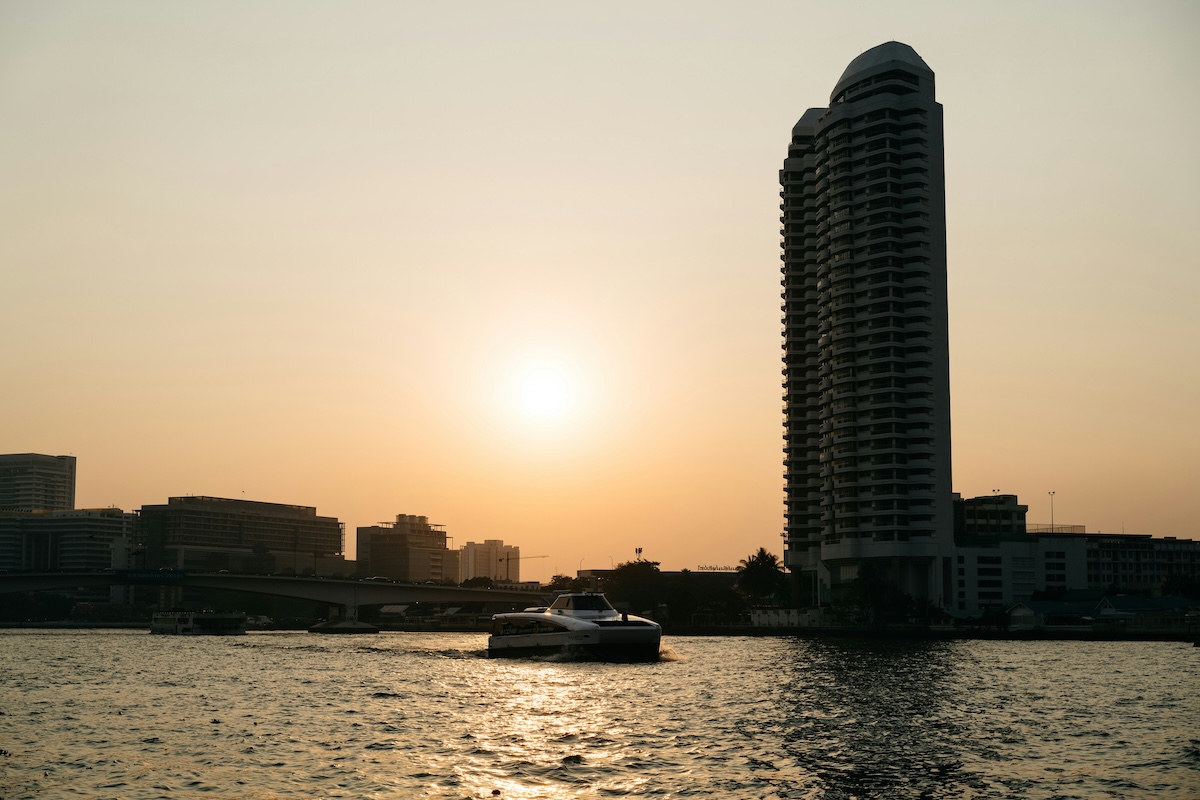
Culture-led tourism activity can strengthen Bangkok's wider visitor and lifestyle positioning.
The property link is selective
Tourism confidence does not lift every condo equally. The most direct benefits are usually in districts with strong visitor infrastructure, easy rail or river access, hotel clusters, hospitals, convention venues, retail anchors and short travel times to the airport or central business areas. Even then, condominium performance depends on legal leasing rules, building management, unit quality and tenant fit.
A foreign buyer looking at a rental-led purchase should ask how tourism and business travel connect to the specific building. Does the district attract long-stay visitors, regional executives, consultants, medical travellers or families? Are leases typically annual, medium-term or owner-occupied? Are short stays prohibited by the juristic office? Is the unit positioned for a tenant who values wellness, culture and convenience, or is it relying on a vague Bangkok growth story?
The stronger argument is often about city confidence rather than immediate rent. Bangkok remains attractive when it can host international events, present Thai culture professionally and convert visitors into repeat travellers, residents, entrepreneurs and investors.
Wellness as a premium city signal
TAT’s wider tourism messaging has recently emphasised wellness, meaningful travel and quality-led demand. The Tai Chi conference fits that direction because it links exercise, Thai massage, cultural heritage and travel. For Bangkok property, wellness is relevant when it shapes buyer preferences: parks, hospitals, spas, fitness facilities, walkable neighbourhoods and calm building management are no longer decorative extras.
Luxury and upper-mid-market buyers increasingly compare the full lifestyle environment. They ask about air quality, hospital access, green space, traffic, building services, privacy, fitness facilities and neighbourhood dining. A city that can credibly position wellness alongside business and culture may appeal to long-stay residents as well as tourists.
For property buyers, the signal is city confidence rather than a direct rent forecast.
What buyers should watch next
Investors should monitor whether event-led travel activity converts into sustained arrivals, stronger airline capacity, resilient hotel performance and broader spending in Bangkok. They should also watch which districts benefit. A cultural or wellness event may support city branding, but the best condo purchase still comes down to location, building, layout, management and price.
IBP’s Thailand economy and investment news coverage follows these signals because they help foreign buyers understand the wider confidence environment behind Bangkok property. Macro confidence is useful only when it is connected to a specific condo strategy.
For buyers considering Bangkok in 2026, the practical takeaway is measured optimism. Thailand continues to use tourism, wellness and cultural exchange to strengthen its global position, while disciplined property selection remains essential at unit level.
Krung Thon Buri is one of Bangkok’s more practical cross-river condo locations for foreign buyers who want access to the Silom side without living directly inside the densest part of the central business district. Its appeal is not based on a single luxury landmark. It comes from rail connectivity, Chao Phraya proximity, local neighbourhood texture and improving convenience around Khlong San and Charoen Nakhon.
For investors and lifestyle buyers, the district should be judged carefully. It can offer better value than some core CBD addresses, but buildings vary widely by age, walkability, view protection and tenant profile. The right purchase depends on whether the unit solves a real daily routine.
Krung Thon Buri gives buyers a cross-river position near Sathorn and Charoen Nakhon.
Where Krung Thon Buri fits in Bangkok
Krung Thon Buri sits on the Thonburi side of the Chao Phraya, close to Saphan Taksin, Sathorn, Charoen Nakhon and Wongwian Yai. The area gives residents a bridge into the Silom-Sathorn office corridor while keeping access to west-bank neighbourhoods that feel less corporate than the inner CBD.
The BTS Silom Line is the main reason many buyers consider the location. Krung Thon Buri station connects back towards Saphan Taksin, Surasak, Chong Nonsi, Sala Daeng, Siam and National Stadium in one direction, and towards Wongwian Yai, Talat Phlu and Bang Wa in the other. The Gold Line connection also improves access to Charoen Nakhon and ICONSIAM, which has changed how many foreign residents perceive the riverfront side of Bangkok.
This connectivity gives the district a mixed tenant audience: office workers who commute into Sathorn or Silom, residents who prefer riverside lifestyle, and renters who want rail access but do not need a prime Sukhumvit address. That tenant mix can be useful, but it also means each building needs its own analysis.
Because the district serves several audiences, buyers should avoid using one comparator. A Sathorn office tenant, a river lifestyle tenant and an owner-occupier from Thonburi may value different things. Strong pricing comes from matching the unit to the right audience rather than assuming all cross-river demand behaves the same way.
Strengths for condo buyers
The first strength is optionality. Residents can use BTS, taxis, motorcycle taxis, river crossings and nearby road links depending on the time of day. In Bangkok, that matters. A district with only one strong route can become frustrating when traffic, rain or peak-hour crowding changes the plan.
The second strength is lifestyle depth. Charoen Nakhon, Khlong San and nearby river areas now offer malls, hotels, casual dining, heritage streets, ferry access and quieter residential pockets. Foreign buyers who enjoy Bangkok beyond office towers may find the area more layered than a conventional CBD condo district.
The third strength is value comparison. Some Krung Thon Buri buildings can price below comparable core-Sathorn or prime-Sukhumvit assets while still offering rail access. The discount is not automatically an opportunity, but it gives disciplined buyers room to compare total ticket size, rent depth and exit audience.
Rail access is central to the value case for cross-river condo locations.
Risks and buyer checks
Walkability is uneven. A condo may look close to BTS on a map but require an awkward footpath, exposed road crossing or motorcycle-taxi ride in daily life. Foreign buyers should walk the route during heat, rain and evening hours before deciding that a location is convenient.
View risk is also important. River and skyline views can support both owner enjoyment and resale appeal, but future construction, neighbouring plots and lower-floor obstructions can change the value story. Buyers should ask what is protected by the site position and what is simply a current open view.
Building age and management quality matter more than district branding. Some older buildings may offer larger rooms, while newer buildings may have smaller layouts and stronger facilities. Neither is automatically better. Review common-area condition, lift waiting times, sinking-fund planning, parking, juristic responsiveness and resident mix.
Questions for the sales file
Ask how many units are owner-occupied, how many are investor-owned, what rents have recently been achieved, how quickly similar units let, whether pets are allowed, how short-term stays are controlled and what major repairs are planned. A building that is quiet, clean and well managed can outperform a more photogenic project with weak operations.
Who the district suits
Krung Thon Buri can suit foreign buyers who work around Sathorn or Silom but want a less compressed residential setting. It may also suit owners who use Bangkok part-time and want river access, hotel dining, cross-river shopping and straightforward rail trips. For investors, the strongest units are usually those that are easy to explain: close to rail, sensible layout, good management and a clear tenant profile.
It may be less suitable for buyers who want the deepest expatriate services of Phrom Phong, Thonglor or Asoke, or for families that need a specific school commute. In those cases, the savings may not compensate for daily travel friction.
The best district choice balances river lifestyle with practical weekday access.
How to compare a Krung Thon Buri unit
Start with the total ticket, not only price per square metre. Then compare station access, room shape, furnishing cost, expected rent, building fees, future repairs and resale audience. A slightly smaller unit with a better walk to BTS may be easier to lease than a larger unit in a weaker micro-location.
Foreign buyers can use IBP’s district and BTS/MRT guides alongside investment analysis when comparing Krung Thon Buri with Sathorn, Charoen Nakhon, Bang Na or Phaya Thai. The best answer is usually not the cheapest district, but the district that fits the intended tenant and holding period.
Before reserving a unit, ask IBP to review the building, tenant profile, juristic records and resale logic. Krung Thon Buri can be a sensible cross-river choice, but only when the specific condo is strong enough to carry the location story.
A Bangkok condo purchase is not finished when the transfer is registered. For foreign owners, the first few weeks after handover should be used to make the unit practical: electricity, water, internet, access cards, appliance warranties, juristic office records and payment routines need to work before the owner, tenant or guest arrives.
Utilities setup is rarely difficult, but it can become slow when documents are scattered or the owner is overseas. The safest approach is to build a handover file that connects the title transfer, juristic office requirements, meter readings, bank payments and tenant-ready condition in one place.
The juristic office is usually the practical starting point after transfer.
Start with the juristic office
In most condominiums, the juristic office is the practical gateway for move-in. It can confirm the registered owner, common-area rules, access cards, parking stickers, renovation procedures, parcel handling, move-in deposits, lift protection and the normal process for tenant registration. Foreign buyers should visit or appoint a trusted representative immediately after transfer.
Ask for the current common-fee account, sinking-fund record, insurance details for the building, emergency contact numbers and the process for reporting water leakage, air-conditioning drainage or electrical issues. The answers vary by building. A premium tower may have a formal resident app and concierge system; an older building may rely on paper forms and direct contact with management.
Owners should also decide who is authorised to speak with management. If an agent, lawyer, family member or property manager will collect keys, book technicians or receive invoices, give the juristic office clear written instructions. Ambiguous authority can delay repairs and make overseas ownership more difficult than it needs to be.
The key is not to assume. A unit that looks complete can still be missing access cards, mailbox keys, internet permission, parking documentation or a clear payment reference. These small gaps matter if the owner plans to lease quickly.
Electricity and water checks
At handover, record the electricity and water meter readings with dated photographs. Check whether bills are paid directly to the utility provider, through the juristic office or through a building payment portal. Some owners prefer to keep bills under the owner name and recover them through the lease; others require the tenant to pay directly where the building process allows it.
Before a tenant moves in, test the distribution board, lighting circuits, water pressure, water heaters, air-conditioning units, extractor fans and any smart-home controls. A new-looking appliance is not enough. Owners should keep warranty cards, manuals and installer contacts in a shared file so repairs do not become a negotiation during the tenancy.
If the unit will be vacant for a period, ask the juristic office how often the room should be aired, whether water valves should be closed and how access can be arranged for emergency checks. Bangkok humidity makes prevention more useful than delayed repair.
Meter readings, appliances and internet readiness should be checked before occupancy.
Internet, mobile signal and work-from-home readiness
Internet setup is now part of the rental product. Many tenants work remotely or take regional calls from home, so a condo should be tested for fibre availability, router location, mobile signal, desk placement and video-call lighting. The best package is not always the most expensive; it is the one that can be installed cleanly and supported quickly.
Some buildings restrict where technicians can work, require advance booking or have preferred service providers. Check this before advertising the unit as tenant-ready. If the unit has thick walls or a deep layout, consider whether a mesh router or better cable routing is needed.
For owners who visit Bangkok several times a year, a reliable connection also protects personal use. It allows remote monitoring of appliance issues, smoother communication with managers and a better experience when the owner arrives after a long flight.
Payments, records and overseas management
Foreign owners should set up a simple payment routine for common fees, utilities, internet and property management. A Thai bank account can help, but the owner still needs clear reminders, invoice storage and a responsible person who checks whether payments are actually received. Missed common-fee payments can create avoidable friction with the building.
Keep a digital folder with the title deed copy, sale and purchase agreement, transfer receipt, passport copy, juristic contact sheet, meter readings, appliance warranties, insurance documents, photographs, lease template and tax-support records. This folder should be available to the owner and any appointed manager, but sensitive documents should not be casually shared with tenants.
If the unit is rented, the lease should state which utilities are included, how bills are settled, what happens if the tenant leaves unpaid bills, and how final meter readings are taken at check-out. A clear lease prevents small operational issues becoming deposit disputes.
A clean owner file makes overseas payments and tenant handover easier to manage.
Before you advertise the unit
Do a final tenant-readiness walk-through. Confirm keys, cards, internet, hot water, air-conditioning, curtains, appliance manuals, inventory list, emergency contacts and building move-in rules. Then photograph the unit in clean daylight. Strong utility preparation is invisible when it works, but very visible when it fails.
Foreign buyers can combine this checklist with IBP’s wider foreign buyer guides and expat living notes before transfer. The goal is a condo that is not only legally owned, but easy to occupy, lease and manage.
IBP can help buyers review a handover file, compare building management quality and plan a rental-ready setup before completion. That is usually cheaper than solving preventable problems after a tenant has already found them.
Rental income in Bangkok is rarely as even as a spreadsheet suggests. Foreign buyers often compare headline rents, advertised yields and district averages, but the real test is whether a unit can stay attractive across quieter leasing months, relocation cycles and changing tenant priorities.
Seasonality does not make Bangkok a weak rental market. It simply means investors should underwrite a purchase with more discipline. A condo that suits a clear tenant group, has sensible furnishing, is easy to view and sits in a building with responsive management can handle slower periods better than a unit bought only because the first advertised rent looked high.
Rental seasonality should be tested against real tenant demand, not only headline rent.
Why rental seasonality matters
Bangkok has several overlapping drivers of tenant demand. Some renters arrive with corporate moves, some with school calendars, some with embassy or regional office assignments, and others with shorter project-based work. Tourism, medical travel and long-stay lifestyle demand can also support certain locations, but these groups do not all move at the same time of year.
That mix is useful for the city, because it gives Bangkok more than one rental audience. It also means a buyer should avoid assuming that the first month after handover represents the normal market. A unit may receive strong enquiry when relocation teams are active, then need sharper pricing, better photography or more flexible terms in a quieter period.
Foreign owners are especially exposed if they manage from overseas. When the owner is not in Bangkok, a slow letting period can become more expensive if repairs, key handover, cleaning or agent communication are delayed. Good seasonality planning is partly financial and partly operational.
Build a conservative rent calendar
A useful rent calendar starts with twelve months, not one target rent. Model a realistic achieved rent, a prudent vacancy allowance, annual refresh costs, agent commission, juristic fees, repairs, insurance, tax filing support and any mortgage or currency costs. Then test the result against a lower-rent case, not only the optimistic case.
This is not about being negative. It is about seeing which units still make sense when the market is less convenient. A one-bedroom near a strong rail interchange may recover quickly because the tenant pool is wide. A larger luxury unit may achieve a higher rent but need a longer matching process because the tenant pool is narrower and expectations are higher.
Investors should also ask whether the building has many similar units competing at the same time. If several owners list the same layout with similar furniture, tenants can negotiate harder. A well-presented unit with a better view, quieter stack, stronger appliances or a cleaner handover file may let faster even when headline rent is similar.
Building quality and management affect how quickly a unit can recover after vacancy.
Match the unit to a real tenant profile
Seasonality is easier to manage when the likely tenant is clear. A compact BTS-connected unit may suit a single professional who values commute time and predictable bills. A two-bedroom near international schools or hospitals may suit a family or medical professional. A riverfront unit may appeal to tenants who prioritise views, hotel dining and weekend lifestyle over the shortest office commute.
The mistake is to buy a unit that is generic in every direction. If the room is too small for a couple working from home, too far from transport for a daily commuter and too plain for an executive tenant, the owner may have to compete mainly on price. Bangkok has enough supply that unclear positioning can cost time.
Questions to ask before purchase
Ask which tenant group has recently rented in the building, how long comparable units stayed vacant, what lease length is normal, whether tenants request pet permission or work-from-home space, and which nearby offices, schools, hospitals or lifestyle anchors create repeat demand. A good agent should be able to discuss actual tenant behaviour, not only quote a rent per square metre.
Foreign buyers should also check whether the juristic office is cooperative with move-ins, contractor access and tenant registration paperwork. Smooth building administration can reduce friction during the exact weeks when a tenant is comparing several choices.
Viewings, furnishing and refresh timing
A rental unit should be ready before the tenant starts looking. That sounds obvious, but many overseas owners lose time because small repairs, internet setup, cleaning, appliance manuals or access cards are not prepared. A vacant month is often more expensive than a modest pre-leasing refresh.
Furnishing should support the target tenant rather than simply fill the room. Durable sofa fabric, proper blackout curtains, a desk or flexible dining surface, enough storage and neutral lighting are often more useful than decorative items. For premium units, tenants may expect a stronger kitchen package, better bedding, hotel-like bathrooms and building services that match the rent.
The best refresh timing is before the main viewing push, not after enquiry has slowed. If a unit has been listed for several weeks without serious interest, owners should review photographs, price, access arrangements and presentation quickly. Waiting too long can make the listing look stale.
A realistic rent model includes vacancy, refresh costs and tenant-ready presentation.
What this means for foreign buyers
Bangkok remains attractive because it combines regional business access, strong lifestyle districts, improving transport and a broad expatriate base. Rental seasonality does not remove that appeal. It simply rewards buyers who understand the difference between a market story and a unit-level plan.
Before committing, compare the target unit with recent Bangkok investment analysis, district-level demand and realistic ownership costs. A lower headline yield with faster letting and easier resale can be better than a higher theoretical yield that depends on perfect occupancy.
Foreign buyers who want a rental-led purchase should speak with the IBP team before reserving a unit. We can help compare tenant profile, building management, likely leasing friction and exit strategy so the numbers are tested before money moves.
Air quality is a practical liveability issue for Bangkok condo buyers. It affects morning walks, school runs, exercise routines, work-from-home comfort, balcony use and how often residents rely on air-conditioning. Foreign buyers should treat it as a building and district check, not only a seasonal complaint.
The point is not to rule out Bangkok. Many residents live comfortably by choosing the right building, routes and routines. The buyer’s task is to understand how a condo performs during traffic-heavy, hot or hazy periods, and whether the surrounding district supports healthier daily choices.
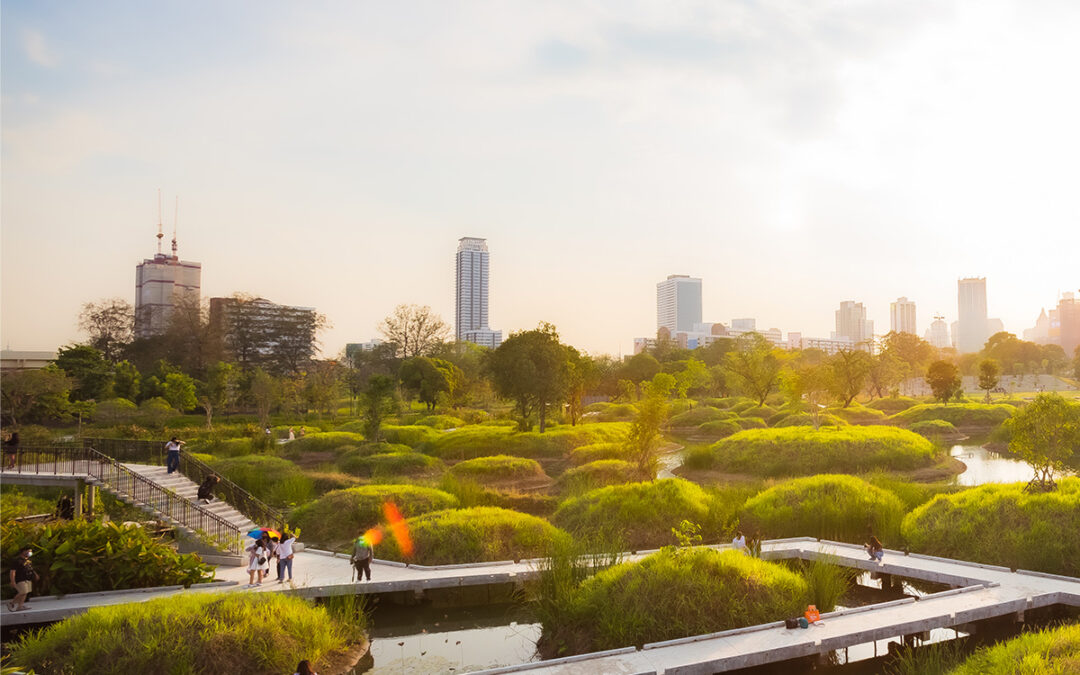
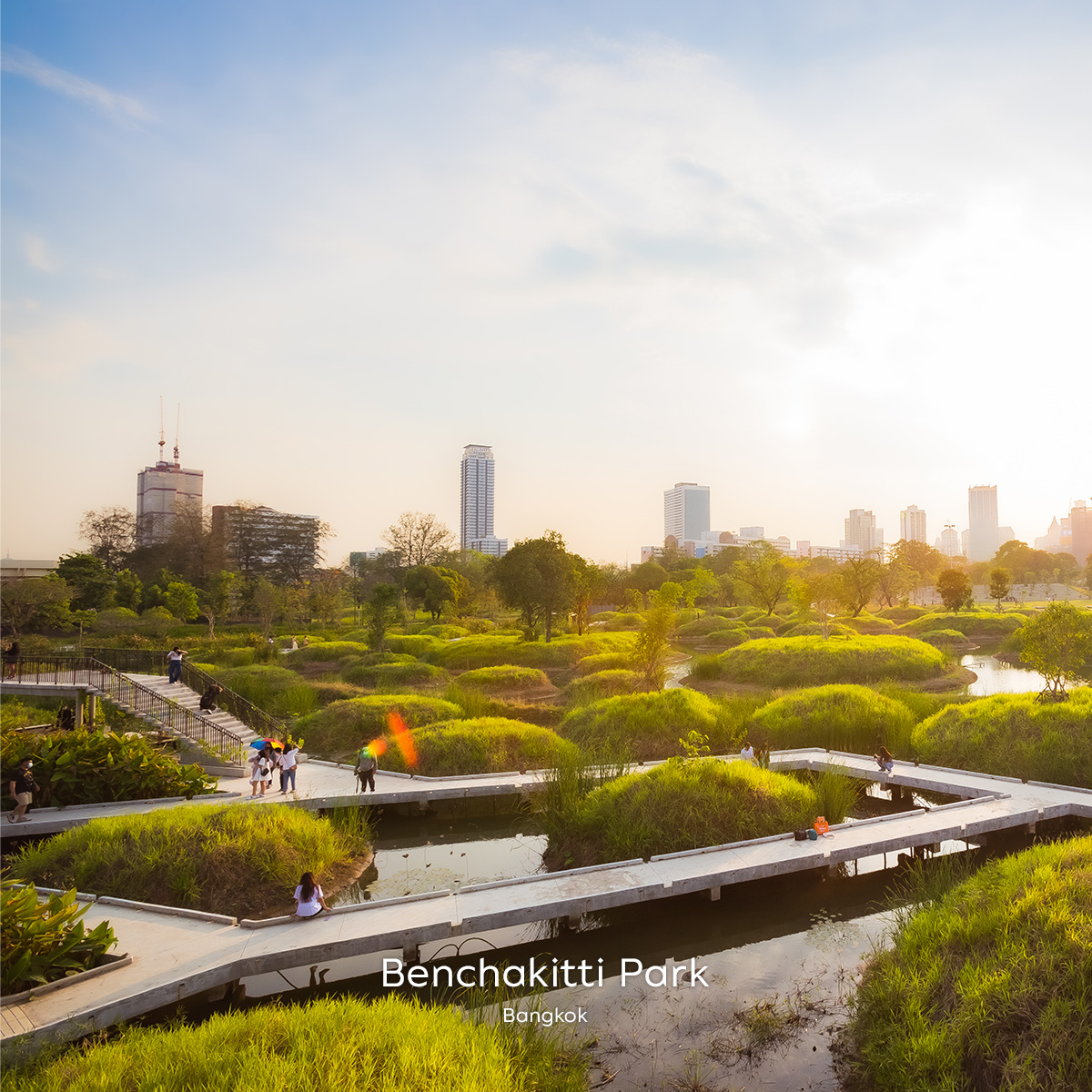
Park access can help daily routines, but buyers should still test routes, shade, traffic and building systems.
Start With The Street Environment
Air-quality comfort begins outside the building. A condo beside a major road, expressway, bus stop or loading area may feel different from one set back on a quieter soi. Buyers should walk the route to BTS, MRT, shops and parks at the times they would actually use it.
Traffic exposure is not only about distance. Crossings, idling vehicles, motorbike concentration, construction, school traffic and poor pavement can make a short walk feel uncomfortable. A slightly longer route with shade and less traffic may be better for daily life.
If the buyer has children, respiratory sensitivities or a work-from-home routine, this check becomes more important. It should influence district choice, building orientation and the value placed on indoor amenities.
Air-quality comfort is partly a neighbourhood question: roads, shade, walkability, transport and daily timing all matter.
Check The Building Systems
Inside the building, ask how common areas are ventilated and maintained. Lobbies, corridors, gyms and lounges may feel comfortable during a viewing, but buyers should still consider air-conditioning maintenance, filters, odours, car-park ventilation and whether smoky or dusty areas sit near resident routes.
The unit itself needs attention. Window seals, balcony doors, air-conditioning age, filter access, kitchen ventilation and bathroom exhaust all affect comfort. A high-floor unit may feel airy but still need good filtration and maintenance. A lower-floor unit may be practical if it faces away from traffic and has better shade.
Buyers who plan to rent out the unit should make filter replacement and air-conditioning servicing part of the management routine. A tenant may not renew if the condo feels dusty, damp or difficult to cool.
Inside the unit, filtration, window condition, orientation and maintenance can affect comfort during haze or traffic-heavy periods.
Parks Help, But They Are Not The Whole Answer
Green space can improve the daily experience of living in Bangkok. Parks, shaded streets and river walks give residents places to exercise and decompress. They also make a district feel more balanced, especially for people moving from less dense cities.
Still, buyers should be realistic. A nearby park does not cancel out a poor building or difficult commute. The route to the park matters, as do opening hours, crowding, safety, shade, lighting and how easily the resident can use it before or after work.
The best liveability choice combines several elements: a building with good systems, a unit away from the worst exposure, access to green or lower-traffic routes, and enough daily services nearby that residents do not spend every errand in heavy traffic.
How Air Quality Affects Investment
For investors, air-quality comfort is part of tenant retention. A well-furnished unit can still struggle if the balcony is unusable, windows leak dust, the gym feels stale or the route to transport is unpleasant. These issues may not appear in listing photos, but tenants discover them quickly.
District reputation can also matter. Some tenants ask about parks, walkability, schools, hospitals and indoor amenities because they are thinking about daily health and comfort. A condo that supports those routines may have a wider audience than one that relies only on a low rent.
The buyer should price this calmly. Do not overpay for a vague green lifestyle claim, but do give credit to buildings and districts that make comfortable routines easier to maintain.
A Practical Viewing Checklist
During the viewing, check the balcony, window seals, air-conditioning units, filters, odours, corridor ventilation, car-park route, gym air flow and the walk to transport. Visit at different times if possible, especially during rush hour or nearby construction activity.
Ask the juristic office about air-conditioning servicing rules, renovation dust control, smoking rules, car-park ventilation and how complaints are handled. If the building has a central system or shared facilities, understand who maintains them and how often.
For personal use, think about your daily rhythm. Where will you exercise, buy groceries, wait for transport, work and rest? For investment, think about how a tenant will answer those same questions after moving in.
Buyer Takeaway
Bangkok air-quality comfort is manageable when buyers treat it as part of location and building due diligence. The right question is not whether the city is perfect, but whether the specific condo gives residents practical control over their environment.
A good purchase should combine a sensible route, good building systems, manageable exposure, useful green or indoor amenities and a unit that is easy to maintain. These factors support both liveability and rental confidence.