Foreign buyers often inspect Bangkok condominiums by looking upward: tower height, view, lobby, pool deck, ceiling, brand and price per square metre. Liveability also needs a ground-level test. Where can residents walk? Where do families go at weekends? Where does the city host culture, exercise, festivals and public life? Benchakitti Park is one answer, and its role as the setting for the Maha Songkran World Water Festival 2026 shows why public space matters to condo decisions.
Benchakitti Park has become an important setting for large public events in central Bangkok.
TAT officially opened the Maha Songkran World Water Festival 2026 at Benchakitti Park on 12 April 2026, presenting cultural activities, performances and public celebration in the heart of Bangkok. For property buyers, the event is not only a seasonal festival. It is a reminder that Bangkok’s central districts are becoming more usable when parks, transport, retail, hotels and residential buildings connect into a fuller urban routine.
Why parks influence property choices
A good park changes how a district feels. It gives residents somewhere to walk before work, run after dinner, meet friends, take children outside and reset during long stays. In a dense city, this can be just as important as a bigger balcony or a more elaborate common area. For foreign buyers who plan to use a Bangkok condo regularly, public green space can make the difference between a unit that feels convenient and a unit that feels like a home base.
Benchakitti is especially relevant because it sits near Asok, Queen Sirikit National Convention Centre, Sukhumvit, Rama IV and the wider Khlong Toei area. That location gives it a broad catchment. Residents from different condo districts can reach it for exercise, events, exhibitions and weekend routines. It also supports the appeal of nearby buildings that may otherwise be judged only by traffic or office density.
Cultural programming helps residents experience Bangkok as more than a work-and-commute city.
Events make the city easier to belong to
Expat liveability is not only about hospitals, schools and supermarkets, although those remain essential. A city becomes easier to belong to when residents can join public festivals, watch performances, use parks and understand local traditions without needing a private club or hotel setting. Songkran is a strong example because it combines family activity, culture, tourism and neighbourhood participation.
For foreign buyers, this matters emotionally and practically. A family comparing Bangkok with Singapore, Kuala Lumpur, Hong Kong or Dubai may ask whether the city offers enough open-air life and cultural access. A retiree or long-stay owner may care about morning walks and quiet daytime routines. A younger buyer may want events, dining and transport nearby. Public spaces help Bangkok answer those questions.
How to use this in a viewing trip
Visit target buildings during both weekday and weekend conditions.
Walk from the condo to the nearest park, BTS, MRT, mall and supermarket rather than judging by map distance.
Check whether the area feels comfortable in the morning, evening and after rain.
Ask how easily guests, children or older relatives could use the neighbourhood.
Balance private amenities with public space that can be used without booking or fees.
This type of test can change a shortlist. A building with a slightly smaller pool may be more liveable if it sits near a major park and convenient transport. A larger unit may feel less attractive if every daily errand requires a car. Bangkok buyers should treat the surrounding district as part of the purchase, not as decoration around the unit.
Public festivals add a social layer to central districts near parks, transport and residential towers.
Where Benchakitti fits for buyers
Benchakitti strengthens the lifestyle case for nearby areas such as Asok, Phrom Phong, Rama IV and parts of Khlong Toei, but buyers should avoid simplistic park-premium assumptions. Not every building near a park has strong management, good layouts or sensible pricing. The park is an advantage when the rest of the ownership case is sound. It cannot fix weak construction, poor access, high fees or unrealistic resale expectations.
The better view is that Benchakitti adds depth to central Bangkok. It gives residents another reason to stay in the city at weekends, host visiting family and build routines outside malls and offices. That depth supports Bangkok’s wider appeal as a place to live, not simply a place to invest.
Buyer takeaway
Bangkok’s liveability is built from many small decisions: transport, parks, healthcare, schools, food, culture, safety, building management and neighbourhood rhythm. Benchakitti Park events show how public space can make a dense central district more human. For foreign buyers, that should be part of due diligence.
IBP can help buyers compare lifestyle fit across Sukhumvit, Rama IV, Sathorn, Lumphini and riverside districts. Browse our Bangkok lifestyle guides or contact IBP Real Estate for a neighbourhood-led shortlist.
Thailand’s push into film tourism is a useful confidence signal for Bangkok property buyers because it sits at the intersection of travel, creative industries, hospitality and global visibility. The Tourism Authority of Thailand hosted Amazing Thai Night in Cannes 2026 during the Cannes Film Festival, using the event to promote Thailand as both a film destination and a journey destination. For property investors, the point is not that a film event directly raises condo prices. The point is that Thailand is working to turn international attention into repeat travel and higher-value economic activity.
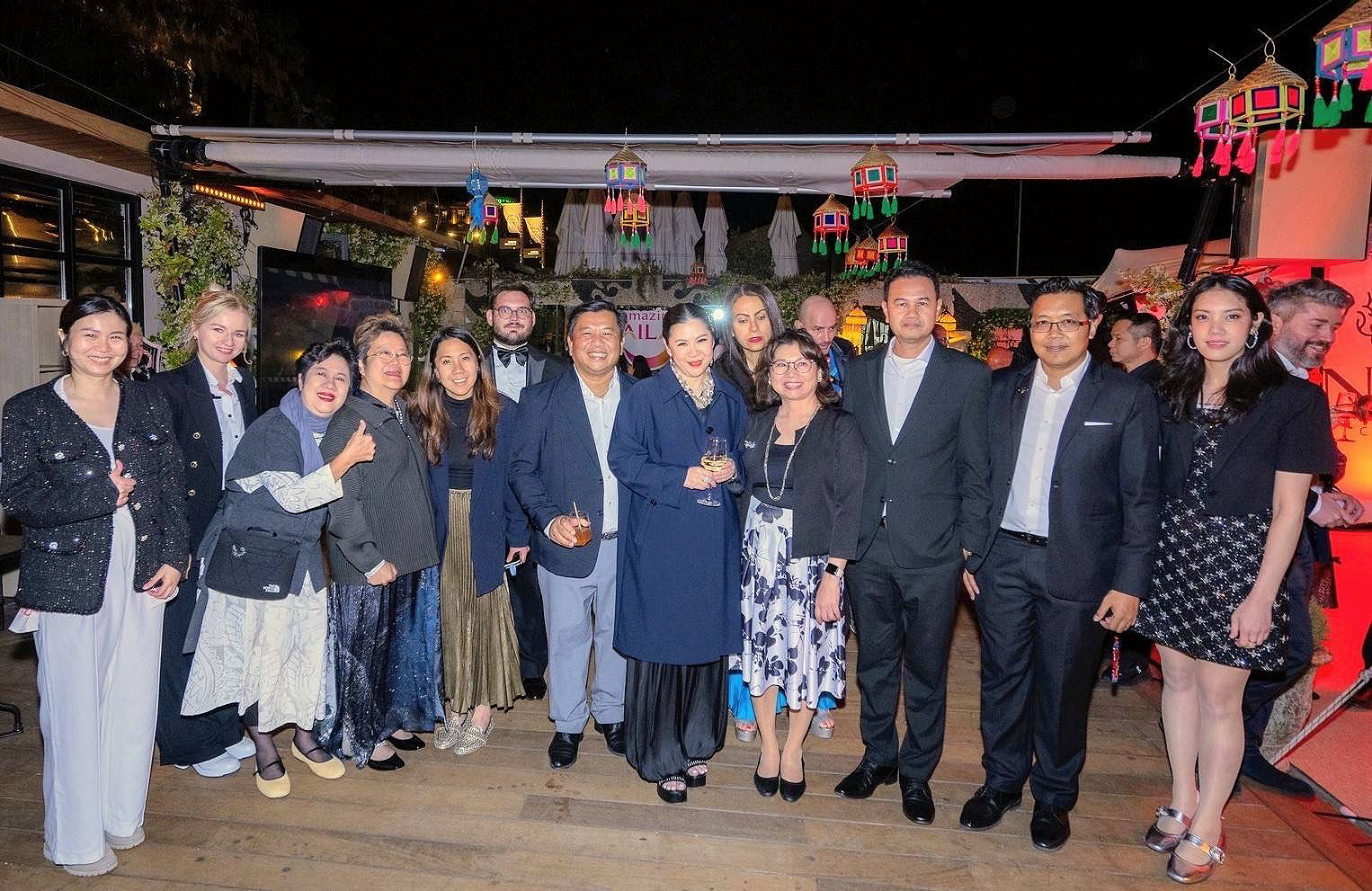
TAT used Amazing Thai Night in Cannes 2026 to position Thailand as a global film and travel destination.
TAT said the Cannes activity supported the “Amazing Location Thailand the Story Continues” campaign and the wider Thailand FILMAZING Year direction towards 2027. The agency also reported that Thailand welcomed 546 foreign productions with a combined value of more than 6 billion baht in 2025, while 218 productions generated 2.46 billion baht from January to April 2026. These figures matter because film production brings crews, hotels, local vendors, logistics, post-production services and destination exposure into the economy.
Why this matters beyond tourism
Film tourism is not only about visitors following a movie location. It can deepen a country’s brand among producers, streaming platforms, media teams, actors, creators and high-spending fans. That type of visibility supports Thailand’s wider soft-power strategy. Bangkok benefits because it is the country’s main international gateway, business base and hospitality hub even when filming or travel routes include beaches, heritage towns or national parks.
For foreign property buyers, this reinforces Bangkok’s role as a globally connected city. The strongest property markets are not supported by one demand channel. They draw from tourism, corporate relocation, education, healthcare, events, regional business and lifestyle appeal. Film tourism adds another layer to that mix by keeping Thailand present in international culture and media conversations.
Film tourism links creative-industry visibility with visitor demand and local economic activity.
The Bangkok property connection
A buyer should connect this signal to districts that already capture international movement. Areas near hotels, convention venues, embassies, hospitals, premium retail, BTS and MRT stations are better positioned than isolated buildings. If Thailand attracts more film-related travel, business events and media attention, Bangkok’s established central districts are likely to be the places where visitors stay, meet, shop and consider longer returns.
This does not make every central condominium a good investment. The property still has to pass the normal tests: sensible entry price, foreign quota, building management, tenant demand, common fees, furnishing cost and resale liquidity. The macro story can support confidence, but the unit must earn the purchase case locally.
The most relevant buyer response is to watch repeat-use districts rather than promotional headlines. If media, production and tourism campaigns keep bringing international visitors back through Bangkok, the advantage should be tested in buildings with proven daily convenience and professional management.
Quality travel over simple arrival numbers
TAT’s Cannes messaging also fits Thailand’s broader focus on value-led tourism. A film-production visitor, international media delegate or set-jetting traveller may spend differently from a mass-market tourist. They may use premium hotels, specialist services, private transport, restaurants, wellness venues and repeat Bangkok stopovers. That is more relevant to prime property districts than raw arrival numbers alone.
Foreign buyers should therefore watch how Thailand converts visibility into structured routes, business partnerships and repeat spending. A one-off event is less important than whether the country can keep attracting productions, crews, festivals, media campaigns and travel products over time.
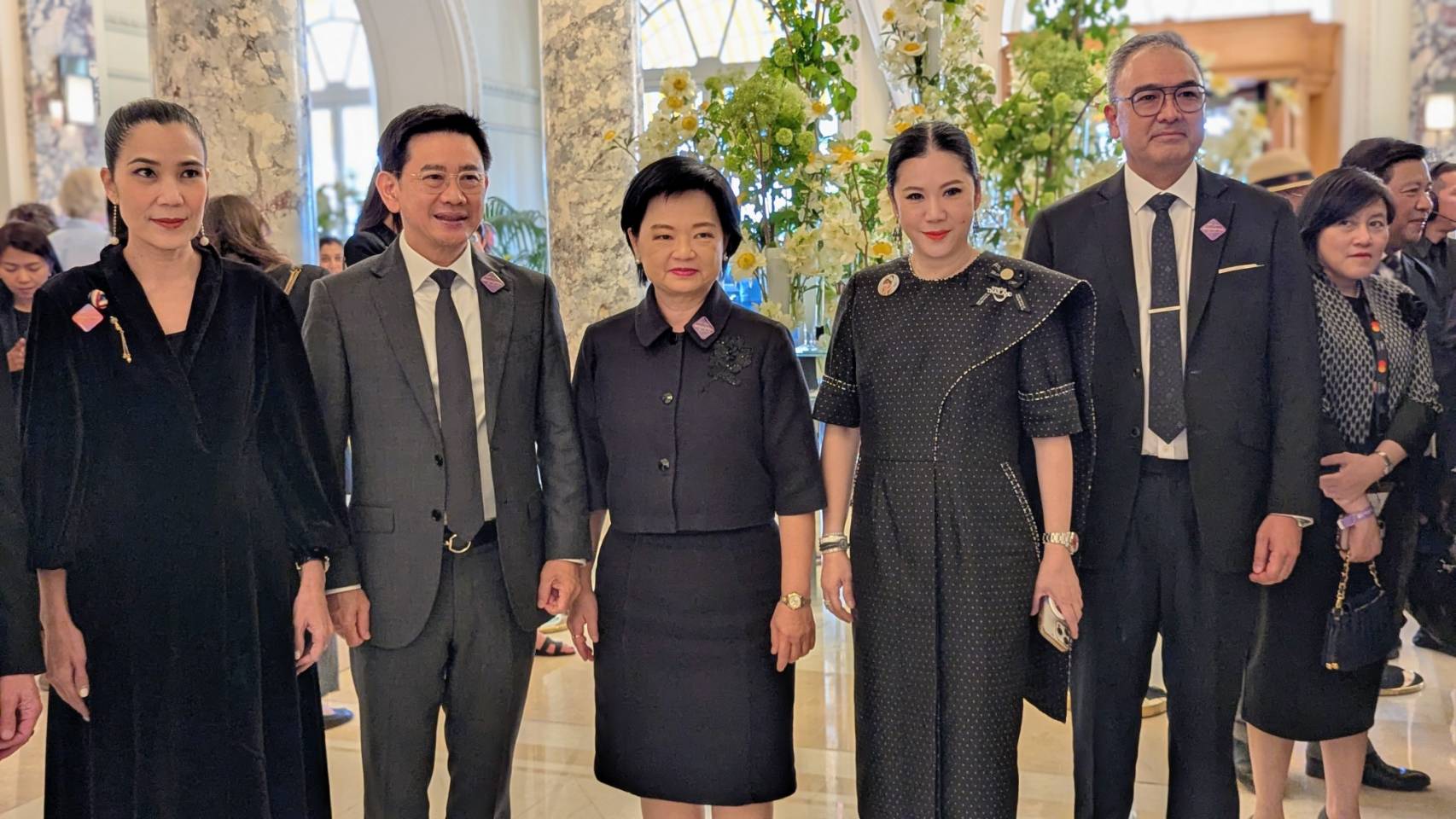
Soft-power events can keep Thailand visible to international media, producers and high-value travellers.
Investor takeaway
Thailand’s film-tourism push is a positive soft-power signal, not a shortcut to property returns. It suggests that the country is competing for higher-value attention and creative-economy activity, both of which can support Bangkok’s long-term position as a liveable and internationally recognised base.
For buyers, the practical move is to keep macro confidence separate from unit selection. Use the country story to decide whether Bangkok deserves attention, then use building evidence to decide what to buy. IBP can help foreign buyers compare districts that benefit from tourism, business travel and premium lifestyle demand. Read our Thailand economy and investment news or contact IBP Real Estate for a Bangkok plan.
The Residences at Sindhorn Kempinski Hotel Bangkok represent a specific type of luxury purchase: branded residential living in a quiet central setting. For foreign buyers, the appeal is easy to understand. The project connects hotel-style service expectations, landscaped surroundings, access to Lumphini Park, and the convenience of the wider Lang Suan and Wireless Road area. The investment question is more precise: does the branded premium match the buyer’s intended use, holding period and resale audience?
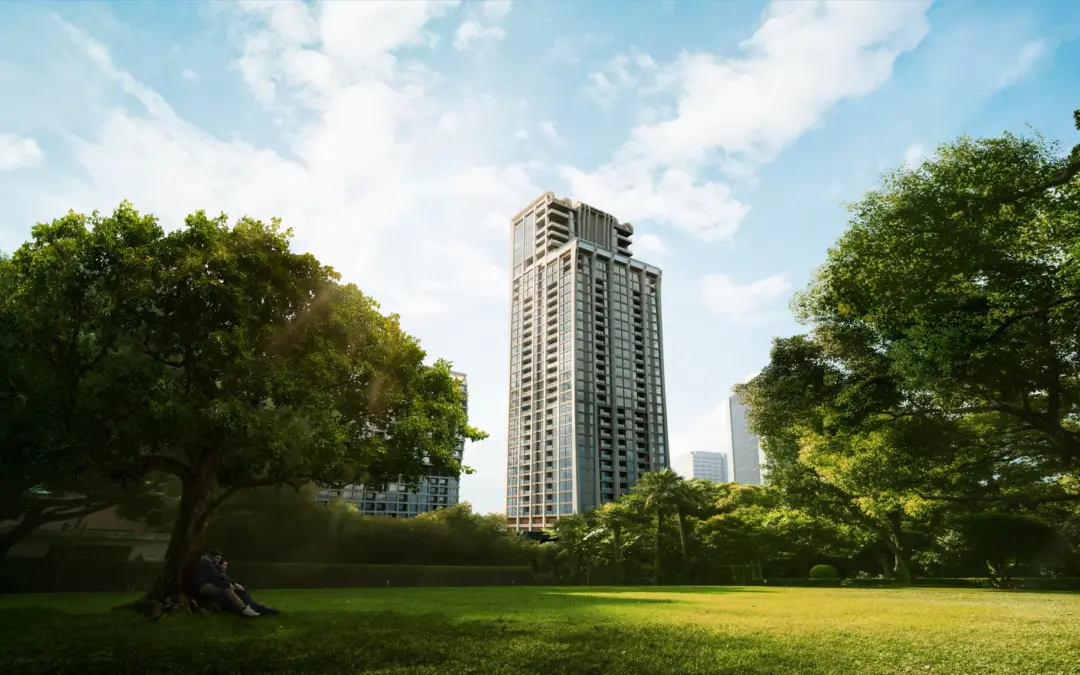
The Residences at Sindhorn Kempinski Hotel Bangkok sit within the wider Sindhorn Village setting.
Kempinski describes the residences as a collection of 231 units ranging from one to four bedrooms, with sizes stated from 50 to 500 square metres, and with access to facilities including a private residence lounge, lobby, swimming pool, fitness room, landscaped gardens, retail and restaurants within Sindhorn Village. Those facts help frame the product. This is not a mass-market investor building. It is a premium, lifestyle-led address where buyer fit matters more than headline yield.
The location case
The strongest location argument is calm centrality. Lang Suan and the surrounding Lumphini area are close to offices, embassies, hotels, hospitals, schools, retail and park space, but they feel less hectic than some parts of Sukhumvit. That is valuable for buyers who want Bangkok access without living directly above the busiest nightlife and tourist corridors.
For owner-occupiers, Lumphini Park access is a real daily-life advantage. Morning walks, wellness routines and outdoor space can make a central Bangkok unit feel more liveable over repeated stays. For investors, the park and hotel-led environment help define the future buyer or tenant profile: executives, families, long-stay residents and regional owners who value service, security and privacy.
What branded living adds
A branded residence can offer more than a name on the brochure. It can influence service standards, arrival experience, maintenance expectations, amenity quality and buyer confidence. In Bangkok, where building management varies widely, that can be meaningful. A foreign buyer who is abroad for long periods may value a project where the resident experience is professionally managed and easier to explain to future tenants or buyers.
The brand does not remove ordinary ownership risk. Buyers still need to check title, foreign quota, building rules, common fees, sinking fund, maintenance records, insurance arrangements and resale evidence. A brand can support confidence, but it does not replace due diligence. The unit still has to work on its own merits.
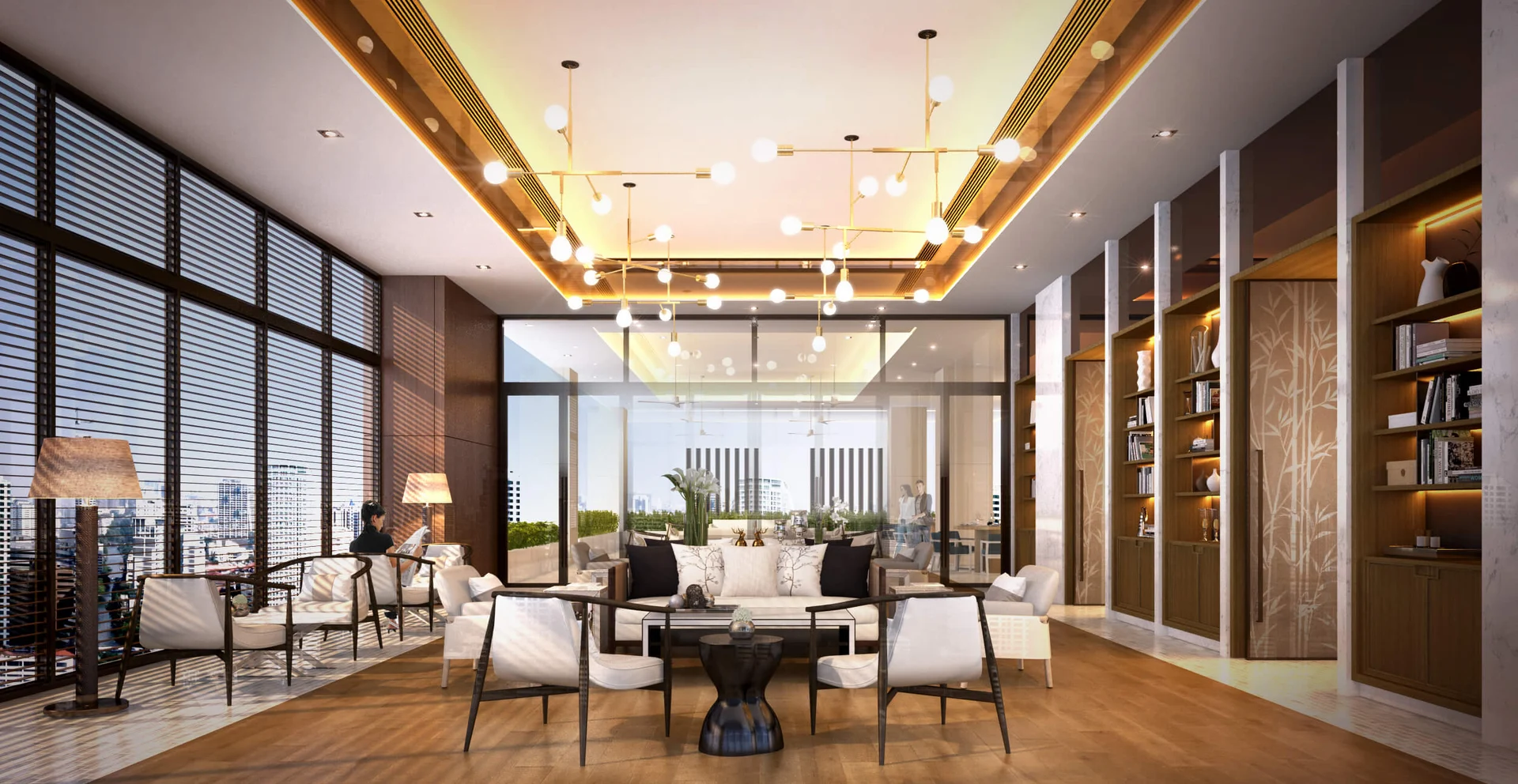
Private shared spaces are central to the branded-residence proposition.
Unit selection matters more at the top end
In a premium project, the spread between a good unit and a difficult unit can be large. Foreign buyers should compare outlook, privacy, natural light, ceiling feel, lift access, parking, storage, kitchen practicality, maid or service area, and noise exposure. Larger residences may appeal to owner-occupiers and families but can have a narrower rental audience. Smaller residences may be easier to lease but still carry premium running costs.
Buyers should also think about furniture and presentation. A branded residence usually needs a finish that matches the building. Under-furnishing can weaken rental appeal, while over-personalised decoration can narrow resale demand. The best strategy is often restrained, durable and consistent with the building’s service-led positioning.
Questions for a viewing
What services are included for residence owners and what costs extra?
How do common fees compare with similar premium buildings nearby?
How often are major shared facilities refurbished or maintained?
What restrictions apply to leasing, pets, renovations and short-stay use?
What resale evidence exists for similar unit sizes and floors?
How does the walking route feel to BTS, Lumphini Park, retail and hospitals?
These questions help separate emotional prestige from practical ownership. A branded residence should make daily life easier, not simply more expensive. If the services are not relevant to the buyer, the premium may be difficult to justify. If the buyer values privacy, wellness, park access and hotel-quality management, the premium may fit the use case.
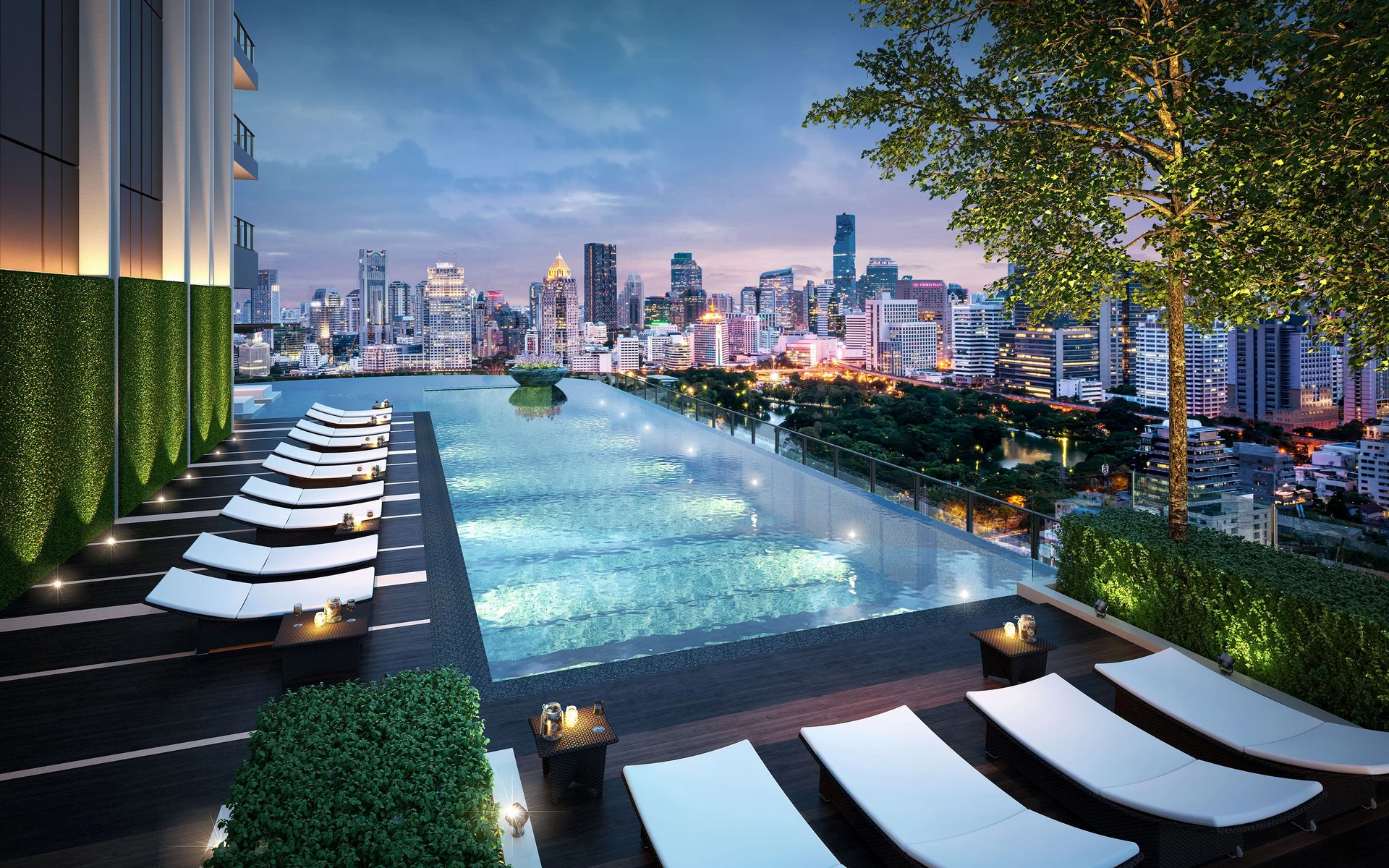
Amenities should be judged by daily usability, maintenance quality and owner profile.
Resale and rental positioning
The likely exit audience is not the entire Bangkok market. It is a smaller group of buyers who want a central, high-service address and are willing to pay for a refined environment. That can support resilience, but it also means pricing must be realistic. If the owner needs a fast exit, the buyer pool may be thinner than for a lower-priced unit near a mass-market BTS station.
For rental, the building is more suited to quality long-stay demand than high-turnover assumptions. Corporate tenants, relocating executives and regional families may understand the value of service and location. The landlord still needs to check building rules, lease compliance and furnishing standards before projecting rent.
Foreign buyers should also compare the building with non-branded luxury alternatives nearby. A strong unbranded condominium may offer larger layouts or lower running costs, while the branded option may offer better service discipline and easier international recognition. The right answer depends on how the buyer will actually use the unit.
Buyer takeaway
Sindhorn Kempinski is best read as a lifestyle-led luxury ownership case, not a simple yield play. The project’s strengths are brand, calm central location, park access and a service environment. The due diligence work is to match those strengths with the buyer’s budget, holding period and future exit audience.
IBP can help foreign buyers compare Bangkok branded residences against completed luxury condominiums in Lumphini, Wireless Road, Sathorn and Sukhumvit. Browse our project reviews or contact IBP Real Estate for a private shortlist.
Insurance is one of the least glamorous parts of owning a Bangkok condominium, but it can become one of the most important when something goes wrong. Foreign buyers often assume that the juristic person’s building insurance is enough. In many cases it is not. The building policy may protect common property and structural elements, while the owner still needs to think about contents, improvements, liability, tenant damage, water leaks, loss of rent and the practical claims process from overseas.
Foreign owners should keep insurance records with the title, lease and juristic files.
A buyer does not need to become an insurance specialist before purchasing a unit. The useful approach is to know which questions to ask, which documents to keep and where the gaps may sit. Insurance is part of due diligence because it shows how the building manages risk. A well-run condominium should be able to explain its master policy, claim procedure, fire-safety systems, maintenance routines and owner responsibilities without confusion.
Start with the building policy
The first insurance check belongs at building level. Ask the juristic office or seller for confirmation of the condominium’s master policy, insured parties, policy period, general coverage area and claim procedure. The owner should understand whether the policy covers only common areas, whether structural elements are included, how excess amounts work, and who coordinates claims involving common property.
This matters because many problems cross the line between private and common property. A leak may start in one unit and damage another. A fire-safety issue may involve both private contents and building systems. A storm, flood, lift issue or public-area incident may require the juristic office, insurer and individual owners to coordinate. If the building’s documents are vague, the owner may face delays at the worst moment.
Then check what the owner must insure
The owner’s policy should be shaped around the unit’s real use. A furnished unit held for personal visits has a different risk profile from a fully tenanted investment unit. A high-value renovation, imported furniture, artwork, appliances, home office equipment and built-in fittings may need specific consideration. A basic policy may not reflect the actual replacement cost of a premium Bangkok unit.
Foreign owners should pay attention to contents cover, fixtures and improvements, personal liability, accidental damage, water damage, electrical damage, theft, tenant-related exclusions and any requirement to maintain locks, alarms or air-conditioning systems. The point is not to buy the most expensive policy. The point is to avoid discovering after an incident that the relevant risk was never covered.
The building policy and the owner policy should be checked together, not separately.
Rental units need extra care
Landlords should not rely on the tenant’s good intentions alone. A lease should state who is responsible for utilities, minor repairs, air-conditioning servicing, damage, lost access cards, cleaning, smoking, pets and unauthorised subletting. Insurance should then be checked against those lease obligations. If the policy excludes tenant damage or commercial use, the owner needs to know before keys are handed over.
Loss of rent cover may also be relevant, but owners should read the conditions carefully. It may apply only after an insured event and only for a defined period. It will not usually protect an owner from ordinary vacancy, weak demand or a tenant who simply decides not to renew. Insurance can reduce certain risks, but it does not replace proper tenant screening and market pricing.
Keep the evidence file current
Photograph the unit before completion, before each lease and after move-out.
Keep receipts for furniture, appliances and renovation work where available.
Record serial numbers for major appliances and electronics.
Save air-conditioning service reports, repair invoices and pest-control records.
Keep the lease, tenant ID record and deposit receipt with the insurance file.
These records may feel routine, but they can decide whether a claim is smooth or contested. An owner who lives outside Thailand should store digital copies securely and make sure the local agent or property manager knows who to contact in an emergency. A claim can move slowly if the insurer cannot verify ownership, policy details, unit condition or authority to act.
Photos, inventories and maintenance records make claims easier to evidence.
Questions for the juristic office
Before buying or leasing out a unit, ask the juristic office how incidents are reported, whether there is a standard form, who contacts the building insurer, how neighbour damage is handled, whether contractors must be approved and whether renovation works require separate insurance or deposits. These questions reveal the building’s management culture. A clear process is a positive ownership signal.
Also ask about recent incidents in general terms. The issue is not to obtain private details about other owners. It is to understand whether the building has recurring water leaks, lift issues, fire-alarm problems, parking damage, balcony drainage concerns or contractor disputes. Repeated incidents can point to maintenance risk that an individual policy cannot fully solve.
Buyer takeaway
For foreign buyers, condo insurance should sit beside title, quota, funds transfer and tax records. It is not a formality to handle after completion. It is part of owning safely in a city where the buyer may be abroad when a problem occurs. The strongest position is a clear building policy, an owner policy that matches the unit’s use and a documented handover file.
IBP can help buyers review management documents and prepare practical ownership questions before transfer. Read our foreign buyer guides or contact IBP Real Estate before committing to a Bangkok condominium.
Bangkok’s condominium market is no longer a market where foreign buyers should read every new launch as automatic growth. The more useful signal in 2026 is supply discipline. Are developers slowing new projects in weaker segments? Are completed buildings clearing stock without damaging resale values? Are buyers choosing finished, well-managed buildings over speculative future supply? These questions matter because Bangkok remains attractive, but the opportunity is selective.
Supply discipline matters because Bangkok property performance is increasingly building-specific.
The Bank of Thailand’s latest monthly reporting on the real estate sector noted that the overall market had contracted from the previous year, with weaker demand and lower newly launched properties across low-rise housing and condominiums. It also noted that condominium prices had stabilised after an earlier decline. For a foreign buyer, that combination is important. It does not say Bangkok is closed for investment. It says buyers need to pay attention to where supply is being held back, where inventory is still heavy, and where pricing has already adjusted enough to create value.
Why supply discipline matters
Supply discipline means developers are not simply adding new units because land is available or because marketing language is optimistic. In a softer local credit environment, disciplined supply can help the market reset. Fewer launches can reduce pressure on completed stock, give developers time to sell remaining units, and make buyers compare real alternatives more carefully. That can be constructive for well-located buildings with credible demand.
Foreign buyers should avoid reading a slower launch market as only negative. A market with fewer weak launches can be healthier than a market full of aggressive pricing, shallow reservations and future resale competition. The key is to distinguish between a district that is pausing because demand is thin and a district where limited new supply protects strong completed buildings.
Read launch restraint alongside completed stock
A lower level of new launches is useful only if completed stock is also being absorbed in a sensible way. If developers are delaying launches but unsold completed units remain widespread, buyers still have negotiating power. If completed buildings are trading steadily, rents are supported and foreign quota is available, a restrained future pipeline can improve the case for a carefully chosen unit.
This is where foreign buyers should move from macro headlines to building evidence. A broad report can show market direction, but it cannot tell you whether a specific one-bedroom on Sukhumvit, a two-bedroom near a school, or a branded residence near Lumphini Park is priced correctly. Building-level comparison remains the real work.
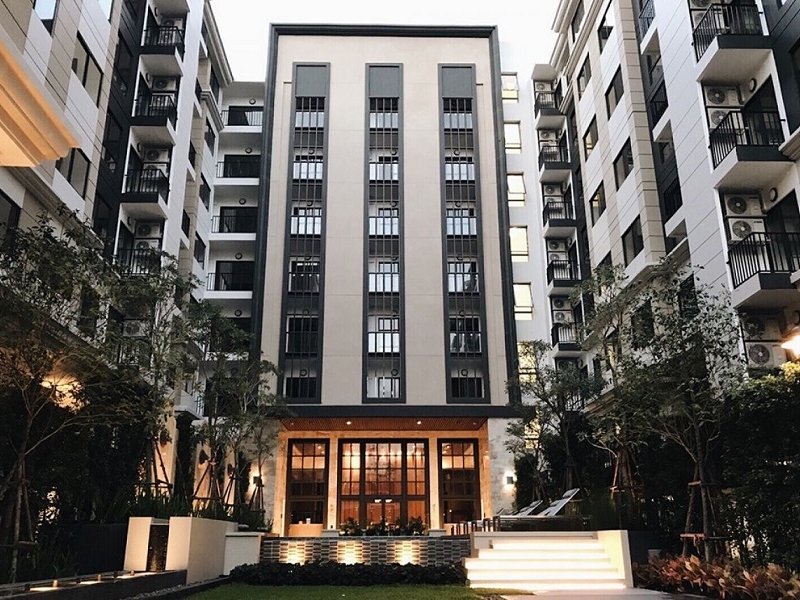
Completed buildings give foreign buyers evidence that launch brochures cannot provide.
What to ask before reserving
How many comparable completed units are available in the same district?
Are developers discounting only weak layouts, or are good stacks also being repriced?
Is the project relying on local mortgage buyers, cash buyers or overseas demand?
How much future supply is scheduled within the same tenant catchment?
Do resale listings show realistic asking prices or stale owner expectations?
Would the unit still make sense if rent were lower for the first lease cycle?
These questions keep the buyer away from the common mistake of treating a discount as value. A reduced price is only attractive if the unit has a clear use case. If the layout is awkward, the walk to transport is weak, the juristic management is poor or the resale audience is thin, a discount may simply reflect risk that other buyers have already spotted.
Cash buyers have an advantage, but only with discipline
Foreign condominium buyers usually purchase with offshore funds rather than local mortgages. In a market where Thai household purchasing power and bank approvals are under pressure, that can give a genuine advantage. A cash-ready buyer may be able to negotiate more calmly, move faster on a strong resale unit and avoid the uncertainty that affects some local purchasers.
The advantage can disappear if the buyer uses cash to chase weak stock. Sellers and developers know that foreign buyers can transfer quickly, so the buyer still needs a walk-away price. The right question is not simply whether the seller will reduce the asking price. It is whether the final price is low enough to compensate for vacancy, fees, furnishing, tax, currency movement and resale timing.
The best purchase case still comes down to unit fit, holding cost and exit audience.
Where the signal is strongest
Supply discipline is most useful in districts with durable daily demand. Areas connected to BTS or MRT, hospitals, schools, offices, premium retail and established expatriate routines can benefit more from restrained launches than fringe locations where demand is speculative. A limited pipeline near real demand can support building performance. A limited pipeline in a weak location may simply show that developers are cautious.
Foreign buyers should therefore compare three layers. The first is macro: national credit, launch and price direction. The second is district: transport, rental depth, competing supply and resident profile. The third is unit: view, layout, floor, furnishing burden, common fees and likely exit buyer. A purchase only becomes attractive when all three layers point in the same direction.
Buyer takeaway
Bangkok remains compelling because foreign freehold condominium ownership is clear, the city is globally connected and prime districts offer a deep lifestyle base. But the market now asks for sharper selection. Supply discipline can help patient buyers, especially when it limits future competition and improves negotiation on completed stock. It should not be used as a blanket reason to buy.
IBP can help foreign buyers compare new launches, completed resales and district-level pipeline risk before committing. Review our Bangkok investment analysis or contact IBP Real Estate for a buyer shortlist.