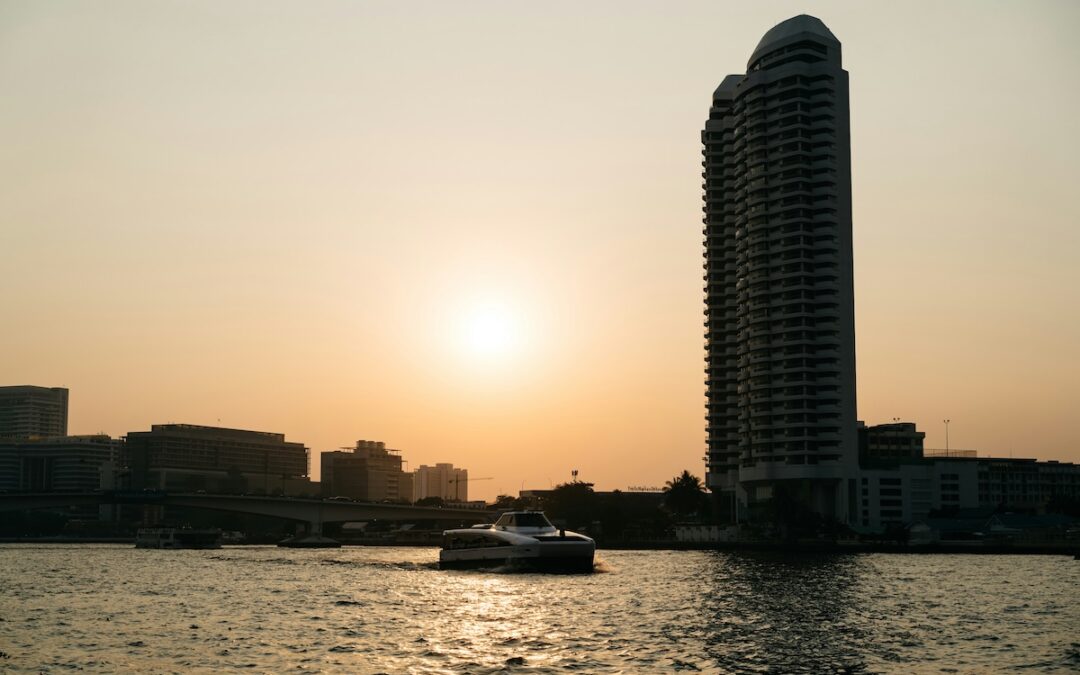
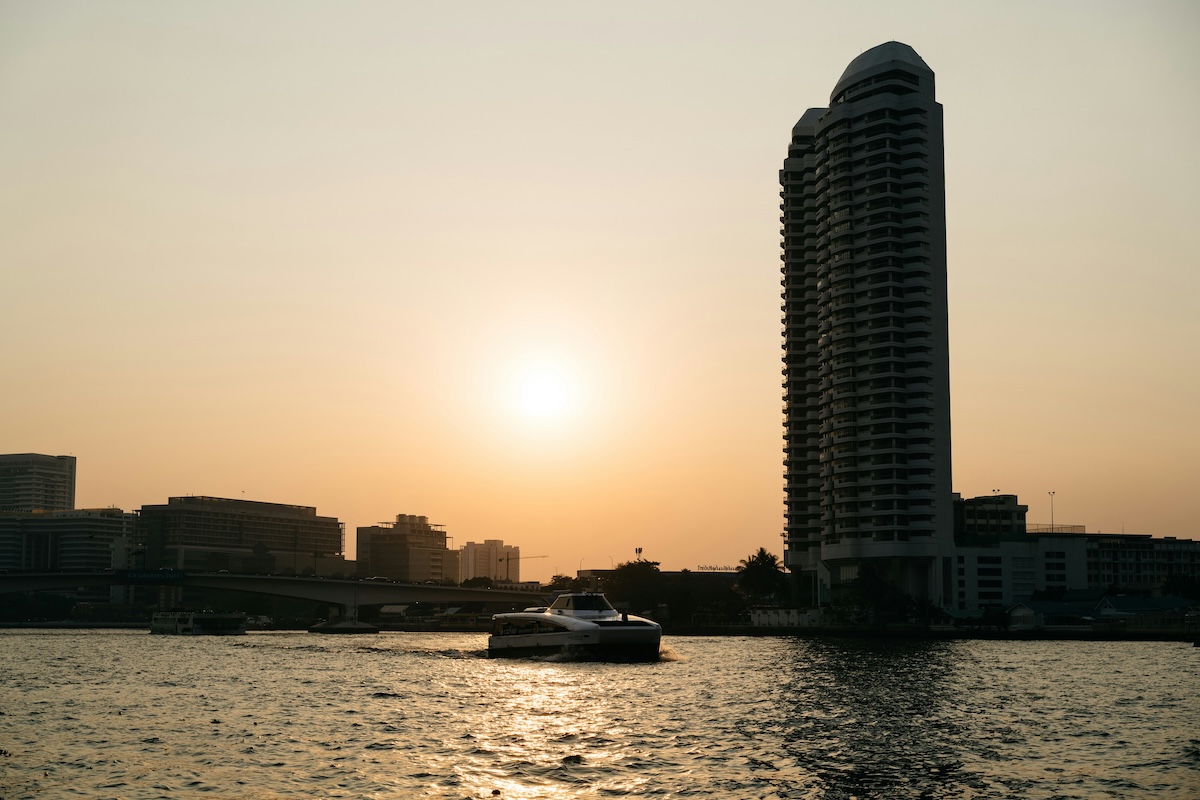
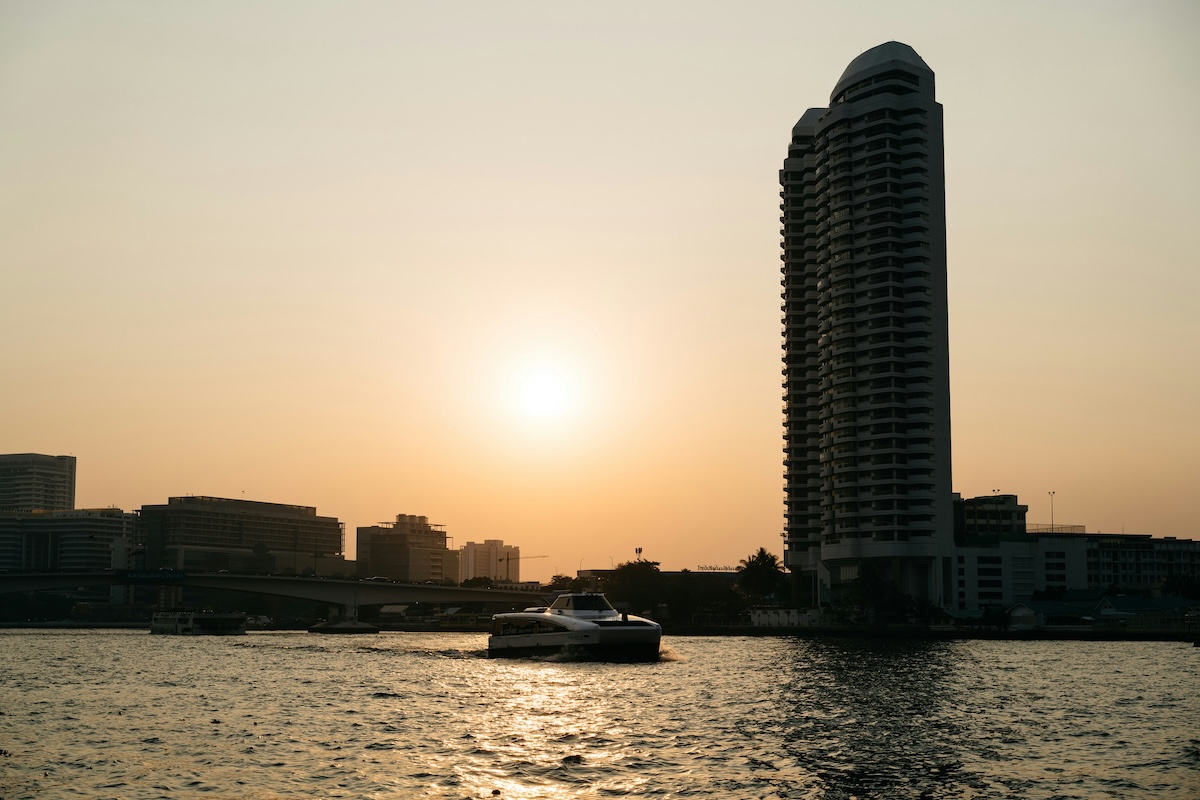
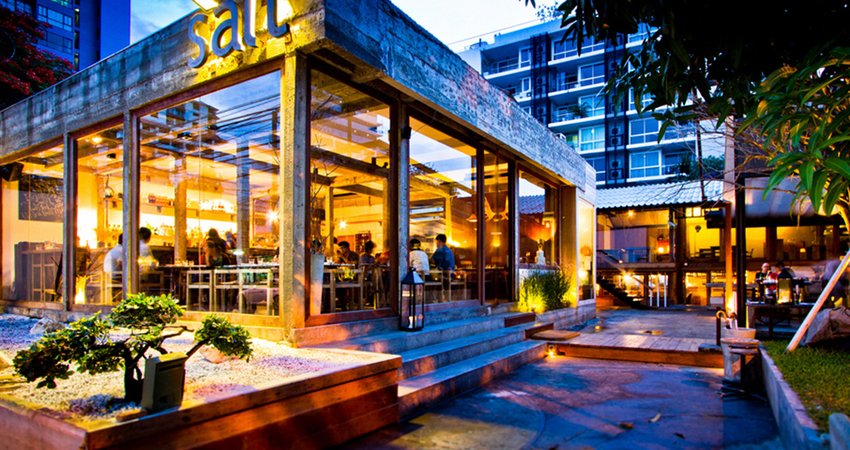
Bangkok riverfront living has a different mood from inner Sukhumvit, Langsuan or Sathorn. The Chao Phraya gives owners open views, hotel energy, evening light, boat movement, historic neighbourhoods and a calmer sense of space. For many expat buyers, that is exactly the reason to consider a riverfront condominium.
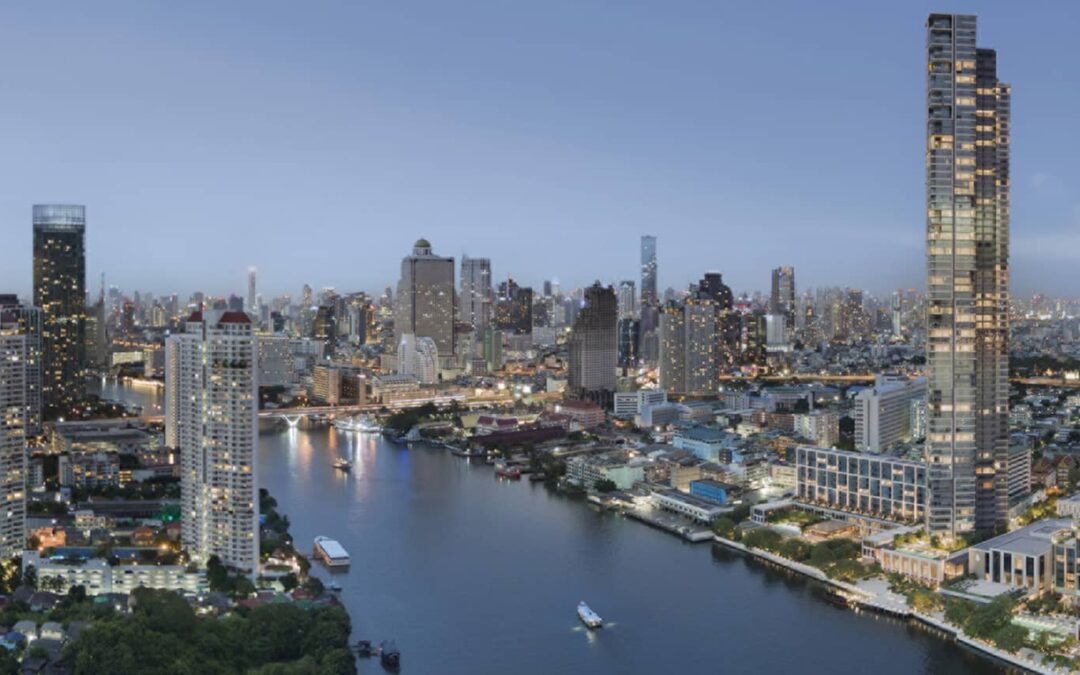
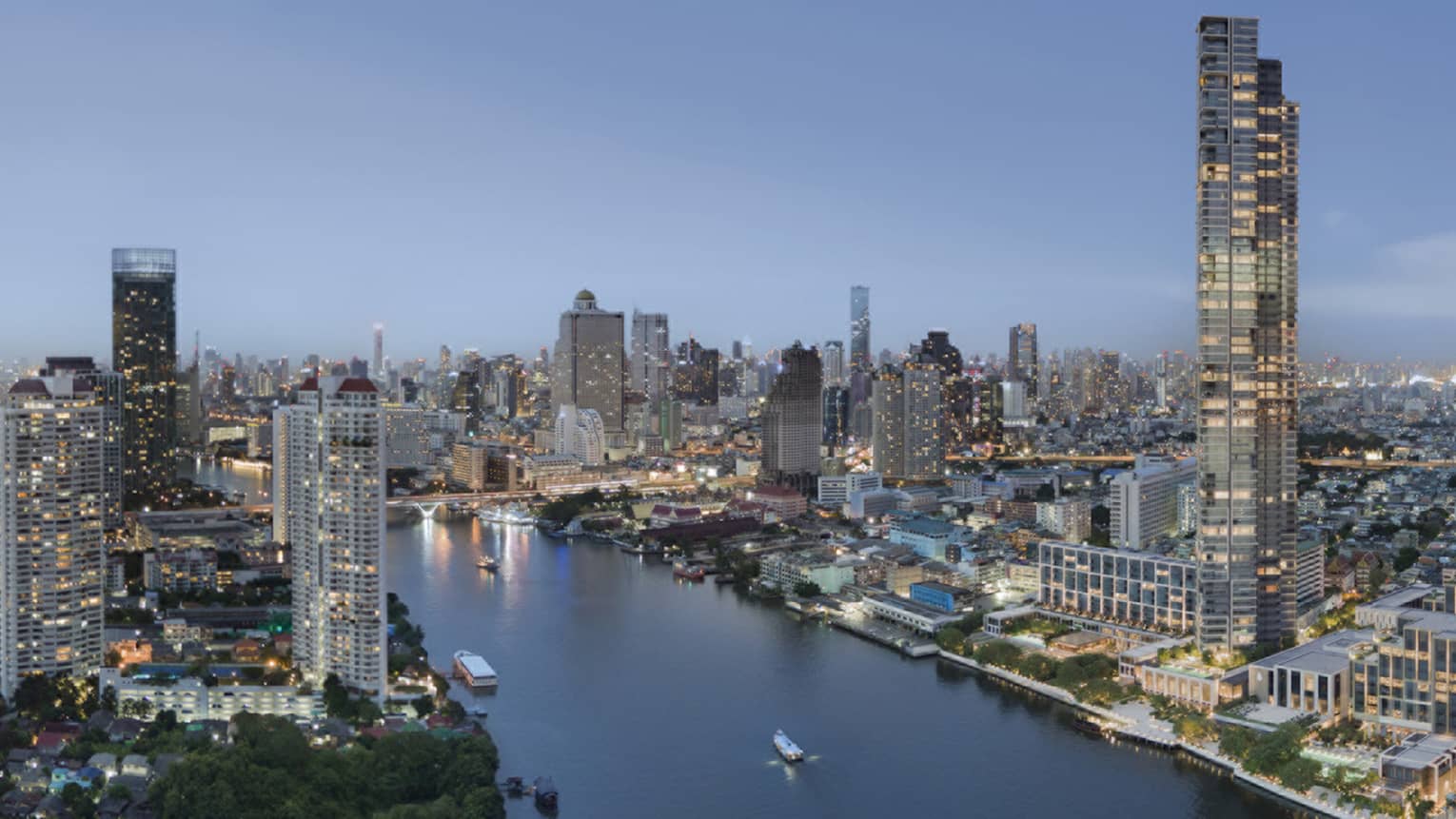
Riverfront living gives Bangkok buyers views, atmosphere and a different daily rhythm from inner Sukhumvit.
The river is not automatically better or worse than a BTS-centred district. It simply works differently. A buyer who understands the rhythm can find a highly liveable home. A buyer who only falls in love with a sunset view may later discover that commutes, school runs, supermarket trips or taxi access do not fit the household’s routine.
What riverfront living does well
The biggest advantage is atmosphere. Riverfront condos often feel more open than dense inner-city towers because views are not only across another building. Hotels, restaurants, galleries, temples, heritage streets, river piers and destination retail can make the area feel special without needing to leave Bangkok.
The river also works for buyers who want Bangkok to feel like a second-home city rather than only a work base. A weekend breakfast by the water, a boat ride to dinner, a walk through old commercial streets or a quiet evening view can make ownership more emotionally durable. That matters for buyers who plan to use the property themselves for years.
The best riverfront purchase still needs practical links to work, school, healthcare and transport.
The trade-offs to test
Transport is the main trade-off. Some riverfront buildings have shuttle boats, easy road links or quick access to BTS and MRT connections. Others feel close on a map but slow during rain, peak traffic or school-run hours. Before buying, test the real journey to the places that matter: workplace, school, hospital, supermarket, airport route, gym, favourite restaurants and friends’ neighbourhoods.
Buyers should also check flood management, lobby access during heavy rain, pier operating hours, shuttle frequency, parking, ride-hailing pickup points and visitor access. A beautiful building can become frustrating if ordinary movement is difficult. Ask how residents actually travel, not only how the sales brochure describes connectivity.
Which buyers may fit the riverfront
Riverfront living often suits owner-occupiers, retirees, regional families, part-time residents, hospitality-minded buyers and people who value views and neighbourhood character. It can also suit tenants who work in Sathorn, Silom, Charoen Krung, Khlong San, Rama III or near the river itself.
It may be less suitable for buyers who need daily walking access to many office towers, nightlife streets or a specific international school corridor. In those cases, a central BTS or MRT district may be more practical. The right answer depends on daily routine, not prestige.
Rental and resale logic
A riverfront condo can be attractive to tenants when the building has strong management, good views, sensible layouts and practical access. However, the tenant pool can be more specific than in central Sukhumvit. Some tenants love the river; others want to be directly beside a BTS station. Landlords should price and furnish for the actual tenant audience rather than assume every international renter wants a river view.
For resale, the most defensible riverfront units usually have clear view protection, good natural light, efficient layouts, maintained facilities and a location that can be explained quickly to both Thai and foreign buyers. A weak view, awkward road access or high common fee can reduce the advantage of a river address.
Daily errands and walkability should be tested as carefully as river views.
Viewing checklist
Visit at morning, school-run, evening and rainy-season times.
Test the route to BTS, MRT, pier, supermarket, hospital and main road.
Ask whether shuttle boats are frequent, reliable and resident-only.
Check flood management, lobby access, parking and ride-hailing pickup points.
Compare view quality by stack, height, bend of river and future obstruction risk.
Model rental demand from the likely tenant pool, not only lifestyle appeal.
Buyer takeaway
Bangkok riverfront living can be deeply rewarding for expat buyers who want space, views, heritage and hotel-style neighbourhood energy. It works best when the romance of the river is matched by practical daily movement and disciplined building checks.
IBP can help foreign buyers compare riverfront condominiums with BTS-led districts by lifestyle, rental demand and resale logic. Read our expat living guides or contact IBP Real Estate for a neighbourhood-led shortlist.
Thailand’s latest long-haul tourism push gives Bangkok property buyers another confidence signal to interpret carefully. The Tourism Authority of Thailand reported that the Amazing Thailand Latin America Roadshow 2026 connected Thai tourism suppliers with travel companies in Sao Paulo, Bogota and Mexico City from 8 to 13 May 2026.
Thailand is working to expand long-haul visibility in emerging source markets beyond Asia.
TAT said the programme brought together 11 Thai tourism suppliers and 85 travel companies, generating 487 pre-scheduled business meetings. The campaign aligned with Thailand’s 2026 communication direction, “Healing is the New Luxury”, and its “Value over Volume” strategy for quality long-haul growth.
For property buyers, this does not mean Latin American arrivals will directly drive Bangkok condo prices. The point is broader: Thailand continues to market itself as a premium, wellness, culture and experience-led destination to more distant source markets. That helps support Bangkok’s global visibility, hotel economy, medical and wellness positioning, and the perception of Thailand as an internationally connected base.
Connectivity was part of the roadshow message as well. TAT said Ethiopian Airlines joined the Sao Paulo event, while Emirates participated in Bogota and Mexico City, reinforcing available routes between Latin America and Thailand through major global hubs. For Bangkok, that matters because ease of arrival shapes repeat visitation, inspection trips and confidence in holding a property from overseas.
Why long-haul tourism matters
Bangkok is not only a local housing market. It is the main gateway to Thailand for business visitors, leisure travellers, medical tourists, regional families and expatriates. When Thailand builds recognition in long-haul markets, Bangkok benefits first because it provides international airport access, hotels, private healthcare, retail, dining, culture and onward travel connections.
TAT’s update said Thailand welcomed 221,824 visitors from Latin America in 2025, up from 134,800 in 2024. Brazil was the largest source market with 70,103 visitors, followed by Mexico with 50,144, Argentina with 28,058 and Colombia with 27,301. From 1 January to 30 April 2026, arrivals from Latin America reached 86,057, signalling continued momentum.
Trade meetings help convert destination awareness into future travel and business pipelines.
The property link is indirect but real
Foreign property demand rarely comes from one campaign. It builds from repeated exposure: a holiday, a hospital visit, a school search, a regional work assignment, a business event or a second-home conversation. Long-haul tourism marketing increases the number of people who understand Thailand well enough to consider spending more time here.
That matters for Bangkok because premium residential demand is linked to more than local wages. It is supported by international schools, private hospitals, hotels, restaurants, serviced apartments, flexible offices, airports and a deep lifestyle economy. Buyers looking at Sukhumvit, Silom, Sathorn, Chit Lom, Langsuan, Riverside and Rama IV should understand how those urban services sit inside a wider tourism and business ecosystem.
Do not overread the signal
A roadshow is a confidence signal, not a transaction guarantee. It does not replace due diligence on price, title, foreign quota, building management, rental evidence or resale depth. It also does not mean every district benefits equally. The property link is strongest where international visitors and residents already spend time: hotel districts, hospital corridors, central retail nodes, riverside luxury areas and well-connected BTS or MRT neighbourhoods.
Buyers should also separate tourism visibility from tenant demand. A visitor may become a repeat traveller without becoming a long-term tenant. A corporate tenant still needs employment, school, commute and budget reasons to lease a condo. The best investment cases combine macro confidence with unit-level evidence.
For Bangkok property buyers, international tourism promotion is a confidence layer, not a price forecast.
What foreign buyers can take from it
Thailand is broadening its quality-tourism audience beyond nearby Asian markets.
Bangkok remains the first city many long-haul travellers use to understand Thailand.
Premium residential districts benefit most when tourism, healthcare, retail and business services overlap.
Connectivity and visibility should support confidence, but never replace building-level due diligence.
Investor takeaway
The Latin America Roadshow adds to Bangkok’s global-city story. It reinforces Thailand’s effort to attract quality travellers and promote higher-value experiences, which can support the wider services economy around prime residential districts. For property buyers, the practical response is to treat tourism momentum as context and still buy only where price, building and district fundamentals are clear.
IBP can help overseas buyers connect Thailand tourism and economy signals with Bangkok condo due diligence. Read our Thailand economy updates or contact IBP Real Estate for a buyer consultation.
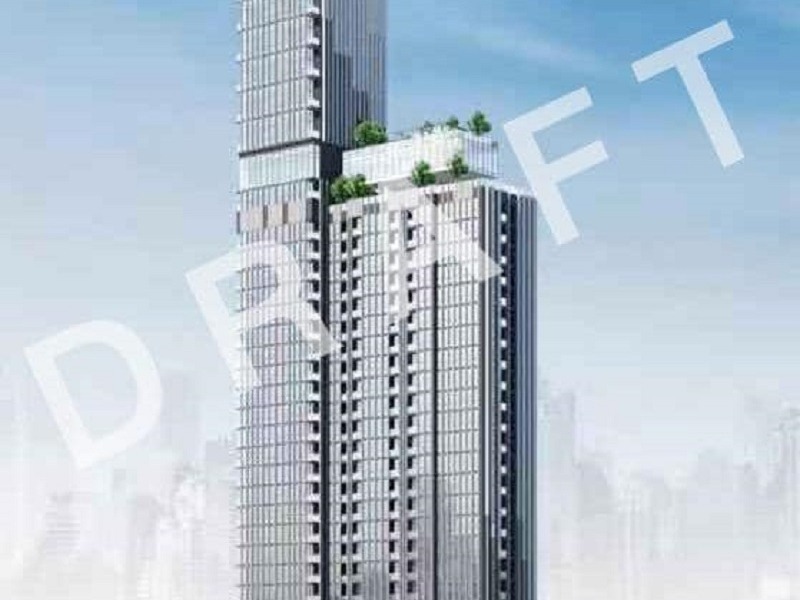
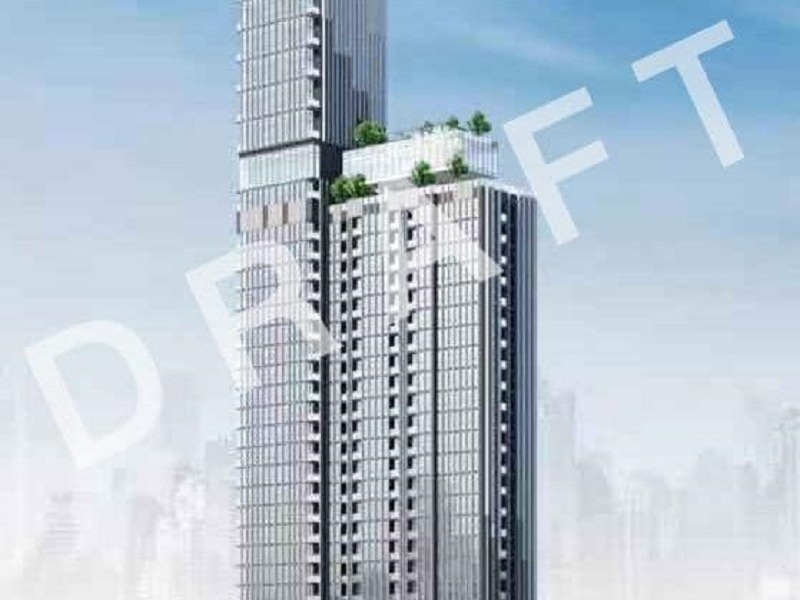
Four Seasons Private Residences Bangkok is one of the most recognisable branded residences on the Chao Phraya River. For foreign buyers, its appeal is easy to understand: an international hospitality name, a completed riverside address, hotel-style service expectations and a luxury product that can be explained quickly to overseas family members, advisers or future buyers.
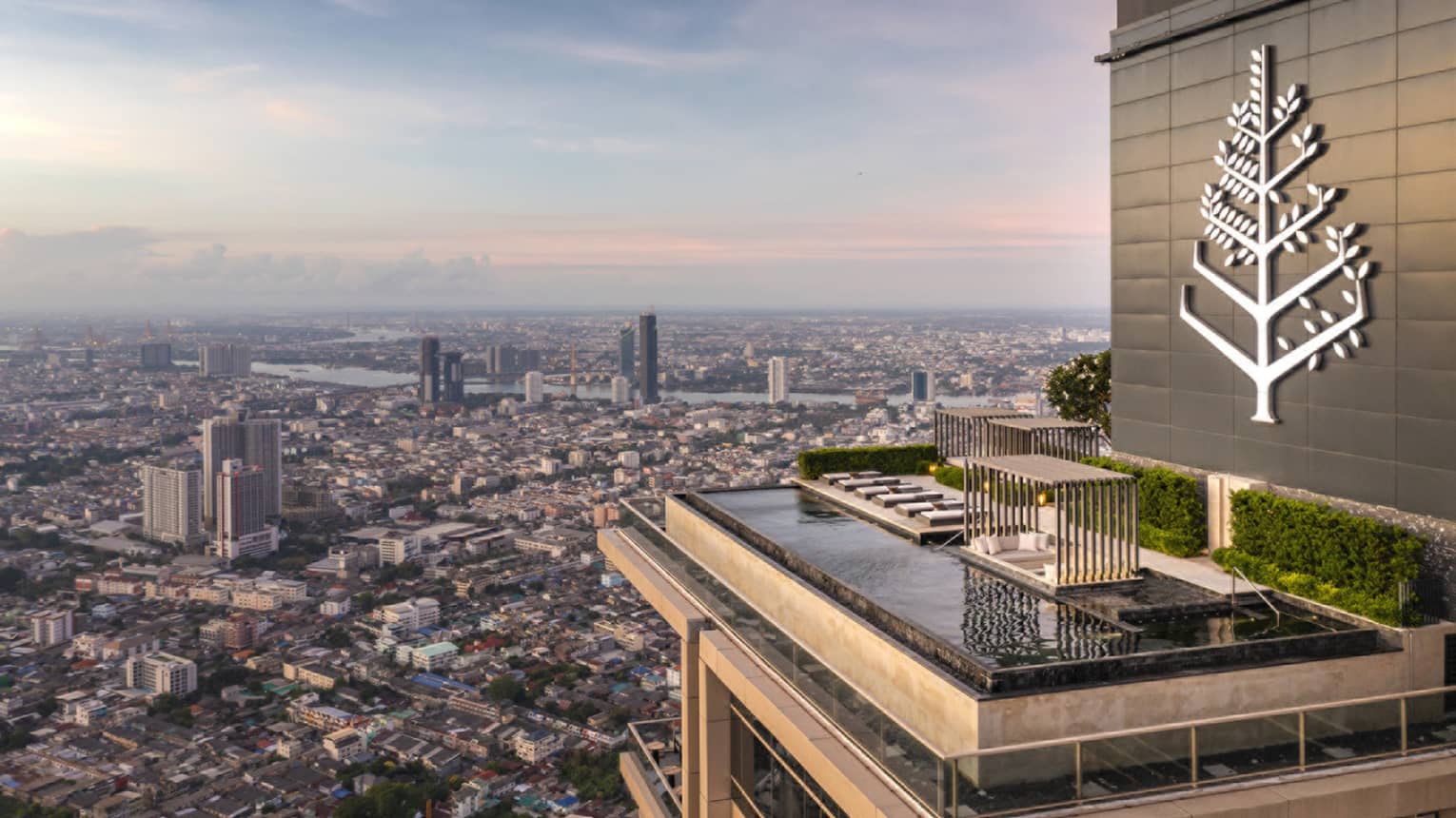
Four Seasons Private Residences Bangkok is positioned as a branded riverfront residence on the Chao Phraya.
The question for buyers is not whether the project is prestigious. It is whether the unit, price, view, service cost, holding plan and future resale audience fit the buyer’s goals. Branded residences can be excellent lifestyle assets, but the entry premium should be underwritten as carefully as any other Bangkok condominium purchase.
What the official project details say
The Four Seasons residential page describes the project as a 73-floor private residential tower on the banks of the Chao Phraya River in Bangkok. The same official page lists 366 private residences, Country Group Development as developer, BAMO Inc and PIA Interior Co as interior designers, Hamiltons International as architect, and 2020 as the opening date.
The official amenity list includes a Residents Amenity Club, Sky Lounge and Bar, Sky Pool, Wine Room, Private Dining Room, Screening Room, Teen Lounge, Music Studio, Sky Fitness and Yoga Studio, and Sky BBQ Terrace. For buyers, the value of this list depends on maintenance, access rules, resident density, privacy and how the service experience performs in ordinary weeks, not only during a viewing.
The official materials emphasise sky-level amenities and a luxury riverfront lifestyle.
Why the riverside position matters
The Chao Phraya riverfront gives the project a different profile from Sukhumvit, Wireless, Langsuan or Sathorn condominiums. Riverfront buyers are often seeking views, hotel access, a resort-like arrival, larger unit formats and a calmer sense of place. This can suit owner-occupiers, regional families, high-net-worth part-time residents and buyers who want Bangkok lifestyle value rather than only a simple yield play.
The trade-off is movement. Riverfront living can be deeply pleasant, but buyers must test daily routes. How long does it take to reach Sathorn, Silom, Sukhumvit, international schools, hospitals, airports and favourite dining districts at real travel times? Is boat access useful for the owner’s routine, or mainly a lifestyle extra? A strong purchase case should work on weekdays as well as weekends.
Who the project may suit
Four Seasons Private Residences Bangkok is likely to suit buyers who prioritise service, brand familiarity, views, privacy and long-term owner use. It may also appeal to buyers comparing Bangkok with other global branded residences, because the Four Seasons name is widely understood across markets.
It may be less suitable for a buyer whose main objective is a high gross rental yield or a low entry price. Large branded residences can command premium rents in the right circumstances, but the purchase price and holding costs usually require a longer and more lifestyle-led investment horizon. A buyer should be honest about whether the unit is primarily a home, a second residence, a family base, a trophy asset or an income property.
Unit-level checks before offering
The building name is only the starting point. Buyers should compare stack, height, river orientation, city view, afternoon sun, balcony usability, lift access, parking, furniture quality, kitchen practicality, storage and bathroom condition. In completed luxury buildings, two units with the same bedroom count can feel very different because view, layout and owner fit-out vary widely.
Ask for current common fees, sinking fund position, renovation rules, pet rules, leasing restrictions, management structure and recent resale evidence. If the unit is leased, review the lease terms, tenant quality and move-out obligations. If the purchase is for self-use, inspect at different times of day and test the arrival sequence from car, boat and lobby.
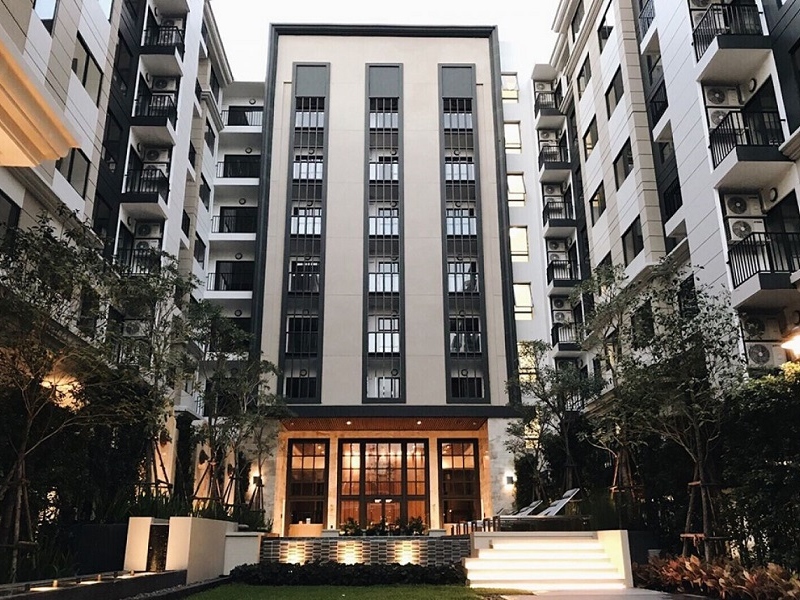
Interior planning, views and daily usability should be checked unit by unit.
Rental and resale considerations
The rental audience for a branded riverside residence can include senior executives, regional families, diplomats, lifestyle-focused expatriates and wealthy part-time residents. However, the tenant pool is narrower than for mid-market BTS condominiums. Rent assumptions should be based on comparable leases and realistic vacancy, not only on the Four Seasons brand.
For resale, the future buyer must value the brand, riverfront setting, unit size, service model and total ownership cost. That can be a strong story when entry pricing is disciplined and the unit has clear advantages. It can become difficult if the seller pays too much for an ordinary stack or a view that does not stand out.
Questions to ask
How does the asking price compare with recent completed transactions in the building?
What are the exact common fees, sinking fund obligations and likely major capital works?
Does the unit have a view, layout and furniture package that a future buyer will understand quickly?
How do weekday commute times work for the owner’s real routine?
What services are included, optional or charged separately?
Is foreign quota available and can transfer documents be completed on the buyer’s schedule?
Buyer takeaway
Four Seasons Private Residences Bangkok is a compelling option for foreign buyers who want a completed branded residence with a clear Chao Phraya lifestyle identity. The strongest purchase cases will pair that prestige with disciplined pricing, a superior unit and a realistic hold plan.
IBP can help buyers compare Bangkok branded residences by building evidence, foreign quota, service model and resale logic. Read our project review notes or contact IBP Real Estate for a private luxury-condo shortlist.
Foreign buyers often plan carefully for a Bangkok condominium purchase, but spend less time planning the exit. That can create avoidable stress when it is time to sell, transfer the unit and move sale proceeds out of Thailand. A resale can be straightforward when the ownership file is clean, the buyer’s payment route is clear and the owner has spoken to the bank before transfer day.
A clean resale file makes the transfer and outward-remittance process easier to manage.
This checklist is for foreign individual owners selling a Bangkok condominium. It is not legal or tax advice. Every sale should be checked against the owner’s title, tax position, mortgage status, marital status, power of attorney arrangements and bank requirements. The practical point is simple: repatriation is easiest when it is prepared before the sale contract is signed.
Start with the original purchase file
The first step is to find the documents from the original purchase. These may include the sale and purchase agreement, title deed copy, Land Department transfer receipt, tax receipts, foreign exchange transaction evidence, bank credit advice, payment receipts, passport copies used at transfer, and any power of attorney used at the time. If the unit was bought through a developer, keep the developer payment schedule and final transfer statement as well.
The foreign exchange evidence is especially important. When a foreigner buys a Thai condominium in foreign quota, the Land Department normally expects foreign-currency remittance evidence at purchase. When the owner later sells, banks may ask for evidence showing how the funds originally entered Thailand before processing outward remittance of sale proceeds. Requirements can vary by bank and account history, so do not assume the old file is optional.
Check title, quota and juristic records
Before listing, confirm the exact name on the title deed, the unit number, registered area, ownership share, mortgage status and any encumbrances. Ask the juristic office what documents they will need for transfer day and whether there are unpaid common fees, sinking fund items, utility charges, parking stickers, access cards or renovation approvals to settle.
A seller should also ask for the building’s process for issuing the debt-free letter. Without the required building clearance, the Land Department transfer can be delayed. If the owner lives overseas, the timeline for couriered documents and notarised or legalised powers of attorney should be started early.
Inspection records help sellers close unit-condition questions before transfer day.
Write the payment route into the sale contract
The sale contract should identify the deposit, balance payment, transfer date, currency, receiving account, responsibility for transfer fees and taxes, and what happens if either party misses the date. If the seller expects to remit funds overseas after completion, the contract should support a clean paper trail. Avoid informal payment arrangements that make it difficult to show the source and purpose of funds later.
Some buyers pay from a Thai account, while others bring funds from overseas. Some sellers receive funds directly, while others use a lawyer or escrow-like structure where available. The right structure depends on the buyer, seller, bank and timing. What matters is that the seller can explain the chain: buyer payment, Land Department transfer, tax and fee deductions, net sale proceeds and outward remittance request.
Prepare for transfer day costs
Transfer day is not only about signing the title deed. The parties must settle official fees, withholding tax, specific business tax where applicable, stamp duty where applicable, agent commission if due, legal fees and any building-related charges. The exact allocation should be agreed in writing before transfer day.
Foreign sellers should ask their adviser to estimate the cost range before accepting an offer. A headline sale price can look strong, but the net proceeds may be lower after taxes, fees, commission, repairs and currency conversion. If the owner has a Thai mortgage, the bank release process must be coordinated with the buyer’s payment and the Land Department appointment.
Speak to the bank before completion
Do not wait until after the sale to ask the bank how outward remittance will work. Contact the bank that will receive the sale proceeds and ask what documents it expects for an international transfer. Commonly requested items may include passport, bank forms, sale contract, Land Department transfer documents, tax receipts, original inward-remittance evidence, proof of ownership and details of the overseas receiving account.
Banks may also ask about the purpose of remittance, relationship between accounts and supporting documents for anti-money-laundering checks. If the seller’s passport has changed since purchase, keep old and new passport records. If the seller cannot be present in Thailand, confirm whether the bank will accept instructions under power of attorney and what format is required.
Owners should prepare the building, juristic and banking steps before accepting a buyer.
Currency timing and evidence
The seller may need to decide whether to convert baht immediately or wait. Currency timing is an investment decision and should not be left to administrative panic. Consider the expected transfer date, bank processing time, exchange spread, daily remittance limits, receiving-bank charges and tax reporting obligations in the seller’s home country.
Keep copies of every document generated after sale: the final sale contract, transfer receipt, tax receipts, buyer payment evidence, bank remittance application, exchange confirmation and overseas receipt. This file may be useful for future tax filings, banking queries or proof of funds for another property purchase.
Common mistakes to avoid
Accepting a buyer deposit before checking title, debt-free letter timing and mortgage release steps.
Assuming any Thai bank will remit sale proceeds without the original purchase file.
Letting the contract stay vague on payment account, transfer date and fee allocation.
Forgetting that an overseas owner may need notarised or legalised documents.
Ignoring small building charges, access cards, utilities and repair promises until transfer week.
Planning the exchange rate only after net proceeds are already sitting in baht.
Seller takeaway
A successful Bangkok condo exit is not only about finding a buyer. It is about proving ownership, completing transfer, settling taxes and moving funds in a documented way. The earlier a foreign owner prepares the resale and bank file, the less likely the sale will be delayed by paperwork.
IBP can help foreign owners plan resale strategy, prepare unit documentation and coordinate Bangkok sale steps with trusted legal and banking support. Read our resale and exit strategy guides or contact IBP Real Estate for a resale consultation.
Bangkok property buyers have a new Q1 2026 data point to read carefully. The Real Estate Information Center of Government Housing Bank reported that nationwide residential transfers rose in the first quarter, helped by policy support and still-active housing demand. The headline is constructive, but the details are more useful for foreign condominium buyers than the headline alone.
Q1 transfer data gives foreign buyers a market signal, but building and district evidence still matter most.
REIC-linked reporting put nationwide Q1 2026 property transfers at 72,583 units, up 11.2 percent year on year, with total value at 187,182 million baht, up 3.1 percent. In Bangkok, transfer units rose 11.1 percent year on year to 17,746 units, but transfer value fell 4.5 percent to 64,952 million baht. That split matters. It suggests that activity improved, while pricing power and product mix remained under pressure.
For foreign buyers, this is not a simple green light or red light. It is a reminder that Bangkok is a broad, segmented market. Some buildings and districts can still attract resilient demand, while weaker stock may need deeper negotiation, longer holding periods or more realistic rent assumptions.
Volume recovery does not mean every price is firm
A rise in transfers shows that transactions are happening. It does not prove that sellers have regained full pricing power. In Bangkok, the Q1 unit increase alongside a lower total value points to buyers becoming more price sensitive, more active in lower ticket bands or more selective about what they are willing to pay for.
That is useful for overseas buyers who are comparing new launches, completed stock and resale opportunities. A developer sales gallery may emphasise scarcity and future upside. A resale seller may point to location and replacement cost. The transfer data says buyers should ask a more practical question: what is actually clearing in this price band, and at what discount to optimistic asking prices?
Bangkok transfer volume improved in Q1, while value signals remained more selective.
Foreign condominium demand remains important
The foreign condominium data was softer. REIC-linked reporting said foreign condominium transfers in Q1 2026 reached 3,241 units, down 17.3 percent year on year, with value at 13,464 million baht, down 17.9 percent. Foreign buyers still represented 13.6 percent of total condominium transfers by unit and 23.9 percent by value. Bangkok held the highest foreign market value at 6,138 million baht, equal to 45.6 percent of the foreign condominium market value reported.
That combination is important. Foreign demand contracted, but it did not disappear. Overseas buyers remain a meaningful part of the condominium market, especially in value terms. This supports Bangkok’s role as Thailand’s deepest urban foreign-buyer market, but it also reinforces the need to avoid overpaying on the assumption that international demand will absorb every unit later.
What this means for foreign buyers
The strongest message is price discipline. Buyers should not treat weak sentiment as a reason to chase every bargain, and they should not treat a Q1 volume rebound as proof that any central Bangkok condo will perform well. The right response is to combine macro data with building-level evidence.
A foreign buyer should compare recent transactions where available, realistic rental evidence, competing listings, days on market, foreign quota availability, common fees, unit condition and likely resale audience. For new launches, check whether the price premium is justified by location, specification, completion risk, developer delivery record and future supply nearby.
The Q1 data also supports a cash-flow approach. If values are not rising broadly, the hold period becomes more important. Buyers should model vacancy, management fees, repair reserves, taxes, selling costs and currency movement. A unit that only works with fast capital growth is less attractive in a selective market than a unit that can be held comfortably.
Where buyers should be more conservative
Be cautious with units that depend on a narrow resale audience: very large layouts without clear family demand, highly personalised renovations, small units in buildings with heavy investor ownership, or projects where asking prices are far above completed resale evidence. Also be careful when foreign quota is tight but the premium for quota is not matched by rent or resale depth.
Bangkok still has strong long-term attractions for foreign buyers: regional connectivity, healthcare, schools, shopping, business services, lifestyle depth and a large rental market. Those strengths do not remove the need for careful entry pricing. In a market where volume and value send different signals, the best investors separate city confidence from unit discipline.
Foreign buyers should translate market data into unit-level price, rental and resale assumptions.
Buyer checklist
Compare the asking price with completed resale evidence, not only competing listings.
Check whether rent assumptions survive a vacancy and repair reserve.
Confirm foreign quota and transfer documents before paying a large deposit.
Review common fees, sinking fund obligations and likely building repairs.
Ask whether the future resale audience is local, foreign, investor-led or owner-occupier.
Use Q1 data as context, then make the decision building by building.
Investor takeaway
Bangkok’s Q1 2026 transfer data is constructive but selective. More units changed hands, yet Bangkok transfer value softened and foreign condominium transfers contracted. For foreign buyers, that points to a market where negotiation, due diligence and cash-flow modelling matter more than headline confidence.
IBP can help overseas buyers compare Bangkok districts, completed resale evidence and foreign-quota availability before committing capital. Read our investment analysis guides or contact IBP Real Estate for a buyer-focused consultation.