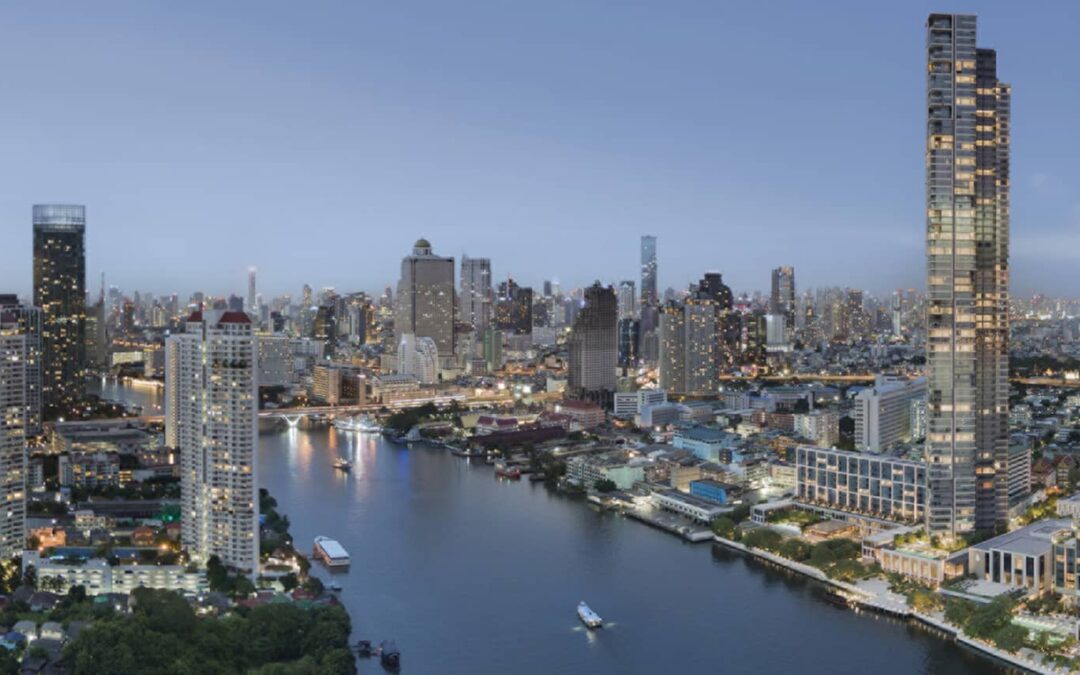
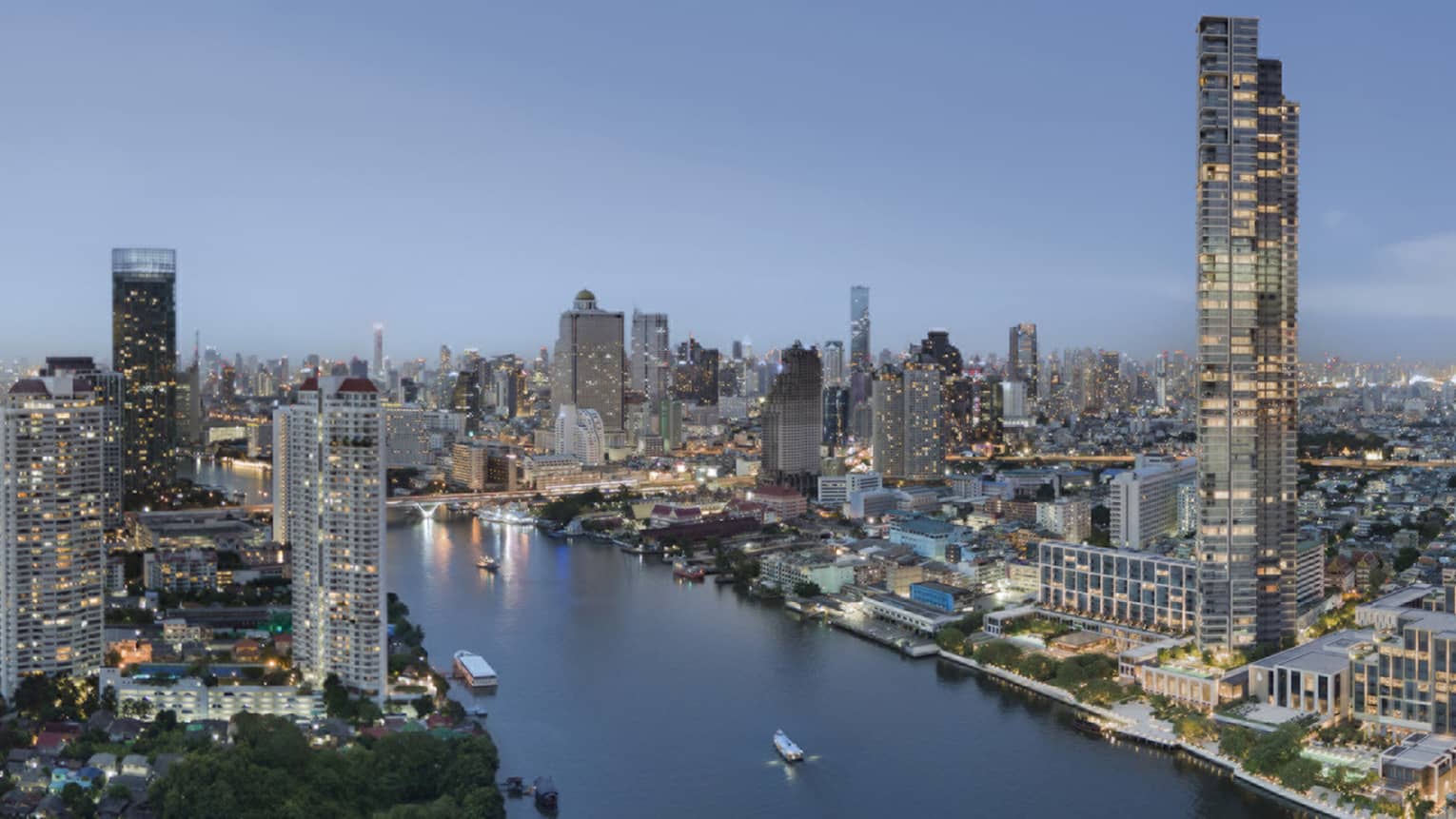
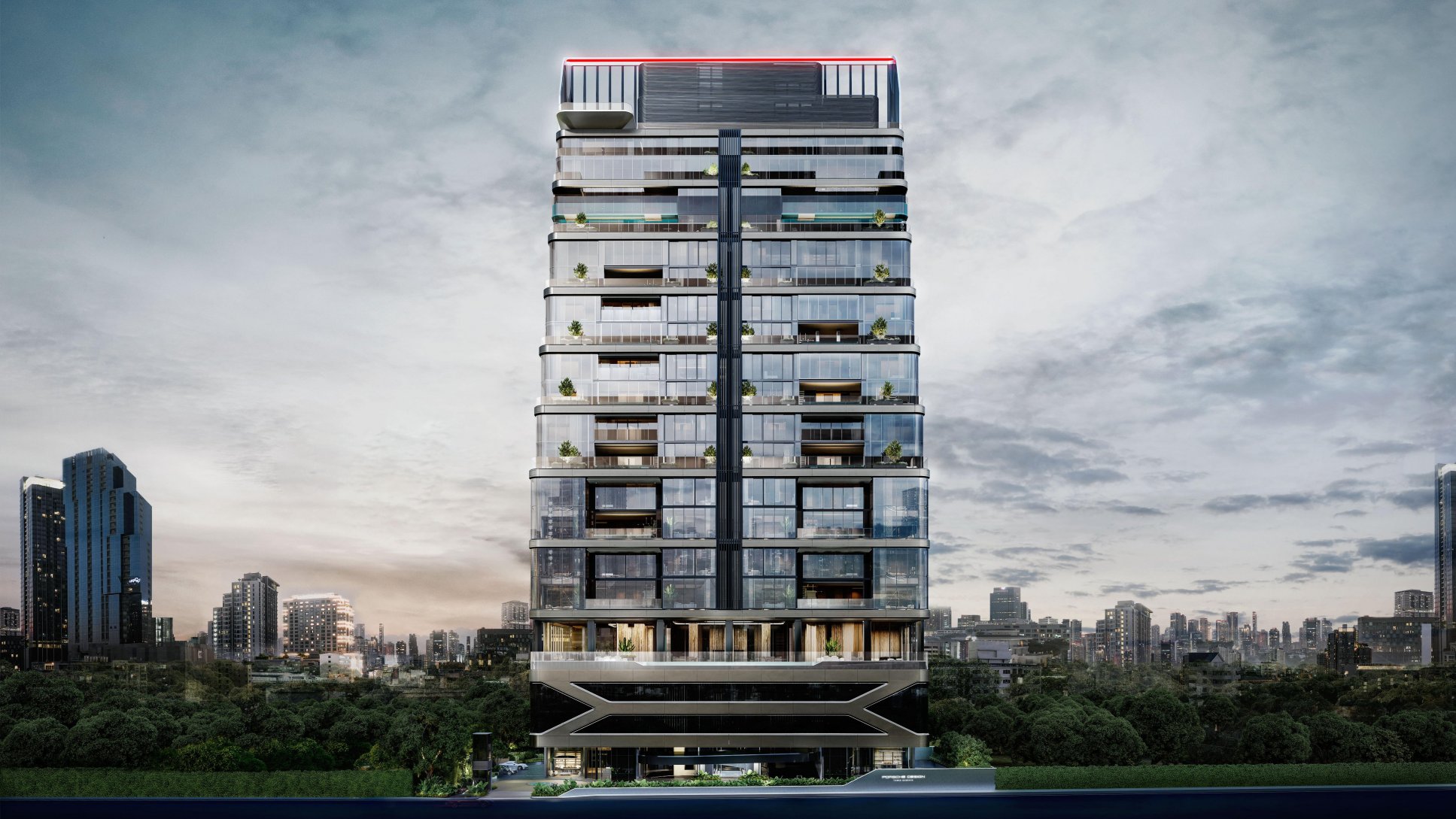
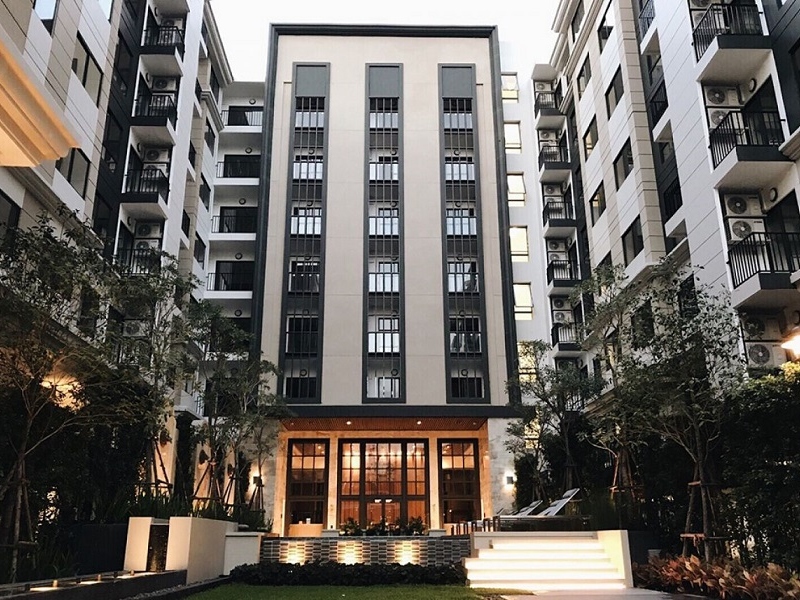
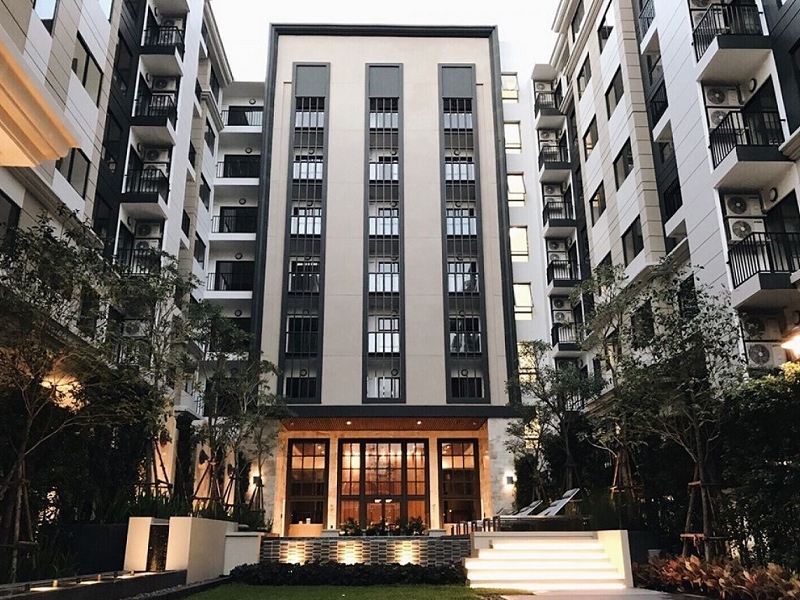
Branded residences and luxury condos in Bangkok can occupy the same premium streets, offer impressive amenities and target similar international buyers. The distinction is not simply that one carries a famous name. It lies in the operating model, service promise, contracts, ongoing cost and buyer audience.
A recognised hospitality brand can shape service expectations, but buyers still need to assess the residence as property.
A foreign buyer should compare both formats as long-term homes and assets rather than as showroom experiences. The stronger choice is the one whose location, unit, management and cost structure match the buyer’s actual use, holding period and exit strategy.
Define the product before comparing it
A branded residence usually operates under an agreement involving a hotel, hospitality, design or lifestyle brand. The brand may influence design standards, resident services, operating procedures and marketing. The exact role varies, so the name alone does not explain the product.
A luxury condominium can deliver premium architecture, large units, concierge-style staffing and extensive facilities without an international residential brand. Some are developed and managed by highly experienced Thai groups. Compare what is contractually and operationally provided rather than assuming one label guarantees superiority.
Understand who does what
Identify the developer, landowner, sales entity, condominium juristic person, property manager and brand operator. Ask how responsibilities change after completion and which organisation residents will deal with day to day. A strong launch team does not necessarily remain the long-term operating team.
For a branded project, have independent counsel review the agreements and disclosures relevant to the brand relationship. Understand its term, renewal arrangements, standards, fees and consequences if the relationship changes. Buyers should not assume a brand name remains attached forever under every circumstance.
Compare service you will actually use
Branded residences may offer hotel-informed concierge, housekeeping coordination, dining access, wellness support or other personalised services. Ask which services are included, which are charged separately, operating hours, booking rules and whether availability depends on an adjacent hotel.
A luxury condo may provide fewer named services but still offer efficient reception, security, engineering and resident support. For many owners, prompt maintenance and consistent management are more valuable than a long service menu. Rank services by realistic frequency of use.
Location, outlook and mixed-use connections can be as important as the brand attached to a residence.
Analyse recurring cost, not just purchase price
Request a clear schedule of common charges, reserve or sinking-fund contributions, service fees and pay-per-use items. Check how budgets can change and which facilities the residence is responsible for maintaining. Mixed-use shared areas require particular clarity.
Compare cost per year and over the intended holding period. A higher operating charge may be reasonable where staffing and service genuinely support the owner’s lifestyle and preserve the building, but it reduces net rental income and affects the pool of future buyers.
Study the exact unit
Premium shared spaces cannot correct an unsuitable home. Measure room proportions, furniture walls, storage, kitchen function, privacy, service access, laundry, lift journey and parking. Test light, heat, noise and the likelihood that the view remains protected.
Large branded residences may target owner-occupiers and long stays, while smaller luxury units may serve a broader leasing market. These are tendencies, not rules. Compare the exact floor plan with the household or tenant profile rather than relying on project positioning.
Test hotel and mixed-use relationships
An adjacent hotel, retail centre, office or park can add dining, security, convenience and destination value. It can also create traffic, events, shared access and operating complexity. Walk all routes between the residence, arrival areas, parking and public realm.
Ask which facilities are exclusive, shared or merely nearby. A marketing illustration can make separate components appear seamlessly connected. Legal rights, access rules, hours and future operating decisions determine how the relationship works after purchase.
Model rental fit carefully
A recognised brand can help an overseas tenant understand service expectations, yet rent still depends on unit size, location, supply, lease rules and affordability. Do not convert a brand premium automatically into a yield premium.
Check minimum lease terms, management requirements, furnishing standards, pet rules and any restrictions on rental activity. Estimate agency costs, vacancy, service charges, maintenance and replacement before comparing net outcomes with an unbranded luxury condo.
Wellness and hotel-style amenities need to be tested against actual use, operating cost and long-term maintenance.
Plan for resale from the start
Ask who is likely to buy the unit later. A distinctive branded residence may appeal to a focused international and domestic luxury audience, while a well-located luxury condo may have a broader pool. Neither is automatically more liquid.
Review competing inventory, developer-held units, future phases and the number of similar layouts. Consider how a buyer will judge the building after the launch period: management quality, condition, resident experience and transparent operating cost become more important than early publicity.
Review the brand and developer separately
The hospitality or lifestyle brand and the property developer contribute different capabilities. Research the developer’s completion record, build quality, defect handling and after-sales process. Separately, understand the brand’s experience in residences and the scope of its role in Bangkok.
Independent legal, tax, technical and financial review remains necessary in both formats. A global name does not replace title, foreign-quota, contract, remittance or physical checks, and an established local luxury developer should be assessed with the same discipline.
Comparison checklist
Identify every party and its long-term role.
Read the terms governing the brand relationship.
Price included and optional services separately.
Compare recurring charges over the full holding period.
Inspect the exact unit and access routes.
Clarify shared and exclusive mixed-use facilities.
Bangkok branded residences are attractive to many foreign buyers because they combine recognisable names, managed living, strong design narratives and a sense of global familiarity. For an overseas investor, that can reduce uncertainty. A buyer who understands Mandarin Oriental, Ritz-Carlton, Porsche Design, Banyan Tree, Kempinski or similar hospitality-led brands may feel more comfortable evaluating a Bangkok residence than an unfamiliar standalone condominium.
A hotel or lifestyle brand can support buyer confidence, but the premium still needs unit-level underwriting.
The investment question is not whether a brand is impressive. It is whether the premium paid for that brand is supported by rent evidence, owner-use value, service quality, building scarcity and a believable resale audience. Bangkok has enough branded and ultra-luxury stock for buyers to compare rather than buy only from emotion.
JLL’s 2026 Thailand real estate outlook described a more selective market in which growth opportunities remain present but are increasingly concentrated in assets aligned with long-term demand drivers. That is a useful lens for branded residences. The best examples can sit inside that flight to quality, but the weakest investment cases can simply be expensive units with a strong logo.
What the premium is meant to buy
A branded residence premium usually reflects several layers. The first is location: most high-end branded projects are in central, riverside or embassy-adjacent districts where land is scarce and daily life is easy for international residents. The second is design and finishing, often with a stronger focus on lobbies, arrival experience, wellness, private lifts, concierge areas and view corridors.
The third layer is service. Depending on the project, this may include concierge support, housekeeping options, hotel privileges, owner events, valet, engineering support, food and beverage links or membership-style benefits. The fourth layer is identity. A globally recognised brand can make a property easier to explain to a foreign spouse, adviser, tenant or future buyer.
Those benefits matter, but they are not equal across every project. A genuine service platform with consistent delivery is different from a licence agreement that mostly appears in marketing. Buyers should ask exactly what the brand manages, what the juristic person manages, what is optional, what is included in common fees and what happens if brand standards change over time.
Branded residences should be compared by location, management, service model and future resale audience.
How to test rental value
Rental underwriting should start with the likely tenant. Some branded residences fit corporate executives, diplomatic families, high-net-worth retirees, regional business owners or buyers using the unit part-time. Others are more owner-occupier products where rental evidence may be thin. A strong rent story should be supported by comparable leases, not only by the assumption that a brand will automatically command more rent.
Foreign landlords should compare the branded unit against nearby luxury non-branded condominiums with similar size, view, furniture and transport access. If the branded premium is 25 percent but the achievable rent premium is only 10 percent, the buyer needs another reason to pay the difference. That reason might be personal use, scarcity, long holding horizon or confidence in resale, but it should be explicit.
Vacancy also deserves conservative modelling. Premium tenants can be selective and may wait for the right layout or view. A beautiful branded unit with awkward furniture, weak kitchen storage or limited parking can underperform a simpler building that better matches the tenant pool.
Service costs and common fees
The service layer that makes a branded residence feel premium can also increase holding costs. Buyers should review monthly common fees, sinking fund obligations, optional service charges, repair responsibilities, insurance, parking costs, hotel-benefit terms and any restrictions on leasing. A higher fee is not automatically negative if it preserves the building and tenant appeal, but it must be built into the yield and resale model.
Ask whether facilities are exclusive to residents, shared with a hotel, open to members or used for events. Shared facilities can be valuable if managed well, but they may also affect privacy, operating costs and the feel of daily living. Buyers should walk the building at different times and ask current residents or agents how the service experience works after handover, not only during a sales tour.
Resale depth matters more than the logo
The resale audience for a branded residence is usually narrower than for a well-priced mass luxury condominium. The next buyer must value the brand, the address, the size and the total ownership cost. That does not make resale weak, but it means pricing discipline at entry is essential. A buyer who overpays for a trophy address may need a long holding period before the market catches up.
Resale evidence should be checked by building and by competing district. Look at completed transaction history where available, asking-price reductions, time on market, foreign quota position, nearby new launches and whether brokers can identify active buyers for that exact price band. The more specialised the unit, the more important it is to know the exit audience before purchase.
The more distinctive the concept, the more carefully buyers should test long-term demand.
What to ask before paying the premium
What services are included, optional or subject to separate charges?
How does the common-fee level compare with nearby luxury buildings?
Is there evidence that tenants pay more for this brand in this location?
Does the unit layout suit the target tenant or future resale buyer?
How much of the premium is location, design, scarcity, brand, view or furniture?
What happens to owner privileges if the hotel or brand relationship changes?
Is foreign quota available and will it remain available at transfer?
Investor takeaway
Bangkok branded residences can be compelling assets for foreign buyers who value clarity, service and global positioning. The strongest cases combine a proven address, durable building management, practical layouts and a brand that genuinely improves daily life. The weakest cases rely on prestige without enough rent or resale support.
IBP can help buyers compare branded Bangkok residences against non-branded luxury alternatives by price, lease evidence and exit logic. Read our investment analysis articles or contact IBP Real Estate for a buyer-focused shortlist.
Bangkok’s high-end residential market is giving foreign buyers a useful but selective signal in 2026: rents can remain resilient even when capital values are under pressure. JLL’s Q1 2026 Bangkok residential commentary reported that central business area luxury condo rents rose 0.3 percent quarter on quarter and 5.1 percent year on year, while capital values fell 1.3 percent quarter on quarter. That combination pushed market yields slightly higher to 5.4 percent in Q1.
Luxury rental demand is strongest where transport, office, lifestyle and school access overlap.
This does not mean every Bangkok luxury condominium is suddenly a yield bargain. It means buyers should separate the rent story from the resale story, then test both against the actual building, unit and tenant audience. A unit can rent well but still face slow resale if the purchase price is too ambitious. Another unit can have moderate rent but stronger exit logic because the location, layout and building condition are easier for future buyers to understand.
The practical reading for overseas investors is disciplined optimism. Bangkok remains a liveable, globally connected city with deep expatriate, business, healthcare, education and lifestyle demand. But the market is not rewarding careless buying. The best opportunities are likely to be in buildings where rental evidence is real, incentives are transparent and pricing already reflects softer buyer sentiment.
What the Q1 rent signal shows
JLL described demand as bottoming out and gradually recovering in Q1 2026, helped by discounts on existing projects in Thonglor and Phrom Phong. The firm also noted strong foreign-buyer interest in new launches, with some projects nearing foreign quota. That matters because foreign quota is not just a legal point; it can be a demand indicator in projects that genuinely attract overseas buyers.
At the same time, JLL reported that inventory clearance continued to pressure both primary and resale condo markets. For investors, the message is that rental demand and capital growth are not moving in a straight line. Tenants may still want flexibility and high-quality locations, while buyers remain cautious about price, completion pipeline, global conditions and local purchasing power.
Why rents can hold when prices soften
Rental demand can be more immediate than purchase demand. A family relocating for work may need a home near school and office within weeks. A regional executive may choose a serviced, well-managed condominium rather than commit capital to a purchase. A tenant testing Bangkok before buying may prefer a premium lease with flexibility. These groups can support rents even while buyers negotiate harder on purchase prices.
This is especially true in prime areas where daily life is efficient. Phrom Phong, Thonglor, Asoke, Ploenchit, Chit Lom, Silom, Sathorn and selected riverside addresses each serve different tenant pools. The strongest locations are not only fashionable; they solve daily problems such as commuting, schooling, hospital access, grocery routines, dining, airport links and weekend lifestyle.
Building quality and management decide whether a rent signal becomes a practical investment case.
What buyers should still check
A market yield is an average, not a promise. Foreign buyers should build a unit-level model with realistic rent, vacancy, agent fees, common fees, sinking fund exposure, furniture replacement, repairs, insurance, transfer costs and resale assumptions. A headline rent can disappear quickly if the unit needs expensive furnishing, sits vacant between leases or competes with many similar units in the same tower.
Buyers should also ask whether the rent is supported by actual signed leases or only by asking prices. The more comparable evidence an owner can collect before purchase, the safer the underwriting. Useful evidence includes same-building rents, renewal behaviour, tenant profile, lease length, furnishing quality, floor level, view, parking, pet rules and whether the building attracts corporate or individual tenants.
The two-bedroom lesson
JLL noted that two-bedroom units in the 60 to 100 sq.m. range gained strong interest from end buyers in recent launches. This is worth attention because it points to practical use. Compact luxury one-bedroom units can be easy to rent in the right location, but two-bedroom units may serve couples, small families, work-from-home tenants and executives who want a guest room or office. That wider use case can support both rental and resale demand when the layout is efficient.
Foreign buyers should not assume bigger is always better. Large units have a narrower tenant pool and higher absolute holding costs. The better test is whether the unit size, room count and monthly rent align with a clear tenant audience. If a two-bedroom has a weak second room, poor storage or an awkward kitchen, its size advantage may not translate into better demand.
How to read new supply
JLL reported that two luxury projects totalling 315 units completed in Q1, bringing total stock to 73,885 units, and expected about 1,000 units to complete in 2026 with presales nearing 84 percent. New supply can help tenants by adding choice, and it can pressure older buildings that have not maintained standards. It can also support buyer confidence when developers focus on proven districts rather than speculative locations.
For an overseas investor, new supply should be mapped against the target tenant. If several new premium buildings are completing in the same rental catchment, tenants may demand better furniture, sharper pricing or stronger facilities. If a completed building has lower entry pricing but strong management and location, the resale unit may still compete well.
A rent-led purchase still needs conservative vacancy, furnishing and resale assumptions.
A buyer checklist for 2026
Model rent from signed or recently achieved leases, not only advertised asking prices.
Compare same-building and nearby units by size, view, furnishing, floor and lease length.
Stress test vacancy, agent fees, repairs, furniture replacement and common fees.
Check foreign quota, title status and whether the building attracts repeat expatriate demand.
Treat price discounts as useful only when they improve both yield and resale logic.
Avoid overpaying for a view, brand or facility package that tenants will not price highly.
Investor takeaway
Bangkok luxury condo rents in Q1 2026 suggest that the tenant base remains selective but alive. Softer capital values can create room for better entry pricing, yet the safest investor response is not to chase yield in isolation. It is to buy a unit that can rent, hold and resell through several market conditions.
IBP can help foreign buyers compare Bangkok luxury condos by rent evidence, building quality and exit demand before reserving. Read our investment analysis guides or contact IBP Real Estate for a buyer-focused shortlist.
Thailand’s April export data gives foreign buyers another reason to watch the wider economy behind Bangkok property. Reports citing the Trade Policy and Strategy Office under the Ministry of Commerce said exports in April 2026 were worth US$31.583 billion, or THB1.022354 trillion, up 23.1 percent year on year and marking a 22nd consecutive month of growth. That is a strong headline, but property buyers should read it carefully rather than automatically.
Export momentum supports confidence most when it connects to jobs, services and corporate activity.
Exports matter because they support company revenue, employment, logistics, business services and investor confidence. Bangkok is not an export factory city in a narrow sense, but it is the centre for headquarters, banks, legal advisers, logistics managers, consultants, retail groups, hospitals, hospitality companies and regional decision-makers. When trade is resilient, those service layers can support residential demand in selected districts.
At the same time, exports are only one part of the story. Xinhua’s report on the same official data noted that imports rose faster in the first four months of 2026, creating a trade deficit. For property buyers, the balanced reading is that Thailand still has external demand strengths, while costs, supply chains and currency conditions need monitoring.
Why export strength is relevant to Bangkok property
Foreign buyers often focus on tourism, infrastructure and condo prices. Export performance adds another lens. A country that sells goods and services into global markets can build deeper business confidence than one relying only on visitor spending. Stronger trade can support logistics, banking, industrial estates, business travel, serviced apartments and professional hiring.
Bangkok benefits indirectly from that activity. Executives may not live beside factories or ports, but they often base themselves near offices, schools, hospitals, embassies, retail and airports. That is why areas with strong transport and daily convenience can remain relevant even when the economic news is national rather than local.
Trade, travel and logistics all reinforce Bangkok’s role as Thailand’s international gateway.
What drove the latest attention
The April data drew attention because the growth rate was high and because the expansion extended a long monthly run. The Government Public Relations Department also reported that agricultural exports rebounded in April 2026 after eight months of decline, with fruit exports up 17.9 percent and durian, rambutan and lychee showing particularly strong increases. That adds a useful reminder that Thailand’s economy is not only tourism and property; it has food, agriculture, manufacturing and trade channels that foreign investors should understand.
For Bangkok property, the point is confidence and diversity. A buyer choosing a long-term Bangkok asset should prefer a city supported by several demand engines: tourism, healthcare, education, trade, finance, retail, technology, embassies and regional services. Export momentum can contribute to that broader platform.
Where the property link is strongest
The export-property link is strongest in districts that serve professionals, regional managers and internationally mobile households. Sathorn, Silom, Rama IV, Phrom Phong, Asoke, Ploenchit, Chit Lom, Bang Na and selected riverside areas can all benefit from different parts of the business ecosystem. The right district depends on whether the tenant base is office-led, school-led, healthcare-led, logistics-linked or lifestyle-led.
Buyers should avoid turning macro data into a blanket purchase signal. A weak building does not become strong because exports grew in one month. The unit still needs a realistic rent, good management, sensible common fees, credible resale demand and a price that can be defended against comparable options.
Macro confidence should still be translated into building-level rental and resale checks.
A practical buyer reading
Treat export growth as a confidence signal, not a guarantee of condo appreciation.
Watch whether trade momentum supports hiring, office demand and business travel.
Focus on districts with transport, schools, healthcare, retail and airport access.
Model rent after vacancy, fees and furnishing, even when the macro backdrop looks positive.
Track import costs and inflation pressure because they can affect household budgets and business margins.
Investor takeaway
Thailand’s April export performance supports a constructive view of the country’s economic base, especially when combined with Bangkok’s role as the national business and services hub. For foreign property buyers, the message is selective confidence: use the macro signal to frame the market, then let district evidence and building quality decide the purchase.
IBP can help foreign buyers connect Thailand economy news with Bangkok district and condominium selection. Read our Thailand economy and investment updates or contact IBP Real Estate for a buyer-focused market discussion.
Foreign buyers often enter Bangkok with a purchase question: which condominium should I buy? A safer starting point is the exit question: who is likely to buy or rent this unit from me later, and why would they choose it over the alternatives? That is resale liquidity. It does not mean a unit will sell instantly. It means the asset has a credible future audience, enough comparable evidence and a story that remains clear when market conditions are less forgiving.
Resale liquidity starts with a location that future buyers can understand quickly.
Bangkok has many attractive condominium buildings, but not all are equally easy to exit. Some units look strong in a presentation but depend on a narrow buyer group. Others are less dramatic but sit in districts with proven transport, office, healthcare, school, retail or lifestyle demand. For overseas owners, liquidity deserves special attention because they may not be in Bangkok to manage a long resale campaign, repeated viewings or difficult negotiations.
The discipline is to judge a unit from the next buyer’s perspective. A foreign investor may accept a longer holding period, but the eventual buyer will still ask practical questions about price, building age, view, maintenance, foreign quota, transfer costs, rentability and daily convenience. The more easily those questions can be answered, the stronger the resale case becomes.
What liquidity means in Bangkok condos
Liquidity is not only about discounting. A cheap unit in a weak building can remain illiquid if buyers worry about maintenance, location, oversupply or poor layouts. A premium unit can be liquid if the buyer pool is deep enough and the price is supported by recent evidence. In Bangkok, liquidity is usually strongest where several demand groups overlap: Thai owner-occupiers, foreign buyers, local investors, expatriate tenants and corporate tenants.
That overlap is why central mass-transit districts, hospital corridors, international-school routes, office clusters and established lifestyle zones often remain easier to explain. A buyer does not need every demand driver in one address, but the unit should not depend on only one fragile reason. If the only story is future capital gain, the resale case is too thin.
Start with the future buyer pool
Before reserving a unit, list the realistic buyer groups. A compact one-bedroom near a BTS station may appeal to landlords and younger professionals. A larger family unit may need school access, parking, storage and a quieter building. A branded residence may appeal to high-net-worth buyers who value service and scarcity, but the common fees and service model must match that audience. A riverside unit may need a buyer who values views and destination living more than a short walk to office towers.
This exercise prevents a common mistake: buying a unit because it suits the first buyer’s holiday pattern but not the next buyer’s daily routine. The stronger test is whether the future audience can see the value in less than ten minutes. If the agent must explain too many compromises, liquidity is weaker.
Completed buildings reveal management quality, maintenance standards and actual buyer depth.
Compare the building, not only the district
District quality can support resale, but the building still matters. Buyers should check lobby condition, lift waiting times, common-area upkeep, parking, access control, juristic communication, sinking fund history, owner mix and rules on short stays or pets where relevant. These details affect tenant satisfaction and buyer confidence after the first impression fades.
Completed buildings give the clearest evidence. A buyer can inspect corridors, noise, views, facilities, repairs and tenant profile. Off-plan purchases require more caution because the future building condition is still an assumption. For off-plan units, buyers should focus on developer track record, payment schedule, foreign quota, construction progress, comparable completed projects and how many similar units may compete at completion.
Read comparable evidence carefully
A resale asking price is not the same as a resale value. Buyers should ask for recent transactions where available, competing listings in the same building, nearby alternatives and rental evidence after vacancy and agent fees. The most useful comparisons are similar unit sizes, floors, views, furnishing quality and transfer status. A high-floor corner unit should not be judged against a lower-floor unit with a blocked view unless the price difference is clear.
Foreign buyers should also check whether the building has an active resale market or only a few stale listings. A building with many owners trying to exit at similar prices can create negotiation pressure. A building with almost no comparable evidence can be attractive, but it also makes valuation harder. The right answer depends on why supply is available and whether demand is visible.
A practical liquidity checklist
Can the location be explained through transport, work, healthcare, school, retail or lifestyle demand?
Does the unit plan suit a clear buyer or tenant group?
Are there credible comparable sales or rentals rather than only asking prices?
Is the building well maintained and easy to inspect?
Will common fees, sinking funds and transfer costs be acceptable to the future buyer pool?
Is foreign quota available now, and likely to be relevant at resale?
Could the unit still compete if rent or resale pricing softens?
A strong exit case is usually built at purchase, before the buyer signs the contract.
Where buyers make liquidity harder
The biggest liquidity errors are usually made at purchase. Buyers overpay for furniture, choose an awkward layout, ignore a weak view, accept an inconvenient walk, buy in a building with poor upkeep or assume that a future infrastructure story will solve every issue. These errors may not matter during a holiday stay, but they matter when a tenant compares alternatives or a resale buyer asks for a discount.
Another error is buying too personally. Bangkok can be highly liveable, and personal enjoyment is a valid reason to own. But if the property is also an investment, personal preference should be balanced against future market logic. A unit can be beautiful and still have a narrow resale audience. A unit can be understated and still be easier to exit.
Buyer takeaway
Resale liquidity is a practical risk-control tool for foreign buyers. It forces the purchase decision to account for the next buyer, the next tenant and the next market cycle. In Bangkok, the best liquidity cases combine clear location logic, credible building management, usable layouts, comparable evidence and conservative pricing.
IBP can help overseas buyers compare Bangkok condos by exit demand, rental evidence and building-level risk before they reserve. Read our resale and exit strategy guides or contact IBP Real Estate for a disciplined buyer shortlist.