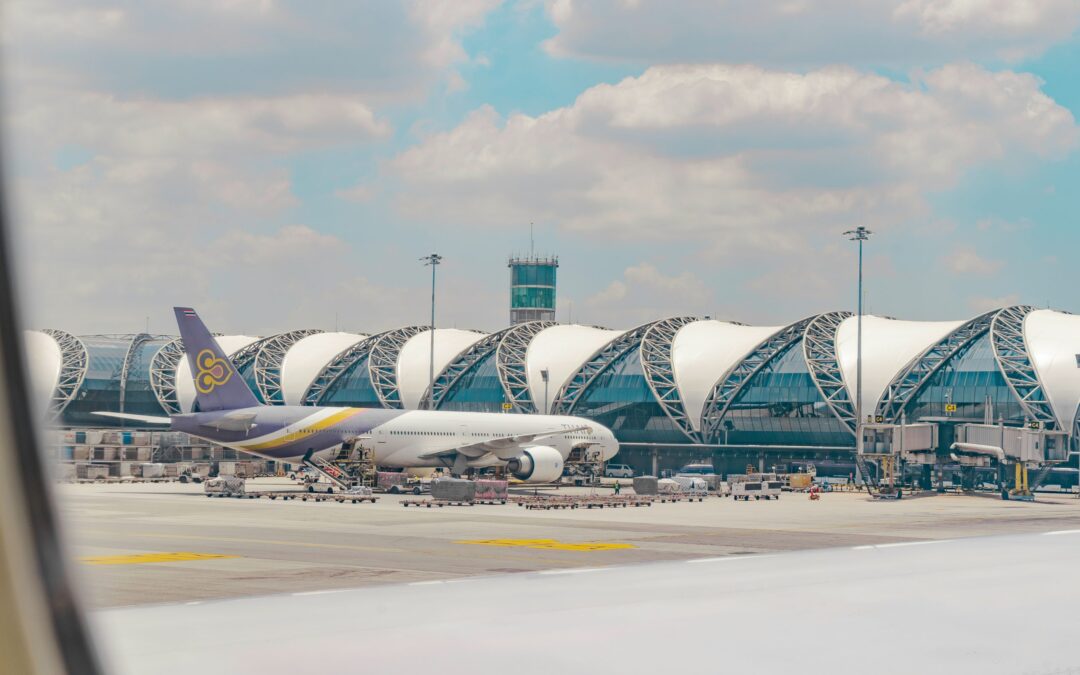
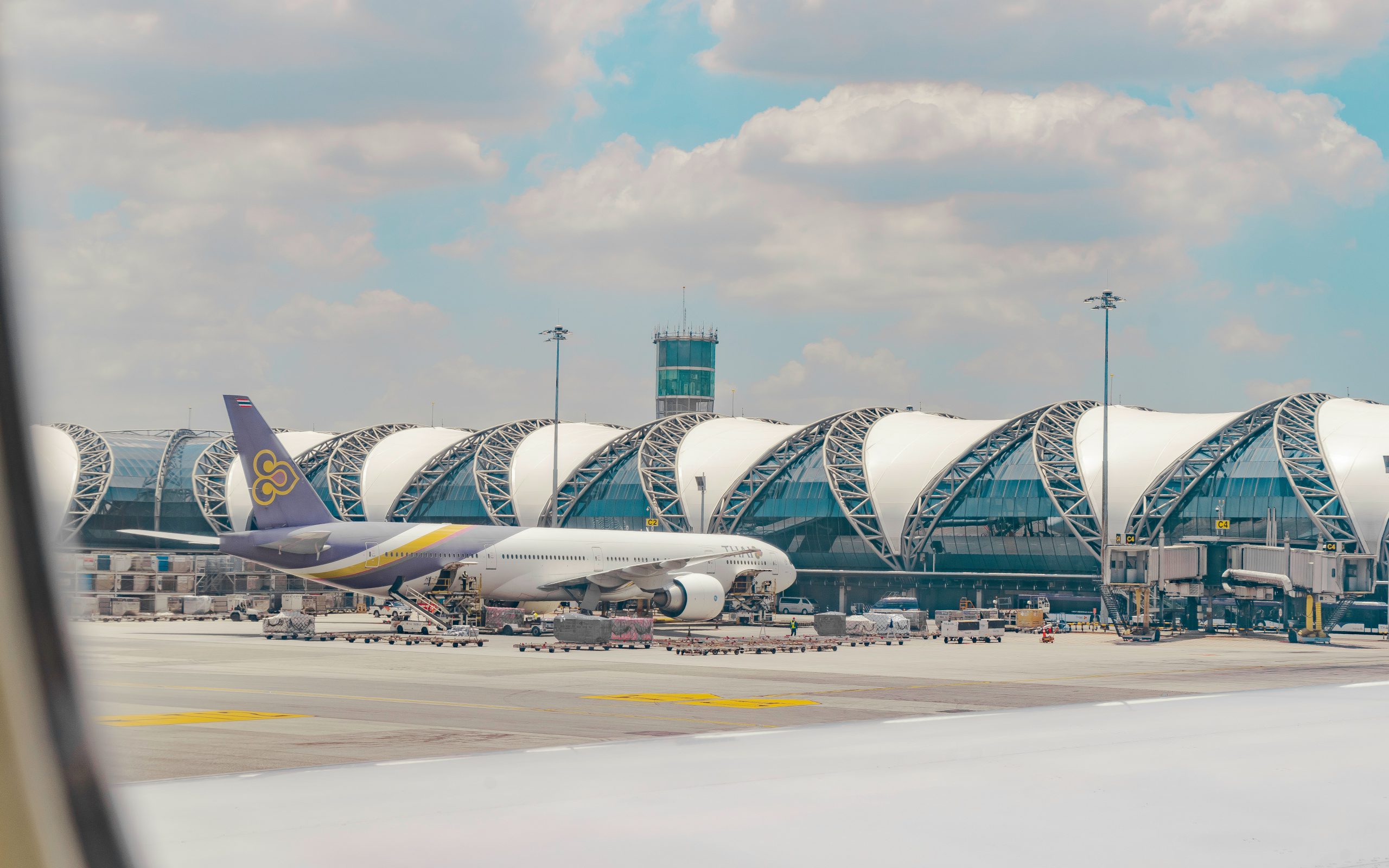
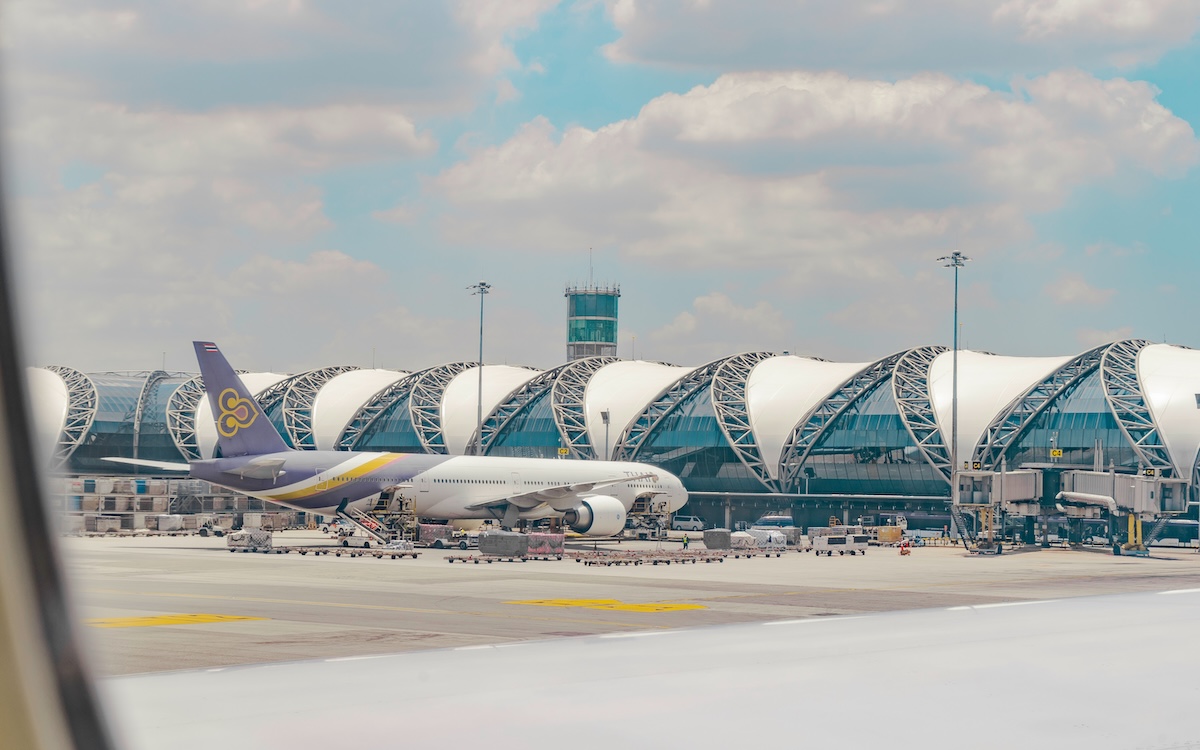
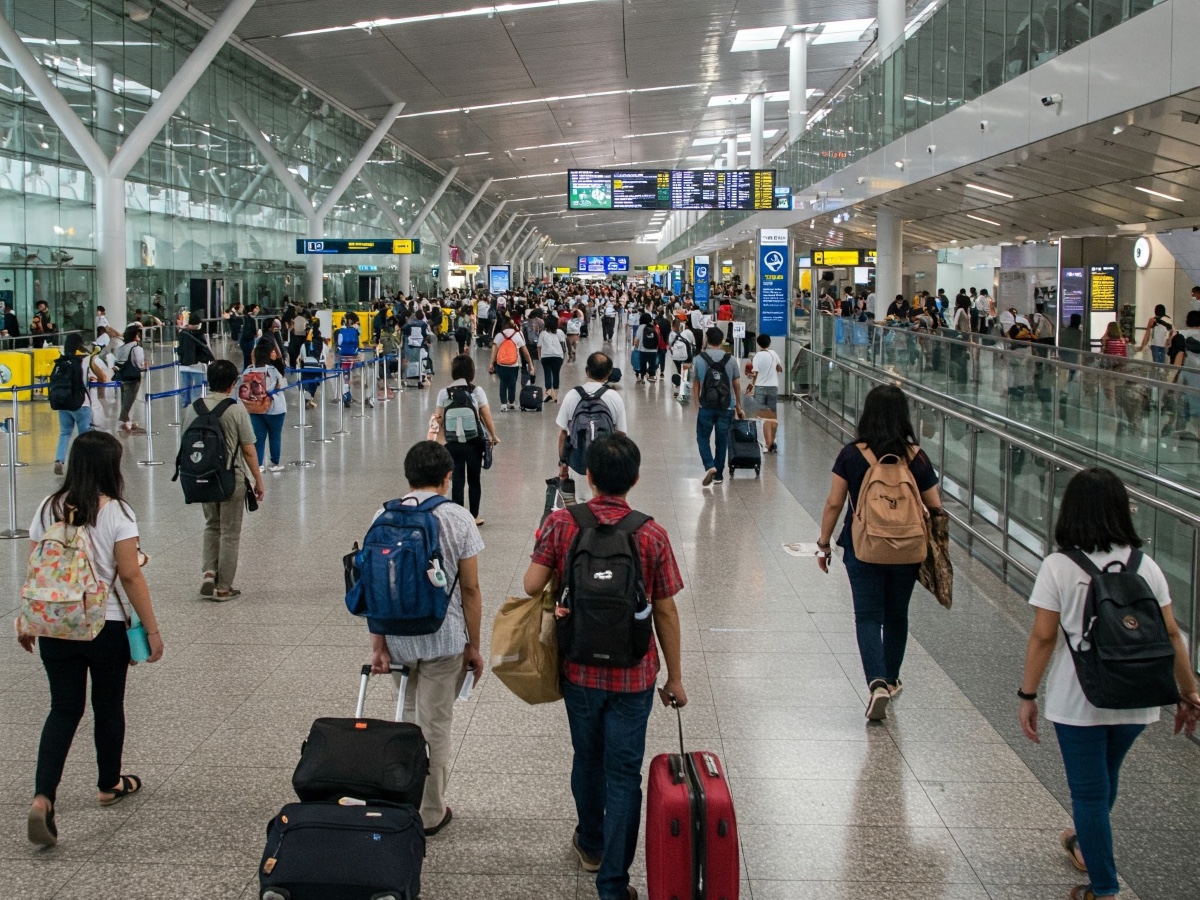
EVA Air’s new Washington DC-Taipei service gives Thailand another useful long-haul access signal. TAT Newsroom reported that the Tourism Authority of Thailand welcomed the scheduled route because it strengthens one-stop travel from North America to Bangkok and destinations across the kingdom.
New long-haul access can strengthen the practical travel case for Bangkok as a property base.
For Bangkok property buyers, the point is not that one route changes condo values by itself. The more useful lesson is connectivity. Bangkok’s appeal to foreign residents and investors depends partly on how easy Thailand is to reach, how well regional travel works, and whether global visitors can imagine the city as a practical base rather than a remote holiday destination.
What changed
The Washington DC-Taipei service started on 26 June 2026 and operates four times weekly. TAT described it as an additional North American gateway for travellers connecting through Taipei to Thailand. The route is operated with a Boeing 787-9 Dreamliner, and Washington DC joins EVA Air’s wider North American network.
The same TAT update noted EVA Air’s existing Thailand-Taiwan connectivity, including Bangkok-Taipei services during the airline’s Summer 2026 schedule and onward access to Chiang Mai and Phuket. That network context matters because Thailand’s tourism and property appeal are not built around a single city pair. They depend on repeatable, multi-city access.
Air connectivity supports Bangkok’s role as a regional base for visitors, residents and investors.
Why North America access matters
North America is a long-haul market. Travellers need confidence that Thailand is reachable without excessive friction, especially if they are planning longer stays, wellness trips, family visits, business travel or exploratory property trips. More gateway options can make Thailand easier to include in a resident or investor’s travel pattern.
For Bangkok, this supports the city’s role as the arrival point, service hub and decision centre for many foreign buyers. A property tour, hospital visit, school search, business meeting or relocation trip often begins with flight convenience. Better one-stop access does not replace due diligence, but it can reduce practical barriers.
Connectivity is a property confidence factor
Foreign buyers often compare Bangkok with other regional cities. Air access is part of that comparison. A globally connected city is easier for owners to visit, easier for tenants to reach, and easier to explain to future buyers. This is especially relevant for second-home owners, regional executives, consultants, retirees and families who travel regularly.
Airport convenience also affects district choice inside Bangkok. A buyer who flies often may value direct road access, Airport Rail Link connections, expressway routes, luggage-friendly lobbies and buildings that can support lock-up-and-leave ownership. The macro connectivity signal should eventually translate into practical neighbourhood questions.
Foreign buyers should connect airport access with district choice, daily routines and resale positioning.
What buyers should not overread
An airline route is not an investment guarantee. Buyers should not pay more for a weak condo because a new service exists, and they should not assume tourism headlines automatically produce higher rent. Property still depends on entry price, tenant profile, building management, unit condition, ownership costs and exit liquidity.
The better reading is confidence-based. Thailand continues to promote long-haul access, quality travel and destination depth. Bangkok benefits when the wider travel system supports repeat visits, longer stays and easier exploration. Investors should use that context to support, not replace, building-level due diligence.
How to use the signal
Buyers can treat connectivity news as one part of a wider checklist. Is Bangkok becoming easier to reach from the buyer’s home region? Does the chosen district make airport travel practical? Can the building support overseas ownership? Is the unit attractive to tenants who travel often or work regionally? Those questions connect the headline to an actual property decision.
For North American buyers, the Washington DC-Taipei route may be another option to reach Thailand. For other foreign buyers, the principle is the same: Bangkok property is strongest when the city remains globally connected, regionally useful and easy to revisit.
Buyer takeaway
EVA Air’s Washington service is a positive connectivity signal for Thailand’s long-haul travel market. For Bangkok property, it reinforces the city’s role as a reachable, service-rich base for foreign residents and investors. The right response is disciplined: connect air-access confidence with district choice, ownership planning and careful unit selection.
IBP helps foreign buyers translate Thailand tourism, infrastructure and economy news into Bangkok property decisions. Read more in our Thailand economy and investment news archive or contact IBP Real Estate for a market brief.
Nana BTS is one of Bangkok’s most internationally recognisable Sukhumvit locations. It sits between Phloen Chit and Asoke, with hotels, serviced apartments, restaurants, nightlife, offices, medical access, embassies and rail links all close by. For foreign buyers, that visibility can be useful, but it also means the condo choice needs discipline.
Nana and Sukhumvit 11 need careful checks on access, noise, hotel activity and tenant fit.
The best Nana-area purchases are not simply the nearest units to the station. Buyers should compare street character, lobby control, noise, building age, tenant profile, unit orientation, parking, foot traffic and resale audience. Nana can work for rental investors and owner-occupiers, but the location rewards precise selection rather than generic confidence in central Sukhumvit.
Why foreign buyers consider Nana
Nana offers centrality. Residents can move quickly along the BTS Sukhumvit Line, reach Asoke’s MRT interchange, access Phloen Chit and Chit Lom, and use taxis or ride-hailing for hospitals, embassies, malls and offices. For visitors and new arrivals, the area is easy to understand because it is close to hotels, dining and daily services.
That accessibility can support rental demand from short- and medium-term expatriates, consultants, regional workers and tenants who want a central base without committing to the most family-oriented parts of Sukhumvit. However, demand is not automatic. Tenants will still compare the building, furniture, lift speed, security and street feel.
Side-street position can change the feel of a Nana-area condo as much as the BTS distance.
Street-by-street checks matter
Nana is not one uniform district. Sukhumvit 11, Sukhumvit 8, Sukhumvit 12 and smaller connecting streets can feel very different. Some routes are active late into the evening. Others are quieter or more residential. A buyer should walk the exact route from BTS to lobby during the day, after work and at night, not only during a scheduled viewing.
Check pavements, lighting, noise, traffic, motorcycle-taxi points, hotel entrances, bar frontage, construction and pickup areas. A building that is convenient for one tenant type may feel too busy for another. Matching the route to the target occupier is part of the investment decision.
Noise and privacy need careful testing
Central Sukhumvit can be lively, and Nana is no exception. Buyers should open windows and balcony doors during inspection, listen for road noise, music, generators, nearby venues, construction and elevated rail exposure. Higher floors can help, but they do not solve every sound issue.
Privacy also matters. Some units look toward hotels, serviced apartments, office buildings or neighbouring towers. If residents keep curtains closed most of the time, the unit may feel less spacious than the floor plan suggests. Orientation, window position and distance to adjacent buildings should be checked alongside the view.
Building management, lobby control and unit orientation are central to the Nana investment case.
Building management can decide the outcome
In an active district, building management is especially important. Lobby control, visitor registration, lift security, delivery procedures, parking access and common-area cleanliness all affect resident confidence. A condo can be centrally located but still underperform if the building feels loose, tired or poorly managed.
Investors should ask how the building handles tenants, contractors and visitors. Owner-occupiers should pay attention to the lobby atmosphere and common areas at different times. The more active the neighbourhood, the more the building itself needs to create calm and predictability.
Tenant profile and unit choice
Compact one-bedroom units may appeal to single professionals, consultants and residents who value central transport more than large internal space. Larger units need a clearer story, because families may prefer quieter streets, school access or parks. A two-bedroom Nana unit can work, but only if it solves a real resident need and is priced against nearby alternatives.
Furniture quality is also important. In a district with hotels and serviced apartments nearby, tenants compare convenience and presentation quickly. A tired unit may need to compete on price. A well-kept unit with good storage, practical appliances and a calm outlook can stand out.
Resale positioning
Nana’s resale story is central location, BTS access and international recognition. The risk is that buyers may discount units affected by noise, poor access, weak management or overly busy surroundings. Foreign investors should ask whether the unit would be easy to explain to a future buyer who is comparing Asoke, Phloen Chit, Chit Lom, Ekkamai and Thong Lo.
A strong resale unit should have a defensible building, a tolerable route, a layout that makes sense and a price that reflects both convenience and friction. Paying only for the station name can leave too little margin for the area’s practical trade-offs.
Buyer checklist
Walk the exact BTS-to-lobby route at several times.
Check night-time noise, hotel activity and venue exposure.
Assess lobby control, lift security and visitor procedures.
Match the unit size and furniture level to a realistic tenant profile.
Compare resale logic with Asoke, Phloen Chit and other Sukhumvit options.
Price any convenience premium against the building’s actual strengths.
Buyer takeaway
Nana BTS can be a useful Bangkok condo location for foreign buyers who want central Sukhumvit access and an internationally familiar rental story. The right unit needs more than proximity to the station. It needs a manageable street route, controlled building environment, realistic tenant fit and a clear resale case.
IBP helps foreign buyers compare Bangkok districts by transport, tenant demand, building quality and lifestyle fit. Browse our district guides or contact IBP Real Estate for a Sukhumvit shortlist.
InvestBangkokProperty.com held our quarterly Bangkok Property Tour on the 28th to 30th September 2018. It was a 3-day tour from Friday to Sunday. There were two things different about this tour as compared to previous tours.
1) We were not going to use private transportation. We took public transportation and relied heavily on the BTS and MRT train lines.
2) We were doing this in collaboration with two bloggers, Wilbur from Aroi Mak Mak and Eddie from Stranger in Bangkok.
Day 1 (Friday 28th September 2018)
We gathered at the information counter of Terminal 21. We then proceeded to eat at a noodle stall just next to Terminal 21. After which we had dessert at Paris Miki which is just a stone’s throw away from Terminal 21.
Next, we headed off to take the MRT to Huai Khwang to visit the All Inspire showflat. All Inspire is an award-winning developer and the showflat is near Huai Khwang MRT Station. When we turned out of the MRT Station, we went past the actual site of XT Huai Khwang which is right next to the MRT station. XT Huai Khwang is developed by Sansiri.
At the All Inspire sales gallery, we viewed the show unit of The Excel Ratchada 18. All Inspire produces good quality developments but their developments are not the closest to the train stations. However, their developments are extremely affordable for the average property investor.
Next, we travelled one MRT station to Thailand Cultural Centre to view Noble Revolve 2 which is just next to Thailand Cultural Centre MRT Station and the Stock Exchange of Thailand. Noble Revolve 2 is a completed project.
We then walked to Phra Ram 9 MRT Station instead of taking the train. We passed by the business district. XT Huai Khwang’s sales gallery is located at Pakin Building which is just opposite Central Plaza Grand Rama IX.
Our next stop was Chewathai Residence Asoke by Chewathai. This is a completed development and the unique thing about this development is that all the units are 1-bedroom loft units.
Our final stop was The Line Ratchathewi by Sansiri. The condominium is located about 3 minutes (walk) from Ratchathewi BTS Station.
Here is a video of the highlights for Day 1:
Day 2 (Saturday 29th September 2018)
We started our day with breakfast at Luka Moto (thanks Eddie from Stranger in Bangkok for the introduction!) at The Taste Thong Lor, located at Thong Lor Soi 10. If you are looking for a nice cafe in Thong Lor, do try out this cafe.
Our first stop of the day was to visit the sales galleries of Noble BE 19 and Noble BE 33 by Noble Development. The sales gallery is located at the lobby of Noble Remix which was right next to Thong Lor BTS Station. Noble BE 19 is located close to Terminal 21 and Noble BE 33 is located close to Phrom Phong BTS Station and just around the corner from The EMQuartier.
Next, we went to the sales gallery of The ESSE Sukhumvit 36 and EYSE Sukhumvit 43 by Singha Estate. The ESSE Sukhumvit 36 is located right next to Thong Lor BTS Station and EYSE Sukhumvit 43 is located within walking distance to Phrom Phong BTS Station.
We then took the BTS train to the next BTS Station which is Ekkamai BTS Station. We viewed a development just behind Gateway Ekkamai called Siamese Exclusive 42 by Siamese Asset.
After which we convened for lunch and we had lunch at Gateway Ekkamai. Wilbur from Aroi Mak Mak introduced us to have Izakaya at a Japanese restaurant called Nagiya. It was really good. If you are in Ekkamai, do try out the food at this restaurant.
After lunch, we headed to On Nut BTS and took the shuttle bus to Habito Mall within the T77 Community. The T77 Community is a guarded and gated township developed by Sansiri. It is very unique and one of its kind. You can read more about the T77 Community here:
At Habito Mall, we visited the sales gallery of Kawa Haus by Sansiri.
After Kawa Haus, Sansiri provided us with a van to our next destination, the sales gallery of Oka Haus which is located along Rama 4 road. This was the one and only instance when we took private transportation to our next destination!
After Oka Haus, we were done for the day! We had dinner at Suan Plearn Market which is a stone’s throw away from Oka Haus.
Here are the highlights from day 2:
Day 3 (Sunday 30th September 2018)
Kevin had to fly off to meet a client in Singapore (He was our assigned videographer and thus we did not have enough footage on the 3rd day to make a highlight video) so it was just Daryl along with Wilbur leading everyone for the day!
Our first stop was to view Noble Ploenchit by Noble Developments. Noble Ploenchit is located right next to Ploenchit BTS Station. Most of the participants were impressed by the proximity to the BTS Station. This development is really next to the train station!
For lunch, we went to Eathai Food Court at Central Embassy Shopping Mall which was linked by sky bridge from Noble Ploenchit as well as Ploenchit BTS Station. Prices were rather expensive and surprisingly, the food court was packed! Just shows the spending power of the people who live in the area.
After lunch, we visited the sales gallery of XT Phayathai by Sansiri which is about a 5-minute walk from Phayathai BTS Station. Phayathai BTS Station is two stations after Siam BTS Station.
Our last stop for the day and also the tour was at Park Origin Phayathai which was also very near Phayathai BTS Station. In fact, it is nearer to the BTS Station than XT Phayathai. The development is developed by Origin Property and the architect for the project is Singapore architecture firm, Ong and Ong.
And that concludes our 3 day Bangkok Property Tour!
For details of our next property tour, visit our link at:
Hong Kong investors looking for a stable rental income instead of parking their money in a bank are setting their sights on Southeast Asian property, according to industry experts.
Demand for investment property in the region – where prices are a fraction of those in Hong Kong – has stayed firm, with total transactions of completed properties up 19 per cent year on year in the first half of 2017 to around USD 61 billion, according to Colliers International.
One such investor is Gordon Cheung, who bought a flat in Life Asoke Rama 9, a project in Bangkok jointly developed by AP (Thailand) and Japan’s Mitsubishi Estate Group.
“Bangkok’s property prices are just about a quarter of Hong Kong’s. The location is also great, at the heart of Bangkok’s central business district near the Chinese embassy,” Cheung said.
More than 95 per cent of the project’s 154 units allocated to the Hong Kong market sold out within two days of going on the market. The average price for Life Asoke units on offer was 12,542 Thai baht (HKD 2,952) per square foot, compared with the average price of HKD 11,762 per sq ft in Hong Kong.
Vittakarn Chandavimol, chief condominium officer of AP (Thailand), said they were targeting investors.
“Foreign buyers of Thai properties mostly want a stable rental income, unlike those who buy properties in Western countries for their children’s education. Average rental yield of Bangkok’s property is 5.15 per cent,” he said. “As only 49 per cent of flats can be sold to foreign buyers, the supply to each market is limited.”
Chandavimol said the company is trying to enter the Chinese market, despite the tight capital controls making it difficult to get money out of the country.
“Chinese citizens are limited to exporting USD 50,000 per person, per year. But buyers can split payments, not to mention the fact a lot of flats are cheaper than that. Prices of high-floor studios in this project start at HKD 670,000,” he said.
The focus of Chinese investment in foreign property seems to be shifting from the US to Asia, says Colliers.
“Despite capital controls, we expect continued Chinese interest in APAC [Asia Pacific] gateway cities in the near term. Thereafter we foresee material Chinese investment in Belt and Road markets in Southeast Asia. This should be a long-term trend,” it said.
Chandavimol believes Thailand is the most attractive destination for Hong Kong investors eyeing foreign property.
“Properties in developed regions like Japan, Beijing and Shanghai are too expensive. Thailand has the best infrastructure among Southeast Asian countries, whose economies are catching up fast,” he said.
Meanwhile, Kuala Lumpur’s Sentral Suites project, which is 10 minutes away from the city centre, sold more than 60 per cent of the 30 units allocated to Hongkongers.
Hong Kong people have started to notice the strong economic growth among the region’s countries, said Binoche Chan, chief operating officer of List Sotheby’s International Realty, Hong Kong.
“For Kuala Lumpur, gross rental return is about 4 per cent to 6 per cent. For Singapore it’s about 3 to 4 per cent,” Chan said.
“Malaysia is now much more popular than Singapore. This may change as we see the Singapore market touched the bottom – it can rebound at any time.
“As much as 90 per cent of Kuala Lumpur’s buyers are investors, while in Singapore it’s only 35 per cent. The rest are buying for their own use.”
But Chan also highlighted some risks.
“Malaysia has foreign exchange control so foreigners can only purchase property priced above 1 million Malaysian Ringgit (HKD 1.85 million). Malaysians have a variety of choices under 1 million Malaysian Ringgit so reselling the expensive properties to locals is difficult,” Chan said. “Meanwhile, political instability and corruption problems prevail.
“For Singapore, foreigners must pay an extra 15 per cent in stamp duty.”
Foreigners will receive a loan-to-value ratio of 60 to 70 per cent for purchasing properties in Kuala Lumpur for up to a 35-year mortgage, and a ratio of 70 per cent for Singapore and Thailand.