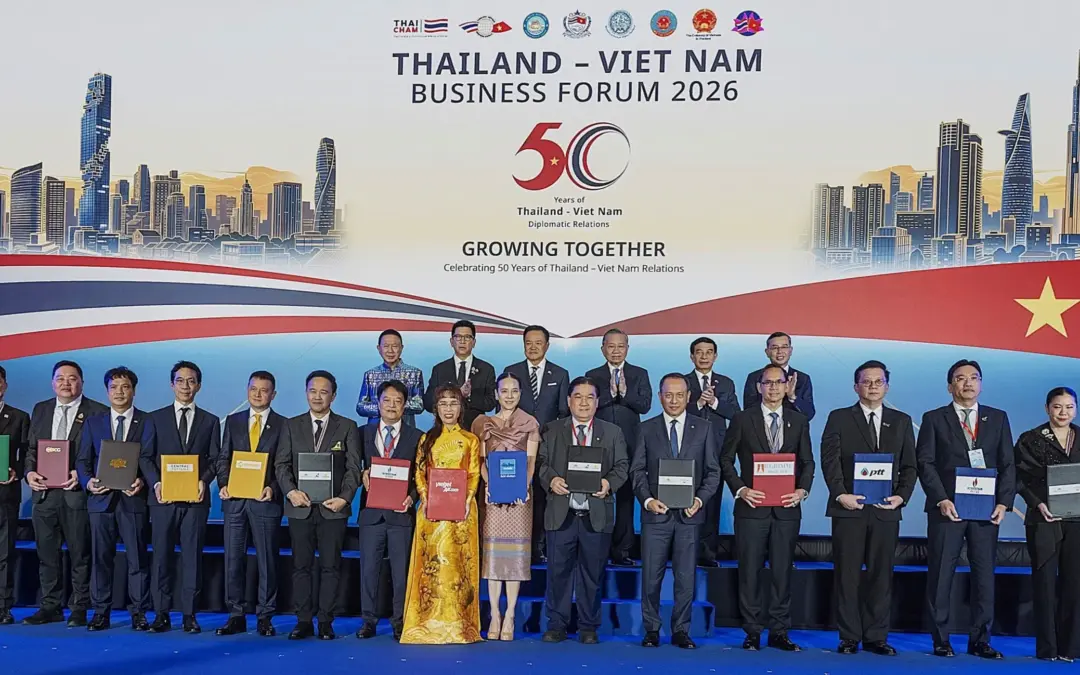
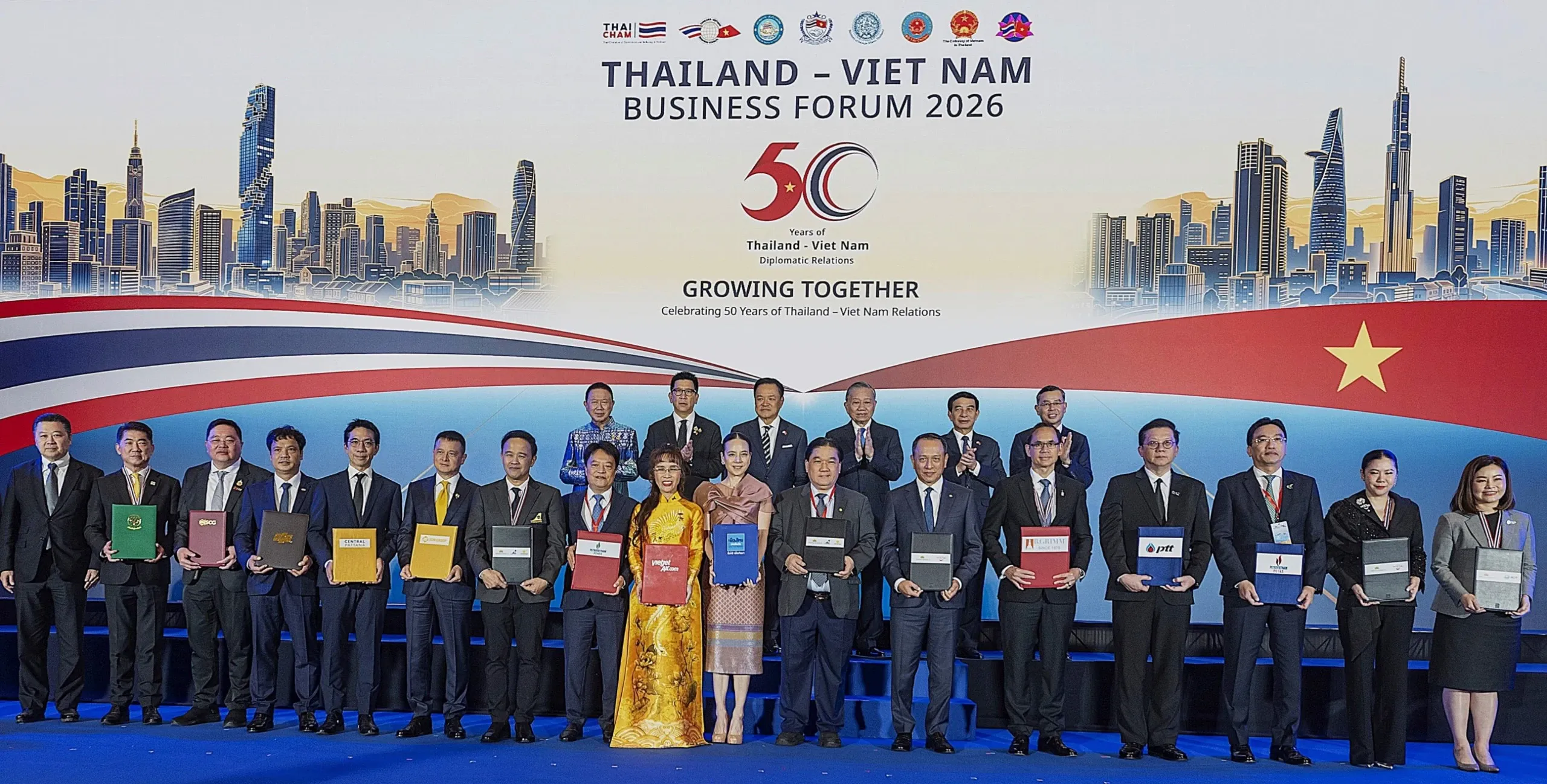
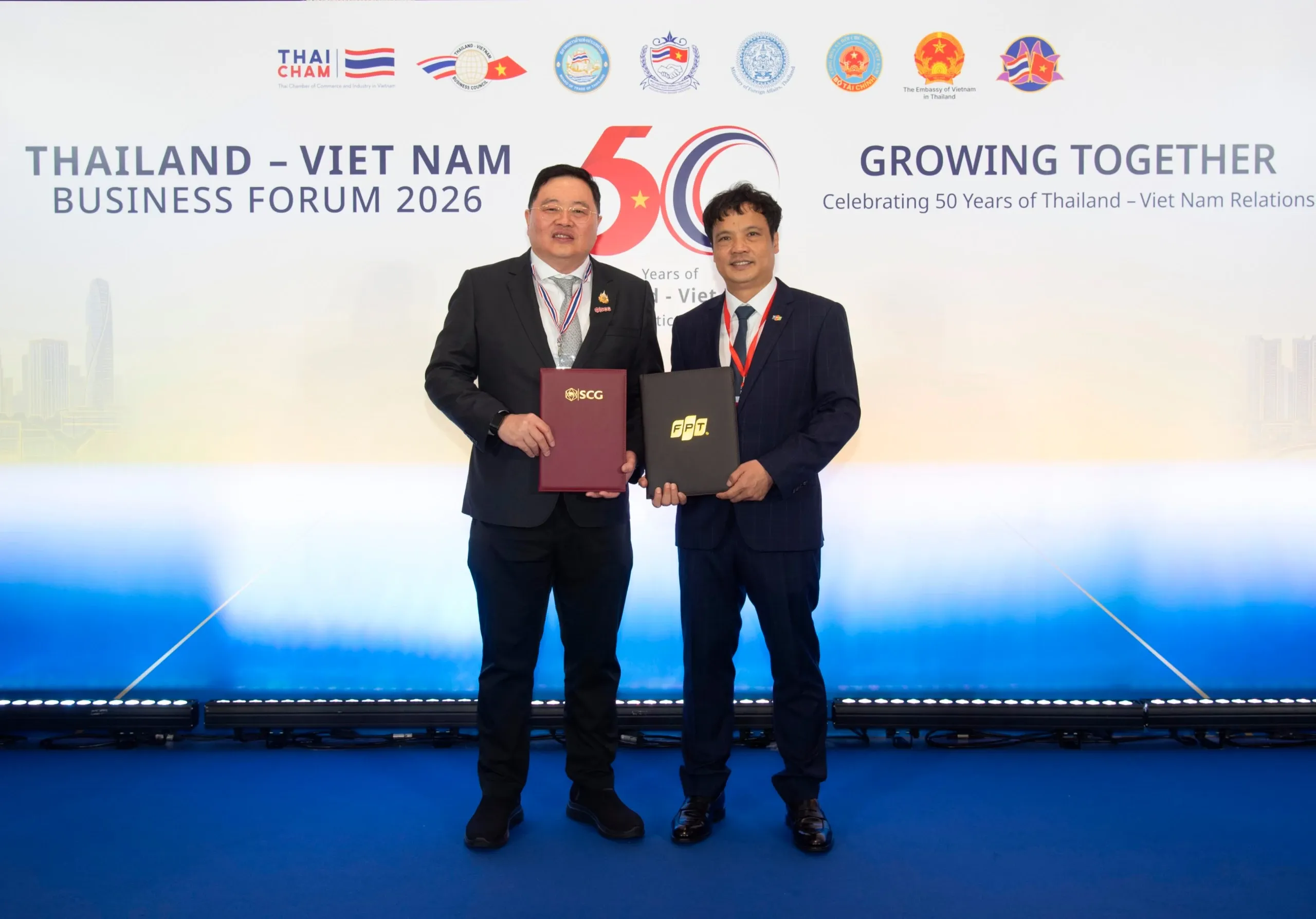
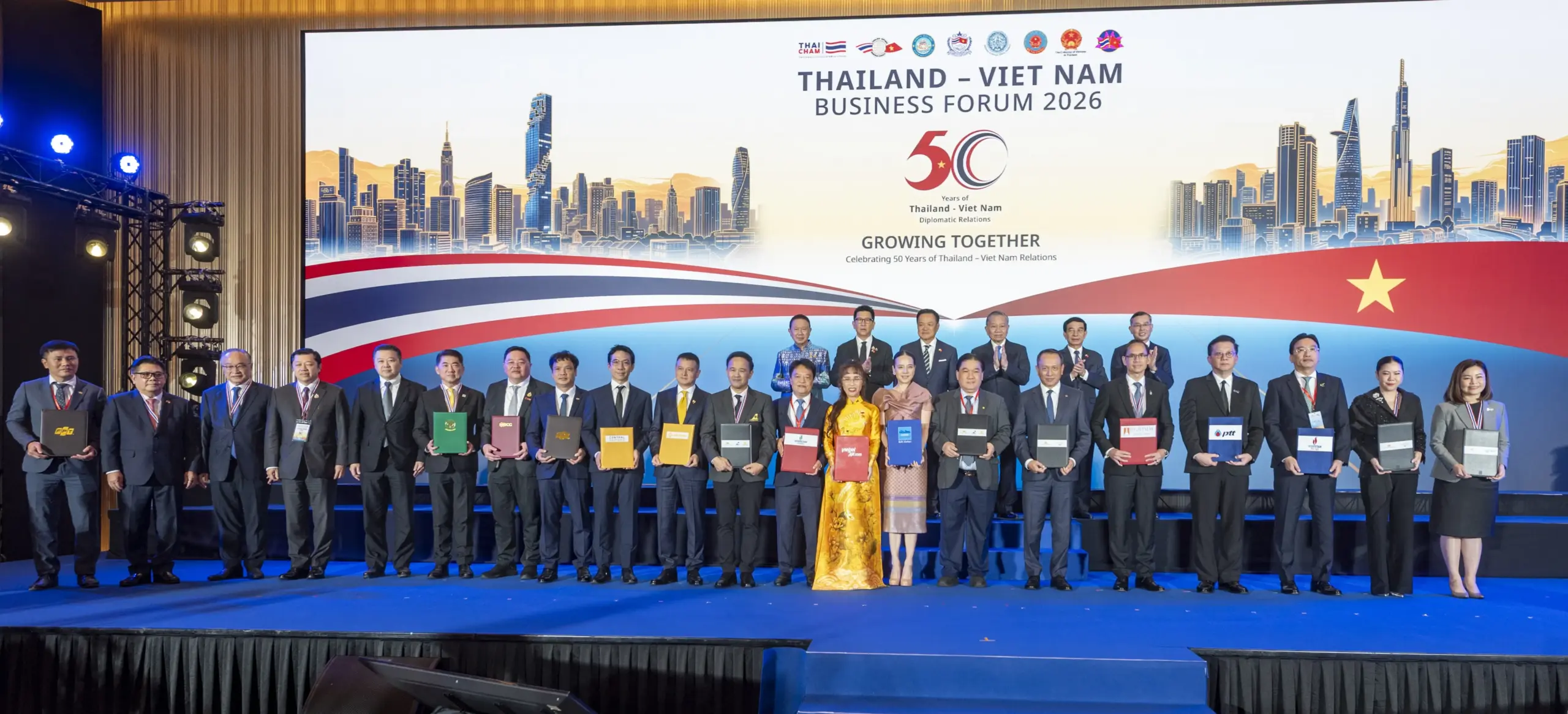
SCG and FPT’s 2 June 2026 AI and digital transformation MOU in Bangkok is not a property announcement. That is precisely why it is useful for foreign condo buyers to watch. The strongest Bangkok property case is supported by a broader city economy: regional companies, professional services, industrial groups, technology partners, banks, consultants and executives using Bangkok as a place to make decisions.
FPT’s official release said the agreement with SCG will explore AI-driven industrial transformation, integrated digital platforms, enterprise process excellence, digital infrastructure, security and governance across SCG’s business ecosystems. It also placed the signing in Bangkok during a period of strengthening Vietnam-Thailand business ties.
SCG and FPT framed the agreement as part of a wider shift toward practical AI-led business transformation.
Why this matters to property buyers
Foreign buyers sometimes look for a single headline to justify a purchase: a new mall, a new station, a new company investment or a tourism figure. A more durable reading is cumulative. Bangkok becomes more attractive when many different forms of high-value activity keep choosing the city, including board meetings, technology partnerships, regional offices, finance, logistics, healthcare, hospitality and education.
The SCG-FPT announcement points to corporate modernisation rather than tourism. That matters because Bangkok’s premium rental and resale markets need more than visitors. They need executives, specialists, consultants, project teams and internationally mobile households who can justify living close to offices, transport, hospitals, schools and lifestyle districts.
A digital economy signal, not a condo guarantee
The announcement should not be read as a promise that condo prices will rise. It does not identify a residential district, a housing programme or a tenant relocation plan. The correct property reading is more measured: Thailand’s large corporates are investing attention in AI, data, governance and process improvement, and Bangkok remains an important meeting point for that activity.
That kind of signal can support confidence in central districts with strong corporate access. Sathorn, Silom, Rama IV, Ploenchit, Chit Lom, Asok and selected riverside areas all benefit when Bangkok continues to host regional business and high-value services. Still, each building must be tested by price, rent, quota, management and exit liquidity.
Corporate technology partnerships can support Bangkok’s role as a regional business decision centre.
What investors should watch next
The next useful signs are practical rather than promotional. Are companies increasing headcount in Bangkok? Are regional teams spending more time in Thailand? Are office districts active outside peak tourist periods? Are hotels, serviced apartments and Grade A offices reporting business demand? Are developers designing units and common areas for hybrid work, meetings and long-stay executive use?
A corporate partnership alone does not answer those questions, but it belongs in the wider evidence set. Buyers should connect it with office occupancy, business travel, international schools, healthcare demand, airport connectivity and transport improvements before drawing a property conclusion.
Buyer checklist
Treat corporate investment news as confidence context, not a standalone buy signal.
Prioritise buildings with real access to business districts, not only fashionable branding.
Check whether the target tenant group works in Bangkok regularly or only visits briefly.
Compare rents achieved in comparable buildings, not only asking rents.
Ask whether the building supports hybrid work through layout, internet, quiet and services.
Keep exit strategy conservative, especially for large-ticket luxury units.
For property buyers, the value is an economic confidence signal, not a direct promise of higher condo prices.
Where the Bangkok angle is strongest
For central Bangkok, the best property implications are in districts where business, transport and lifestyle overlap. A unit near a genuine office cluster, MRT or BTS interchange, hospitals and daily retail can serve more tenant groups than a unit that depends only on one company or one project. The investment case is strongest when the building remains useful even if a specific corporate story fades.
This is also why foreign buyers should avoid overpaying for vague technology narratives. AI, cloud and digital transformation are important themes, but they do not excuse weak unit selection. The building still needs good management, realistic common fees, strong facilities, tenant-friendly rules and a defendable price per square metre.
Buyer takeaway
The SCG-FPT AI MOU is a useful signal that Bangkok remains part of Thailand’s regional corporate and digital transformation story. For property buyers, the lesson is not to chase the headline. It is to buy units that fit the professional, executive and long-stay demand that a deeper business ecosystem can support.
Thailand’s latest tourism-connectivity push is not only a travel story. On 5 June 2026, TAT said it had discussed regional air connectivity and “Fly and Drive” tourism with the Ministry of Transport, the Department of Airports, Thai Airways International and related agencies. For Bangkok property buyers, the signal is about how Thailand is trying to support higher-value, more flexible visitor flows through its national gateway.
Bangkok remains the place where many overseas buyers first assess Thailand. Even when a trip includes Hua Hin, Krabi, Khon Kaen, Udon Thani or Nan, the decision-making often starts with international flights, hotels, hospitals, banks, lawyers and property viewings in Bangkok. Better regional connectivity can strengthen the wider Thailand story that gives foreign buyers confidence to spend more time in the country.
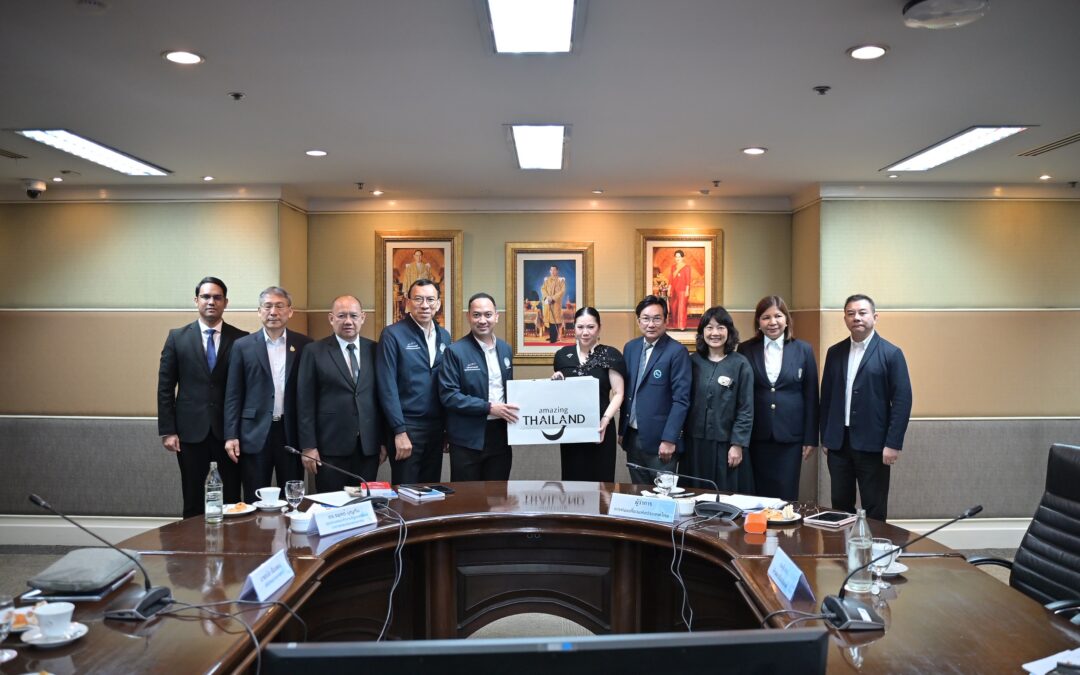
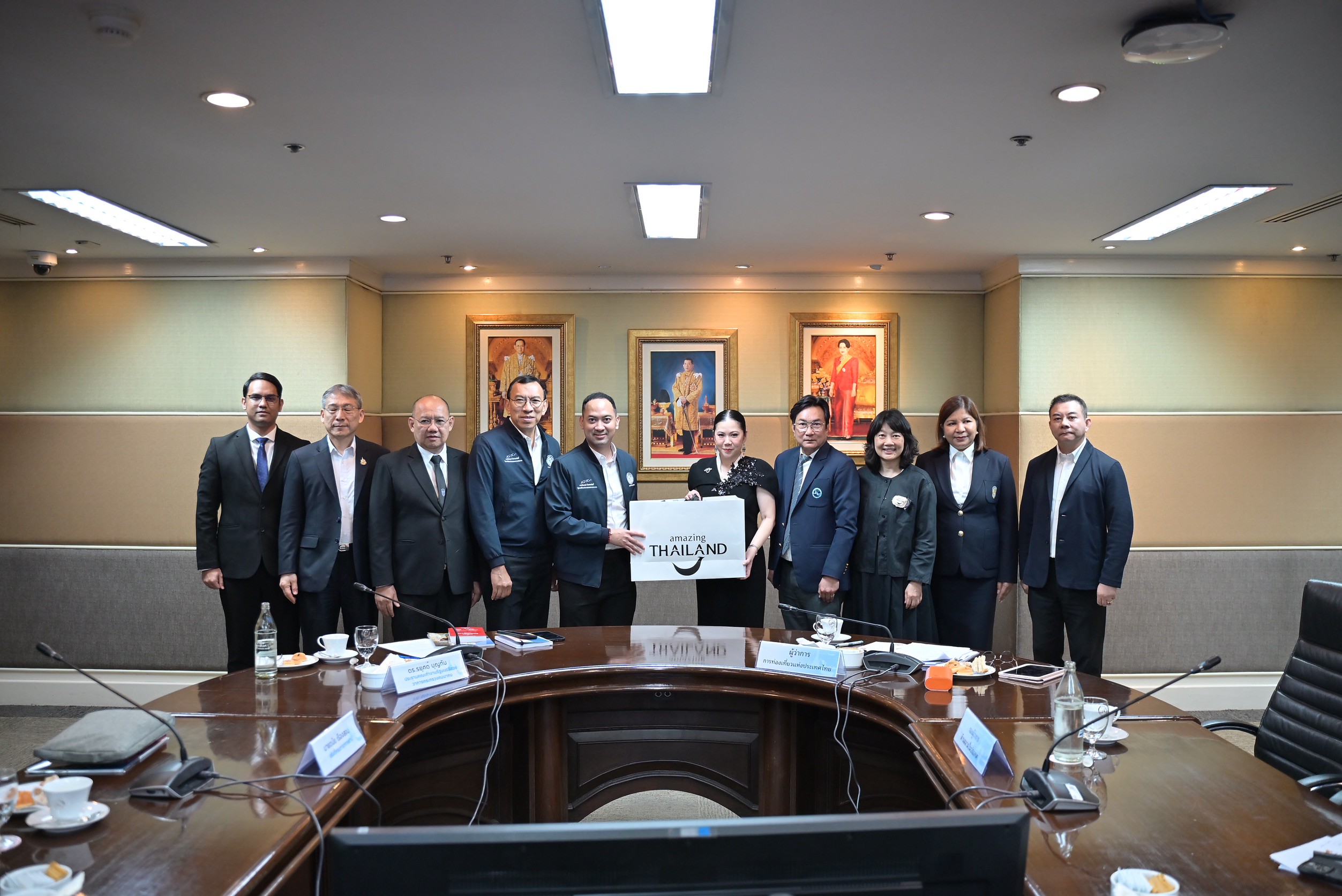
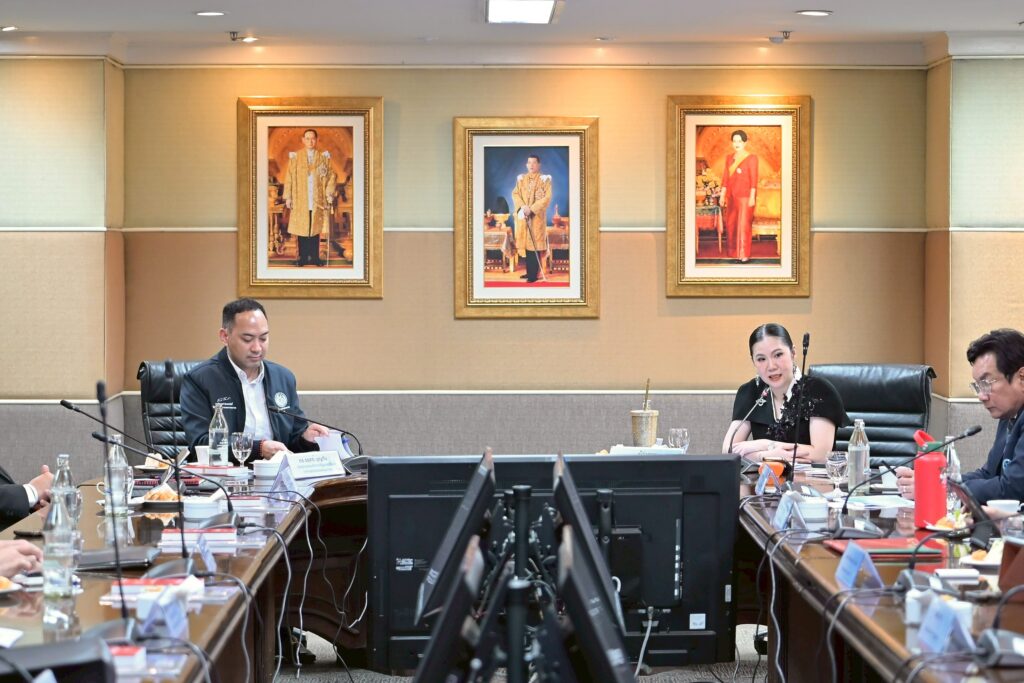
TAT discussed regional air connectivity and Fly and Drive tourism with transport partners in Bangkok.
What TAT announced
TAT said the meeting was held on 2 June 2026 and focused on linking tourism marketing, air route development and regional airport use to stimulate travel in the second half of 2026. The agency outlined marketing support for eight airport destinations under a “3-3-1-1” route focus from June to September 2026: Udon Thani, Ubon Ratchathani and Khon Kaen in the Northeast; Krabi, Nakhon Si Thammarat and Surat Thani in the South; Hua Hin Airport in Prachuap Khiri Khan; and Nan in the North.
The official release says the route focus is designed to encourage travellers to combine air travel with self-drive journeys to nearby destinations, improving access to high-potential areas beyond Thailand’s major gateways. It also notes directions around regional aviation hub positioning, short-stay experiences for transit passengers and premium air travel segments such as seaplanes, private jets and helicopters.
Why this matters to Bangkok
Bangkok benefits when Thailand feels easier to navigate. A foreign buyer may choose a Bangkok condo as a primary city base while using the rest of the country for leisure, family visits, medical recovery, golf, beaches or regional business. If more destinations become easier to combine with Bangkok, the capital’s role as a practical anchor becomes stronger.
This is especially relevant for buyers from markets where property decisions are tied to lifestyle flexibility. A Bangkok home is not just a unit near BTS; it can be a hub for a wider Thailand routine. Regional air links, airport convenience and short-stay travel experiences make that routine easier to imagine.
The June 2026 plan focuses on linking tourism marketing, regional airports and flexible travel flows.
The value-over-volume angle
TAT framed the discussion in line with Thailand’s Value over Volume tourism strategy. That phrase matters for property confidence. A market that chases only arrival numbers can create pressure without improving spending quality. A market that improves access, experience and higher-value segments may do more for premium hospitality, healthcare, branded retail and residential demand over time.
For Bangkok condos, the connection is indirect but meaningful. High-quality tourism supports hotels, restaurants, medical services, private clubs, retail and serviced residences. Those services make the city more liveable for long-stay owners. They also support employment and business ecosystems that feed rental demand in central districts.
Do not overstate the signal
A Fly and Drive programme does not guarantee higher condo prices. It does not replace checks on unit price, building management, tenant demand, resale liquidity or foreign quota. Buyers should not treat any tourism campaign as a substitute for due diligence.
The better reading is that Thailand continues to invest attention in connectivity, traveller confidence and regional access. Those are supportive macro conditions. They help explain why Bangkok remains a serious property market for foreign buyers, but the investment still has to work at building and unit level.
For property buyers, connectivity policy is a macro confidence signal rather than a direct price forecast.
What buyers should watch next
Foreign buyers should watch whether route support turns into practical traveller convenience: more reliable schedules, better airport processes, sensible transport links and joined-up marketing between Bangkok and regional destinations. They should also watch whether higher-value segments such as wellness, medical travel, business events and premium leisure continue to build around Bangkok as the main gateway.
For investors, the strongest property decisions will still combine macro confidence with micro evidence. A good Bangkok condo should have a clear tenant profile, resilient location, fair price and an exit route that makes sense even without perfect tourism growth.
Buyer takeaway
TAT’s Fly and Drive push reinforces the wider case for Bangkok as a globally connected, liveable and practical base. It supports the idea of Thailand as a multi-destination lifestyle country, with Bangkok acting as the service, finance and travel hub. That is relevant for foreign buyers, but it should be used as context, not as a promise of returns.
IBP Real Estate can help you connect national tourism and infrastructure signals with district-level condo choices in Bangkok. Continue with our Thailand economy and investment news and infrastructure updates for more buyer context.
SUBCON Thailand 2026 gives foreign property buyers another way to understand Bangkok’s economic role. The event is not a condominium launch, a tourism campaign or an infrastructure opening. It is an industrial sourcing and business-matching platform. That makes it relevant because Bangkok property confidence is supported by more than residential demand alone.
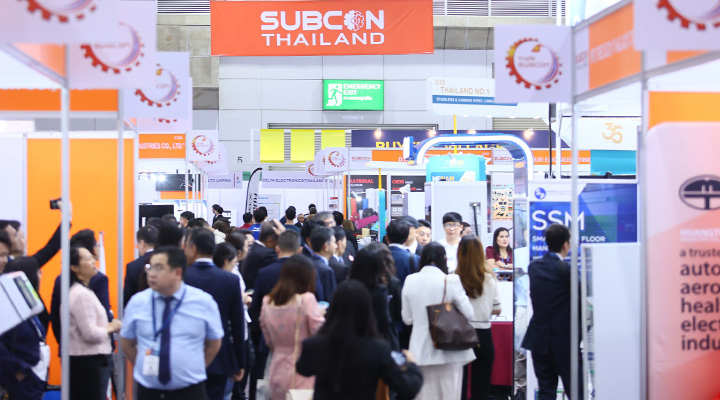
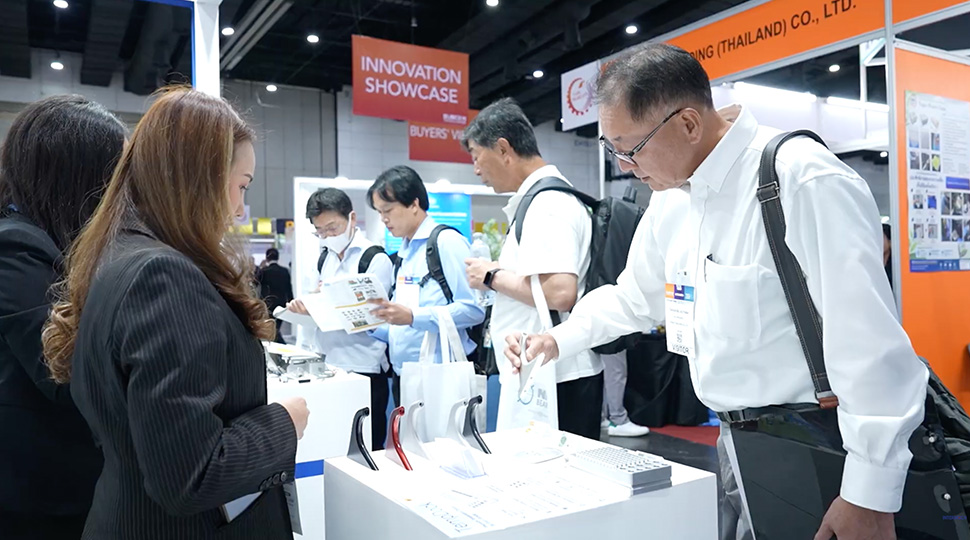
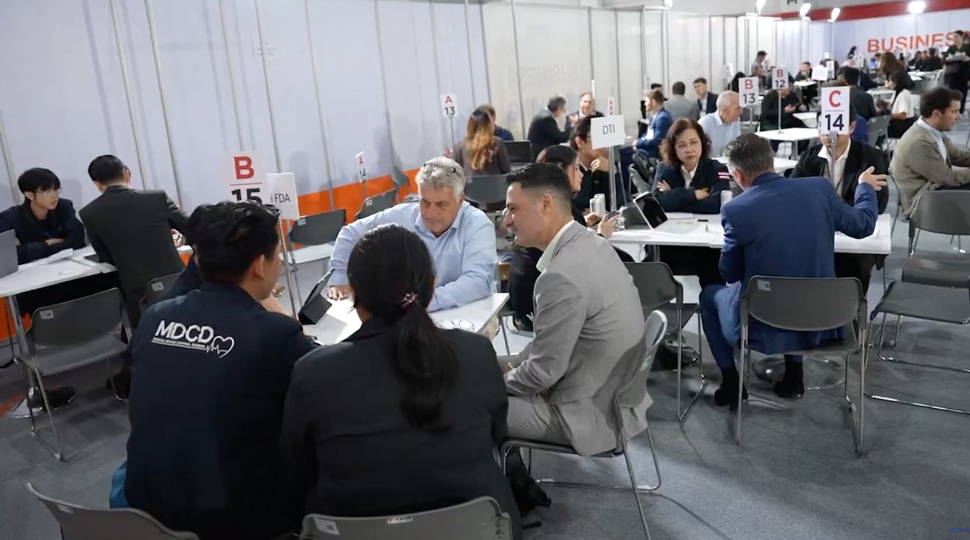
SUBCON Thailand connects Bangkok with industrial sourcing, business matching and supply-chain activity.
The Thailand Board of Investment reported that SUBCON Thailand closed its 20th edition with an estimated USD 705.5 million in parts trade, approximately 23 billion baht. The event ran from 13 to 16 May 2026 in Bangkok, drew more than 50,000 participants and generated over 9,600 business matching pairs. BOI said the event was co-organised by BOI, the Thai Subcontracting Promotion Association and Informa Markets Thailand.
For foreign buyers of Bangkok property, the link is indirect but important. A city that hosts supply-chain meetings, industrial exhibitions, investor delegations and regional business events gains more than short-term hotel nights. It strengthens Bangkok’s function as the commercial front door to Thailand’s industrial economy.
Why industrial events matter to property buyers
Residential investors should avoid turning one trade show into a price forecast. SUBCON does not mean every Bangkok condo will rise in value. The more useful point is that Thailand continues to position itself as a manufacturing and advanced-industry base, while Bangkok remains the place where many investors, suppliers, consultants and executives meet, stay and make decisions.
That activity supports the wider urban economy. It feeds hotels, serviced apartments, restaurants, retail, transport, meeting venues, translators, lawyers, accountants, industrial consultants and business services. These are the same city services that make Bangkok more liveable and more credible as a base for regional owners.
Business matching matters because investment confidence often begins with supplier and buyer relationships.
Bangkok as the meeting point
The official SUBCON website describes the event as ASEAN’s largest industrial subcontracting and business matching event. It also says SUBCON Thailand is co-organised by BOI, Informa Markets Thailand and the Thai Subcontracting Promotion Association, and has been at the centre of purchasing and subcontracting for quality industrial parts for more than 20 years.
That matters because Bangkok is not only competing as a lifestyle city. It is also competing as a place where international business can land, understand Thailand and connect to industrial zones beyond the capital. The residential property link is strongest in districts that serve executives, consultants and internationally mobile families: central Sukhumvit, Rama IV, Sathorn, Silom, Bang Na, Riverside and airport-accessible corridors.
It also helps explain why foreign buyers should look beyond tourist headlines. Business travel, supplier visits and investment roadshows create repeat reasons for people to spend time in Bangkok, and repeat familiarity is often what turns a city from a holiday stop into a serious ownership candidate.
Supply-chain depth supports confidence
BOI’s release said companies used the event to source across electric vehicles, semiconductors, advanced electronics, automation and robotics, medical devices and aerospace. These sectors are relevant because they point to future-industry positioning, not only traditional manufacturing. For a foreign buyer, that helps frame Thailand as a country still working to attract productive investment.
Property buyers should still separate national confidence from unit selection. A stronger industrial story can support long-term city confidence, but it cannot fix an overpriced unit, weak building management or poor resale liquidity. The best response is to treat economic momentum as a backdrop and then buy carefully at the project and district level.
For property buyers, industrial confidence is a macro layer rather than a direct condo-price forecast.
How foreign buyers can use the signal
Read trade and FDI events as evidence of Bangkok’s regional business role.
Look for residential districts that serve executives, families, airport users and business visitors.
Do not assume industrial growth automatically supports every condo submarket.
Connect macro confidence with building-level checks, rental evidence and exit strategy.
Investor takeaway
SUBCON Thailand 2026 reinforces Bangkok’s role as a business and supply-chain meeting point. The estimated trade value, participant count and business-matching activity show that Thailand is still working to connect local manufacturers with global demand. For foreign property buyers, that supports the broader confidence case for Bangkok, while leaving the actual investment decision at the level of price, building, district and holding period.
IBP can help overseas buyers connect Thailand economy signals with Bangkok condominium due diligence. Read our Thailand economy updates or contact IBP Real Estate for a buyer-focused consultation.
Amazing Thailand Grand Sale 2026 gives Bangkok property buyers another way to read the city’s tourism and retail economy. It is not a condominium market indicator by itself, but it shows how Thailand is trying to convert visitor traffic into higher spending across shopping, hotels, restaurants, wellness and local brands during the Green Season.
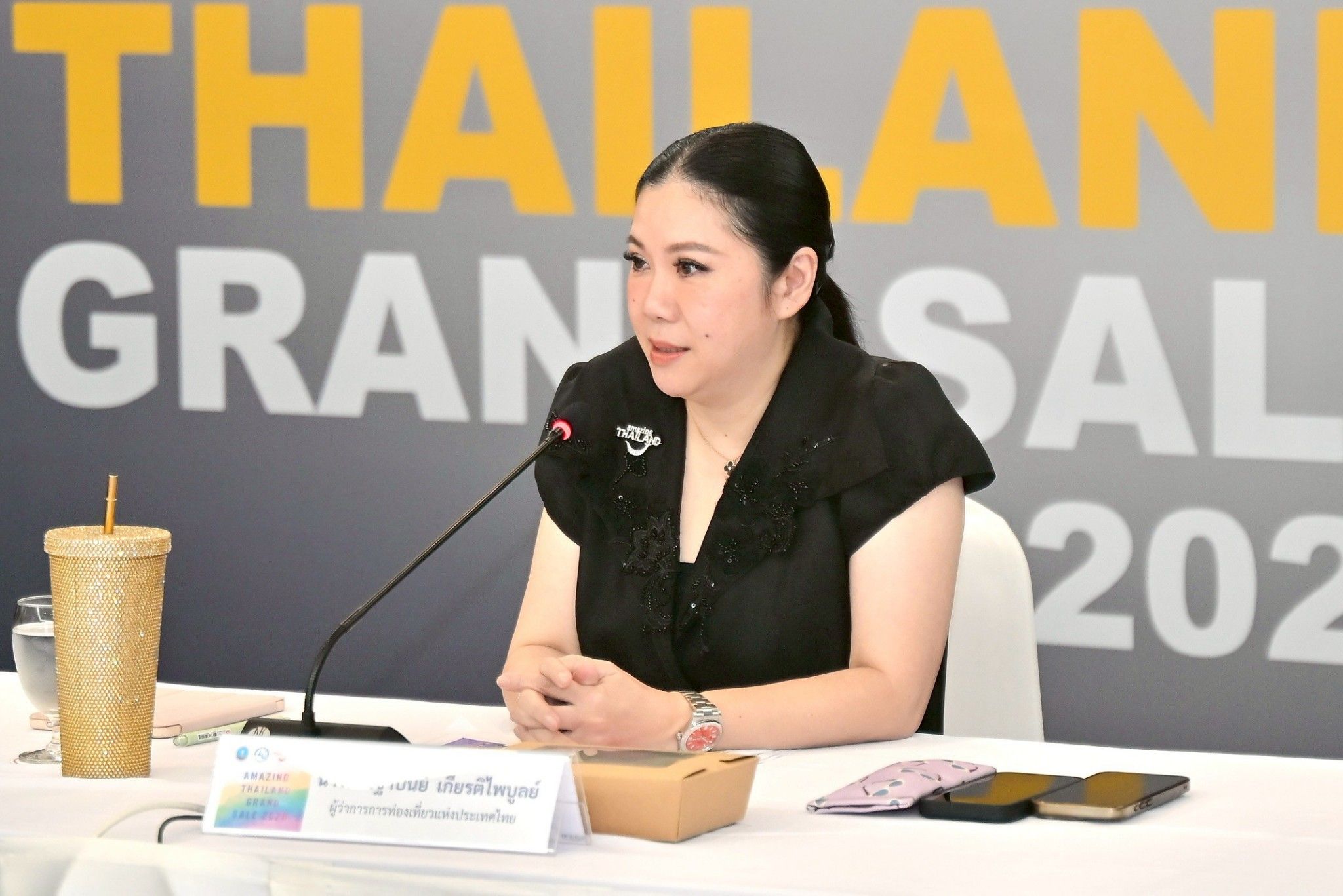
TAT is preparing Amazing Thailand Grand Sale 2026 as a Green Season spending campaign.
According to the Tourism Authority of Thailand’s Thai-language release, TAT held a preparation meeting on 7 May 2026 with more than 100 tourism-industry partners. The campaign is scheduled for 15 June to 15 August 2026 and is intended to stimulate spending by both short-haul and long-haul visitors. The Government Public Relations Department’s English summary also described the campaign as being led by TAT under the Ministry of Tourism and Sports with more than 100 partners.
Why retail spending matters to property buyers
Foreign buyers often focus on rent, resale and legal due diligence, but Bangkok’s retail economy is also part of the ownership story. Prime condominiums draw confidence from the city around them: malls, restaurants, wellness clinics, hotels, public transport, event venues and lifestyle districts. When those services are active, Bangkok feels easier to live in, easier to visit and easier to explain to a future tenant or buyer.
TAT’s update said foreign visitors typically spend around 15 to 20 percent of their travel budget on shopping and souvenirs, making it the third-largest expense after accommodation and food and beverages. The target markets highlighted included China, Singapore, the United States, the United Kingdom, Japan, France, Australia, India, South Korea and Hong Kong. For Bangkok, those are relevant because the city is Thailand’s main retail gateway for many international visitors.
The campaign links tourism spending with retail, hotels, restaurants, wellness and Thai designer products.
From discount-driven to discovery-driven
The TAT Thai release said the 2026 campaign is being adjusted from “discount-driven” to “discovery-driven”, with a greater emphasis on Thai identity, designers, craft, jewellery, fashion and environmentally friendly products. That matters because premium property confidence is stronger when Bangkok is not only seen as cheap or convenient, but as a city with distinctive brands, culture and lifestyle depth.
The campaign covers major cities and emerging destinations, including Bangkok, Chonburi or Pattaya, Chiang Mai, Udon Thani, Phuket and Songkhla or Hat Yai. Bangkok’s advantage is that it can combine international malls, luxury retail, designer pop-ups, hotel stays, fine dining, spas and onward airport connectivity in one trip.
What the 2025 result suggests
TAT’s Thai release said the 2025 campaign generated more than 700 million baht in circulation, with satisfaction of 92.92 percent and a willingness-to-recommend figure of 98.67 percent among participating tourists. It also listed the top participating foreign visitor groups as Malaysia, Singapore, the United States, China and India, and said the most attractive privileges included hotels, restaurants, tourism packages, shopping and health or beauty.
For property investors, the practical message is not that a sale campaign raises condo prices. It is that Bangkok’s visitor economy is broad enough to support multiple spending categories. Buildings near major retail, hospitality and transport nodes may benefit from that urban convenience, but only when the individual unit, entry price and rental evidence also make sense.
For Bangkok property buyers, retail momentum is a confidence layer rather than a price forecast.
Where the property link is strongest
The link is strongest in districts where shopping, hotels, offices, healthcare and transit overlap: Chit Lom, Ratchaprasong, Phrom Phong, Asoke, Silom, Sathorn, Riverside and Rama IV. In those areas, a tenant or owner can use Bangkok as a lifestyle base rather than only a sleeping address. That can support liveability and make a unit easier to understand for overseas buyers.
The link is weaker where the building has poor access, weak management or a price that assumes too much future growth. A retail campaign should be treated as part of Bangkok’s city-confidence story, not as a substitute for due diligence.
Investor takeaway
Amazing Thailand Grand Sale 2026 reinforces Bangkok’s role as a shopping, hospitality and wellness gateway during the Green Season. For foreign property buyers, it is useful context for prime-district confidence, especially where retail and transport are genuinely convenient. The investment decision should still come down to price, building quality, rent evidence and resale depth.
IBP can help overseas buyers connect Thailand tourism and retail signals with Bangkok condo due diligence. Read our Thailand economy updates or contact IBP Real Estate for a buyer consultation.
Bangkok property confidence is built partly on local demand, and partly on how easily the city connects with the world. That is why the planned LOT Polish Airlines Warsaw-Bangkok service is worth noting for foreign buyers. It adds another direct long-haul route into Bangkok and strengthens Thailand’s visibility in Central Europe.
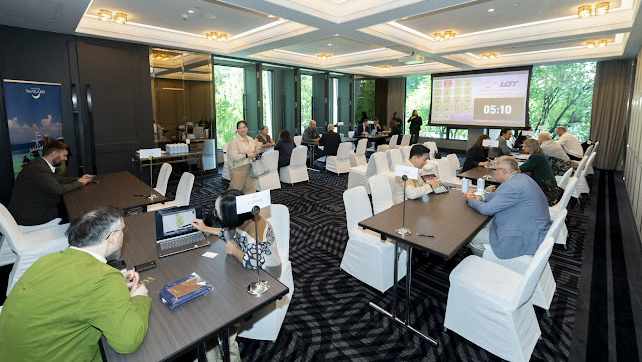
TAT positioned the Warsaw-Bangkok service as a new direct gateway from Central Europe to Thailand.
The Tourism Authority of Thailand reported that its TAT x LOT Polish Airlines familiarisation trip and Tabletop Sale in Bangkok on 25 May 2026 connected Thai tourism suppliers with Polish travel partners ahead of LOT Polish Airlines’ inaugural direct Warsaw-Bangkok service on 7 October 2026.
According to TAT, the route will launch with three weekly flights and increase to five weekly frequencies from 26 October 2026 through the winter 2026/2027 season. The route is expected to use Boeing 787 Dreamliner aircraft with 252 seats and a flight time of approximately 10 hours and 20 minutes.
Why this matters to Bangkok
A new direct European service does not directly push condominium prices higher. The effect is broader. Direct access makes Bangkok easier to visit, inspect, revisit and use as a second-home or regional base. It reduces friction for travellers who might otherwise connect through other European or Middle Eastern hubs.
This matters because Bangkok’s property appeal to foreigners is not only about ownership law or price. It is also about confidence in the city’s role as a gateway. A city with more direct routes can support tourism, hotels, medical visits, education trips, business events, family travel and recurring inspection journeys for prospective buyers.
Trade programmes help turn new air links into travel demand and market readiness.
The Poland demand signal
TAT described Poland as one of Thailand’s rising European markets. It said Thailand welcomed 237,570 Polish visitors in 2025, up 31.46 percent from 2024. From 1 January to 18 May 2026, Polish arrivals reached 137,772, up 17.08 percent from the same period in 2025.
TAT also said the new direct Warsaw-Bangkok route is expected to generate approximately 47,000 visitors and 3.196 billion baht in tourism revenue during winter 2026/2027, with continued growth forecast for winter 2027/2028. These are tourism figures, not property forecasts, but they show why Thailand is investing attention in the Central European market.
How foreign buyers should interpret it
The property link is strongest in districts that already serve international users. Sukhumvit, Chit Lom, Langsuan, Sathorn, Silom, Riverside, Rama IV and selected hospital or school corridors benefit from the wider ecosystem of hotels, restaurants, serviced apartments, private healthcare, shopping and business services.
A buyer from Europe may begin with a holiday or family trip, then return for healthcare, remote work, school checks or an investment viewing. Direct flights make that repeat behaviour easier. For landlords, the route may add to the wider pool of long-stay visitors and executives who need well-managed rental homes, though actual leasing demand still depends on price, location and unit quality.
Do not mistake connectivity for a guarantee
Air access is a support signal, not a substitute for due diligence. A poorly priced unit in a weak building will not become a good investment because a new route launches. Buyers still need to verify foreign quota, title documents, common fees, building management, rent evidence, resale comparables and realistic holding costs.
The strongest Bangkok purchases combine macro confidence with daily usefulness. That means clear transport, good building management, practical layouts, reasonable total ticket, credible tenant demand and an exit story that future buyers can understand quickly.
For property buyers, air access supports confidence but does not replace building-level due diligence.
Investor takeaway
The Warsaw-Bangkok route improves Thailand’s direct long-haul access from Central Europe.
Polish visitor growth adds another quality-tourism signal for Bangkok service economy.
Prime districts benefit most when air access, hotels, healthcare, retail and business services overlap.
Foreign buyers should treat the route as confidence context, not a price forecast.
Bangkok’s global connectivity remains one of the reasons foreign buyers keep the city on their shortlist. The LOT Polish Airlines route reinforces that story. The buyer’s job is to translate that confidence into a disciplined property decision, not to overpay for a broad macro narrative.
IBP can help overseas buyers connect Thailand economy and connectivity news with Bangkok condominium due diligence. Read our Thailand economy updates or contact IBP Real Estate for a buyer consultation.