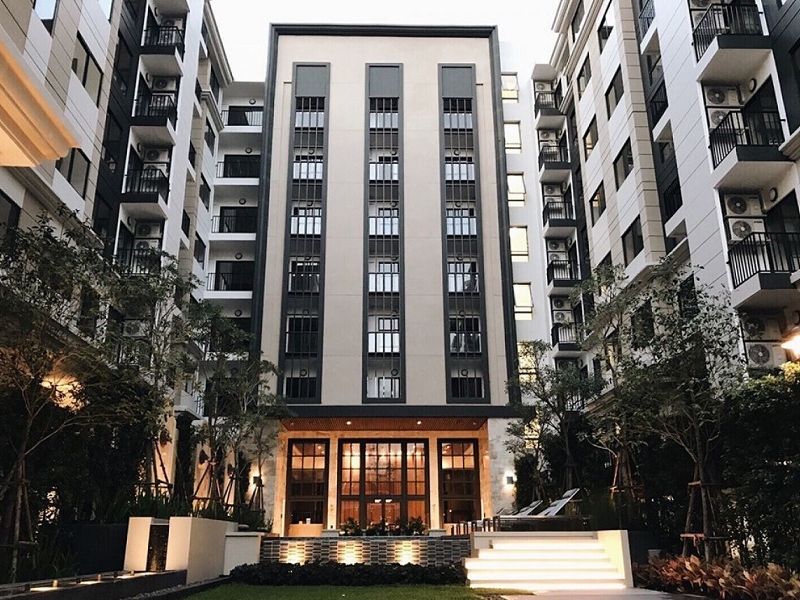
Bangkok condo buyers often start with price per square metre, but the better investor question is how much of that area is genuinely useful. A larger unit can underperform if the plan wastes space in corridors, awkward corners, deep dark rooms or a balcony that does not suit the target tenant. A smaller unit can compete well when it feels simple, bright and easy to furnish.
Layout efficiency matters because foreign buyers pay for every registered square metre, while tenants and future buyers respond to daily usability. The aim is not to buy the smallest unit. It is to buy a plan that converts paid area into comfort, rentability and resale clarity.
Layout efficiency should be tested against the way tenants and future buyers actually use the space.
Why Layout Efficiency Affects Returns
A rental decision is usually made quickly. Tenants compare the bedroom, living area, work space, storage, kitchen, bathroom, light and route to the lift. If those elements feel clear, the unit is easier to understand and easier to show. If the plan feels cramped or confusing, the listing may need a discount even when the building and district are strong.
The resale effect is similar. A future buyer does not pay only for area on a title document. They ask whether the living room can take normal furniture, whether the bedroom can fit a proper bed, whether there is a place to work, and whether the view and light make the space feel better than competing units. Efficient plans help the next buyer see value quickly.
For foreign investors, layout efficiency also protects against management friction. A practical unit is easier to furnish, photograph, clean, repair and re-let. The wrong layout can turn every tenant change into a small negotiation about missing storage, weak work space or furniture that never quite fits.
The same square metre count can perform very differently across buildings, floor plans and tenant groups.
Do Not Let Size Hide A Weak Plan
A large headline area can hide wasted space. Long entry corridors, oversized bathrooms, columns in difficult places, narrow kitchens and odd corners may look acceptable in a plan but disappoint in person. Buyers should walk through the unit and ask what each square metre actually does.
Balcony size deserves a separate check. Some Bangkok buyers like a generous balcony for drying clothes, plants or river views. Others prefer more internal space because heat, rain, road noise or building rules limit balcony use. An investor should not assume that outdoor area has the same value as indoor living space.
Ceiling height and window placement also change how area feels. A compact unit with good ceiling height, natural light and sensible furniture walls may feel better than a larger unit with poor proportions. The lived experience is what tenants and future buyers remember.
Match The Plan To The Tenant Profile
Layout should be judged against the likely tenant. A young professional near BTS may value a desk zone, easy kitchen, laundry space and quick access to daily services. A couple may need a larger wardrobe, better living room and more privacy between bed and work areas. A family may prioritise bedrooms, storage, schools, parking and noise control.
A unit near hospitals or universities may need different furnishing from a unit in a finance or embassy district. A short commute can attract tenants, but the unit still has to support their actual routine. The strongest investment plans make the target tenant obvious.
Avoid buying a plan that requires too many explanations. If an agent has to justify why a dining table cannot fit, why the bedroom door clashes with the wardrobe, or why the kitchen is hidden in a corridor, the future resale conversation may be just as difficult.
Good layouts turn paid area into usable rooms, storage, work space and a clearer resale story.
How To Compare Layouts Fairly
Compare the target unit with at least three alternatives in the same price band. Use the same questions each time: usable living area, bedroom function, storage, light, kitchen practicality, bathroom ventilation, furniture walls, balcony usefulness, laundry position and privacy. A simple scorecard reduces the risk of being influenced by one attractive photo.
Then compare the plan with listings in the same building. If many identical units are available, the buyer needs price discipline because the layout is not scarce. If the plan is genuinely better than typical alternatives, it may deserve a premium, but only when rent and resale evidence support it.
Investors should also look at furnishing cost. A weak layout may need custom furniture, which increases upfront spending and can be harder to repair. A standard, efficient plan may be less dramatic, but it is often easier to manage from overseas.
Red Flags During A Viewing
Watch for beds pushed against walls with no walking space, sofas that block balcony doors, dining tables removed for photography, wardrobes that cannot open fully, air-conditioning units aimed at uncomfortable angles, and kitchens with poor work surfaces. These are not cosmetic details. They show whether the unit works in daily life.
Also check how the plan handles noise and light. A bedroom beside the corridor or lift lobby may need a discount. A living room that faces a hot west exposure may require better curtains and air-conditioning. A unit with windows only on one side may feel darker and less flexible.
If the unit is tenanted, ask what furniture belongs to the owner and what belongs to the tenant. The layout may look better because the current resident has adapted it in ways that will not transfer with the sale.
Buyer Takeaway
Layout efficiency is a quiet investment factor, but it affects rent, vacancy, furnishing cost and resale depth. A foreign buyer should not pay simply for square metres. The stronger approach is to pay for usable rooms, a clear tenant story and a plan that future buyers can understand without persuasion.
Before bidding, model the unit as if no layout premium appears. If the deal still works, a strong plan gives extra resilience. If the numbers only work because the buyer assumes a high rent for a difficult layout, the margin is thin.
Punnawithi has become easier for foreign condo buyers to understand because True Digital Park gives the district a clear mixed-use anchor. The area is no longer only a lower-Sukhumvit residential stop between On Nut and Bang Na. It now has a more visible work, retail, event and technology ecosystem that can shape tenant demand and daily convenience.
That does not make every nearby condominium a strong purchase. The buyer still has to test distance to BTS, building quality, unit layout, rent evidence and resale depth. True Digital Park is a useful district signal, not a substitute for due diligence.
True Digital Park gives Punnawithi a mixed-use anchor combining work, retail and daily services.
What True Digital Park Adds To The District
True Digital Park’s official positioning describes it as Southeast Asia’s largest tech and startup hub in the South Sukhumvit district of Bangkok. The campus brings together workplaces, event spaces, business services, retail, dining, fitness and lifestyle uses. For condo buyers, the important point is that it creates a repeatable reason for people to visit, work and spend time in Punnawithi.
Mixed-use anchors can help a district because they make daily life more legible. A tenant or owner can picture where to work, meet, eat, exercise, collect services and join events. That is different from buying in a purely residential area where convenience may depend on scattered shops and road access.
The effect is strongest when the condo has a realistic connection to the anchor. A building that is genuinely easy to reach from BTS Punnawithi and True Digital Park may benefit from the story. A building that is far away or awkward on foot should not borrow the same premium without proof.
The campus effect is useful to condo buyers only when it improves repeatable daily routines.
Tenant Profiles To Consider
The most natural tenant profile is practical rather than ultra-luxury. Punnawithi can suit technology workers, startup founders, corporate teams, remote workers, students, regional professionals and residents who want lower-Sukhumvit access without paying prime Asoke, Thonglor or Phrom Phong prices. Some buyers may also consider it for owner use if they value work-life convenience over prestige.
Investors should be precise about unit size. Compact one-bedroom units may appeal to single professionals if the layout supports work from home and the building is easy to reach. Larger units need a clearer audience because families may compare schools, parks, hospitals and car access more carefully. A two-bedroom unit should not rely only on the tech-hub story.
Furnishing should match the tenant. A durable desk, good lighting, storage, reliable internet setup and simple maintenance may be more useful than decorative luxury. In this district, the strongest rental product is often one that makes a busy weekday easy.
Connectivity And Walking Route
Punnawithi’s BTS access is central to the buyer case. The station links the area to On Nut, Udom Suk, Bang Na, Siam and the wider Sukhumvit line. That is useful for commuters and for residents who want to move around Bangkok without depending entirely on taxis.
The walking route still needs to be tested. Shade, pavement quality, crossings, rain cover, traffic, security and the route from station to lobby all affect rent and liveability. A map distance can look short while the real walk feels inconvenient in heat or rain. Buyers should walk the route during the day and evening before paying a premium.
Car access also matters. Some residents may commute to business parks, international schools, industrial estates or airport routes. Check drop-off, parking, traffic chokepoints and expressway access if the target tenant is not purely rail-led.
Workplace, event and business-service activity can broaden the district's tenant story.
How To Compare Punnawithi With Nearby Stops
Punnawithi should be compared with On Nut, Udom Suk, Bang Na and selected inner-Sukhumvit alternatives. On Nut has a stronger established residential and retail identity. Udom Suk and Bang Na may offer different value and road access stories. Inner Sukhumvit has deeper expat recognition but higher entry pricing. Punnawithi sits between value, connectivity and the True Digital Park anchor.
That middle position can be attractive when the price is disciplined. A buyer may accept less prime address recognition in exchange for a lower total ticket and a clearer work-life anchor. The risk is overpaying for a district story that has not translated into actual rent or resale evidence in the specific building.
Compare completed rents, not only asking prices. Look at how long similar units stay listed, whether tenants renew, and whether the building attracts corporate or long-stay demand. A good Punnawithi investment should work on current evidence, with the district story as support.
Also check the building’s owner mix. A project with too many identical investor units may face more rent competition, while a building with committed residents and sensible management can make the same district feel more stable.
Buyer Takeaway
True Digital Park gives Punnawithi a more defined identity and a practical reason for foreign buyers to study the area. It supports the case for selected condos that offer easy access, efficient layouts, sound management and tenant-ready furnishing. It does not justify paying a premium for a weak building or inconvenient route.
Foreign buyers should treat Punnawithi as a value-and-connectivity district with a strong mixed-use anchor. The best purchases will be specific: the right building, the right walk, the right rent evidence and the right total price.
IBP can help compare Punnawithi with On Nut, Udom Suk, Bang Na and inner-Sukhumvit options. Browse our district and BTS guides or contact IBP for a buyer shortlist.
Floor premiums are easy to understand and easy to overpay for. In Bangkok, a higher floor can mean better light, a cleaner outlook, lower street noise and stronger resale appeal. It can also mean more afternoon heat, longer lift waits, a view that is not protected, or a price gap that future tenants will not support.
Foreign buyers often see floor level as a simple quality signal. The stronger approach is to treat it as one investment variable inside a wider building, rent and exit strategy. A thirty-fifth-floor unit may be worth a premium in one project and poor value in another. The difference is evidence.
Floor premiums should be tested against real rent and resale evidence, not assumed from height alone.
Why Higher Floors Can Be Valuable
A higher floor can improve the daily experience of a Bangkok condo. It may reduce road noise, improve privacy, bring more natural light, create a wider city or river view, and make the unit feel more distinct when compared with lower-floor alternatives. For owner-occupiers, that can be a genuine lifestyle benefit. For investors, it can help photography, viewing impressions and resale positioning.
The premium is most persuasive when the view is specific and hard to replace. An open park, river bend, low-rise embassy district, protected temple view or wide skyline corridor may justify a stronger price than a generic city view across other towers. Buyers should ask what makes the outlook scarce, not simply what floor number appears on the listing.
Floor level can also help in dense districts where lower floors face neighbouring buildings, car parks, air-conditioning equipment or busy roads. In those cases, moving up may materially change tenant comfort. The buyer still needs to compare the exact premium with alternatives in the same building and nearby projects.
A higher floor is useful only when the building, lift service and outlook support the premium.
When The Premium Is Weak
A high floor is less valuable when the building has slow lifts, ageing systems, weak management or a view that can be blocked by future development. It is also weaker when the unit layout is poor. A narrow bedroom, awkward kitchen, limited storage or inefficient living area will not become a good investment simply because it sits higher in the tower.
Heat and orientation matter in Bangkok. A west-facing high-floor unit can be bright but hot in the afternoon, increasing air-conditioning use and reducing comfort. Some tenants love dramatic city views; others prioritise quiet sleep, practical furnishing and lower running costs. Investors should not assume that every tenant pays more for height.
The premium can also disappear if many similar high-floor units are available. In a large project with repeated layouts, a buyer may find several units with comparable views. Scarcity is then limited, and bargaining should be more disciplined.
Compare Floor Bands, Not Just One Unit
The useful comparison is by floor band. Look at low, mid and high floors in the same stack or similar stacks. Compare asking prices, achieved rents where available, view quality, furnishing, room size and time on market. If the price jumps sharply but rent barely changes, the premium may be more emotional than financial.
Buyers should also compare across neighbouring buildings. A mid-floor unit in a better-managed project may be safer than a high-floor unit in a weaker building. A lower floor with a protected green view may outperform a higher floor facing future construction. The floor number is not the asset; the liveable and saleable experience is the asset.
For resale, ask who will buy the unit next. A local end-user may pay for a view if the total ticket still feels reasonable. An investor may discount the view if rental yield is thin. A foreign buyer may value privacy and skyline photographs, but still need building quality and legal readiness. The future buyer pool should shape today’s bid.
Layout, light, heat, noise and view protection can matter more than the floor number.
Inspection Checks For Foreign Buyers
Inspect the unit at different times of day if possible. Check morning light, afternoon heat, evening noise, lift waits, corridor ventilation and how the view feels with lights on inside the unit. Take photographs from sitting height as well as standing height, because the lived view can differ from the sales-gallery angle.
Ask about nearby vacant plots, planned towers, road works, rail lines, schools, bars, mechanical equipment and neighbouring balconies. A premium paid for privacy should not depend on a view that is obviously vulnerable. If the agent claims the view is protected, ask what document or physical condition supports that claim.
Also check practical details. High floors may have stronger wind on balconies, different mobile reception, more dependence on lift reliability and longer evacuation routes. Those points rarely decide a purchase alone, but they should be part of the risk review.
How To Price The Decision
A sensible price test starts with the best lower-floor alternative you would actually buy. Add only the premium that can be defended by view, privacy, rent evidence and resale depth. If the higher-floor unit needs a heroic resale assumption to make the numbers work, the buyer is paying for emotion rather than risk-adjusted value.
For rental investors, model the unit both with and without a floor premium in the rent. If the investment is still acceptable without assuming extra rent, the higher-floor upside is a bonus. If the deal only works because a future tenant must pay a large premium, the margin of safety is thin.
Foreign buyers comparing resale units should also read IBP’s investment analysis and resale strategy sections. For help testing whether a view or floor premium is justified, contact IBP before making an offer.
Phaya Thai is one of Bangkok’s most useful interchange locations for foreign condo buyers who want rail access without moving too far from the centre. The district connects the BTS Sukhumvit Line with the Airport Rail Link, putting Siam, Victory Monument, Ratchathewi, Ari and Suvarnabhumi Airport within a practical city map. That does not make every unit a good investment, but it does make the area worth a focused look.
Phaya Thai's interchange role is the core of its buyer appeal.
The buyer case for Phaya Thai is convenience. It suits residents who want fast airport movement, central Bangkok access, a local food scene, office links and a less polished daily rhythm than the prime luxury zones around Chit Lom or Phrom Phong. The challenge is that the district is mixed. Buyers need to judge each building, soi and walking route carefully.
Why the interchange matters
Phaya Thai’s strongest advantage is the ability to move in several directions. BTS access links the area to Siam, Ari, Mo Chit, Asoke and the wider Sukhumvit corridor. The Airport Rail Link adds direct airport access, which is useful for foreign owners, regional executives, frequent travellers and tenants who value predictable travel times.
For rental demand, interchange locations can be resilient because they appeal to more than one tenant profile. A tenant may work near Siam, study at a nearby institution, travel often, or want a central base without paying top-tier luxury rents. The location story is easy to explain, which helps both rental marketing and future resale.
Walking route quality can matter as much as the mapped distance to rail.
Who Phaya Thai suits
Phaya Thai can suit buyers who want a Bangkok base that is practical rather than resort-like. It may appeal to young professionals, airport-linked workers, regional commuters, students, medical visitors, long-stay expats and owners who want quick access to Siam without living inside the most expensive shopping core. It can also work for buyers who like neighbouring Ari but want a more transport-led position.
It is less obvious for buyers who prioritise quiet luxury, river views, very large family layouts or hotel-style branded services. Those buyers may prefer Wireless Road, Langsuan, Sathorn, Riverside or selected Sukhumvit addresses. The Phaya Thai brief should be written around access, value and daily practicality.
Investors should also consider the difference between station convenience and neighbourhood identity. Ari has a stronger lifestyle brand, Ratchathewi has a closer Siam link, and Victory Monument has a larger commuter base. Phaya Thai sits between those stories. That can be useful for tenants, but it means pricing should be justified by the actual building and walking route, not by a vague claim that the area is central.
Walking route and soi depth
In Phaya Thai, the distance from the station is only the beginning. A building can be close on a map but awkward on foot because of pavement quality, junctions, traffic, shade, construction or narrow sois. Foreign buyers should walk the route at daytime and evening, with luggage if airport access is a key part of the appeal.
Soi depth also matters. A quieter inner soi may be more pleasant to live in, but tenants may discount it if the walk is inconvenient. A building directly near the transport node may rent faster but face more traffic and noise. There is no universal answer; the correct price depends on the balance.
Buyers should compare Phaya Thai with nearby Ari, Ratchathewi and Victory Monument options.
Building age and resale evidence
Phaya Thai has a mix of older condominiums, mid-market projects and newer launches in nearby districts. The best purchase is rarely decided by age alone. Older buildings may offer larger usable space, while newer buildings may offer facilities, security and easier tenant appeal. The management record is often the deciding factor.
Before buying, compare asking prices with actual resale evidence in Phaya Thai, Ratchathewi, Ari and Victory Monument. Check how many units in the same building are available, how long they have been listed, and whether rent evidence supports the price. If a building relies mainly on the interchange story but has weak layout or poor maintenance, the discount should be clear.
Resale comparison should be narrow. A unit beside the interchange should not be compared lazily with a quieter Ari low-rise or a new project closer to Siam without adjusting for age, facilities, room size and tenant profile. The better question is which buyer would choose this exact unit in five years and why.
Rental strategy
A sensible rental strategy in Phaya Thai starts with unit practicality. One-bedroom units can work if the layout is efficient, storage is adequate and the building is easy to reach. Two-bedroom units need a clear tenant profile because families may prefer school-linked districts and sharers may be price-sensitive. Furnishing should be durable and work-from-home friendly rather than decorative only.
Investors should model vacancy conservatively. Good rail access helps, but the tenant still compares price, building quality, furniture, view, internet, lift waits, noise and management response. A clean, well-managed unit can outperform a cheaper but tired one.
Buyer checklist
Walk from the BTS and Airport Rail Link at different times of day.
Compare rents with Ari, Ratchathewi and Victory Monument alternatives.
Check building age, juristic records, common fees and sinking fund position.
Test noise from rail, roads, schools, hospitals and nearby construction.
Confirm whether the unit layout suits a tenant who may work from home.
Review resale depth before paying a premium for station proximity.
Buyer takeaway
Phaya Thai is attractive because it is easy to understand: central, connected and practical. For foreign buyers, that makes it a useful district for rental and personal-use shortlists. The best opportunities still depend on building quality, walking route, price discipline and evidence of tenant demand. Buy the right unit, not just the interchange.
IBP can help foreign buyers compare Phaya Thai with Ari, Ratchathewi, Siam and Sukhumvit alternatives. Browse our district and BTS guides or contact IBP Real Estate for a Bangkok shortlist.
Building age is one of the simplest Bangkok condo facts to check and one of the easiest to underestimate. Foreign buyers often focus first on the view, furniture, floor level or headline price per square metre. Those details matter, but the age and maintenance history of the building can have a larger effect on rent, resale confidence and the real cost of ownership.
Building age should be read together with maintenance quality and resale evidence.
A ten-year-old Bangkok condo can be an excellent purchase if the management is disciplined, the common areas are well funded and the location still has tenant depth. A newer building can be a weak investment if defects, poor juristic management or unrealistic pricing are already visible. Age is not a verdict. It is a prompt for deeper questions.
Why building age changes the investment case
Bangkok condominiums do not age evenly. Some buildings remain attractive because they were well designed, use durable materials and have co-owners who approve sensible maintenance budgets. Others look tired within a few years because common areas were overpromised, repairs were deferred or the juristic office struggles to collect fees. The difference shows up in tenant demand before it shows up in official documents.
For investors, age affects three areas. First, it influences the rent a tenant is willing to pay compared with newer alternatives nearby. Second, it affects holding costs because older lifts, pumps, corridors, facades and air-conditioning systems may need more attention. Third, it shapes the future buyer pool. A resale buyer may accept an older building if the price, location and management record are convincing.
AGM minutes and budgets help buyers understand what older buildings may need next.
Newer does not always mean lower risk
New projects can offer fresh facilities, modern layouts and easier financing for local buyers. They can also carry early-stage uncertainty. Common fees may not yet reflect the true operating cost, defects may still be settling, rental competition may be intense if many owners complete at the same time, and the first few years of juristic management can reveal whether the building culture is serious.
Foreign buyers should therefore avoid a simple new-versus-old rule. A completed five-year-old building with stable occupancy, clear accounts and strong tenant demand may be safer than a brand-new project where the rent case is based mainly on brochure assumptions. Conversely, an older building with poor reserves, weak security and repeated water issues may be cheap for good reason.
Repairs and capital expenditure
The practical question is not only what the unit costs today. It is what the building may ask owners to fund over the next ownership period. Lift upgrades, waterproofing, pipe repairs, fire-system improvements, lobby refreshes, pool repairs, parking equipment and exterior works can all become material. These costs may be covered by the sinking fund, by annual budgets or by special contributions.
Before buying, ask for recent AGM minutes, audited accounts, sinking fund balance, common fee arrears and any notices about major works. If the building is older, ask specifically about lifts, water pressure, drainage, roof and facade condition. A good answer will not always be perfect, but it should be documented. Vague reassurance is not enough.
A physical inspection should match what the building records say about repairs.
How age affects rental demand
Tenants are practical. They may love a central address, but they still notice lifts, corridors, air-conditioning, smell, noise, security, parcel handling, gym quality and the route from station to lobby. In some mature Bangkok areas, older buildings offer larger rooms and better value than new stock. In other areas, new supply can pull tenants away if the older building has not kept pace.
Investors should compare actual rental listings and closed rents in the same micro-market. Look at unit size, view, floor level, furniture quality and building condition. If an older building rents well because of room size and location, the age may be acceptable. If rent is being defended only through discounting, the investment case needs a more conservative model.
Resale depth matters more as buildings mature
As a building ages, the resale buyer becomes more selective. They will ask whether the location is still convenient, whether the project has a recognisable reputation, whether the common areas are clean and whether future works are manageable. For foreign owners, this matters because exit can be harder if the buyer pool narrows to bargain hunters.
A useful test is to imagine explaining the unit to a future buyer in one sentence. If the sentence is easy because the building has a strong address, sensible size, good management and fair price, age may be manageable. If the explanation depends on excuses, the discount should be meaningful.
Foreign buyer checklist
Confirm completion year, developer record and current juristic management.
Read recent AGM minutes, budgets and sinking fund information.
Inspect lifts, corridors, parking, waste rooms, pool, gym and back-of-house areas.
Compare rents with newer and older competitors within the same walking radius.
Ask whether major repairs are planned and how they will be funded.
Model a resale period that is realistic for the age, price bracket and unit size.
Buyer takeaway
Building age should not scare foreign buyers away from Bangkok resale condos. It should make the due diligence sharper. The best older buildings can offer proven locations, larger layouts and established tenant demand. The weaker ones can trap owners in repair costs and slow resale. Age is useful only when it is read together with management quality, cash reserves, rent evidence and exit demand.
IBP can help foreign buyers compare Bangkok condo buildings by age, management record, rent assumptions and resale evidence. Read more in our investment analysis section or contact IBP Real Estate for a building-level review.
Parking is easy to overlook when a Bangkok condominium looks attractive on price, view or rental yield. Foreign buyers often focus on the unit, the payment schedule and the building lobby, then ask about parking only when a tenant or future buyer needs it. That can be a mistake because parking rights can affect rent, resale depth and day-to-day convenience.
The issue is not simply whether a building has spaces. Buyers need to know whether the right is fixed, rotating, registered, rented, attached to the unit, controlled by building rules or limited by practical availability. The answer can change the investment case, especially for larger units, family tenants, older buildings and projects away from direct BTS or MRT access.
Parking rights are most valuable when they fit the building, tenant profile and resale audience.
Why parking can change investment value
In central Bangkok, many tenants do not use a car every day. That does not mean parking is irrelevant. A corporate tenant may still want a space for weekend travel, school runs, visiting family or irregular office routes. A Thai end-user buying in the resale market may care more about parking than a short-stay foreign renter. A two-bedroom or three-bedroom unit without practical parking can lose part of its natural buyer pool.
Parking also interacts with location. A compact unit directly beside BTS or MRT may rent well without a dedicated space if the tenant profile is clearly rail-led. A larger unit in a quieter soi, a riverside building, or a project with family appeal may need stronger parking certainty. The weaker the public-transport story, the more carefully parking should be checked.
For investors, the right question is not whether parking sounds convenient. It is whether the parking position supports the unit price. If two comparable units trade at similar prices but one has a clearer parking arrangement, better access and fewer disputes, that unit may have a stronger exit story.
Confirm what is actually attached to the unit
Some buyers hear that a condo has parking and assume the space belongs to the unit. In practice, arrangements vary. A building may have common parking, assigned spaces, mechanical parking, queue systems, paid additional spaces, visitor parking restrictions or committee rules that change over time. The buyer should ask for written confirmation from the seller and the juristic office before deposit.
The title file and sale documents matter. If a parking right is represented as part of the purchase, ask your lawyer to check whether that right is registered, contractual, customary or only a building practice. A casual promise in a chat message is not the same as a transfer-ready right. The more expensive the unit, the less acceptable uncertainty becomes.
Also confirm whether the right can be passed to a tenant. Some buildings are stricter with tenant registration, additional cards, parking stickers, overnight guest parking and second-car use. A landlord who assumes flexibility may disappoint a tenant after the lease is signed.
The parking story starts at building level, not inside the unit.
Read parking through the likely tenant profile
Parking value depends on who will live in the unit. A one-bedroom near Asok, Phrom Phong or Silom may target a tenant who commutes by rail and uses ride-hailing. In that case, parking is still useful but may not drive rent. A two-bedroom near schools, hospitals, embassies or lower-density luxury neighbourhoods may need parking to satisfy families, couples and senior executives.
Investors should ask agents and property managers for evidence from the same building. Which tenants ask about parking first? Do tenants pay more for a unit with a confirmed space? Are vacant spaces available to rent from other owners? Do disputes happen during busy evenings or weekends? Building-specific evidence is better than broad assumptions about Bangkok car ownership.
Questions before relying on parking value
Is the space fixed, rotating, common, rented or separately documented?
Can a tenant use the space without extra approval or cost?
Are access cards, stickers and visitor rules simple to manage?
Is mechanical parking reliable and acceptable to the target tenant?
How does the building handle second cars, motorcycles and EV charging?
Would the unit still rent or resell well if parking became less convenient?
Older buildings need closer checks
Older Bangkok condominiums can be attractive because they may offer larger layouts in established locations. Parking can be one of the hidden strengths or weaknesses. Some older projects have generous surface or basement parking compared with newer compact developments. Others have tight ramps, poor signage, ageing systems, unclear allocation or queues during peak periods.
The buyer should physically inspect the parking area, not just the unit. Look at lighting, ventilation, security, flooding history, ramp width, lift access, CCTV, maintenance and how easy it is to move from parking to the lobby. A car park that feels neglected may say something about the wider building management culture.
If the building has EV charging, treat it as a useful bonus rather than a substitute for parking due diligence. Ask who operates the chargers, how billing works, how many spaces are affected, and whether future installation may change parking allocation. EV readiness can support future value only when governance is clear.
Parking should be modelled beside layout, rent, management and exit strategy.
Model parking as part of resale
Resale is where parking uncertainty often becomes visible. A future buyer may be more cautious than a tenant because they are committing capital. If the unit is large, premium or far from rail, vague parking rights can become a negotiation point. If the seller can show clear records, building rules and practical use, the buyer conversation is easier.
Parking should therefore sit in the same file as title, foreign quota, debt-free letter, common fees, sinking fund, renovation approvals and rental evidence. The stronger the file, the easier it is for a foreign owner to sell from overseas without repeatedly answering basic questions.
This is also a pricing discipline. Do not pay a premium for a parking promise that cannot be documented. Conversely, do not dismiss a unit with a less impressive view if its parking, building management, layout and tenant fit are stronger than a flashier alternative.
Buyer takeaway
Bangkok condo parking rights are not the main reason to buy a unit, but they can protect the investment case. They matter most when the unit targets families, executives, larger budgets or resale buyers who expect complete daily convenience.
Foreign buyers often ask whether a Bangkok condominium is a good investment. A sharper question is whether the unit will be liquid when the owner needs to rent, refinance, hold or sell. Liquidity is not the same as popularity. A fashionable district can still contain slow-moving units, while a quieter building can sell well if pricing, management and buyer audience are clear.
A liquidity scorecard helps turn that question into a disciplined review. It asks whether a future buyer can understand the asset quickly, whether tenants have a real reason to choose it, whether the building file is clean, and whether the price leaves enough room for transfer costs, furnishing, vacancy and negotiation. In a mixed 2026 economy, this matters more than a broad headline about Bangkok.
Liquidity depends on real buyer depth, not only a broad Bangkok growth story.
Why liquidity should come before yield
Yield is useful, but it can be fragile. A projected rent may assume a perfect tenant, no vacancy, no furnishing mistakes and no repair surprises. Liquidity asks a wider set of questions. If the tenant leaves, can the unit be re-let without a long gap? If the owner needs to sell, are there enough buyers for this size, view, age and price point? If financing conditions or local confidence soften, does the unit remain understandable?
Bangkok can be attractive because it combines regional business access, private healthcare, international schools, mass transit, tourism, hospitality and a large condominium culture. Those strengths help the market, but they do not rescue every purchase. A foreign buyer still needs to separate a genuinely liquid unit from one that simply looks attractive during a viewing.
Score the location by routine, not reputation
The first liquidity factor is daily routine. A unit near BTS, MRT, offices, hospitals, schools, supermarkets and restaurants has more possible users than a unit that depends on a single selling point. The test is practical: how would a tenant commute, buy groceries, get to healthcare, receive visitors and use weekends?
District reputation is only the starting point. Sukhumvit, Sathorn, Silom, Rama IV, Riverside, Ari and Ratchathewi all contain stronger and weaker pockets. A project may use a famous district name while sitting on a less convenient route. Walk the route yourself if possible, or ask for a street-level video at rush hour and at night. Liquidity often lives in those small details.
Building quality, management and location all affect how easy a unit may be to sell later.
Score the building as a shared business
A condominium is a private unit inside a shared financial and management structure. The building needs common fees, staff, security, insurance, repairs, lift maintenance, rules and owner cooperation. A unit can be beautiful while the building story is weak. Future buyers will notice tired corridors, unresolved leakage, poor juristic communication or facilities that no longer match the common-fee level.
Ask how the building collects fees, maintains common areas, manages renovations and communicates with owners. Read recent meeting minutes where available. If the building is older, ask what large capital items are likely: lifts, waterproofing, facade work, piping, pool systems, access control and major repainting. A buyer who understands these issues before deposit has a stronger negotiating position and a clearer holding-cost model.
Score the unit for resale audience
Some units have a wide resale audience. A well-planned one-bedroom near a station may suit an investor, an owner-occupier, a tenant, a second-home buyer or a parent buying for a child. A larger riverfront unit may suit a smaller but wealthier audience that values view and service. Neither is automatically better. The risk appears when price and buyer audience do not match.
Layout is central. Awkward columns, poor storage, dark bedrooms, difficult furniture placement, noisy exposure and unusable balconies can make resale slower. Foreign buyers should compare the exact unit with competing units in the same building and nearby buildings. A discount may be justified if the unit has a structural drawback that future buyers will also see.
A liquid unit usually has a clear tenant profile, sensible layout and a defensible resale audience.
A simple buyer scorecard
Transport: clear access to BTS, MRT, expressway, river pier or a genuine daily destination.
Tenant depth: at least two realistic tenant groups, not one narrow assumption.
Resale audience: a future buyer can understand the unit in one viewing.
Building file: quota, common fees, rules and repair planning are checkable before deposit.
Price discipline: the purchase allows for transfer costs, furnishing, vacancy and negotiation.
Exit route: the owner can sell from overseas with good records, photos and market evidence.
Use current conditions as context, not a command
The Bank of Thailand’s current public pages show that official economic and monetary reporting is active through April 2026, with the next policy meeting scheduled later in June. That is useful context because liquidity is shaped by confidence, interest rates, bank lending, consumption, tourism and business activity. It is not a command to buy or wait.
A foreign cash buyer may feel insulated from Thai mortgage conditions, but local buyers, developers and sellers are not. If domestic credit is cautious, resale timing can lengthen. If tourism or corporate demand improves, selected rental markets may feel firmer. The scorecard keeps the buyer focused on unit-level evidence rather than trying to predict every macro movement.
Buyer takeaway
A liquid Bangkok condo is usually easy to explain: strong routine, sensible layout, credible rent, clean building file and a price that leaves room for the next buyer. When those pieces line up, Bangkok’s wider strengths can support the decision. When they do not, a famous address may still become a slow exit.
IBP Real Estate can help foreign buyers compare liquidity, rental demand and resale risk before reserving. Continue with our investment analysis and resale strategy guides for more buyer-side checks.
A Bangkok condo investor should ask a simple question before looking at yield: who is likely to rent this exact unit, and why would they renew? The answer is the tenant mix. It is more useful than a generic view of the market because it connects the building, layout, rent, commute, furnishing and management quality to real demand.
The 2026 backdrop makes that discipline important. The Bank of Thailand described the economy as expanding in the first quarter, while also reporting softer private consumption in March and a more subdued April picture, with tourism receipts and arrivals easing after a temporary acceleration. For buyers, that does not mean avoiding Bangkok. It means buying with a clearer view of which tenant groups are resilient and which units may sit vacant if demand becomes selective.
Tenant demand is strongest when the building fits a real daily routine, not only a broad district story.
Why tenant mix matters more than headline yield
Headline yield can hide weak assumptions. A broker may quote one expected rent, but a building might actually appeal to several different tenant groups: expatriate executives, Thai professionals, medical visitors, students, regional business travellers, long-stay retirees, digital workers or families. Each group has different expectations for lease length, furniture, internet, parking, pet rules, school access, hospital access and proximity to BTS or MRT.
If a unit only works for one narrow tenant type, the investor needs a larger buffer. If it can appeal to two or three realistic tenant groups, the owner has more flexibility during soft periods. This is where Bangkok can be attractive for foreign buyers. The city has deep demand drivers across offices, hospitals, education, retail, hospitality, embassies, logistics and regional business, but those drivers do not support every unit equally.
Start with the tenant, then test the unit
A practical rental review should start with a named tenant profile. For example, a compact one-bedroom near Asok may suit a single professional who values MRT and BTS interchange. A larger two-bedroom near Phrom Phong may suit a couple or small family focused on schools, parks, dining and hospital access. A riverside unit may suit a lifestyle tenant who prioritises view, quiet and hotel-style service over a short commute.
Once the profile is clear, test whether the unit really fits. Does the bedroom size work for a long lease? Is the kitchen useful or only decorative? Is the washing machine placed sensibly? Is there enough storage? Is the desk area adequate for hybrid work? Can the unit be shown quickly when vacant? Small practical details often determine whether a tenant renews or moves after one year.
A building can attract different tenant groups at different rents, lease lengths and vacancy risk levels.
Read the 2026 demand backdrop carefully
The BOT’s recent releases point to a mixed economy rather than a uniformly strong or weak market. Exports and some production categories have been supportive, while consumption and tourism have shown softer patches. That matters because Bangkok rental demand is not one thing. Office-led tenants, tourism-linked tenants, relocation families, medical visitors and domestic professionals can move at different speeds.
For investors, a mixed backdrop rewards buildings with broad appeal. A building connected to transport, daily services and credible management may hold demand even when one tenant segment slows. A building that depends on a speculative short-stay story, poor access or a single corporate tenant source can be more exposed.
Questions to ask before relying on rent
Which tenant groups have actually rented in this building during the past two years?
What rent has been achieved for comparable units after negotiation, not only advertised online?
How long do units usually stay vacant between leases?
Do tenants renew, or does the building rely on constant new demand?
Are competing buildings newer, better managed or more convenient at the same rent?
Would the unit still attract tenants if the asking rent had to be reduced by 5-10%?
Match furnishing to the tenant group
Foreign owners often under-budget furnishing because the purchase price receives all the attention. For rental performance, furnishing is part of the product. A corporate tenant may value a proper desk, blackout curtains, reliable appliances and neutral finishes. A family may care about storage, safety, an extra bed and easy cleaning. A lifestyle tenant may respond to view, lighting and a calmer furniture package.
Over-furnishing can be as weak as under-furnishing. Highly personal furniture may reduce the tenant pool. Cheap furniture can increase repairs and make the unit feel tired after one lease. The best package is usually durable, neutral and aligned with the likely tenant, with enough quality to make renewal easier.
The best rental analysis links tenant profile, layout, furnishing, management and resale audience.
Use tenant mix to protect resale
Tenant mix also affects exit strategy. A future buyer will ask whether the unit can be rented easily and whether the building has a stable resident profile. If the owner can show realistic rents, manageable vacancy and a sensible tenant pool, the resale story is easier to defend. If the unit has a patchy rental record, excessive owner use, weak management or unrealistic rent assumptions, the buyer pool narrows.
This is especially important for foreign owners who may sell from overseas. A clear rental file, good photos, service records, tenant history and realistic pricing can reduce friction. The exit should be planned when buying, not only when the owner decides to sell.
Buyer takeaway
Bangkok’s rental market remains attractive when a unit matches real tenant demand, but investors should avoid relying on a single yield number. The stronger test is tenant mix: who rents, why they stay, what they pay, how long vacancy lasts and who would buy the unit later.
IBP Real Estate can compare tenant profiles, rent evidence and resale depth before you reserve. Continue with our investment analysis and rental market articles for more buyer-side checks.
Thailand’s policy-rate cycle is not a simple buy signal for Bangkok condominiums. It is a liquidity signal. Foreign buyers, especially cash buyers, may not need a Thai mortgage, but they still buy into a market shaped by Thai bank lending, developer financing, domestic buyer confidence, seller urgency and the cost of holding unsold stock.
The Bank of Thailand’s Monetary Policy Committee cut the policy rate by 0.25 percentage points to 1.00% on 29 April 2026. The decision came with a cautious view of the economy, credit quality and external risk. For Bangkok condo buyers, the practical question is how to translate that macro information into offer discipline, timing and risk control.
Interest-rate context affects liquidity, but the buyer decision still has to work at building and unit level.
Why the policy rate matters even for cash buyers
A foreign cash buyer might assume Thai interest rates do not matter. That is only partly true. The buyer may not borrow locally, but the seller, developer, Thai buyer pool and competing landlords often do. When domestic credit is tight or cautious, some Thai buyers delay purchases, some sellers become more realistic, and some developers use promotions to convert inventory into cash. That can create negotiation room for a buyer who has clean funds, correct foreign-exchange evidence and a clear transfer plan.
The rate itself is not the full story. The BOT’s April decision noted concerns around credit quality, especially for small businesses and some retail borrowers. In property terms, that means buyers should watch not only headline interest rates but also bank approval behaviour, transfer rates, mortgage rejection stories and developer inventory strategies.
What the April 2026 macro backdrop adds
In its April 2026 economic conditions release, the BOT described private consumption as subdued compared with the previous month and said foreign tourist arrivals and receipts declined after a temporary acceleration before measures related to cross-border tensions. It also reported that private investment improved in some machinery and equipment categories, while merchandise exports rose in several sectors including electronics and automotive goods.
That mixed picture is important. Bangkok property confidence is supported by Thailand’s long-term role in tourism, services, manufacturing, logistics and regional business. But the near-term mood is not uniformly strong. Buyers should therefore avoid assuming that every district, building and unit benefits equally from lower rates or broader recovery hopes.
A softer credit cycle can change seller urgency, domestic buyer depth and negotiation room.
How to adjust your buying strategy
1. Separate macro confidence from unit evidence
A lower policy rate can support sentiment, but it cannot fix a poor layout, weak building management or unrealistic asking price. Before treating a unit as good value, compare recent resale evidence, achievable rent, vacancy risk, common fees, upcoming repairs, foreign quota and future buyer depth. The rate cycle is context, not due diligence.
2. Ask whether the seller is liquidity-sensitive
In a cautious credit cycle, some sellers are more motivated than others. An owner with a vacant unit, an upcoming transfer deadline, a loan, multiple competing listings or a slow resale history may accept a cleaner offer. A cash buyer should not simply ask for a discount. The better approach is to present certainty: proof of funds, realistic transfer timing, clear legal process and a narrow set of conditions.
3. Compare new-launch incentives with resale discounts
Developers may respond to softer demand with furniture packages, fee support, payment schedules or limited-time incentives. Resale sellers may respond with direct price reductions. Compare the net price after incentives and costs, not the brochure price. A resale discount can be stronger if the building is proven and the unit is ready to lease. A new-launch incentive can be attractive if the project has genuine scarcity and the completion risk is acceptable.
Foreign buyers should model rates, rent, vacancy, cash timing and resale liquidity together.
A practical stress test for 2026 buyers
Build three scenarios before offering. The base case assumes the target rent, a normal vacancy period and ordinary holding costs. The cautious case assumes a longer vacancy, a lower renewal rent and minor repairs. The stress case assumes slower resale, a discount to exit and extra time to find a tenant. If the unit only works in the base case, the rate-cut story is not enough.
Cash timing should also be modelled. A foreign buyer needs correct overseas remittance evidence for a freehold condominium transfer. If the buyer waits for a stronger exchange rate, they may lose the unit. If they transfer too early without a clear purchase sequence, they may create administrative friction. The best buying strategy links offer timing, lawyer review, remittance evidence and transfer date.
Where the opportunity may be
The most useful opportunities in a cautious rate environment are often specific rather than broad. Look for completed buildings with motivated sellers, strong juristic-person management, clear tenant profiles and asking prices that can be defended against both rent and resale evidence. Avoid buying a weak unit simply because the market mood feels softer.
For luxury stock, rate cuts may help sentiment, but the buyer pool can remain selective. Premium buyers pay for scarcity, service, view, address, privacy and convenience. If those elements are missing, a lower policy rate will not create lasting value.
Buyer takeaway
Thailand’s 1.00% policy rate gives foreign buyers a useful lens on liquidity and negotiation, not a guarantee of returns. The strongest Bangkok condo strategy in 2026 is to combine macro patience with precise unit-level evidence: rent, vacancy, condition, quota, costs and exit.
IBP Real Estate can prepare a buyer-side offer range and holding-cost model before you negotiate. Continue with our investment analysis and resale strategy articles for more practical checks.
A Bangkok condo price gap is not automatically a bargain. It is a clue that needs to be explained. In 2026, foreign buyers will see new-launch prices, resale asking prices, developer promotions, older-building discounts and rent evidence moving at different speeds. The opportunity is real only when the gap is supported by liquidity, tenant demand and a sensible exit route.
The right question is not simply whether one unit is cheaper than another. It is why the price difference exists. A lower price may reflect weaker views, older common areas, higher renovation costs, a larger supply of competing units, limited foreign quota, poor tenant demand or an owner who needs a fast sale. A higher price may reflect a stronger address, newer specification, better building management or simply an optimistic seller.
A Bangkok condo price gap should be tested against district demand, building quality and resale depth.
Why price gaps are more visible in 2026
CBRE reported that Bangkok’s condominium market had a slow start to 2026, with only 12 new project launches in the first quarter and buyers taking longer to decide. That cautious mood makes comparison more important. When buyers slow down, sellers and developers have to compete for attention, and headline prices can become less useful than the full package of discounts, transfer terms, furnishing and post-purchase costs.
At the same time, CBRE’s 2026 outlook pointed to more new launches in the luxury and super-luxury condominium segments, supported by a 93% sales rate for existing supply, and expected downtown asking-price growth of up to 15% year on year. That does not mean every premium unit deserves a premium. It means buyers need to separate scarce, well-located stock from units that are merely priced as luxury.
New launch price versus resale evidence
A new-launch unit often includes presentation value: fresh design, staged sales galleries, payment plans, warranties and a cleaner ownership story. A resale unit offers different evidence: existing building management, actual common-area condition, current rental competition, juristic-person budgets, occupied units and real view corridors. Both can be attractive, but they should not be compared only by price per square metre.
Foreign buyers should adjust for what is missing. A resale unit may need furniture replacement, repainting, appliance upgrades or a more realistic rent target. A new launch may carry construction timing risk, future supply risk and uncertainty about the final tenant profile. A price gap is useful only after those adjustments are made.
Comparable evidence is strongest when it narrows the field to similar buildings, views and age profiles.
The four checks before calling it value
1. Is the location demand proven?
Start with tenant and buyer depth. BTS and MRT access still matter, but not every station-adjacent unit has the same pool. Compare the building with realistic alternatives in the same micro-market: walk time, footpath comfort, supermarket access, office access, hospital access, school access and night-time taxi convenience. A cheaper unit in a less practical pocket may remain cheaper when you sell.
2. Is the building ageing well?
Building condition can explain a discount more honestly than any seller narrative. Inspect lifts, corridors, facade condition, lobby service, parking, pool, gym, waste areas, security process and delivery handling. Read AGM minutes and juristic-person budgets where available. An older building with strong management may be a better buy than a newer building with weak upkeep, but the evidence has to be checked.
3. Does the rent support the price?
Do not rely on advertised rents. Ask for achieved leases, likely vacancy period, tenant profile, furnishing standard and agent feedback. A unit that looks cheap against sale comparables can still be expensive if the rent has limited upside or if the tenant pool is thin. The best price-gap opportunities usually have both a sensible entry price and a believable rental story.
4. Can another buyer understand the same value later?
Resale is where many price-gap arguments fail. A foreign buyer may be comfortable with an unusual layout, a deep soi, a low floor or a building with limited facilities. Future buyers may not agree. Before making an offer, ask whether the same value case can be explained in one clear paragraph to a future buyer: better space, better location, better rent, better condition or better scarcity.
The best offer price is built from rent, holding cost, liquidity and future buyer appeal.
How to build an offer range
A disciplined offer range starts with the best comparable resale evidence, then adjusts for unit condition, view, floor, orientation, furniture, transfer costs, common fees and expected vacancy. It should also include a walk-away price. If the deal only works because rent is assumed at the top of the market, the price gap is not strong enough.
For off-plan and newly completed stock, compare the net price after all incentives, not the headline price. Ask how much of the discount is real cash value, how much is furniture, and how much depends on transfer timing or payment terms. A foreign buyer wiring funds from overseas should also confirm the remittance and foreign quota sequence before committing.
Where the opportunity may sit
In a cautious market, value may appear in completed buildings where an owner wants liquidity, in larger units that need a narrower buyer pool, or in older prime buildings with strong land locations but tired interiors. Newer luxury projects can still work, especially where scarcity and service quality are genuine, but buyers should prove the exit case rather than accept a prestige address as enough.
The point is not to chase the largest discount. It is to buy the most explainable discount. A small reduction on a highly liquid unit can be safer than a large discount on a unit that will be hard to lease or resell.
Buyer takeaway
Bangkok remains attractive because it combines liveability, regional connectivity, established private services and a deep condominium culture. In 2026, the smarter opportunity is not broad market timing. It is careful selection: finding a price gap that survives rent checks, building checks and resale checks.
IBP Real Estate can prepare a buyer-side comparable set and offer range before you negotiate. Continue with our Bangkok investment analysis and resale strategy guides for more practical due diligence.
Vacancy risk is the part of a Bangkok condo investment that is easiest to underestimate. A buyer may check headline yield, building reputation and asking price, then assume rent will begin quickly after transfer. In practice, vacancy is where the spreadsheet meets the real tenant market: viewings, furnishing, agent response, competing units, price reductions and the first renewal conversation.
For foreign buyers in 2026, the issue is not whether Bangkok remains attractive. The city still has strong lifestyle pull, regional connectivity, established hospitals, international schools, malls, offices and a deep rental culture. The more useful question is narrower: can this specific unit find the right tenant at the rent required, within a vacancy period the owner can afford?
Vacancy risk starts with the depth of tenant demand around the building, not only the rent advertised online.
Why vacancy deserves its own model
A quoted gross yield can look tidy because it assumes rent is received every month. Vacancy breaks that assumption. One empty month, one unfurnished repair period or one tenant who negotiates a lower renewal can change the annual return materially, especially after common fees, agent commission, maintenance, insurance and tax are included.
Vacancy also behaves differently by micro-location. A compact one-bedroom near a proven BTS station may have steady demand from young professionals, while a larger unit in the same district may depend on corporate budgets, families or diplomats. A riverfront or luxury unit may attract premium rent, but the tenant pool can be smaller and more sensitive to furnishing standard, view, building service and lease flexibility.
What the 2026 market context says
CBRE reported that Bangkok’s condominium market had a slow start to 2026, with only 12 new project launches in the first quarter and buyers taking longer to make decisions. That slower buyer rhythm matters to investors because it usually creates a more selective leasing environment too. Tenants can compare more carefully when local confidence is soft and competing units are visible.
The same Q1 report noted that Thailand recorded 9.3 million international arrivals in the quarter, while the Bank of Thailand projected more moderate full-year growth for 2026. For landlords, that mixed backdrop is important. Tourism and international movement support Bangkok’s liveability story, but rental demand still has to be proven at building level. A foreign owner should not treat broad city confidence as a substitute for a conservative vacancy allowance.
Building quality, access and management can change the vacancy profile more than a district average.
The checks that matter before buying
Start with tenant source. Ask who is likely to rent the unit: local professional, expatriate employee, medical traveller, embassy household, student, remote worker, regional executive or relocating family. Each group has different expectations on lease length, furnishing, internet, parking, pet rules, school access, hospital access, public transport and building service.
Then test competing stock. Do not compare only asking rent in the same district. Compare similar floor height, view, layout, furniture level, building age, walking distance and current availability inside the same project and nearby alternatives. If ten similar units are already listed, the landlord may need either sharper pricing or a better presentation plan.
Vacancy questions for the shortlist
How many directly comparable units are available in the same building today?
What rent has actually been achieved recently, not just advertised?
Does the unit need furnishing, appliance replacement or repainting before it can be marketed?
How long did the last similar unit sit empty before lease signing?
Will the building rules support the intended tenant, including pets, family use, corporate leases or work-from-home needs?
Can the owner cover three empty months without needing a rushed discount?
A simple vacancy stress test
A practical model should include three scenarios. The base case assumes a realistic rent, one normal leasing commission and a short gap between tenants. The cautious case assumes one to two additional empty months, a minor repair budget and a renewal at a slightly lower rent. The stress case assumes a longer vacancy, a more expensive furnishing refresh and the need to reduce rent to meet the market.
This does not make the investment pessimistic. It prevents a buyer from relying on perfect occupancy. If the property still works after a reasonable vacancy stress test, the buyer can negotiate with more confidence. If it only works when every month is occupied at a top-of-market rent, the buyer is relying on a narrow outcome.
A unit should be tested against real tenant use, holding cost and resale depth before the offer is final.
How to reduce the risk
The best vacancy protection is bought before transfer. Choose a building with strong management, clean common areas, reliable lifts, practical drop-off, clear delivery handling and a tenant profile that matches the unit. Choose a layout that photographs well and works naturally for the likely renter. Avoid paying a premium for features that buyers like in a brochure but tenants rarely pay for in monthly rent.
After purchase, move quickly on presentation. Good photos, clear floor plans, working appliances, neutral furniture, accurate rent expectations and responsive agent communication matter. A well-prepared unit can still sit empty in a slow market, but poor preparation almost always makes the vacancy longer.
Buyer takeaway
Bangkok remains a compelling rental city for foreign owners, but rental income should be modelled with patience. In 2026, cautious buyers and selective tenants reward owners who understand the exact building, not only the broad district. Vacancy is not a reason to avoid Bangkok; it is a reason to buy with sharper evidence.
IBP Real Estate can prepare a rental evidence review, vacancy stress test and building-level comparison before you make an offer. Continue with our Bangkok investment analysis and rental market guides for more buyer-side checks.
Bangkok condominium buyers have more room to think in 2026, but that does not mean every unit is suddenly a bargain. The useful question is narrower: where does a foreign buyer have genuine negotiation leverage, and where is the seller still protected by scarcity, location or a strong rental story?
CBRE reported that the overall Bangkok condominium market had a slow start to 2026, with only 12 new project launches in the first quarter. It also noted that buyers remained cautious and were taking longer to make decisions amid a weak local economy, geopolitical tension and elevated oil prices. For a foreign buyer, that combination points to a more disciplined market: fewer rushed launches, more careful buyers and a wider gap between average stock and genuinely liquid stock.
Negotiation leverage starts with market context, not just the listed asking price.
What buyer leverage means in Bangkok
Leverage is not the same as asking for a discount. It is the evidence that allows a buyer to request better terms without weakening the deal. In Bangkok, that evidence usually comes from four places: comparable resale stock in the same building, unsold developer inventory nearby, rent evidence from similar layouts, and the seller’s timing pressure.
The first lesson for overseas buyers is to separate market-wide softness from unit-level quality. A well-managed freehold unit near a proven BTS or MRT station may still attract owner-occupiers and tenants even when the broader market is slower. A compromised unit with an awkward layout, weak view or high common-fee burden may deserve a sharper negotiation even if it sits inside a fashionable district.
Read the market before reading the listing
A slower launch environment can support buyer discipline because developers and agents have fewer fresh headlines to use as urgency. Yet the absence of abundant new supply in a specific micro-location can also protect prices for completed, well-located stock. Before making an offer, compare the target unit with active listings, recent asking-price reductions and the level of furnished competition in the same rental catchment.
CBRE’s 2026 outlook also pointed to more luxury and super-luxury condominium launches, supported by a high sales rate for existing supply in that segment. That matters because prime Bangkok is not one uniform market. Downtown branded or rare-address assets can behave differently from older mass-market buildings or outer-station projects. Foreign buyers should therefore avoid using a single headline to justify every negotiation.
Building-level evidence can be more useful than broad market averages when negotiating.
Where negotiation tends to be strongest
Foreign buyers often have the most leverage where the seller wants certainty. A cash buyer with clean foreign-exchange documentation, a realistic transfer date and a lawyer already appointed can be more attractive than a buyer who is still arranging finance or has unclear remittance evidence. The strongest offer is not always the highest offer; it is the offer most likely to complete without drama.
Leverage also improves when there is visible competition inside the same building. If several similar units are listed and none has moved for months, the buyer can ask why a specific unit deserves its premium. Floor height, view, renovation quality, parking rights, furniture condition and tenant status should be priced explicitly rather than treated as vague talking points.
Common leverage points to test
Whether the unit has been listed for a long period without a serious price adjustment.
Whether similar layouts in the same building are offered at lower net prices.
Whether rent evidence supports the seller’s claimed yield after common fees, vacancy and agent fees.
Whether the seller needs a fast transfer, a delayed transfer or a clean cash settlement.
Whether furniture, repairs, tax sharing or transfer-fee sharing can improve the economics without headline price movement.
Where buyers should be careful
Some discounts are expensive. A low headline price may hide high renovation needs, a weak tenant profile, poor sinking-fund discipline, excessive common fees or a building that is losing appeal against newer projects. A buyer who focuses only on price can inherit a unit that is harder to rent, harder to resell and more costly to hold.
This is especially important for buyers who plan to rent out the condo. A unit that is ten per cent cheaper than a stronger competitor is not necessarily better if it also suffers longer vacancy or attracts tenants who negotiate aggressively every renewal. In practice, the right negotiation target is the total risk-adjusted cost of ownership, not only the purchase price.
Foreign buyers should test layout, rentability and resale depth before agreeing final terms.
A practical offer structure
A sensible offer should state the price, deposit timing, intended transfer date, who pays which transfer-related costs, what furniture and appliances are included, and what documents must be satisfactory before the deposit becomes non-refundable. If the buyer is relying on foreign freehold ownership, the offer should also depend on receiving clear foreign-quota confirmation and acceptable foreign-exchange evidence from the receiving bank.
For resale units, ask for the title deed copy, house registration copy, juristic debt-free letter process, latest common-fee statement, sinking-fund position where available, AGM minutes if relevant, tenant agreement if occupied and a list of included items. For off-plan or developer stock, focus on payment schedule, construction progress, EIA status, defect process and refund language if conditions are not met.
What foreign buyers should do next
Bangkok’s 2026 market gives disciplined buyers space to compare, but it does not remove the need for local checks. Shortlist buildings by transport, tenant demand and management quality first. Then use comparable evidence to negotiate the specific unit. The best outcome is not a dramatic discount; it is a clean acquisition at a price that still works if rent is slower, resale takes longer or the buyer’s own plans change.
For a private shortlist, pricing review or negotiation brief, speak with IBP Real Estate before making a formal offer. A buyer-side review can help separate negotiable price from non-negotiable risk.