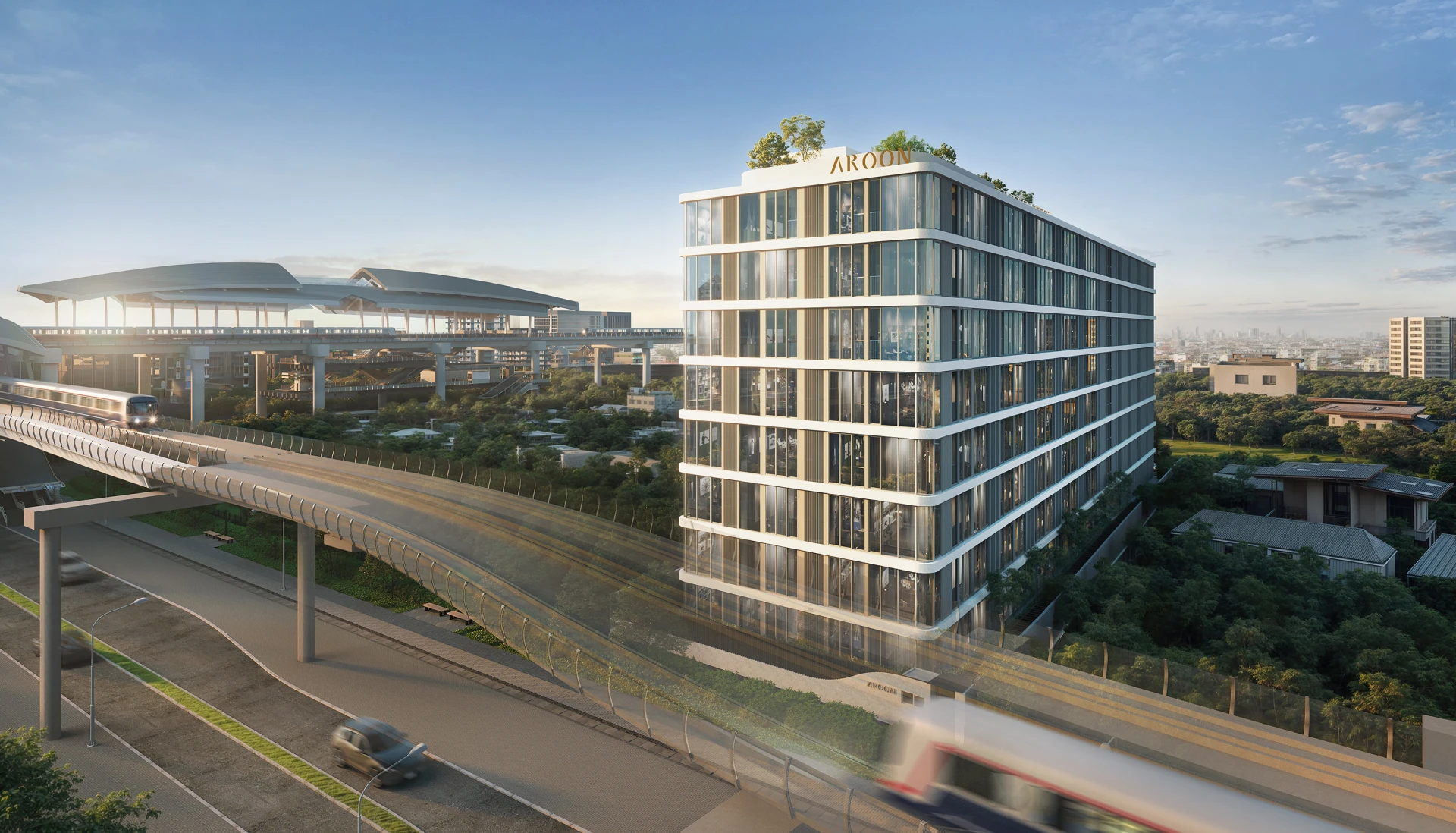
Aroon Siriraj Triple Station gives foreign buyers a different Bangkok condo question from the familiar Sukhumvit or riverside search. Instead of leading with a hotel brand, skyline address or super-luxury amenity deck, the project leans into a medical-district location, low-rise privacy and proximity to Bang Khun Non’s rail interchange story.
For buyers who want a tenant-demand angle beyond the usual CBD executive pool, that is worth a closer look. For buyers who require immediate international recognition, deep resale liquidity or classic expatriate lifestyle amenities, the project also deserves a careful reality check.
Aroon Siriraj Triple Station positions itself as a premium low-rise project near Siriraj.
What the project is
The official Aroon project website describes Aroon Siriraj Triple Station as a premium low-rise condominium on Charansanitwong 32, with 144 units on a site of 1-0-94.69 rai and 56 per cent parking. The listed unit mix includes one-bedroom, two-bedroom, two-bedroom-plus and three-bedroom formats, with unit sizes shown from 28.00 sq m to 103.80 sq m.
The project’s facility story is compact rather than resort-scale. The official website highlights a gym, co-working space, co-dining space, rooftop garden, pool, relaxation hub, smart locker and laundry drop-off service. For a foreign buyer, the immediate question is whether these facilities fit the likely tenant pool: medical professionals, students, hospital-linked families, local owner-occupiers and buyers who want access to the old-city side of Bangkok.
Recent project update
CBRE Thailand published a 22 May 2026 update stating that the project had obtained EIA approval, was scheduled to start construction in May 2026 and was expected to complete by June 2027. The same update described the project as having a value of more than THB 800 million, with prices starting from THB 3.9 million and developer-highlighted rental yields of 5 per cent to 6 per cent.
Buyers should treat any yield statement as a marketing assumption to be tested. The stronger use of that figure is not to accept it at face value, but to ask for the exact unit type, rent evidence, vacancy assumption, furnishing cost, common fees, agent fees and exit liquidity that would be needed to reach it.
The official project details highlight 144 units, low-rise scale and a Charansanitwong 32 address.
Why Siriraj matters
Siriraj is one of Bangkok’s most important medical anchors. A condo near a major hospital can appeal to doctors, healthcare workers, academics, students, patient families and local professionals who want shorter commutes. That demand is different from the expatriate executive demand seen around Phrom Phong, Thonglor, Chit Lom or Sathorn, but it can be resilient when the micro-location is convenient and the unit sizes match real users.
Aroon’s official nearby-amenities list includes Siriraj Hospital, Thonburi Hospital, Bang Khun Non Market, Bang Khun Sri Market, Makro Charan Sanit Wong, Lotus Pinklao, Central Pinklao, Wang Lang Market, The Sense Pinklao, the Faculty of Medicine Siriraj Hospital, Thammasat University Tha Phra Chan and Silpakorn University. This reads more like a practical daily-life and institutional-demand map than a luxury retail map.
The transport angle
The project’s marketing relies heavily on Bang Khun Non connectivity. CBRE’s update described the site as adjacent to MRT Bang Khun Non station on the Blue Line, with the station becoming a future interchange connecting the SRT Light Red Line and MRT Orange Line. It also referenced a 40-metre distance to the interchange station and road, rail and river connectivity.
Foreign buyers should verify the walking route, station access, future-line timing and actual daily convenience during a site visit. A map distance can look strong while the lived route feels different in heat, rain or evening traffic. For rental strategy, the relevant test is whether target tenants would genuinely pay a premium for the specific route, not whether the broader interchange story sounds impressive.
Who may fit this project
Aroon Siriraj is likely to be most interesting for buyers who understand Bangkok’s west-side and medical-district demand. It may suit an investor seeking a smaller-ticket freehold unit with a hospital-linked tenant story, a parent buying near educational or medical institutions, or a local/foreign household that values lower-rise density and the Charansanitwong-Bangkok Noi setting.
It may be less suitable for a buyer who wants a highly liquid international resale address, a large expatriate tenant pool, hotel-branded services, immediate BTS Sukhumvit lifestyle, or a building with many comparable foreign-buyer transactions. The project’s strength is specificity; the same specificity requires better due diligence.
Foreign buyers should compare the project’s hospital-linked demand story with resale depth in the wider area.
Due-diligence checklist
Ask for the latest EIA, construction, payment and completion documentation from the developer or selling agent.
Compare one-bedroom and two-bedroom rent evidence around Siriraj, Pinklao and Bang Khun Non rather than relying on CBD rent assumptions.
Check whether the selected unit is foreign-freehold eligible and how the foreign quota is tracked before transfer.
Model common fees, furnishing, vacancy, agent fees and likely maintenance after handover.
Visit the station route, hospital route, markets and main road access at different times of day.
Review resale competition in older nearby buildings and future supply around the interchange.
Buyer takeaway
Aroon Siriraj Triple Station is not trying to be another central-Sukhumvit trophy address. Its case is more localised: a compact low-rise project near Siriraj, with a transport-interchange story and a tenant base tied to healthcare, education and west-Bangkok daily life. That can be useful for a foreign investor who wants diversification, but only if the numbers are tested on local evidence.
Before reserving, ask IBP Real Estate to compare the project against completed alternatives in Bangkok Noi, Pinklao, Bang Khun Non and more central medical-demand locations. The right question is not whether the brochure is attractive; it is whether the unit, price and tenant pool work together after all holding costs.
COBE Kaset-Sripatum gives foreign buyers a useful case study in how to read a Bangkok condominium outside the most familiar central luxury zones. It is not a Wireless Road trophy address or a riverside branded residence. Its appeal is more practical: a new SC Asset project name, a north Bangkok education corridor, a commuter market and a price band that may sit within reach of buyers who want a smaller-ticket Bangkok holding.
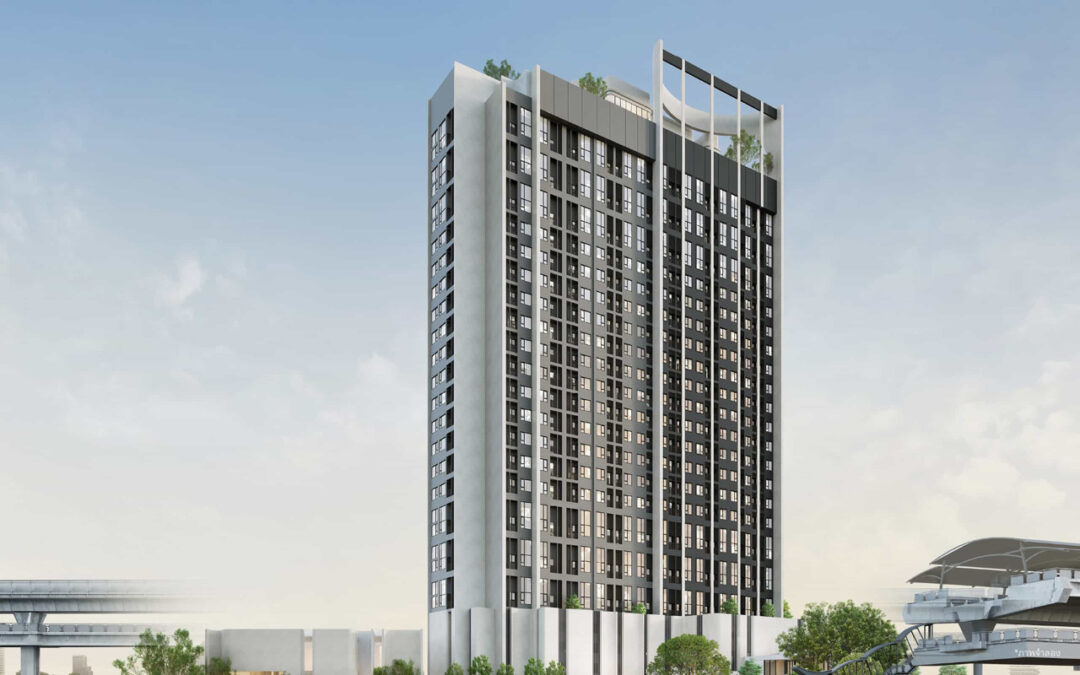
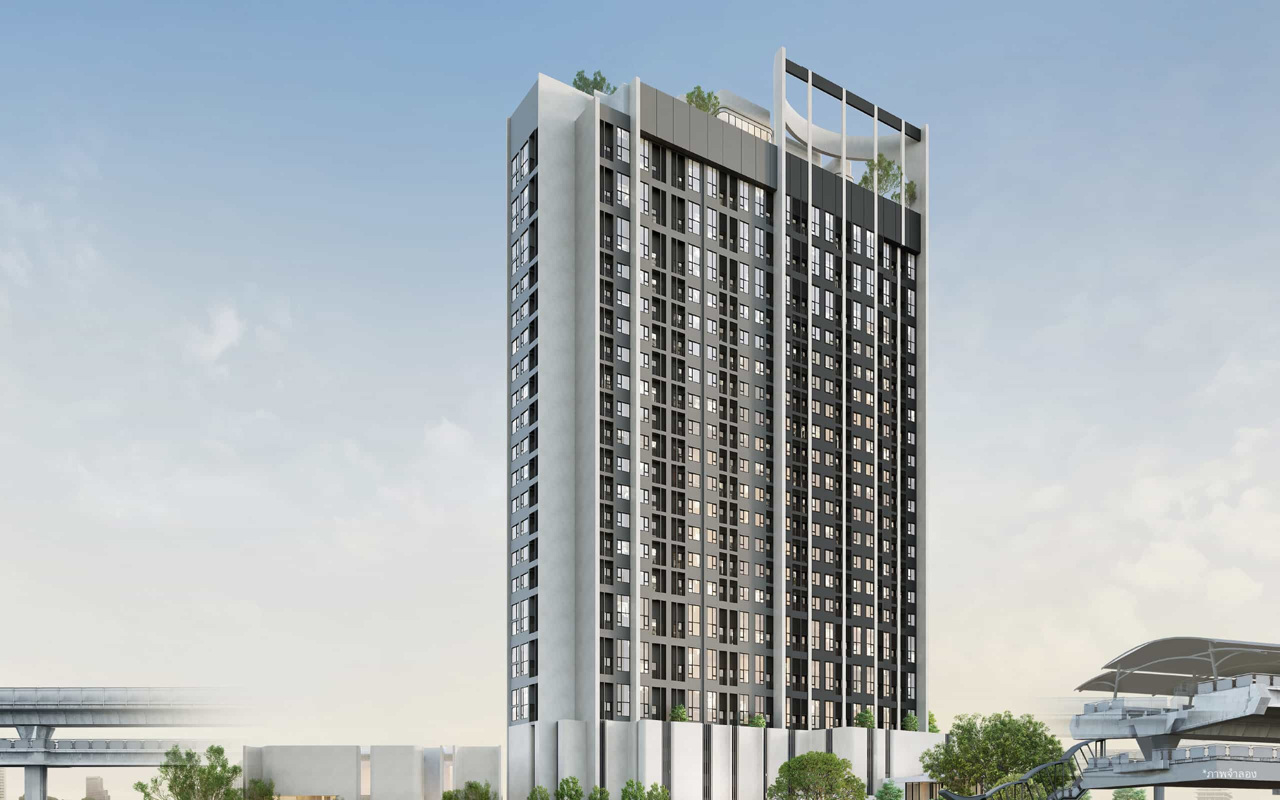
COBE Kaset-Sripatum is positioned by SC Asset for the north Bangkok education and commuter corridor.
SC Asset’s official project page identifies COBE Kaset-Sripatum and shows a starting range from 3.19 to 12 million baht. That price signal is important because it places the project in a different decision set from ultra-prime freehold condos. Foreign buyers should not judge it by the same criteria as a luxury second home. They should ask whether the location, unit mix, building operations and rental audience make sense for the intended hold period.
The buyer question is therefore not simply whether the renderings look attractive. The real question is whether a foreign owner can explain the asset to the next tenant or buyer: near education demand, connected to north Bangkok routines, new enough to feel efficient, and priced with enough discipline to leave room for normal ownership costs.
Why the corridor deserves attention
The Kaset-Sripatum label points buyers towards a part of Bangkok where universities, offices, residential neighbourhoods, commuting routes and local retail overlap. That is a different demand profile from Phrom Phong or Sathorn. It may attract students’ families, younger professionals, local renters, university-linked households and buyers who want access to the northern side of the city without paying central-core prices.
For foreign buyers, this can be attractive if the target is yield discipline rather than prestige. However, the tenant pool needs to be checked carefully. Local demand can be deep, but it may also be price-sensitive. A compact unit can rent well only if the rent, furniture, commute and building condition match what local tenants can actually pay.
Amenity quality matters most when it supports a clear tenant or owner-occupier audience.
How to read the official imagery
The official gallery presents a contemporary building and lifestyle-led shared spaces. Renderings are useful for understanding the developer’s intent, but they are not due diligence. Buyers should ask what will be delivered at handover, whether the finish quality matches the images, how the amenities will be maintained, and what common fees are expected to cover.
This is particularly important in buildings where the purchase price is moderate. A strong amenity package can help leasing, but it also needs long-term funding. Swimming pools, lounges, gyms, garden decks and co-working spaces all require management. If common fees are too low to maintain the facilities, the building may age faster. If fees are too high, yield can be squeezed.
Questions for foreign buyers
Start with foreign quota. A buyer should ask how much of the freehold quota remains, whether the unit being offered is already allocated to the foreign quota, and how evidence of foreign-currency remittance will be handled. If buying off-plan, confirm the contract process, payment schedule, expected completion obligations and what happens if the buyer cannot obtain the required bank evidence on time.
Then check the unit itself. Compact units can be efficient, but they need enough storage, natural light, sensible furniture placement and a layout that tenants understand quickly. A narrow plan, awkward kitchen, weak view or poor air-conditioning placement can matter more than an extra decorative amenity downstairs.
Rental strategy should be conservative
A north Bangkok project should be stress-tested with local rents, not only developer projections. Buyers should compare nearby completed buildings, not just new launches. Ask what similar one-bedroom and studio units actually lease for, how long vacancies last, whether tenants prefer furnished or semi-furnished units, and whether agents see demand from students, staff, young professionals or families.
The safest underwriting assumes normal competition. If several new buildings deliver around the same time, tenants will compare rent, furniture packages, building age, shuttle convenience, parking, internet quality and the responsiveness of the juristic office. A unit that depends only on a launch story may struggle once more supply is available.
Buyers should compare the finished facilities, running costs and management standards at handover.
Developer and management checks
SC Asset is an established SET-listed developer, which gives buyers a recognisable counterparty. That does not remove the need to read the contract. Foreign buyers should still review defect-liability terms, area measurement, transfer-cost allocation, late-payment rules, cancellation terms, handover procedures and the process for appointing the first juristic management team.
After completion, management quality will shape the investment. The juristic office, maintenance schedule, security, lift performance, cleanliness and repair response all affect tenant satisfaction. Buyers who cannot visit often should choose buildings where management reporting is clear and an agent can monitor the unit properly.
Who might this suit
COBE Kaset-Sripatum may suit buyers who want a Bangkok asset with a practical price point, local demand logic and a new-building experience. It may be less suitable for buyers whose priority is international-school family living, embassy-area prestige, luxury resale scarcity or a personal pied-a-terre in the central core.
For foreign buyers comparing new launches outside the prime districts, the discipline is to match the asset to a realistic tenant. Review IBP’s project review notes and district guides before reserving, then verify the contract and foreign-quota position before sending funds.