by kevinyeo | 25 May 2018 | Bangkok Property Market Updates, Investment Analysis
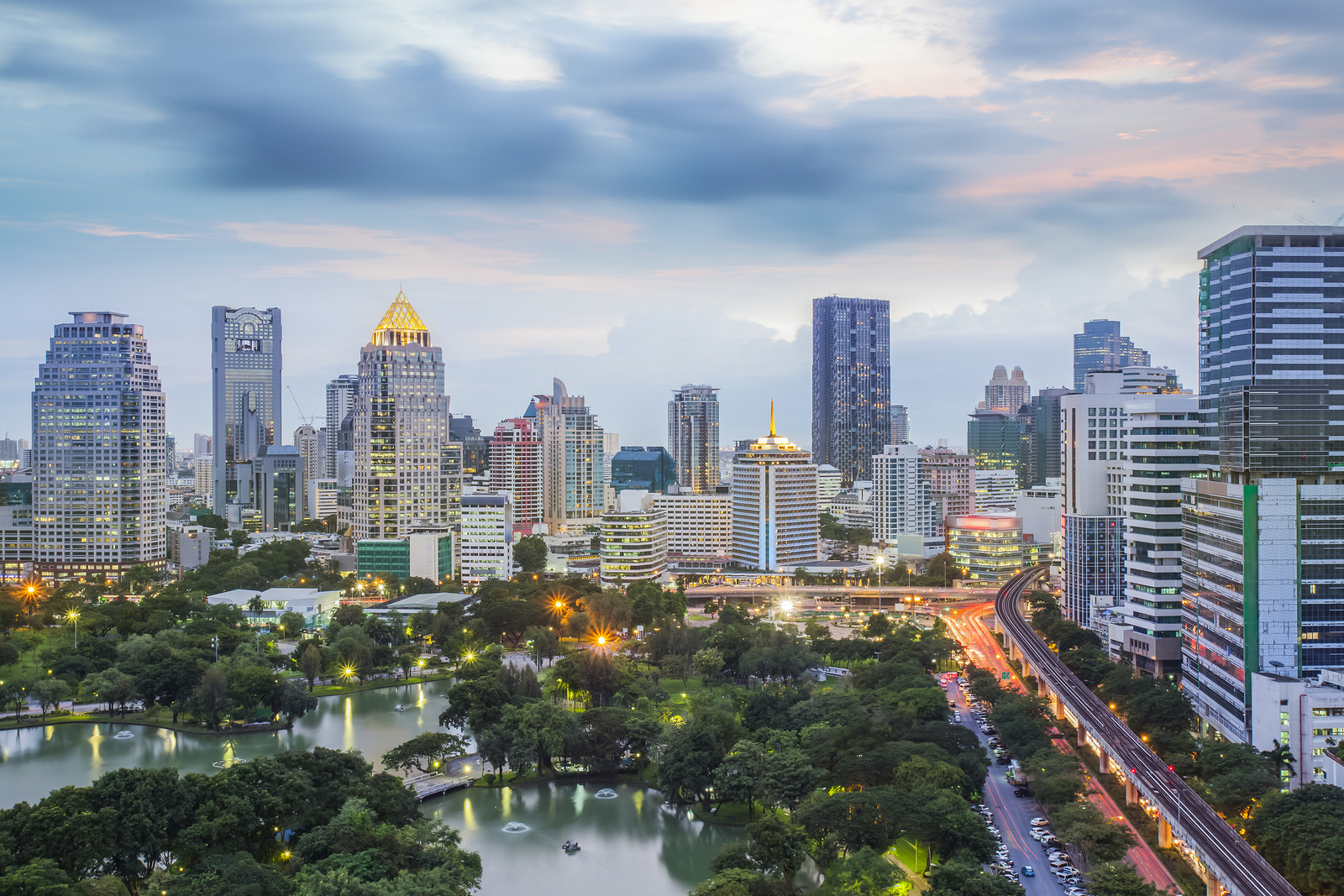
A TOP government think tank has raised its forecast for economic growth to as much as much as 4.7 percent for this year after the report card for the first quarter came within a whisker of that mark.
The National Economic and Social Development Board (NESDB) said it now expects 2018 expansion in the range of 4.2 to 4.7 percent – up from an earlier projection of 3.6 to 4.6 percent – after the economy grew at the fastest pace in 20 years for the three months of the year.
NESDB deputy secretary-general Wichayayuth Boonchit said gross domestic product (GDP) rose 4.8 percent year on year for the quarter, driven by an acceleration in spending by the public and private sectors.
Thailand had suffered GDP contraction of 0.4 percent in the first quarter of 2014, the worst performance for a quarter for the preceding five years.
For opening quarter of 2018, total investment edged up 3.4 percent from the year-earlier period. Public investment increased 4 percent.
Exports expanded 9.9 percent, while tourism-based income jumped 16.8 percent.
With the NESDB’s revised GDP growth forecast of 4.2 to 4.7 percent, the median estimate is 4.5 percent.
The health of the global economy and robust product prices have been cited as factors behind the strong growth performance.
The trend of rising exports is expected to firm up and the nation’s stronger economic base is likely to spur industrial expansion – aided by expenditure flows from the government.
The NESDB expects exports to grow 8.9 percent for 2018, with public spending likely to rise 3 percent and private investment in the order of 3.9 percent. Private consumption is estimated to increase 3.7 per cent. Average headline inflation is projected in a range of 0.7 to 1.7 percent.
Thailand’s current account is forecast to enjoy a surplus that amounts to 8.4 percent of the nation’s GDP.
However, risks to growth loom in the form of increased prices for certain products and crude oil, along with expected rises in interest rates, amid global economic and financial uncertainties
Deputy Prime Minister Somkid Jatusripitak said he drew encouragement from the 4.8 percent GDP marking the fastest growth in five years.
Broad indicators rising
The government had spent most of the past five years driving forward the economy, he said.
All economic indicators, including private investment, exports, and tourism receipts, had improved, he said, adding the prolonged pressures in the agricultural sector had eased.
Somkid said that the strong GDP expansion was likely to raise the confidence of the private sector, increasing the prospects of greater corporate income.
If the scale of investment through public-private partnership (PPP) plans proceeds as planned, businesses in a range of activities will be boosted, with infrastructure and property projects to follow, he said.
Meanwhile, a meeting of the PPP committee chaired by Somkid, yesterday resolved to accelerate the pipeline of such projects. Three big projects are expected this year with an investment of about THB 446.87 billion, according to Prapas Kong-Ied, director-general of State Enterprise Policy Office.
They are the THB 80.6-billion Nakhon Pathom-Cha-am intercity motorway, the THB 128.23 billion Tao Poon-Kanchanaphisek Ring Road mass rapid transit system, and the Purple Line’s THB 238.04-billion eastern and western section MRT project.
The Siam Commercial Bank Economic Intelligence Centre forecasts the economy will grow more than 4 percent this year, citing the 4.8 percent expansion achieved for the first quarter.
The centre’s confidence is based on encouraging signs across all sectors of the economy, as well as a reduction in household debt. These factors will boost consumer spending throughout the rest of the year, it said.
The Bank of Thailand’s senior director for the economy and policy department, Don Nakornthab, said yesterday that the economic expansion for the year’s first three months had exceeded the central bank’s expectations.
Don also highlighted the contributions from investment by the private and state sectors, as well as increased domestic consumption. He said the Bank of Thailand would announce next month a fresh estimate of economic expansion for 2018.
However, Don cautioned that the economy faced a range of risks – both internal and external. The latter included uncertainties over global trade policies and rising oil prices. On the home front is the issue of how well domestic consumption will hold up.
by kevinyeo | 21 May 2018 | Bangkok Property Market Updates, Investment Analysis
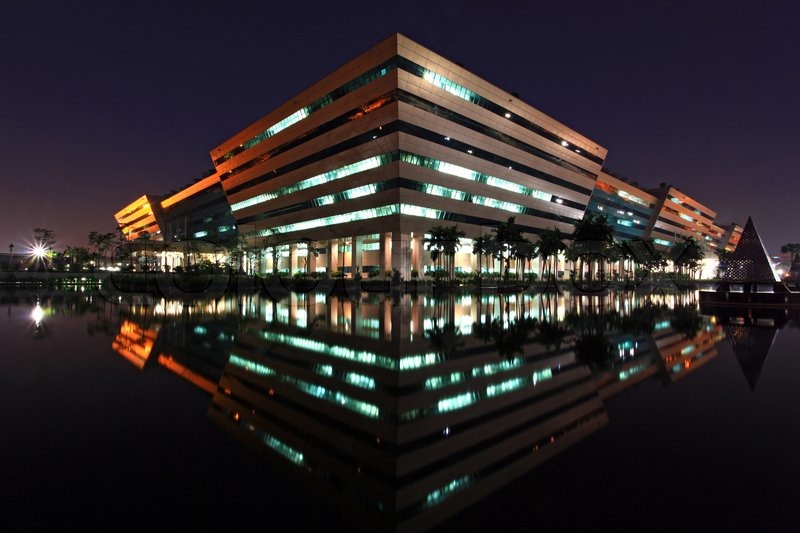
In 2010, Thailand relocated 29 administrative and judicial departments to the Chaeng Watthana Government Complex, and property prices in Chaeng Wattana have risen.
In the past few years, chaeng watthana road has witnessed the opening of Central Chaeng Wattana Mall, Index Living Mall, Big C, Tesco Lotus, and Makro Hypermarket. The resident population has been rising year by year; at the beginning of this year, the Thai government announced that it was connecting the government’s administrative centre to the pink line in the territory of Minh Buri. Construction to commence this year. Wattana Road will welcome an unprecedented golden period of development.
Located in the north of Bangkok, Chaeng Watthana Road is 8 kilometers long and is adjacent to Don Muang Airport on the west. It is adjacent to the Chao Phraya River to the east with three expressways running through it. The government spent 20 billion baht in 2005 to build a 929,800 square meter administrative centre here. Five years later, tens of thousands of civil servants who work here have driven the demand in the local housing market and created many business opportunities. Many shopping malls, hypermarkets, snack bars and massage shops have opened one after another to form a community with good living amenities.
Real estate analysts pointed out that Chaeng Watthana Road is close to the administrative centre of the government and is also close to the Don Muang Airport and Impact venue centre; Don Muang Airport has direct flights to major cities in China and is the gateway for many Chinese tourists to enter and leave the country.
“The surge in Chinese tourists in the past three years has resulted in a higher occupancy rate for hotels in the Chaeng Watthana area. The owners of the apartments that make the apartments into Air BNB rooms have benefited greatly.”
Real estate analysts believe that the MRT pink line, which starts at the Nonthaburi Civic Centre and ends at Min Buri via Watthana Road, is about to start construction and is expected to stimulate housing prices and land prices along the route.
The centre of MRT pink line is at Si Rat Station and Muang Thong Thani Station on Chaeng Watthana Road; Si Rat Station is next to Makro Shopping Mall. Within 2 km radius, there are Central Shopping Centre, Index Living Mall, Tesco Lotus and Big C Shopping Mall. This is largely considered as the central area of Chaeng Watthana.
The Noble NUE Chaeng Wattana project was promoted by developer Noble last month. It was 0 meters away from the Si Rat MRT station and was next to the Makro shopping mall. The response from the Thai buyers was overwhelming.
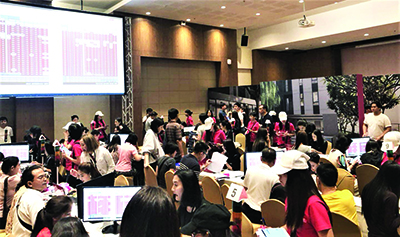
“This shows that the Thai people are very confident in positive Wattana, and in the potential sharp rise in property prices after the opening of the MRT.”

Located at the upcoming Sirat MRT station, there are 2 shopping malls and 3 hypermarkets within a radius of 2 kilometers.
For more information on the launch of Noble NUE Cheang Wattana, visit the official developer sales website.
source: www.udnbkk.com
by kevinyeo | 18 May 2018 | Bangkok Property Market Updates, Investment Analysis
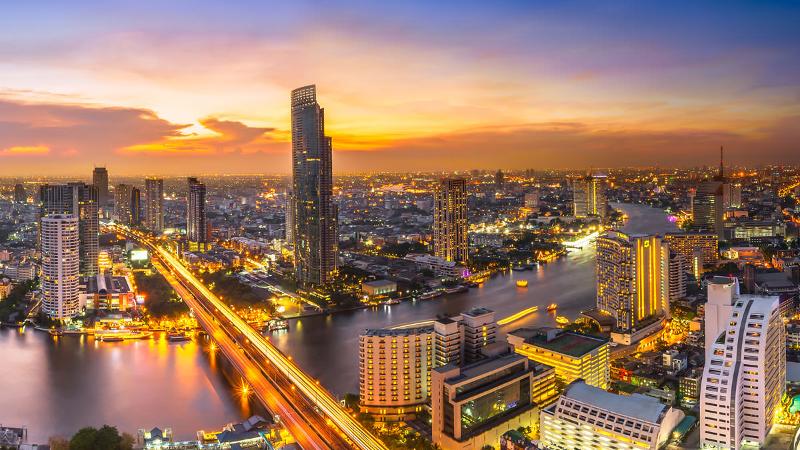
A shortage of land and the new supply of high-end condos on the banks of the Chao Phraya River has driven luxury residential prices to rise by 80% on average from 2014-18, says property consultant JLL Thailand.
JLL managing director Suphin Mechuchep said prices of riverside condos in the luxury and ultra-luxury segment rose to 250,000-300,000 baht per square meter from at least 140,000 baht five years ago.
“To develop a riverside condo project, plots should be large as a setback from the river is required,” she said. “There are rarely large riverfront plots available for new property development on Charoen Krung Road.”
The Bangkok Metropolitan Regulation said for building control, a new building within 45 meters of a river bank must not be higher than 16m.
With land for new condo development scarce and no new condo supply launched last year, the sales rate of riverside condo projects under construction was 80% on average.
Completed projects had sales rates of 95%, she said, and buyers in this segment were those buying for both to live in and as an investment. Some want a riverside unit to build their investment profile.
JLL research found the outstanding number of luxury and ultra-luxury condos in Bangkok totals around 17,200 units, merely 3% of the total condo supply in Bangkok.
Of 17,200 units, 15% or about 2,600 units were on the banks of the Chao Phraya River, said Mrs Suphin.
She said riverfront land shortage has also made the average price of riverside condos in the luxury segment 15% higher than condos in the central business district (CBD).
In the ultra-luxury segment, the average price of riverside condo supply was 5-6% higher than in the CBD.
The riverside condo supply on Charoen Krung and Charoen Nakhon roads comes from six projects, of which half are hotel-branded residences.
Mandarin Oriental at Iconsiam and Banyan Tree are on haroen Nakhon Road and Four Seasons is on Charoen Krung Road, with a current selling price of between 300,000-350,000 baht per sqm.
Menam Residences on Charoen Krung Road is worth 4 billion baht and has 294 units.
The project has 26 units worth a combined 785 million baht or only 5% available for sale. It aims to close sales by the end of the year.
Daecha Tangsin, chief executive of the project’s developer Menam Residences Co, said over 90% of sold units were bought by Thais and the other 10% were bought by Chinese.
“Foreign buyers’ behaviour in the high-end segment has changed since four years ago. They are shifting to riverside projects from the Sukhumvit area,” he said.
Mr Daecha, who also owns the over-30-year-old Ramada Plaza Menam Riverside Bangkok Hotel, located next to Menam Residences, has seen a change in the behaviour of tourists who preferred Bangkok’s riverside area.
“These tourists changed from cultural tourism 30 years ago to shopping after open-air night market Asiatique The Riverfront pioneered the riverfront market,” he said.
Asiatique neighbors his hotel that attracts a large number of Chinese tourist arrivals.
His hotel, with an average room rate of 3,000 baht per night, are expected to see occupancy this year to rise to over 90% from 87% last year.
In the first quarter this year, occupancy was 95%, up from 90% in the same period last year, he added.
Mr Daecha said the company has a six-rai riverfront plot next to the hotel available for development, in which it plans to invest 4 billion baht to develop a 250-room hotel and a convention hall next year.
by kevinyeo | 8 May 2018 | Bangkok Property Market Updates, Investment Analysis
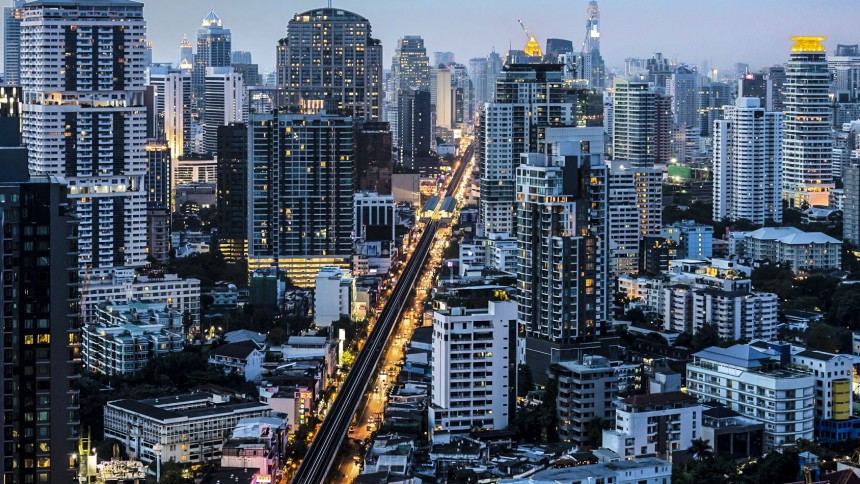
Successive Japanese real estate firms are penetrating the Thai property market by joining forces with local partners to cash in on growing demand for residences.
Tokyo Tatemono Co, one of the major developers in the Tokyo metropolitan area, is the latest entrant into Southeast Asia’s second-largest economy as condominium supply swells in Bangkok.
The company recently signed a joint venture agreement with Raimon Land Public Co to implement a 9.1-billion-baht project for the development of two high-rise condo complexes, one in Sathon and the other in Phrom Phong, both in the heart of the capital.
This is the company’s first real estate project in Thailand, following ongoing development projects in Singapore and Myanmar. The project calls for about 400 units in total, each costing more than 10 million baht, with construction set to start later and be completed in 2021.
Katsuhito Ozawa, executive managing officer of the Tokyo-based firm, said his company has good long-term prospects for property investment in Thailand and believes that stable economic growth will continue to create more residential demand.
Raimon Land, which will own a 51% stake in the planned joint venture, has mainly specialized in the middle- and upper-grade residences in the centre of the capital, and aims to double its annual revenue to 10-12 billion baht in the next five years in partnership with Tokyo Tatemono, chief executive Adrian Lee said.
Japanese developers have been flocking to the Southeast Asian nation since Mitsui Fudosan Co, a leading real estate firm at home, tapped the Thai market by teaming up with Ananda Development Plc in 2013 for a project with 1,875 residential units.
Major rivals such as the Mitsubishi Estate group, railway-to-property and hotel chain conglomerate Tokyu Corp and Nomura Real Estate Development followed suit, forming partnerships with local counterparts.
The 20 joint projects between Mitsui Fudosan and Ananda total about 16,000 housing units, the largest among Japan-Thai alliances, while Mitsubishi Jisho Residence and AP Thailand Public have developed 11 projects, supplying nearly 12,000 units in total.
Meanwhile, various partnerships have emerged such as Hankyu Hanshin Properties Corp and Sena Development Plc, Osaka-based Shinwa Real Estate and Woraluk Property Public, and Tokyo-based Hoosiers Holdings and All Inspire Development Public.
The property market in Bangkok remained vigorous in the first quarter of this year, said Nalinrat Chareonsuphong, managing director of Nexus Property Marketing. “We have started to see more condo projects that target Japanese people in Thailand and we expect to see at least 4-5 mega projects come from Japanese developers this year.”
A Thai real estate analyst, on condition of anonymity, said that Japanese investors have turned to the real estate and service sectors as “a new opportunity” to expand business abroad on the back of steady growth in the property market, especially the condo segment, although they previously focused on the manufacturing sector.
The Thai government’s investment promotion schemes such as the Eastern Economic Corridor and the expansion of mass rapid transit systems in the capital and suburban areas are providing foreign investors with positive factors to tap into the property market.
Mr Nalinrat said the proportion of medium- to small-sized developers, including foreign competitors, increased significantly in the first quarter of 2018.
Japanese investment is also a chance for Thai developers to benefit from funding and expertise, the analyst said. Kyodo
by kevinyeo | Mar 8, 2018 | Bangkok Property Market Updates, Investment Analysis
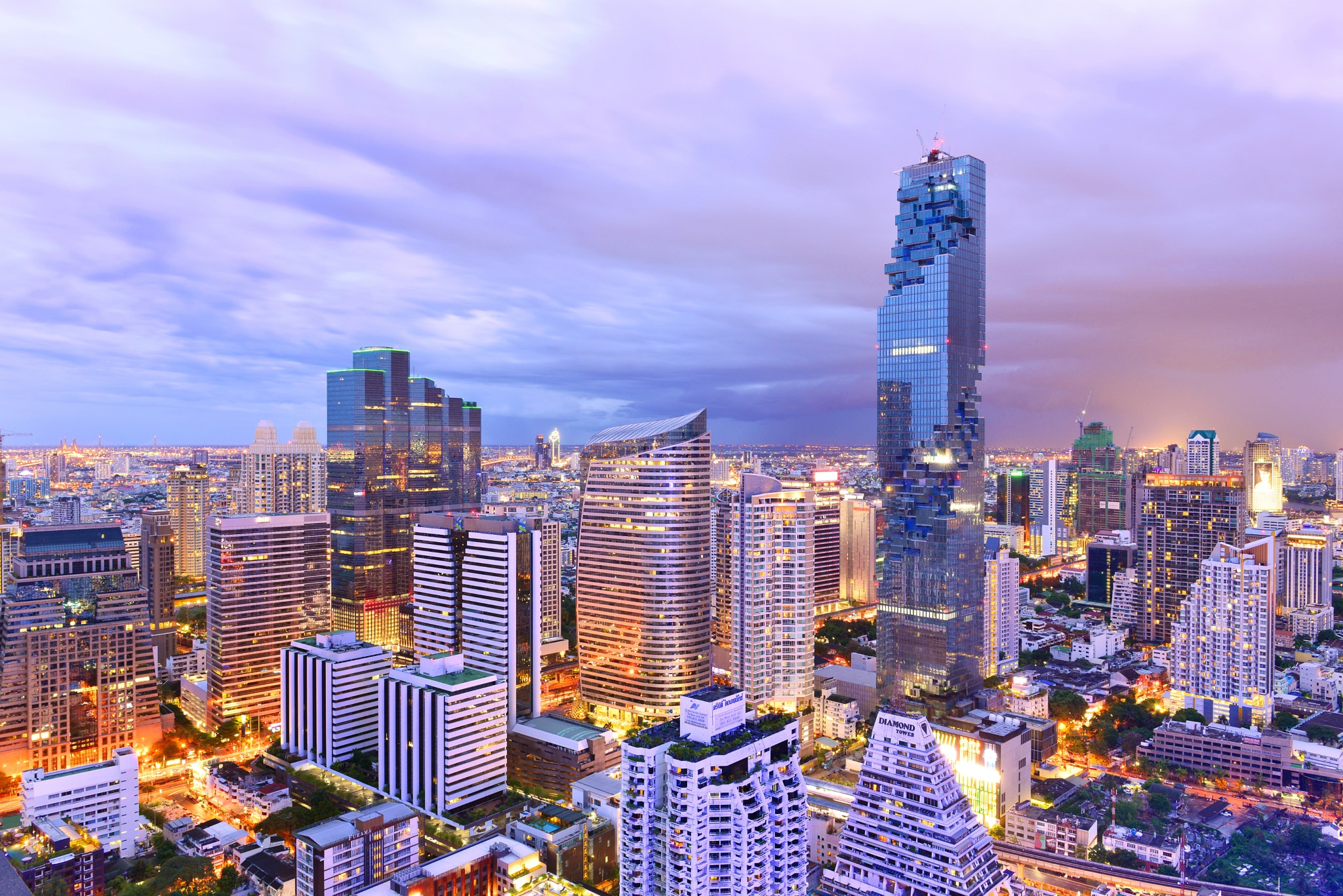
The Real Estate Information Centre (REIC) says the vacant land price index in Greater Bangkok last year was 165.6, a gain of 65.6 points from 2012, the base year, and increase of 13.2% from 2016.
The highest increase in land prices was 14.9% in 2013, while the lowest increase was 4.6% in 2016.
In the fourth quarter of 2017, the vacant land price index in Greater Bangkok was 168.3, a rise of 1.1% from the third quarter and 12.5% year-on-year.
Mass transit lines and land use depending on city zones have an impact on land price.
The announcement of a mass transit line makes land prices rise 24.6% on average. For any change in zoning regulations, land prices increase by 22.8% on average.
The top five areas with the highest increase in land prices during 2012-17 were located along the MRT route with a rise of 173.7% or 29% a year on average, followed by the Dark Red Line between Bang Sue and Hua Lamphong with a rise of 169.5% or 28.2% a year.
The area with the third-highest increase in land price was along the Gold Line between Thon Buri to Pracha Thippok with an increase of 148.9% or 24.8% a year.
The fourth-highest rise was in locations along the Green Line (Mor Chit-Saphan Mai-Khu Khot) with a rise of 148.1% or 24.7% a year.
The fifth was in locations along the Dark Red Line between Bang Sue and Rangsit with a 144% rise or 24.1% a year.
The REIC conducts quarterly surveys of vacant land prices based on land transactions at the Lands Department.
The most recent data was from land transferred to companies, as declared prices were mostly actual prices. Land transferred to individuals is usually declared at lower than the actual price.
by kevinyeo | Mar 8, 2018 | Bangkok Property Market Updates, Developer Watch, Investment Analysis
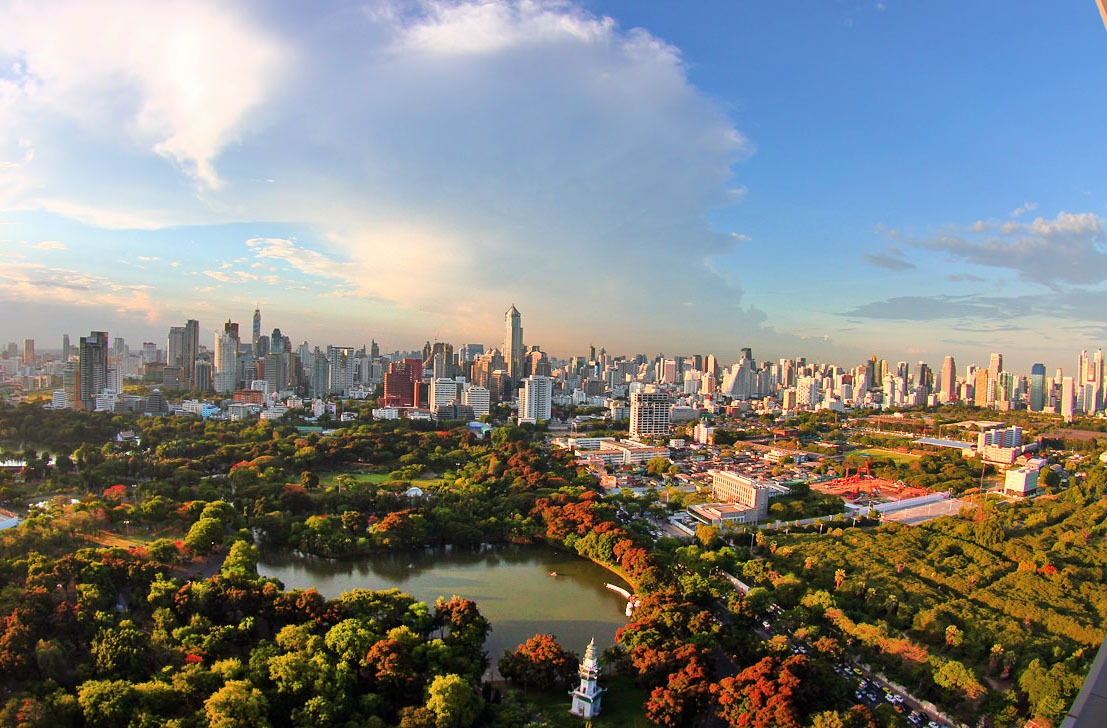
For your average Joe, 100,000 baht per square wah is no trifling sum for a piece of land. But for inner Bangkok, it’s small change, as the area has set a record high of 3.17 million baht per sq wah for a 880-sq-wah plot on Lang Suan Road. (One wah equals two meters.)
SET-listed SC Asset Corporation Plc, which is developing the record-setting plot, remains assured of the area’s strong demand.
Nuttaphong Kunakornwong, chief executive of SC Asset, said hefty land prices in inner Bangkok are reshaping the luxury residential development landscape, as only truly rich Thais and global buyers can afford them.
“I’m confident there is still demand in the super-luxury segment,” Mr Nuttaphong said.
SC Asset offered the highest price through a sealed bid and was the only player to bid above 3 million baht per sq wah. The second-highest bid was 2.6 million baht, said a bidder who asked not to be named.
“SC quoted that price because it really wanted it,” the bidder said.
Based on this land cost, units will reach 500,000 baht per square metre, but Mr Nuttaphong said there are buyers willing to bear this price point.
“The location near Chidlom BTS is the most prime in the country, and the Lang Suan area is like nowhere else,” he said. “We do not aim to launch the highest selling price [per sq m] but we are confident that units priced above 500,000 baht can be sold.”
Ben Taechaubol, chief executive of SET-listed developer Country Group Development Plc, said 3.2 million baht per sq wah is not overpriced for a plot in a prime location, as land prices continue rising, against a decrease in the number of plots to be developed.
“If a developer offers a product that meets the requirements of the luxury segment, prices of 500,000 baht per sq m and above can justify the land prices,” he said. “Luxury is not just a property, but a lifestyle.”
Aliwassa Pathnadabutr, managing director of property consultant CBRE Thailand, said a sharp increase in the price of land plots, particularly those in prime locations, shows that super-prime land remains in high demand because locations are limited.
“There are always concerns about dramatic price increases in any asset class, whether it be central business district land, stock shares, commodities or bonds,” she said. “The price increases are confined to a small area and have not risen in the whole of Bangkok.
“There is a finite amount of demand for super-luxury products unless there is a significant increase in foreign buying, which is why developers attempting to achieve these prices must have a product that buyers believe is super-luxury and worth the price.”
The average prime downtown super-luxury price is 350,000 baht per sq m, which Ms Aliwassa said is acceptable for this market. Products priced at over 500,000 baht per sq m target a very niche market, in which demand is specific to the ultra-luxury market, which is small.
This type of super-luxury product must be in a super-prime location, offer freehold titles, be low-density, and have features and specifications that really match the requirements of this group of buyers, she said.
It is important to note that the sale of this type of product will not be as fast as luxury and other high-end projects with lower prices, Ms Aliwassa said.
Chatchai Payuhanaveechai, chief executive and president of Government Savings Bank, said foreigners will become a more important part of the Bangkok property market, as condominiums priced higher than 300,000 baht per sq m may not cater primarily to Thais.
Prasert Taedullayasatit, chief executive for high-end condominiums at Pruksa Real Estate, said demand in the luxury segment is varied and comprises real demand, investment buyers and foreigners.
“The high-end condominium market continues to grow,” he said. “Given land acquisitions in the pipeline among large developers, new condominium supply being launched this year will be in the upper-end segment, mostly the Sukhumvit area.”
Ms Aliwassa said many land plots in prime locations released on the market during the past few years, both for sale and rent, have felt the effects of the new inheritance tax, which was created as an incentive to sell.
But a greater motivator has been the rising price of land, which has incentivised some families to convert non-revenue-producing sites into cash with massive capital gains, as they do not have the financial resources or expertise to develop the land themselves.
Suphin Mechuchep, managing director of property consultant JLL Thailand, said prime land plots recently acquired in Bangkok’s central business district have strong potential to accommodate ultra-luxury condominium development projects with prices starting from 300,000 baht per square metre.
In some premium areas such as Wireless, Phloenchit, Lang Suan and lower Sukhumvit, where land prices have skyrocketed on strong demand from major developers, future condominium projects will fetch prices at more than 500,000 baht per sq m, she said.
“Growing scarcity of land for new development in these areas, coupled with excellent accessibility and amenities, justifies such pricings,” Mrs Suphin said.
But new projects must also offer special products with truly superior specifications that will meet and can create demand in a niche market, she said.
The levels of demand in this niche market cannot be underestimated. There are ultra-high-net-worth Thais and foreigners who are looking for an opportunity to own a trophy property asset — a collector’s item — for which they can be proud because of its excellence and rarity, Mrs Suphin said.
“It is clear that ultra-luxury condominiums in Bangkok do not offer attractive rental yields,” she said. “But for people who can afford such premium products, yields do not count.”
Mrs Suphin said concerns over the financial burden from the proposed land and buildings tax are expected to encourage owners to offload their property, particularly that which is high-value and underutilized.
But evidence shows that recent sales of prime land plots in Bangkok have been motivated by other factors.
One of the recent transactions was the sale of the British embassy site on Wireless Road. It was reportedly a part of the British government’s efforts to raise funds for upgrading other embassies around the world.
A sale of the Australian embassy site on Sathon Road acquired last year by SET-listed developer Supalai Plc followed the embassy’s relocation to new premises opposite Lumpini Park.
At the beginning of this year, JLL concluded sales of two prime land plots, for which landlords were motivated by high price offers from several property development firms.
Located in Bangkok’s CBD and sized at two rai each, the two plots were sold for a combined value of more than 3.6 billion baht.
“The proposed land and buildings tax should have a more apparent impact on many property owners when there is more clarity about the new tax scheme and the roll-out plan,” Mrs Suphin said.
“But we do not expect the new tax to lead to distressed sales, particularly for prime real estate assets. Developers and investors will compete fiercely for sought-after assets when they are put up in the market.”
by kevinyeo | Mar 8, 2018 | Bangkok Property Market Updates, Infrastructure & Urban Development, Investment Analysis
Eleven new mass transit lines citywide spanning 480 kilometers will change the property landscape and urban lifestyles in the next decade, say property analysts.
Surapong Laoha-Unya, chief operating officer at Bangkok Mass Transit System Plc, operator of the Skytrain, said new mass transit lines scheduled for the next decade will change the property landscape similar to the skytrain’s effect the past 18 years.
The 11 new lines include the Orange Line running from Taling Chan-Thailand Cultural Centre-Min Buri, the Pink Line from Khae Rai to Min Buri, the Yellow Line from Lat Phrao to Samrong and the recently approved 22km Brown Line monorail from Khae Rai to Lam Sali.
“Land prices in locations along the Skytrain and MRT rose by 10% per year on average, compared with an average increase of 3% in land prices in Bangkok,” he said Wednesday at a seminar on mass transit lines.
In popular locations in the inner city like Nana, Asok, Phrom Phong and Ari, land prices increased higher than 10% per year.
Mr Surapong said the amount of new housing supply being launched in Bangkok each year was falling, but condos near mass transit lines are rising, with a sales rate exceeding 70% on average.
Ridership has risen by 9.1% per year since the skytrain started running in 1999. The Green Line averages 700,000 rides on weekdays and 800,000 rides on weekends now, up from 150,000 rides in the early years.
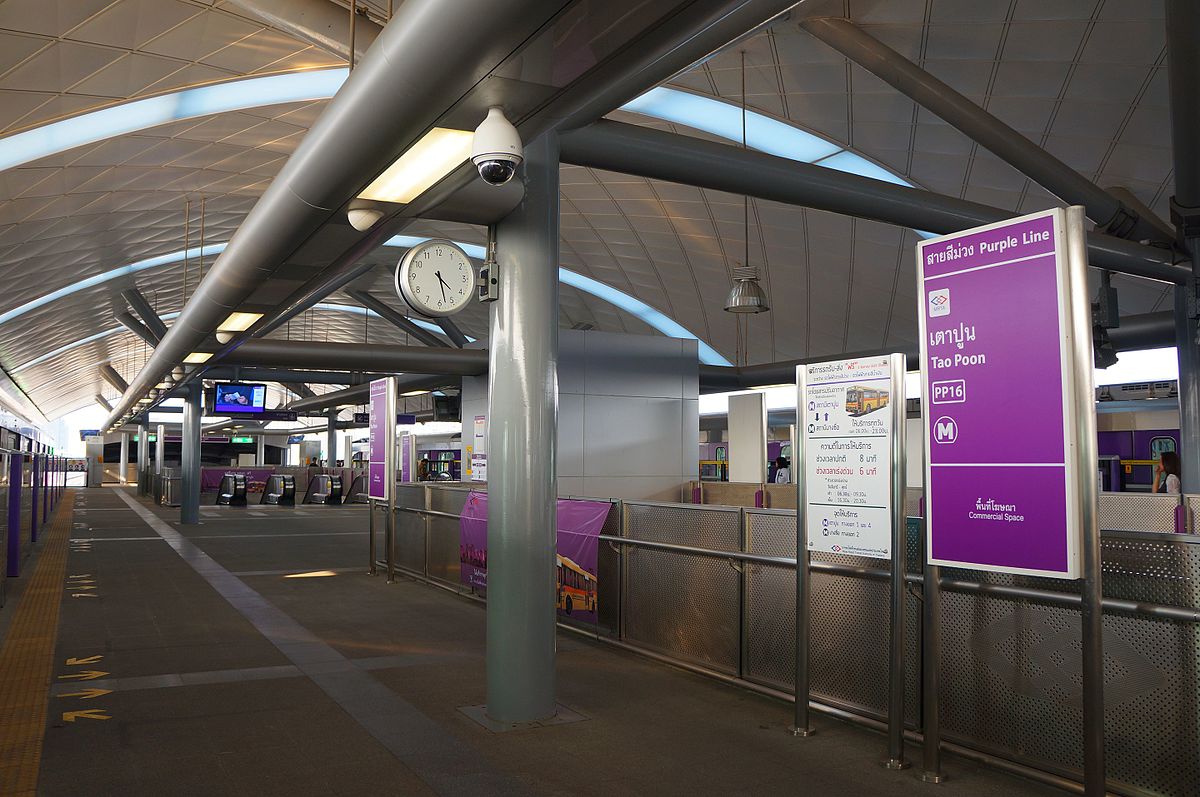
However, the number of rides on the Purple Line is only 50,000-60,000 a day.
Tritecha Tangmatitham, managing director of SET-listed developer Supalai Plc, said there were two factors that would help boost condominium demand: high land prices and heavy traffic.
“In locations along the Purple Line on Rattanathibet Road onwards, land prices are still low and traffic is not too heavy,” he said.
“People usually prefer a single house or townhouse to a condo unit. This is why there are still several unsold condos there.”
During the Purple Line’s construction, condominium launches had a good sales rate. When it was completed and a slew of new condo supply launched, some consumers found living in a condo near the Purple Line was not to their liking, said Mr Tritecha.
“The Purple Line is not popular as it takes longer and is more expensive than using a passenger van,” he said.
“Even when the missing link was connected, it did not matter.”
Over the next seven years the amount of new mass transit lines is set to triple.
“The amount of new condo supply launched in the inner city was large during the past few years as development of mass transit lines disconnected after the Purple Line,” said Mr Tritecha.
The Orange, Yellow and Pink lines will open new locations for property development, expanding to wider areas. Last year new condos launched in some locations where they had been lacking for several years, he said.
Chatchai Payuhanaveechai, chief executive and president of Government Savings Bank, said higher land prices, driven by mass transit lines, would change condo demand in inner city locations as prices soared.
“Foreigners will become a new market for the Bangkok property market as condos priced higher than 300,000 baht per square metre may not be mainly for Thais,” he said.
“Many wealthy Thais still want to live in a single house on a large plot of land.”
According to the bank’s research, the new residential supply launched in Greater Bangkok rose 3.5% last year while residential demand increased 5.5%. Residential value increased 11% as residential prices rose.
In a related development, Deputy Commerce Minister Somkid Jatusripitak, who Wednesday chaired a meeting of the Commission for Management of Land Traffic, ordered related agencies to speed up 11 new mass transit developments in Bangkok and five light rail projects in Khon Kaen, Chiang Mai, Phuket, Phitsanulok and Nakhon Ratchsima to ease the traffic congestion.
All mass transit development projects should become operational by 2025, he said.
by kevinyeo | Mar 2, 2018 | Bangkok Property Market Updates, Investment Analysis
The condominium market in the Rama IX area has growth potential because of the intersection of two mass transit lines and strong demand from Chinese buying for their own use and for investment, says property analyst Surachet Kongcheep.
The Rama IX area will continue to be one of the most attractive locations, he said, as the government plans to build the Orange Line from Thailand Cultural Centre to Min Buri, a route that interchanges with the MRT subway at Rama IX Road.
“New office supply at this location will be limited because land prices are so high that the development of new office buildings may not be feasible or worth the investment,” Mr. Surachet said.
Condominium supply will continue expanding in locations along Ratchadaphisek Road rather than Rama IX Road as the latter has less potential. But the amount of new supply will likely be limited when compared with other locations along with new mass transit lines.
“Rama IX-Ratchadaphisek is one of the locations in Bangkok where there is a large number of foreign buyers, particularly Chinese who are keen to buy a Bangkok condo unit for either their own use or an investment,” Mr Surachet said.
He said the area from the Rama IX intersection to Thailand Cultural Centre MRT is called the new central business district (CBD), but it is more accurate to call it a CBD extension as office supply totals only 405,000 square meters.
“New office supply completed and added to the market the past four years was located along Ratchadaphisek Road from the Rama IX intersection to the Thailand Cultural Centre MRT station as land prices in the traditional CBDs were not worth the investment for rental offices,” said Mr Surachet.
Many office buildings around the Rama IX intersection or within a radius of one kilometer were a key factor driving new condominium supply during the past several years. A big expansion took place in 2012 and a bigger one in 2017.
In 2017, the number of new condos launched in the Rama IX area totaled 2,848 units. The outstanding number of condos at this location totaled 14,917 units, with more than 1,500 units from three projects scheduled for launch this year and next.
The condo sales rate for the area exceeded 85%, which is considered healthy, he said. Some projects partially launched in February and recorded a high sales rate.
Mr Surachet said some new condo projects planned for launch during 2018-19 will have sales prices of more than 250,000 baht per sqm, while the average price at the location is 130,000 baht per sqm, rising 3% per year.
The current CBD locations cover key roads including Silom, Sathon, Rama I, Rama IV, Ratchadamri, Wireless, Lang Suan, Phloenchit and Sukhumvit between sois 1 to 21.
The total area of office buildings for all grades is over 3.48 million sqm.
Most office spaces are at buildings over 10 years old, while new buildings aged less than 10 years had combined office space of only 453,900 sqm, accounting for 13% of the total, he said. The latter are in locations where either the Skytrain or MRT serve.
CBDs are locations where land prices are the highest in Bangkok, continuing to rise during the past several years.
A plot priced lower than 1 million baht per sq wah in a CBD is very rare, said Mr. Surachet.
With the continual rise in land prices, there have been no new office buildings on freehold plots, only leasehold plots.
by kevinyeo | Feb 6, 2018 | Bangkok Property Market Updates, Investment Analysis
The property market is expected to grow by 5-10% this year, led by the condominium sector and driven by myriad positive factors, say experts.
Atip Bijanonda, president of the Housing Business Association, said the purchasing power of potential buyers remains strong this year, particularly in Greater Bangkok, while banks are starting to lend to more prospective homebuyers.
“Condominiums will lead the market growth with a higher expansion than the overall market, as people’s lifestyle has changed,” Mr Atip said. “There will be no condominium oversupply. Developers are just concerned about the sales rate, which prevents them from over-investment.”
Prasert Taedullayasatit, president of the Thai Condominium Association, said large developers will continue to dominate the market, particularly in the condominium segment, as land costs for high-rise development remain high.
In the single-house segment, the market share of small- and medium-sized developers fell from 54% in 2013 to 34% last year. This portion will keep declining.
Kittipol Pramoj Na Ayudhya, vice-president of the Thai Real Estate Association, said hotels in all star categories will be boosted by tourism growth. The occupancy rate of Bangkok hotels last year was quite high at 80%, despite intensifying competition.
“The strong baht may have an impact on the tourism market, but it will affect only the budget segment,” Mr Kittipol said. “There will be new hotel supply in the future of about 20% of total supply, but strong growth in the tourism sector there should be no concern.”
Tourist arrivals have also boosted the retail sector, with retail sales growth of 10.6% in last year’s third quarter. Meanwhile, the new supply of retail space will still be limited. The retailer will have to adjust strategy to meet consumers’ changing expectations.
“The office market is very healthy, as vacancy rate is quite low at 8% and rental rates rise 4-5% per year,” Mr Kittipol said. “However, return on investment from office space is not as good as from apartments in prime locations like Sukhumvit.”
Don Nakornthab, senior director of the economic and policy department at the Bank of Thailand, said the central bank forecasts 3.9% GDP growth this year, driven by internal factors.
“The government’s investment in megaprojects, many of which were postponed from last year, will be a key driver for the country’s economic growth this year,” Mr Don said. “Other factors like tourism, export, and private investment are also in a positive trend.”
But interest rates will not be headed lower, he said at a seminar held yesterday by three real estate associations.
Meanwhile, external factors are on a positive trend, including the global economic growth of 3.9% during 2018-19 as predicted by the IMF. The US, Europe, and China are poised for an economic expansion.
Wichayayuth Boonchit, deputy secretary-general of the National Economic and Social Development Board, said the NESDB expects GDP growth this year of 4.1%, the highest in six years, fuelled by government spending, low-interest rates, and people’s rising income.
Benjarong Suwankiri, head of strategy and transformation at TMB Bank Plc, said the property market will grow an estimated 5-6%.
“Condominiums along mass transit lines and single houses and townhouse in the upper-end segment will continue to be healthy,” Mr. Benjarong said. “The low-end segment and provincial markets still are not good.”
Mortgage loan rejection rates remain high, he said, but they will gradually decline this year as banks regain their appetite to lend.
“Government spending and the Eastern Economic Corridor (EEC) initiative will play a key role in boosting the economy and sentiment this year,” Mr Benjarong said.
Pojanee Artarotpinyo, deputy secretary-general of the EEC Office, said 2018 will see the start of infrastructure development such as high-speed trains linking U-tapao and Suvarnabhumi airports and the surrounding cities.
“We are studying how many new cities should be developed,” Ms Pojanee said. “The Department of Public Works and Town and Country Planning (DPT) studied and suggested 11 new and existing cities [along high-speed lines].”
She said Chachoengsao will be a residential town for those working in the EEC. Chon Buri will be a financial centre and an aerotropolis, while Rayong will be a research and education hub.
“With the EEC, the unused land will be developed,” Ms Pojanee said. “Land price will rise. Travel will be more convenient and people will have various choices of jobs.”
DPT deputy director-general Anawat Suwannadej said the department is doing a comprehensive city plan for the EEC, which will span the provinces of Chon Buri, Rayong, and Chachoengsao. If the plan is completed, their existing city plans will be revoked.
by kevinyeo | Feb 6, 2018 | Bangkok Property Market Updates, Infrastructure & Urban Development, Investment Analysis
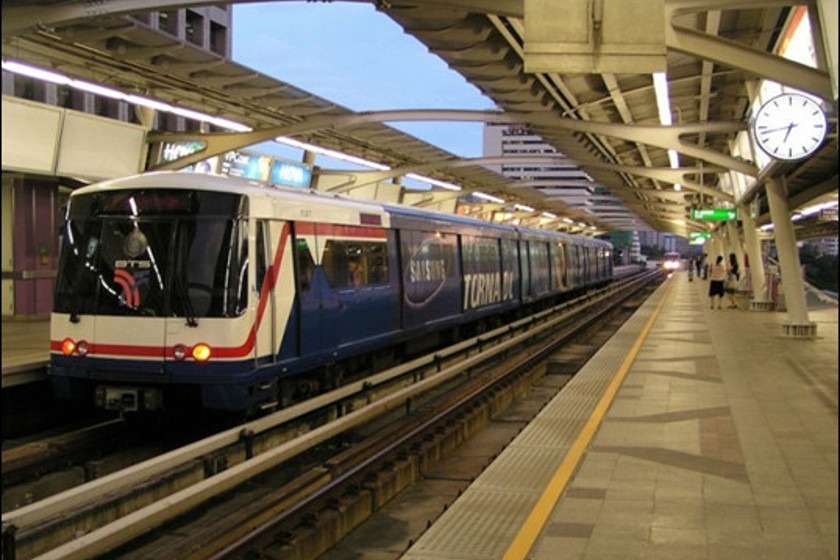
Knight Frank Thailand Research (KFTR) says new mass transit routes will continue to rule real estate conversations in the coming years, as there are a lot of major public transport changes happening in Bangkok in the near future.
The company says it expects heightened competition in previously less accessible zones of Bangkok, especially areas along the BTS Light Green Line Extension (Mo Chit-Kukot), MRT Blue Line Extension (Taopoon–Thapra-Hualamphong), MRT Pink Line (Kae Rai–Minburi), MRT Orange Line (Rama 9–Ramkamhaeng), and MRT Yellow Line (Ladprao-Huamak).
Rent and sale prices in those aforementioned areas are foreseen to increase substantially based on a project’s proximity to convenient transport.
“The amount of new supply launched in Bangkok is expected to mount continuously and big-name developers will be key players in the market supported by their solid capital structure, high bargaining power, and innovative amenities that focus more on experiences and future lifestyle,” KFTR said.
“While selling prices in the peripheral is expected to be stable on the back of land abundance and affordable land prices in the areas, prices for future supply in the CBD is anticipated to increase in line with land scarcity and soaring land prices.”
In 2018, more affordable units are expected to enter the market, especially those between THB 3 million to THB 5 million that will continue to draw attention from buyers in the mid-range market segment, KFTR said.
“However, developers should be cautious in starting new projects in the lower-end to middle market segments along new mass transit routes in the suburbs to cushion against the risk of oversupply.
“On the demand front, demand across the market will continue to be driven upwards by domestic home buyers and expatriates. Moreover, one trend that is helping drive demand is an influx of foreign buyers, especially those from China who are looking for a safe place to store their wealth.”
by kevinyeo | Jan 30, 2018 | Bangkok Property Market Updates, Investment Analysis
IN THE PAST DECADE, Thai properties marketed overseas were either projects in prime downtown Bangkok or properties in top resort destinations such as Phuket.
Nowadays, visitors and investors are becoming more familiar with other non-prime locations in Bangkok through information from social media and digital communications.
New condominium property prices in downtown Bangkok have increased to an average of over THB 260,000 per square metre, with starting prices of over THB 10 million. The high Central Business District (CBD) prices combined with marketing efforts of non-prime locations by Thai developers, over the last two years, has increased awareness and interest from overseas investors in non-CBD Bangkok locations who are keen to invest in the fringe of the downtown areas or in midtown locations, especially along the extended mass transit lines where prices are more affordable than downtown areas.
The popular prices for these locations range between THB 3 to 10 million per unit.
Even though Chinese buyers are one of the fastest-growing groups of overseas buyers for real estate, CBRE believes that Hong Kong investors remain the most active in Thai property market. Chinese buyers have been constrained by increasingly strict capital controls and Chinese government policies aimed at restricting purchases of overseas property by their nationals.
A new Chinese regulation requires that banks report any transfer over USD 29,000 and prohibits people from “lending” their quotas to other individuals, making it more challenging for a person to transfer money over their allowed annual quota. Additionally, the Chinese government has also banned transferring funds overseas for purchasing bonds, “insurance” products, and real estate; which has made it more difficult for mainland Chinese buyers to invest foreign property markets.
CBRE pioneered marketing of Thai properties overseas in the 1990s such as Laguna Phuket and SV City to purchasers in Hong Kong and Singapore. During the 2010s, Hong Kong investors focused on Phuket properties and super luxury and branded properties in Bangkok such as 185 Rajadamri, and Four Seasons Private Residences Bangkok.
In 2015, the mid to lower end condominium market slowed down resulting in Thai developers looking to overseas buyers.
THE LINE Jatujak-Mochit was the first notable non-CBD Bangkok project to be marketed in Hong Kong. More projects have since been |exhibited in Hong Kong during 2015-2017.
According to our counterparts at CBRE Hong Kong, Hong Kong buyers’ investments in the overseas property market totalled USD 6.6 billion in the first half of 2017 alone. Investment locations included the UK and Australia in the early stages, Japan started 2-3 years ago and Thailand in recent years. The total transaction value of Thai properties is expected to reach HKD 3 billion (approximately THB 12.3 billion) in 2018.
Records indicate that approximately 85 projects by 35 developers from Thailand were marketed to Hong Kong buyers last year. Ananda Development and Sansiri were among the most active in marketing to Hong Kong and most major condominium developers were active in marketing at least 2-4 projects.
The influx of foreign developments, especially off-plan, into Hong Kong, has been so significant that the Hong Kong Estate Agents Authority will issue new regulations set to take effect in April of 2018 to govern agents selling properties located outside of Hong Kong to regulate agents and protect buyers.
This year, developers are bullish about the prospects for the real estate industry in Thailand and are planning many new launches as well and new phases in current projects.
This increase in supply will mean that developers will be targeting foreign purchasers for projects in good locations with high yield potential. CBRE expects Hong Kong to remain a strong investment buyer market for Thai properties in 2018 for both the luxury and mid-market segments.
Note: By Aliwassa Pathnadabutr, Managing Director of CBRE Thailand
by kevinyeo | Jan 30, 2018 | Bangkok Property Market Updates, Expat Living & Relocation, Investment Analysis
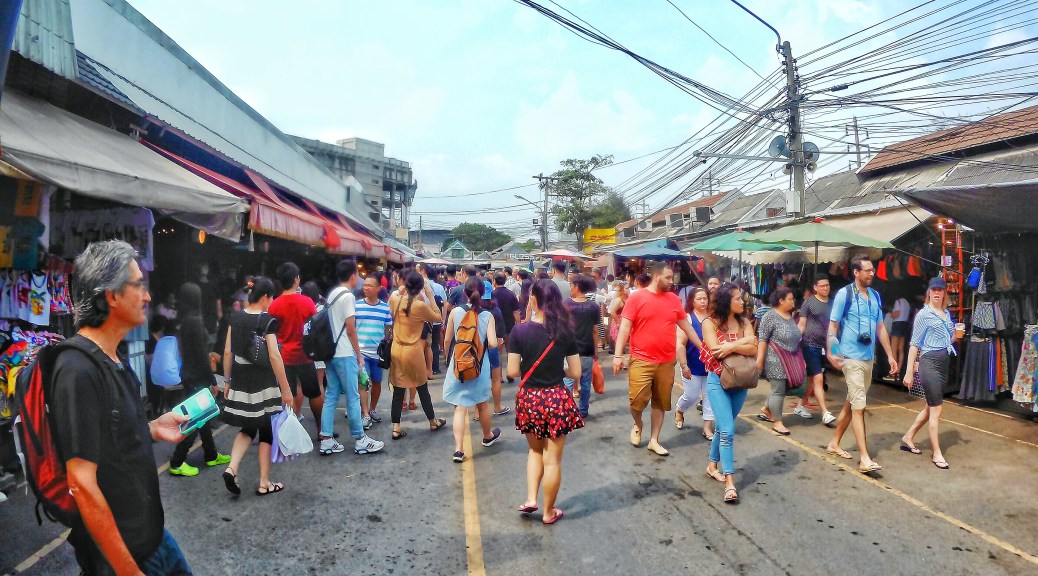
Tourists heading to one of Bangkok’s most popular shopping destinations, the Chatuchak market, could do away with cash payments by June, as part of several upgrades that will be made available later this year.
The Bangkok Post on Friday (Jan 26) reported that the State Railway of Thailand (SRT), which manages Chatuchak, aims to begin turning the weekend market into a cashless commercial area by June.
Shoppers will pay for items through using a single card for their purchases or by QR code, said the SRT’s director for land development Siripong Preutthipan.
Occupying an area of nearly 11ha in the city’s north end, Chatuchak is said to be one of the world’s largest weekend markets with more than 1,000 stalls divided into 27 sections selling everything from plants to antiques, clothes, books, food, home products and pets.
Thousands of shoppers head to the market every Saturday and Sunday and the market is a main draw for tourists to the city.
The SRT will spend more than 100 million baht (SGD 4.2 million) on developing the market this year, Dr Siripong said.
First on the agenda, are automated parking lots which will be available by the end of the year, he said.
Costing around cost around 40 million baht to build, each lot will accommodate 100 cars.
“The systems will comprise automated ticket dispensaries given out to vehicles as they enter,” he was quoted saying by the Bangkok Post. “Bidding for construction will begin mid-year, with the aim of making parking spaces available by year’s end.”
In addition to the two new upgrades, the SRT has also launched the Chatuchak Guide mobile app, a virtual directory that lists the stalls according to their category and ratings, making it easier for shoppers to navigate the market.
In the future, Dr Siripong said the SRT hopes to be able to allow its retailers to export their products abroad.
The market will also have air-conditioned lavatories later this year, with patrons paying 10 baht to use the facilities. The SRT is currently negotiating with private firms for the construction rights for the lavatories.
Presently, the market has eight non-air conditioned lavatories, with patrons being charged 2 baht for their usage. The lavatories will also see a 25-million-baht upgrade, after which patrons will be charged 5 baht for the facilities. The bidding for the project will take place in March.