by Willie Tan | Jul 24, 2024 | Bangkok Property Market Updates, Expat Living & Relocation, Legal, Tax & Due Diligence
On July 23, a deputy prime minister announced that Thailand would move forward with legislating marijuana for medical use, signalling a reversal from previous intentions to re-criminalise the plant. This marks another shift in the government’s uncertain stance on cannabis. In 2022, Thailand became one of the first Asian nations to decriminalise marijuana without establishing clear laws or regulations, leading to a surge in recreational use and the emergence of numerous cannabis cafes and retailers, raising public concerns about potential misuse.
Deputy Prime Minister Anutin Charnvirakul, a key advocate for marijuana liberalisation, stated that Prime Minister Srettha Thavisin has now endorsed legislation as the appropriate course of action. Anutin thanked the prime minister for considering and deciding to proceed with legislative action.
The government continues to prohibit recreational cannabis use, and Prime Minister Srettha, from a different political party, had previously suggested re-criminalisation, with allowances for medical and research purposes. The legislation will be debated in parliament, where a draft law already exists, according to Prommin Lertsuridej, the secretary-general to the prime minister. The determination of cannabis as a narcotic will be up to the legislative body.
A draft cannabis law had been presented to the legislature under the previous administration, but parliament was dissolved before it could be voted on. It remains uncertain whether actions will be taken to restrict recreational cannabis use, as advocated by Prime Minister Srettha. The domestic marijuana retail sector in Thailand is rapidly growing, with projections estimating it could reach up to USD 1.2 billion by 2025.
The Bhumjaithai Party, led by Anutin and the second largest in the ruling coalition, has promoted the use of marijuana for health and economic purposes but officially does not support recreational use and opposes re-criminalisation. Nattabhorn Buamahakul, managing partner at Vero Advocacy, a government affairs consultancy, noted that the latest policy shift suggests improved coordination among coalition parties on the complex issue of cannabis compared to last year when the government was formed.
by Willie Tan | Jul 15, 2024 | Bangkok Property Market Updates, Expat Living & Relocation
Prime Minister Srettha Thavisin announced on Sunday that he will sign an extension to the visa waiver on Monday, allowing citizens from 93 nations to enter Thailand without a visa or obtain a visa on arrival and stay for up to 60 days.
He expressed confidence that immigration and security agencies will smoothly implement the measures to screen foreign arrivals in the long term. “We prepared for visa waivers for travellers from China, India, and Kazakhstan with measures implemented last year,” he added.
To boost tourism and attract more tourist dollars, the Cabinet decided on May 28 to extend visa waivers to a total of 93 nations.
The 57 nations or regions that already had a visa waiver and can now receive a 60-day stamp on arrival include: Canada, the Czech Republic, Denmark, Estonia, Finland, France, Germany, Greece, Hungary, Iceland, Indonesia, the Republic of Ireland, Israel, Italy, Japan, Kuwait, Latvia, Liechtenstein, Lithuania, Luxembourg, Malaysia, Maldives, Mauritius, Monaco, the Netherlands, New Zealand, Norway, Oman, the Philippines, Poland, Portugal, Qatar, San Marino, Singapore, Slovakia, Slovenia, Spain, South Africa, South Korea, Sweden, Switzerland, Turkey, Ukraine, the United Arab Emirates, the United Kingdom, the United States, Peru, Hong Kong, Vietnam, Saudi Arabia, Andorra, Australia, Austria, Belgium, Bahrain, Brazil, and Brunei.
The 13 nations whose citizens previously received a 30-day stamp on arrival and will now receive a 60-day stamp are India, Kazakhstan, Malta, Mexico, Papua New Guinea, Romania, Uzbekistan, Taiwan, Bhutan, Bulgaria, Cyprus, Fiji, and Georgia.
The six new nations or regions whose citizens now qualify for a visa waiver and a 60-day stay are China, Laos, Macau, Mongolia, Russia, and Cambodia.
The 17 new nations eligible for visas on arrival, receiving a 60-day stamp, include Guatemala, Jamaica, Jordan, Kosovo, Morocco, Panama, Sri Lanka, Trinidad and Tobago, Tonga, Uruguay, Albania, Colombia, Croatia, Cuba, Dominica, the Dominican Republic, and Ecuador.

by Daryl Lum | Jun 6, 2024 | Bangkok Property Market Updates, Expat Living & Relocation
According to a statement from the Thai government, while Cambodia and Laos have joined the list of countries eligible for a 60-day visa-free stay, Myanmar has not been included. Previously, Myanmar, along with Cambodia and Laos, received only 14-day visas.
Myanmar is not among the 93 countries on Thailand’s newly extended visa-free list, which will take effect on June 1, sources reported.
In an effort to boost tourism, the Thai government has extended the list of 60-day visa-exemption countries, effective June 1. Previously, nationals from certain countries could stay in Thailand for 60 days without a visa. Now, six more countries have been added to this list: China, Laos, Mongolia, Russia, Cambodia, and Macau.
As a result, Myanmar citizens will continue to be limited to a 14-day stay without a visa.
Additionally, a new type of Destination Thailand Visa has been introduced, allowing individuals involved in business, Thai culinary education, art, and traditional Muay Thai boxing to stay for 180 days under the new visa policy.
Currently, more Myanmar nationals are purchasing condos and conducting business in Thailand than in previous years. In the first quarter of this year, Myanmar surpassed Russia to become the second-highest country in terms of condo purchases in Thailand.

by Daryl Lum | 17 May 2024 | Bangkok Property Market Updates, Expat Living & Relocation
A coalition of cannabis supporters urged the government on Thursday to reconsider its decision to reclassify marijuana as an illegal narcotic, following a recent policy shift just two years after its decriminalization.
Prime Minister Srettha Thavisin is advocating for cannabis use strictly for medical purposes, emphasizing a stringent approach to illegal drugs, which he claims are contributing to addiction and negatively impacting the youth.
Pro-cannabis groups met with Public Health Minister Somsak Thepsutin on Thursday, encouraging him to reconsider the policy reversal.
“Even for medical use, don’t subject the people’s plant to bureaucratic control. It has been integral to our culture for centuries. Licencing only breeds corruption,” stated Prasitchai Nunual, Secretary-General of Thailand’s Cannabis Future Network.
Thailand first legalized cannabis for research and medical purposes in 2018. In June 2022, the government led by Gen Prayut Chan-o-cha removed the plant from the national narcotics list, enabling cultivation, sale, and consumption.
This led to a surge in recreational use, with numerous cannabis cafes and dispensaries emerging nationwide, particularly in tourist areas, creating an industry projected to reach USD 1.2 billion by 2025.
Critics argue that the previous government rushed the liberalization process without drafting a comprehensive cannabis bill or clear regulations, resulting in public confusion and misuse.
Thailand has a long-standing tradition of using marijuana for pain relief and fatigue, as well as in traditional medicine and culinary practices. Mr. Somsak emphasized that cannabis should be limited to medical use.
Mr. Somsak’s predecessor, Dr. Cholnan Srikaew, had pushed for stringent legislation to curb recreational cannabis use. He had prepared a bill to clearly define approved medicinal uses and banned forms of consumption.
However, many cannabis businesses argue that the issue is not recreational use but the lack of clear regulations.
“There is nothing more sensible than a comprehensive Cannabis Act, addressing safety concerns like use among minors and regulated growth,” said activist and cannabis retailer Chokwan “Kitty” Chopaka.
“We do not support an uncontrolled cannabis market in Thailand but advocate for policies that support farmers, retailers, and medical users.”
by Daryl Lum | Jan 5, 2024 | Bangkok Property Market Updates, Expat Living & Relocation
Thailand is poised to achieve its target of welcoming 28 million foreign tourists in 2023, with a notable increase in visitors from neighboring Malaysia compensating for a sluggish recovery in the Chinese market, which was the primary source of inbound travellers before the onset of the Covid-19 pandemic.
Year-to-date, total arrivals have surpassed 25 million, with the number of Malaysian travellers more than doubling compared to last year, reaching four million, as reported by the Ministry of Tourism and Sports. Although approximately 3.1 million Chinese holidaymakers have visited Thailand this year, securing the second position and demonstrating growth from 273,567 in 2022, this year’s figure is anticipated to fall short of the official target of four million to 4.4 million, according to available data.
The Tourism Authority of Thailand envisions a continued recovery with 35 million visitors expected next year, including 8.2 million from China.
However, achieving this target appears ambitious in light of this year’s disappointing Chinese tourist numbers, as noted by Krungsri Securities. Instead, total tourist arrivals are projected to reach 33 million in 2024, attributed to a slower increase in Chinese visitors amid economic challenges in their home country, according to analyst Sirilak Konwai’s report.
Thailand’s Prime Minister Srettha Thavisin is banking on tourism to drive the nation’s economic growth, given that the sector contributes about 12 per cent to the gross domestic product and nearly a fifth of the jobs. The government has implemented temporary visa waivers for travellers from China, Russia, Kazakhstan, India, and Taiwan. Additionally, airlines have been instructed to expand routes and airport operations have been streamlined to reduce waiting times for visitors.
In 2019, the country witnessed a record influx of foreign arrivals, reaching almost 40 million, generating 1.91 trillion baht (SGD 72.9 billion) in revenue. During that year, each tourist spent an average of 47,895 baht during their nine-day trip, according to official data. This year, Thailand has generated 1.07 trillion baht from tourism.
(
by Daryl Lum | Jan 2, 2024 | Bangkok Property Market Updates, Expat Living & Relocation
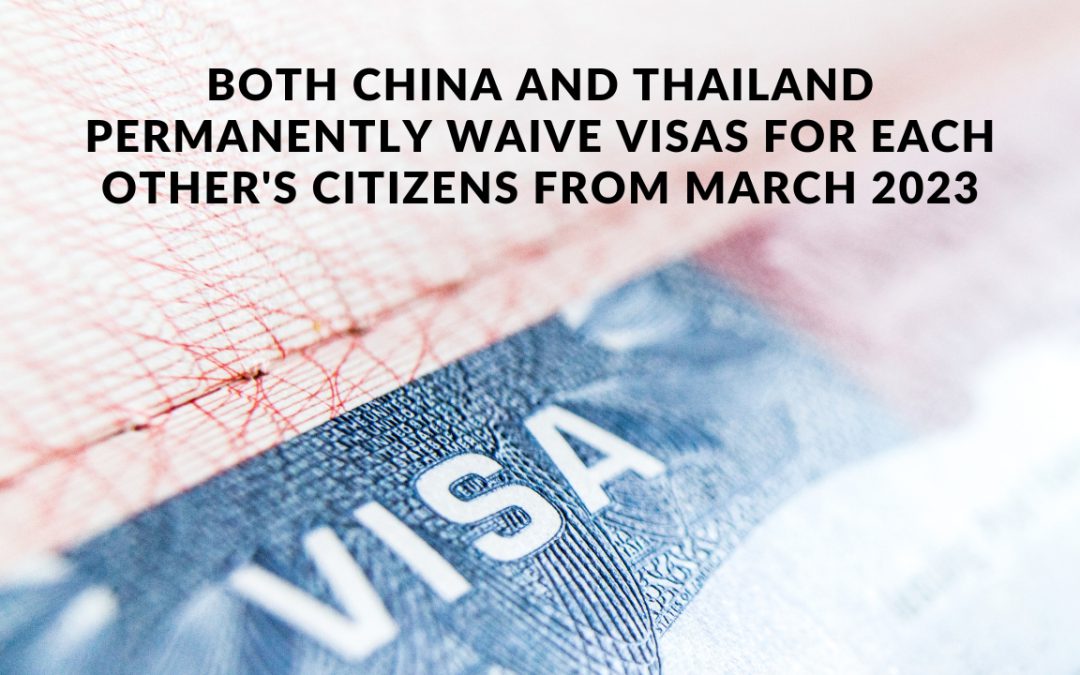
Thailand and China are set to establish a permanent visa waiver for each other’s citizens starting in March, as announced by Thai Prime Minister Srettha Thavisin on Tuesday (Jan 2).
As the second-largest economy in Southeast Asia, heavily reliant on tourism, Thailand had previously lifted entry requirements for Chinese tourists until February of the current year. Prime Minister Srettha highlighted that this move will strengthen the bilateral relationship between the two nations.
China’s Ministry of Foreign Affairs stated that both countries are intensifying people-to-people exchanges through the reciprocal exemption of visa requirements. Ministry spokesperson Wang Wenbin conveyed during a regular briefing that authorities from both sides are in close communication, eagerly anticipating the implementation of the agreed-upon arrangement.
In 2023, Thailand surpassed its target by welcoming 28 million foreign tourists, generating a revenue of 1.2 trillion baht (USD 34.93 billion), according to government data. Malaysia was the primary source market with 4.5 million visitors, followed by 3.5 million arrivals from China. This performance, although slightly below the pre-COVID record of 39 million arrivals with 11 million from China, underscores the significance of international tourism for Thailand’s economy.

by Willie Tan | Nov 10, 2023 | Bangkok Property Market Updates, Developer Watch, Expat Living & Relocation
CapitaLand Investment (CLI) and Pruksa Holding (PSH), Thailand’s prominent real estate entity, have disclosed the inception and successful initial closure of the CapitaLand Wellness Fund (C-WELL), a pioneering real estate fund centered around wellness and healthcare. In a collaborative effort, CLI and PSH have committed an initial equity investment of USD 350 million, aiming for a target equity size of USD 500 million. An option to expand this equity to USD 1 billion exists, with a projected asset value of USD 2.9 billion upon full deployment.
C-WELL represents the second collaborative venture between CLI and PSH, following the introduction of the CapitaLand SEA Logistics Fund the previous year. Positioned as a Southeast Asia-focused value-add fund, the newly established fund will concentrate initially on Singapore, Thailand, and Malaysia. Its investment focus encompasses single- or mixed-use assets within the wellness spectrum, encompassing residential, lodging, senior living, clinics, medical suites, and hospital facilities, along with wellness and lifestyle-oriented living solutions.
Additionally, the fund will allocate resources for strategic development opportunities in the broader Asia Pacific region. C-WELL adopts an operator-agnostic approach to investment, ensuring broad accessibility and diversity among its user base.
C-WELL’s primary objective is to meet the increasing needs of aging populations by developing purpose-built environments that foster wellness, comfort, and an elevated quality of life. This is particularly pertinent as both Thailand and Singapore are anticipated to transition into “super-aged” societies, with the senior population aged 65 and above projected to exceed 21% and 24%, respectively, by 2030.
In alignment with its asset-light strategy, CLI will maintain a sponsor stake in C-WELL, contributing to its funds under management and fee-related earnings, according to Patricia Goh, CLI CEO of Southeast Asia Investment. Meanwhile, Uten Lohachitpitaks, CEO of PSH Group, highlights the company’s commitment to elevating the lives of the elderly through multi-sectoral and community-level care initiatives in purpose-driven spaces. He emphasizes that the partnership with CLI is more than a mere investment, underscoring their dedication to redefining standards for wellness-focused real estate where individuals can thrive.
by Daryl Lum | Sep 27, 2023 | Bangkok Property Market Updates, Expat Living & Relocation
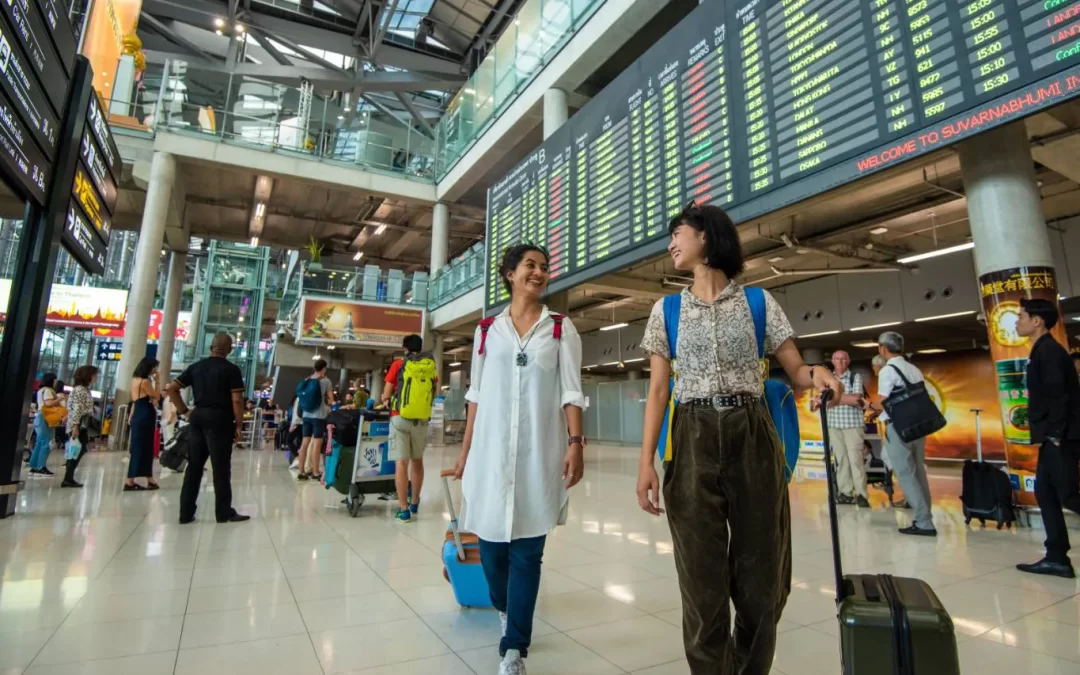
On Monday, Chinese tourists arriving in Bangkok were personally welcomed by the Thai prime minister as part of a new visa-free initiative aimed at revitalizing the country’s crucial tourism sector. Prime Minister Srettha Thavisin, accompanied by traditional dancers, warmly greeted visitors from Shanghai at Bangkok’s Suvarnabhumi airport, even distributing welcome gifts.
One visitor, Zhuang Pan, aged 31, expressed her surprise and joy at the reception, describing it as an excellent beginning to her trip. Jin Li, who was on her honeymoon, shared her enthusiasm for the scheme and managed to capture a photograph with Prime Minister Srettha. She mentioned that the new visa-free policy allowed her to travel without worrying, as all she needed to do was book a ticket.
Before the COVID-19 pandemic, Chinese tourists constituted the largest group of visitors to Thailand, and tourism accounted for approximately 20 percent of the country’s GDP. However, the tourism sector suffered greatly due to travel restrictions imposed during the pandemic, and its recovery has been slow, influenced by global economic challenges and safety concerns stemming from a popular Chinese thriller about a man being abducted and forced to work in a Southeast Asian online scam operation.
One visitor, Zheng Zhengzhou, aged 36, acknowledged his awareness of the safety concerns associated with Thailand, referencing the movie “No More Bets” that had unnerved many tourists. He admitted to having some safety-related concerns but still chose to visit Thailand.
Prime Minister Srettha has consistently emphasized the importance of tourist safety, highlighting that the security of visitors from the moment they set foot in Thailand until their departure is a top priority.
Chinese visitors were not only greeted by traditional dancers but also by tourism police officers who provided information about a 24-hour police hotline.
The visa-free program was launched in time for China’s “Golden Week” holiday season in October and is set to run until February 29. Srettha reported that bookings had already increased tenfold under the program, expressing confidence that it would significantly boost the economy. He concluded by stating that it marked a positive day for Thailand, and he hoped that other policies would continue to stimulate the economy.
by Willie Tan | Aug 21, 2023 | Bangkok Property Market Updates, Expat Living & Relocation, Investment Analysis
In the April-June quarter, Thailand’s economy expanded by around 3.1%, a rise from the previous quarter’s growth of 2.7%. This upswing is attributed to the increased influx of foreign tourists, as predicted by a median survey of 21 economists.
Quarterly calculations indicate that the gross domestic product (GDP) growth, when seasonally adjusted, is projected to be approximately 1.2%. This marks a slowdown compared to the preceding quarter’s growth of 1.9%, as indicated by a smaller set of forecasts gathered between August 14 and 17 in a Reuters poll.
Although Thailand’s economy, which heavily relies on tourism, is anticipated to exhibit gradual improvement, the number of visitors remains significantly lower than the levels seen before the Covid-19 pandemic. The projection for this year suggests that Thailand might welcome around 29 million tourists, a decrease from the 40 million visitors recorded in 2019, the year before the pandemic hit.
As of August 13, the Tourism and Sports Ministry reported a total of 16.47 million foreign tourists visiting Thailand from January, with a total expenditure amounting to 690 billion baht (equivalent to USD 19.48 billion).
Exports, which play a crucial role in driving growth, have been contracting since October 2022, reflecting subdued global demand, particularly from China, Thailand’s primary trading partner.
Chua Han Teng, an economist at DBS, noted that the ongoing recovery in foreign tourism, including returning visitors from China, along with resilient private consumption, were the pillars supporting the expansion of the economy. However, the decline in merchandise exports, although stabilizing, continued to impede overall growth, thus preventing a more robust improvement in the second quarter of 2023, due to the challenging global economic environment.
The growth forecast for the year shows an average of 3.7%, aligning with the estimate from the Bank of Thailand (BoT). Additionally, a separate Reuters poll indicated that growth is expected to reach 3.8% in 2024.
by kevinyeo | Apr 5, 2021 | Bangkok Property Market Updates, Expat Living & Relocation
The government expects about two million foreign tourists, mostly Chinese and Europeans, to visit Phuket this year after the nation’s most popular resort island reopens to vaccinated visitors from July 1.
The holidaymakers may generate about 105 billion baht (USD 3.4 billion) in revenue in the second half, according to Vichit Prakobgosol, vice president of the Tourism Council of Thailand. It will be the first time in more than a year that the island allows visitors without the mandatory two-week quarantine.
Phuket’s plan to waive quarantine for inoculated visitors is part of a gradual reopening of the country’s borders. Tourism contributed to about one-fifth of its pre-pandemic economy; a successful reopening of Phuket to foreign visitors, who used to contribute almost 90% of the island’s tourism receipts, may pave way for other popular destinations to end movement restrictions.
China, Russia, the UK, Germany, France, Sweden and the US are likely to be the key origins for tourists to Phuket, Mr Vichit said. The Chinese, who were the biggest group of tourists to Thailand before the pandemic, are expected to return in July on chartered flights, while visitors from Europe will likely start arriving during the winter months, he said.
“It’s good that the majority of countries with high numbers of vaccinations are the main markets for Thai tourism,” Mr Vichit said on Monday. “The focus for the government should now be to finalise agreements and vaccine passports with various countries to allow visitors to return without having to quarantine.”
Phuket province has ramped up its capacity to administer as many as 12,000 doses of vaccine per day, from 400 previously, to reach its target of fully inoculating 70% of its residents before the reopening, said Thaneth Tantipiriyakij, vice president of the Phuket Tourist Association. The island will complete the rollout of 930,000 doses by June, he said.
by Daryl Lum | Nov 24, 2020 | Bangkok Property Market Updates, Expat Living & Relocation
Thailand will open up a 2-year window for foreign buyers looking to purchase a property in Thailand to obtain its Easy Access Visa for free or at a discount. The Thai government approved the new package in early November.
Foreign buyers who purchase one or several condominium units worth at least THB 10 million will receive a 5-year residence visa worth THB 500,000 for free or at a discounted rate.
The Easy Access Visa will entitle members to perks like VIP guide at the airport, fast track immigration and passport control, free limousine transport from the airport to a hotel or place of residence 24 times a year.
Somchai Soongswang, president of Thailand Privilege Card, mentioned that the program should be launched by the 1st quarter of 2021. The program will run for 2 years and the property purchased must be ready to move in and not under construction.
by Daryl Lum | Oct 1, 2020 | Bangkok Property Market Updates, Expat Living & Relocation
In a bid to draw foreign tourists, Thailand has approved a new Special Tourist Visa. This Special Tourist Visa will allow foreigners to stay in Thailand for 90 days and to extend the visa twice at a cost of 2,000 baht each time. This Special Tourist Visa will become available from October 2020 to September 30 2021.
The Special Tourist Visa was approved in principle by the Thai cabinet on the 15th of September as part of plans to rejuvenate the economy and tourism sector which have been decimated by the Covid-19 pandemic.
Tourists on this Special Tourist Visa will need to receive permission from the Ministry of Foreign Affairs or Centre for Covid-19 Situation Administration (CCSA) operation centres and must travel by charter plane. Before travelling to Thailand, foreign visitors will need to take a Covid-19 test before departing for Thailand. They must also buy Covid-19 health insurance and sign a letter of consent agreeing to comply with the Thai government’s Covid-19 measures. They will still need to be quarantined for 14-days upon arrival although there are discussions to reduce this to 7-days.
About 1,200 Special Tourist Visas are expected to enter Thailand every month bringing in more than 1.03 billion baht. In the one year, this number is likely to reach 14,400, generating about 12.4 billion baht for the Thai economy.
Yours Sincerely,
The Invest Bangkok Property editorial team