
by Daryl Lum | Nov 13, 2024 | Bangkok Property Market Updates, Expat Living & Relocation
Agoda’s CEO sees casinos and similar attractions as major drivers for Thailand’s tourism growth, expressing confidence that the country could set a new record for international visitors next year.
The Thai government has announced plans for its first large-scale “entertainment complex,” which will include a casino as part of its strategy to generate employment, attract tourists, and draw investments.
“It’s about the experience beyond gambling—think of Macau and Las Vegas, which offer impressive shows, culinary delights, and world-class hotels,” Agoda CEO Omri Morgenshtern said on Wednesday in Bangkok.
He also emphasized the importance of theme parks, museums, and family-friendly attractions, citing Singapore’s Marina Bay Sands as a successful example.
Casinos operate year-round, which could help sustain tourism even during low seasons, Mr. Morgenshtern noted.
Tourism is a vital sector for Thailand’s economy, Southeast Asia’s second-largest, which saw a 29% increase in international arrivals in the first ten months of this year compared to 2023.
Efforts to legalize casinos in Thailand have faced resistance, with both conservative opposition and public concerns. However, the Pheu Thai government argues that the absence of legal casinos results in lost state revenue and missed opportunities to boost tourism. Neighboring countries such as Cambodia, Singapore, the Philippines, Laos, and Myanmar have successfully attracted tourism with large casino complexes.
In 2019, Thailand welcomed a record 39.9 million foreign visitors, generating 1.91 trillion baht in revenue. The government is now targeting 40 million arrivals and 3.4 trillion baht in tourism revenue for next year—a goal Mr. Morgenshtern believes is achievable, assuming stable global travel demand.
Agoda, headquartered in Thailand and Singapore and part of Booking Holdings, shares this optimism, noting that visa waiver programs and increased flight availability could help surpass 2019 arrival levels.
“Barring any unforeseen global events or local missteps, we have a good chance of exceeding Thailand’s previous tourism record,” he said. “Our data shows Thailand’s strong appeal, with around 46% of travelers visiting multiple times.”
Thailand is Agoda’s second-largest market for repeat travelers, after Japan, Mr. Morgenshtern added.
However, he expressed caution over the government’s planned electronic travel authorization (ETA) program, noting that, “Every fee or extra form can deter visitors, as people may decide not to visit if the process feels complicated.”

by Daryl Lum | Nov 12, 2024 | Bangkok Property Market Updates, Expat Living & Relocation
Thailand is setting an ambitious goal to attract 8 million European tourists in 2025, aiming to reach 11 million total long-haul visitors. The Tourism and Sports Ministry is committed to accelerating partnerships with airlines and foreign embassies to resume full international flight operations.
“Thailand’s tourism sector is poised for a vibrant future. We’re enhancing infrastructure, simplifying visa procedures, and developing new offerings to ensure Thailand remains a global leader in tourism,” said Tourism and Sports Minister Sorawong Thienthong at the 2024 World Travel Market in London, held from Nov 5-7.
Following the event, Minister Sorawong plans to engage with ambassadors from key markets, including the UK, Germany, Eastern Europe, and the Middle East, along with airline executives, to align on flight schedules and preparations for peak travel seasons in 2025.
The ministry also intends to collaborate with the Transport and Finance Ministries on airline support initiatives, such as fuel and tax subsidies, to boost tourism accessibility.
For 2024, Thailand anticipates 9.6 million long-haul arrivals, including 7.3 million from Europe, as per the Tourism Authority of Thailand (TAT). Next year’s expected 11 million long-haul visitors are projected to generate over 896 billion baht, contributing 40% of Thailand’s 2.2 trillion baht in foreign tourism revenue.
At the WTM, 42 Thai tourism operators joined the TAT pavilion to engage with long-haul markets, especially the UK and Europe, with TAT projecting at least 950 business meetings and an estimated economic impact of over 898 million baht.
Princess Ubolratana was also present to advocate for Thailand’s focus on sustainable tourism and cultural appeal.
Nithi Subhongsang, managing director of Nutty’s Adventures, a Thai destination management firm, noted that European travelers, especially small groups, remain core customers interested in local and sustainable travel experiences. He emphasized the importance of consistent policies supporting sustainable tourism and diversifying tourist destinations to manage crowding and boost local economies.
Sam Collins, UK product manager at Best at Travel, highlighted Thailand’s reputation for warm hospitality and value. In 2023, Best at Travel saw over 4,000 UK tourists visit Thailand, generating £8 million (351.8 million baht). He observed a shift in demand toward less-crowded locations such as Koh Lipe, Koh Samet, Koh Tao, and Khao Lak, rather than major hubs like Phuket and Samui. Collins urged the Thai government to invest in inter-city transportation, particularly rail, and increase direct international flights.
Korakot Chatasingha, THAI’s chief commercial officer, shared that the national airline is positioning Bangkok as a hub for European tourists visiting Asia. European routes are expected to contribute around 30% of the airline’s revenue this year, with flight frequencies rising to 91 per week by December, including a new route to Belgium. THAI’s load factor for European flights remains above 80%, and the airline, with 88 aircraft by 2025, aims to sustain its European routes with strong frequency, with London as the only destination offering first-class service.
by Daryl Lum | Nov 11, 2024 | Bangkok Property Market Updates, Investment Analysis
Foreign investment in Thailand rose by 60% to reach 134 billion baht in the first nine months of this year, according to a government representative, with Japan remaining the leading source of investment.
Jirayu Houngsub, spokesperson for the Prime Minister’s Office, announced that approvals were granted for 636 foreign businesses under the 1999 Foreign Business Act, reflecting a 29% increase compared to the previous year.
These investments generated jobs for 2,505 Thai workers.
Japan led in investment volume and applications, contributing 74 billion baht across 157 applications, followed by Singapore with 12.2 billion baht (96 applications), China with 11.9 billion baht (89 applications), the United States with 4.14 billion baht (86 applications), and Hong Kong with 4.11 billion baht (46 applications).
“Key areas such as platform and software businesses have driven foreign investor interest, bolstering strong growth in the Thai economy,” said Mr. Jirayu, noting that these sectors accounted for 28.3 billion baht, or 7.27% of total foreign investment during the period.
The top three investor countries in platform and software sectors were Singapore, Taiwan, and Malaysia, respectively.
by Daryl Lum | Oct 29, 2024 | Bangkok Property Market Updates, Investment Analysis
The Bangkok housing market is projected to decline amid economic challenges, according to SCB EIC, the research arm of Siam Commercial Bank. They anticipate a 10% drop in the transfer of new residential units in Greater Bangkok this year, with an additional contraction of 1-3% likely in 2025, largely due to Thailand’s stagnant economic conditions.
In terms of market value, a 9% decrease is forecast for 2024, with potential stabilization between 0-2% expected next year.
The slowdown in the housing sector stems from rising living costs, reduced purchasing power, high household debt, increased interest rates, and more stringent mortgage approval processes. These pressures are prompting prospective homebuyers, especially within lower- and middle-income brackets, to delay their purchasing plans.
SCB EIC also forecasts a 28% year-on-year reduction in newly launched residential units for 2024, with moderate recovery expected in 2025 as the contraction may ease to 2-4%.
To address these conditions, developers are concentrating on middle- to high-end projects where buying capacity is less affected. Major local banks reported a decline in mortgage lending in the first nine months of this year due to tighter mortgage criteria.
SCB, the fourth-largest bank in Thailand and a leader in housing loans, reported a mortgage loan portfolio of 779 billion baht as of September 2024, reflecting a quarter-on-quarter decrease of 15.5%, a year-to-date decline of 39%, and a year-on-year drop of 38.5%.
Bangkok Bank (BBL), the country’s largest lender, recorded a mortgage portfolio of 332 billion baht, slightly down by 0.6% quarter-on-quarter and 1.7% year-to-date. Bank of Ayudhya (Krungsri) saw its housing loan portfolio decrease to 248 billion baht, down by 3% quarter-on-quarter and 7.6% year-to-date.
TMBThanachart Bank (ttb) reported an overall mortgage lending decrease of 0.8% quarter-on-quarter and 2.2% year-to-date as of September, according to a filing with the Stock Exchange of Thailand (SET).
In contrast, Krungthai Bank (KTB), Thailand’s second-largest lender, reported growth in its mortgage loan portfolio, reaching 498 billion baht by September, a 1.5% increase quarter-on-quarter and a 2.9% rise year-to-date.
Kasikornbank (KBank) did not release mortgage loan data in its SET report.
In response to current market trends, major banks announced widespread cuts to their lending rates, including adjustments to the minimum retail rate (MRR) for housing loans. BBL now offers the lowest MRR at 7% per year. Other banks’ rate reductions will be effective from Nov 1, with the revised MRRs as follows: KTB at 7.445%, KBank at 7.180%, SCB at 7.175%, Krungsri at 7.275%, and ttb at 7.705%.
by Daryl Lum | Oct 21, 2024 | Bangkok Property Market Updates, Developer Watch
The developer sentiment index for Greater Bangkok’s housing market fell for the second consecutive quarter in Q3, hitting its lowest level since Q3 2020.
Kamonpop Veerapala, president of Government Housing Bank and acting director-general of the Real Estate Information Centre (REIC), reported the current situation index at 45.1, a 4.6-point drop year-on-year and 0.1 points lower than in Q2.
“The index has remained below the neutral threshold of 50 for seven consecutive quarters, signaling a continued decline in developer confidence in the residential sector,” he said.
The last time the index was this low was in Q3 2020, at 42.8 points, before rising to 46.3 in Q4 2020.
In Q3 2024, the most significant quarter-on-quarter decline was seen in sales sentiment, which dropped 6.6 points to 40.7, followed by a 0.2-point dip in investment sentiment, bringing it to 47.4.
Notably, revenue sentiment rose by 2.5 points to 42.0, and sentiment for new project launches increased by 1.6 points to 50.7.
Development costs sentiment increased 1.5 points to 40.4, while employment sentiment rose by 0.9 points to 49.6. However, except for new project launches, all other components remained below the neutral 50 mark.
The sentiment index for listed developers declined to 47.9, down from 52.2 in Q2 2024, reflecting reduced confidence and heightened concerns among listed firms, according to REIC.
Sales sentiment for listed developers saw the largest drop, falling 15.8 points to 43.8. Investment and new project launch sentiment both declined by 5.6 points to 52.1, while revenue sentiment decreased by 2.3 points to 47.7.
On the positive side, development costs sentiment rose by 3.1 points to 39.6, and employment sentiment edged up by 0.2 points to 52.1.
Looking ahead, the expectations index for the next six months rose to 51.6, slightly up from 51.4 in Q2 2024, signaling a positive outlook from developers for the near future.
The biggest improvement was seen in sales sentiment, which increased by 3.4 points to 57.8, followed by development costs, which rose by 2.9 points to 37.5.
Employment sentiment increased by 2.2 points to 52.4, and revenue sentiment grew by 2.0 points to 53.0.
However, there were declines in sentiment for new launches, which dropped by 6.3 points to 58.1, and investment, which decreased by 3.1 points to 51.0.
by Daryl Lum | Oct 17, 2024 | Bangkok Property Market Updates, Investment Analysis
The Thai government is preparing to roll out 55 billion baht (approximately USD 1.66 billion) in soft loans to stimulate the property sector and boost the national economy, according to Deputy Finance Minister Paopoom Rojanasakul.
This proposal will be presented to the cabinet for approval, Rojanasakul stated in a press briefing.
He added that the stimulus package would target both supply and demand within the real estate market, aiming to encourage both property developers and buyers, ensuring a wide-reaching impact.
The Deputy Minister emphasized that fresh stimulus measures are necessary as the current schemes have been fully utilised.
Recently, the Finance Ministry leveraged state financial institutions, including the Government Housing Bank (GH Bank), to support the real estate market. Earlier this year, GH Bank launched a low-interest loan program called “Happy Home,” offering a total of 20 billion baht in loans. This initiative provided flexible loan terms for low-income households, allowing for a maximum loan of 3 million baht per applicant, with a fixed interest rate of 3% for the first five years. However, this program has now reached its funding limit.
by Daryl Lum | Oct 16, 2024 | Bangkok Property Market Updates, Developer Watch
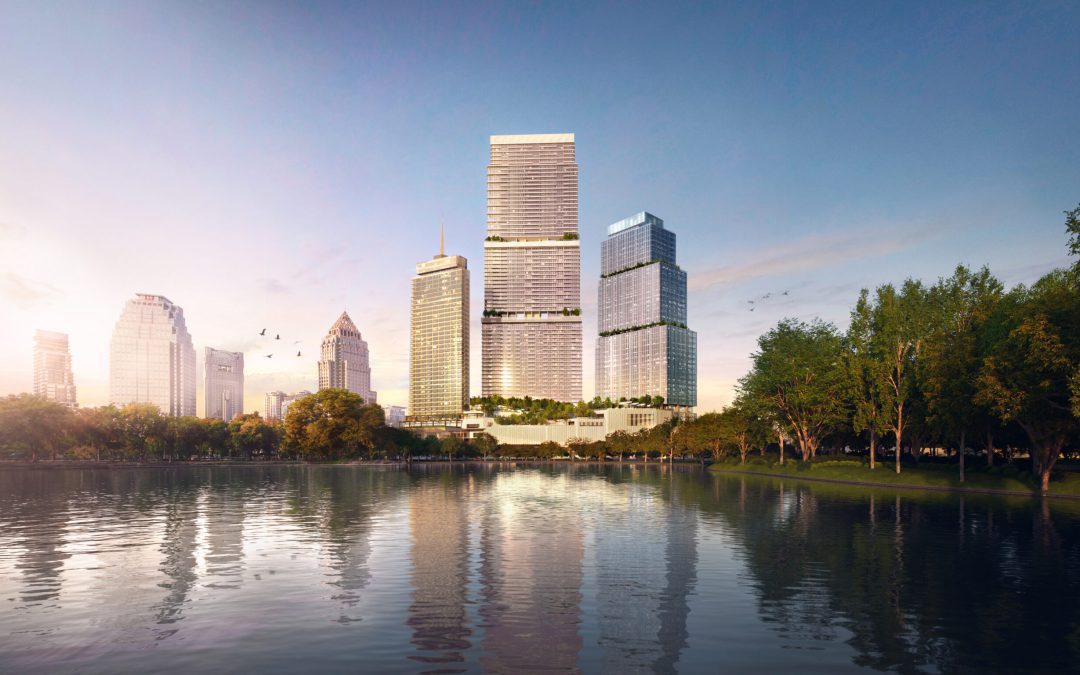
Vimarn Suriya Co, the developer behind the luxury mixed-use Dusit Central Park project, remains unfazed by rising interest rates and a strengthening baht, as the branded residential development primarily targets affluent Thai buyers.
CEO La-ead Kovavisaruch noted that elevated mortgage rates have a minimal effect on luxury homebuyers compared to those in the mass market.
“Demand in the luxury segment remains robust, while supply, particularly in prime locations, is quite limited,” she commented.
Currently, 80% of The Residences at Dusit Central Park, valued at 11.5 billion baht, have been sold. The company anticipates reaching 85% by year-end.
The project comprises 406 units, starting at 55 square meters, with an average price of 380,000-390,000 baht per square meter.
There will be seven penthouses, including six units of 450 square meters and one expansive 900-square-meter unit. Two 450-square-meter penthouses and the 900-square-meter unit are still available.
“The 900-square-meter penthouse offers customization options, allowing buyers to tailor the number of bedrooms,” said Ms. La-ead.
“We are in the process of selecting a luxury brand to collaborate on marketing this unit.”
She added that the recent strength of the baht would not affect sales, as 80% of buyers are Thai nationals.
“The baht has fluctuated between 32 and 37 baht to the US dollar over the last two to three years, so the current rate hasn’t impacted our project,” said Ms. La-ead.
“Our key customer base is Thai, which means currency fluctuations affect us less compared to foreign buyers.”
The company expects the project to be fully sold by 2025, with construction scheduled for completion by the end of that year.
by Daryl Lum | Oct 9, 2024 | Bangkok Property Market Updates, Investment Analysis
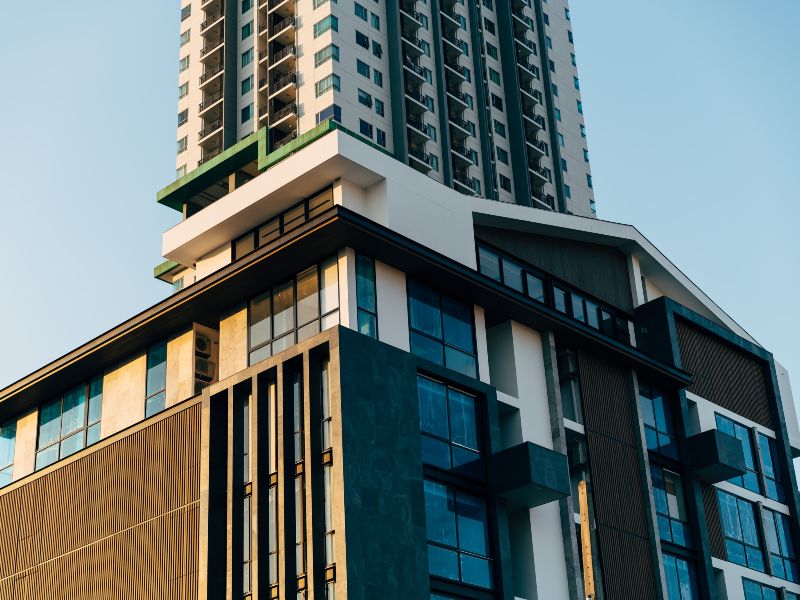
Rising house prices, driven by increasing construction costs, are having a lesser impact on potential homebuyers than the growing challenges in obtaining mortgage loans, according to property associations.
Pornarit Chounchaisit, President of the Thai Real Estate Association, noted that the surge in costs reflects a global trend, with property prices climbing in major cities worldwide.
“The war and its influence on oil prices are escalating construction costs for new housing projects,” he said. “Moreover, rising labor costs will further drive up housing prices.”
Although selling homes remains difficult, housing prices are expected to increase next year due to the government’s planned wage hikes. However, this policy is likely to benefit foreign workers, who constitute 50-60% of the labor force, more than local labor.
Soonthorn Sathaporn, President of the Housing Business Association, emphasized that the increase in housing prices has not outstripped inflation.
“The real challenge lies in stricter lending criteria, which are preventing many potential buyers from securing mortgages,” he said.
He also pointed out that mortgage rejection rates have surged to 35%, up from the usual 15-20%, with rejection rates reaching 50-60% for homes priced between 2-3 million baht.
Some developers have had to reduce their profit margins to make homes more affordable and are expediting construction to control costs.
To boost demand, Soonthorn urged the government to extend the expiring property measures and introduce income tax deductions for first-time homebuyers. He also suggested that relaxing loan-to-value (LTV) regulations could stimulate second-home purchases, particularly for properties near schools and workplaces.
Prasert Taedullayasatit, President of the Thai Condominium Association, supported the call for temporary relaxation of LTV rules to encourage market growth, proposing that the government withdraw these measures if speculative behaviour is observed.
“A reduction in interest rates would also enhance purchasing power, especially for lower-income buyers, while a weaker baht could boost tourism and attract foreign property buyers,” he added.
To further stimulate demand in Q4, the three associations are organising the House & Condo Expo from October 31 to November 3 at the Queen Sirikit National Convention Centre. Their goal is to sell at least 1,000 units, totaling over 4.5 billion baht in value, and they expect an additional 10 billion baht in sales in the months following the event.
by Daryl Lum | Oct 8, 2024 | Bangkok Property Market Updates, Expat Living & Relocation
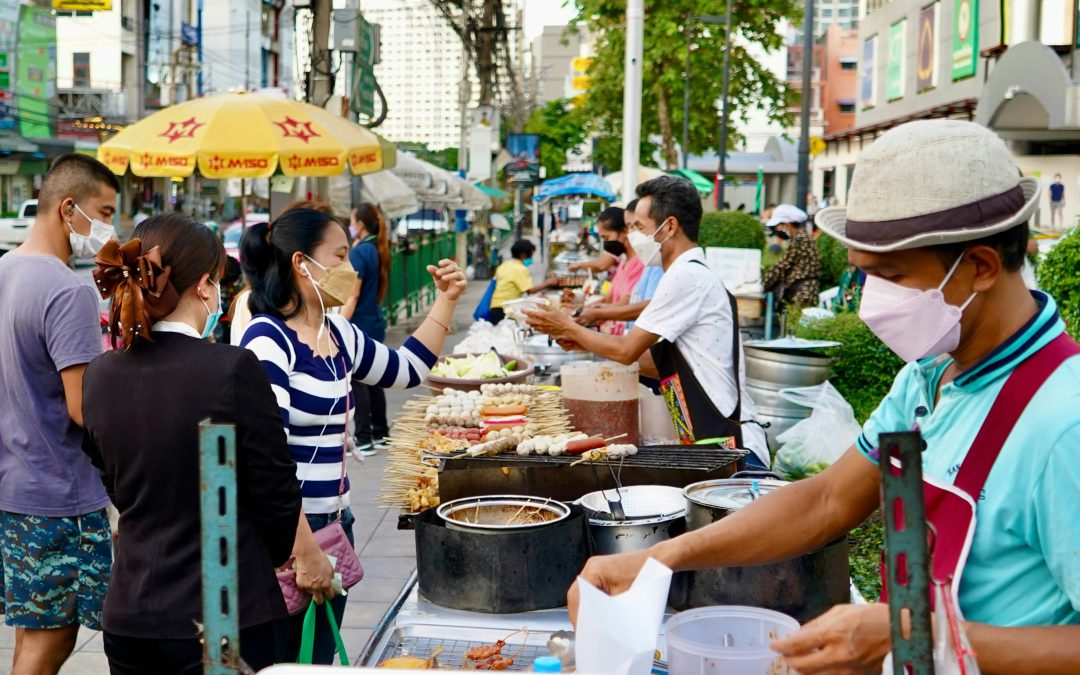
Thailand is poised to transition to a cashless society faster than its regional counterparts, driven by the nation’s rapid adoption of digital technologies, according to a survey by Visa.
Visa, a leading global provider of digital payment services, recently conducted the Consumer Payment Attitude Study, which indicates that Thailand could become cashless by 2028, ahead of the broader ASEAN region, which is expected to reach this milestone after 2028.
The survey found that 22% of Thai consumers believe a cashless society will emerge between 2026 and 2028, compared to 16% of consumers across ASEAN.
Thailand ranks third in the region for carrying minimal cash, with cash accounting for only 47% of the content in each respondent’s wallet, trailing behind Vietnam (56%) and Malaysia (49%).
Punnamas Vichitkulwongsa, Visa Thailand’s country manager, noted that the development stage of payment technology in each regional market is critical for advancing towards a cashless society. In Thailand, PromptPay, the national payment platform, has significantly driven digital banking adoption, especially during the post-pandemic period.
The survey also revealed that Thailand leads the region in mobile banking app usage, with an impressive 97% of Thai consumers using these apps at least once a week, surpassing Vietnam (95%) and Indonesia (90%).
Real-time payments (RTP) are growing rapidly, with 76% of ASEAN consumers aware of RTP and 47% having used it for fund transfers. Thailand leads the region in RTP usage frequency, with 86% of respondents making at least one RTP transaction per week, followed by Vietnam (84%) and Indonesia (69%).
Mr. Punnamas attributed the growth of RTP in Thailand to PromptPay, which has enhanced digital payment adoption and supported Visa’s business in the market. Thai consumers are becoming increasingly comfortable with digital payments, including Visa credit cards.
However, he acknowledged that PromptPay’s success has affected Visa’s business in Thailand, particularly in the debit card segment. The cancellation rate of Visa debit cards has increased post-pandemic, largely due to the rising influence of PromptPay.
“Approximately 20% of Visa debit cardholders have not renewed their cards after expiry during the post-pandemic period. However, this figure is expected to decline as debit cards remain essential for specific customer segments,” he said.
Given the country’s high household debt and limited access to credit cards for certain retail borrowers, debit cards remain a crucial digital payment option for this segment.
Mr. Punnamas further shared that Visa Thailand plans to launch Click-to-Pay, a tokenized payment system, next year to enhance card security and reduce fraud. This innovative solution will eliminate the need for a 16-digit card number.
by Daryl Lum | Oct 7, 2024 | Bangkok Property Market Updates, Resale & Exit Strategy
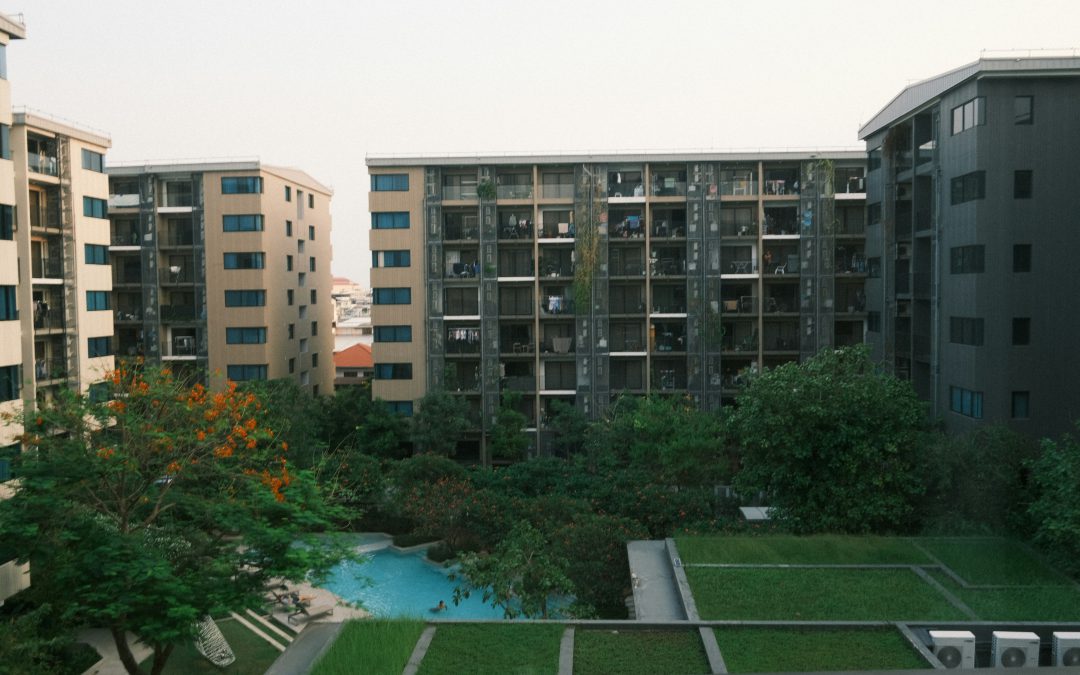
Sales of second-hand condos in Thailand’s Eastern Economic Corridor (EEC) are performing well.
According to the Real Estate Information Centre (REIC), the number of second-hand condo transfers in the EEC provinces increased in the second quarter of 2024 compared to both new condos and new and second-hand low-rise houses, with the majority of activity focused on units priced below 5 million baht.
Siddhipen Siddharthapong, acting assistant director-general, stated that this trend indicates a limited budget among homebuyers in Chon Buri, Rayong, and Chachoengsao, driven by a sluggish economy.
“When the economy slows, second-hand homes often perform better in the market due to their lower prices compared to new units and more desirable locations,” she explained.
“Second-hand condos are more appealing than second-hand low-rise houses, as potential buyers either cannot afford the latter or find that similarly priced options are too far from their workplaces.”
REIC’s data shows that second-hand residential unit transfers in Chon Buri, Rayong, and Chachoengsao amounted to 12,033 units valued at 29.5 billion baht in the second quarter of 2024, a decline from 12,532 units worth 32.8 billion baht in the same period last year.
The most significant drop was seen in low-rise houses, with transfers falling to 8,390 units worth 21.1 billion baht, representing declines of 5.2% in units and 6.3% in value, compared to 8,846 units worth 22.5 billion baht previously.
Condo transfers by unit number fell slightly by 1.2% to 3,643 units from 3,686 units, but the value declined more sharply, decreasing by 18.3% to 8.36 billion baht from 10.2 billion baht.
This indicates that while demand remains robust, buyers are focusing on lower-priced units.
Among categories, only second-hand condos saw an increase, rising 17.7%, whereas new condos, new low-rise houses, and second-hand low-rise houses recorded declines of 14.8%, 6.1%, and 4.5%, respectively.
In terms of pricing, new condos priced below 1.5 million baht were the only segment to experience year-on-year growth, with units below 1 million baht increasing by 35.1%, and those priced between 1 and 1.5 million baht rising by 13.9%.

by Daryl Lum | Oct 2, 2024 | Bangkok Property Market Updates, Resale & Exit Strategy
The share of pre-owned home transfers in Greater Bangkok has increased for two consecutive quarters, driven by weakened purchasing power due to the economic slowdown, according to the Real Estate Information Centre (REIC).
Siddhipen Siddharthapong, acting assistant director-general of the REIC, noted that many homebuyers, particularly in the lower-end market segment, were unable to find homes at their desired price points, leading them to choose more affordable alternatives.
“Pre-owned homes are generally priced lower than new ones of similar size and location,” she stated.
“Given the high household debt and interest rates, many homebuyers are opting for more cost-effective second-hand properties.”
As per the REIC, 21,504 low-rise houses in Greater Bangkok were transferred in the second quarter of 2024, with a total value of 93.2 billion baht—representing a year-on-year decline of 13.5% in volume and 5.6% in value.
The largest decreases were seen in homes transferred by companies, which the REIC considers new homes, with the number of units dropping by 22.5% to 9,087, and value falling by 7.8% to 56.9 billion baht.
Meanwhile, transfers of homes by individuals, categorized as pre-owned homes, declined by 5.5% to 12,417 units, with the value falling by 1.9% to 36.3 billion baht.
The proportion of transferred pre-owned low-rise houses rose to 57.8% in Q2 2024, up from 57.3% in Q1 and 53% in Q4 2023.
For unit sales, the largest increase during the period was seen in units priced over 100 million baht and those between 80-100 million baht, rising by 300% and 150% to four and ten units, respectively. Both categories comprised new homes.
For the pre-owned segment, homes priced above 100 million baht saw the highest year-on-year growth, increasing by 125% to nine units.
Among new homes priced below 80 million baht, units priced between 20-60 million baht increased, while other price categories declined, with units below 1 million baht experiencing the sharpest decline, down 47.2%.
For pre-owned properties, units priced below 3 million baht, between 7.5-10 million baht, and between 20-60 million baht also saw a year-on-year decrease.
According to the REIC, transfers of low-rise housing better reflect market trends than condominiums, as these involve shorter-term decisions made by buyers within approximately six months due to the shorter construction timeline.

by Willie Tan | Sep 25, 2024 | Bangkok Property Market Updates, Infrastructure & Urban Development
The Samyan Smart City project in central Bangkok is making notable advancements in smart energy development. The Metropolitan Electricity Authority (MEA) recently announced the successful relocation of overhead power and communication cables underground, significantly improving the urban landscape.
This initiative, which began in June 2019 in collaboration with Chulalongkorn University, saw the removal of cables along Chulalongkorn Soi 12 and near the King Rama VI Monument at Lumpini Park. This effort not only enhances the city’s aesthetics but also supports the broader goal of smart energy management in the area.
Key developments include installing a Battery Energy Storage System (BESS) and the creation of a smart grid. The BESS, which works alongside solar and wind power, ensures a consistent electricity supply despite variable weather conditions. The smart grid will enhance electricity production, sales, and consumption management, leveraging consumer behaviour data for better efficiency.
Samyan Smart City spans 1,153 rai, bordered by Banthat Thong, Rama IV, Henri Dunant, and Rama I roads. Overseen by Property Management of Chulalongkorn University (PMCU) and initially funded by the Energy Conservation Fund in 2017, the project also includes rooftop solar panels and a district cooling system developed by BCPG, a subsidiary of Bangchak Corporation.
Additionally, the project promotes smart mobility with battery-operated shuttle buses, providing eco-friendly transportation options for students and residents.
These efforts underscore the commitment to transforming Samyan into a model of sustainable urban living through innovative energy solutions and smart city technologies. The collaboration between MEA and Chulalongkorn University highlights the importance of partnerships in achieving these ambitious goals. As the project progresses, it continues to set a benchmark for smart city initiatives in the region, demonstrating how urban areas can evolve to meet the demands of modern living while prioritising sustainability and efficiency.
