
by Daryl Lum | Feb 28, 2025 | Bangkok Property Market Updates, Expat Living & Relocation
Thailand, often referred to as the “Land of Smiles,” has been ranked among the top five global destinations for solo travelers in a recent survey by luxury tour operator Kensington. The study highlights emerging travel trends, placing Thailand in fifth position worldwide for independent adventures. India leads the list, followed by Italy, Japan, and Egypt.
Rising Popularity of Solo Travel
Matt Cammaert of Kensington, in an interview with Travel + Leisure magazine, noted, “Solo travel is gaining momentum. Travelers are increasingly drawn to destinations that offer cultural depth, unique landscapes, and the freedom to explore at their own pace, complemented by seamless and personalized services.”
Why Thailand Stands Out
According to the Kensington report, solo travelers are not just attracted to scenic beauty but also seek immersive cultural experiences and meaningful connections with their destinations. Thailand excels in this regard, boasting a rich history, vibrant culture, and diverse landscapes. From the dynamic urban centres of Bangkok and Chiang Mai to the serene beaches of its southern islands, Thailand provides a wide array of experiences tailored to the independent traveler.
India’s Diverse Appeal
Anit Singh, Kensington’s destination expert for the Indian subcontinent, emphasized India’s top ranking, stating, “India’s appeal lies in its incredible diversity, from the lively streets of Jaipur to the peaceful backwaters of Kerala. This variety makes it a standout destination for all types of travelers.” Home to the well-known Taj Mahal, a UNESCO World Heritage Site and one of the New Seven Wonders of the World, India offers a captivating mix of history and culture, fulfilling the aspirations of many travelers.
Italy’s Unique Charm
Italy, a perennial favorite among travelers, also holds special allure for solo adventurers. The Kensington report highlights that solo travelers in Europe often seek unique, off-the-beaten-path experiences beyond mainstream tourist attractions. This aligns with trends identified by Expedia and Booking.com, which show a growing preference for quieter, less crowded destinations over traditional luxury resorts.
Expedia’s “Unpack 25” report reveals that 63% of travelers are inclined to visit lesser-known destinations on their next trip. Italy, with its blend of hidden gems and well-known landmarks like the Leaning Tower of Pisa, the Colosseum, and Milan Cathedral, perfectly caters to this trend.
Post-Pandemic Resurgence of Solo Travel
The report also underscores the revival of solo travel in the post-pandemic era. While solo travel initially declined during the pandemic, it has rebounded strongly, driven by a desire for “revenge travel” and reconnecting with loved ones through shared experiences. As these needs are met, the focus shifts to personal fulfillment, allowing individuals to pursue their interests and passions independently.
The survey further highlights a growing interest in solo travel, with 76% of respondents who have never traveled alone expressing interest in embarking on an international solo trip within the next three years.
Top 10 Solo Travel Destinations for 2025:
- India
- Italy
- Japan
- Egypt
- Thailand
- Australia
- Spain
- Iceland
- France
- New Zealand
by Daryl Lum | Feb 19, 2025 | Bangkok Property Market Updates, Developer Watch, Investment Analysis, New Launches & Project Previews
Economic Uncertainty, Unsold Inventory, and High Household Debt Weigh on Market
The launch of new residential projects in Greater Bangkok is projected to decline for the third consecutive year in 2025, driven by a growing backlog of unsold units from 2024, economic uncertainty, and elevated household debt, according to Kasikorn Research Centre.
Last week, the research centre forecasted a 0.7% year-on-year decline in new residential supply for 2025, following approximately 61,450 units launched in 2024. This continues a downward trend, as 2024 saw a 39.5% drop from around 102,000 units in 2023, which had already decreased by 5.2% from 107,000 units in 2022. Notably, the 2022 figure represented a 77% surge from the pandemic-era low of 60,000 units in 2021.
In 2024, all housing categories experienced a decline in new supply, with condominiums seeing the steepest drop at 43%, followed by townhouses (41.5%) and single detached houses (20.8%).
Despite the sharp reduction in new project launches, unsold inventory remains high. The centre anticipates that the total number of unsold units will exceed 230,000 units, surpassing the level recorded at the end of 2023.
Weakened Demand Due to Economic Factors
Prasert Taedullayasatit, President of the Thai Condominium Association, highlighted that poor market sentiment throughout 2024 was driven by weakened purchasing power, slow economic growth, and high household debt.
Additional challenges such as geopolitical conflicts, high interest rates, and stringent mortgage lending policies carried over from 2023, making homeownership more difficult. Lending curbs and high mortgage rejection rates further constrained market activity, leading many developers to postpone new project launches.
“The market was further impacted by political transitions in Q3 and widespread flooding in Q4,” said Mr. Prasert. “Additionally, weak investor confidence in the debenture market led several developers to delay their projects.”
Developers Respond by Scaling Back New Projects
Over the past three weeks, five major SET-listed developers—Land & Houses, Supalai, Sansiri, Frasers Property Thailand, and AssetWise—announced plans to launch a total of 85 new residential projects worth 140.9 billion baht in 2025.
These figures represent a 26% decline in the number of projects and a 20% drop in total value compared to 115 projects worth 175.9 billion baht launched in 2024.
Most developers are scaling back their new launches, while some are shifting toward the upper-end market, where purchasing power remains stronger than in the lower-end segment.
Middle- to Lower-Income Groups Struggle with Homeownership
“Thai middle- and lower-income groups are losing the ability to afford homes due to rising living costs and economic pressures,” Mr. Prasert explained. “High interest rates have further weakened purchasing power, while the loan-to-value (LTV) policy has made it more difficult for buyers to secure financing.”
According to Mr. Prasert, Q3 2024 marked the lowest point for the residential market in 13 years, with presales in Greater Bangkok hitting 59.5 billion baht—the lowest level since Q4 2011, during the Great Floods.
Declining Presales Across All Price Segments
By price segment, the sharpest year-on-year decline in presales occurred in units priced below 3 million baht, which plummeted 59%, followed by units priced between 3–5 million baht, down 55%.
Higher price segments also saw declines, including:
7–10 million baht units: Down 33%
5–7 million baht units: Down 24%
10+ million baht units: Down 16-22%
10–20 million baht units: Down 16%
20–50 million baht units: Down 17%
50+ million baht units: Down 22%
Despite ongoing challenges, developers are adjusting their strategies by targeting premium segments, reducing overall project launches, and focusing on projects with higher-value sales potential. However, market recovery remains uncertain, given persistent economic headwinds and financial constraints affecting homebuyers.
With high unsold inventory, subdued demand, and a challenging financing environment, the Greater Bangkok real estate sector faces another tough year ahead in 2025.

by Daryl Lum | Feb 18, 2025 | Bangkok Property Market Updates, Expat Living & Relocation
Thailand’s private hospital sector is driving efforts to position the country as a premier global hub for medical and wellness tourism.
Industry leaders believe that the increasing global focus on health and well-being presents significant opportunities, leveraging Thailand’s strengths in tourism, advanced medical care, cosmetic surgery, and wellness services to drive economic growth and international market expansion.
This vision aligns with data from the Global Wellness Institute (GWI), which highlights a surge in consumer demand for health-focused services, prompting rapid business adaptation. The global wellness industry has seen significant growth, expanding from USD 4.6 trillion in 2020 to USD 6.3 trillion in 2023, with projections indicating further expansion to USD 9 trillion by 2028.
Thailand’s established reputation as a leading tourism destination provides a strategic advantage. The country attracts high-value international visitors through its diverse natural landscapes, rich cultural heritage, exceptional service standards, and expertise in both modern and traditional Thai medicine. These factors create a strong competitive edge, reinforcing Thailand’s potential as a top destination for medical and wellness tourism.
Dr. Artirat Charukitpipat, CEO of Bumrungrad Hospital in Bangkok, shared insights with Thansettakij, noting that while Thailand’s economy is projected to grow by 2.7% this year, it remains heavily reliant on external revenue, particularly from tourism. Despite challenges posed by the COVID-19 pandemic, the tourism sector has demonstrated resilience and a strong recovery, outperforming other foreign income-generating sectors.
She emphasized the vast growth potential of medical and wellness tourism, urging all stakeholders to prioritize sustainability and well-being as foundational pillars of Thailand’s future economic strategy. She also highlighted the global shift toward longevity and healthy living, requiring Thailand’s healthcare sector to adapt and innovate.
Bumrungrad Hospital, celebrating its 45th anniversary, has expanded into holistic care through its subsidiary, VitalLife Scientific Wellness Centre. Specializing in anti-aging, cosmetic enhancement, and weight management programs, the centre has experienced steady growth for over two decades, underscoring the rising demand for medical and wellness tourism.
Dr. Artirat underscored the increasing relevance of longevity medicine, which aims to extend healthy lifespans by preventing disease and promoting overall well-being. She noted that while Thailand’s current life expectancy stands at 80 years, future advancements could push this figure beyond 120 years.
Lapasrada Lertpanurot, CEO of Master Style Pcl, which operates Masterpiece Hospital in Bangkok, emphasized the importance of Thailand establishing a clear global identity.
She acknowledged ongoing economic and social uncertainties, including the impact of global events such as the U.S. elections on Thai markets. To mitigate these external risks, she advocated for targeted investment in tourism, healthcare, and wellness—key national strengths—to sustain long-term economic stability.
She stressed the need for stronger collaboration between the public and private sectors to enhance Thailand’s positioning in medical and wellness tourism, attracting foreign investment and reinforcing the country’s economic resilience.
Dr. Tanupon Wirunhakarun, Chairman of the Executive Committee at BDMS Wellness Clinic and BDMS Wellness Resort, part of Bangkok Dusit Medical Services Pcl (BDMS), confirmed the company’s strong commitment to the wellness sector.
BDMS has seen a rising number of international patients, with preventive medicine now accounting for 11% of its treatments—a figure expected to grow significantly.
He highlighted Thailand’s potential to surpass pre-pandemic wellness tourism figures of 15 million visitors annually by 2024-2025. Citing GWI data, he noted that wellness tourists spend an average of 60,000-70,000 baht per trip, significantly higher than general tourism expenditures.
Dr. Tanupon expressed confidence that with enhanced collaboration between the government and private sector, Thailand could achieve a top-five global ranking in wellness tourism. Currently, the United States, Germany, China, France, and Japan lead the sector, with Thailand ranking 15th.
Dr. Wittaya Wanpen, Assistant Director of Praram 9 Hospital, observed shifts in Thai consumer spending within the wellness sector since mid-2024, reflecting economic conditions.
He noted increased price sensitivity among domestic wellness tourists, particularly in cosmetic procedures and minor treatments, with a growing preference for home-based care over hospital stays.
Despite this trend, Praram 9 Hospital continues to cater to a wide range of clients. While demand for premium services has softened slightly, the hospital’s core strength lies in complex medical treatments, which generate over 50% of its revenue, followed by cosmetic surgery and wellness services.
With a strong foundation in healthcare, tourism, and wellness services, Thailand is well-positioned to become a global leader in medical and wellness tourism. By fostering innovation, attracting international investment, and strengthening public-private partnerships, the country aims to capitalize on the growing demand for health-focused travel and well-being services, securing its place as a top-tier destination in the global wellness market.
by Willie Tan | Feb 17, 2025 | Bangkok Property Market Updates
In response to a growing housing shortage, Australia has announced a two-year ban on foreign investors purchasing existing homes. The policy, set to take effect immediately, aims to address the country’s housing crunch by prioritizing local buyers and renters. The ban will remain in place until at least 2025, with the government hoping to stabilize the housing market and make homes more affordable for Australian residents.
The decision comes as Australia faces increasing pressure from rising property prices and a lack of available housing. By restricting foreign investment in existing properties, the government hopes to free up more homes for locals while encouraging foreign buyers to invest in new developments instead. This move is part of a broader strategy to boost housing supply and support the construction of new homes.
While the ban may impact foreign investors looking to purchase second homes or investment properties in Australia, it does not apply to new construction projects. Foreign buyers are still welcome to invest in off-plan properties or newly built homes, which aligns with the government’s goal of increasing housing stock.
This policy reflects a growing trend among countries to regulate foreign investment in real estate to address domestic housing challenges. For those considering overseas property investments, it’s essential to stay informed about changing regulations and market conditions in your target country.
Australia’s decision highlights the importance of understanding local real estate laws and market dynamics before making an international property purchase. As always, consulting with local real estate experts and legal advisors is crucial to navigating these complexities successfully.

by Daryl Lum | Feb 17, 2025 | Bangkok Property Market Updates, Infrastructure & Urban Development
Prime Minister Paetongtarn Shinawatra has instructed relevant ministries to expedite the high-speed rail project, as China prioritizes its completion to reduce transportation costs. Additionally, a task force has been urged to fast-track the feasibility study for the Land Bridge project.
Speaking on a special episode of Thailand’s Opportunity with Prime Minister Paetongtarn on 16 February 2025, the Prime Minister reflected on her official visit to China, which marked the 50th anniversary of Thai-Chinese diplomatic relations. The program aired nationwide on the National Broadcasting Services of Thailand and Public Relations Department radio networks.
During her visit from February 5-8, 2025, she engaged in high-level discussions with Chinese President Xi Jinping, National People’s Congress Chairman Zhao Leji, and Premier Li Qiang. This rare opportunity to meet all three leaders underscores China’s strong commitment to its partnership with Thailand.
Key discussions included the potential transfer of two giant pandas to Thailand and strategies to boost Chinese tourism. The Prime Minister reassured visitors of their safety, highlighting stricter enforcement against cybercrime and enhanced collaboration on “soft power” initiatives.
Regarding infrastructure development, she emphasized the ongoing construction of Phases 1 and 2 of Thailand’s high-speed rail system. Once completed, this network will enhance regional connectivity between China, Laos, and Thailand, facilitating more efficient logistics, lowering transportation costs, and creating opportunities for Thai SMEs and farmers. Given China’s strong interest in the project, Thailand has been urged to accelerate its implementation.
Similarly, China has expressed keen interest in Thailand’s Land Bridge project, which aims to develop deep-sea ports in Chumphon and Ranong and establish a direct transport corridor between them. Recognising the project’s potential economic and logistical benefits, China has requested a feasibility study. In response, the Thai government has directed a research team to provide further details and explore potential Chinese investment.
“The Land Bridge will shorten export transit times by four days, reduce business costs by 15%, and lower fuel consumption, ultimately making products more affordable for consumers. Additionally, it aligns with Thailand’s green energy initiatives, promoting sustainability while positioning the country as a key logistics hub that generates employment and enhances trade opportunities,” Prime Minister Paetongtarn stated.
On trade and investment, the Prime Minister invited Xiaomi to establish an electric vehicle (EV) manufacturing plant in Thailand, citing the country’s strategic role in ASEAN and its attractiveness as a foreign investment destination.
The visit also facilitated discussions on cybersecurity and transnational crime. The Chinese President commended Thailand’s crackdown on call-centre scams and agreed to establish two joint task forces to strengthen cybercrime prevention.
“China is willing to provide further support but has requested two dedicated teams for swift action. Our foreign minister will oversee their collaboration to ensure immediate and effective resolutions,” Paetongtarn noted.
The Prime Minister concluded by emphasizing the visit’s tangible benefits for Thailand, particularly in security and crime prevention. The strengthened bilateral cooperation is expected to lead to a significant reduction in transnational criminal activities.
During the trip, Thailand and China signed 14 Memorandums of Understanding (MOUs), attracting considerable attention from Chinese media. These agreements cover data-sharing, cybersecurity measures against online scams, and joint development initiatives, with further collaboration opportunities on the horizon.
Additionally, the Prime Minister attended the opening ceremony of the 9th Asian Winter Games, where she cheered for Thai athletes and congratulated Paul Henri Vieuxtemps on securing Thailand’s first bronze medal in Freestyle Skiing.

by Daryl Lum | Feb 7, 2025 | Bangkok Property Market Updates, Expat Living & Relocation
The Research & Innovation for Sustainability Centre (RISC), under Thai property developer Magnolia Quality Development Corporation (MQDC), has introduced an advanced air purification tower designed to tackle PM2.5 pollution on an urban scale.
Known as “Fahsai,” the tower utilizes high-speed blades to draw in air, employing jet venturi scrubber technology to effectively filter dust and water droplets. This system can purify up to 120,000 cubic meters of air per hour, according to Singh Intrachooto, Chief Adviser at RISC.
The installation of Fahsai in key locations, including True Digital Park in Bangkok’s Phra Khanong district and the University of Phayao, has resulted in a 50% and 40% reduction in air pollution, respectively.
To expand its reach, RISC has appointed Dee Supreme as the official distributor of Fahsai. Several organisations have already placed orders, including the National Science Museum Thailand, which is set to install the system this month.
PM2.5 refers to fine particulate matter with a diameter of 2.5 micrometers or smaller, which can infiltrate the lungs and bloodstream, posing serious health risks such as respiratory and cardiovascular diseases. Major sources of PM2.5 pollution include vehicle emissions, industrial activities, forest fires, and agricultural burning.
Additionally, a more compact version, “Fahsai Mini,” has been deployed at MQDC headquarters within the DTGO Campus in Samut Prakan’s Bang Phli district. While smaller in size, Fahsai Mini can still purify up to 60,000 cubic meters of air per hour, covering an area of approximately 12,000 square meters—equivalent to a large football field.
With these innovations, RISC continues to drive sustainable solutions for improving air quality and mitigating urban pollution.

by Daryl Lum | Feb 4, 2025 | Bangkok Property Market Updates, Infrastructure & Urban Development
Thailand is advancing its high-speed rail infrastructure, with the Cabinet approving the second phase of the Thai-Chinese high-speed train project. This expansion, valued at 341.35 billion baht, aims to enhance connectivity with Laos and China, paving the way for significant foreign investments.
Government spokesperson Jirayu Houngsub announced that the approval was granted during a Cabinet meeting chaired by Prime Minister Paetongtarn Shinawatra, just ahead of her official visit to China from Wednesday to Saturday. In addition to endorsing the railway project, the prime minister directed relevant ministries to expedite initiatives that facilitate Chinese investment and tourism.
The second phase of the high-speed rail line will extend from Nakhon Ratchasima to Nong Khai, which borders Laos. The Transport Ministry has been tasked with closely overseeing its implementation. Transport Minister Suriya Jungrungreangkit informed the Cabinet that the project will span 357.12 kilometers, with construction expected to commence this year and operations projected to begin in 2031. This railway will seamlessly link with the China-Laos high-speed rail network, further strengthening regional connectivity.
During her visit to China, Prime Minister Paetongtarn has instructed ministers to enhance bilateral economic, trade, and investment relations, with a focus on fostering long-term partnerships. She specifically emphasized the need to prioritize green and digital industries, including electric vehicle manufacturing, semiconductor production, and the development of data centres.
Additionally, the prime minister directed the Agriculture and Commerce Ministries to ensure that Thai food and agricultural exports meet China’s stringent safety standards. To attract further investment from China, she also urged the Transport Ministry to accelerate the development of the southern land bridge project.
by Daryl Lum | Jan 31, 2025 | Bangkok Property Market Updates
Condominiums near Chulalongkorn University (CU) are the most sought-after for both purchase and rental, driven by strong demand for prime locations near top universities and convenient access to public transportation.
According to a report published on Monday by DDproperty, one of Thailand’s leading property platforms, condominiums surrounding CU are in the highest demand among buyers and tenants.
The platform’s data further revealed that Srinakharinwirot University ranked second in popularity among those searching for nearby condominiums.
DDproperty emphasized that areas surrounding Bangkok’s top universities have become key investment locations for property developers, given their strong appeal to prospective buyers. The availability of electric train routes enhances accessibility, making these areas even more attractive for residents.
Additionally, the portal referenced data from the Agency for Real Estate Affairs Co., Ltd, which indicated that as of the end of 2024, land prices in key university zones, including Siam Square, Chidlom, and Ploenchit, had surged to as high as 3.75 million baht per square wah (approximately 1.5 billion baht per rai).
Top Universities in Bangkok for Condo Purchases:
- Chulalongkorn University
- Srinakharinwirot University
- University of the Thai Chamber of Commerce
- Sripatum University
- King Mongkut’s University of Technology Thonburi
Top Universities and International Schools in Bangkok for Condo Rentals:
- Chulalongkorn University
- Srinakharinwirot University
- Sripatum University
- Thammasat University (Tha Phra Chan Campus)
- Bangkok Prep International School

by Willie Tan | Jan 27, 2025 | Bangkok Property Market Updates
Bangkok’s real estate market has been buzzing with excitement following the launch of the Thai government’s ambitious “Home for Thais” program, aimed at making homeownership more accessible for low-income citizens and fresh graduates. The program has sparked unprecedented interest, with over 12 million people attempting to register online within hours of its opening. The overwhelming demand even caused the official website to crash shortly after registration began.
Affordable Housing with Monthly Payments as Low as THB 4,000
The program, inaugurated by Prime Minister Paetongtarn Shinawatra at an exhibition in Krung Thep Aphiwat Central Terminal, offers affordable condominiums and houses at payments starting from just THB 4,000 per month. For many, this initiative represents a long-awaited opportunity to secure a home, especially given that nearly 6 million households—approximately 27% of Thailand’s population—currently lack proper housing.
The exhibition, running until January 31, showcases model homes, drawing crowds as early as 5 a.m. Attendees eager to register expressed optimism about the initiative, which allows buyers to purchase homes on state land with leaseholds lasting up to 99 years.
Where Are These Affordable Homes Located?
Four key locations have been identified for the pilot phase, all conveniently located near mass transit systems:
- Bang Sue Km 11: Featuring 1,232 condominium units priced from THB 1.76 million for 30 sqm to THB 3 million for 50 sqm.
- Thon Buri: Offering 2,100 condominium units.
- Chiang Rak: Planned to deliver 1,795 units.
- Chiang Mai: Focused on single houses with 720 units available.
The State Railway of Thailand has earmarked over 38,000 rai of unused land nationwide for the program, with initial plots for these developments expected to be handed over by the end of the year.
Who Can Apply?
The program comes with specific eligibility requirements:
- Applicants must be Thai nationals of legal age.
- They must have never owned a residence before.
- Monthly income must not exceed THB 50,000.
- Applicants must not be blacklisted by the National Credit Bureau.
The absence of a down payment requirement makes this program even more appealing, removing one of the biggest barriers to homeownership.
Transforming Housing in Thailand
Speaking at the launch, Prime Minister Paetongtarn emphasised that the initiative is part of the government’s broader strategy to improve the quality of life for Thai families by addressing the housing gap. The collaboration between the Ministries of Transport and Finance has been instrumental in bringing this vision to life.
For those interested in condominiums in Bangkok, the “Home for Thais” program is a game-changer. Not only does it provide an affordable way to step into the property market, but it also ensures the convenience of living near transit hubs—a significant advantage in the bustling capital city.
If you’re keen to learn more or explore your eligibility, visiting the exhibition or keeping an eye on further developments could be your first step toward owning a dream home in Bangkok.
by Daryl Lum | Jan 20, 2025 | Bangkok Property Market Updates, Infrastructure & Urban Development
Entertainment Complex Law: A Game Changer for Investment
The passing of the Entertainment Complex law could turn Khlong Toei in Bangkok and U-Tapao Aviation City into prime investment destinations. This legislative breakthrough sets the stage for creating world-class entertainment hubs, with the government keen to fast-track implementation.
The Cabinet approved the entertainment complex project on January 13, and just days later, former Prime Minister Thaksin Shinawatra announced a clear roadmap for advancing the law. A dedicated committee will be established next year to finalize regulations and bidding procedures for potential investors.
Key Criteria for Investment Locations
The selection process for entertainment complex sites will consider several vital factors. The government has outlined specific requirements:
- A minimum area of 300 rai (48 hectares).
- Robust infrastructure, particularly transportation networks.
- Proximity to major tourist attractions.
- State-owned land to ensure rental revenue for the government.
These standards aim to attract high-value investments and foster economic growth in strategically located areas.
Khlong Toei: A Mixed-Use Marvel in Bangkok
Bangkok Port in Khlong Toei offers an expansive 2,353-rai (376.4-hectare) area, making it an ideal candidate for an entertainment complex. The Port Authority of Thailand (PAT) has already proposed a Smart Port development plan to modernize the area. This ambitious project envisions:
- Residential developments for the Khlong Toei community.
- A free-trade zone under the Bangkok Port Free Zone.
- Shopping malls, convention centres, and duty-free facilities.
PAT Director-General Kriangkrai Chaisirivongsuk acknowledged the area’s potential but emphasized that any entertainment complex project must align with the PAT Act of 1951. This law mandates that the port’s land serves state and public purposes, primarily for logistics and port operations.
U-Tapao Aviation City: A Global Gateway
U-Tapao Aviation City, managed by U-Tapao International Aviation Co. Ltd., is another promising location for an entertainment complex. The area’s master plan includes:
- Shopping malls and luxury hotels.
- Duty-free zones and food courts.
- A Formula 1 race track to draw international visitors.
While current plans exclude a casino, U-Tapao’s potential remains immense. Bangkok Airways President Puttipong Prasarttong-Osoth highlighted that if the government legalizes casinos, U-Tapao would become a magnet for investors. This development would boost leasing opportunities and drive substantial private sector investment.
The Vision for Entertainment Complexes
These entertainment complexes aim to redefine Thailand’s tourism and investment landscape. Proposed facilities include:
- 4-5 star hotels with over 5,000 rooms.
- International conference and exhibition centres.
- State-of-the-art sports arenas and concert halls.
- Amusement parks, shopping centres, and event spaces.
- Casinos, occupying a limited area of the development.
By combining luxury accommodations, entertainment, and infrastructure, the government hopes to attract tourists and investors alike.
Strategic Advantages of Khlong Toei and U-Tapao
Both locations stand out due to their strategic advantages:
- Khlong Toei: Close to Bangkok’s central business district, with existing port infrastructure and connectivity.
- U-Tapao: Near Pattaya, a major tourist hub, and well-connected by air and road networks.
These factors position the two areas as frontrunners in the government’s entertainment complex initiative.
Khlong Toei and U-Tapao Aviation City are poised to become Thailand’s premier investment hubs following the Entertainment Complex law. Their strategic locations, combined with government-backed development plans, make them attractive options for investors seeking high returns.
As these projects unfold, they promise to transform Thailand into a global entertainment and investment powerhouse. Now is the perfect time for stakeholders to seize the opportunities that lie ahead.
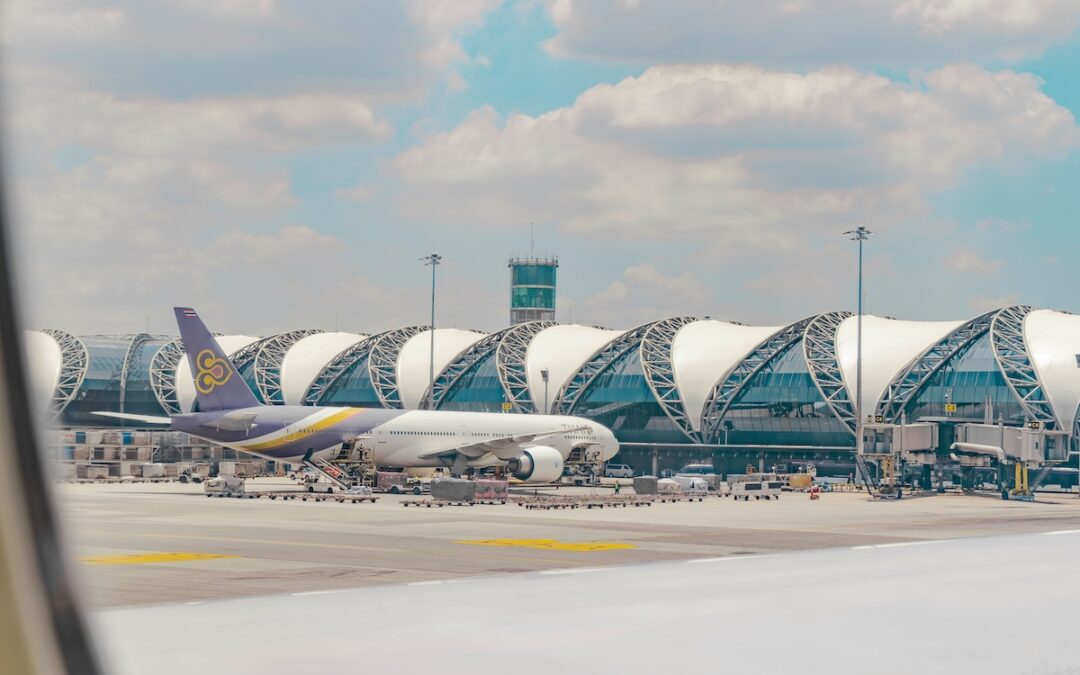
by Daryl Lum | Nov 19, 2024 | Bangkok Property Market Updates, Infrastructure & Urban Development
The Midfield Satellite Terminal 1 (SAT-1) at Suvarnabhumi Airport has been honored as one of the World’s Most Beautiful Airports for 2024 by Prix Versailles, according to Transport Minister Suriya Jungrungreangkit.
Prix Versailles, a global architectural competition endorsed by UNESCO since 2015, acknowledged six airport projects across five countries for their exceptional design and influence on travelers’ experiences. Alongside SAT-1, the recognised airports include:
- Zayed International Airport, Abu Dhabi, UAE
- Felipe Ángeles International Airport, Zumpango, Mexico
- Changi Airport Terminal 2, Singapore
- Logan International Airport Terminal, USA
- Kansas City International Airport, USA
The Prix Versailles awards celebrate excellence in contemporary architecture across multiple categories, including airports, campuses, passenger stations, sports venues, museums, retail spaces, hotels, and restaurants. The selection criteria align with principles of “intelligent sustainability,” considering ecological, social, and cultural impacts.
The six airports are now contenders for three global accolades – Prix Versailles, Interior, and Exterior – to be announced at UNESCO headquarters on December 2, Mr. Suriya added.
About SAT-1 Terminal
Opened in September 2023, the SAT-1 terminal spans 251,400 square meters of indoor usable space, with an apron area exceeding 260,000 square meters. Standing four stories tall with two underground levels, the terminal has increased Suvarnabhumi Airport’s annual passenger capacity from 45 million to 60 million.
Incorporating Thai architectural elements, Airports of Thailand (AoT) has adorned the terminal with traditional art from the country’s four regions. Visitors are welcomed by well-known installations, including statues of elephants and mythical creatures such as Kinnaree, Hemaraj, and Hongsa, located on the third floor. Traditional artworks also embellish the immigration area on the second floor, complemented by two Buddha statues positioned on raised platforms at opposite ends of the terminal.
Beyond its aesthetic appeal, SAT-1 prioritizes operational efficiency and environmental sustainability. Its 28 aircraft parking bays, linked by contact gates, enhance passenger convenience, while its automated water-saving toilet systems underscore eco-friendly innovation.
Minister Suriya described the terminal’s architecture as a harmonious blend of functionality, cultural identity, and designs that enrich passenger experiences.

by Daryl Lum | Nov 14, 2024 | Bangkok Property Market Updates, Expat Living & Relocation, Rental Market & Landlord Guides
The Ministry of Tourism and Sports has committed to registering unlicensed hotels within one year through a new regulatory draft, aiming to safeguard Thailand’s long-haul tourism market as the EU’s Carbon Border Adjustment Mechanism (CBAM) comes into effect in two years, enforcing strict environmental standards.
The ministry also seeks to bring a prominent global trade show, like the World Travel Market (WTM) Asia, to Thailand.
Tourism and Sports Minister Sorawong Thienthong noted that many small operators, especially unlicensed accommodations in smaller towns, lack awareness of sustainable practices.
Expected to curb emissions, the EU’s CBAM regulation—phasing in fully by 2026—places a carbon price on imported goods based on their production emissions. For Thailand, this regulation will impact EU tourists visiting the country, as service providers who don’t meet CBAM standards may incur higher tariffs, reducing Thailand’s competitive edge in tourism.
Minister Sorawong aims to expedite new regulations that can formalize unregistered operators, establishing a committee comprising MPs and private-sector representatives to discuss the draft before presenting it to parliament. The process is expected to conclude within a year.
“I am confident that all operators will want to register, as this will qualify them for government support in case of unforeseen events,” he said, adding that many tourists prefer registered accommodations.
Mr. Sorawong, alongside Tourism Authority of Thailand (TAT) executives and 42 Thai tourism businesses, attended WTM London 2024 from Nov 5-7, where they explored negotiations to host WTM Asia in Thailand in the future.
“Thailand is a leading global tourism destination but has yet to host a tourism trade fair of this scale,” Mr. Sorawong added.
According to Siripakorn Cheawsamoot, TAT Deputy Governor for Europe, Africa, the Middle East, and the Americas, the process could take two years to bring the event to Thailand. With the TAT’s pavilion at WTM London receiving an award for Best Stand Feature, showcasing local products and soft power, Thailand has a strong foundation for further discussions.
The TAT also plans to participate in ITB Berlin 2025, focusing on promoting Thailand’s secondary provinces. Local government officials will be invited to contribute content for this international stage.
The ministry’s 2025 tourism target is 40 million international arrivals, generating 2.4 trillion baht.
