Bangkok condominium due diligence is not complicated in theory, but it is unforgiving when buyers rush. Foreigners can buy freehold condominium units in Thailand, but only when the legal conditions, building quota, payment evidence and Land Office process line up correctly.
A good purchase file should prove four things before completion: the unit can legally be transferred to a foreign buyer, the seller has the right to sell, the building is financially and physically manageable, and the buyer can present the right foreign-exchange evidence at transfer.
This checklist is written for foreign buyers considering Bangkok property from overseas. It is practical rather than legal advice. Use it to structure questions for your lawyer, agent, bank and the condominium juristic office before money becomes difficult to recover.
Due diligence starts with the exact building, not only the district or developer name.
Confirm foreign quota before the deposit becomes binding
The first question is whether the unit can be registered in foreign freehold name. Thailand.go.th, the Thai government portal, explains that foreigners may own condominium units within the permitted foreign proportion and that a letter confirming the foreign proportion from the condominium juristic person is required for the transfer process.
In practice, ask for written foreign-quota confirmation that names the project, building, unit and current quota position. Do not rely only on a verbal statement from a salesperson. For resale units, the juristic office should be able to issue a quota letter or explain the documents required before it does so. For off-plan purchases, the sales agreement should state how foreign quota is reserved and what remedy applies if transfer cannot proceed in foreign name.
Quota is usually measured by area, not simply the number of units. That distinction matters in buildings with many large foreign-owned units. A small number of large units can consume more quota than buyers expect, so confirmation should be tied to the measured area of the specific unit.
Plan the foreign exchange evidence early
Foreign buyers usually need to show that purchase funds were brought into Thailand in foreign currency for the condominium purchase. The receiving bank issues the foreign-exchange evidence commonly referred to as an FET form or equivalent bank document, depending on the amount and transaction structure.
Do not leave this until transfer week. Ask your Thai receiving bank what wording should be used in the remittance instruction, whose name must appear as sender or beneficiary, how multiple payments will be documented, and how long the bank needs to issue the required evidence. If parents, spouses, companies or overseas trusts are involved, check the structure with a Thai lawyer before sending funds.
The safest instruction normally makes the purpose clear, such as purchase of condominium unit, and keeps the buyer name consistent. A mismatch between buyer, sender, developer receipt and bank certificate can delay transfer or create unnecessary explanation at the Land Office.
Foreign buyers should confirm tenure, foreign quota and transfer requirements before paying a non-refundable deposit.
Review title and seller authority
For a completed resale unit, the buyer should review the condominium title deed, seller identification, marriage consent if relevant, mortgage status and any registered encumbrances. If the seller is a company, verify authorised signatories and corporate approvals. If the unit is inherited or held through a power of attorney, the supporting documents deserve extra scrutiny.
The contract should clearly state the unit number, area, furniture list, fixtures, transfer date, who pays each tax or fee, what happens if either party fails to transfer, and whether the deposit is refundable if legal transfer conditions are not met. Avoid vague promises that are not written into the contract.
For off-plan purchases, review the developer entity, construction timeline, payment schedule, completion obligations, defect period, common-area specifications and remedies for delay. The more future performance you are buying, the more important the developer track record becomes.
Read the building, not only the brochure
The condominium juristic person is central to long-term ownership quality. Ask about common fees, sinking fund balances, insurance, major repair plans, parking rules, pet rules, short-stay restrictions, renovation controls and any ongoing disputes. If possible, review annual meeting minutes and financial statements.
A beautiful lobby does not guarantee a healthy building. Look for signs of deferred maintenance, lift downtime, water leaks, weak security, noisy short-term rentals or poor communication from management. These issues affect tenant satisfaction, resale confidence and owner stress.
For investment buyers, also test practical rental demand. A one-bedroom unit near transport may rent quickly, but a large luxury unit may need a narrower tenant pool. Ask for evidence of recent leases in the same building or direct competitors, not only district averages.
Buyers should also confirm practical handover details: meter readings, access cards, mailbox keys, parking stickers, outstanding common fees and whether furniture shown during inspection will remain at transfer. Small omissions can become expensive when the buyer is overseas.
A resale purchase requires careful review of juristic records, transfer costs, title documents and payment timing.
Check transfer costs and after-transfer obligations
Thailand.go.th lists official fee guidance for condominium transfers, including a transfer fee based on appraised value. In real transactions, buyers also need to understand specific business tax, stamp duty, withholding tax, agent commission, juristic clearance fees, utility deposits and any apportionment of common fees. Which party pays each item should be written into the contract.
After transfer, the buyer needs registered title documents, keys, access cards, utility account changes, insurance review, tax records, juristic registration and a plan for leasing or property management. Overseas owners should appoint a reliable local contact for repairs, tenant handover and annual notices.
Bangkok remains one of the clearest freehold condominium markets in the region for foreign buyers, but clarity depends on process. Before signing, ask Invest Bangkok Property to review the unit, building, quota position and transaction timeline with you so the purchase is structured correctly from the start.
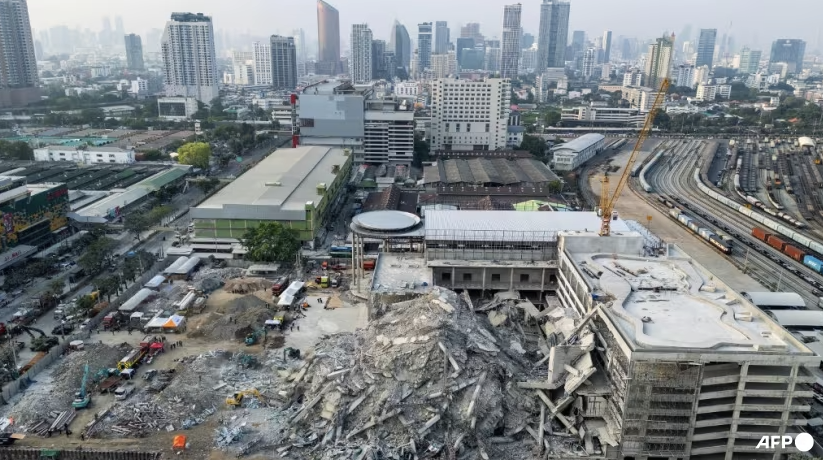
The Department of Disaster Prevention and Mitigation (DDPM), under the Ministry of Interior, is offering financial compensation of up to THB 49,500 to homeowners whose properties were damaged by the March 28 earthquake in Myanmar. The support is intended to assist with the repair of affected private residences.
According to Bangkok MP Suphanat Minchaiynunt, owners of houses and condominium units impacted by the 8.2-magnitude earthquake—which caused structural damage across northern and central Thailand, including parts of Bangkok—are eligible to apply for this reimbursement.
In a statement posted on Facebook, MP Suphanat noted that eligible applicants must reside in Bangkok, Nonthaburi, Samut Prakan, or designated areas within Pathum Thani, Chiang Mai, Chiang Rai, Lamphun, Phrae, and Phichit provinces.
“The reimbursement covers repairs to privately-owned homes and condominium units, up to a maximum of THB 49,500. Communal property repairs are not included. Homeowners with existing insurance coverage are also eligible to apply,” he clarified.
Application Procedure:
Photograph the damaged areas of the property.
Prepare the necessary personal identification documents.
File an official report at your local police station.
Complete the application form (available for download here).
Submit the completed form, documents, photographs, and police report to your district office.
The district office will arrange a site visit to assess the damage.
The request will be submitted to the DDPM for approval.
Upon approval, the DDPM will contact the applicant to coordinate the reimbursement.
Hotel operators are expressing concerns over proposed changes to foreign ownership rules in real estate, fearing it could result in a rise in illegal hotels in Thailand.
The government’s proposal includes extending the leasehold period for foreigners to 99 years and increasing the foreign ownership quota in condominiums from 49% to 75%.
These measures could negatively impact the competitiveness of Thai hotels by encouraging foreign buyers to exploit the tourism industry, according to Udom Srimahachota, vice-president of the Thai Hotels Association (THA).
Mr. Udom warned that with increased ownership, more foreign buyers might convert condo units into short-term rentals for tourists. Past incidents have shown agents from countries like China purchasing entire floors in condominiums and renting them exclusively to tourists from their home country in key tourism areas.
He highlighted that licensed Thai hotels face higher costs, including land and corporate taxes, while illegal accommodations operate without the same financial burden. Currently, there are around 16,000 licensed hotels in Thailand and approximately 15,000 unregistered ones.
In one instance, Russian agents bought out a condo project in Hua Hin, using the units solely for renting to Russian tourists, directly competing with licensed hotels, Mr. Udom added. He also raised concerns that with increasing flights from China to cities like Hua Hin, Chinese buyers may be drawn to invest in properties and illegally rent them to tourists.
He further questioned the proposal to lengthen leasehold terms for foreign land buyers, pointing out the existing trend of Chinese nominees developing housing, condo projects, and hotels. These investors often import both labor and construction materials from China, limiting the benefits to the local economy.
The THA has voiced these concerns to the Interior Ministry, calling on the government to focus on enhancing the competitiveness of Thai hotels. Mr. Udom also urged the administration to ease financial restrictions, allowing small and medium-sized hotel operators better access to loans for renovations. He emphasized the importance of regulating non-hotel properties rented out to tourists, ensuring they are properly registered within the system.
The government is advancing a bill to legalise casinos within entertainment complexes across the country. According to sources, the Finance Ministry has completed drafting the Entertainment Complex Act. The bill will undergo a public hearing as required by Section 77 of the constitution, ensuring public input before being presented to the cabinet for review.
Why the move?
Deputy Prime Minister and Commerce Minister Phumtham Wechayachai confirmed that coalition party leaders will meet today to discuss the bill, which aims to legalise and regulate casinos as part of the broader entertainment industry. The bill argues that such complexes can significantly boost tourism revenue and domestic investment.
How does it work?
Under the proposed legislation, entertainment complexes must obtain a license valid for up to 30 years, with an initial registration fee of 5 billion baht and an annual payment of 1 billion baht. The license can be renewed for an additional 10 years after the initial period. Entry to these complexes is restricted to individuals over 20 years old, with Thai citizens required to pay a 5,000 baht entrance fee.
The bill also establishes a policy board, chaired by the prime minister, to oversee regulations governing these complexes. According to Mr. Chai, the project could have a substantial economic impact, with the global casino-based entertainment complex industry projected to grow from USD 1.5 trillion in 2022 to USD 2.2 trillion by 2028. He emphasised the need for Thailand to expedite its plans to capture a share of this lucrative market.
A House committee report estimates that the project could generate at least 12 billion baht in taxes in its first year. The report examined the economic, social, cultural, and legal implications of the initiative, identifying five potential locations: two in Bangkok, and one each in the Eastern Economic Corridor, Chiang Mai, and Phuket.
However, Pariyes Angkurakitti, a spokesman for the opposition Thai Sang Thai Party, criticised the project, warning that lax law enforcement could undermine efforts to properly regulate the casino industry.
Thailand’s comprehensive revamp of visa and entry regulations has elicited a range of reactions, from enthusiasm to confusion and some frustration. To shed light on the new rules, Naruchai Ninnad, Deputy Director-General of the Department of Consular Affairs at Thailand’s Ministry of Foreign Affairs, addressed questions during the Bangkok Post’s Deeper Dive vodcast.
Destination Thailand visa (DTV)
A key highlight is the introduction of the five-year Destination Thailand visa (DTV), which allows stays of up to 180 days, extendable to one year. However, eligibility is restricted to three specific categories.
The first category targets digital nomads or freelancers paid by employers outside Thailand. Naruchai explained, “You can work remotely in Thailand as long as your employer and income are based abroad. Documentation like a payslip or a letter from your employer is required.” The second category includes those relocating to Thailand for specific activities, such as Muay Thai training, cooking classes, medical treatment, or attending events. Applicants must provide proof, such as an appointment or event ticket. The third category covers individuals with spouses or children in Thailand, requiring proof of relationship. This visa can serve as an alternative to the category O spousal visa but must be renewed every six months and requires at least one exit from the country per year.
The DTV does not mandate health insurance but requires proof of at least 500,000 baht in assets, held anywhere globally. Naruchai stressed that qualifying for the visa also depends on fitting into one of the defined categories, not just financial capability.
He also clarified that the DTV cannot substitute the one-year retirement visa unless the applicant qualifies under a different category, and addressed concerns that the DTV might be seen as a cheaper alternative to the Elite visa, noting that each visa offers different benefits.
Another significant change is the expansion of countries eligible for visa-free entry from 57 to 93, including China and India. The entry stamp duration has been extended from 30 to 60 days, with an additional 30-day extension available at an immigration office. Naruchai noted that there’s no limit on the number of entries per year, and entrants must show access to at least 20,000 baht, though a return or onward ticket is only required upon request by immigration officials.
Visa on arrival
The number of countries eligible for a visa on arrival has also increased from 19 to 31, though this option is less favourable due to its 2,000 baht cost and 15-day validity. Naruchai emphasized that immigration officers would grant the most beneficial option, citing that Chinese citizens would receive a 60-day visa exemption over a visa on arrival.
Non-ED Plus visa
Additionally, a new Non-ED Plus visa has been introduced for the 40,000 foreign students at Thai universities pursuing Bachelor’s degrees or higher. This visa allows for a one-year stay after graduation to seek employment in their field. Those already in Thailand on an ED visa and who meet the ED Plus criteria will automatically be upgraded, eliminating the need for a re-entry permit.
Despite these updates, other visas and the controversial 90-day reporting requirement remain unchanged. However, the health insurance requirement for the retirement and spousal visas has been reduced from 3 million baht to 400,000 baht.
Regarding concerns about foreign criminals, Naruchai assured that security measures remain robust. While pre-screening for the 97 countries may not occur before entry, arrivals will still undergo security checks using the same database. Recent incidents involving foreign criminals and corrupt immigration officials have highlighted these issues, but strict regulations and screenings aim to ensure security while avoiding undue burdens on law-abiding expats.
On July 23, a deputy prime minister announced that Thailand would move forward with legislating marijuana for medical use, signalling a reversal from previous intentions to re-criminalise the plant. This marks another shift in the government’s uncertain stance on cannabis. In 2022, Thailand became one of the first Asian nations to decriminalise marijuana without establishing clear laws or regulations, leading to a surge in recreational use and the emergence of numerous cannabis cafes and retailers, raising public concerns about potential misuse.
Deputy Prime Minister Anutin Charnvirakul, a key advocate for marijuana liberalisation, stated that Prime Minister Srettha Thavisin has now endorsed legislation as the appropriate course of action. Anutin thanked the prime minister for considering and deciding to proceed with legislative action.
The government continues to prohibit recreational cannabis use, and Prime Minister Srettha, from a different political party, had previously suggested re-criminalisation, with allowances for medical and research purposes. The legislation will be debated in parliament, where a draft law already exists, according to Prommin Lertsuridej, the secretary-general to the prime minister. The determination of cannabis as a narcotic will be up to the legislative body.
A draft cannabis law had been presented to the legislature under the previous administration, but parliament was dissolved before it could be voted on. It remains uncertain whether actions will be taken to restrict recreational cannabis use, as advocated by Prime Minister Srettha. The domestic marijuana retail sector in Thailand is rapidly growing, with projections estimating it could reach up to USD 1.2 billion by 2025.
The Bhumjaithai Party, led by Anutin and the second largest in the ruling coalition, has promoted the use of marijuana for health and economic purposes but officially does not support recreational use and opposes re-criminalisation. Nattabhorn Buamahakul, managing partner at Vero Advocacy, a government affairs consultancy, noted that the latest policy shift suggests improved coordination among coalition parties on the complex issue of cannabis compared to last year when the government was formed.
Thailand has announced a 7% value-added tax (VAT) on imported goods priced under 1,500 baht (approximately USD 40.93) effective from July to December, according to a finance ministry representative on Friday, June 21.
Currently, imported goods under 1,500 baht are exempt from VAT in Thailand.
Post-December, legislation will be updated to enable the revenue department to maintain the VAT collection on these items, the official informed Reuters.
In February, Deputy Finance Minister Julapun Amornvivat highlighted that low-cost Chinese imports, previously exempt from customs duties and VAT, were adversely affecting local manufacturers.
Prime Minister Srettha Thavisin has also pointed out that there have been instances of false declarations for low-cost Chinese products in free trade zones to evade VAT, which he believes should be enforced.
The government is considering increasing the allowable foreign ownership in condominiums from 49% to 75% of a building’s usable space, Deputy Prime Minister Phumtham Wechayachai announced.
The Ministry of Interior has also been tasked with evaluating the potential extension of property leaseholds for foreigners from 50 years to 99 years, Phumtham informed the press on Friday.
This initiative was initially proposed during a cabinet meeting in April, as part of the government’s efforts to boost the economy and attract foreign investment.
Local property industry leaders have been advocating for a revision of the foreign ownership cap, citing growing demand from international buyers.
Concurrently, high household debt levels and stricter lending conditions have dampened property demand among local buyers, prompting developers to proceed with caution.
According to the Real Estate Information Centre (REIC), the number of land allocation permits nationwide fell by 19.7% in the first quarter of this year, marking the largest decline in nine quarters, as developers adapted to consecutive drops in low-rise house transfers.
The REIC has highlighted that foreign ownership quotas for condos in popular destinations like Phuket and Pattaya are fully occupied in several projects.
“Certain areas do not attract domestic buyers, so increasing foreign ownership quotas in those regions could stimulate the economy, as the condo market there relies heavily on foreign demand,” said Vichai Viratkapan, acting director-general of the REIC.
Some projects have responded by setting aside units for leasehold contracts, priced 10-15% lower than freehold units, to cater to the predominantly foreign buyers.
In 2023, foreign condo transfers totaled 14,449 units, a 25% increase from the previous year, with transaction value rising by 23.5% to 73.1 billion baht, surpassing pre-pandemic levels, according to the REIC.
Chinese buyers led the market, accounting for 45.8% of the units transferred and 46.7% of the total value, followed by buyers from Russia, the United States, and Myanmar.
The revision of the land and building tax law aims to boost revenue by improving collection efficiency and establishing appropriate tax rates, while also tightening criteria to close tax loopholes, according to Lavaron Sangsnit, the finance permanent secretary.
Lavaron stated that the land and building tax law, which has been operational for five years, necessitates periodic reviews every five years to address implementation issues. Initially, the criteria were not overly strict, particularly for vacant land, which typically incurred higher tax rates compared to residential, agricultural, or commercial/industrial land.
However, Lavaron noted that some owners of vacant urban land avoided higher tax rates by planting fruit trees like limes, claiming agricultural status with the lowest tax rate. This strategy now obligates owners to pay agricultural land tax rates, whereas previously, no tax was levied on such land.
Determining vacant land status falls under the jurisdiction of local administrative organisations responsible for tax collection. Vacant land, legally defined, refers to land not utilized to its fullest potential. Lavaron emphasized the principle that landowners should derive benefits from the land exceeding the tax imposed.
He emphasized the gradual tightening of tax collection criteria in the future, as current levies remain relatively low. Tax rates should increase over time, with adjustments based on appropriate timing and circumstances, according to Lavaron. While the law specifies minimum rates, local administrative organisations can increase them, but not below the legal limit.
The land and building tax replaced the house and land tax and the local development tax, resulting in slightly higher revenue collection after deductions expired, and full rates were enforced. The current system bases property tax on land appraisal values multiplied by respective tax rates, unlike the previous house and land tax, which used annual rental values multiplied by a fixed rate of 12.5%.
Lavaron mentioned that certain properties like department stores may face higher tax levies, while others could have lower rates than before. This system is deemed fairer as it applies the same tax rate universally, without reliance on tax collectors’ discretion.
The Thai Department of Revenue has enacted Departmental Instruction No. Paw 161/2566, which introduces substantial amendments to the taxation of foreign-sourced income for personal income tax purposes, effective from 1 January 2024. 161/2566 was issued to provide interpretation to Section 41 Paragraph 2 of the Thai Revenue Code. This directive mandates that Thai taxpayers, including both citizens and residents, who earn income from employment, business activities, or property outside of Thailand, are required to pay taxes on such income upon repatriation to Thailand.
Under the prior regulations, foreign-source income was taxable only if repatriated to Thailand within the same calendar year it was earned. The new instruction closes this loophole by requiring the declaration and taxation of overseas income regardless of the repatriation timeline, within the tax year it is earned.
This revised taxation rule applies to all Thai taxpayers. This includes:
Thai nationals;
Residents who have previously filed taxes in Thailand;
Foreign nationals residing in Thailand for 180 days or more within a tax year.
For the 2024 tax year, with tax filings due by March 2025, income tax will be applicable under the following conditions:
Income earned both within and outside of Thailand, including wages, business income, and passive or property income as specified under sections 40 and 41 of the Revenue Code.
The income tax rates for Thai citizens and permanent foreign residents are structured as follows:
Income up to 150,000 baht is exempt;
Income over 150,000 baht up to 300,000 baht is taxed at 5%;
Income over 300,000 baht up to 500,000 baht is taxed at 10%;
Income over 500,000 baht up to 750,000 baht is taxed at 15%;
Income over 750,000 baht up to 1 million baht is taxed at 20%;
Income over 1 million baht up to 2 million baht is taxed at 25%;
Income over 2 million baht up to 5 million baht is taxed at 30%;
Income above 5 million baht is taxed at 35%.
Instruction No. P 161/2566 signifies a pivotal shift in Thailand’s approach to taxing foreign-sourced income, aimed at creating a more equitable tax environment for individuals earning from both domestic and international sources. This is particularly relevant for foreign investors and expatriates residing in Thailand.
In light of the COVID-19 situation, the Thai government has cut the tax of land and buildings by 90% for the taxes due in the tax year 2020. This is to relieve the burden on taxpayers.
The Thai government would also help local administrative organisations financially as well. These local administrative organisations rely on the collection of land and building taxes for their own expenses.
For most overseas property investors, you will not be affected by the Land and Building Tax Act. Under the existing law, first-home owners are already tax-exempted for the value of land and buildings up to 50 million baht, and 10 million baht if they only own the structures but not the land. Thus for condominiums, if you own one property and if that property is less than 10 million baht, you will not be taxed. If the value is higher than 10 million baht, then the tax rate will be 0.02%.
For example, if your property is 15 million baht, the tax payable will be 0.02% x 15 million = 3000 baht.
With the 90% cut, you will pay 300 baht.
Hope this is clear to everyone.
For an in-depth article of the Land and Building Tax Act, you can refer to this article:
Property developer Siamese Asset Co is unconcerned about the central bank’s loan-to-value (LTV) limit on mortgage lending, as it already collects a down payment of 20% of the unit price.
It plans to launch two new condo projects worth a combined 10 billion baht in the next two months.
Managing director Kajonsit Singasansern said the new requirement for LTV ratio of 80% the Bank of Thailand asked financial institutions to comply with from Jan 1, 2019, will have no effect on the company’s existing or new customers.
“We have collected a down payment of 20% at our condo projects for many years, so we don’t need to be worried about this new rule,” he said. “It only hurts our competitors.”
There was one project, Blossom Condo @Fashion, where the company collected a down payment of 15% of unit price because the project was in the lower-priced segment, in which most buyers were first-time purchasers.
Last Thursday the central bank announced it would require home buyers to make a down payment of at least 20% of the home value for new mortgages worth at least 10 million baht, as well as for second homes.
“We will continue with our policy of 20% down payment at our new projects as most of them are high-priced, where buyers have strong purchasing power and can pay a high down payment,” Mr. Kajonsit said.
Next month Siamese Asset plans to launch a new luxury condo project, The Collection, worth 4.8 billion baht. It will be located on a 2.1-rai plot on Ratchadaphisek Road, opposite Benchakiti Park.
The project comprises 443 units sized between 33.8 and 135.35 square meters and priced at 6.2-45 million baht a unit, or 240,000 baht per sq m on average. It plans to offer a guaranteed yield of 5% for two years.
The project targets both real demand and investors, estimated to account for 60% and 40% of buyers, respectively, and aims for 70% presales on the launch date.
By year-end, Siamese Asset plans to launch a mid-priced condo worth 5 billion baht located on 2.5 rai near Ratchadaphisek subway station. It comprises three towers with 600 units.