by Willie Tan | 2 May 2025 | Bangkok Property Market Updates, Expat Living & Relocation
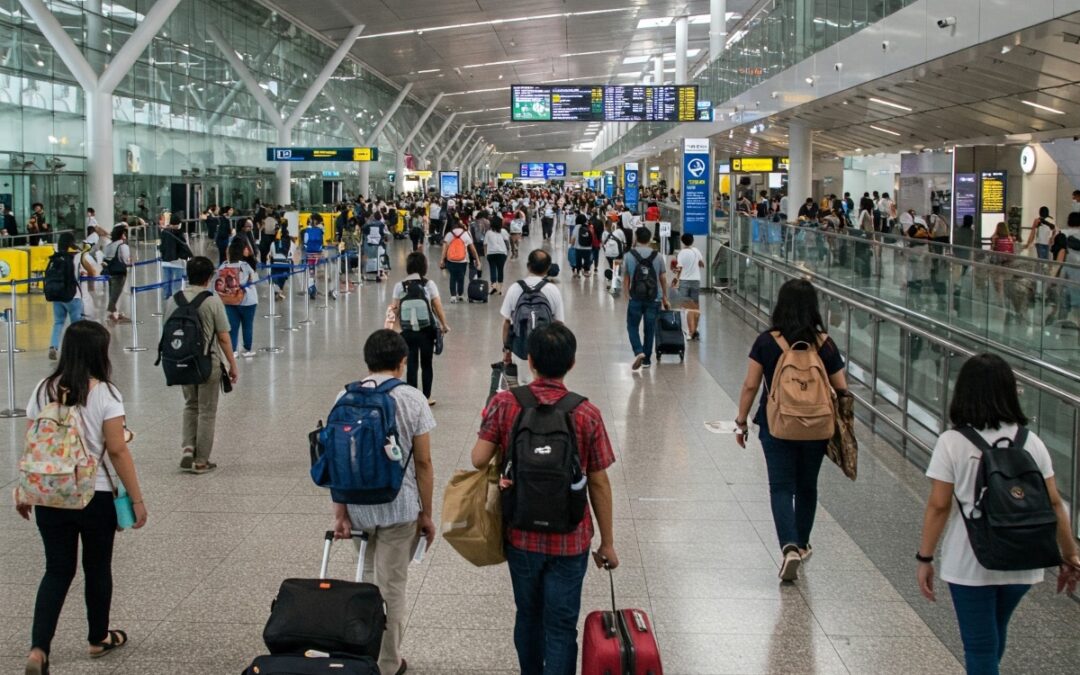
Right, let’s talk travel updates for those of you keen on heading to Bangkok, or anywhere else in Thailand for that matter. There’s a significant change you absolutely need to be aware of, impacting pretty much everyone arriving in the country from this May.
Starting May 1st, 2025, Thailand is introducing a mandatory digital arrival card. It’s officially being called the Thailand Digital Arrival Card, or TDAC. This isn’t entirely new in concept; it’s the digital replacement for those little paper TM6 cards you might remember filling out on flights before they were paused. The plan was always to bring them back, just in a digital format.
So, who actually needs to complete this TDAC? The rule is quite broad: Pretty much everyone who is a foreign national arriving in Thailand. This applies whether you’re arriving by air, land, or sea. It even includes foreign residents who are returning to Thailand using their re-entry permits. Transit passengers need it too, but only if they pass through immigration. If you’re just changing planes and staying airside in the international zone, with your bags checked through, you generally don’t need to complete the TDAC.
Who is exempt? Thai citizens, naturally. Also, those transit passengers who don’t go through immigration. Diplomatic and consular staff using diplomatic passports are also exempt.
For everyone else, you need to know when to do it. The window for submission is up to three full days before your arrival. For example, if you’re landing on May 6th, you can submit your TDAC on May 3rd, 4th, 5th, or even on the 6th before you land. The system actually went live a little earlier, on April 28th, to allow people arriving right on May 1st to get theirs done.
Where do you complete it? It’s done online via the official Thailand Digital Arrival Card Portal website. On the portal, you’ll find a button labelled ‘arrival card’ to launch the form.
The information required is very similar to the old paper form. You’ll need to provide your full name, date of birth, nationality, passport number and expiry date. Standard identity details. You’ll also need your occupation, contact details, and trip specifics. This includes your date of arrival, flight number, your purpose for visiting Thailand (tourism, business, etc.), your planned departure date and flight number, and the address where you’ll be staying in Thailand, such as your hotel name and address. One additional item is a list of countries you’ve visited in the two weeks before arriving.
Once you fill in all the details and submit, you should receive a QR code confirmation. This is likely to come via email, potentially with a downloadable PDF attached. We’ve heard the system is quite fast, often providing a downloadable PDF on screen immediately after submission, with the email following quickly.
Now, for some practical advice: The absolute best way to handle this is to complete the TDAC before you even leave home. Do it well in advance of heading to your departure airport. Waiting until you’re at the gate or on the plane is definitely not recommended. Doing it in advance saves potential hassle at check-in and on arrival.
Will airlines check for this QR code? That’s still a little unclear. Some might, some might not, especially initially. However, the strong advice is to just assume they will check and have your QR code ready. It’s the safest approach to avoid being denied boarding at your departure airport, which is a serious possibility if you haven’t completed it. Don’t risk your whole trip for a form that should only take about 10 minutes to fill out.
The form itself is split into three main sections: personal information, trip and accommodation details, and a health declaration section.
Here’s a crucial ‘pro tip’ once you get your QR code confirmation: Save it digitally on your phone (screenshot, save the PDF), BUT also print out a paper copy. Technology can fail – phones die, apps glitch, Wi-Fi might be unavailable when you need it. Having that physical piece of paper can be a real lifesaver and provides peace of mind.
What if your plans change after you’ve submitted? Good news, you can update it. The portal has an update function. You’ll need your TDAC number from your confirmation, your passport number, date of birth, and nationality to log in. You can update things like your arrival date, flight number, or accommodation details if they change.
So, what happens if you just forget or don’t do it at all? It’s definitely not ideal. You will likely face significant delays and longer queues at immigration upon arrival in Thailand as you’ll have to complete it there. As mentioned, there’s also the potential risk of being denied boarding by your airline.
However, Thailand’s Immigration Bureau hasn’t left people completely stranded. There is a fallback option: They’ve set up kiosks or counters in the arrival halls for last-minute TDAC submission. Specific counters have even been mentioned at Suvarnabhumi Airport in Bangkok. But, and this is a big but, expect potentially long queues if you have to use these. This is very much an emergency option and absolutely not the recommended approach. Plan A is to do it before you leave home to avoid the stress and queues on arrival.
It’s worth noting that Thailand is following a trend here. This move to digital arrival cards is becoming a standard practice globally and aligns Thailand with neighbours like Singapore, which has its SG Arrival Card, and Malaysia, with its MDAC. It’s all about modernising, streamlining processes, and collecting data digitally.
For the absolute official details or if you have complex questions, always refer to the official sources. The Thailand Digital Arrival Card Portal itself is the primary place, and you should find a user guide and an FAQ section there.
To boil it all down for your readers heading to Thailand from May 1st, 2025: The Thailand Digital Arrival Card is mandatory for foreign nationals, and you must complete it before you arrive. The best approach is to do it within the 3-day window before travel, fill it out online, get your QR code, save it on your phone, and print a copy. Being prepared will make your arrival in Bangkok or elsewhere in Thailand much smoother. And perhaps pack a little extra patience, as any new system might have initial bumps, especially processing millions of travellers.
It’s interesting to see how travel is rapidly moving towards digital processes – boarding passes, visas, now arrival cards. It makes you wonder what’s next! But for now, the TDAC is the key thing to focus on for your upcoming trip.

by Willie Tan | Feb 17, 2025 | Bangkok Property Market Updates
In response to a growing housing shortage, Australia has announced a two-year ban on foreign investors purchasing existing homes. The policy, set to take effect immediately, aims to address the country’s housing crunch by prioritizing local buyers and renters. The ban will remain in place until at least 2025, with the government hoping to stabilize the housing market and make homes more affordable for Australian residents.
The decision comes as Australia faces increasing pressure from rising property prices and a lack of available housing. By restricting foreign investment in existing properties, the government hopes to free up more homes for locals while encouraging foreign buyers to invest in new developments instead. This move is part of a broader strategy to boost housing supply and support the construction of new homes.
While the ban may impact foreign investors looking to purchase second homes or investment properties in Australia, it does not apply to new construction projects. Foreign buyers are still welcome to invest in off-plan properties or newly built homes, which aligns with the government’s goal of increasing housing stock.
This policy reflects a growing trend among countries to regulate foreign investment in real estate to address domestic housing challenges. For those considering overseas property investments, it’s essential to stay informed about changing regulations and market conditions in your target country.
Australia’s decision highlights the importance of understanding local real estate laws and market dynamics before making an international property purchase. As always, consulting with local real estate experts and legal advisors is crucial to navigating these complexities successfully.

by Willie Tan | Jan 27, 2025 | Bangkok Property Market Updates
Bangkok’s real estate market has been buzzing with excitement following the launch of the Thai government’s ambitious “Home for Thais” program, aimed at making homeownership more accessible for low-income citizens and fresh graduates. The program has sparked unprecedented interest, with over 12 million people attempting to register online within hours of its opening. The overwhelming demand even caused the official website to crash shortly after registration began.
Affordable Housing with Monthly Payments as Low as THB 4,000
The program, inaugurated by Prime Minister Paetongtarn Shinawatra at an exhibition in Krung Thep Aphiwat Central Terminal, offers affordable condominiums and houses at payments starting from just THB 4,000 per month. For many, this initiative represents a long-awaited opportunity to secure a home, especially given that nearly 6 million households—approximately 27% of Thailand’s population—currently lack proper housing.
The exhibition, running until January 31, showcases model homes, drawing crowds as early as 5 a.m. Attendees eager to register expressed optimism about the initiative, which allows buyers to purchase homes on state land with leaseholds lasting up to 99 years.
Where Are These Affordable Homes Located?
Four key locations have been identified for the pilot phase, all conveniently located near mass transit systems:
- Bang Sue Km 11: Featuring 1,232 condominium units priced from THB 1.76 million for 30 sqm to THB 3 million for 50 sqm.
- Thon Buri: Offering 2,100 condominium units.
- Chiang Rak: Planned to deliver 1,795 units.
- Chiang Mai: Focused on single houses with 720 units available.
The State Railway of Thailand has earmarked over 38,000 rai of unused land nationwide for the program, with initial plots for these developments expected to be handed over by the end of the year.
Who Can Apply?
The program comes with specific eligibility requirements:
- Applicants must be Thai nationals of legal age.
- They must have never owned a residence before.
- Monthly income must not exceed THB 50,000.
- Applicants must not be blacklisted by the National Credit Bureau.
The absence of a down payment requirement makes this program even more appealing, removing one of the biggest barriers to homeownership.
Transforming Housing in Thailand
Speaking at the launch, Prime Minister Paetongtarn emphasised that the initiative is part of the government’s broader strategy to improve the quality of life for Thai families by addressing the housing gap. The collaboration between the Ministries of Transport and Finance has been instrumental in bringing this vision to life.
For those interested in condominiums in Bangkok, the “Home for Thais” program is a game-changer. Not only does it provide an affordable way to step into the property market, but it also ensures the convenience of living near transit hubs—a significant advantage in the bustling capital city.
If you’re keen to learn more or explore your eligibility, visiting the exhibition or keeping an eye on further developments could be your first step toward owning a dream home in Bangkok.

by Willie Tan | Sep 25, 2024 | Bangkok Property Market Updates, Infrastructure & Urban Development
The Samyan Smart City project in central Bangkok is making notable advancements in smart energy development. The Metropolitan Electricity Authority (MEA) recently announced the successful relocation of overhead power and communication cables underground, significantly improving the urban landscape.
This initiative, which began in June 2019 in collaboration with Chulalongkorn University, saw the removal of cables along Chulalongkorn Soi 12 and near the King Rama VI Monument at Lumpini Park. This effort not only enhances the city’s aesthetics but also supports the broader goal of smart energy management in the area.
Key developments include installing a Battery Energy Storage System (BESS) and the creation of a smart grid. The BESS, which works alongside solar and wind power, ensures a consistent electricity supply despite variable weather conditions. The smart grid will enhance electricity production, sales, and consumption management, leveraging consumer behaviour data for better efficiency.
Samyan Smart City spans 1,153 rai, bordered by Banthat Thong, Rama IV, Henri Dunant, and Rama I roads. Overseen by Property Management of Chulalongkorn University (PMCU) and initially funded by the Energy Conservation Fund in 2017, the project also includes rooftop solar panels and a district cooling system developed by BCPG, a subsidiary of Bangchak Corporation.
Additionally, the project promotes smart mobility with battery-operated shuttle buses, providing eco-friendly transportation options for students and residents.
These efforts underscore the commitment to transforming Samyan into a model of sustainable urban living through innovative energy solutions and smart city technologies. The collaboration between MEA and Chulalongkorn University highlights the importance of partnerships in achieving these ambitious goals. As the project progresses, it continues to set a benchmark for smart city initiatives in the region, demonstrating how urban areas can evolve to meet the demands of modern living while prioritising sustainability and efficiency.

by Willie Tan | Sep 9, 2024 | Bangkok Property Market Updates
Thailand is set to distribute 145 billion baht (USD 4.2 billion) from its “digital wallet” handout program earlier than initially planned, aiming to support vulnerable groups and provide short-term economic stimulus. This announcement was made by Deputy Finance Minister Julapun Amornvivat on Monday, September 9.
During a budget debate in the Senate, Julapun highlighted that the government has allocated a total of 450 billion baht (USD 13.29 billion) for this flagship handout initiative. The program is designed to boost economic activity by transferring 10,000 baht to 50 million Thai citizens for local spending.
Originally scheduled for the last quarter of this year, the handout scheme is a key component of Thailand’s strategy to revitalize Southeast Asia’s second-largest economy, which saw a growth of 2.3% in the second quarter.
The recent change in government, following the unexpected removal of Srettha Thavisin as premier by the court, has created uncertainty about the timing of the promised stimulus measures. However, Paetongtarn Shinawatra, Srettha’s ally and successor, confirmed last week that part of the handout will now be distributed in cash.
Julapun noted that 32 million people, including vulnerable groups, have registered for the program so far. However, those without smartphones, who were supposed to receive funds via an application, are not included in this count. It remains unclear whether the first tranche of payments, expected later in September and sourced from the 2024 budget and other funds, will be in cash.
Paetongtarn, the daughter of influential billionaire Thaksin Shinawatra, recently assured that the new government would immediately stimulate the economy and adhere to Srettha’s policy agenda. Her administration published a policy statement on Sunday, which she will present to parliament later this week.
Despite criticism from economists, including two former central bank governors, who deem the handout scheme fiscally irresponsible, the government maintains that the policy is essential to invigorate the economy. The central bank projects a modest growth of 2.6% this year, up from 1.9% in 2023, but still lagging behind most regional peers.

by Willie Tan | Aug 19, 2024 | Bangkok Property Market Updates
Paetongtarn Shinawatra was officially confirmed as Thailand’s prime minister by the king on Sunday, August 18, following her election by parliament two days earlier. This sets the stage for her to form a new Cabinet in the coming weeks.
At 37 years old, Paetongtarn is Thailand’s youngest prime minister, succeeding Srettha Thavisin, who was removed by the Constitutional Court, an institution often at the centre of the country’s ongoing political unrest. Paetongtarn is the daughter of Thaksin Shinawatra, a prominent and polarizing political figure, and she secured the position after receiving 319 votes in the House of Representatives, making her Thailand’s second female prime minister and the third member of the Shinawatra family to hold the office, following her father and aunt Yingluck Shinawatra.
The king’s approval, a formal requirement, was announced during a ceremony in Bangkok by the House Secretary, Apat Sukhanand. Paetongtarn, dressed in official attire, knelt before a portrait of King Vajiralongkorn to pay her respects and delivered a brief speech expressing gratitude to the king and parliament. She emphasized her commitment to working with legislators openly and listening to all viewpoints to ensure the country progresses with stability.
Despite her lack of previous government experience, Paetongtarn faces significant challenges, including a struggling economy and declining support for her Pheu Thai Party, which has yet to fulfil its promise of a 500 billion baht (approximately USD 14.46 billion) digital wallet program.
After receiving the royal endorsement, Paetongtarn embraced her father and family members. In her initial press conference, she pledged to continue the policies of her predecessor, Srettha, focusing on economic stimulus, drug enforcement, healthcare improvement, and promoting gender diversity. She reaffirmed her commitment to the digital wallet policy, although she intends to review it to ensure fiscal responsibility.
Paetongtarn stated she has no plans to appoint her father, Thaksin, to any government position but will seek his counsel. She also mentioned that her government’s policies will be presented to parliament next month.
The recent dismissal of Srettha after less than a year in office serves as a warning of the risks Paetongtarn faces in a political environment characterized by coups and court rulings that have repeatedly disrupted governments. The Shinawatra family’s political legacy and future are also at risk, as their once-dominant influence suffered a setback in the last election, forcing them to collaborate with their long-time adversaries in the military to form a government.
Recent events suggest a breakdown in the fragile agreement between Thaksin and the royalist establishment. This facilitated his return from 15 years of self-exile in 2023 and Srettha’s brief tenure as prime minister. A week earlier, the court that removed Srettha also disbanded the Move Forward Party, which had won the 2023 election, over its campaign to amend a royal defamation law, arguing it threatened the constitutional monarchy. The popular opposition party has since reorganized under a new banner, the People’s Party.

by Willie Tan | Aug 14, 2024 | Bangkok Property Market Updates, Legal, Tax & Due Diligence
The government is advancing a bill to legalise casinos within entertainment complexes across the country. According to sources, the Finance Ministry has completed drafting the Entertainment Complex Act. The bill will undergo a public hearing as required by Section 77 of the constitution, ensuring public input before being presented to the cabinet for review.
Why the move?
Deputy Prime Minister and Commerce Minister Phumtham Wechayachai confirmed that coalition party leaders will meet today to discuss the bill, which aims to legalise and regulate casinos as part of the broader entertainment industry. The bill argues that such complexes can significantly boost tourism revenue and domestic investment.
How does it work?
Under the proposed legislation, entertainment complexes must obtain a license valid for up to 30 years, with an initial registration fee of 5 billion baht and an annual payment of 1 billion baht. The license can be renewed for an additional 10 years after the initial period. Entry to these complexes is restricted to individuals over 20 years old, with Thai citizens required to pay a 5,000 baht entrance fee.
The bill also establishes a policy board, chaired by the prime minister, to oversee regulations governing these complexes. According to Mr. Chai, the project could have a substantial economic impact, with the global casino-based entertainment complex industry projected to grow from USD 1.5 trillion in 2022 to USD 2.2 trillion by 2028. He emphasised the need for Thailand to expedite its plans to capture a share of this lucrative market.
A House committee report estimates that the project could generate at least 12 billion baht in taxes in its first year. The report examined the economic, social, cultural, and legal implications of the initiative, identifying five potential locations: two in Bangkok, and one each in the Eastern Economic Corridor, Chiang Mai, and Phuket.
However, Pariyes Angkurakitti, a spokesman for the opposition Thai Sang Thai Party, criticised the project, warning that lax law enforcement could undermine efforts to properly regulate the casino industry.

by Willie Tan | Aug 14, 2024 | Bangkok Property Market Updates, Expat Living & Relocation
Thailand has launched new visa programs designed to facilitate extended stays and remote work, aligning with a global trend of attracting higher-spending visitors with a smaller impact.
Content Creator Steve Lim’s Unexpected Journey to Thailand
Steve Lim, a content creator from New Zealand, never intended to settle in Thailand; his original destination was New York. However, during a brief stopover in Bangkok in 2022, his U.S. visa fell through, forcing him to reconsider his plans. Despite initial uncertainties, the Thai capital, once unfamiliar and emerging from the pandemic, became his home. Now, at 27, Mr. Lim works remotely in business development for a Chinese firm, thriving in what he describes as Southeast Asia’s “hub of creativity.”
‘Ignite Thailand’s Tourism’ campaign
Recognising the growing appeal to digital nomads like Lim, the Thai government has introduced new visa schemes under the ‘Ignite Thailand’s Tourism’ campaign to make extended stays easier. Mr Nithee Seeprae, a deputy governor at the Tourism Authority of Thailand (TAT), emphasised that these policies are designed to boost tourism revenue, enhance regional competitiveness, and attract business investors. Among the new offerings is the Destination Thailand Visa (DTV), which allows remote workers, freelancers, and digital nomads to stay in Thailand for up to five years, with multiple entries and an application fee of 10,000 Thai baht (USD 285). Other visa changes include expanded visa-free entry for nationals of 93 countries and extended stay options for graduates of Thai universities.
For Lim, who has dealt with short-term visas throughout his time in Bangkok, the new DTV is a welcome relief. He initially relied on a holiday visa, frequently leaving and re-entering the country to renew his stay, which led to burnout. Eventually, he switched to an education visa to study the Thai language remotely, though he knew this was only temporary. With the new DTV, Lim and others in his network see a chance to secure their future in Thailand.
What is the current travel trend?
The travel industry is seeing a trend towards longer stays and higher spending, with Thailand experiencing a shift in visitor behaviour. According to Olivier Ponti, director of intelligence and marketing at ForwardKeys, 25% of visitors to Thailand now stay for over two weeks, and stays of 22 nights or more have fully recovered to pre-pandemic levels.
In response to this trend, other Southeast Asian countries like Indonesia and Malaysia have also introduced long-term visa options for digital nomads. Peter Guis, owner of TMT Visa Service Phuket, noted the immediate interest in Thailand’s DTV, though he acknowledged uncertainties about its long-term impact. Stephen Noton, international marketing advisor for Tourism.co.th, added that broader economic factors, such as global inflation and airline prices, will influence the success of these initiatives.
Quality Over Quantity
Thailand’s focus on attracting “quality over quantity” tourists aims to bring both economic and social benefits, according to Paul Pruangkarn, chief of staff at the Pacific Asia Travel Association (PATA). He emphasised the need for balance, as the government targets 40 million visitors in 2024 while ensuring sustainable industry growth and social harmony. Infrastructure improvements, including airport expansions and a high-speed rail network, are planned to support this growth and enhance the tourist experience.
In the competitive tourism landscape, Pruangkarn expects continued adaptation of immigration policies. Although Thailand may have been slower to welcome this new wave of remote workers, the country now recognises their value. “You have to stay competitive,” he said, “and ensure you’re one step ahead of your neighbours.”

by Willie Tan | Aug 14, 2024 | Bangkok Property Market Updates, Infrastructure & Urban Development
Bangkok Shopping Centres Report Strong Recovery in H2 2023, Driven by Foreign Tourism
The Bangkok shopping centre sector has shown a robust recovery in the second half of 2023, largely fueled by an influx of international tourists, according to RETalk Asia. Despite challenges from e-commerce competition and the COVID-19 crisis, shopping centres, including those managed by Central and Robinson groups, now hold about 27% of the market. Hypermarkets account for 28%, while The Mall Group, Siam Piwat, LH Group, Seacon Square, and Future Park hold smaller shares.
Real Estate Careers in Malaysia Surge Amid Market Recovery
Malaysia’s real estate sector is witnessing significant career growth as the market recovers, reports Bernama. AFZ Realty Sdn Bhd Managing Director, Afizan Mohktar, highlighted the rising demand for real estate consultants, who are crucial in sustaining property development and driving industry progress.
Indian Developer Zoya Developments to Invest AED2 Billion in UAE Market
Indian real estate developer Zoya Developments has announced its entry into the UAE market, with plans to invest over AED2 billion in the next three years, as reported by PropertyNews.ae. Their first Dubai project, located in the Furjan area, is set for completion by 2026 and aims to set new benchmarks in residential living with modern design and smart home technology. Zoya Developments, renowned in India for delivering over 100,000 units and developing more than two million square feet of prime real estate, will focus on prime locations in Dubai, including Furjan, Dubai Islands, and JVT.

by Willie Tan | Aug 9, 2024 | Bangkok Property Market Updates, Expat Living & Relocation, Legal, Tax & Due Diligence
Thailand’s comprehensive revamp of visa and entry regulations has elicited a range of reactions, from enthusiasm to confusion and some frustration. To shed light on the new rules, Naruchai Ninnad, Deputy Director-General of the Department of Consular Affairs at Thailand’s Ministry of Foreign Affairs, addressed questions during the Bangkok Post’s Deeper Dive vodcast.
Destination Thailand visa (DTV)
A key highlight is the introduction of the five-year Destination Thailand visa (DTV), which allows stays of up to 180 days, extendable to one year. However, eligibility is restricted to three specific categories.
The first category targets digital nomads or freelancers paid by employers outside Thailand. Naruchai explained, “You can work remotely in Thailand as long as your employer and income are based abroad. Documentation like a payslip or a letter from your employer is required.” The second category includes those relocating to Thailand for specific activities, such as Muay Thai training, cooking classes, medical treatment, or attending events. Applicants must provide proof, such as an appointment or event ticket. The third category covers individuals with spouses or children in Thailand, requiring proof of relationship. This visa can serve as an alternative to the category O spousal visa but must be renewed every six months and requires at least one exit from the country per year.
The DTV does not mandate health insurance but requires proof of at least 500,000 baht in assets, held anywhere globally. Naruchai stressed that qualifying for the visa also depends on fitting into one of the defined categories, not just financial capability.
He also clarified that the DTV cannot substitute the one-year retirement visa unless the applicant qualifies under a different category, and addressed concerns that the DTV might be seen as a cheaper alternative to the Elite visa, noting that each visa offers different benefits.
Another significant change is the expansion of countries eligible for visa-free entry from 57 to 93, including China and India. The entry stamp duration has been extended from 30 to 60 days, with an additional 30-day extension available at an immigration office. Naruchai noted that there’s no limit on the number of entries per year, and entrants must show access to at least 20,000 baht, though a return or onward ticket is only required upon request by immigration officials.
Visa on arrival
The number of countries eligible for a visa on arrival has also increased from 19 to 31, though this option is less favourable due to its 2,000 baht cost and 15-day validity. Naruchai emphasized that immigration officers would grant the most beneficial option, citing that Chinese citizens would receive a 60-day visa exemption over a visa on arrival.
Non-ED Plus visa
Additionally, a new Non-ED Plus visa has been introduced for the 40,000 foreign students at Thai universities pursuing Bachelor’s degrees or higher. This visa allows for a one-year stay after graduation to seek employment in their field. Those already in Thailand on an ED visa and who meet the ED Plus criteria will automatically be upgraded, eliminating the need for a re-entry permit.
Despite these updates, other visas and the controversial 90-day reporting requirement remain unchanged. However, the health insurance requirement for the retirement and spousal visas has been reduced from 3 million baht to 400,000 baht.
Regarding concerns about foreign criminals, Naruchai assured that security measures remain robust. While pre-screening for the 97 countries may not occur before entry, arrivals will still undergo security checks using the same database. Recent incidents involving foreign criminals and corrupt immigration officials have highlighted these issues, but strict regulations and screenings aim to ensure security while avoiding undue burdens on law-abiding expats.

by Willie Tan | Aug 9, 2024 | Bangkok Property Market Updates
Hyundai Motor Company, the South Korean automaker, has announced a 1 billion baht (USD 28 million) investment to establish an electric vehicle (EV) and battery assembly facility in Thailand, as reported by the country’s Board of Investment (BOI) on Wednesday.
Currently, Chinese automakers such as BYD (Build Your Dreams) and Great Wall Motors dominate Thailand’s rapidly growing EV market, using the country as a key manufacturing base to supply vehicles across Southeast Asia.
The new Hyundai factory, which will be located southeast of Bangkok, is scheduled to commence production in 2026, according to a statement from the BOI.
BOI Secretary General Narit Therdsteerasukdi noted that Thailand’s well-established supply chain will enable Hyundai to source at least one-third of its raw materials and components locally, further bolstering the domestic industry.
As EV sales surge across Southeast Asia, led by BYD, they are increasingly capturing market share from the internal combustion engine vehicles long dominated by Japanese and Korean manufacturers. In the first quarter, Thailand, Southeast Asia’s largest automotive manufacturing hub, accounted for 55% of the region’s EV sales, according to Counterpoint Research.

by Willie Tan | Jul 25, 2024 | Bangkok Property Market Updates, Expat Living & Relocation
Thai Interior Minister Anutin Charnvirakul has called for an urgent investigation into the source of a Bangkok billboard advertising the sale of passports and nationalities. The billboard was located in the Huai Khwang district of Bangkok. This investigation aligns with Mr. Anutin’s broader strategy to crack down on crime hubs and bolster the country’s reputation and public trust.
Ministry spokeswoman Traisulee Traisaranakul announced on July 22 that Mr Anutin had been informed about social media posts criticising the Chinese-language billboard, which advertised the sale of passports and nationalities from several countries.
Mr. Anutin, who also serves as Deputy Prime Minister, ordered the immediate removal of the billboard and a thorough investigation. Should any illegal activities be discovered, the investigation will expand to identify and penalise those responsible. The billboard had been taken down as of press time.
Ms Traisulee emphasised that while the government is implementing policies to facilitate easier entry for tourists, there must be stricter screening to prevent criminals from using Thailand as a base for illegal activities. “Since easing visa regulations for several countries, Anutin has directed provincial governors and local administrative bodies to work with police and security agencies for stringent inspections and monitoring,” she said. “This is to prevent Thailand from becoming a hub for criminal activity, which could harm the country’s image, tourism confidence, and long-term investments.”
Mr. Wiroj Lakkhanaadisorn, an MP from the Move Forward Party, expressed concern, stating that the billboard represents a severe legal breach. “If true, it signifies a blatant disregard for Thai authorities. The billboard in Huai Khwang, where many Chinese nationals reside, suggests it targeted them. This could mean our country is becoming a centre for global threats,” Mr Wiroj said.
He added that such incidents damage the country’s reputation and could attract international criminals. If verified, authorities should pursue legal action. He also noted the possibility of the Chinese mafia and criminals with arrest warrants using Thailand as a haven. “Rumors suggest a network of Chinese criminals uses Thailand as a hideout before moving to other countries. This network seems well-organised, with the ability to bribe officials and turn Thailand into a hub for illegal activities,” Mr Wiroj added.
The billboard featured a prominent message in Chinese, first noticed by a Facebook user who used Google Translate to interpret it. The advertisement offered a legal passport and nationality within 30 days, including a price list for passports from Indonesia, Vanuatu, Cambodia, and Turkey. After gaining social media attention, the billboard was removed by 10 am on July 22.
Mr. Paitoon Ngammuk, director of the Huai Khwang district, confirmed that an initial investigation report has been received, and further detailed inspections will follow. Convicted individuals face penalties, including imprisonment and/or fines. Meanwhile, deputy immigration chief Panthana Nuchanart stated that while some countries sell nationalities, this practice is strictly forbidden in Thailand. Investigators will determine if any illegal activities occurred. Preliminary findings suggest the billboard advertised the sale of other nationalities, not Thai, using Thailand as the advertising venue. Nonetheless, thorough checks will be conducted to ensure no national security breaches.