by kevinyeo | Mar 8, 2018 | Bangkok Property Market Updates, Developer Watch
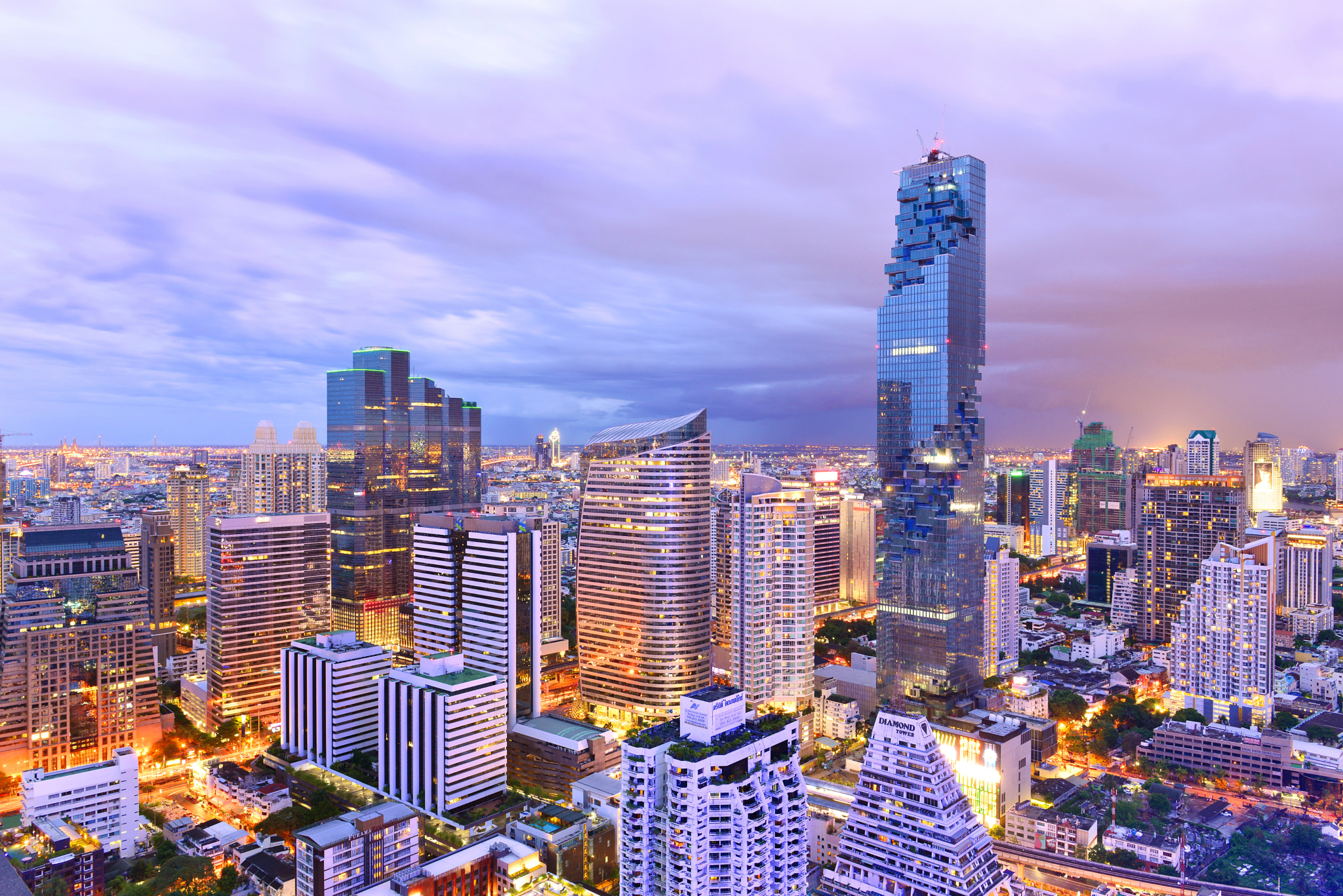
The residential, office, retail and logistics sectors will continue to be robust this year thanks to the country’s economic growth and the upbeat global outlook, says property consultant CBRE Thailand.
Managing director Aliwassa Pathnadabutr said new condominium launches in Greater Bangkok this year will rise by 10-15% from 64,000 units last year because of strong confidence in the Thai economy among consumers and developers.
The main contributors to the Thai economy are exports and tourism. Last year the country finished with 3.9% year-on-year GDP expansion, resulting from 9.9% growth in exports.
The tourism sector, which accounted for 20% of the country’s GDP, saw a record 35.4 million arrivals, a rise of 8.6% from 2016.
“Technology and diversification will be key trends in the property market this year,” she said. “Local developers have diversified to other sectors like offices, hotels, and retail, not focusing only on residential development.”
Many developers over the last two years have shifted to the high-end segment from the middle-to lower-end markets. This trend drove the growth of 51% in newly launched high-end residential supply last year to 12,544 units, up from 8,321.
Middle-to lower-priced condo supply saw a rise of 18% from 43,800 to 51,700, while the overall market grew 23% to 64,200 units.
“Continuing growth of new condo supply in the high-end segment will not cause oversupply, as such projects will be in inner city locations and on a smaller scale than those in the middle-to lower-priced segment,” she said.
But soaring land costs will drive selling prices of new condo supply in the high-end market, which CBRE estimates to be 285,000 baht per square meter on average, up from 270,208 last year, a rise of 9.2% year-on-year.
The highest price was in riverside locations at 321,750 baht, followed by Sukhumvit (255,954) and Silom-Sathon (233,583).
Resale high-end condo prices increased 7.4% to 213,194 baht, with the highest price in the Silom-Sathon area (229,496), followed by Lumpini or Lang Suan-Wireless-Phloenchit (215,729) and Sukhumvit (194,357).
Last year CBRE sold 900 condo units worth a combined 17 billion baht, rising from 15 billion in 2016. Some 561 units were in the high-end segment, with 25% bought by foreigners, up from 22% in 2016.
The largest portion of buyers was from China at 28%, followed by Hong Kong (14%), Singapore (8%) and France and Britain (6% each).
“Foreigners came as property investment buyers and partners in joint ventures with local developers. Both groups will come in higher numbers this year as Thai property prices are lower than other countries and banks remain more cautious about project lending,” she said.
From 2013-17, more than 70% of joint ventures were with Japanese partners. This trend is projected to continue, with 73% of partners from Japan, 18% from Singapore and 3% each from Chinese, American and Hong Kong.
In the office sector, demand will remain strong, with key drivers comprising e-commerce, tech firms and online business, co-working space operators and banks.
There will be at least four international co-working space operators that plan to open their first locations in Thailand with a combined 18,000 sqm of office building space in Bangkok’s central business district (CBD) this year.
Two of the co-working spaces are from Singapore — The Great Room and JustCo — and one each will be available from serviced office operator Regus and a US firm.
But key challenges in the office sector include the large quantity of new supply being completed, with 1.48 million sqm in the pipeline from 2020-23. About 800,000 sqm will be in the CBD.
“In the future, it will change from a landlord market to a tenant market,” said Nithipat Tongpun, CBRE’s head of advisory and transaction services.
“To be competent, office landlords should focus more on collaborative spaces to attract millennial talents, not just locations near mass transit lines and others with attractive rental rates,” said Mr. Nithipat.
With the economic recovery and growing consumer confidence, new retail supply exceeding 300,000 sqm is projected to be completed this year.
by kevinyeo | Mar 8, 2018 | Bangkok Property Market Updates, Investment Analysis
The Real Estate Information Centre (REIC) says the vacant land price index in Greater Bangkok last year was 165.6, a gain of 65.6 points from 2012, the base year, and increase of 13.2% from 2016.
The highest increase in land prices was 14.9% in 2013, while the lowest increase was 4.6% in 2016.
In the fourth quarter of 2017, the vacant land price index in Greater Bangkok was 168.3, a rise of 1.1% from the third quarter and 12.5% year-on-year.
Mass transit lines and land use depending on city zones have an impact on land price.
The announcement of a mass transit line makes land prices rise 24.6% on average. For any change in zoning regulations, land prices increase by 22.8% on average.
The top five areas with the highest increase in land prices during 2012-17 were located along the MRT route with a rise of 173.7% or 29% a year on average, followed by the Dark Red Line between Bang Sue and Hua Lamphong with a rise of 169.5% or 28.2% a year.
The area with the third-highest increase in land price was along the Gold Line between Thon Buri to Pracha Thippok with an increase of 148.9% or 24.8% a year.
The fourth-highest rise was in locations along the Green Line (Mor Chit-Saphan Mai-Khu Khot) with a rise of 148.1% or 24.7% a year.
The fifth was in locations along the Dark Red Line between Bang Sue and Rangsit with a 144% rise or 24.1% a year.
The REIC conducts quarterly surveys of vacant land prices based on land transactions at the Lands Department.
The most recent data was from land transferred to companies, as declared prices were mostly actual prices. Land transferred to individuals is usually declared at lower than the actual price.
by kevinyeo | Mar 8, 2018 | Bangkok Property Market Updates, Developer Watch, Investment Analysis
For your average Joe, 100,000 baht per square wah is no trifling sum for a piece of land. But for inner Bangkok, it’s small change, as the area has set a record high of 3.17 million baht per sq wah for a 880-sq-wah plot on Lang Suan Road. (One wah equals two meters.)
SET-listed SC Asset Corporation Plc, which is developing the record-setting plot, remains assured of the area’s strong demand.
Nuttaphong Kunakornwong, chief executive of SC Asset, said hefty land prices in inner Bangkok are reshaping the luxury residential development landscape, as only truly rich Thais and global buyers can afford them.
“I’m confident there is still demand in the super-luxury segment,” Mr Nuttaphong said.
SC Asset offered the highest price through a sealed bid and was the only player to bid above 3 million baht per sq wah. The second-highest bid was 2.6 million baht, said a bidder who asked not to be named.
“SC quoted that price because it really wanted it,” the bidder said.
Based on this land cost, units will reach 500,000 baht per square metre, but Mr Nuttaphong said there are buyers willing to bear this price point.
“The location near Chidlom BTS is the most prime in the country, and the Lang Suan area is like nowhere else,” he said. “We do not aim to launch the highest selling price [per sq m] but we are confident that units priced above 500,000 baht can be sold.”
Ben Taechaubol, chief executive of SET-listed developer Country Group Development Plc, said 3.2 million baht per sq wah is not overpriced for a plot in a prime location, as land prices continue rising, against a decrease in the number of plots to be developed.
“If a developer offers a product that meets the requirements of the luxury segment, prices of 500,000 baht per sq m and above can justify the land prices,” he said. “Luxury is not just a property, but a lifestyle.”
Aliwassa Pathnadabutr, managing director of property consultant CBRE Thailand, said a sharp increase in the price of land plots, particularly those in prime locations, shows that super-prime land remains in high demand because locations are limited.
“There are always concerns about dramatic price increases in any asset class, whether it be central business district land, stock shares, commodities or bonds,” she said. “The price increases are confined to a small area and have not risen in the whole of Bangkok.
“There is a finite amount of demand for super-luxury products unless there is a significant increase in foreign buying, which is why developers attempting to achieve these prices must have a product that buyers believe is super-luxury and worth the price.”
The average prime downtown super-luxury price is 350,000 baht per sq m, which Ms Aliwassa said is acceptable for this market. Products priced at over 500,000 baht per sq m target a very niche market, in which demand is specific to the ultra-luxury market, which is small.
This type of super-luxury product must be in a super-prime location, offer freehold titles, be low-density, and have features and specifications that really match the requirements of this group of buyers, she said.
It is important to note that the sale of this type of product will not be as fast as luxury and other high-end projects with lower prices, Ms Aliwassa said.
Chatchai Payuhanaveechai, chief executive and president of Government Savings Bank, said foreigners will become a more important part of the Bangkok property market, as condominiums priced higher than 300,000 baht per sq m may not cater primarily to Thais.
Prasert Taedullayasatit, chief executive for high-end condominiums at Pruksa Real Estate, said demand in the luxury segment is varied and comprises real demand, investment buyers and foreigners.
“The high-end condominium market continues to grow,” he said. “Given land acquisitions in the pipeline among large developers, new condominium supply being launched this year will be in the upper-end segment, mostly the Sukhumvit area.”
Ms Aliwassa said many land plots in prime locations released on the market during the past few years, both for sale and rent, have felt the effects of the new inheritance tax, which was created as an incentive to sell.
But a greater motivator has been the rising price of land, which has incentivised some families to convert non-revenue-producing sites into cash with massive capital gains, as they do not have the financial resources or expertise to develop the land themselves.
Suphin Mechuchep, managing director of property consultant JLL Thailand, said prime land plots recently acquired in Bangkok’s central business district have strong potential to accommodate ultra-luxury condominium development projects with prices starting from 300,000 baht per square metre.
In some premium areas such as Wireless, Phloenchit, Lang Suan and lower Sukhumvit, where land prices have skyrocketed on strong demand from major developers, future condominium projects will fetch prices at more than 500,000 baht per sq m, she said.
“Growing scarcity of land for new development in these areas, coupled with excellent accessibility and amenities, justifies such pricings,” Mrs Suphin said.
But new projects must also offer special products with truly superior specifications that will meet and can create demand in a niche market, she said.
The levels of demand in this niche market cannot be underestimated. There are ultra-high-net-worth Thais and foreigners who are looking for an opportunity to own a trophy property asset — a collector’s item — for which they can be proud because of its excellence and rarity, Mrs Suphin said.
“It is clear that ultra-luxury condominiums in Bangkok do not offer attractive rental yields,” she said. “But for people who can afford such premium products, yields do not count.”
Mrs Suphin said concerns over the financial burden from the proposed land and buildings tax are expected to encourage owners to offload their property, particularly that which is high-value and underutilized.
But evidence shows that recent sales of prime land plots in Bangkok have been motivated by other factors.
One of the recent transactions was the sale of the British embassy site on Wireless Road. It was reportedly a part of the British government’s efforts to raise funds for upgrading other embassies around the world.
A sale of the Australian embassy site on Sathon Road acquired last year by SET-listed developer Supalai Plc followed the embassy’s relocation to new premises opposite Lumpini Park.
At the beginning of this year, JLL concluded sales of two prime land plots, for which landlords were motivated by high price offers from several property development firms.
Located in Bangkok’s CBD and sized at two rai each, the two plots were sold for a combined value of more than 3.6 billion baht.
“The proposed land and buildings tax should have a more apparent impact on many property owners when there is more clarity about the new tax scheme and the roll-out plan,” Mrs Suphin said.
“But we do not expect the new tax to lead to distressed sales, particularly for prime real estate assets. Developers and investors will compete fiercely for sought-after assets when they are put up in the market.”
by kevinyeo | Mar 8, 2018 | Bangkok Property Market Updates, Infrastructure & Urban Development, Investment Analysis
Eleven new mass transit lines citywide spanning 480 kilometers will change the property landscape and urban lifestyles in the next decade, say property analysts.
Surapong Laoha-Unya, chief operating officer at Bangkok Mass Transit System Plc, operator of the Skytrain, said new mass transit lines scheduled for the next decade will change the property landscape similar to the skytrain’s effect the past 18 years.
The 11 new lines include the Orange Line running from Taling Chan-Thailand Cultural Centre-Min Buri, the Pink Line from Khae Rai to Min Buri, the Yellow Line from Lat Phrao to Samrong and the recently approved 22km Brown Line monorail from Khae Rai to Lam Sali.
“Land prices in locations along the Skytrain and MRT rose by 10% per year on average, compared with an average increase of 3% in land prices in Bangkok,” he said Wednesday at a seminar on mass transit lines.
In popular locations in the inner city like Nana, Asok, Phrom Phong and Ari, land prices increased higher than 10% per year.
Mr Surapong said the amount of new housing supply being launched in Bangkok each year was falling, but condos near mass transit lines are rising, with a sales rate exceeding 70% on average.
Ridership has risen by 9.1% per year since the skytrain started running in 1999. The Green Line averages 700,000 rides on weekdays and 800,000 rides on weekends now, up from 150,000 rides in the early years.
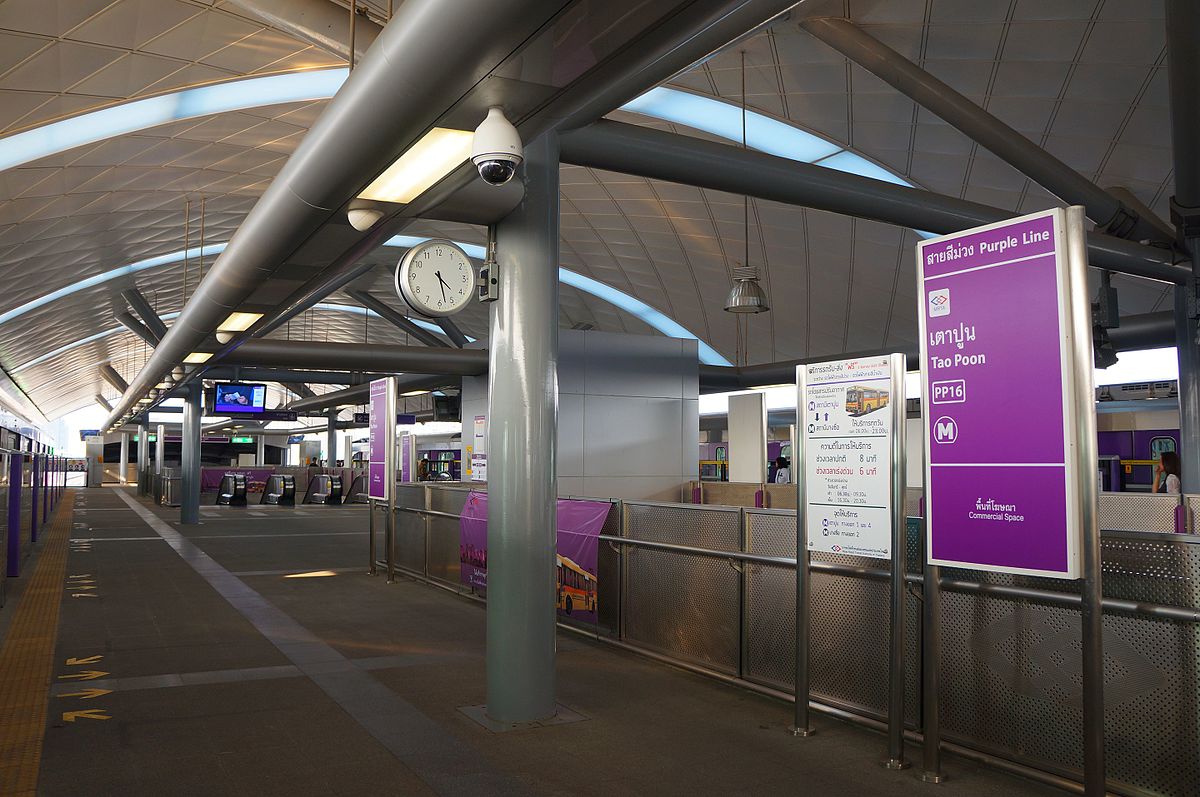
However, the number of rides on the Purple Line is only 50,000-60,000 a day.
Tritecha Tangmatitham, managing director of SET-listed developer Supalai Plc, said there were two factors that would help boost condominium demand: high land prices and heavy traffic.
“In locations along the Purple Line on Rattanathibet Road onwards, land prices are still low and traffic is not too heavy,” he said.
“People usually prefer a single house or townhouse to a condo unit. This is why there are still several unsold condos there.”
During the Purple Line’s construction, condominium launches had a good sales rate. When it was completed and a slew of new condo supply launched, some consumers found living in a condo near the Purple Line was not to their liking, said Mr Tritecha.
“The Purple Line is not popular as it takes longer and is more expensive than using a passenger van,” he said.
“Even when the missing link was connected, it did not matter.”
Over the next seven years the amount of new mass transit lines is set to triple.
“The amount of new condo supply launched in the inner city was large during the past few years as development of mass transit lines disconnected after the Purple Line,” said Mr Tritecha.
The Orange, Yellow and Pink lines will open new locations for property development, expanding to wider areas. Last year new condos launched in some locations where they had been lacking for several years, he said.
Chatchai Payuhanaveechai, chief executive and president of Government Savings Bank, said higher land prices, driven by mass transit lines, would change condo demand in inner city locations as prices soared.
“Foreigners will become a new market for the Bangkok property market as condos priced higher than 300,000 baht per square metre may not be mainly for Thais,” he said.
“Many wealthy Thais still want to live in a single house on a large plot of land.”
According to the bank’s research, the new residential supply launched in Greater Bangkok rose 3.5% last year while residential demand increased 5.5%. Residential value increased 11% as residential prices rose.
In a related development, Deputy Commerce Minister Somkid Jatusripitak, who Wednesday chaired a meeting of the Commission for Management of Land Traffic, ordered related agencies to speed up 11 new mass transit developments in Bangkok and five light rail projects in Khon Kaen, Chiang Mai, Phuket, Phitsanulok and Nakhon Ratchsima to ease the traffic congestion.
All mass transit development projects should become operational by 2025, he said.
by kevinyeo | Mar 7, 2018 | Bangkok Property Market Updates
Demand for prime sites has remained strong, with developers continuing to acquire sites for all types of development.
Land prices have dramatically increased, especially in the most prime locations and along with mass transit lines.
The biggest land sale in Thai history was the recent acquisition of the British Embassy site by the joint venture between CPN and Hong Kong Land for £420 million. SC Asset paid a record price per square wah of 3.1 million baht for an 880-sq-w development site on Soi Lang Suan.
There were also other downtown site acquisitions that have not been publicly announced, including a site on main road Sukhumvit, as well as Origin Property’s purchase of a 13-rai site on Soi Thong Lor 10, where the price was not disclosed.
Not only freehold sites, but more leasehold land plots are being sought after.
Land and Houses announced that they would sign a 30-year lease for an approximately six-rai site on the corner of Sukhumvit Soi 10. The developer plans to develop a mixed-use project comprising an office, hotel, and retail component where construction is expected to start in 2019. Ananda Development signed a 30-year lease for a one-rai site on Sukhumvit Soi 8, with plans to develop a low-rise hotel.
Last year, Raimon Land signed a 30-year lease for a six-Rai site on Phloenchit Road, opposite Central Embassy for an office development. Dusit Thani renewed their lease for a 24-rai site on Rama IV Rd with the Crown Property Bureau and will redevelop the site together with CPN. Origin Property’s also subleased a 3.5-Rai plot on Sukhumvit 24, opposite their recently acquired Park 24 condominium project, with plans to develop a mixed-use development comprising an office and serviced apartment.
Although there has been continued expansion of mass transit networks that connect outer Bangkok suburbs to the city centre, the real competition for site acquisition has been in the core areas of Bangkok — central Lumpini, early Sukhumvit Road up to Sukhumvit 55, and Sathorn and Silom roads.
Developer’s aggressive central business district (CBD) site acquisitions have led to a spike in land prices. There is fierce competition from Thai developers with strong financial backgrounds together with funding and support from foreign joint venture partners.
The intense competition will persuade more landowners to sell as prices become more and more attractive.
The Treasury Department of the Ministry of Finance reported that land prices are rising by double digits in downtown Bangkok. While the Real Estate Information Centre’s undeveloped land price index increased 13.2% year-on-year in 2017.
Another reason for landowners to consider selling is the proposed new land tax that penalizes owners of unutilized land and the proposed change of the basis in the calculation of withholding tax — from using the official government assessed value to the actual selling price which will increase the tax amount substantially. The date for the new taxes to come into effect and the exact details of the taxes have yet to be finalized.