by kevinyeo | Mar 21, 2018 | Project Reviews & Site Visits
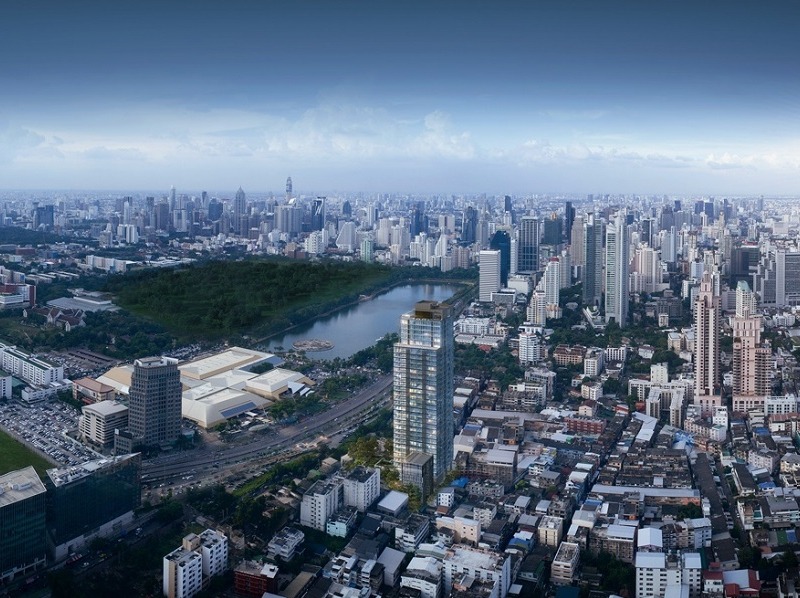
If we were to talk about the fastest growing property developers in the past five years, Siamese Asset Co Ltd. must be included in this list.
Siamese Asset Co Ltd is a Bangkok based developer which were formed in 2010, with their motto, “Asset of Life”.
The company has a proven track record of successful and internationally-acclaimed projects.
Siamese Asset’s outstanding success has come from a combination of factors, including the attractive designs of its projects, good locations, quality of construction, quality maintenance, and most of all, pricing, which is 15-20 percent lower than that of the company’s competitors on the same quality level. These factors will allow buyers to realize high capital gains and high rental yields or easily resell their properties with potentially high profits, the things that most foreign investors are looking for.
Foreign investors can rest assured with Siamese Asset’s property projects as many of them have achieved international awards including the World Architecture Award 2013, reflecting the company’s commitment to quality.
They also have after-sales service. Siamese Hospitality provides hotel room serviced apartments and Siamese Property Service, which helps to manage rented rooms for customers who buy for investment.
The company plans to launch an IPO on the stock market over the next two years.
Some of Siamese Asset notable developments of late:
Siamese Exclusive Queens. A luxury development situated just 50 meters away from Queen Sirikit National Convention Centre MRT.
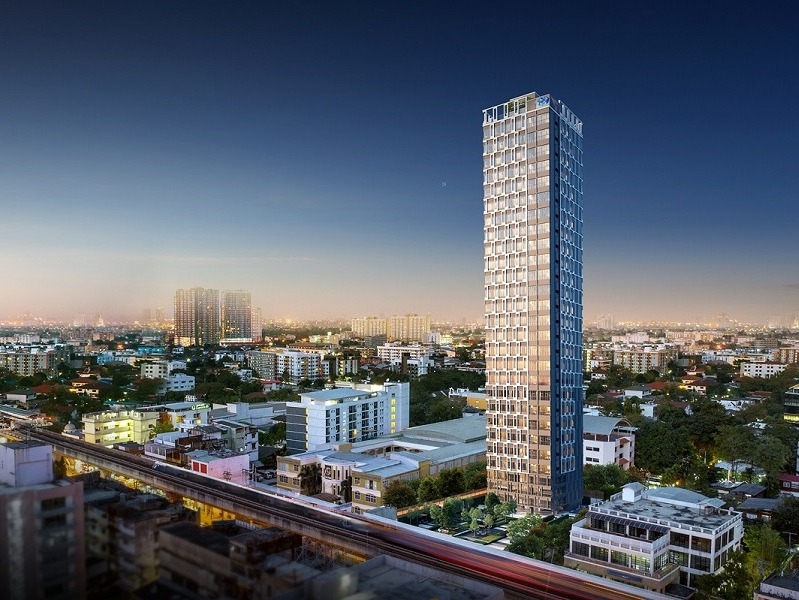
Siamese Exclusive Sukhumvit 87. Located at the ever increasingly popular On Nut, with European style loft units. (As I am writing this article, Siamese Exclusive Sukhumvit 87 has yet to be launched but is already receiving a large amount of interest.)
For more information, visit Siamese Asset Official Site.
![[Interview] Eddie Yii from Stranger In Bangkok](https://investbangkokproperty.com/wp-content/uploads/2018/03/Interview-Eddie-Yii-Pings-Kitchen-Thonglor-Soi-10.jpg)
by Daryl Lum | Mar 19, 2018 | Interview
Interview Eddie Yii Ping’s Kitchen Thonglor Soi 10

Interview Eddie Yii The Locker Room Thonglor Soi 12
Location: The Locker Room (Thonglor Soi 12) and Ping’s Kitchen (Thonglor Soi 10). Coincidentally, both establishments are owned and run by Singaporeans.
Here we are with Eddie Yii. Eddie is a Malaysian and he was born and bred in Singapore. Eddie was educated at Hua Chong Institution, Raffles Junior College and got his degree from the National University of Singapore. He is currently working and living in Bangkok. He has a blog entitled Stranger In Bangkok. He is living, working and bringing up his family in Bangkok.
What made you come to Bangkok?
Opportunity, I was lucky enough to be offered 2 jobs, 1 in Hong Kong and the other in Bangkok, both cities which my wife and I loved dearly. I eventually chose Bangkok because the project felt more concrete and gave me more freedom to express myself.
Where do you live in Bangkok and why do you choose to live there?
I live between Punnawithi and Udomsuk THB s stations. I chose to live here because it’s towards the direction of my office, which is nearer to Suvarnabhumi airport, and yet it’s accessible to the BTS station. On BTS it takes me only 25 minutes to reach Siam. It’s away from the tourist crowd, in a real local residential zone. I don’t see many major traffic jams here too.
What are the biggest challenges that you face as a foreigner working and living in Bangkok?
Language, obviously, and the time taken to make sense of the culture and behaviour of the people here.
How do you spend your free time in Bangkok?
I have 2 little kids, free time is usually spent spending quantity time with the family.
Which location in Bangkok do you think are the growth areas in terms of population growth, business and inflow of foreign talent?
I feel that business and population growth will be a little bit out of the main city area from now on. For example, the Rama 9 area will have lots of business development, and Punnawithi will also have a new tech hub coming soon.
Foreigner-wise, I feel that more and more expats will choose to live in the hipster areas like Thong Lor, Ekamai and Ari.
In the time that you have spent in Bangkok, what are the changes or improvements you have seen in the city?
I have been here for 8 years now, changes have been immense, especially in terms of living quality as world-class residential property, shopping malls and dining locations are sprouting like mushrooms here. Public transport has improved as well, soon there will be almost double the number of BTS stations working as compared to when I came in 2010.
Where do you think is a good area to purchase property in Bangkok?
Depends on what you want it for. For living, I recommend a little bit away from the mess in town, maybe Phra Khanong and beyond. For investment, maybe a smaller studio right smack in ‘hot zones’ like Siam, Ploenchit and even hipster places like Thong Lo and Ekamai.
Will you retire in Bangkok and why?
Yes, I think it is a possibility. My family is settling down here really well and the locals don’t see foreigners as ‘intruders’. I can live comfortably amongst the locals in most cities in Thailand, including Bangkok.
Eddie’s blog, Stranger In Bangkok, can be found here.
by kevinyeo | Mar 13, 2018 | Bangkok Property Market Updates
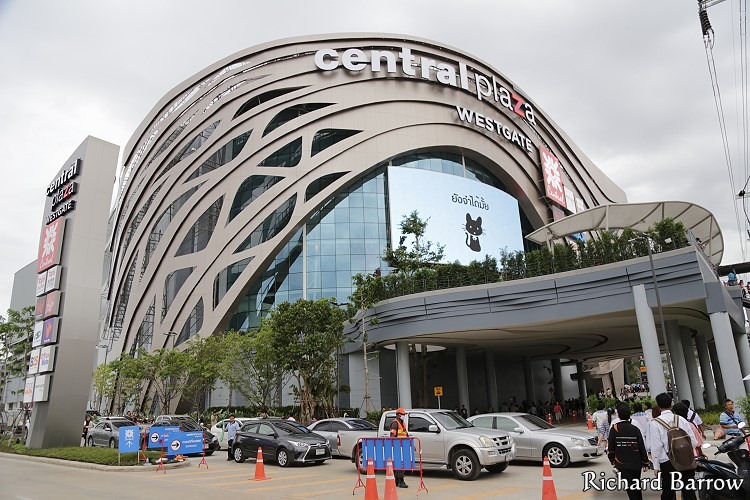
CENTRAL Pattana Plc (CPN), the largest retail real estate developer in Thailand and operator of CentralPlaza WestGate, has announced that ‘CentralPlaza WestGate, ’ the super regional mall in Southeast Asia, has formed a partnership with IKEA, the world’s top furniture brand.
The largest IKEA store, with a new design, will open on March 15 in Watergate. CPN is investing over THB 120 million in marketing budget to create ‘Expand Happiness – Have a Big Life’ campaign, supporting the growth and urbanised lifestyle in the Bang Yai/WestGate area, which is fast on its way to becoming the ‘West Business District’ (WBD), hoping to attract customer traffic of over 100,000 people per day to the shopping centre and the IKEA store.
Nattakit Tangpoonsinthana, CPN’s executive vice president/marketing, said CPN is committed to continuing the development of its shopping centres at high potential locations nationwide.
Bangkok and its suburbs remain the prime strategic locations, and intense competition can be seen. CPN sees the opportunities to penetrate into these high potential locations.
“We are the first major retailer to have developed mega projects in both eastern and western Bangkok as we foresaw the trend of urban growth spreading from the heart of the city to its outskirts. Today, our mega projects have achieved significant success. The most obvious example is CentralPlaza WestGate, the ultimate super regional mall in Southeast Asia, which is the best destination for everyone in the family and the largest gateway for western Bangkok. Today, if someone mentions the word ‘WestGate’, most people will think of Bang Yai and of us,” he said.
“The WestGate area has become a prime location, with great capacity in various aspects such as urbanisation, the size of the local population, purchasing power, over 40,000 residential project units, the government’s infrastructure projects and transport networks etc. Upon the arrival of IKEA Bangyai at CentralPlaza Westgate, CPN has been talking about plans to cooperate with IKEA since the start of the CentralPlaza WestGate development. It is a great honour that IKEA, the world-class furniture brand, has chosen to develop its best and newest design store to connect with our shopping centre. The new IKEA store is not only the largest and the latest design in Thailand, it is also the biggest IKEA store in Southeast Asia, with a total area of over 50,000 m2. It includes eight entrances and exits (connecting to CentralPlaza WestGate on three floors), with a total of 29 checkpoints located on every floor for shopping convenience. Convenient transportation connects all routes together: the MRT Purple Line, buses, a pier, the ring road, expressway and motorway. In addition, our shopping centre and IKEA both have parking areas that can accommodate each other’s customers.” Nattakit added.
He said that the partnership between CentralPlaza WestGate and IKEA Bangyai is creating the phenomenon of ‘Big Bang Magnets’ as each is a magnet with the potential to complement each other in three major aspects:
First, expanding target customer groups: the main customers of CentralPlaza WestGate and IKEA are families and the new IKEA store will help to attract more working people and modern-lifestyle teenagers. It will also widen the catchment area to cover upto 13 million target customers in Bangkok, Nonthaburi, Pathum Thani, Ayutthaya, Nakhon Pathom and Suphan Buri;
Second, CentralPlaza WestGate is outstanding in fulfilling all the needs and lifestyles of its customers as a ‘Centre of Life’ that offers an extensive range of products and services. The arrival of IKEA will further extend the continuity of the seamless shopping experience through connecting points between the two shopping venues and customer journeys that complement each other. The customers can spend time, eat, drink and entertain themselves and continue on to look for home products and furniture shopping all on one trip.
Third, CPN will introduce the ‘Expand Happiness – Have a Big Life’ campaign to further complement its concept, which encourages everyone to ‘Have a Big Life’. CPN is holding special promotions together with IKEA by bringing signature events that will be held at the IKEA Bangyai opening ceremony to join CPN in the campaign. One such event is ‘Ninja Maze…The Big Adventure Presented by EST COLA’.
by kevinyeo | Mar 13, 2018 | Bangkok Property Market Updates
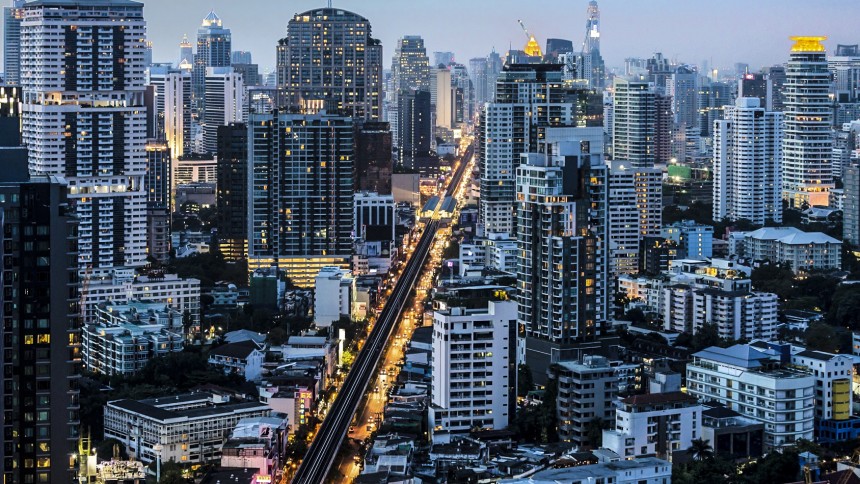
Location and land cost are key factors to develop condominium projects in inner Bangkok, which are attractive to investment buyers as they provide good rental yields and capital gains, says property developer Habitat Group.
Chief executive Chanin Vanijwongse said locations should be popular among foreigners as they are the target tenants, citing areas like Asok, Phrom Phong, and Thong Lor, where Japanese and Europeans prefer to stay.
“Investment buyers usually look for yields and capital gains when buying a condominium unit,” he said. “If a project’s location can draw foreign tenants, the rental yield will be more attractive.”
While location should be attractive, land cost should be low to offer an interesting sales price for an attractive capital gain down the line. The best price range for a condominium unit in inner Bangkok should be lower than 200,000 baht per square meter.
Mr Chanin said while land plots on main roads are generally more attractive than those on sois, they also have higher land prices.
“With lower selling prices, a condominium unit on a soi will have more room to grow, compared with that on the main road,” he said. “But locations should be within walking distance of mass transit stations.”
Property consultant Colliers International Thailand said the take-up rate of condominium units priced between 200,001-250,000 baht per sqm was 80%, the highest in the market at the end of 2017. That was followed by condominium units priced between 150,000-200,000 baht per sqm, which had a take-up rate of 70%.
Habitat surveyed eight newly-launched condominium projects in locations from Asok to Phrom Phong and found those where average unit prices were below 200,000 baht per sqm had a take-up rate of over 80%.
Among five BTS stations from Nana to Ekamai, Thong Lor saw the highest take-up rate of 95% or 2,079 units sold from a total supply of 2,182 units. The average selling price in Thong Lo was 250,000 baht per sqm.
Next was Asoke, where the take-up rate was 83% or 2,077 units sold from a total of 2,488. Phrom Phong came third with 82% or 2,173 units sold from a total of 2,652 units. The average prices were 238,000 and 250,000 baht per sqm, respectively.
In Ekamai, the take-up rate was 75% or 860 units sold from 1,147 units, with an average price of 155,000 baht per sqm. The take-up rate in Nana area was 70% or 921 units sold from 1,316 units, with an average price of 244,000 baht per sqm.
Meanwhile, Habitat, a Pattaya-based developer, will launch its second project in Bangkok, Walden Asoke, with 83 units priced 190,000 baht per sqm on average.
by kevinyeo | Mar 12, 2018 | Bangkok Property Market Updates, Legal, Tax & Due Diligence
The land windfall tax is expected to help fend off a property market bubble as developers take care to avoid tax liabilities that will come into effect if the value of unsold residential units exceeds 50 million baht.
The tax should compel property developers to be more cautious in assessing market demand, said a source at the Finance Ministry.
A draft bill on the land windfall tax, now under consideration by the Fiscal Policy Office, capped the ceiling at 5% of the inflated price, but the applicable rate will be decided later.
Those liable for the tax must own land within a radius of five kilometers of a station serving high-speed, double-track or electric trains, or of the on- or off-ramp of an expressway. Those who own plots within 5km of building-restricted zones such as airports or ports will also be required to pay the tax.
Landlords whose land value is inflated will be charged the land windfall tax every time ownership is transferred from the time when the transport infrastructure project’s contract is signed until the project’s completion.
Once transport projects begin operations, those owning land for residential and agricultural purposes will not be liable to pay the tax, while those who have land for commercial use and whose value is higher than 50 million baht will be subject to the tax upon ownership transfer.
Only property developers for which the leftover units of their projects are valued in excess of 50 million baht will be taxed in the event that land ownership is transferred after the launch of an infrastructure project.
For condominiums, the tax base will be the difference between the sale price and valuation on the effective date of the law. For new or under-construction units, the valuation will be 20% of the average valuation of condominiums in the same area.
But a one-time tax will be applied to cases where land ownership is transferred after a transport infrastructure project starts. That means other landlords on plots for which the tax has been paid will no longer be subject to the tax.
Owners of land near infrastructure projects launched before the land windfall tax take effect will be exempt from the levy.
The Finance Ministry source said a property developer working on more than one project in the same area may be taxed less for the second or third project than for the first one to create a fair tax payment system, as such developers would have already paid the land windfall tax.
For instance, the first project could be taxed at 3% and the second one at 1%.
But the second project could be charged at the same rate as the first if the government determines that its unit prices are higher on account of infrastructure project development, the source said.
