Rental income in Bangkok is rarely as even as a spreadsheet suggests. Foreign buyers often compare headline rents, advertised yields and district averages, but the real test is whether a unit can stay attractive across quieter leasing months, relocation cycles and changing tenant priorities.
Seasonality does not make Bangkok a weak rental market. It simply means investors should underwrite a purchase with more discipline. A condo that suits a clear tenant group, has sensible furnishing, is easy to view and sits in a building with responsive management can handle slower periods better than a unit bought only because the first advertised rent looked high.
Rental seasonality should be tested against real tenant demand, not only headline rent.
Why rental seasonality matters
Bangkok has several overlapping drivers of tenant demand. Some renters arrive with corporate moves, some with school calendars, some with embassy or regional office assignments, and others with shorter project-based work. Tourism, medical travel and long-stay lifestyle demand can also support certain locations, but these groups do not all move at the same time of year.
That mix is useful for the city, because it gives Bangkok more than one rental audience. It also means a buyer should avoid assuming that the first month after handover represents the normal market. A unit may receive strong enquiry when relocation teams are active, then need sharper pricing, better photography or more flexible terms in a quieter period.
Foreign owners are especially exposed if they manage from overseas. When the owner is not in Bangkok, a slow letting period can become more expensive if repairs, key handover, cleaning or agent communication are delayed. Good seasonality planning is partly financial and partly operational.
Build a conservative rent calendar
A useful rent calendar starts with twelve months, not one target rent. Model a realistic achieved rent, a prudent vacancy allowance, annual refresh costs, agent commission, juristic fees, repairs, insurance, tax filing support and any mortgage or currency costs. Then test the result against a lower-rent case, not only the optimistic case.
This is not about being negative. It is about seeing which units still make sense when the market is less convenient. A one-bedroom near a strong rail interchange may recover quickly because the tenant pool is wide. A larger luxury unit may achieve a higher rent but need a longer matching process because the tenant pool is narrower and expectations are higher.
Investors should also ask whether the building has many similar units competing at the same time. If several owners list the same layout with similar furniture, tenants can negotiate harder. A well-presented unit with a better view, quieter stack, stronger appliances or a cleaner handover file may let faster even when headline rent is similar.
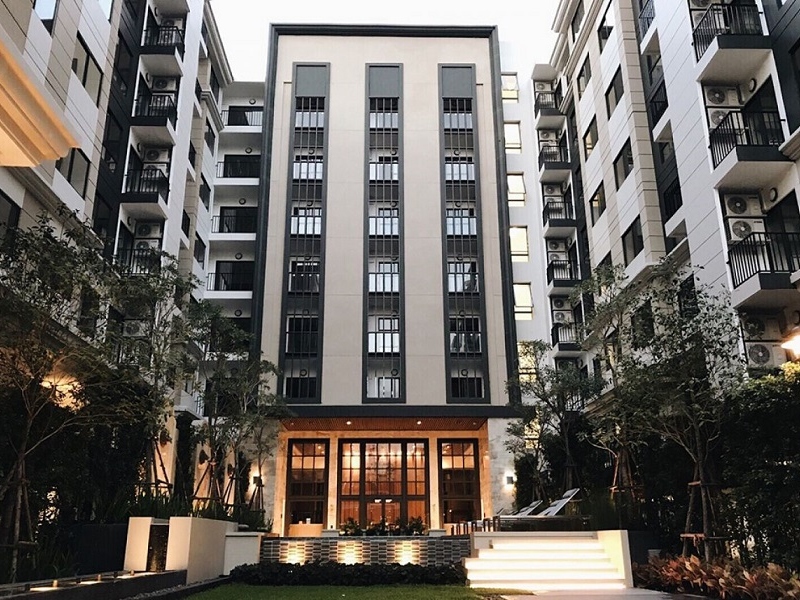
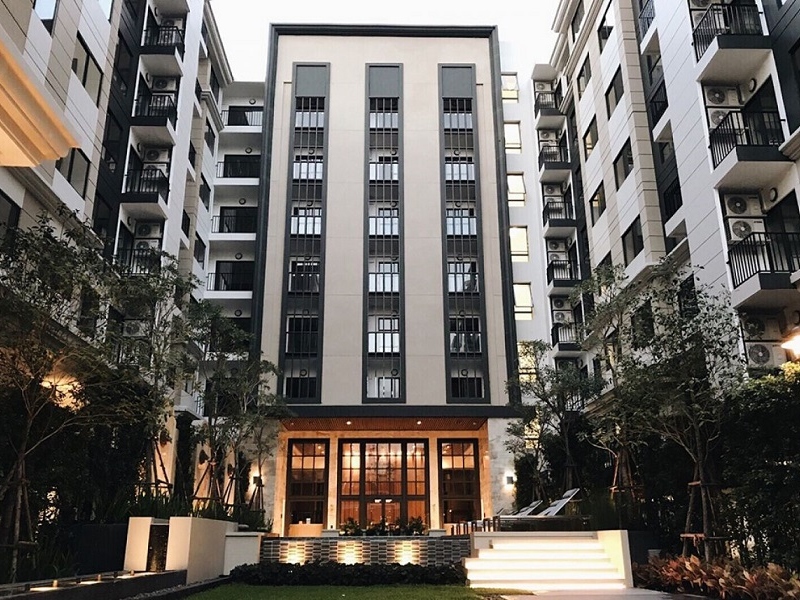
Building quality and management affect how quickly a unit can recover after vacancy.
Match the unit to a real tenant profile
Seasonality is easier to manage when the likely tenant is clear. A compact BTS-connected unit may suit a single professional who values commute time and predictable bills. A two-bedroom near international schools or hospitals may suit a family or medical professional. A riverfront unit may appeal to tenants who prioritise views, hotel dining and weekend lifestyle over the shortest office commute.
The mistake is to buy a unit that is generic in every direction. If the room is too small for a couple working from home, too far from transport for a daily commuter and too plain for an executive tenant, the owner may have to compete mainly on price. Bangkok has enough supply that unclear positioning can cost time.
Questions to ask before purchase
Ask which tenant group has recently rented in the building, how long comparable units stayed vacant, what lease length is normal, whether tenants request pet permission or work-from-home space, and which nearby offices, schools, hospitals or lifestyle anchors create repeat demand. A good agent should be able to discuss actual tenant behaviour, not only quote a rent per square metre.
Foreign buyers should also check whether the juristic office is cooperative with move-ins, contractor access and tenant registration paperwork. Smooth building administration can reduce friction during the exact weeks when a tenant is comparing several choices.
Viewings, furnishing and refresh timing
A rental unit should be ready before the tenant starts looking. That sounds obvious, but many overseas owners lose time because small repairs, internet setup, cleaning, appliance manuals or access cards are not prepared. A vacant month is often more expensive than a modest pre-leasing refresh.
Furnishing should support the target tenant rather than simply fill the room. Durable sofa fabric, proper blackout curtains, a desk or flexible dining surface, enough storage and neutral lighting are often more useful than decorative items. For premium units, tenants may expect a stronger kitchen package, better bedding, hotel-like bathrooms and building services that match the rent.
The best refresh timing is before the main viewing push, not after enquiry has slowed. If a unit has been listed for several weeks without serious interest, owners should review photographs, price, access arrangements and presentation quickly. Waiting too long can make the listing look stale.
A realistic rent model includes vacancy, refresh costs and tenant-ready presentation.
What this means for foreign buyers
Bangkok remains attractive because it combines regional business access, strong lifestyle districts, improving transport and a broad expatriate base. Rental seasonality does not remove that appeal. It simply rewards buyers who understand the difference between a market story and a unit-level plan.
Before committing, compare the target unit with recent Bangkok investment analysis, district-level demand and realistic ownership costs. A lower headline yield with faster letting and easier resale can be better than a higher theoretical yield that depends on perfect occupancy.
Foreign buyers who want a rental-led purchase should speak with the IBP team before reserving a unit. We can help compare tenant profile, building management, likely leasing friction and exit strategy so the numbers are tested before money moves.
Common fees and sinking funds rarely decide whether a Bangkok condo is attractive on their own, but they can change the quality of an investment very quickly. For a foreign buyer, they sit between the headline price and the real holding cost. A unit that looks efficient on price per square metre may be less efficient once monthly building charges, repair reserves and future capital works are included.
Common fees should be tested against rental demand and long-term building quality.
Why common fees belong in the investment model
Many overseas buyers first compare location, unit size, view and price. Those are important, but common fees are the recurring cost that keeps the asset functioning after completion. They pay for security, cleaning, lift maintenance, lighting, landscape care, shared facilities, management staff and the juristic office. In a building with pools, gyms, lounges, co-working areas, shuttle services or extensive gardens, the fee can represent a meaningful annual cost even before tax, insurance, repairs and agency expenses are considered.
The practical question is not whether a fee is high or low in isolation. The better question is whether the fee matches the building promise and the tenant pool. A premium tower with deep facilities, strong maintenance and a capable juristic team may justify a higher charge if it protects rental appeal and resale confidence. A building with underfunded operations may look cheaper each month but can become less competitive as common areas age.
Separate monthly fees from sinking funds
Foreign buyers should separate day-to-day common fees from sinking fund contributions. Monthly common fees support regular operations. Sinking funds, or similar reserve contributions, are intended for larger building needs such as major repairs, equipment replacement and long-cycle capital works. New projects often collect an initial fund at transfer, while older buildings may ask owners to approve additional contributions if reserves are thin.
This matters because a resale unit can look attractively priced while carrying an underfunded future. Before making an offer, ask for the latest juristic financial statements, AGM minutes, owner notices and information on known repair plans. If a large facade, lift, waterproofing or mechanical system project is already being discussed, the buyer should understand whether reserves are sufficient and whether special owner contributions are likely.
Building age, facilities and juristic management all shape owner costs.
How fees affect rental yield
Rental yield should be calculated after owner costs, not just against the gross rent. Common fees are usually borne by the owner in Bangkok condo leases, although lease structures can vary. This means the same advertised rent may produce different net outcomes across two buildings of similar price. A unit in a highly serviced project may rent well, but the investor should test whether the rent premium is enough to absorb the higher running cost.
For long-term tenants, building quality is often visible in daily routines. Reliable lifts, responsive security, clean corridors, well-kept facilities and clear parcel management can support renewals. If the fee is being spent well, it can reduce vacancy and make the unit easier to defend against competing stock. If the fee is not translating into visible upkeep, it becomes a drag on performance.
Investors comparing units can use the approach in IBP’s Bangkok rental yield guide and then add a separate holding-cost line for common fees, owner maintenance, insurance, agency renewals and vacancy allowance. The aim is not to chase the lowest fee. It is to understand the net return after the building has been properly funded.
What to review before signing
Start with the official fee schedule in the sale documents or resale pack. Check whether the quoted charge is per square metre, per unit or based on another formula. Confirm when the fee starts, how it is invoiced, whether it is payable monthly or annually, and what penalties apply if it is late. For a resale, ask whether the seller has paid all outstanding juristic charges up to transfer.
Then review the building’s decision-making record. AGM minutes can show owner disputes, planned works, insurance questions, budget pressures and quorum issues. A well-run building usually keeps owners informed and explains why fees change. A building that avoids communication or postpones necessary repairs may be storing up cost for future owners.
Unit size and ownership period change how common area costs are felt.
Older buildings need a different lens
Older Bangkok condos can offer larger layouts, stronger locations and attractive resale prices. They also require a sharper review of reserves and repair history. Lifts, pipes, air-conditioning systems in common areas, car-park systems, fire safety equipment and facade works all become more relevant over time. A well-managed older building can be a sound purchase, but the buyer should not treat a low common fee as a bonus unless the reserves and maintenance record support it.
In some cases, a fee increase is a positive sign. If owners agree to fund necessary upgrades, the building may be protecting long-term value. The risk is a building that holds fees too low for too long, then faces large catch-up costs or visible decline. Foreign owners who live abroad should pay particular attention because they may not see early signs of deterioration until a tenant leaves or a resale inspection exposes them.
A simple investor checklist
Before committing, ask for the current fee schedule, sinking fund position, recent AGM minutes, insurance summary, major repair plan, arrears position and any owner notices about special assessments. Confirm whether the seller has unpaid charges and whether the juristic office can issue a debt-free confirmation before transfer. If buying off-plan, ask how the first-year budget is formed and when owner-controlled budgeting begins.
This review fits naturally alongside the IBP Bangkok condo due diligence checklist. A foreign buyer does not need to become a building accountant, but they should know whether the building is funded well enough to protect the lifestyle and rental proposition being marketed.
Bottom line for foreign buyers
Common fees are not just an expense line. They are evidence of how a building is run and how future buyers or tenants may judge it. A transparent, adequately funded project can support confidence, especially for an overseas owner who relies on professional management. A weak budget can turn a good-looking purchase into a difficult hold.
If you are comparing Bangkok condos for investment, ask IBP to review common fees, sinking fund exposure and rental assumptions together. The strongest purchase is usually the one where location, building quality and recurring costs all make sense at the same time.
Bangkok’s high-end residential market is giving foreign buyers a useful but selective signal in 2026: rents can remain resilient even when capital values are under pressure. JLL’s Q1 2026 Bangkok residential commentary reported that central business area luxury condo rents rose 0.3 percent quarter on quarter and 5.1 percent year on year, while capital values fell 1.3 percent quarter on quarter. That combination pushed market yields slightly higher to 5.4 percent in Q1.
Luxury rental demand is strongest where transport, office, lifestyle and school access overlap.
This does not mean every Bangkok luxury condominium is suddenly a yield bargain. It means buyers should separate the rent story from the resale story, then test both against the actual building, unit and tenant audience. A unit can rent well but still face slow resale if the purchase price is too ambitious. Another unit can have moderate rent but stronger exit logic because the location, layout and building condition are easier for future buyers to understand.
The practical reading for overseas investors is disciplined optimism. Bangkok remains a liveable, globally connected city with deep expatriate, business, healthcare, education and lifestyle demand. But the market is not rewarding careless buying. The best opportunities are likely to be in buildings where rental evidence is real, incentives are transparent and pricing already reflects softer buyer sentiment.
What the Q1 rent signal shows
JLL described demand as bottoming out and gradually recovering in Q1 2026, helped by discounts on existing projects in Thonglor and Phrom Phong. The firm also noted strong foreign-buyer interest in new launches, with some projects nearing foreign quota. That matters because foreign quota is not just a legal point; it can be a demand indicator in projects that genuinely attract overseas buyers.
At the same time, JLL reported that inventory clearance continued to pressure both primary and resale condo markets. For investors, the message is that rental demand and capital growth are not moving in a straight line. Tenants may still want flexibility and high-quality locations, while buyers remain cautious about price, completion pipeline, global conditions and local purchasing power.
Why rents can hold when prices soften
Rental demand can be more immediate than purchase demand. A family relocating for work may need a home near school and office within weeks. A regional executive may choose a serviced, well-managed condominium rather than commit capital to a purchase. A tenant testing Bangkok before buying may prefer a premium lease with flexibility. These groups can support rents even while buyers negotiate harder on purchase prices.
This is especially true in prime areas where daily life is efficient. Phrom Phong, Thonglor, Asoke, Ploenchit, Chit Lom, Silom, Sathorn and selected riverside addresses each serve different tenant pools. The strongest locations are not only fashionable; they solve daily problems such as commuting, schooling, hospital access, grocery routines, dining, airport links and weekend lifestyle.
Building quality and management decide whether a rent signal becomes a practical investment case.
What buyers should still check
A market yield is an average, not a promise. Foreign buyers should build a unit-level model with realistic rent, vacancy, agent fees, common fees, sinking fund exposure, furniture replacement, repairs, insurance, transfer costs and resale assumptions. A headline rent can disappear quickly if the unit needs expensive furnishing, sits vacant between leases or competes with many similar units in the same tower.
Buyers should also ask whether the rent is supported by actual signed leases or only by asking prices. The more comparable evidence an owner can collect before purchase, the safer the underwriting. Useful evidence includes same-building rents, renewal behaviour, tenant profile, lease length, furnishing quality, floor level, view, parking, pet rules and whether the building attracts corporate or individual tenants.
The two-bedroom lesson
JLL noted that two-bedroom units in the 60 to 100 sq.m. range gained strong interest from end buyers in recent launches. This is worth attention because it points to practical use. Compact luxury one-bedroom units can be easy to rent in the right location, but two-bedroom units may serve couples, small families, work-from-home tenants and executives who want a guest room or office. That wider use case can support both rental and resale demand when the layout is efficient.
Foreign buyers should not assume bigger is always better. Large units have a narrower tenant pool and higher absolute holding costs. The better test is whether the unit size, room count and monthly rent align with a clear tenant audience. If a two-bedroom has a weak second room, poor storage or an awkward kitchen, its size advantage may not translate into better demand.
How to read new supply
JLL reported that two luxury projects totalling 315 units completed in Q1, bringing total stock to 73,885 units, and expected about 1,000 units to complete in 2026 with presales nearing 84 percent. New supply can help tenants by adding choice, and it can pressure older buildings that have not maintained standards. It can also support buyer confidence when developers focus on proven districts rather than speculative locations.
For an overseas investor, new supply should be mapped against the target tenant. If several new premium buildings are completing in the same rental catchment, tenants may demand better furniture, sharper pricing or stronger facilities. If a completed building has lower entry pricing but strong management and location, the resale unit may still compete well.
A rent-led purchase still needs conservative vacancy, furnishing and resale assumptions.
A buyer checklist for 2026
Model rent from signed or recently achieved leases, not only advertised asking prices.
Compare same-building and nearby units by size, view, furnishing, floor and lease length.
Stress test vacancy, agent fees, repairs, furniture replacement and common fees.
Check foreign quota, title status and whether the building attracts repeat expatriate demand.
Treat price discounts as useful only when they improve both yield and resale logic.
Avoid overpaying for a view, brand or facility package that tenants will not price highly.
Investor takeaway
Bangkok luxury condo rents in Q1 2026 suggest that the tenant base remains selective but alive. Softer capital values can create room for better entry pricing, yet the safest investor response is not to chase yield in isolation. It is to buy a unit that can rent, hold and resell through several market conditions.
IBP can help foreign buyers compare Bangkok luxury condos by rent evidence, building quality and exit demand before reserving. Read our investment analysis guides or contact IBP Real Estate for a buyer-focused shortlist.
Bangkok can look attractively priced beside many global gateway cities, but foreign buyers should still judge a condominium by the cash it will require after the transfer. A purchase price is only the entry point. The stronger investment decision is the one that also models common fees, sinking-fund demands, fit-out, vacancy, repairs, agent work, tax administration and the time it may take to resell.
Holding costs should be tested against the type of tenant demand a location can realistically support.
This matters because Bangkok is not a single rental market. A compact unit near a major office and rail node, a larger family apartment near schools and a riverfront residence aimed at long-stay executives will each have a different cost rhythm. The owner who understands those rhythms can hold through quieter periods without being forced into a weak lease or a rushed exit.
Start with the building, not only the room
Foreign buyers often focus on the view, furniture package and headline price per square metre. Those points are useful, but a long-term owner should also ask how the condominium juristic person is funded, whether common areas are being maintained, whether major repairs are expected, and how transparent the annual general meeting minutes are. A building that is underfunded can become expensive even if the unit itself looks clean.
Common-area fees should be treated as a recurring operating cost rather than a small administrative line. Ask whether charges are based on ownership ratio, whether parking carries separate costs, how arrears are handled, and whether any special assessments have been discussed. For older buildings, lift replacement, waterproofing, facade work, pool systems and fire-safety upgrades can be more relevant than showroom finishes.
Model fit-out, furniture and handover reserves
A ready-to-rent budget should include furniture, appliances, curtains, internet setup, minor repairs, deep cleaning, photography and replacement items after tenant turnover. Even in a well-managed new unit, the owner may need to spend before the first lease begins. In resale units, small defects can also appear only after a full inspection, so a reserve is more useful than an optimistic assumption.
Building age, management quality and common-area upkeep all affect the true cost of ownership.
The correct allowance depends on the asset plan. A tenant-facing unit needs durable furniture, easy-to-replace items and practical storage. A personal-use unit can be more bespoke, but future resale buyers may discount unusual layouts or expensive owner-specific upgrades. The safest approach is to spend enough to protect rental appeal without overcapitalising beyond the building and district ceiling.
Vacancy and leasing costs are part of yield
Gross rent is not yield. Foreign owners should reduce expected rent for vacancy, agent commission, small repairs, juristic paperwork, tax filing support, bank fees and exchange-rate friction if income is eventually remitted overseas. A good agent can reduce these frictions, but they should still be visible in the model before purchase.
Vacancy assumptions should be tied to tenant depth. A unit near employment clusters, hospitals, universities or lifestyle amenities may have broader demand than a unit that relies only on a view or a developer brand. That does not mean every central unit is safe. It means the owner should ask who the likely tenant is, how long that tenant normally stays, what competing supply looks like and what rent they would pay in a softer market.
Taxes, compliance and administration
Thailand property ownership is administratively manageable for many foreign buyers, but it is not hands-off. Owners may need to track rental income, coordinate withholding or personal tax advice, keep invoices, renew insurance, manage repair approvals and maintain accurate contact details with the juristic office. If the owner lives overseas, a reliable local representative becomes part of the holding-cost plan.
A realistic budget includes the unit, the building and the time needed to prepare it for occupancy or rent.
Transfer fees, specific business tax, stamp duty and withholding tax also matter on exit, although the split depends on the transaction and holding period. Buyers should not rely on a sales agent estimate alone. Before committing, ask a lawyer or tax adviser to explain likely transfer charges for both the acquisition and a future resale so the investment model does not assume a frictionless exit.
Build a conservative cash buffer
A sensible holding-cost model should test at least three cases: base rent, slower leasing and no rent for a period while repairs or resale marketing take place. The exact numbers will vary by unit, but the discipline is the same. If the investment only works when the unit is constantly occupied at an ambitious rent, the purchase is more fragile than the brochure suggests.
Foreign buyers should also think about currency. The baht cost base may be stable, but the buyer may earn or report wealth in another currency. That can affect comfort with common fees, renovation costs and the timing of resale proceeds. A buffer held in baht for predictable local costs can reduce avoidable pressure.
What to ask before signing
Before signing a reservation or sale and purchase agreement, ask for the latest common-fee schedule, sinking-fund position, juristic accounts, AGM minutes, house rules, insurance summary, renovation rules, pet rules if relevant, parking rights and any known upcoming works. For resale, confirm whether the unit has unpaid charges and whether the debt-free letter can be issued on time.
IBP can help foreign buyers compare Bangkok condominium options by total ownership cost, not only headline price. For a broader starting point, review the Investment Analysis articles and speak with the team before committing capital to a unit that has not been tested against holding reality.