Foreign buyers often compare Bangkok condominiums by asking price first, then rent second. That is understandable, but it is too narrow for an investment decision in a city where two buildings on the same road can have very different juristic finances, tenant demand, maintenance standards and resale depth.
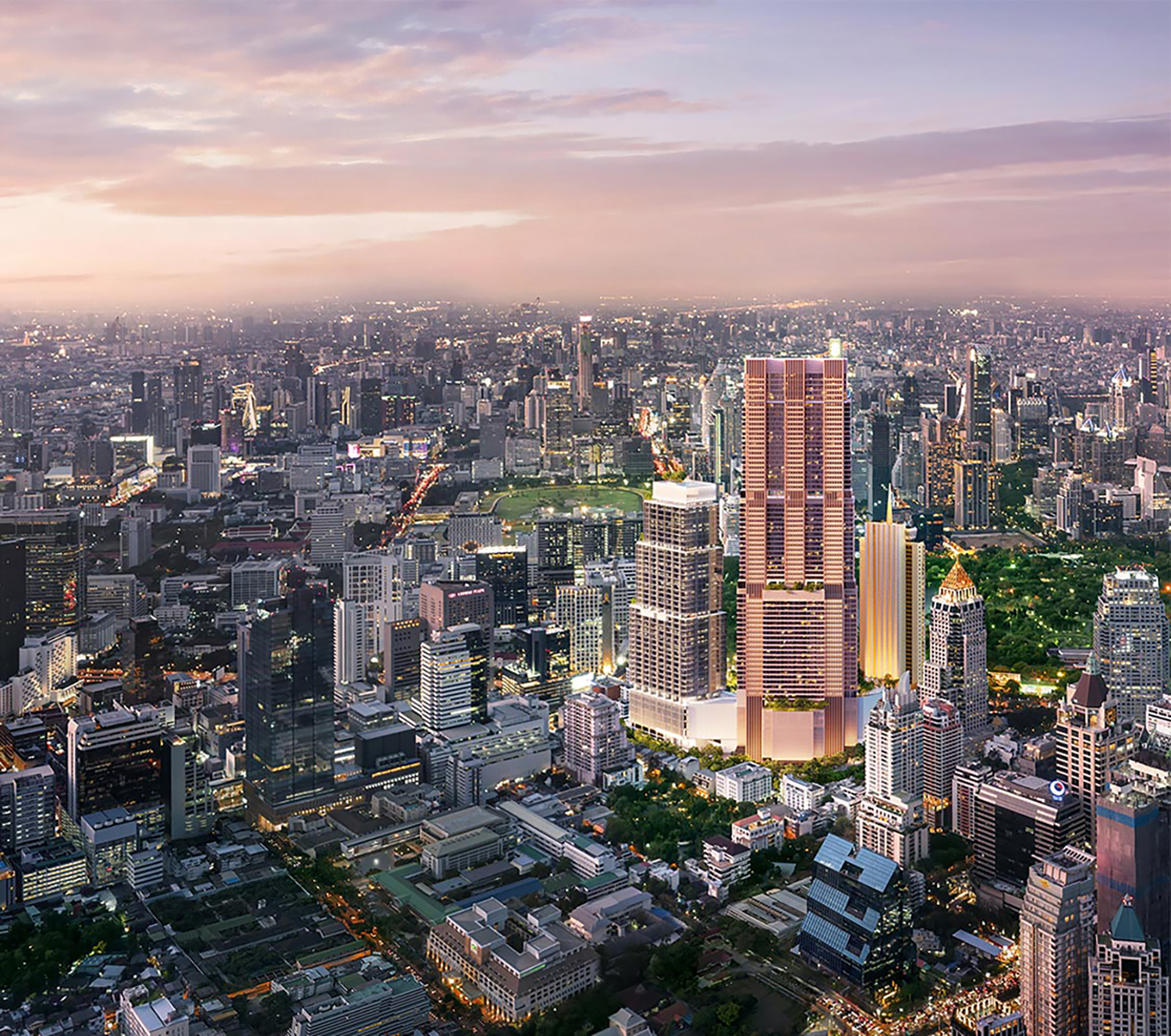
Prime mixed-use surroundings can influence how investors compare Bangkok condo value.
A useful benchmark is not a single number. It is a disciplined comparison of how a unit performs against realistic alternatives. The best question is not whether a condo looks cheap in isolation, but whether it looks sensible after you have compared its price, rental evidence, building quality, ownership costs, exit route and neighbourhood support.
For overseas investors, that discipline is especially important because they may not see the building every month. A calm framework reduces the risk of buying the most persuasive sales story instead of the most resilient asset.
Start with genuinely comparable buildings
Benchmarking begins by narrowing the comparison set. A 35-square-metre leasehold unit in a hotel-branded tower should not be compared directly with a 35-square-metre freehold resale in a standard condominium, even if both sit near the same BTS station. The right comparison set should share a similar district, tenure, age band, grade, transport access and buyer profile.
For a central Bangkok condo, compare against buildings that compete for the same tenant and future buyer. A Japanese corporate tenant, a regional executive, a long-stay medical visitor and a local owner-occupier may all value different features. If the unit is likely to depend on expat rental demand, the benchmark should include buildings with proven expat appeal rather than the cheapest stock nearby.
Investors should also separate completed resale buildings from off-plan launches. A completed building gives evidence of actual rents, actual maintenance standards and actual resale listings. A launch may offer newer design, payment staging and developer incentives, but the investor is underwriting future delivery and future tenant demand.
Compare the full cost, not just the sale price
The quoted price per square metre is only the opening line. Foreign buyers should calculate the acquisition cost, transfer-related costs, furnishings, appliance replacement, sinking fund exposure, common fees, agency fees, vacancy allowance and likely refresh costs over the intended holding period.
A unit that is slightly cheaper at purchase can become less attractive if the building has high monthly charges, weak maintenance discipline or near-term capital works. A slightly more expensive unit can be the better investment if it rents faster, holds condition better and appeals to a wider buyer pool when it is time to sell.
Benchmark common fees against building grade and facility depth. A full-service tower with extensive amenities should have higher running costs than a simple low-rise building, but those costs should still feel proportionate to occupancy, staffing, maintenance and the tenant profile. If the fee looks unusually low, ask whether the building is underfunding maintenance. If it looks unusually high, ask whether the rent can support it.
Location depth should be judged by transport, parks, retail, offices and daily convenience together.
Use rental evidence cautiously
Rental adverts are not the same as achieved rents. Asking rents show owner ambition; signed leases show market evidence. Where possible, compare recent leases in the same building, nearby buildings of similar grade and units with similar furnishing standards. A renovated corner unit with open views should not set the rent expectation for a lower-floor unit facing a neighbouring wall.
Investors should also look at speed of letting. A high theoretical rent is less useful if the unit sits empty for months. For practical modelling, it is better to use a conservative rent that can be achieved repeatedly than an optimistic rent that depends on a rare tenant.
Foreign landlords should include vacancy and tenant-change costs in the benchmark. Bangkok rentals can be steady in strong locations, but leases still expire, furniture wears out and market sentiment changes. A yield calculation that assumes twelve perfect months every year may overstate the result.
Score the building as a business, not a postcard
Every condominium has a small operating business behind it: the juristic person, the committee, the property manager, the budget, the reserve fund and the rules. Investors should benchmark that operating business as carefully as they benchmark the pool, lobby or view.
Ask for the latest financial statements, AGM minutes where available, common fee position, major repair discussions and any known disputes. A building with good governance can protect long-term value. A building with poor collection, recurring disputes or deferred maintenance can turn a good location into a difficult hold.
This is also where overseas ownership changes the risk profile. A foreign owner who lives abroad needs predictable administration, clear communication and a management team that can coordinate repairs, tenant access and documents without constant intervention.
Test the exit route before buying
A buyer-focused benchmark should include resale liquidity. Check how many similar units are listed, how long they appear to have been on the market, and whether the building has a consistent buyer audience. If many similar units compete at the same time, the owner may need to price patiently when exiting.
Liquidity is not only about the district. It can depend on unit size, layout, view, floor, parking, furnishing condition, ownership quota and the reputation of the building. A compact one-bedroom in a known rental building may sell more readily than an unusual layout in a quieter tower, even if the second unit looks larger on paper.
Investors planning a shorter hold should be stricter. The shorter the intended holding period, the less time there is for market recovery, rental income and capital improvements to offset a weak entry price.
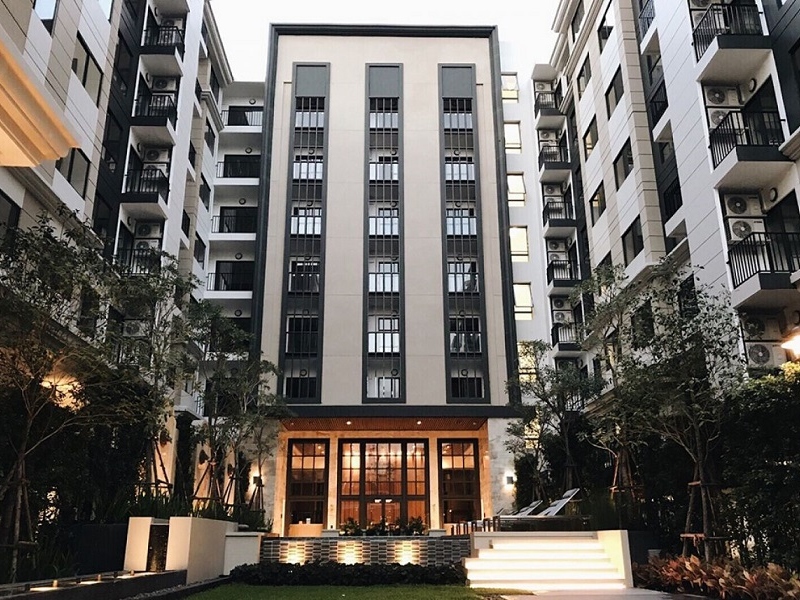
Amenity depth around a building can matter as much as the headline district name.
Neighbourhood depth matters
Foreign buyers should benchmark the neighbourhood as a living system. BTS or MRT access is important, but so are supermarkets, hospitals, schools, parks, restaurants, offices, embassies, hotels, serviced apartments and evening activity. These features help create a broader tenant base and can make the unit easier to explain to a future buyer.
A station name alone is not enough. Walk the route at different times of day, check shade and crossings, consider traffic patterns and ask whether the daily life around the building matches the target tenant. For example, a quiet residential pocket may suit families, while a denser business district may suit executives who value short commutes.
A practical scoring method
Before making an offer, give each shortlisted unit a simple score out of five for entry price, rent evidence, building governance, maintenance condition, neighbourhood depth, tenant pool, resale liquidity and ownership simplicity. The exact scoring is less important than the discipline of comparing each unit in the same way.
If a unit scores strongly on location but weakly on governance, the investor knows what to investigate next. If it scores strongly on price but weakly on tenant demand, the investor can adjust rent assumptions. If it scores strongly across most categories, it may justify paying a fair price rather than waiting for a bargain that never appears.
IBP can help foreign buyers compare shortlisted Bangkok condos against realistic alternatives, including rental assumptions, exit risk and practical ownership checks. You can also review our Bangkok investment analysis and our recent guide to holding-period checks before committing to an offer.
Foreign buyers often compare Bangkok condos by price, rental yield, location and building age. Those checks matter, but they are incomplete until the buyer decides how long the asset is likely to be held. A condo bought for a three-year plan should be judged differently from one intended for a decade of ownership, family use or eventual retirement in Thailand.
The holding period affects almost every practical decision: how much renovation makes sense, whether a tenant profile is deep enough, how much cash reserve to keep, and how patient the owner can be during resale. It also disciplines the buying process. Instead of asking whether a unit is simply attractive, an investor can ask whether the unit still looks attractive after ownership costs, vacancy risk, agency fees, currency movement and a realistic exit window.
A clear holding period helps investors compare income, resale timing and district depth.
Why the holding period comes before the offer
A Bangkok condo can be a long-term base, an income asset, a future relocation option or a blend of all three. The same unit may serve one purpose well and another poorly. A compact unit near a major BTS interchange might be easy to rent, but if the building has heavy near-term competition it may not suit a short resale plan. A larger family unit in a quieter district may be slower to lease, yet can make sense for an owner who wants personal use and is prepared to wait for the right tenant or buyer.
For foreign investors, the main advantage of defining the hold early is that it keeps the numbers honest. Gross yield can look tidy on a listing sheet. Net return is shaped by furnishing, repairs, juristic-person charges, management, vacant months, tax advice, currency conversion and the cost of selling. A longer hold gives those costs more time to be absorbed. A short hold leaves less room for mistakes.
Match the unit to the exit plan
A buyer expecting to sell within a few years should focus on liquidity first. Liquidity does not mean a guaranteed quick sale. It means the unit has a wide pool of plausible buyers: clear title, sensible layout, fair building condition, useful transport access and a price point that is not dependent on one unusual buyer preference. The most fragile short-hold investments are often highly personalised units, over-furnished units, unusual floor plans or units bought at a premium that is hard to explain later.
A buyer planning a five-to-ten-year hold can accept a different set of trade-offs. Building management, sinking fund discipline, upcoming capital works and neighbourhood development become more important. The question shifts from, “Can I resell this quickly?” to “Will this still be easy to own, rent and explain after several market cycles?” That approach is especially useful in Bangkok because districts mature at different speeds.
Unit layout, maintenance and tenant appeal should match the intended investment horizon.
Costs that can punish a short hold
Thai condo ownership has transaction costs at both entry and exit. The exact amount depends on the transaction structure, ownership period, assessed value and tax position, so buyers should check the latest calculation with a lawyer or tax adviser before relying on a net return. The broader point is simple: the shorter the hold, the more those costs matter.
Investors should also budget for the less visible costs of preparing a unit for rent or resale. Air-conditioning servicing, appliance replacement, painting, deep cleaning, curtain replacement and minor furniture upgrades can be small individually, but meaningful when a sale is brought forward. A unit bought with no cash reserve can force the owner to delay repairs, accept a weaker tenant or sell before the presentation is strong.
Rental income is often used to justify the hold, but rental depth varies by district, building, unit size and tenant type. A one-bedroom unit near employment and lifestyle demand may have a larger tenant pool than a larger unit in the same building. A premium riverfront or park-side unit may attract fewer tenants, but those tenants may value quiet, view and services more than headline rent per square metre.
For a shorter hold, the investor should model at least one vacant month between tenants and allow time for listing, cleaning and repairs. For a longer hold, the investor should ask whether the building can keep its tenant appeal as newer projects launch nearby. A low-maintenance unit with broad tenant demand is often more valuable than a unit that only looks good under a perfect rent assumption.
The Bangkok rental yield guide gives a useful framework for checking gross and net income before committing to a rental-led plan.
Building age changes the holding-period calculation
Building age is not automatically a negative. Some older Bangkok condos have larger layouts, established addresses and proven management. The issue is whether the building’s future costs and buyer perception have been properly priced. Lifts, facade works, common-area refreshes, waterproofing, parking systems and major mechanical equipment can all influence resale confidence.
A short-hold buyer should be careful with a building that is approaching a large maintenance cycle unless the discount is clear and the juristic-person records are strong. A long-hold buyer can still consider the building, but should understand the likely cash calls, common-fee trajectory and owner-committee culture. The best building for a long hold is not always the newest one; it is the one where future ownership feels predictable.
Exit planning starts before transfer, not when an owner decides to sell.
A practical holding-period checklist
Before making an offer, foreign investors should write down the intended hold and test the unit against it. The checklist should include the expected years of ownership, target tenant profile, likely furnishing spend, annual maintenance reserve, ownership structure, currency plan and expected exit route. If the plan depends on rapid capital growth or a perfect tenant, the risk is probably being understated.
Investors should also ask what would happen if the plan changes. Could the unit be rented if personal use is delayed? Could it be sold if currency movement creates pressure? Would the building still appeal if two new projects launch nearby? A good Bangkok condo investment gives the owner options. A weak one requires the market to behave exactly as hoped.
How foreign buyers should use this check
The holding period should not make a buyer timid. It should make the buyer selective. Bangkok remains attractive because it combines urban convenience, international connectivity, deep rental demand in selected districts and a wide range of price points compared with many global gateway cities. Those advantages are most useful when the purchase is matched to a realistic ownership plan.
Before buying, compare the unit against IBP’s condo due diligence checklist and exit strategy guide. A short conversation about hold period, resale depth and rental management can prevent a foreign buyer from choosing a unit that is attractive today but difficult to own tomorrow.