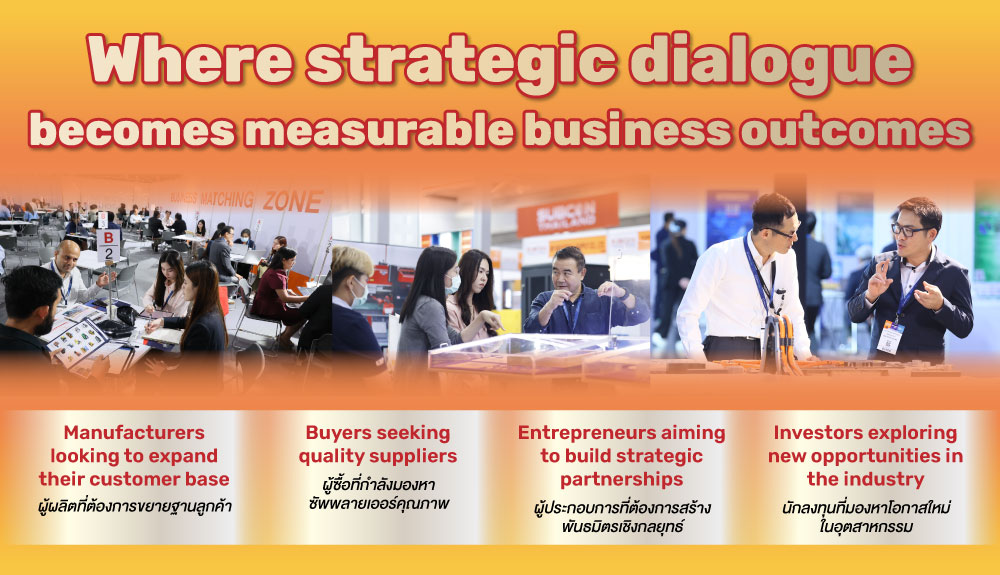
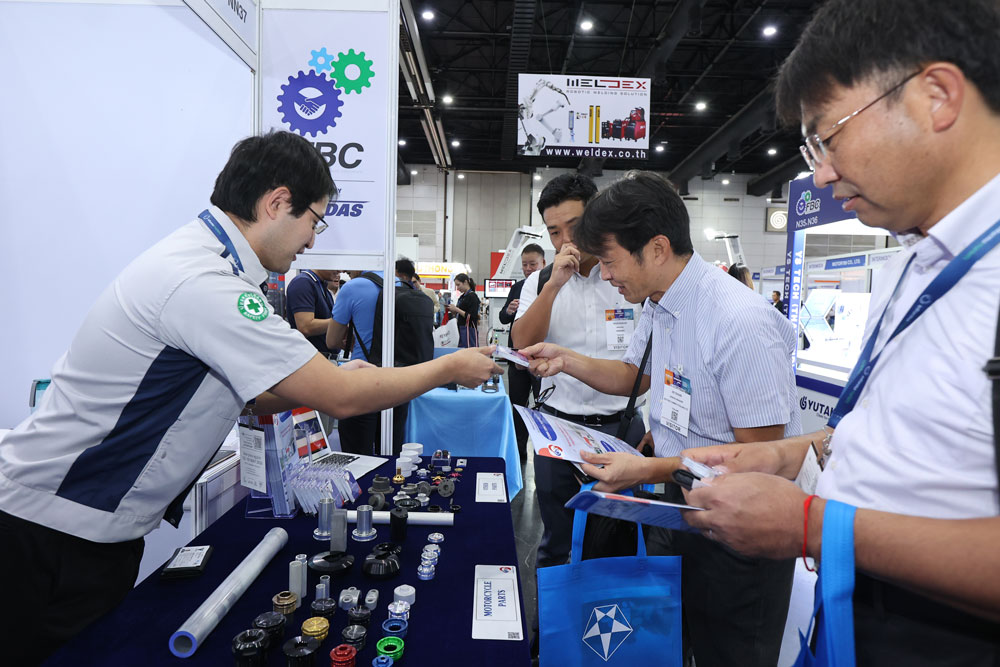
SUBCON Thailand 2026 matters to Bangkok property buyers because it shows how the city works as a business platform, not only as a lifestyle destination. The event brings together manufacturers, buyers, sourcing teams and industrial partners, with the Thailand Board of Investment involved alongside Thai Subcon and Informa Markets. For foreign property investors, that kind of business infrastructure supports confidence in Bangkok’s role as a regional headquarters, meeting and services base.
SUBCON Thailand positions Bangkok as a meeting point for industrial buyers, suppliers and regional supply-chain partnerships.
The official SUBCON Thailand 2026 materials describe the event as a leading industrial parts sourcing and business-matching platform. They also state that the previous event produced 9,975 business-matching meetings and an estimated future business value of more than THB 22,124.30 million. Those numbers should not be read as a direct condominium-demand forecast. The more useful point is broader: Thailand continues to organise the kinds of platforms that connect foreign buyers, Thai suppliers and regional supply chains.
Why Industrial Events Matter To A Property Audience
A foreign condo buyer does not need to invest in an industrial estate to care about industrial confidence. When Thailand attracts manufacturers, technology firms, logistics providers and supply-chain partners, Bangkok often benefits as the service and decision-making centre. Executives travel through the capital, professional services cluster in the city, families consider schools and healthcare, and regional teams need serviced apartments, long-stay rentals and central meeting locations.
That connection is indirect, but it is important. A property market supported only by leisure demand is more fragile than one supported by business travel, expatriate employment, healthcare, education, retail and long-stay lifestyle demand. SUBCON is one sign of that wider ecosystem.
Business-matching platforms help translate foreign-investment interest into supplier relationships and operational commitments.
The BOI Context
The BOI’s 2026 press-release calendar shows continued emphasis on investment, digital infrastructure, advanced industries and supply-chain development. Recent releases have covered large investment applications, data-centre approvals and programmes designed to unlock priority projects. For foreign buyers, the relevance is not that every BOI approval creates immediate city-centre rent. It is that Thailand is actively positioning itself for higher-value industry rather than relying only on tourism recovery.
That matters because Bangkok property confidence is tied to the country’s wider economic credibility. Foreign buyers often ask whether Thailand has enough long-term momentum to justify owning a city asset. Industrial events, BOI activity, manufacturing networks and regional business platforms help answer that question by showing that Thailand remains connected to corporate investment decisions.
What It Means For Bangkok Neighbourhoods
Business confidence tends to support areas that combine transport, offices, hotels, retail and housing. Sukhumvit, Rama 9, Sathorn, Silom, Phrom Phong, Asok and selected Bang Na locations each serve different parts of that ecosystem. Bang Na is especially relevant when events take place at BITEC and when manufacturing, logistics or exhibition activity draws repeat visitors to the eastern side of the city.
However, buyers should not turn an event venue into a simplistic investment thesis. A condo near an exhibition centre still needs good access, sensible pricing, reliable juristic management and tenant demand beyond occasional event weeks. The strongest assets are those that work for daily life as well as business travel.
Co-located manufacturing events broaden Bangkok's role as a regional business and industrial-services hub.
How Foreign Buyers Should Use This Signal
Use SUBCON Thailand 2026 as a confidence signal, not a buying shortcut. It supports the case that Bangkok sits inside a broader regional business network, but it does not remove the need for building-level due diligence. Foreign investors should still check resale evidence, rent levels, common-area fees, foreign quota and the quality of the surrounding walking environment.
For long-term holders, the most attractive reading is that Bangkok continues to combine livability with economic connectivity. People come for meetings, supplier visits, regional roles, healthcare, tourism and education. That mix helps explain why central condominiums remain relevant even when parts of the market are slow.
The Takeaway
SUBCON Thailand 2026 is a reminder that Thailand’s investment story is not only about headline FDI figures. It is also about the networks that turn interest into operating relationships. For Bangkok property buyers, that strengthens the argument for selective ownership in locations that can serve both lifestyle and business demand.
Foreign buyers assessing this theme should compare economy-led signals with local property fundamentals in the IBP Thailand economy and investment news archive before choosing a district or project.
Thailand’s first-quarter 2026 investment data gives foreign property buyers a wider context for Bangkok. According to a BOI announcement carried by The Nation on 29 April 2026, investment promotion applications in Q1 2026 exceeded 1.01 trillion baht across 624 projects, led by digital and electronics activity connected to the AI supply chain.
A property buyer should not read corporate investment data as a direct promise of condo price growth. The useful point is more measured: when high-value sectors choose Thailand, they can deepen employment, supplier networks, international management traffic and confidence in Bangkok as a regional base. Those are the conditions that support a more resilient long-stay housing market.
Thailand’s Q1 2026 investment applications point to continued interest in higher-value sectors and regional operations.
What The Q1 Numbers Show
The Q1 announcement reported 624 submitted projects with a combined investment value of 1,016,962 million baht, around 2.4 times the value of the same period a year earlier. The largest investment value came from digital projects, followed by electronics and electrical appliances, energy and utilities, agriculture and food processing, logistics and high-value services, and automotive-related activity.
Foreign direct investment was also significant. The report stated that FDI accounted for 427 projects with combined investment value of 965,869 million baht, with Singapore, the United Kingdom and Japan among the highest-value sources. For Bangkok, those source markets matter because they overlap with regional headquarters, professional-services networks and internationally mobile executives.
The data is application-led rather than completion-led, so investors should be careful. Some projects may be phased, delayed or revised. But applications at this scale still show where corporate boards are placing strategic options, and Thailand remains visible in sectors linked to data, manufacturing, logistics and energy transition.
Why FDI Matters To Bangkok Housing
Corporate investment supports property indirectly. New factories may sit outside Bangkok, but headquarters teams, consultants, banks, lawyers, engineers, logistics managers and visiting executives often rely on the capital. Bangkok remains the main gateway for flights, meetings, education, hospitals, private clubs, retail and expatriate services.
That is why the housing effect is not limited to industrial provinces. A Japanese electronics supplier expanding in the Eastern Economic Corridor may still generate Bangkok demand through regional managers, visiting specialists, school choices and corporate apartments. A digital investor may create demand around office, data, legal and professional-service clusters.
For foreign condo buyers, the strongest locations are those that connect easily to this broader business ecosystem. Central BTS and MRT districts, airport-linked routes, serviced-apartment corridors and mixed-use areas with office demand tend to benefit more visibly than isolated residential pockets.
Digital, electronics, clean energy, logistics and other strategic sectors help shape the longer-term demand base for Bangkok.
The Quality Of Investment Is Important
The sector mix matters as much as the headline total. Digital, electronics, clean energy, logistics and high-value services suggest an economy trying to move beyond lower-margin activity. That can be positive for Bangkok because higher-value sectors often bring managers, specialists and service providers who have stronger housing budgets and higher expectations for neighbourhood quality.
BOI policy language has also emphasised faster processes, strategic sectors and workforce readiness. If Thailand can improve power readiness, clean-energy access, visas, work permits and investment facilitation, the property market may benefit through greater confidence rather than through a single project announcement.
The caveat is execution. Foreign buyers should watch whether announced investment becomes operating capacity, jobs and recurring business travel. Property demand follows real activity, not press releases. A disciplined buyer keeps the macro story in view while still focusing on the exact building, leaseability and exit liquidity.
Where Bangkok Could Feel The Impact
Central Bangkok office and residential districts are likely to feel the impact first through management, finance, legal and advisory functions. Ploenchit, Wireless, Asok, Phrom Phong, Silom, Sathorn and Rama IV all connect to corporate services and expat routines. These areas also offer the amenities that international staff often need when relocating.
Airport access should remain part of the analysis. If a buyer targets corporate tenants, then routes to Suvarnabhumi, Don Mueang and intercity roads can matter alongside station proximity. A beautiful unit that is inconvenient for weekly travel may be less competitive than a more practical one in a connected building.
Mixed-use districts may also become more important. Investors and executives increasingly value locations where offices, hotels, dining, retail, parks and transport sit together. That supports Bangkok’s premium positioning because the city can offer both business function and liveability within a relatively compact central area.
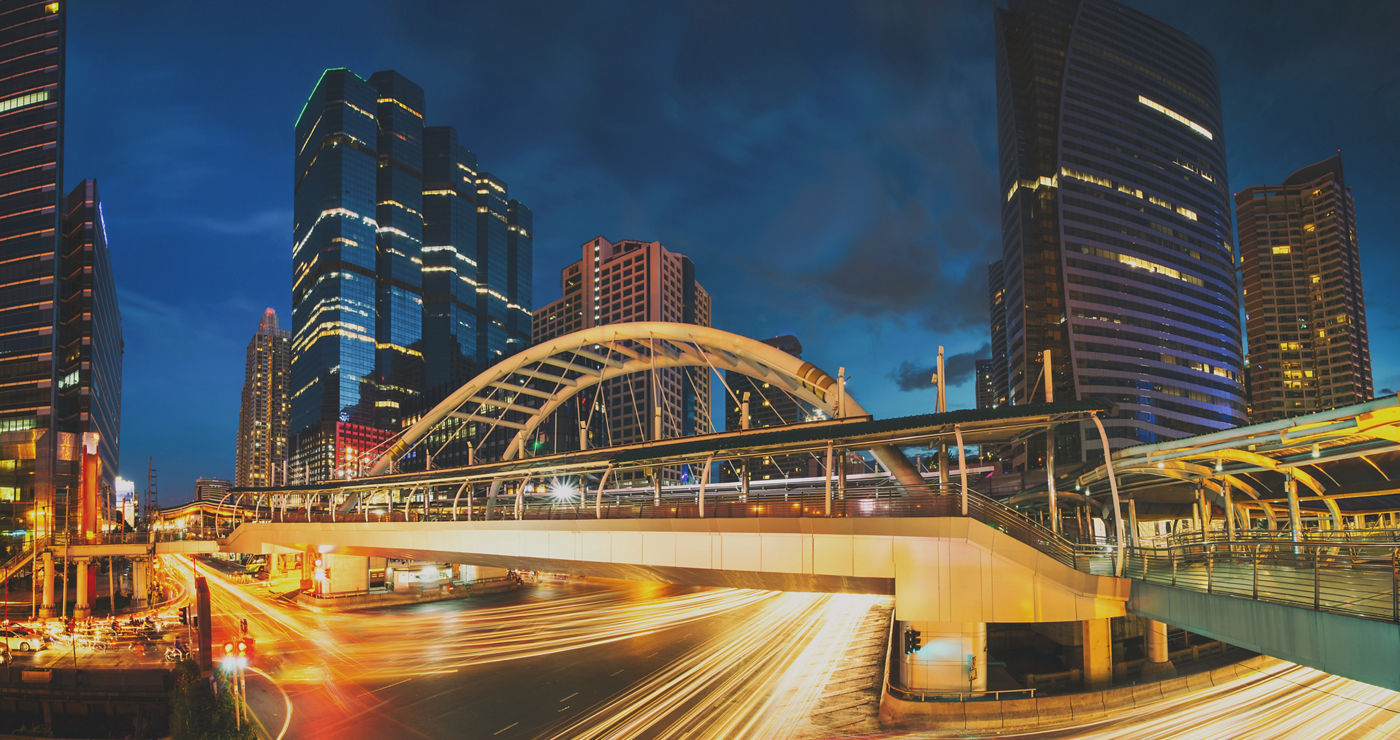
Bangkok property confidence is strongest when corporate investment, infrastructure and liveability improve together.
How Foreign Buyers Should Use This News
Use Q1 investment momentum as a confidence indicator, not a buying instruction. It can justify looking carefully at Bangkok, but it does not remove the need for unit-level due diligence. Foreign quota, title, transfer funding, management quality, construction condition, tenant profile and resale evidence still determine whether a purchase is sound.
Buyers should also avoid assuming that all corporate investment favours the same condo product. A regional executive may want a large serviced residence near an office cluster. A younger specialist may prefer a compact unit on a direct rail line. A family may value schools, parks and hospital access more than nightlife.
The best strategy is to match macro confidence with micro discipline. If Thailand continues to attract high-value investment, Bangkok should remain relevant as a regional living and business base. The buyer’s task is to select a building that can convert that relevance into practical rental or lifestyle demand.
Buyer Takeaway
Thailand’s Q1 2026 investment wave strengthens the long-term case for Bangkok, especially in districts connected to corporate services, transport and premium liveability. IBP can help foreign buyers translate that macro signal into a shortlist of buildings with realistic rental demand and defensible resale prospects.