
Bangkok Condo Capex Checks For Foreign Investors
Bangkok condo investors often focus on entry price, rent and exit value, but the quieter question is whether the unit can absorb capital expenditure over the holding period. Capex is the money needed to keep the asset competitive: repairs, appliance replacement, repainting, furniture refreshes, deeper maintenance and occasional building-level costs that become visible only after ownership begins.
For foreign investors, capex deserves more attention because many owners are not in Bangkok to inspect problems early or negotiate small repairs in person. A unit that looks profitable on a gross-yield calculation can become much less attractive when the first tenant leaves, the air-conditioning fails, furniture looks tired and the building announces a common-area improvement project.
Why capex is different from ordinary expenses
Ordinary operating costs are expected and recurring. They include common fees, agent commission, management fees, insurance, routine cleaning and small tenant-service items. Capex is different because it usually comes in uneven lumps. It may not happen every month, but when it arrives it can change annual returns quickly.
Investors should therefore avoid treating capex as a surprise. A Bangkok condo is a physical asset in a humid, heavily used urban environment. Air-conditioning systems, water heaters, kitchen fittings, curtains, mattresses, sofas, flooring, sealant, paint, balcony drainage and electrical items all have useful lives. Some last well. Others deteriorate faster when tenants use the unit intensively or when the owner delays maintenance.
Start with the building age and management record
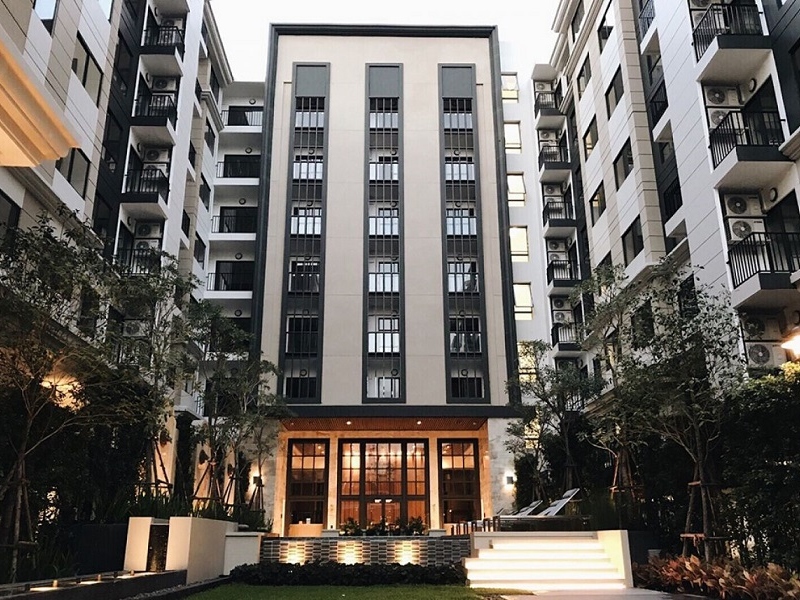
Building-level capex risk depends on age, maintenance culture and the strength of the condominium juristic person. A newer building may have fewer visible issues, but it can still face defects, warranty disputes, lift performance questions or common-area wear if management is weak. An older building can be a sensible investment if its common areas are maintained, budgets are transparent and residents support necessary repairs.
Before buying, review the lobby, corridors, lifts, parking, pool, gym, waste areas, facade, drainage, fire systems and security process. Ask whether the building has a sinking fund, whether common fees are collected reliably and whether any major works have been discussed. If minutes, budgets or notices are available, read them. A cheap unit in a building with underfunded maintenance may not be cheap after the next repair cycle.
Model the unit replacement cycle
The unit itself needs a simple replacement plan. A rental condo may need repainting after tenants, curtain cleaning or replacement, mattress renewal, sofa repairs, appliance servicing, air-conditioning cleaning, grout and sealant work, lock changes, water-heater checks and occasional furniture replacement. None of these items is dramatic on its own. Together, they shape the net return.
Foreign landlords should ask how the unit would present after one, three and five years of use. If the current furniture package is already ageing, the first capex event may arrive earlier than expected. If the investment case assumes premium rent, the furnishing and maintenance standard has to support that rent throughout the lease cycle.
Capex can protect rental income
Capex is not only a cost. Timely spending can protect occupancy and rent. A clean, well-lit, functional unit with reliable appliances is easier for agents to show and easier for tenants to accept. A tired unit can sit vacant or require discounting, even in a good district. Delayed repair can also create bigger damage, especially with water leaks, air-conditioning drainage or bathroom ventilation.
The best investors separate cosmetic spending from protective spending. Decorative upgrades should be judged by whether tenants will pay for them. Protective spending should be judged by whether it reduces vacancy, complaints, damage or future uncertainty. A modest repaint and appliance service before marketing may be more useful than expensive styling that does not match the tenant profile.
Questions before buying
- What repairs would be needed before the unit could be leased at the target rent?
- Which appliances, fittings and furniture items are most likely to fail first?
- Does the building show signs of deferred maintenance?
- Are common-area budgets, sinking funds and notices easy to understand?
- Who will inspect the unit between tenancies if the owner is overseas?
- Would the investment still work after one larger repair event?
Build a practical reserve
A sensible capex reserve should sit outside the purchase budget. Buyers should not spend every available baht on the transfer and furniture package, then hope future rent covers everything. Rent can be interrupted by vacancy, negotiation, repair access or tenant turnover. A reserve gives the owner room to act quickly when a problem appears.
The exact reserve depends on unit size, age, furnishing level and building condition. The principle is simple: the more remote the owner, the more important liquidity becomes. An overseas landlord who cannot authorise repairs promptly may lose more through vacancy and tenant frustration than the repair would have cost.
Resale angle
Capex also affects resale. Future buyers will notice tired interiors, old air-conditioning units, damp marks, stained flooring, weak lighting and poorly maintained common areas. A seller who has kept good repair records and maintained the unit steadily can often explain the asset more confidently. A seller who has postponed work may face heavier negotiation at exit.
For shorter holding periods, capex discipline is even more important because there is less time for rent to offset mistakes. For longer holds, the buyer should accept that some replacement spending is part of owning the asset. Either way, capex should be built into the investment case before signing.
Buyer takeaway
Bangkok condo capex is not a reason to avoid investing. It is a reason to buy with a fuller picture. Foreign investors should inspect the building, model the unit replacement cycle, keep a reserve and appoint someone who can act quickly when repairs arise. A condo that remains clean, functional and easy to lease is usually more defensible than one that looked cheaper only on day one.
IBP helps foreign buyers compare Bangkok condos by price, rent potential, building condition and exit risk. Read more in our investment analysis archive or contact IBP Real Estate for a buyer shortlist.