by Daryl Lum | 28 May 2024 | Bangkok Property Market Updates, Infrastructure & Urban Development
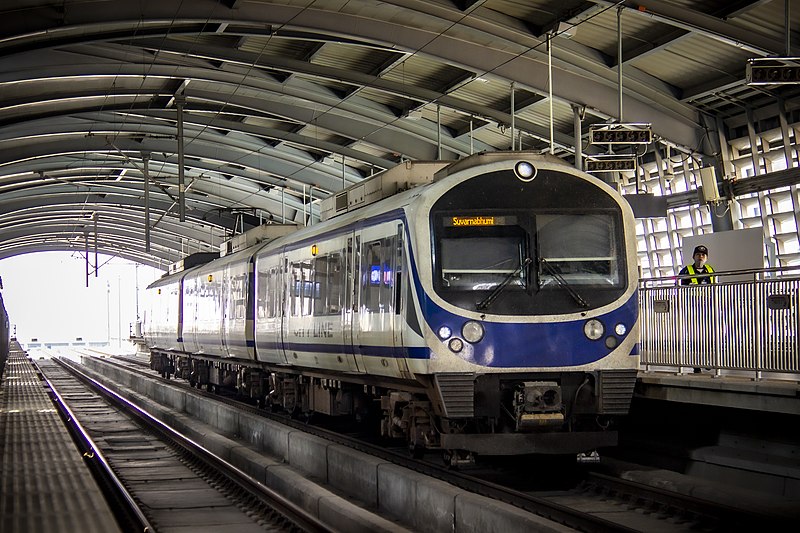
The high-speed rail project connecting Don Mueang, Suvarnabhumi, and U-Tapao airports is slated to commence operations later this year, following a revised agreement between the government and the project developers.
Anan Phonimdang, Deputy Governor of the State Railway of Thailand (SRT), confirmed that the revised agreement has been approved by the SRT board.
The agreement will be forwarded to the Eastern Economic Corridor (EEC) Policy Committee and the cabinet for further review to ensure the state’s interests are protected. The Notice to Proceed (NTP) is expected to be issued by the end of this year.
Asia Era One, a consortium led by CP Group, won the 224.5 billion baht contract to build the rail system in 2018. However, the project faced delays due to various issues, including the pandemic’s impact.
The SRT and the Office of the EEC have renegotiated parts of the contract with the consortium to ensure project completion.
“The resolution is clear and based on established principles. The company must provide an additional bank guarantee to assure project completion,” said Mr. Anan.
The revised contract addresses four key issues: payment of the joint venture rights, government investment in the project, an additional bank guarantee, and investment promotion privileges.
Under the new terms, Asia Era One will pay the joint venture rights in full, plus interest, totaling 11.7 billion baht, in seven installments.
The government will begin investing in the project 18 months after the NTP is issued, rather than immediately after the trains start operating. The company is required to provide an additional bank guarantee of 111.9 billion baht within 270 days of the contract revision.
Under the original public-private partnership agreement, the government committed to investing 111.9 billion baht in the project, including 3.57 billion baht for land appropriation. The remaining 108.33 billion baht would be paid starting in the sixth year after train operations commence.
Asia Era One has requested the government to compensate for ongoing construction work.
For the NTP to be issued, the company must first receive an investment promotion certificate from the Board of Investment. However, this requirement has been waived following the review process that concluded on May 22, said Mr. Anan.
If the NTP is issued as planned, the construction is expected to be completed by 2029.

by Daryl Lum | 27 May 2024 | Bangkok Property Market Updates, Investment Analysis
In the first quarter of 2024, foreign buyers took the lead in the condominium market, with new projects primarily targeting major tourist destinations, resulting in a total investment of over 56.6 billion baht.
Phattarachai Taweewong, Director of the Research Department at property consultancy Colliers Thailand, noted this quarter as the first instance where more condo projects were launched in key tourist areas than in Bangkok.
“We have never seen such a large volume of new condo supply outside Bangkok before,” he commented. “The primary driver of this trend was the demand from foreign buyers, especially from China and Russia.”
Pattaya topped the list with 4,493 new units valued at 16 billion baht, a significant increase from the previous year’s 3,302 units—a 132% rise from 2022.
These launches were predominantly from large-scale projects by publicly listed developers such as AssetWise and Origin Property.
Colliers anticipates that the remaining quarters of 2024 will see new condo launches mainly from local developers.
“The substantial volume in the first quarter was driven by strong demand, both for personal use and investment,” Phattarachai explained. “Some Chinese and Russian investors even purchased entire blocks of new projects to lease them to their compatriots.”
By the end of 2024, Colliers expects new condo launches in Pattaya to reach 7,000 units.
However, Phattarachai cautioned that a sustainable market volume should be between 3,000 and 5,000 units annually. “Exceeding this range could lead to an oversupply, similar to the 2013-14 period when over 10,000 units were launched annually, resulting in years to absorb the excess.”
The oversupply from that period had significant repercussions, with 27 projects, comprising about 9,000 units, halting sales activities until now. Colliers is monitoring whether these projects will return to the market.
Following Pattaya, Phuket saw the second highest number of new condo units, with 3,338 units from 12 projects valued at 25 billion baht.
This follows a record high of 8,743 units launched last year, a more than sixfold increase from 1,419 units in 2022, and surpassing the previous peak of 6,429 units in 2012.
Phuket is projected to launch 8,500 new condo units by the end of 2024.
“Before the pandemic, condos priced at 120,000 baht or more per square meter were rare in Phuket. Now, prices typically range between 150,000-180,000 baht per square meter,” Phattarachai observed.
In Bangkok, 3,288 new condos were launched in the first quarter of 2024, a 33% decrease from the same period last year, marking the lowest figure in 15 years.
“The Bangkok condo market has slowed since the third quarter of 2023, with developers adopting a conservative approach,” said Supasit Vitooraporn, a property analyst at Colliers’ advisory services department.
Supasit highlighted that a key issue is the high mortgage rejection rate, particularly in the lower-priced segments of 3 million baht or less, which saw a 70% rejection rate.

by Daryl Lum | 21 May 2024 | Bangkok Property Market Updates, Developer Watch, Investment Analysis
Frasers Property Home (Thailand), a leading residential developer, plans to launch three new condominium projects annually, each valued at over 1 billion baht, to diversify its portfolio and cover all market segments.
Apichart Hengwanich, Senior Executive Vice-President of Condominium Project Development and Operations Support, noted that Frasers Property Thailand Plc, the parent company, was previously the only top 10 developer in Thailand without condominiums in its portfolio.
“The Bangkok condo market experienced a slowdown during the pandemic but rebounded swiftly last year due to a lack of new supply in recent years,” Hengwanich explained. “This makes it an opportune time for us to launch our first condo project this year.”
Several factors are driving increased condo demand, including the government’s budget to boost purchasing power, a downward trend in interest rates, and the potential removal of certain individuals from the National Credit Bureau’s blacklist.
“Many individuals blacklisted by the National Credit Bureau have minor issues,” Hengwanich said. “Removing them from the blacklist would significantly increase the number of potential homebuyers, particularly for condominiums.”
On May 25, Frasers Property Home will begin bookings for Klos Ratchada 7, a low-rise condo project valued at 426 million baht. This marks the company’s first condo project for sale, excluding the leasehold Triple Y Residence in the Samyan Mitrtown mixed-use development.
Situated on a 314.5-square-wah plot on Ratchadaphisek Soi 7, Klos Ratchada 7 will feature an eight-story tower with 111 units, ranging from 26 to 36.4 square meters, priced from 2.99 million baht per unit. The project targets current renters in the Ratchadaphisek area, particularly those paying around 7,000 baht per month.
Frasers expects more than half of the units to be booked within the first two weeks of the launch.
In the first quarter of 2024, Frasers Property Thailand reported a 4.5% increase in revenue from its residential development business, reaching 2.37 billion baht compared to the same period last year.

by Daryl Lum | 20 May 2024 | Bangkok Property Market Updates, Investment Analysis
In the first quarter of this year, ownership of 3,938 condominium units valued at a total of 18.02 billion baht was transferred to foreign buyers.
The Real Estate Information Centre reported on Thursday that both the number of units sold to foreigners and their total value increased by 4.3% and 5.2%, respectively, compared to the same period last year.
Chinese nationals led the foreign buyers, acquiring 1,596 units worth 4.57 billion baht. Myanmar nationals ranked second, with 392 units valued at 2.21 billion baht transferred to them.
Russians were in third place, purchasing 295 condo units worth 924 million baht.
The centre noted that Chinese buyers made up 41% of the foreign market, while Myanmar and Russian buyers represented 10% and 5%, respectively.

by Daryl Lum | 17 May 2024 | Bangkok Property Market Updates, Expat Living & Relocation
A coalition of cannabis supporters urged the government on Thursday to reconsider its decision to reclassify marijuana as an illegal narcotic, following a recent policy shift just two years after its decriminalization.
Prime Minister Srettha Thavisin is advocating for cannabis use strictly for medical purposes, emphasizing a stringent approach to illegal drugs, which he claims are contributing to addiction and negatively impacting the youth.
Pro-cannabis groups met with Public Health Minister Somsak Thepsutin on Thursday, encouraging him to reconsider the policy reversal.
“Even for medical use, don’t subject the people’s plant to bureaucratic control. It has been integral to our culture for centuries. Licencing only breeds corruption,” stated Prasitchai Nunual, Secretary-General of Thailand’s Cannabis Future Network.
Thailand first legalized cannabis for research and medical purposes in 2018. In June 2022, the government led by Gen Prayut Chan-o-cha removed the plant from the national narcotics list, enabling cultivation, sale, and consumption.
This led to a surge in recreational use, with numerous cannabis cafes and dispensaries emerging nationwide, particularly in tourist areas, creating an industry projected to reach USD 1.2 billion by 2025.
Critics argue that the previous government rushed the liberalization process without drafting a comprehensive cannabis bill or clear regulations, resulting in public confusion and misuse.
Thailand has a long-standing tradition of using marijuana for pain relief and fatigue, as well as in traditional medicine and culinary practices. Mr. Somsak emphasized that cannabis should be limited to medical use.
Mr. Somsak’s predecessor, Dr. Cholnan Srikaew, had pushed for stringent legislation to curb recreational cannabis use. He had prepared a bill to clearly define approved medicinal uses and banned forms of consumption.
However, many cannabis businesses argue that the issue is not recreational use but the lack of clear regulations.
“There is nothing more sensible than a comprehensive Cannabis Act, addressing safety concerns like use among minors and regulated growth,” said activist and cannabis retailer Chokwan “Kitty” Chopaka.
“We do not support an uncontrolled cannabis market in Thailand but advocate for policies that support farmers, retailers, and medical users.”