by Daryl Lum | Aug 23, 2023 | Bangkok Property Market Updates
Srettha Thavisin from the populist Pheu Thai party has secured the parliament’s approval to become Thailand’s next prime minister. This marks the beginning of a new coalition government and an end to weeks of uncertainty and political deadlock.
Srettha, a prominent property mogul, clinched victory with 482 votes out of 727 politicians present on Tuesday, finally putting an end to months of suspense, legal disputes, and political bargaining that had followed the May elections.
The progressive Move Forward Party, which had won the most votes in the national election, was prevented from assuming power due to opposition from conservative senators.
This vote took place shortly after the return of Thaksin Shinawatra, the billionaire figurehead of the Pheu Thai party, who had been in self-imposed exile for years.
Srettha, a newcomer to politics, is now tasked with the challenging job of forming and maintaining a potentially delicate coalition government, which will include parties with military backing, responsible for overthrowing Pheu Thai governments in coups in 2006 and 2014.
Srettha will lead an alliance of 11 parties, including two pro-military parties affiliated with the outgoing Prime Minister Prayuth Chan-ocha, who led the 2014 coup. The Move Forward Party is not part of this coalition.
Critics have labeled the new government as a betrayal of the election results, but Pheu Thai leaders argue that it is necessary to break the political deadlock and promote reconciliation.
Supporters at Pheu Thai party headquarters celebrated with dancing in red attire.
“I will give my utmost effort and work tirelessly to enhance the quality of life for the people of Thailand,” stated Srettha.
Pheu Thai excluded the Move Forward Party, citing its commitment to changing the royal defamation law as a hindrance to garnering enough support from other parties and the Senate.
Under the military-imposed constitution, both houses of parliament vote together for the prime minister, a setup designed to preserve conservative military-backed rule.
Pheu Thai disclosed that it would control eight cabinet positions and nine deputy cabinet positions. The military-backed parties, Palang Pracharath and United Thai Nation, would each receive two cabinet positions and two deputy positions. The specific ministries allocated to each party were not disclosed.
The coalition has agreed to support Pheu Thai’s agenda, which includes boosting the economy, raising the minimum wage, and ending mandatory conscription. They also plan to continue the legalization of medical cannabis and work on amending the constitution to enhance democracy in the country, while avoiding changes to the royal defamation law.
The parliamentary vote occurred shortly after the return of the divisive former Prime Minister Thaksin Shinawatra, who had been in self-imposed exile, primarily in Dubai, for years.
Thaksin’s return was an emotional moment for his supporters, as the 74-year-old billionaire had won the allegiance of millions with populist policies that focused on improving the welfare of the predominantly rural north of the country.
Thaksin and the parties aligned with him had a long-standing struggle with the military. He left Thailand 15 years ago following a 2006 coup during his second term, which triggered years of political turmoil. His sister, Yingluck Shinawatra, who led a Pheu Thai government, was ousted in 2014 by then-army chief Prayuth.
by Willie Tan | Aug 21, 2023 | Bangkok Property Market Updates, Expat Living & Relocation, Investment Analysis
In the April-June quarter, Thailand’s economy expanded by around 3.1%, a rise from the previous quarter’s growth of 2.7%. This upswing is attributed to the increased influx of foreign tourists, as predicted by a median survey of 21 economists.
Quarterly calculations indicate that the gross domestic product (GDP) growth, when seasonally adjusted, is projected to be approximately 1.2%. This marks a slowdown compared to the preceding quarter’s growth of 1.9%, as indicated by a smaller set of forecasts gathered between August 14 and 17 in a Reuters poll.
Although Thailand’s economy, which heavily relies on tourism, is anticipated to exhibit gradual improvement, the number of visitors remains significantly lower than the levels seen before the Covid-19 pandemic. The projection for this year suggests that Thailand might welcome around 29 million tourists, a decrease from the 40 million visitors recorded in 2019, the year before the pandemic hit.
As of August 13, the Tourism and Sports Ministry reported a total of 16.47 million foreign tourists visiting Thailand from January, with a total expenditure amounting to 690 billion baht (equivalent to USD 19.48 billion).
Exports, which play a crucial role in driving growth, have been contracting since October 2022, reflecting subdued global demand, particularly from China, Thailand’s primary trading partner.
Chua Han Teng, an economist at DBS, noted that the ongoing recovery in foreign tourism, including returning visitors from China, along with resilient private consumption, were the pillars supporting the expansion of the economy. However, the decline in merchandise exports, although stabilizing, continued to impede overall growth, thus preventing a more robust improvement in the second quarter of 2023, due to the challenging global economic environment.
The growth forecast for the year shows an average of 3.7%, aligning with the estimate from the Bank of Thailand (BoT). Additionally, a separate Reuters poll indicated that growth is expected to reach 3.8% in 2024.
by Daryl Lum | Aug 17, 2023 | Bangkok Property Market Updates
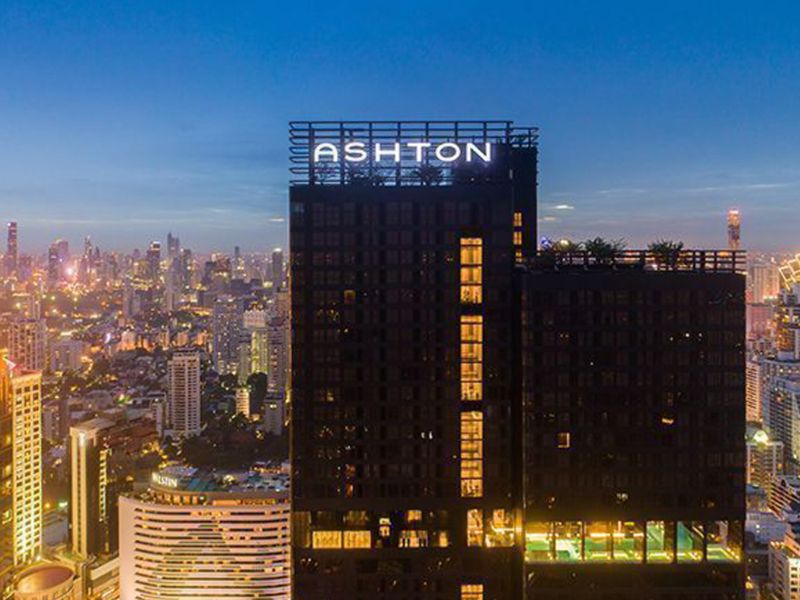
So if you have not already heard, on the 27th of July 2023, the Thai Supreme Administrative Court revoked the construction permit for Ashton Asoke. The already completed 6.481 billion baht project in Bangkok had about 87% or 668 of its units already transferred to property owners.
Where does this leave the development and its owners?
The short answer to this is that the development does NOT need to be demolished due to the revocation of the construction permit.
A bit of background to the case…
The court’s decision was founded on the premise that the access to and from the condominium complex, positioned on Asoke Road, was constructed on land acquired through expropriation by the Mass Rapid Transit Authority of Thailand (MRTA) specifically for the Blue Line train project. As a result, this access cannot be repurposed for other uses. Deputy Governor of Bangkok, Wisanu Subsompon, clarified that the permit’s revocation does not involve the demolition of the condominium. Instead, it necessitates that Ananda Development obtains a new construction permit from City Hall. To achieve this, the company must identify a parcel of land with a minimum width of 12 meters, dedicated to providing access to Asoke Road. It is reported that the company is offering attractive incentives to acquire adjacent land in order to meet this requirement.
Bangkok Governor, Chadchart Sittipunt, has convened a special ad hoc working committee to manage this situation. A press conference has been scheduled to provide further updates on this matter. In the interim, CEO of Ananda Development, Prasert Taedullayasatit, expressed his intention to hold separate discussions with the governors of Bangkok and MRTA. The aim is to explore ways to mitigate the impact on the condominium project and its residents.
Additionally, the company has duly informed the Stock Exchange of Thailand about these recent developments. This demonstrates the company’s commitment to keeping stakeholders informed regarding the steps taken in response to the court’s verdict. (NNT)
We will keep you updated with regard to any new development. If you are an owner of a unit at Ashton Asoke, you should already be in contact with the developer and their legal team.