by kevinyeo | Jan 30, 2018 | Bangkok Property Market Updates, Developer Watch
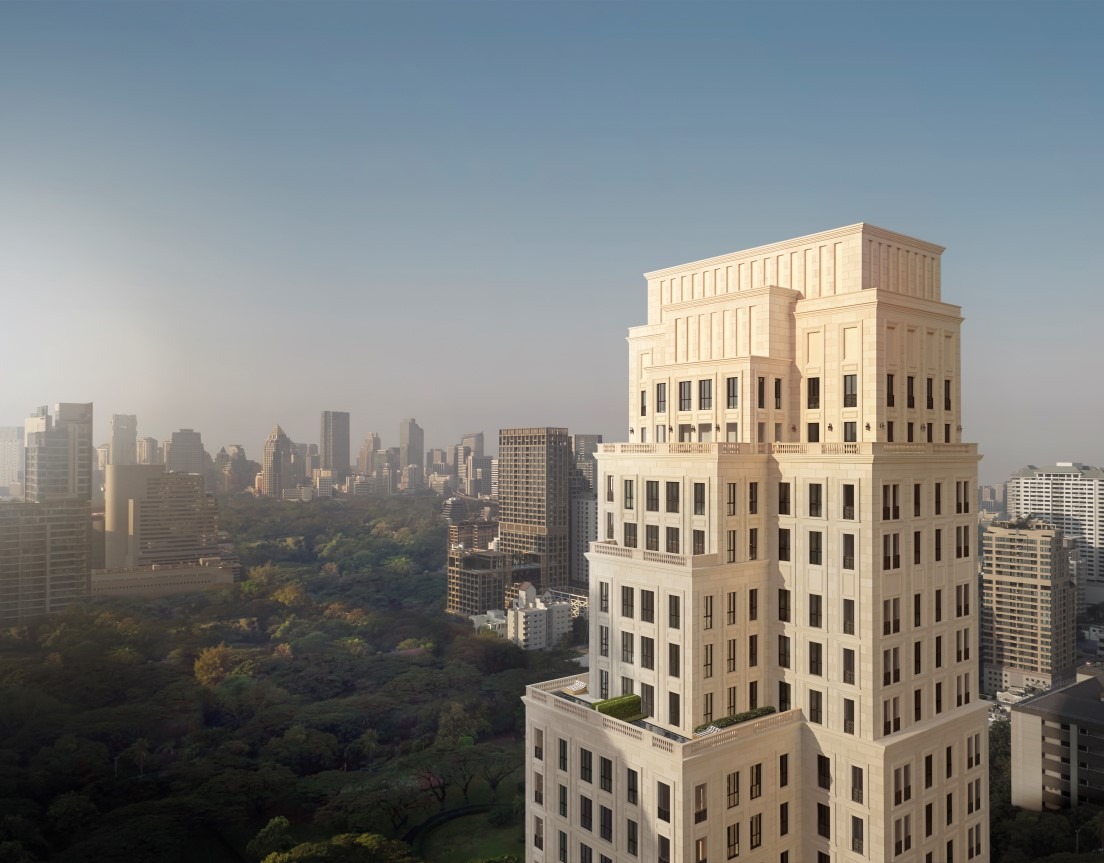
LISTED PROPERTY firm Sansiri Plc has set aside an investment budget of THB 15 billion to buy land for residential projects this year and in 2019, with plans to launch 31 new properties worth THB 63 billion in 2018.
Of the new projects, 12 will be condominiums worth THB 33.5 billion, eight will be single-detached houses worth THB 20.1 billion, while 11 others will be townhouse projects worth THB 9.6 billion.
The company’s investment budget will come from its initial cash flow and the issuance of five-year debenture worth THB 4 billion early this year, with interest rate of 3.35 percent.
It is part of the company’s efforts to drive its presales to THB 45 billion this year or up 16 percent from the year 2017. Last year, the developer recorded total presales of THB 38.6 billion, up 24 percent from the previous year, the company’s chief operating officer Uthai Uthaisangsuk said at press conference yesterday.
In the first nine months of 2017, Sansiri reported a total revenue of THB 23.12 billion and a net profit THB 2.04 billion.
He added that for the current year, the company foresees three significant trends – domestic and global economic recovery; changes in consumer behaviour and a new way of living; and technology disruption that represents new opportunities for many businesses.
The company believes that the adaptive ability along with this technology disruption will be winning weapon in becoming the trendsetter of each industry. All these factors contribute to a positive outlook of the property market expansion and spur consumers’ purchasing power. This year, the company will, therefore, focus on offering a wide range of property projects with various impressive services that best address different needs of all customer groups and expanding the customer base in Bangkok, provinces and foreign countries.Another important direction for this year is to continue and strengthen partnership with existing and new local and international companies, said Uthai.
Given the market trends, the company targets presales from overseas customers to reach THB 13 billion, a rise of 40 percent from its overseas presales of THB 9.3 billion last year.
It will focus on Asia markets this year, including Hong Kong, South Korea, Taiwan, and Japan, he said.
Meanwhile, the company plans to launch between four to six projects worth between THB 12 billion and THB 19 billion in partnerships with BTS Group Holdings Plc and Tokyu Group.
The company also plans to launch the first Standard Residence and Monocle Residence in Thailand this year, following its investment in The Standard and Monocle last year, Uthai said.
Meanwhile, Sansiri will launch JustCoco-working space in four locations, with the first two at AIA Sathorn in May and another at All Seasons Place in August.
It will offer Sansiri’s customers the privilege of using the services.
Hostmaker will also start its property management services for Sansiri customers which will strengthen Sansiri’s competitive advantage in overseas markets, he said.
by kevinyeo | Jan 30, 2018 | Bangkok Property Market Updates, Investment Analysis
IN THE PAST DECADE, Thai properties marketed overseas were either projects in prime downtown Bangkok or properties in top resort destinations such as Phuket.
Nowadays, visitors and investors are becoming more familiar with other non-prime locations in Bangkok through information from social media and digital communications.
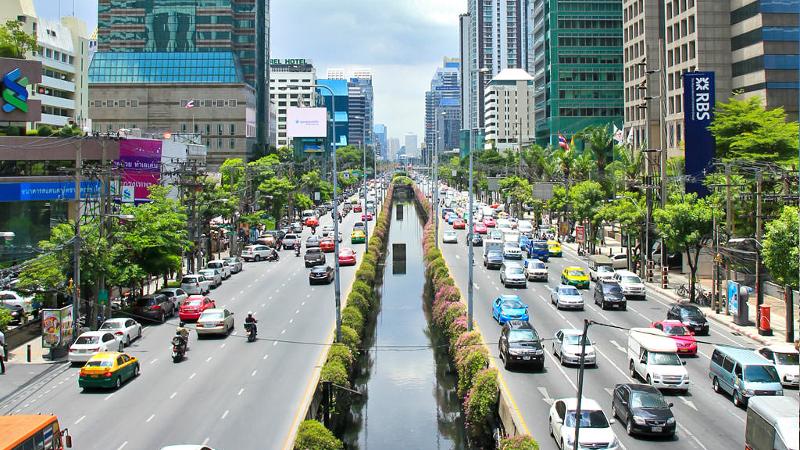
New condominium property prices in downtown Bangkok have increased to an average of over THB 260,000 per square metre, with starting prices of over THB 10 million. The high Central Business District (CBD) prices combined with marketing efforts of non-prime locations by Thai developers, over the last two years, has increased awareness and interest from overseas investors in non-CBD Bangkok locations who are keen to invest in the fringe of the downtown areas or in midtown locations, especially along the extended mass transit lines where prices are more affordable than downtown areas.
The popular prices for these locations range between THB 3 to 10 million per unit.
Even though Chinese buyers are one of the fastest-growing groups of overseas buyers for real estate, CBRE believes that Hong Kong investors remain the most active in Thai property market. Chinese buyers have been constrained by increasingly strict capital controls and Chinese government policies aimed at restricting purchases of overseas property by their nationals.
A new Chinese regulation requires that banks report any transfer over USD 29,000 and prohibits people from “lending” their quotas to other individuals, making it more challenging for a person to transfer money over their allowed annual quota. Additionally, the Chinese government has also banned transferring funds overseas for purchasing bonds, “insurance” products, and real estate; which has made it more difficult for mainland Chinese buyers to invest foreign property markets.
CBRE pioneered marketing of Thai properties overseas in the 1990s such as Laguna Phuket and SV City to purchasers in Hong Kong and Singapore. During the 2010s, Hong Kong investors focused on Phuket properties and super luxury and branded properties in Bangkok such as 185 Rajadamri, and Four Seasons Private Residences Bangkok.
In 2015, the mid to lower end condominium market slowed down resulting in Thai developers looking to overseas buyers.
THE LINE Jatujak-Mochit was the first notable non-CBD Bangkok project to be marketed in Hong Kong. More projects have since been |exhibited in Hong Kong during 2015-2017.
According to our counterparts at CBRE Hong Kong, Hong Kong buyers’ investments in the overseas property market totalled USD 6.6 billion in the first half of 2017 alone. Investment locations included the UK and Australia in the early stages, Japan started 2-3 years ago and Thailand in recent years. The total transaction value of Thai properties is expected to reach HKD 3 billion (approximately THB 12.3 billion) in 2018.
Records indicate that approximately 85 projects by 35 developers from Thailand were marketed to Hong Kong buyers last year. Ananda Development and Sansiri were among the most active in marketing to Hong Kong and most major condominium developers were active in marketing at least 2-4 projects.
The influx of foreign developments, especially off-plan, into Hong Kong, has been so significant that the Hong Kong Estate Agents Authority will issue new regulations set to take effect in April of 2018 to govern agents selling properties located outside of Hong Kong to regulate agents and protect buyers.
This year, developers are bullish about the prospects for the real estate industry in Thailand and are planning many new launches as well and new phases in current projects.
This increase in supply will mean that developers will be targeting foreign purchasers for projects in good locations with high yield potential. CBRE expects Hong Kong to remain a strong investment buyer market for Thai properties in 2018 for both the luxury and mid-market segments.
Note: By Aliwassa Pathnadabutr, Managing Director of CBRE Thailand
by kevinyeo | Jan 30, 2018 | Bangkok Property Market Updates, Expat Living & Relocation, Investment Analysis
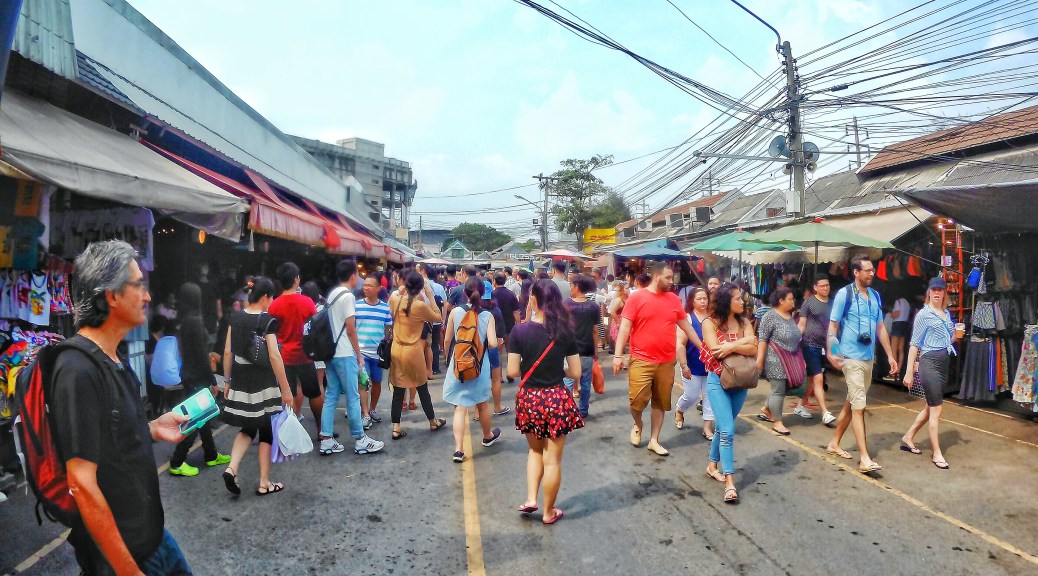
Tourists heading to one of Bangkok’s most popular shopping destinations, the Chatuchak market, could do away with cash payments by June, as part of several upgrades that will be made available later this year.
The Bangkok Post on Friday (Jan 26) reported that the State Railway of Thailand (SRT), which manages Chatuchak, aims to begin turning the weekend market into a cashless commercial area by June.
Shoppers will pay for items through using a single card for their purchases or by QR code, said the SRT’s director for land development Siripong Preutthipan.
Occupying an area of nearly 11ha in the city’s north end, Chatuchak is said to be one of the world’s largest weekend markets with more than 1,000 stalls divided into 27 sections selling everything from plants to antiques, clothes, books, food, home products and pets.
Thousands of shoppers head to the market every Saturday and Sunday and the market is a main draw for tourists to the city.
The SRT will spend more than 100 million baht (SGD 4.2 million) on developing the market this year, Dr Siripong said.
First on the agenda, are automated parking lots which will be available by the end of the year, he said.
Costing around cost around 40 million baht to build, each lot will accommodate 100 cars.
“The systems will comprise automated ticket dispensaries given out to vehicles as they enter,” he was quoted saying by the Bangkok Post. “Bidding for construction will begin mid-year, with the aim of making parking spaces available by year’s end.”
In addition to the two new upgrades, the SRT has also launched the Chatuchak Guide mobile app, a virtual directory that lists the stalls according to their category and ratings, making it easier for shoppers to navigate the market.
In the future, Dr Siripong said the SRT hopes to be able to allow its retailers to export their products abroad.
The market will also have air-conditioned lavatories later this year, with patrons paying 10 baht to use the facilities. The SRT is currently negotiating with private firms for the construction rights for the lavatories.
Presently, the market has eight non-air conditioned lavatories, with patrons being charged 2 baht for their usage. The lavatories will also see a 25-million-baht upgrade, after which patrons will be charged 5 baht for the facilities. The bidding for the project will take place in March.
by kevinyeo | Jan 25, 2018 | Foreign Buyer Guides
The Bangsue station is set to become the central railway terminal for the two high-speed rail, including the northern line (to Chiang Mai) and the Bangkok-Hua Hin Line. Bangsue station will also become the centre of the Bangkok Mass Transit System (BTS).
21st December 2017: The construction of high-speed rail connecting Thailand and China has officially begun. The first phase of the project will connect Bangkok to Nakhon Ratchasima via a 252-Kilometer high-speed railway link. The second phase will then connect to Nakhon Si Thammarat, northeast Thailand and Laos.
It will eventually extend from Laos to China seamlessly forming part of the China-Indochina Peninsula International High-Speed Rail Link.
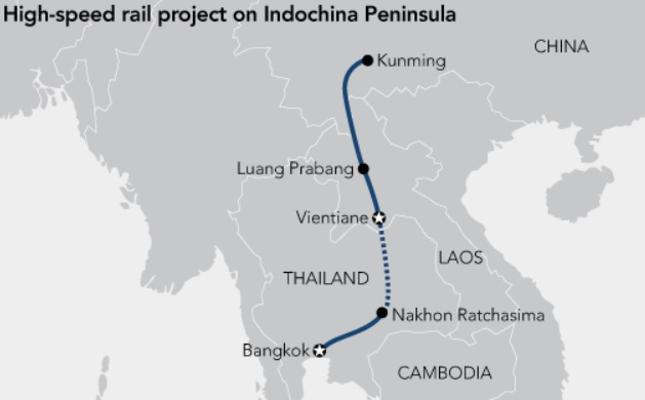
Bangsue Grand Station: Asean’s Transport Hub
In time to come, the entire high-speed rail network of the Pan-Asia Railway will be brought together in Bangkok, making Bangkok the transportation hub in Southeast Asia.
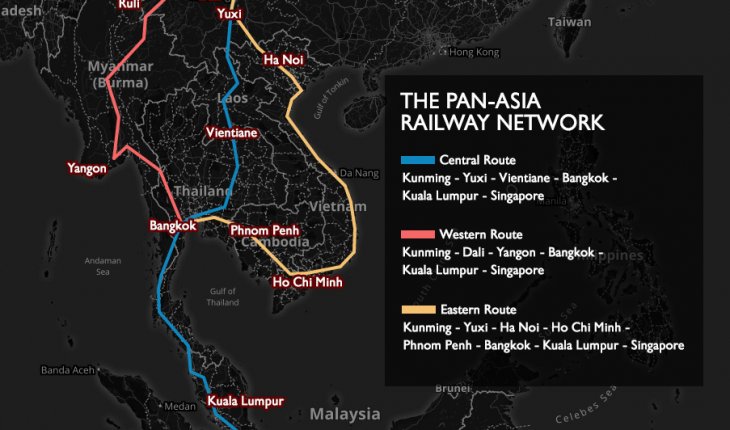
This has the potential to position Thailand as a key trading hub in the heart of South East Asia.
The Ministry Of Transport of Thailand plans to transform Bangsue MRT into a transport hub that will replace the existing Bangkok Station (Hua Lamphong) and all routes will terminate at the new Bangsue Grand Station.
This is propelling Bangsue into the spotlight, with many predicting this neighborhood to experience huge growth as it transforms into a transport and commercial hub for Bangkok and Asean.

Bangsue Grand Station (Artist Impression)
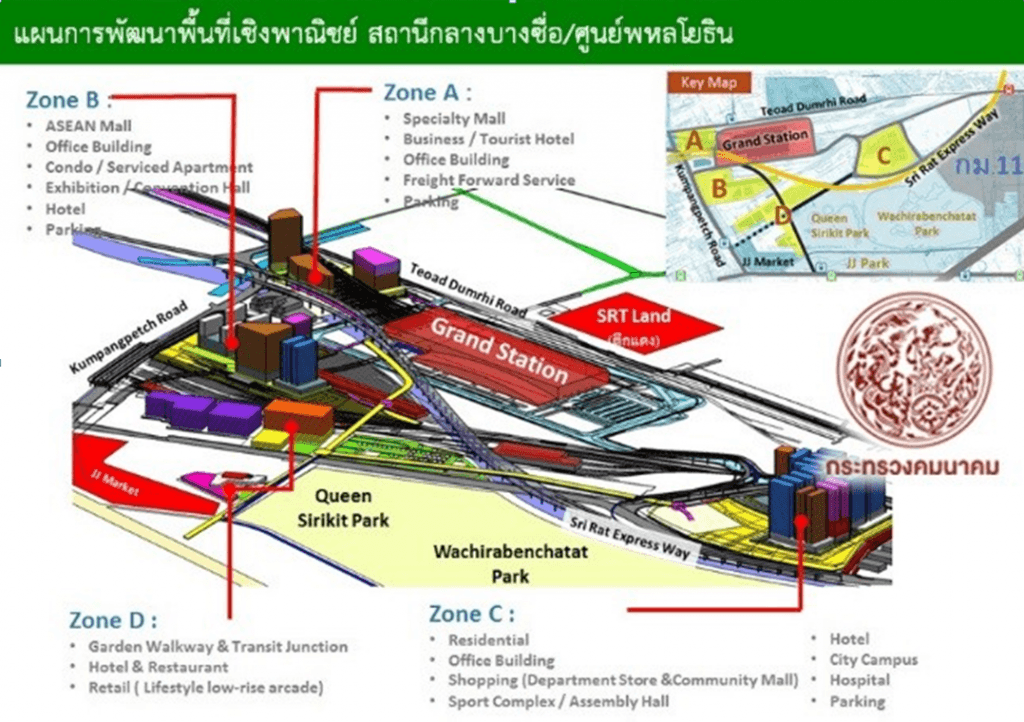
According to a report by The Nation, plans for the construction of Bang Sue Grand Station are well on track. The 218-rai (35 hectares) area surrounding the Grand Station will be developed as an Asean linkage and business hub, comprising three zones.
- In Zone A, roughly 35 rai will be developed as the “Smart Business Complex”, comprising hotels, office buildings, shopping malls and parking.
- Zone B will be developed as the “Asean Commercial and Business Hub”, covering a 78-rai plot within close proximity of Kamphaeng Phet Road, Bang Sue Grand Station, and Kamphaeng Phet MRT station.
- Zone C will be developed as the “Smart Healthy and Vibrant Town”, occupying 105 rai at the Mo Chit 2 Bus Terminal.
- Zone D (World Renowned Garden Interchange Plaza) – On 5 rai, this zone is adjacent to Chatuchak Market. It will become a large interchange zone among the transport modes, boasting retail spaces.
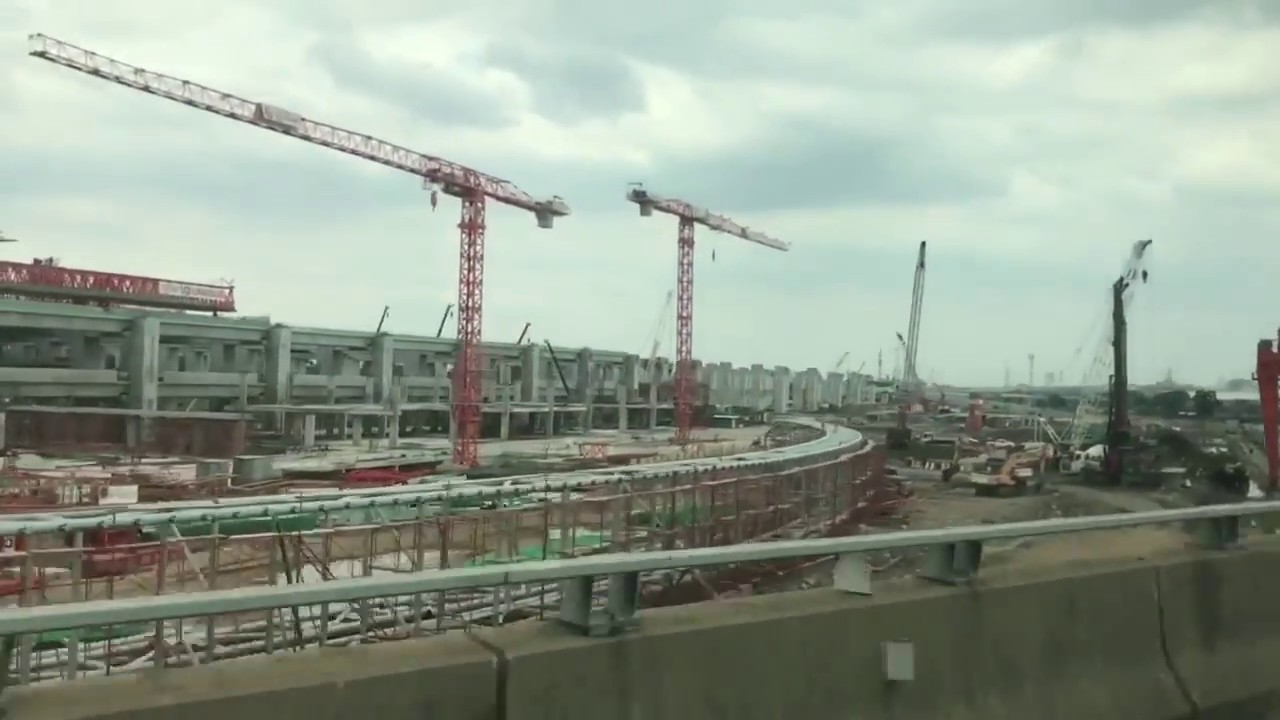
[caption id="attachment_1235" align="alignnone" width="1024"]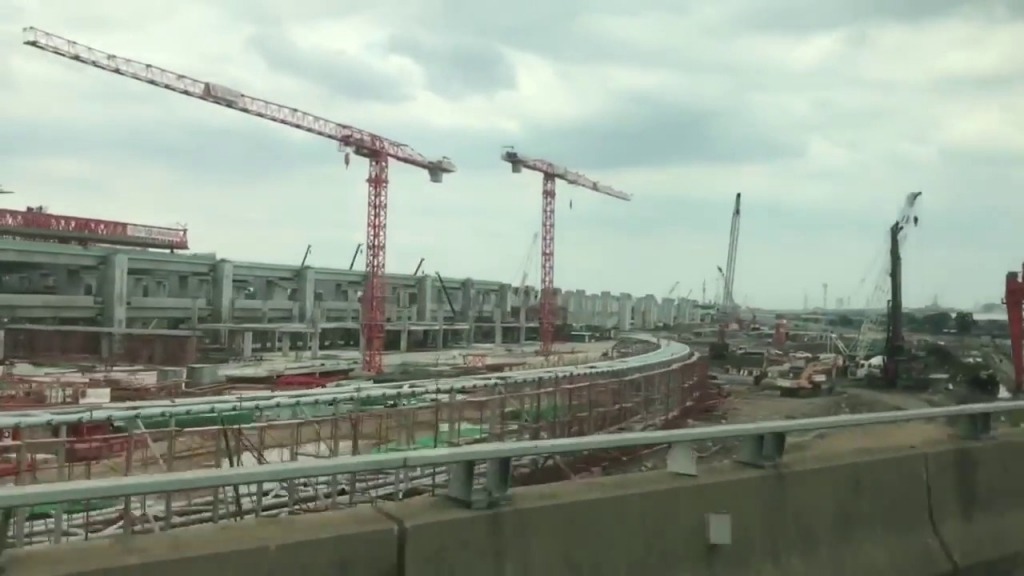 Bangsue Grand Station (under construction)
After the completion of Bangsue Grand Station (estimated to open in 2020), it is expected to attract more than 300,000 people a day. The gathering of crowds will inevitably result in housing demand coupled with rising house prices.
From studies conducted by Knight Frank Thailand’s research department, it was found that many countries, including the United States, Canada, Brazil, France, the Netherlands, Australia, Hong Kong, and Japan, which embarked on Transit Oriented Development (TOD), were successful in raising the values of land and property around their large-scale mass transit stations. In the example of the United States, the value of such land and property increased by 150 percent. The rise in value will, of course, vary from place to place, depending on each locality’s environmental laws, city planning, and level of connectivity provided by the mass transit system. In addition, the national and regional economies at the time of development also play a role in the success.
The existing transport infrastructure in Bang Sue-Mochit is well established.
BTS Mochit Station and MRT Chatuchak Station meet at Mochit. There is Mochit2, a long-distance bus stop nearby. For Bang Sue, the formally completed MRT Purple Line and Blue Extension Line will set up a transfer station at Bang Sue, along with the existing HSR service. Therefore, Bang Sue-Mochit area will also be followed by the construction of underground shopping malls and bus rapid transit system, covering an area of more than 3720000 square meters.
Connected rail transit includes:
- Blue MRT line (in operation)
- Light green Sukhumvit line (in transit)
- Don Mueang Airport Line (under construction)
- Sino-Thai high-speed rail line (under construction)
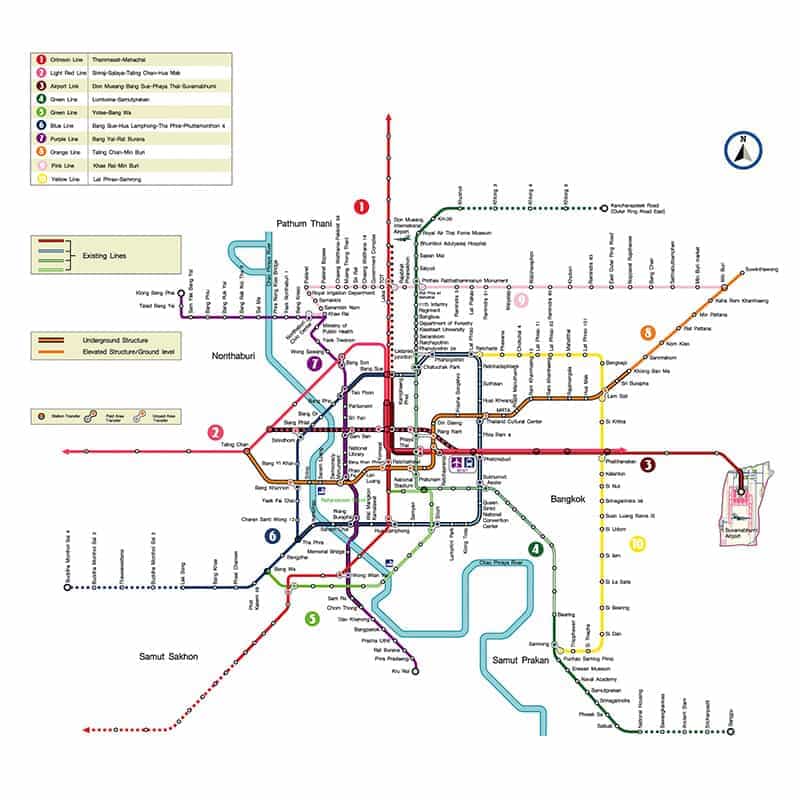
Bangsue is one of the highest densely populated areas in Bangkok. In 2016, the condominium sales rate was 91.6%, which was 10% higher than the average condominium sales rate of the whole of Bangkok.
The sheer grand scale of transformation in this area has already attracted many big scale developers, including condos and commercial projects such as Gateway Bangsue from TCC Land Asset World Co., Ltd.
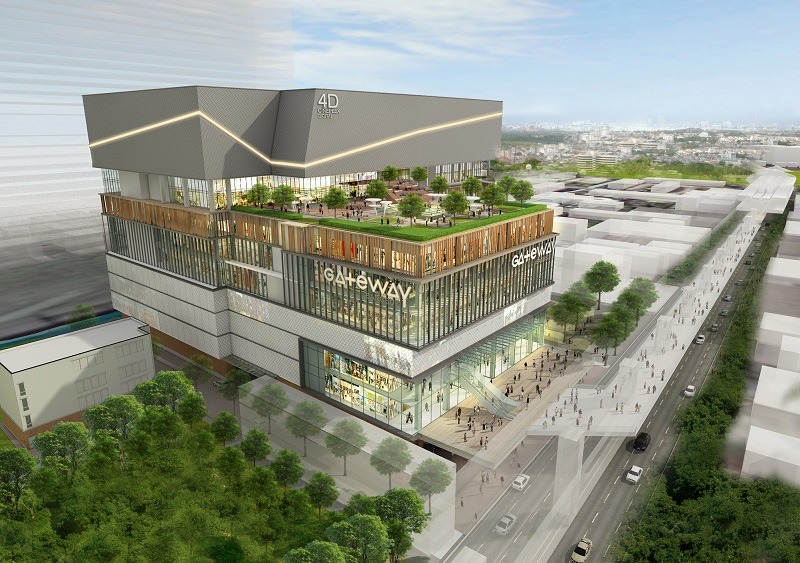
Gateway Bangsue
The latter is situated just 650 meters from Tao Poon Station, with an investment of over 4 billion baht and around 40,000 square meters of retail space. It is slated to open in 2018, and expected to elevate Bangsue – Tao Poon further as an area that’s worth watching from both the property investor and owner standpoints.
New Projects Near Bangsue – Tao Poon
The Line Wongsawang By Sansiri
The Line Phahon – Pradipat By Sansiri
Chewathai Interchange

by kevinyeo | Jan 21, 2018 | Bangkok Property Market Updates
KPN Land has entered into a business partnership with Singapore firm Keppel Land, one of Asia’s leading property companies, to develop luxury condos in Bangkok’s central business district with a project value of more than THB 7 billion.
KPN holds a 51percent stake in a joint venture firm, the KPNKeppel Alliance, with Keppel holding the rest, the company’s chief executive officer Rawee Tahtniyom said.
“Together with Keppel Land, we are committed to developing luxury condominiums situated in the CBD to meet the lifestyle needs of today’s customers. The first project will launch next year and will be worth THB 7 billion,” he said.
Keppel Land’s chief executive officer, Ang Wee Gee, said that Thailand’s increasing urbanization, growing middle class, and infrastructure improvements would support the demand for quality lifestyle projects with strong attributes and value offerings. This is the reason that the company had expanded its investment in Thailand.
