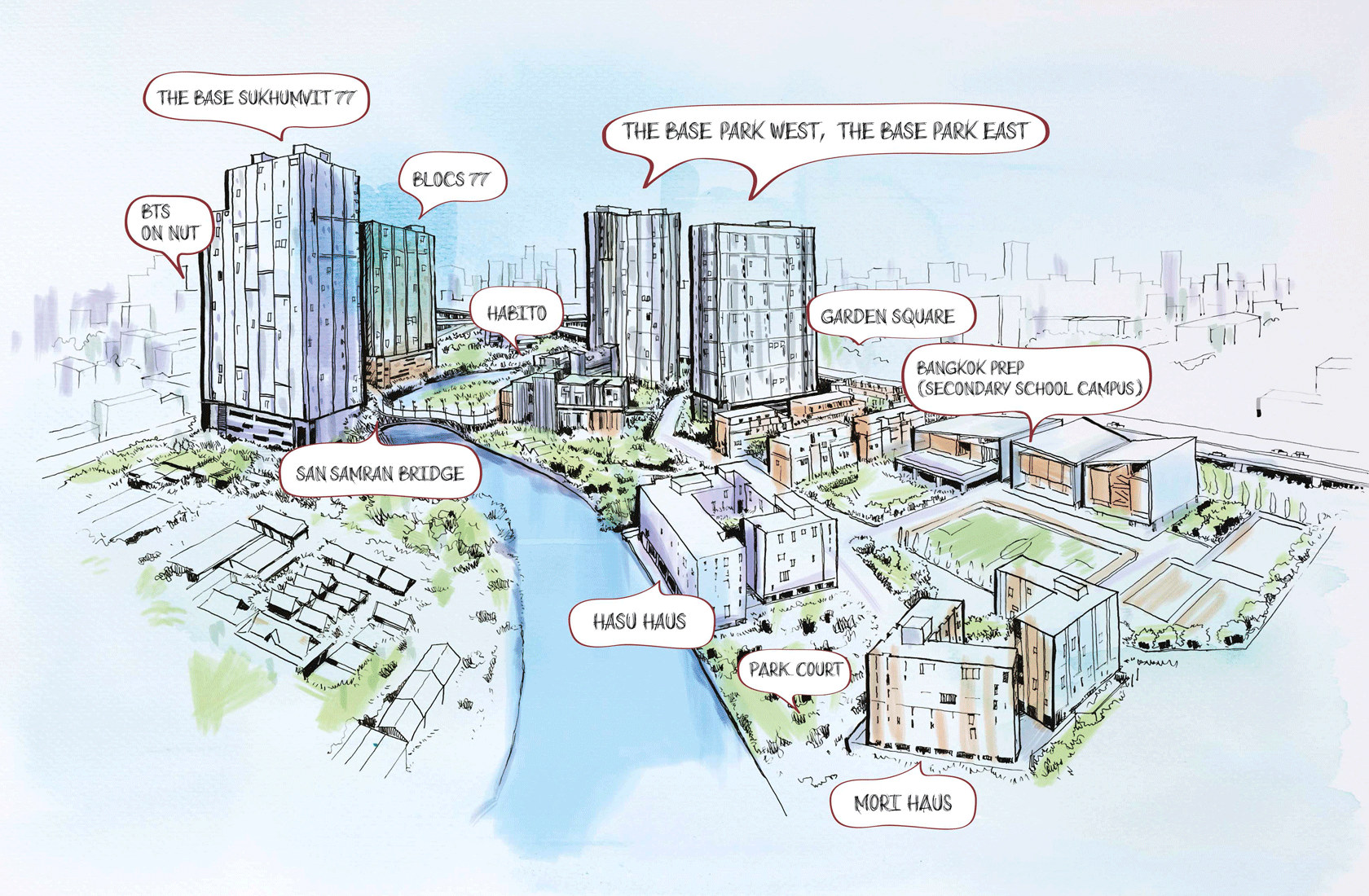
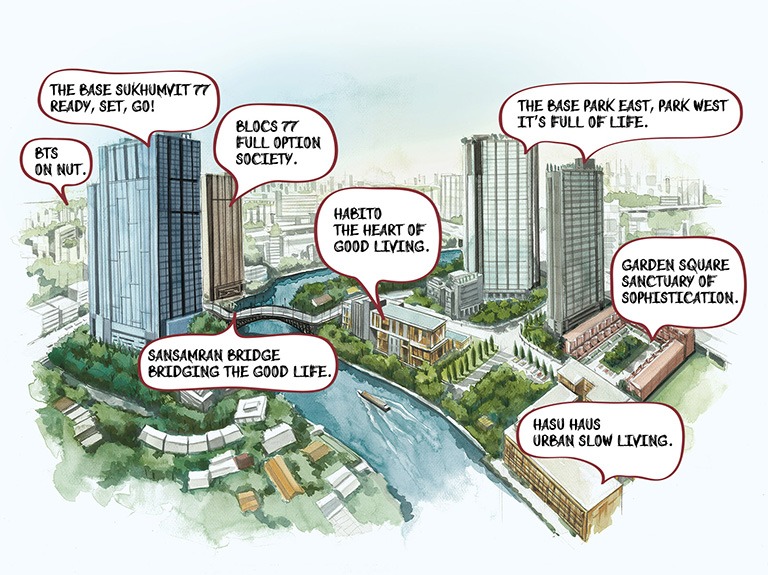
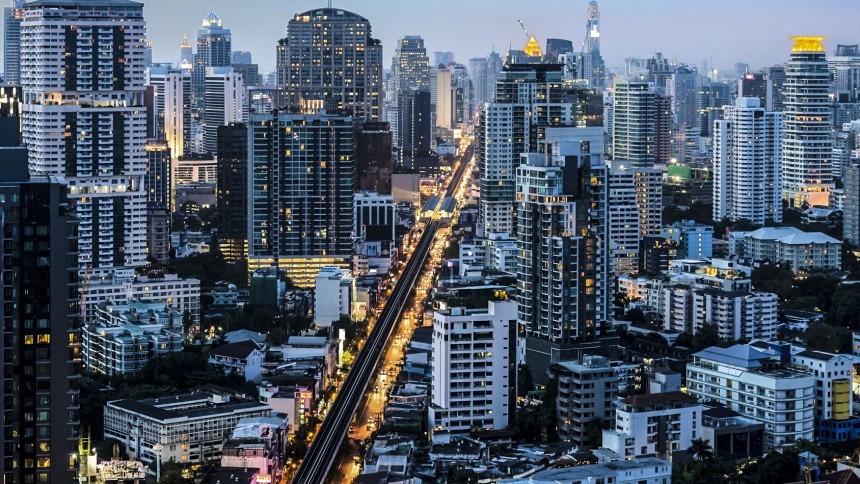
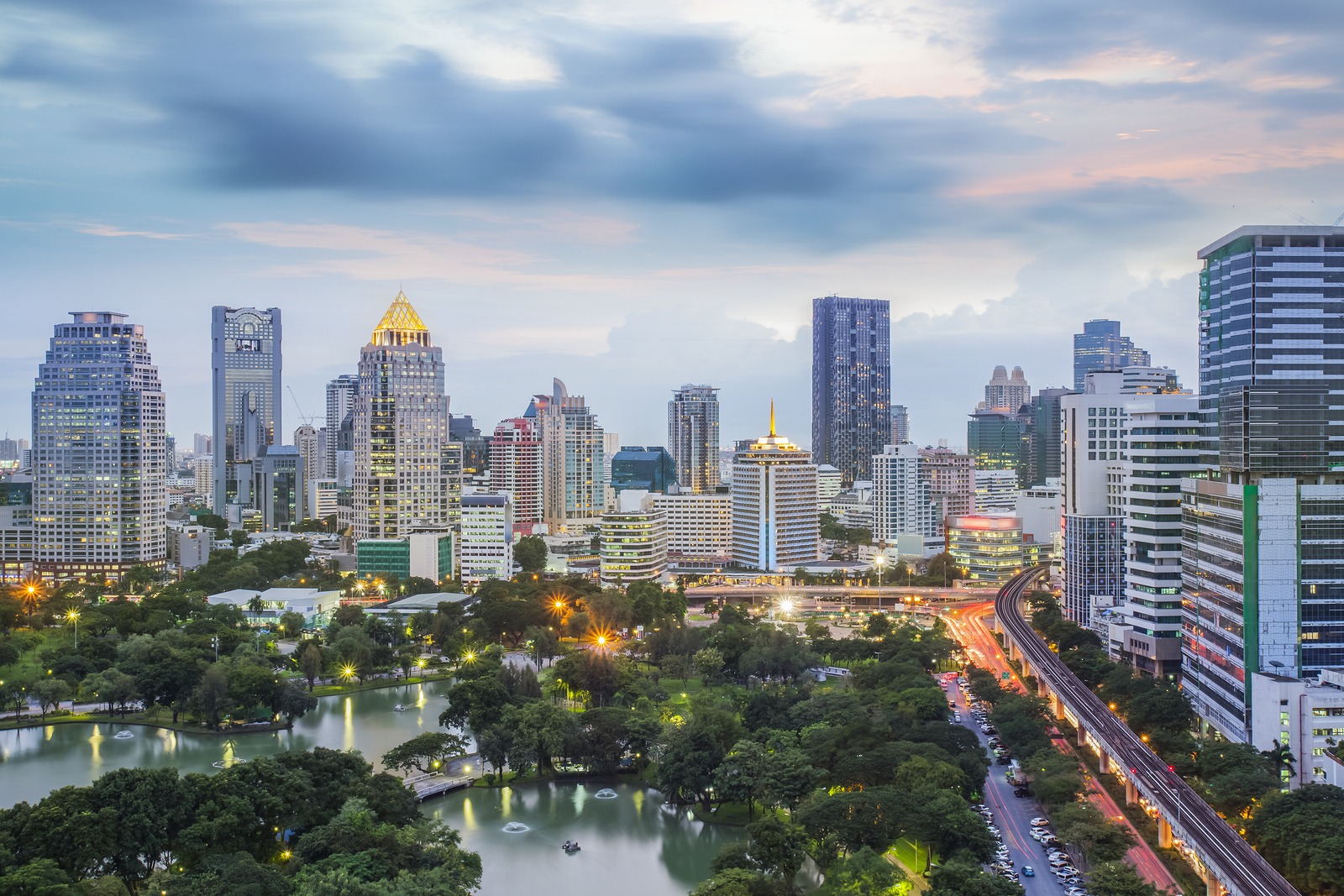
Born of Sansiri’s dream of transforming Sukhumvit 77 into a rich lifestyle hub, the company’s latest megaproject development, T77 Community, delivers in spades.
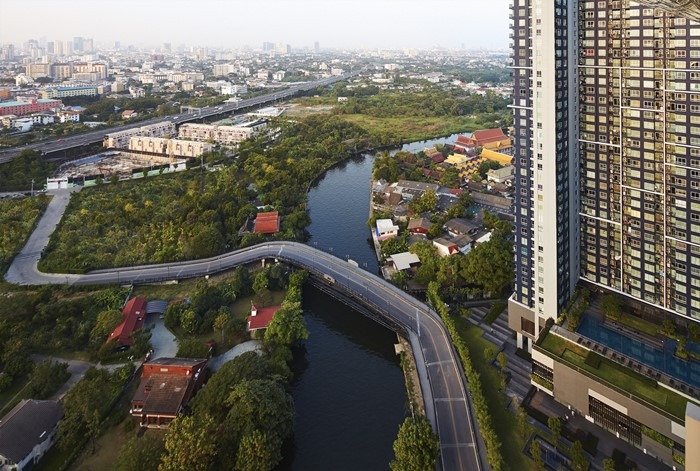
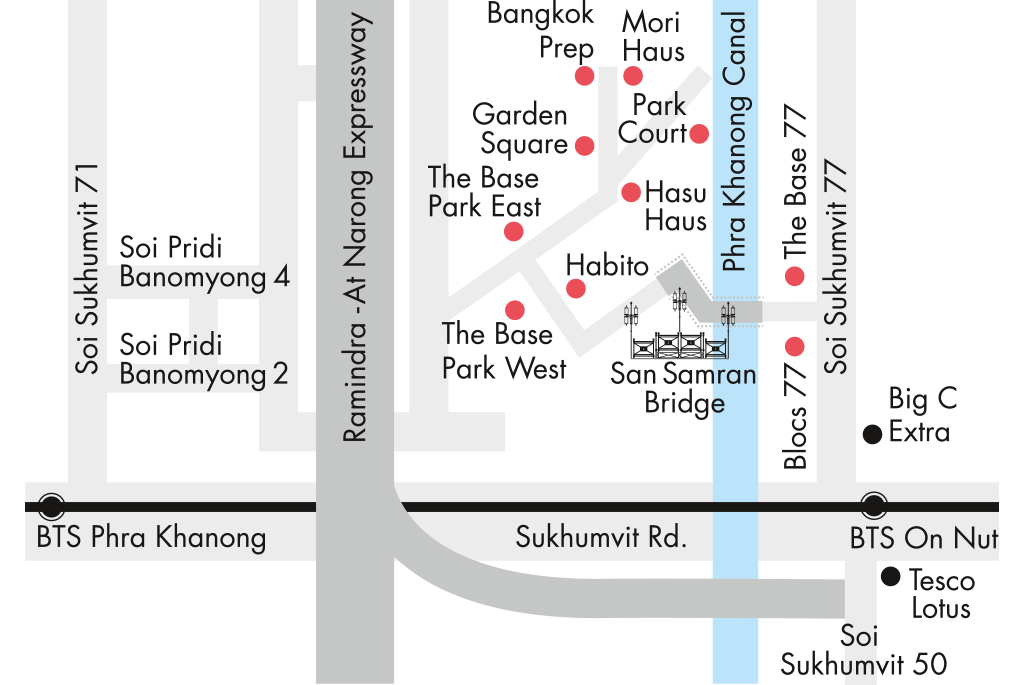
Located on an over-50-rai plot of land in the centre of Sukhumvit 77, the project and its surrounding area provide a complete array of lifestyle activities and residential options.
T77 Community is close to both the BTS station and Ramindra – At Narong Expressway.
The Allure Of T77
When I mentioned T77 to the locals, it seems like everyone knows about this place. And people do speak well of this megaproject. From speaking with the locals who stay in T77, these are some of the good things they have to say about the place.
Easy access to either On Nut or Phra Khanong
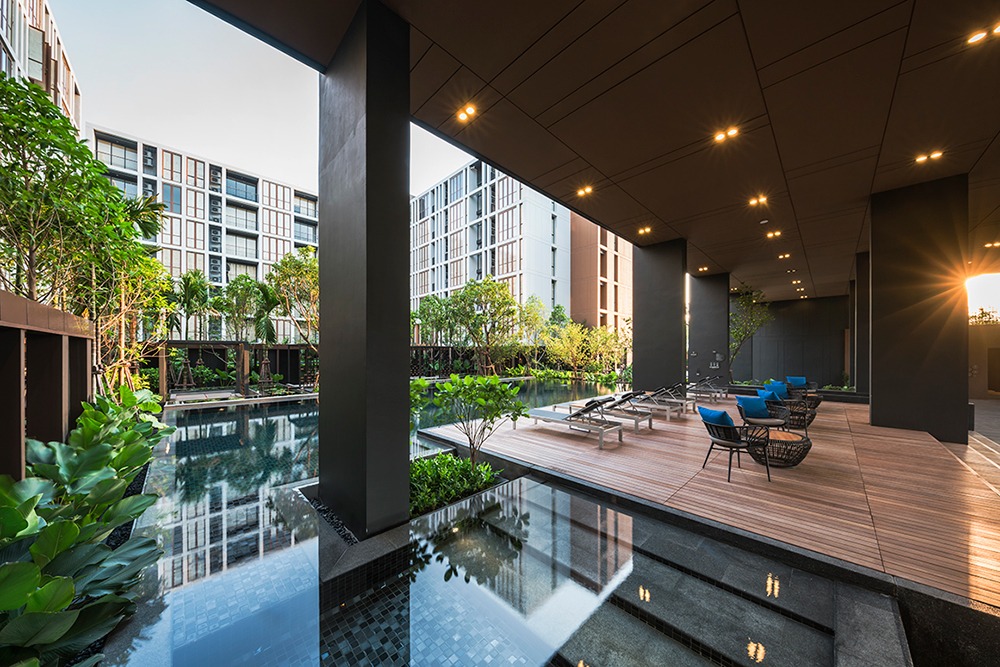
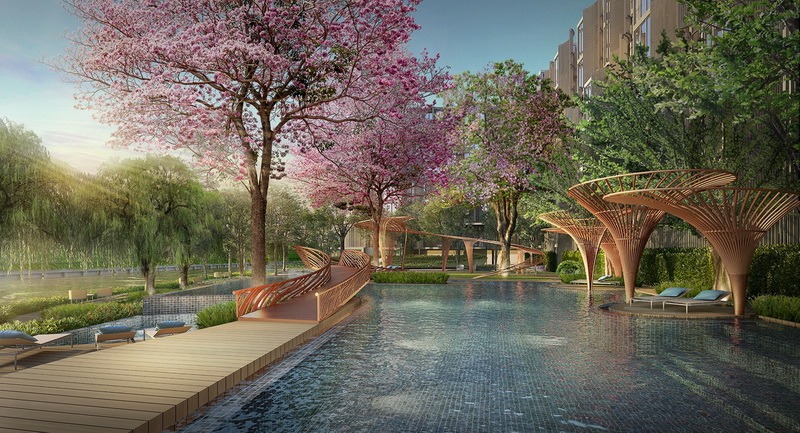
Very lush surroundings with plenty of landscaping
Double security – because one needs to pass the security of the compound and then the individual condo’s security
Big C and On Nut market are just nearby for all basic necessities
There are temples nearby to offer prayers and make merit
Beautiful and serene environment
It does sound like a good place to stay!
Exploring What’s At T77
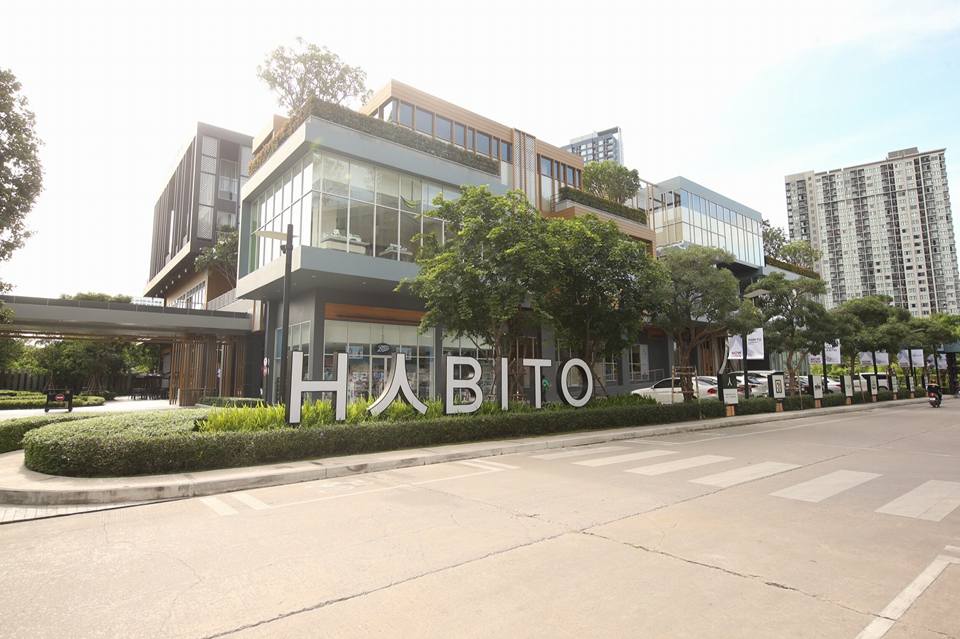
T77 is composed of as many as 5,000 residential units in six Sansiri projects, which anchor this hip mid-town First Japanese residential community with “Habito” Community Mall – Sansiri’s first mall project within the same area.The mall has been carefully and lovingly designed to address all of the lifestyle needs of residents, with a fantastic selection of shops and world-famous restaurants, as well as a modern Co-working Space that is most conducive to productivity and creative endeavors.
The “Habito” Community Mall is an upscale lifestyle mall that caters to the residents living in the T77 town as well the nearby population.
Of particular note, the retail and F&B composition will include coveted Japanese brands to entice the burgeoning Japanese population, estimated to be the largest expatriate community in Thailand with over 150,000 people. As this group of people leads fairly insular lives, their needs will be well looked after under one roof. The extensive array of Japanese- centric goods and services will further serve as a magnet for Japanese living outside the immediate catchment area.
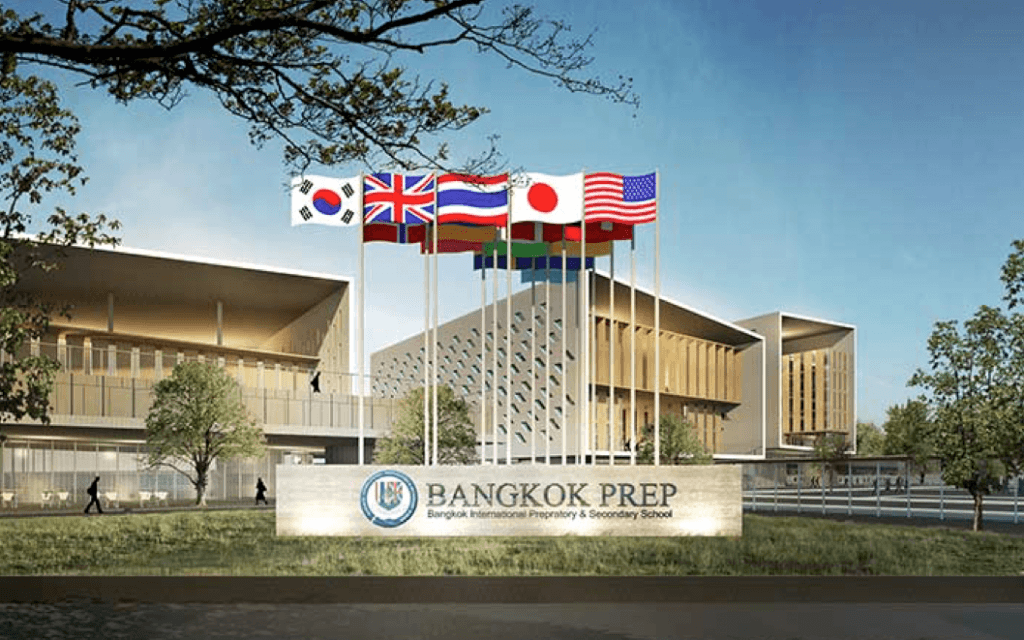
One of Thailand’s best international schools has also made a much-welcomed addition to the neighborhood.
San Samran Bridge
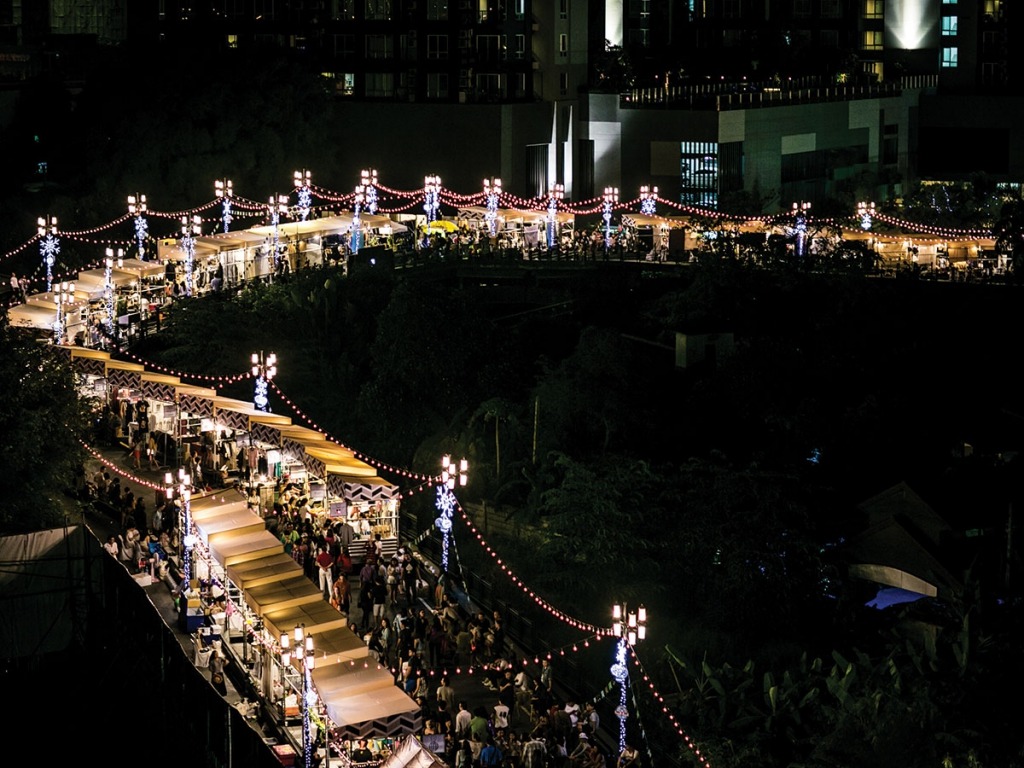
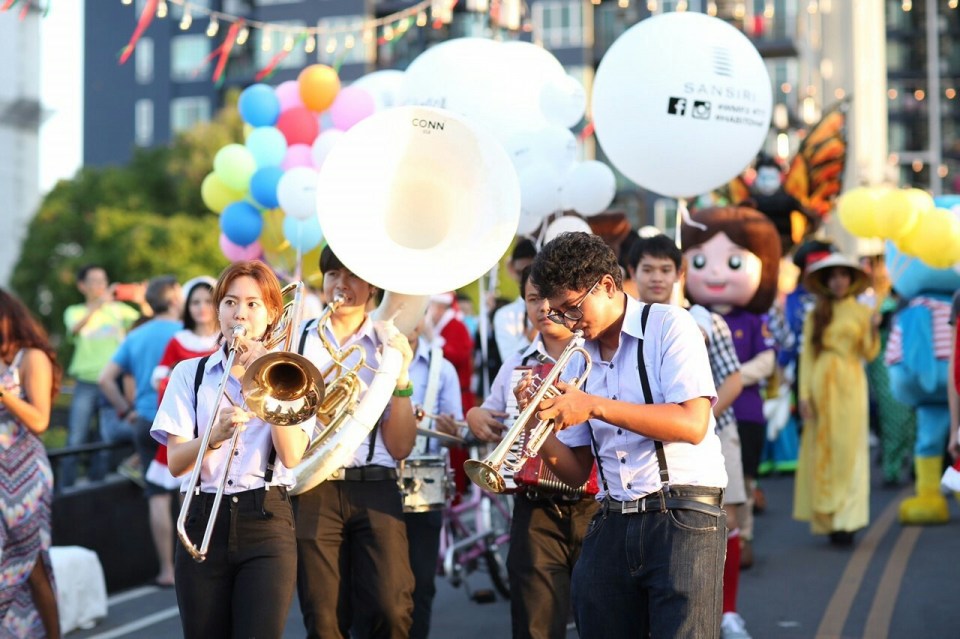
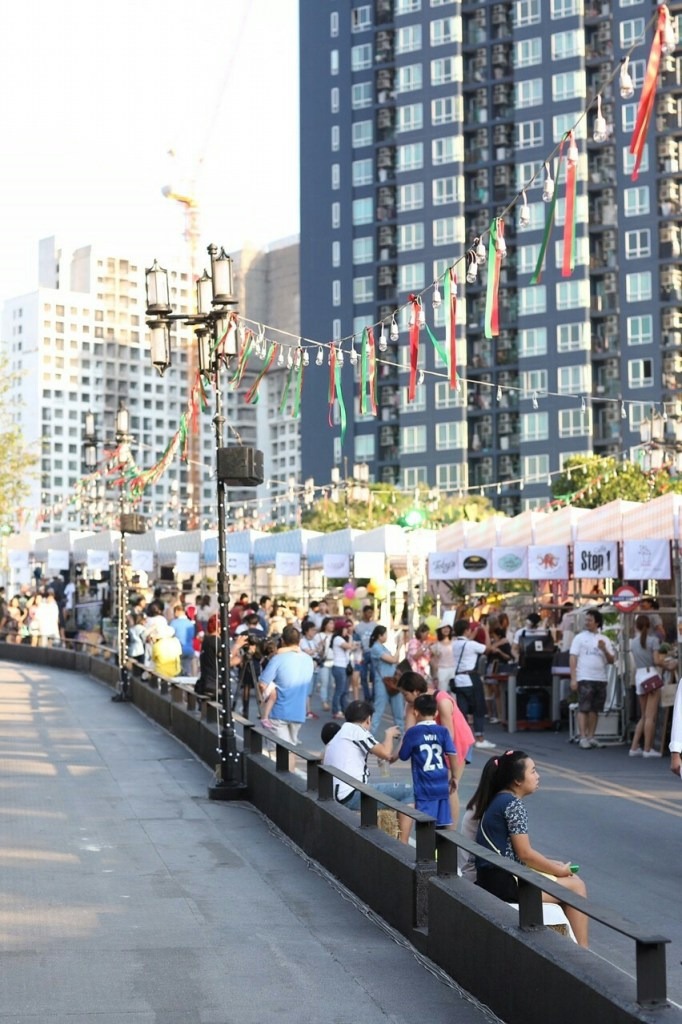
The San Samran Bridge bridges the canal that runs through T77. It is an well-known feature of the town. During festive seasons, events will be held along the bridge.
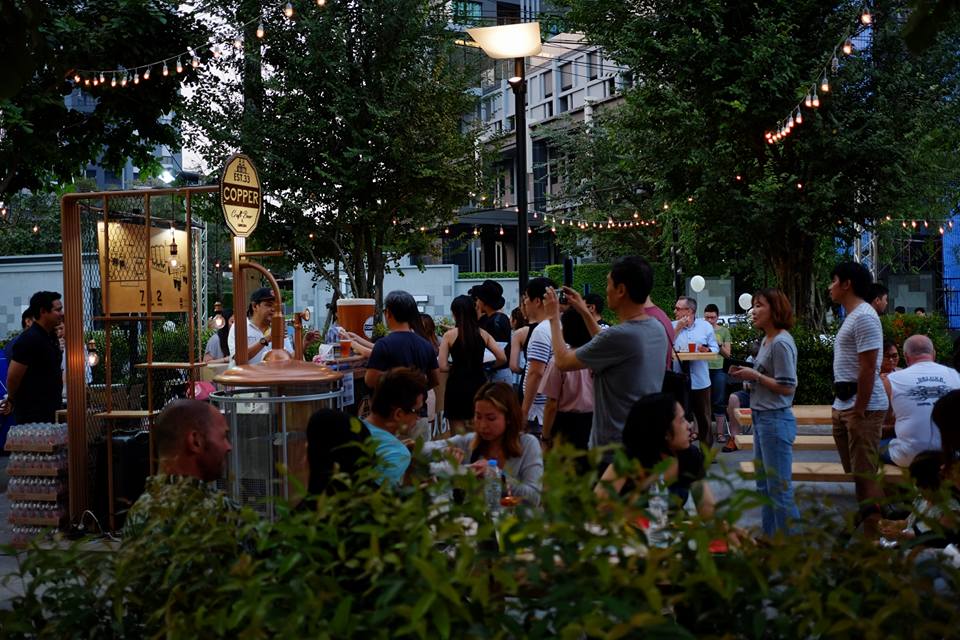
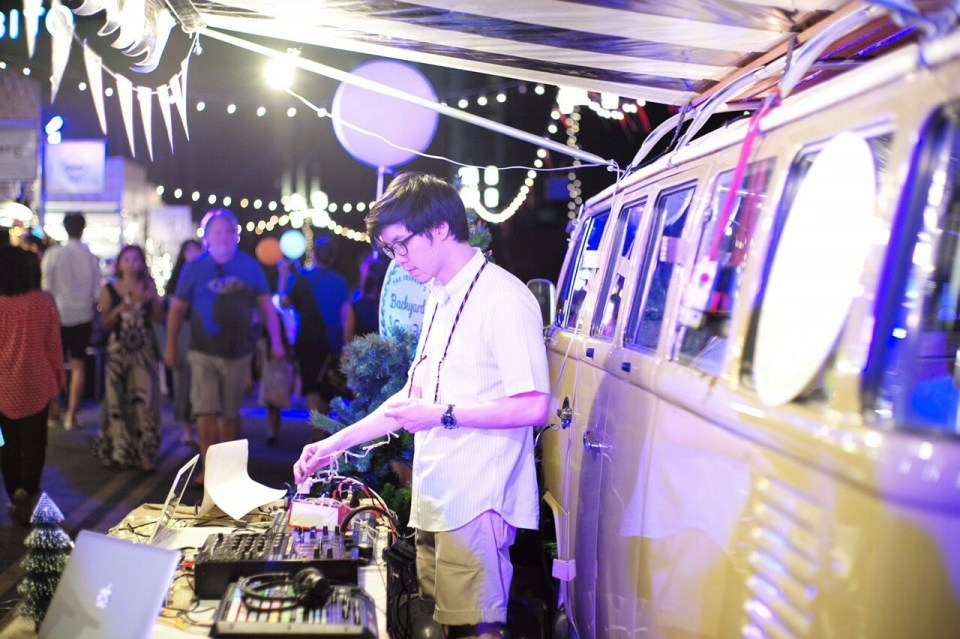
Entering into its 5th year, the winter market festival is a wildly popular event that draws larger and larger crowd as each year goes by.
Good Food and Good Fun. It’s a spectacle not to be missed!
Living In T77
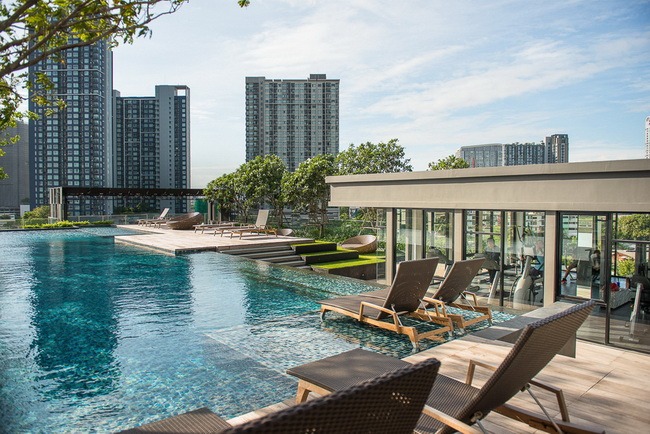
In creating this community, Sansiri has also developed 6 residential projects within T77. These are all very popular with the local Thais. Over in T77 you can find a balance between quality living and not have to pay through your nose for a property in central Bangkok.
mori HAUS
hasu HAUS
THE BASE Park West Sukhumvit 77
Is T77 A Good Investment?
It will be hard to give a straight yes or no. If you have a high investment budget, if you are going for the high-end luxury segment, then you ought to be looking at developments in the core CBD of Bangkok.
I have also met my fair share of investors who no matter what I say, cannot imagine buying something that is not within immediate walking distance to the BTS or MRT.
If you belong to the above category then I say this is not for you.
Often, the biggest challenge for a developing country in South-East Asia is town planning. You may own the shiniest building in the neighborhood but if your surrounding is not well taken care of, it will certainly have an adverse effect on your property value.
That is also the reason why from my years dealing with international property, properties in the township tend to have good genuine demand. Rentability is high.
T77 is a town within a town. As someone staying inside, your immediate surroundings are planned for and taken care of by Sansiri. T77 is a private and peaceful enclave to come home to. You will love it as a holiday home and so will your prospective tenants.
The location is accessible both on Nut and Prakanong, surrounded by rich and varied food sources, both cheap and expensive.
And if you have the chance to visit T77, you will already find an increasing number of expatriates both Westerners and Japanese choosing to stay in this place.
For someone looking for a property with high genuine demand and not having an excessive budget, this is probably 1 of your best option in the vicinity.
BANGKOK — Ms Kobkarn Wattanavrangkul, Thailand’s tourism and sports minister is on an economic mission – to draw high-net worth individuals to the country not only to holiday, but also to live, invest and for retirement.
The drive is underscored by the Authority of Tourism’s series of large-scale international events to boost the tourist dollar and its special visa scheme to allow foreigners to stay in the country for up to 20 years.
“Many foreigners already bought condominium units in Thailand. Bangkok is a popular location among them, and I have heard that foreign buyers are spreading to other provinces such as Chiang Mai, Phuket and Pattaya area,” Ms Kobkarn said.
To capture more wealthy global citizens to live in Thailand, she said the country had made an aggressive push on extending its visa schemes, including allowing foreigners to live in the country for up to 20 years.
Since 2003, 4,800 special visas have been issued under its exclusive residence visa programme, Thailand Elite, which gives foreigners the right to live in the country for five to 20 years with a one-off fee of 500,000 Thai baht (SGD 20,670) to 2.14 million Thai baht. Out of the 4,800 “elite” visas, 1,200 were signed up this year.
The fee covers a concierge programme entitling members to VIP access to government agencies dealing with immigration, driving licences and work permits. Visa holders are also entitled to 24 golf and spa sessions a year and one annual health check at a local private hospital.
The increase in “elite” visas issued has coincided with rising tourist arrivals and spending in the country.
“We aim to draw 34 million tourist arrivals in 2017,” said Ms Kobkarn, who is the former chairperson of Toshiba Thailand.
In 2016, the number of tourist arrivals was 32.52 million, of which 8.7 million, or around 27 per cent, were from mainland China, which has become Thailand’s largest source of international tourists, according to the tourism authority. For the first eight months this year, there were 552,190 visitors from Hong Kong, which is the fourth largest market, up 4 per cent from the same period in 2016.
While foreign investors have traditionally focused on investing in condominiums in the Thai property market, Ms Kobkarn said the scope should be expanded.
“It is time to look at investment in Thailand again. We are aiming to lure more investment in high-tech and high-end industries,” she observed.
Mr Dominic Volek, managing partner of Henley and Partners, said that about 20 to 30 per cent of the successful applicants for the “elite” visas would buy properties, while the rest would lease flats.
Mr Volek’s firm was awarded the global concession in March to promote the “elite” visa issued by Thailand Privilege Card Company, a wholly-owned subsidiary of the tourism authority.
“The visa scheme attracts both visitors and investors,” he said.
Of the total visas issued since 2003, 22 percent of the visa holders were from mainland China, 17 percent from the UK, 12 percent from the US and the rest from Japan and France, Volek said.
“Most of these visa holders are foreigners who made Thailand their second home for retirement, and (those who are] frequent travelers and pure golfers,” he said. SOUTH CHINA MORNING POST
Economy seen expanding 3.6 percent to 4.6 percent next year
Central banks will need to guard against inflation risks
Thailand’s economy grew faster than economists estimated last quarter and is on track for a strong year in 2018, underpinned by a pick-up in exports and booming tourism.
HIGHLIGHTS OF THE GDP REPORT
Gross domestic product rose 4.3 percent from a year ago, compared with the median estimate of 3.9 percent in a Bloomberg survey of economists
Compared with the previous three months, GDP rose a seasonally adjusted 1 percent in the third quarter, higher than the 0.7 percent median estimate
After years of lagging its neighbors, Thailand’s economy is finally catching up with the economic boom in Southeast Asia, fueled by a global trade recovery and a flood of visitors from China. The end of a yearlong mourning period for King Bhumibol Adulyadej strengthens the outlook for consumer spending into next year, while the government is ramping up spending on infrastructure projects to support growth.
The statistics agency said the economy will probably expand 3.9 percent for the whole of 2017, and 3.6 percent to 4.6 percent next year, supported by export growth of 5 percent.
“Economic growth next year will accelerate from this year,” Porametee Vimolsiri, secretary general of the statistics agency, or National Economic and Social Development Board, told reporters in Bangkok. “We may see 4 percent level, supported by an improving global economy, government investment and a clearer recovery of private investment. We will see improving employment and revenue.”
Prime Minister Prayuth Chan-Ocha has adopted measures to boost growth, including a 1.5 trillion baht (USD 46 billion) infrastructure spending plan, and tax breaks for year-end shopping. Thailand — under military rule since 2014 — is on course for electionsnext year.
“Growth is broadening with exports and tourism still doing the heavy lifting,” said Eugenia Victorino, an economist at Australia & New Zealand Banking Group Ltd. in Singapore. “Our 2017 GDP growth forecast of 3.5 percent now looks light and we will be revising it to reflect the endurance of the export recovery.”
Rate Hike?
Thailand’s growth last quarter was supported by a 4.3 percent jump in manufacturing, a 6.7 percent expansion in hotels and restaurants, and an 8.1 percent increase in the transport and storage industries. Private consumption growth remained muted at 3.1 percent compared with 3 percent expansion in the second quarter, while investment rose 1.2 percent.
The response by financial markets to the data was also subdued, with the benchmark stock index rising 0.2 percent as of 12 p.m. in Bangkok on Monday. Julian Wee, a senior market strategist in Singapore at National Australia Bank Ltd., said the GDP data showed “domestic demand might still be quite tepid” and investment showed “little sign of revival.”
Southeast Asian nations are enjoying a growth resurgence with expansion in Vietnam, the Philippines and Malaysia quickening. At the same time, it’s raising worries about inflation and questions about whether central banks in the region will need to tighten monetary policy soon. The Bank of Thailand has held its benchmark rate near a record low since 2015.
Porametee, who is also a member of the central bank’s Monetary Policy Committee, played down any talk of rate hikes yet.
“Fiscal and monetary policies will remain accommodative to ensure macro conditions are stable,” he said. “There is no need to rush on raising interest rates.”
As land prices continue to soar, developers are scrambling to find plots in the area to meet the demand for premium condominiums.
Despite soaring land prices, Thong Lor, one of Bangkok’s most sought-after residential locations, continues to attract new condominium supply with at least two new projects combined worth over 21 billion baht to be launched next year.
Both will be joint ventures between Thai and Japanese developers.
One of them will be a big project worth 15 billion baht from SET-listed developer Origin Property Plc and Japanese firm Nomura Real Estate Development.
Thongchai Busarapan, chief executive of Proud Residence Co, a subsidiary of Origin Property, says the company will develop the project with unit prices and sizes that the Thong Lor market lacks.
“Units will be at an affordable price, under 10 million baht, as the existing condo supply in the Thong Lor area today is priced higher than 15 million baht,” he says. “Land prices get higher and higher and so do condo prices.”
According to Plus Property, a property consultant subsidiary of SET-listed developer Sansiri Plc, land prices in the Thong Lor area reached 1.5 million baht per square wah, a rise of 50% in five years from 1 million baht per sq wah.
This drove average condo prices from 140,000 in 2012 to 253,000 baht per square meter this year, says Anukul Ratpitaksanti, managing director of Plus Property.
Due to a scarcity of land available for development, properties that started selling in 2016 were developed as high-end projects with an average price of 325,000 baht per sq m, compared with just 125,000 baht per sq m for projects launched in 2013.
For new high-rise condos, prices exploded by 159% within five years while resale prices grew by 80% during the same period, he says.
According to Ananda Development Plc, high-rise condo supply located within one kilometer of Thong Lor BTS station totaled 1,774 units since 2012. Of the amount, 75% have been sold.
Last year the average price was 247,000 baht per sq m and new supply prices average 310,000 baht per sq m, a rise of 12% per year from 147,000 baht and 145,000 baht in 2012, respectively.
Ananda forecasts the average and new condo price this year will be 271,000 baht and 340,000 baht, rising to 298,000 baht and 375,000 baht in 2018, respectively.
“In 2001-2002, condominium supply in the Thong Lor area was mainly one-bedroom units sized 70-80 sq m and priced 5 million baht. Today two- or three-bedroom units are developed and priced higher than 20 million baht,” says Mr Thongchai.
Origin’s project in the Thong Lor area will be located on a six-rai plot on Thong Lor Soi 10, which Origin earlier this month bought from Oishi founder Tan Passakornnatee at an undisclosed price.
Mr Thongchai, who made the land deal, says Mr Tan acquired this plot over 10 years ago at around 200,000 baht per sq wah.
In May 2017, a freehold plot sized 199 sq wah on Sukhumvit Soi 38 opposite Soi Thong Lor was offered at 328.35 million baht or 1.65 million baht per sq wah, but it has not been sold, says property consultant Colliers International Thailand.
Late last year SET-listed developer Singha Estate Plc bought a 2.5-rai land plot on Sukhumvit Road near Sukhumvit Soi 36 from Fragrant Property Co, reportedly at 1.75 million baht per sq wah.
According to property consultant Nexus Property Marketing Co, land prices in the Asok to Thong Lor area rose 19% per year during the past seven years while prices of new condo supply soared 9% annually.
Nexus managing director Nalinrat Chareonsuphong says the highest increase in land prices in this area was seen in upper Soi Thong Lor, rising 22% per year during 2011-17.
This was followed by major sois on Thong Lor Road and Sukhumvit Road from Asok to Thong Lor, with an increase of 20% each per year. Land prices will continue rising with an increase of at least 10% per year over the next two years, Mrs Nalinrat estimated.
Other projects scheduled to be launched in Thong Lor next year are Hyde Heritage Thonglor, worth 6 billion baht, a joint venture between SET-listed developer Property Perfect Plc and its subsidiary Grande Asset Hotels & Property Plc, as well as Japanese firm Sumitomo Forestry.
The project will be located on a 2.5-rai plot on Sukhumvit Road between Thong Lor and Ekamai BTS stations, some 350 m from Thong Lor BTS station, comprising a 45-storey building and a total of 300 units priced around 300,00 baht per sq m.
Aliwassa Pathnadabutr, managing director of property consultant CBRE Thailand, says Thong Lor is the most desirable location for both Thais and foreigners, especially Japanese expatriates.
“The location is a central hub that combines a modern lifestyle and exclusive services that best serve the needs of foreigners compared with other areas in Bangkok,” she says.
Housing prices are rising in the Silom-Sathon area due to higher land value and condominium projects.
This is according to results of a real-estate survey released by property and facility management agency Plus Property.
The most recent price for land in the area was found to be THB 1.45 million per square wa, with condominiums commanding prices of THB 200,000-THB 300,000 per square meter.
The area’s location as a business district, surrounded by the offices of leading companies, famous schools, hospitals and government agencies, has attracted both Thai and foreign buyers. They include homeowners and investors, with the rental market showing a 5 percent annual return on investment and average resale prices increasing 7 percent per year over the past five years.
Anukul Ratpitaksanti, Plus Property managing director, said the survey had identified that the Silom-Sathon area had high potential.
Despite possessing limited land for development, the area is experiencing “interesting growth” in condominiums, with a supply of 6,786 units available in the first half of 2017, Anukul said.
At present, the average price of Silom-Sathon condominiums is quite high due to limited land and continual price increases, contributing to rising capital costs of investments for project development, the company said.
New projects located near main roads or mass transit lines feature prices of 200,000-300,000 per square metre, which continue to attract interest. During the past three years, only five new projects were opened in the area, but they boasted average sales of up to 85 percent during their first six-month opening periods.
The survey found that the rental market continues to attract significant interest due to condominiums in Silom-Sathon generating high returns on investment. A condominium unit priced at THB 6.5 million can be rented for THB 30,000 per month, providing an average 5 percent annual return on investment.
The current average rental rates for Silom-Sathon condominiums located near mass transit lines is THB 700-THB 1,000 per square meter. For property purchased for resale, it was found that during the past five years a one-bedroom unit commands a resale price of about THB 210,000 per square meter, while a two-bedroom unit has a resale price of about THB 200,000 per square meter.
The current land price in the area is THB 1.45 million per square wa, with an appraised price of land located on Sathon Road, especially land near roads or mass transit lines, growing an average of 78 percent from 2008 to the forecasted 2019 period. Land on Silom Road has increased 53 percent during the same time range.
“Although the Silom-Sathon area features convenient transportation, including the BTS and MRT, the number of mass transit users is growing every year, with information from BTS Group Holdings indicating that the number of BTS passengers is growing an average of 3-10 percent per year,” Anukul said.
“People working in this area seek real estate to live near their workplaces, in order to avoid heavily used mass transit systems and rush-hour traffic congestion. The forecasted demand for real estate in this area is expected to increase due to buyers’ desire to avoid tiring commutes and travel costs, as well as the proximity and easy access to nearby lifestyle venues, department stores, and world-class restaurants.”