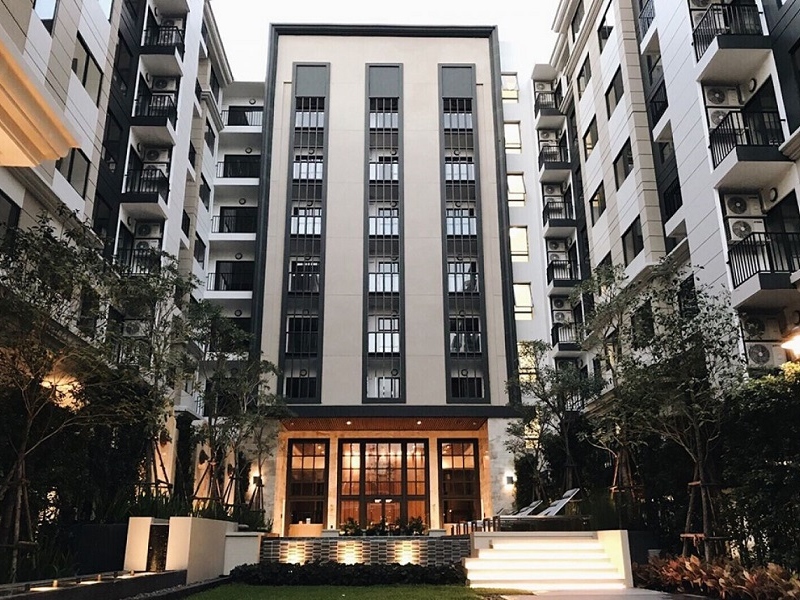
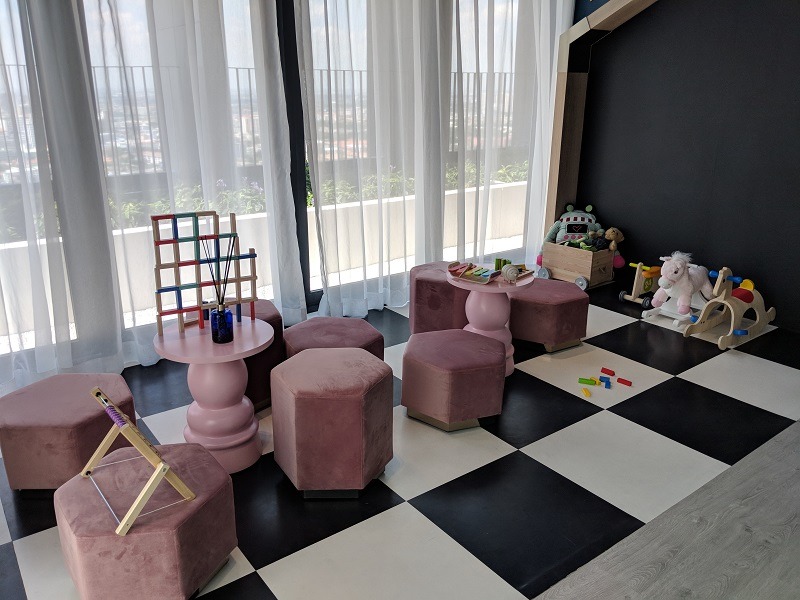
Child-friendly amenities can make Bangkok condo living easier for expat families, but only when they fit real routines. A playroom in a brochure is not the same as a safe, clean, well-managed family environment. Parents should assess how the building works during school mornings, rainy afternoons, deliveries, weekend downtime and visits from grandparents or carers.
Family liveability depends on the building and the surrounding weekday routine.
For foreign buyers, the decision is often emotional and practical at the same time. A building may look sophisticated, but if children have nowhere safe to play, lifts are slow before school, the lobby is difficult for prams, or the route to daily services is awkward, the family may not settle comfortably. A good family condo reduces friction in ordinary weeks.
Start with safety, not decoration
The first check is safety. Look at balcony doors, window locks, pool fencing, lift access, corridor lighting, car-drop areas, fire exits, CCTV coverage and security procedures. Ask how the building manages guests, contractors and delivery riders. If a child can easily reach unsafe areas or wander into vehicle zones, the building may not be as family-friendly as the marketing suggests.
Pool and play areas need particular attention. Check surfaces, shade, cleanliness, staff visibility, depth changes, posted rules and whether older children and toddlers are using the same space. Families should also ask how maintenance issues are reported and how quickly the juristic office responds.
Parents should test how a condo works during school mornings, not only during a quiet viewing.
Layout matters inside the unit
A family-friendly building cannot fix an awkward private unit. Buyers should check whether bedrooms are usable, whether there is space for study, storage, toys, luggage, strollers and household help where relevant. A beautiful two-bedroom unit may still be difficult if the second bedroom is too small, the dining area is squeezed, or there is no practical place for school bags and sports equipment.
Noise separation also matters. Parents working from home may need a quiet area away from children’s activities. Babies and young children may need bedrooms away from traffic noise, lifts or neighbouring entertainment areas. Visit at different times if possible, especially around school pickup, evening traffic and weekend pool hours.
Building amenities to inspect carefully
Children’s playroom condition, cleanliness and age suitability.
Swimming pool safety, shade, seating and supervision expectations.
Garden, lawn or outdoor area usability during hot and rainy months.
Lift capacity during school and office rush hours.
Drop-off, pickup, visitor parking and taxi access.
Storage rules for bicycles, scooters, strollers and sports equipment.
A child-friendly amenity is useful only when it is safe, maintained and easy for families to use regularly.
Neighbourhood support is part of the amenity package
Families should not judge the condo alone. The surrounding area needs to support daily life. Check grocery access, pharmacies, clinics, parks, cafes, after-school activities, safe walking routes, school-bus pickup, taxis and weekend options. A building with a playroom may still be inconvenient if every errand requires a difficult car trip.
Bangkok districts vary widely. Some families prioritise school commutes and international hospitals. Others value parks, mall access, language classes, sports clubs, restaurants or quick airport routes. The right condo is the one that matches the family’s actual week, not a generic idea of luxury.
Questions for the juristic office
Ask whether the building has many family residents, how play areas are managed, whether noise complaints are common, and how move-in or renovation works are controlled. Check whether short-term stays are an issue, because heavy transient use can change the feel of common areas. Ask about pets if relevant, visitor policies, childcare helpers and rules for using amenities with guests.
Good answers do not need to be complicated. They should be clear, consistent and easy for foreign residents to follow. A family building depends on predictable management as much as physical facilities.
Rental and resale angle
For investors, family-friendly amenities can broaden the tenant pool, especially for larger units near schools, hospitals and daily services. But families are selective. They will compare layout, storage, management, noise, safety and commute convenience. A token playroom will not compensate for a poor floor plan or a difficult school route.
For resale, family appeal can help when the building has a real community feel and sensible maintenance. Buyers with children often return to buildings recommended by other families. That word-of-mouth value is difficult to see in a spreadsheet, but easy to understand after living in the building.
Buyer takeaway
A child-friendly Bangkok condo is not defined by one amenity. It is the combination of safe common areas, useful unit layout, predictable management and a neighbourhood that supports family routines. Foreign buyers should inspect the building as parents or landlords will actually use it, not only as viewers on a quiet afternoon.
IBP can help expat families compare Bangkok condos by schools, healthcare, amenities, transport and daily liveability. Browse our Bangkok lifestyle guides or contact IBP Real Estate for a family-focused shortlist.
Foreign families often begin a Bangkok property search with the condominium: number of bedrooms, pool, gym, view and rent. The better starting point is the school-week routine. In Bangkok, a family condo that looks perfect on Saturday can become tiring by Wednesday if the school run, office commute, groceries, activities and healthcare visits all point in different directions.
For families, the best condo address is the one that makes the weekly routine manageable.
Why school commute comes first
Bangkok has a strong international-school ecosystem, but schools are spread across very different parts of the city. NIST, for example, describes its campus as being on Sukhumvit Soi 15 in Asok, with access by taxi, BTS and MRT. International School Bangkok describes its campus as being in Nichada Thani, around 20 kilometres north of downtown Bangkok, accessible by car, school bus or BTS from various parts of the city. Those two examples show why a single “best family district” does not exist. The right condo depends on the school, parents’ work locations and the family’s tolerance for travel.
A short commute is not only about comfort. It affects sleep, homework time, after-school activities, parental work hours and how much the family actually enjoys Bangkok. Buyers relocating from Singapore, Hong Kong, Europe or the Middle East may underestimate how much weather and traffic change daily routines. A 20-minute map estimate can become a very different lived experience during rain or peak school traffic.
Central Sukhumvit family living
Asok, Phrom Phong, Thonglor and Ekkamai are popular because they combine BTS access with supermarkets, clinics, restaurants, serviced apartments and a familiar expat environment. They can work well for families connected to schools in central Bangkok or for parents who need CBD access. The trade-off is price, traffic and sometimes smaller unit sizes. Buyers need to check whether the building is truly family-friendly: larger lifts, practical parking, child-safe common areas, enough storage and a layout that supports home study.
Layout, storage, lifts, parking and nearby services matter more for families than showroom styling.
For families with younger children, walkability to parks and daily services can matter as much as the school route. Benchasiri Park, community malls, medical clinics and supermarkets can make central Sukhumvit feel easy. For older children, BTS independence may become more important. A condo near a station can give teenagers controlled mobility for activities, tutoring and weekend plans, but the building and route must still feel safe and practical.
Northern and suburban school corridors
Some international schools sit outside the central Sukhumvit pattern. Families considering Nichada Thani, Don Mueang, Bang Na, Rama 9, Krungthep Kreetha or other school corridors should be honest about whether they want a central city lifestyle or a more campus-led family lifestyle. A larger home near school can give children more space and a calmer routine. A central condo can give parents shorter access to offices, dining and hospitals. Many families cannot have both without compromise.
This is where rent-before-buy can be valuable. A family that is new to Bangkok may choose a one-year lease before purchasing, especially if children are changing schools or parents are still learning commute patterns. Investors buying for family tenants should also understand this logic. The most rentable family units are often the ones that solve a real school or work route, not simply the units with the most dramatic lobby.
A practical family-condo checklist
Test the school run on a weekday morning before signing, not only on a weekend viewing trip.
Ask whether the school bus serves the building or nearby pickup point, and how early children must leave.
Look for grocery, clinic, pharmacy and activity access within the family’s real weekly routine.
Review noise, balcony safety, pool supervision rules and common-area behaviour.
If buying for rental, confirm whether the unit size matches family tenant budgets in that district.
Healthcare and regional travel
Bangkok’s family appeal is also tied to healthcare and connectivity. Many foreign families value proximity to international hospitals, paediatric clinics and dental care. Regional travel matters too, especially for families with work across Southeast Asia or relatives abroad. A condo that gives manageable access to airports, expressways and hospitals can feel more valuable than a slightly larger unit in a less connected location.
Regional access, school routes and healthcare links all shape Bangkok’s appeal as a family base.
How investors should read family demand
Family tenants tend to care about practical space, school access and building management. They may stay longer than single tenants if the school routine works, but they are less forgiving of poor maintenance, weak air-conditioning, insufficient storage or difficult transport. A two-bedroom or three-bedroom condo near the right school corridor can be attractive, yet only if the rent aligns with competing houses, serviced apartments and older large-format condos.
Foreign buyers should avoid assuming that every international-school district supports premium rent. Some schools draw families who prefer houses, compounds or suburban space. Others support central condos because parents work nearby or children can use BTS. The target tenant must be specific.
A calmer way to choose
For own-use buyers, choose the weekly routine before choosing the view. For investors, choose the tenant profile before choosing the unit. Bangkok is highly liveable for foreign families when the neighbourhood, school and transport pattern fit together. It becomes difficult when the condo is chosen in isolation.