by Daryl Lum | Jan 20, 2025 | Bangkok Property Market Updates, Infrastructure & Urban Development
Entertainment Complex Law: A Game Changer for Investment
The passing of the Entertainment Complex law could turn Khlong Toei in Bangkok and U-Tapao Aviation City into prime investment destinations. This legislative breakthrough sets the stage for creating world-class entertainment hubs, with the government keen to fast-track implementation.
The Cabinet approved the entertainment complex project on January 13, and just days later, former Prime Minister Thaksin Shinawatra announced a clear roadmap for advancing the law. A dedicated committee will be established next year to finalize regulations and bidding procedures for potential investors.
Key Criteria for Investment Locations
The selection process for entertainment complex sites will consider several vital factors. The government has outlined specific requirements:
- A minimum area of 300 rai (48 hectares).
- Robust infrastructure, particularly transportation networks.
- Proximity to major tourist attractions.
- State-owned land to ensure rental revenue for the government.
These standards aim to attract high-value investments and foster economic growth in strategically located areas.
Khlong Toei: A Mixed-Use Marvel in Bangkok
Bangkok Port in Khlong Toei offers an expansive 2,353-rai (376.4-hectare) area, making it an ideal candidate for an entertainment complex. The Port Authority of Thailand (PAT) has already proposed a Smart Port development plan to modernize the area. This ambitious project envisions:
- Residential developments for the Khlong Toei community.
- A free-trade zone under the Bangkok Port Free Zone.
- Shopping malls, convention centres, and duty-free facilities.
PAT Director-General Kriangkrai Chaisirivongsuk acknowledged the area’s potential but emphasized that any entertainment complex project must align with the PAT Act of 1951. This law mandates that the port’s land serves state and public purposes, primarily for logistics and port operations.
U-Tapao Aviation City: A Global Gateway
U-Tapao Aviation City, managed by U-Tapao International Aviation Co. Ltd., is another promising location for an entertainment complex. The area’s master plan includes:
- Shopping malls and luxury hotels.
- Duty-free zones and food courts.
- A Formula 1 race track to draw international visitors.
While current plans exclude a casino, U-Tapao’s potential remains immense. Bangkok Airways President Puttipong Prasarttong-Osoth highlighted that if the government legalizes casinos, U-Tapao would become a magnet for investors. This development would boost leasing opportunities and drive substantial private sector investment.
The Vision for Entertainment Complexes
These entertainment complexes aim to redefine Thailand’s tourism and investment landscape. Proposed facilities include:
- 4-5 star hotels with over 5,000 rooms.
- International conference and exhibition centres.
- State-of-the-art sports arenas and concert halls.
- Amusement parks, shopping centres, and event spaces.
- Casinos, occupying a limited area of the development.
By combining luxury accommodations, entertainment, and infrastructure, the government hopes to attract tourists and investors alike.
Strategic Advantages of Khlong Toei and U-Tapao
Both locations stand out due to their strategic advantages:
- Khlong Toei: Close to Bangkok’s central business district, with existing port infrastructure and connectivity.
- U-Tapao: Near Pattaya, a major tourist hub, and well-connected by air and road networks.
These factors position the two areas as frontrunners in the government’s entertainment complex initiative.
Khlong Toei and U-Tapao Aviation City are poised to become Thailand’s premier investment hubs following the Entertainment Complex law. Their strategic locations, combined with government-backed development plans, make them attractive options for investors seeking high returns.
As these projects unfold, they promise to transform Thailand into a global entertainment and investment powerhouse. Now is the perfect time for stakeholders to seize the opportunities that lie ahead.
by Daryl Lum | Nov 19, 2024 | Bangkok Property Market Updates, Infrastructure & Urban Development
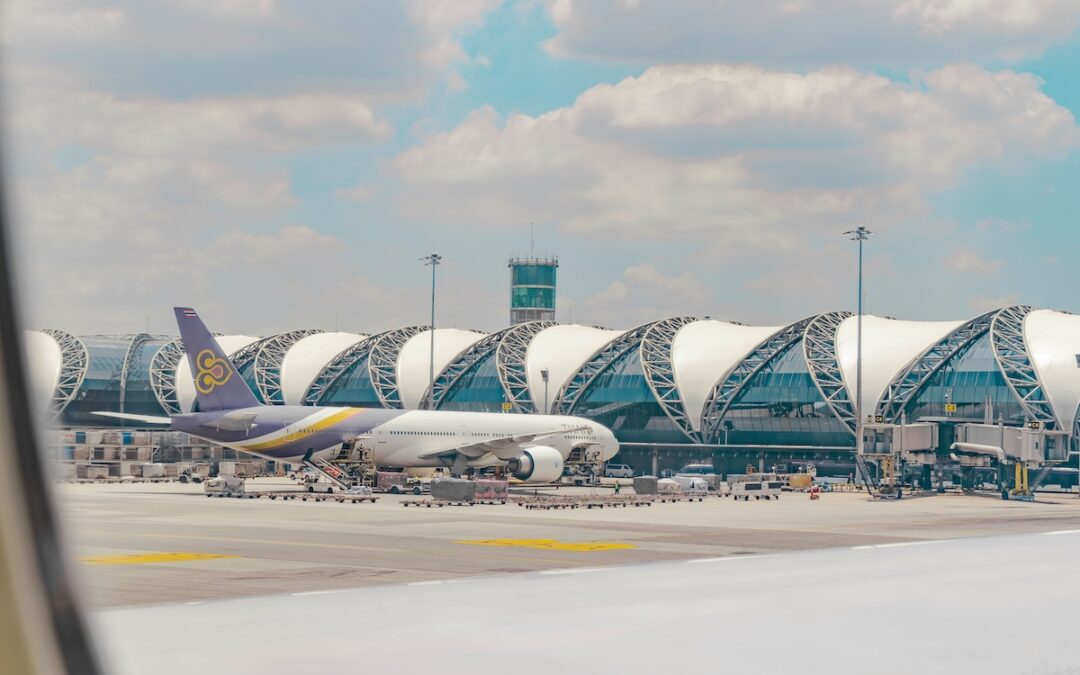
The Midfield Satellite Terminal 1 (SAT-1) at Suvarnabhumi Airport has been honored as one of the World’s Most Beautiful Airports for 2024 by Prix Versailles, according to Transport Minister Suriya Jungrungreangkit.
Prix Versailles, a global architectural competition endorsed by UNESCO since 2015, acknowledged six airport projects across five countries for their exceptional design and influence on travelers’ experiences. Alongside SAT-1, the recognised airports include:
- Zayed International Airport, Abu Dhabi, UAE
- Felipe Ángeles International Airport, Zumpango, Mexico
- Changi Airport Terminal 2, Singapore
- Logan International Airport Terminal, USA
- Kansas City International Airport, USA
The Prix Versailles awards celebrate excellence in contemporary architecture across multiple categories, including airports, campuses, passenger stations, sports venues, museums, retail spaces, hotels, and restaurants. The selection criteria align with principles of “intelligent sustainability,” considering ecological, social, and cultural impacts.
The six airports are now contenders for three global accolades – Prix Versailles, Interior, and Exterior – to be announced at UNESCO headquarters on December 2, Mr. Suriya added.
About SAT-1 Terminal
Opened in September 2023, the SAT-1 terminal spans 251,400 square meters of indoor usable space, with an apron area exceeding 260,000 square meters. Standing four stories tall with two underground levels, the terminal has increased Suvarnabhumi Airport’s annual passenger capacity from 45 million to 60 million.
Incorporating Thai architectural elements, Airports of Thailand (AoT) has adorned the terminal with traditional art from the country’s four regions. Visitors are welcomed by well-known installations, including statues of elephants and mythical creatures such as Kinnaree, Hemaraj, and Hongsa, located on the third floor. Traditional artworks also embellish the immigration area on the second floor, complemented by two Buddha statues positioned on raised platforms at opposite ends of the terminal.
Beyond its aesthetic appeal, SAT-1 prioritizes operational efficiency and environmental sustainability. Its 28 aircraft parking bays, linked by contact gates, enhance passenger convenience, while its automated water-saving toilet systems underscore eco-friendly innovation.
Minister Suriya described the terminal’s architecture as a harmonious blend of functionality, cultural identity, and designs that enrich passenger experiences.
by Willie Tan | Sep 25, 2024 | Bangkok Property Market Updates, Infrastructure & Urban Development
The Samyan Smart City project in central Bangkok is making notable advancements in smart energy development. The Metropolitan Electricity Authority (MEA) recently announced the successful relocation of overhead power and communication cables underground, significantly improving the urban landscape.
This initiative, which began in June 2019 in collaboration with Chulalongkorn University, saw the removal of cables along Chulalongkorn Soi 12 and near the King Rama VI Monument at Lumpini Park. This effort not only enhances the city’s aesthetics but also supports the broader goal of smart energy management in the area.
Key developments include installing a Battery Energy Storage System (BESS) and the creation of a smart grid. The BESS, which works alongside solar and wind power, ensures a consistent electricity supply despite variable weather conditions. The smart grid will enhance electricity production, sales, and consumption management, leveraging consumer behaviour data for better efficiency.
Samyan Smart City spans 1,153 rai, bordered by Banthat Thong, Rama IV, Henri Dunant, and Rama I roads. Overseen by Property Management of Chulalongkorn University (PMCU) and initially funded by the Energy Conservation Fund in 2017, the project also includes rooftop solar panels and a district cooling system developed by BCPG, a subsidiary of Bangchak Corporation.
Additionally, the project promotes smart mobility with battery-operated shuttle buses, providing eco-friendly transportation options for students and residents.
These efforts underscore the commitment to transforming Samyan into a model of sustainable urban living through innovative energy solutions and smart city technologies. The collaboration between MEA and Chulalongkorn University highlights the importance of partnerships in achieving these ambitious goals. As the project progresses, it continues to set a benchmark for smart city initiatives in the region, demonstrating how urban areas can evolve to meet the demands of modern living while prioritising sustainability and efficiency.

by Daryl Lum | Sep 2, 2024 | Bangkok Property Market Updates, Infrastructure & Urban Development
The vision of a continuous train journey from Bangkok to Beijing is closer to becoming a reality, thanks to the recent completion of a critical railway bridge over the Mekong River, connecting Thailand and Laos. This milestone significantly advances cross-border rail transport between the two countries, with only a few kilometers of track left to extend the route into China.
The newly operational Thai-Lao railway allows passengers to travel on a 12-hour journey from Bangkok’s Krung Thep Aphiwat Station to Khamsavath Station, just outside Vientiane, Laos. Khamsavath Station, situated approximately 9.6 kilometers from Vientiane, now serves as the final stop for this cross-border connection.
Final Stretch to China Despite the progress, a gap in the rail network still hinders a direct connection to China. Currently, passengers and cargo arriving in Vientiane must use taxis, vans, or other vehicles to cover the distance between Khamsavath Station and Vientiane Railway Station, which serves as the gateway to China. Officials remain optimistic that the remaining tracks will be completed by 2028, finalizing the direct rail link from Bangkok to Beijing.
Vientiane Railway Station, a modern facility built by China and located 16 kilometers northeast of the Lao capital, serves as the hub for high-speed trains connecting Laos to southern China. These sleek trains, part of China’s Belt and Road Initiative, have been in operation since 2021, linking Laos to major Chinese cities such as Kunming, Beijing, and Shanghai.
Boosting Trade and Tourism The Bangkok-Vientiane rail route is expected to greatly enhance trade between Thailand and Laos while also driving international tourism to Laos. As the once-isolated, single-party nation continues to welcome more foreign visitors, this rail connection is seen as a vital step in fostering greater cross-border exchange.
Ticket prices for the Bangkok-Vientiane journey are affordable, with third-class seats starting at USD 7.80, air-conditioned second-class seats at USD 16, and sleeper options available for USD 22 to USD 25.30.
Previously, trains from Bangkok only reached Nong Khai, with a highway crossing over the Friendship Bridge as the sole route into Laos. The recent extension of the rail line by approximately five miles into Laos, coupled with the construction of the new railway bridge, has now enabled direct rail travel between the two countries.
Collaboration between the State Railway of Thailand (SRT) and the Lao National Railway State Enterprise has ensured smooth operations, from scheduling and station management to ticket sales. As the train crosses the Mekong, Lao drivers take control, ensuring Thai drivers are not exposed to international liability when operating on Lao soil.
Gateway to China and Beyond For travelers seeking to continue their journey beyond Laos, the Chinese-built train service from Vientiane to Boten Station in southern Yunnan province provides a direct route into China. The service passes through key northern Lao cities, including Vang Vieng, Luang Prabang, Muang Xay, and Luang Namtha, before reaching the border. The Vientiane-Boten trains navigate through 75 tunnels, cutting across the rugged terrain and lush landscapes of northern Laos, an area still marked by unexploded ordnance from the Vietnam War.

by Daryl Lum | Aug 21, 2024 | Bangkok Property Market Updates, Infrastructure & Urban Development
The State Railway of Thailand (SRT) has announced that a new train service from Bangkok’s Bang Sue Grand Terminal to Penang, Malaysia, will commence within two to three months.
On August 20, Mr. Ekkarat Sri-arayangpong, Chief of the Office of the Governor of SRT, confirmed this development. It was endorsed by Mr. Awirut Thongnet, Deputy Governor of SRT, during the 42nd KTMB – SRT Joint Conference held in Kota Kinabalu, Sabah, Malaysia, from August 13-16.
The initiative aims to strengthen bilateral rail cooperation, improve passenger travel, and enhance cross-border goods transportation between Thailand and Malaysia. It aligns with the broader policy of Mr. Surapong Piyachot, Deputy Minister of Transport, to stimulate economic growth and boost tourism for both nations.
The conference approved the Bangkok Grand Station – Padang Besar – Butterworth, Penang, route in principle, which is expected to enhance travel connectivity and promote tourism and trade between Thailand and Malaysia.
The agreement also includes extending the MySawasdee tourist train service from Hat Yai Junction in Thailand to Surat Thani Station, following positive feedback and full occupancy rates on all trips.
This extension is anticipated to further stimulate tourism and generate increased revenue for both nations. Further discussions will focus on finalizing operational details and implementation timelines.
A joint working group will be formed to advance the launch of the extended Bangkok-Padang Besar-Butterworth service, expected to commence within the next 2-3 months, with an initial 6-month trial period.
Mr. Ekkarat also highlighted that the meeting explored further freight transport cooperation, with the SRT expressing readiness to support cross-border goods transportation through routes such as Padang Besar – Hat Yai Junction, Hat Yai Junction – Bang Klam/Ban Thung Pho Junction/Kantang, and Padang Besar – Bangkok/Sapli/Na Pradu.
In addition, the success of the ASEAN Express train service connecting Malaysia, Thailand, Laos, and China was recognised, and plans to increase its frequency from once a week to twice a week were discussed.
This collaboration marks a significant expansion in Thailand-Malaysia rail connectivity, promoting seamless travel, trade, and tourism while reinforcing Thailand’s ambition to become a regional hub for tourism and logistics.

by Willie Tan | Aug 14, 2024 | Bangkok Property Market Updates, Infrastructure & Urban Development
Bangkok Shopping Centres Report Strong Recovery in H2 2023, Driven by Foreign Tourism
The Bangkok shopping centre sector has shown a robust recovery in the second half of 2023, largely fueled by an influx of international tourists, according to RETalk Asia. Despite challenges from e-commerce competition and the COVID-19 crisis, shopping centres, including those managed by Central and Robinson groups, now hold about 27% of the market. Hypermarkets account for 28%, while The Mall Group, Siam Piwat, LH Group, Seacon Square, and Future Park hold smaller shares.
Real Estate Careers in Malaysia Surge Amid Market Recovery
Malaysia’s real estate sector is witnessing significant career growth as the market recovers, reports Bernama. AFZ Realty Sdn Bhd Managing Director, Afizan Mohktar, highlighted the rising demand for real estate consultants, who are crucial in sustaining property development and driving industry progress.
Indian Developer Zoya Developments to Invest AED2 Billion in UAE Market
Indian real estate developer Zoya Developments has announced its entry into the UAE market, with plans to invest over AED2 billion in the next three years, as reported by PropertyNews.ae. Their first Dubai project, located in the Furjan area, is set for completion by 2026 and aims to set new benchmarks in residential living with modern design and smart home technology. Zoya Developments, renowned in India for delivering over 100,000 units and developing more than two million square feet of prime real estate, will focus on prime locations in Dubai, including Furjan, Dubai Islands, and JVT.
by Daryl Lum | Jul 30, 2024 | Bangkok Property Market Updates, Infrastructure & Urban Development
The State Railway of Thailand (SRT) is set to launch the first train on the Northeast dual-track route on Sunday, July 28. This route extends from Mab Kabao to Muak Lek stations in Saraburi province, covering a distance of 13.2 kilometers.
This section is part of the larger 42.9-kilometer dual-track route that runs from Mab Kabao to Khlong Khanan Chit station in Nakhon Ratchasima province. Pichet Kunadhamraks, the director-general of the Department of Rail Transport, shared this development.
The inaugural train will pass through the Pha Sadet tunnel, situated between Mab Kabao and Hin Lab station. The dual tunnel is notable for its dimensions: 7.5 meters wide, 7 meters high for each side, and 5.41 kilometers long, making it the longest railway tunnel in Thailand.
Between Hin Lab and Muak Lek stations lies the Hin Lab tunnel. This double-track tunnel is 11 meters wide, 7.3 meters high, and stretches 265 meters long. It further enhances the efficiency and safety of the route.
Pichet highlighted that the Pha Sadet tunnel is fully equipped with essential safety equipment, including ventilation and lighting systems, a supervisory control and data acquisition system, fire extinguishers, CCTV surveillance, emergency telephones, and backup generators. The tunnel also features sensors that detect unauthorised personnel, heat, and levels of oxygen, carbon monoxide, and sulfur dioxide, adhering to the National Fire Protection Association 130 standard for transit and passenger rail.
There are 11 cross passages between the tracks in the Pha Sadet tunnel, located every 500 meters. These passages are designed to facilitate the evacuation of passengers in the event of an accident or other emergencies.
“The two new tunnels will help cut travel time to the northeastern region by rail by about 20 minutes,” Pichet stated. This improvement is a significant step towards enhancing the efficiency of Thailand’s railway network.
The entire route, from Saraburi to Nakhon Ratchasima, terminating at Thanon Chira junction, covers a total distance of 134 kilometers. It is scheduled to be fully operational by 2025, marking a new era in Thai rail transport.
With these advancements, Thailand is poised to offer faster, safer, and more efficient rail travel, benefiting both residents and tourists. The launch this Sunday is just the beginning of an exciting journey towards modernized rail infrastructure in the country.

by Willie Tan | Jul 22, 2024 | Bangkok Property Market Updates, Infrastructure & Urban Development, Legacy Events
The Laos-Thailand cross-border passenger train service has officially commenced, operating between Krung Thep Aphiwat Central Station in Bangkok and Khamsavath Railway Station in Vientiane.
An opening ceremony held in Vientiane on Saturday was attended by Lao Deputy Minister of Public Works and Transport, Saysongkham Manodham, Thai Deputy Minister of Transport, Surapong Piyachote, and representatives from both countries.
The inaugural train departed from Krung Thep Aphiwat Central Station on Friday, arriving at Khamsavath Railway Station on Saturday, completing the 12-hour journey.
During the ceremony, Hinphet Lakhonevong, deputy director of the railway department under the Lao Ministry of Public Works and Transport, stated that the new train service will facilitate travel for citizens of both nations, boost trade, investment, and tourism, and strengthen connectivity between Laos, Thailand, and the Greater Mekong Subregion countries.
Thai Deputy Minister of Transport Surapong Piyachote emphasized that the new service will enhance convenience for the people of Thailand and Laos, fostering greater exchange between the two nations.

by Daryl Lum | Jul 17, 2024 | Bangkok Property Market Updates, Infrastructure & Urban Development
The Immigration Bureau (IB) is implementing measures to ensure that immigration control at airports will take no longer than 45 seconds per person. This initiative supports the government’s expanded visa-free scheme for foreign visitors, which was launched on Monday.
Pol Maj Gen Phanthana Nutchanart, the IB deputy chief, announced on Tuesday that the bureau is prepared to align with the government’s policy. To alleviate long queues at immigration check-in booths during peak hours, the number of immigration officials will be increased.
“Our goal is to ensure that each arriving passenger will clear immigration within 45 seconds,” stated Pol Maj Gen Phanthana. He also mentioned that airports are incorporating biometric technology to enhance security against transnational criminals.
Furthermore, Section 38 of the Immigration Act mandates that house owners, heads of households, landlords, or hotel managers who accommodate foreign visitors must report their presence to immigration authorities within 24 hours of their arrival. This allows immigration authorities to monitor foreigners staying in the country.
The expanded visa-free scheme now allows citizens from 93 countries and territories to enter the kingdom without a visa, up from 57 previously. The details of this expansion were published in the Royal Gazette on Monday, and those arriving under this scheme can stay in the country for up to 60 days.
Prime Minister Srettha Thavisin assured that the immigration police and security authorities have made the necessary arrangements to accommodate this policy. “I believe the scheme will bring long-term benefits,” he remarked.
The Ministry of Interior spearheaded the expansion of the visa-free scheme, which includes extending the list of visa-exempt countries, increasing the number of countries eligible for visas on arrival, introducing the new Destination Thailand Visa (DTV) for remote work and tourism, and extending stay durations for foreign students seeking employment post-graduation.
The DTV permits foreigners to stay in Thailand for up to 180 days at a time for tourism and remote work purposes. This multiple-entry visa is valid for five years. Eligible individuals include remote workers, also known as digital nomads or freelancers, and those participating in activities such as Muay Thai courses, Thai cooking classes, sports training, medical treatment, seminars, and music festivals. Spouses and dependent children of DTV holders are also included.
by Daryl Lum | Jul 9, 2024 | Bangkok Property Market Updates, Infrastructure & Urban Development, New Launches & Project Previews
The State Railway of Thailand (SRT) has announced the commencement of a new international train service connecting Bangkok to Vientiane, Laos, starting July 19. This extension of the existing Bangkok-Nong Khai route will depart from Krung Thep Aphiwat Central Terminal Station at 9:25 PM on July 19, arriving at Vientiane’s Khamsavath station at 9:05 AM the following day.
Upon arrival, passengers can access public transportation options, including vans and taxis, to reach downtown Vientiane, which is approximately 7-9 kilometers away. Notable attractions such as the Patuxai war monument are easily accessible, and travelers can also connect to the high-speed Laos-China railway at Vientiane Railway Station for further travel within Laos or to China.
Ticket prices for a one-way journey from Bangkok to Vientiane are expected to start at around 300 baht for third-class fan seats, with a travel time of approximately 10 hours.
Ekkarat Sriarayanpong, head of the SRT governor’s office, previously disclosed that discussions were held with the Lao National Railways to facilitate the launch of this service and to enhance tourism and logistics between the two nations. The SRT has also provided training to Lao railway officials in areas such as train operations, station management, and ticket sales.
A successful trial run of the service was conducted on May 21, covering stations at Udon Thani, Nong Khai, Thanalaeng, and Vientiane. Ekkarat highlighted the exceptional cooperation between Thailand and Laos in bringing this new service to fruition.

by Daryl Lum | Jun 25, 2024 | Bangkok Property Market Updates, Infrastructure & Urban Development
Thailand is considering Bangkok and Pattaya as potential venues for hosting a Formula 1 race, aiming to enhance sports tourism within the country.
Prime Minister Srettha Thavisin announced on Sunday that U-Tapao Airport, Pattaya, and Bangkok are being evaluated as candidate locations for the prestigious event.
In a post on X following his visits to U-Tapao Airport in Rayong and Jomtien Beach in Pattaya, he examined the feasibility of these sites for Thailand’s first-ever Formula 1 race, contingent on approval from the race organizers.
“As we pursue our Formula 1 ambitions, the U-Tapao Airport Project includes a facility designed for the ‘circuit race’ type, ensuring maximum safety,” he wrote. “Meanwhile, Bangkok and Pattaya are being considered for ‘city race’ types, featuring the allure of the City of Angels and picturesque beachside routes.”
During a visit to Italy in May, the prime minister expressed his hopes for constructing a race track near U-Tapao Airport.
Thailand is in competition with South Korea and Indonesia to secure another Asian venue for Formula 1.
He stated that Thailand is prepared to build the circuit by 2027 or 2028 if selected as the next Asian host.
Singapore currently uses its city streets to host the Singapore Grand Prix.
by Daryl Lum | Jun 17, 2024 | Bangkok Property Market Updates, Infrastructure & Urban Development
The prospect of train travel between Bangkok and Beijing is becoming more tangible as Thailand advances its rail network expansion.
According to the State Railway of Thailand, a trial service between Bangkok and Vientiane, the capital of Laos, is scheduled for July 13-14. Once operational, this new link will enhance transportation between Thailand, Laos, and China, as stated by railway official Ekarat Sriarayanphong.
The inauguration of the Thailand-Laos connection will enable train travel from Bangkok to Beijing, with stops in Vientiane and Kunming, a city in southern China. From Kunming, travelers can board a semi-high-speed train to Beijing.
Covering approximately 3,218 kilometers, the journey will take nearly a full day due to the region’s mountainous terrain. In contrast, a direct flight takes just under five hours.
Currently, a high-speed train between China and Laos facilitates the transport of Thai goods to Kunming, significantly reducing delivery times from two days by truck to 15 hours, as reported by Nikkei.
Thailand aims to strengthen its connectivity with China, its largest trading partner, to stimulate economic growth, which has been lagging behind other regional economies.
From January to November 2023, Thailand’s exports to China reached nearly USD 32 billion (SGD 43 billion), with key exports including fruit and rubber products. Imports from China during the same period were valued at USD 65.3 billion, dominated by electric equipment and machinery.
In addition to trade, the two countries are enhancing tourism ties. Chinese visitors can stay in Thailand visa-free for up to 60 days, while Thai tourists can visit China visa-free for 30 days.
The tourism sector is expected to receive a further boost from a separate, albeit delayed, project to establish a high-speed rail system linking Thailand to China through Laos by 2028.