The rental process in Bangkok can be a wee bit confusing for many as there is no one fixed standard. And it certainly does not help if you have a language barrier or do not understand the local culture in Thailand.
We get 101 questions asked by our clients with regards to renting out their property. So we have decided to answer all these questions once and for all.
To all landlords, this is your complete guide to renting out your condominium and apartment in Bangkok.
To help me work out this guide, I have with me Agnes from TRC Property Co Ltd.
***
Q: Hi Agnes, could you very briefly tell us a little more about TRC Property and what do you do?
TRC Property was founded 4 years ago and we have been providing Condo rental and sales services to landlords, tenants, buyers, and sellers. Being a foreigner who has lived in Bangkok for almost 6 years, I have witnessed how foreigners struggle to manage their investment property in Bangkok. Therefore, we introduced a property management service, two years ago to assist foreign investors in the take-over of their new condos, including defects checking, fittings installation, utilities set up and payment, looking for and managing prospective tenants.
Q: For a property owner who just got his keys to the condominium, what are some of the first things he/she should do or take note of?
I think the first thing to take note of is before you collect your keys, ensure that all the defects are rectified. I will urge buyers not to make the final payment to the developer if the defects of the condominium are not rectified. For one of our clients under our property management service, we have to inspect the unit 5 times over a period of 3 months before the developer was able to rectify all the defects.
Also, ensure that the developer does not move your furniture in without your permission. They are good at hiding things that they do not want you to see.
Q: So you have got your keys to your brand new condo/apartment unit in Bangkok and you are all set to welcome your first tenants. What’s the rental process like?
Upon a successful viewing, the tenant will need to pay a one month deposit with a booking form stating the start of the lease, term of the lease and any requests that the tenant may have.
If the Landlord agrees to the terms stated, the landlord will sign on the booking form and terminate all other prospective viewings of the unit.
Landlord and Tenant will proceed to sign the Tenancy Agreement prior to or on the move in date. In the event that the tenant does not honor the booking, the Landlord is entitled to keep the booking fees. In the instance where Landlord and tenant are unable to agree to the terms of the contract, the booking fee has to be returned to the tenant. Therefore, Landlords are highly encouraged to engage professional agencies and not freelance agents to manage the expectations of tenants, especially inexperienced ones.
Upon the signing of the Tenancy Agreement, the tenant will pay a 2 months deposit (this is the norm for most landlords) to be kept by the landlord till the end of the tenancy. The booking fee paid will then be regarded as the first-month rental.
During the rental, the landlord is still liable to attend to the tenant should there be any problems preventing the tenant from enjoyable living in the unit. At the end of the tenancy, if the unit is returned to the landlord in reasonable condition apart from normal wear and tear, the landlord has to return the deposit of two months to the tenant.
Q: Is there a minor repair clause and can you tell us more about how it works?
This clause is to ensure that the tenant is responsible for minor repairs such as bulb change or maybe fixing of a dripping tap, after the first 30 days warranty given by the Landlord. Usually, a maximum amount will be stated for such repairs. If the price for repairs exceeds the maximum amount, the landlord may need to pay for the repairs, if the damage is due to wear and tear and not negligence on the part of the tenant. The Landlord will have to be consulted in such cases.
Do take note that there are no standard Tenancy Agreements in Bangkok and often times it is arguable who pays for the minor repairs. Therefore it is advisable that you check through the Tenancy Agreement and ensure that there is a clause stating this clause in detail. With the influx of more foreign investors in recent years, there is a clearer definition of such clauses seen within Tenancy Agreements.
Q: How much security deposit should be given?
In the past, I have encountered landlords who demand deposit of up to 6 months of rental due to bad experiences and sometimes lavish decorations. However, over the years the property market has evolved and most Landlords and Tenants are now comfortable with the idea of paying a 2 months deposit.
In 1st May 2018, the authorities of Thailand implemented a set of Laws on rental including how much of deposit is required (http://thailandproperty.news/new-rental-law-start-may-1), to protect the tenants from unscrupulous landlords. As to how widely it is enforced, I have no idea. After a brief period of time, it was never discussed on media again. It seemed like nothing ever happened.
Q: What happens if the tenant fails to pay rent on time?
Within your Tenancy Agreement, it is always important to state the penalty for late payment. Usually, most landlords will include a penalty of 500baht/day for late payment but as far as possible, it is always good to maintain a good relationship with your tenants. Don’t forget that the tenant has access to everything within your unit and especially when you are not living in Bangkok yourself. Therefore, if you do not have the time to keep track of your rentals, please get professional help to manage this.
Fortunately, up to date, we have been able to encourage all the tenants under our charge to pay punctually. During rare instances of late payment, we have also been able to mediate such instances peacefully for the landlord and the tenant.
I have heard of instances where tenants are uncontactable or did not pay rent for up to more than two months. Eventually, the landlord sought help from the juristic to break into the unit and discovered that some of the electrical appliances are gone.
Q: Should the condo be fully furnished? And what would be an estimated cost for furnishing the property?
Yes absolutely! It is rare to find tenants with their own furniture except for an occasional item like a washer. The exceptions are landed housing or high-end properties where tenants are relocating with a full relocation package.
For a basic 1 bedroom unit, the estimated cost of fully furnishing it is 150k baht, including electrical appliances and curtains. For a two bedroom unit, it would be about 200k baht.
There is a strong difference that I notice between a Thai landlord and a foreign landlord. A Thai landlord will definitely have wallpaper on their walls and they will usually include a full set of beddings, pillows, and bolsters, full set of cutlery including pots and pans, decorative items like paintings, flowers, placemats… etc. If you would like to be competitive in terms of rental, then the additional investment is required.
Q: What is a typical rental duration that the property owner can expect?
One to two years rental are the most common terms of a lease. However, we have noticed a trend in Bangkok where there is an influx of foreigners for work attachments or student attachments, requiring 4 to 6 months rental. Also nearing the end of the year, people who are trying to escape winter will be in Bangkok for periods of 1 to 3 months.
Q: Is AirBnb allowed in Bangkok for condominiums?
It is official! AirBnb is illegal here. You can do it at your own risk, but I have heard of landlords being forced to evict their tenants and got a warning letter for it.
Q: What are some of the avenues the property owner can use to source for tenants?
For the local Thai Landlords, there are plenty of free Thai websites where they can share information of their properties with direct tenants and agents. For foreign landlords, it is more difficult due to the lack of printed media here and also the language barrier.
Q: If the property owner does not reside in Bangkok, what is the best way for him to show his property to prospective tenants?
For foreign Landlords, this will largely depend on how credible your juristic is and how much of a risk taker you are. Some foreign owners choose to allow the juristic and random freelance agents to assist them in locating a tenant, by leaving their keys with the Juristic. There is an increasing number of condo management who forbid their juristic to deal with rental as there have been reported cases of misuse of property and it is also a conflict of interest with their job as a juristic personnel. Sometimes, freelance agents only want to deal with direct tenants given the mindset that they can earn all of the commission and this limits the pool of tenants for the rental unit. I have approached agents who refuse to cooperate in the rental even though we are aware that the unit has been available for months.
It is also not uncommon to enter a unit to find that lights and aircon are on and have been for a few days or weeks. This can be costly if you do not have a property manager to check on your unit periodically.
Also, as a landlord, I am sure you would like to ensure that your property is in safe hands. The more secure way of locating a tenant is definitely to entrust your property with a professional property management company. With the help of a professional agency, you can ensure that your property receives the maximum exposure to have it rented out efficiently.
Q: In your experience, how fast is the turnover rate for getting a tenant?
Just like in any country, location and price point are the key factors to how quickly you can rent out your property. I have seen condos which can be rented out within the week it becomes available and also condos that have been vacant for more than 6 months.
So it is essential to buy the correct property for investment.
Q: Will the tenant be allowed to have a pet in the condo?
Unfortunately, no. There is a clear classification of condominiums in Thailand, pet-friendly or not. You are not allowed to house pets in Condos that are not pet-friendly. I have seen too many pet owners who got evicted, thinking its ok since their cats don’t make noise. Only about 3% of condominiums in Bangkok are pet-friendly and often times, even if a landlord owns a unit in a pet-friendly development, he is entitled to keep pets out if he chooses to. Therefore, pet-friendly units are highly sought after.
Q: Is diplomatic clause practiced in Bangkok?
This clause is usually inserted only if the tenant requests for it. It is not widely practiced so often times we see tenants go for shorter leases like 6 months.
Q: Who prepares the rental contract? Is there a standard in Bangkok?
Usually, the Landlord or his representing agent will be the ones to providing the contract. In the past, it is common to see Contracts only in Thai. With the influx of foreign investors, it is now rather common to see contracts stated in English and Thai.
Q: Who is responsible for the water and electricity bill during the period of tenancy?
The tenant is responsible for paying the water and electricity bills. Bills can usually be collected from the mailbox or the juristic.
Q: Who is responsible for paying the maintenance and sinking fund during the period of tenancy?
This is the responsibility of the landlord.
Q: How much agent commission do I have to pay in Bangkok?
In Bangkok, the norm is 1 month rental for a 1-year lease and for a 2 years lease it will be 1.5months of the rental. As for a lease under 1 year, it will be pro-rated base on the 1-year rental rate.
Q: If there are repairs to be done to the property during the tenancy, what is the best way to do so if the property owner is not in Bangkok?
Well, this is a very valid question. This is a common problem faced by the Landlords in Bangkok as not only is there a distance problem, there is also a language barrier. Please do not be mistaken that your agent who assisted you in the rental will need to help you with this. Also, don’t be surprised that your agent is uncontactable if your agent happens to be doing this on a freelance basis. If your rental agent helps you with this, it is good additional service that they are providing. Most of the time, the landlord will need to communicate with the tenants, the juristic personnel and the repairs companies, themselves. So, it can be an excruciating and time-consuming process especially if you encounter a very dependant tenant who expects the landlord to take responsibility for everything and doesn’t speak your language. Therefore, I will advise the landlords to seek the help of a property manager.
Q: Usually by when do we negotiate for a renewal of the tenancy?
This is usually done when the lease is one month from expiry.
Not only will a property manager be able to monitor your lease term, but they will also be able to track monthly rental payment on your behalf.
Q: Can the agent assist with the moving-out checks for potential damages done to the property by the tenant?
Yes, the agent can definitely assist on this, if they choose to offer this service. But like I have mentioned, it depends on the agent. At the beginning of the lease, a professional agent would have ensured that there is a complete documentation of photo inventory for the unit. During the moving out check process, the condition of the unit will be checked against the photographs. Any damage not initially present and not due to normal wear and tear will need to be documented. The tenant then needs to sign on the document to acknowledge the damage during the moving-out check.
The tenant and landlord can discuss and decide how the repairs can be done. Most of the time, the landlord will be the one managing the repairs, as the tenant will no longer have access to the unit.
Q: If the tenant has damaged the property during the stay, how can the landlord claim for the cost of repair?
If the tenant is the one who caused the damage, the cost of repair will be borne by the tenant. Upon the completion of the repairs, the landlord will deduct the cost of repair from the two months deposit collected and return the balance of the deposit to the tenant.
Q: By when does the landlord need to refund the security deposit back to the tenant?
This depends on the landlord and the usual time frame is within 14 to 30 days of the end of lease day. I would suggest a longer time frame of 30 days because wherever possible we prefer to wait for the final electricity and water bill to arrive to provide the fairest estimate of usage. Also at the same time, with the additional time frame given, we can usually ensure that repairs are completed and should there be additional damages discovered with checks made by the contractors, there is more time to manage.
Q: Can you share about how property management services work and the benefits of engaging a property management company to take care of the condominium?
In a perfect world, you would rent your property promptly to a long-term tenant who would keep your property in perfect condition. However, the real world would often present unexpected issues such as a burst pipe or default in rental payment. As a property owner, you are probably aware that property management, if handled inefficiently, can sometimes result in a costly loss of rental income and precious time.
In Bangkok, the cost of engaging a property management company to take care of your investment property is still very affordable. Yet, the benefits are immense. Of course, the caveat is that you have to engage a responsive and responsible property management company.
Over at TRC Property, we take care of the monkey business while leaving you the time to take care of your money business.
Q: For landlords who are interested to find out more about what TRC Property has to offer. Where can they go to for more information?
Investing in Bangkok Properties is not always smooth sailing. We as investors of overseas properties must always understand and be aware of the various risks involved.
Only when we understand and are comfortable with the risks then should we get committed to a purchase. And that is the very same exact reason why we started InvestBangkokProperty.com.
Our aim is to empower would-be investors with the knowledge to make a discerning investment decision. Rather than be rushed into buying because of hype or over promises.
Risks are across the board and there are no investments that have no risk at all.
In this video below, we share what are the risks you have to be aware of when buying a property in Bangkok. And how you can potentially mitigate them.
Some of the points covered are:
Exchange Rate Risk
Political Risk
External Risk
Recession Risk
Scam Risk
Non Completion Risk
Late Completion Risk
Defects Risk
No After Sales Support Risk
Other Risks
We hope this explainer video will give you more clarity in your investment decision. If you have got further questions, please feel free to leave a comment or you can contact us at [email protected] and [email protected].
In Bangkok, rental can be a bit confusing as there seems to be a lack of reliable online resources to guide landlords and tenants through the rental process. There are also no fix rules that apply, just standard practices. If your property is ready to let and this is your first time being a landlord in Bangkok, here’s 7 things you might want to take note of.
#1. Is it legal to Air BnB condos in Thailand?
The promise of high yields from short-term rentals would definitely attract any landlords. This is a grey area and it is an open less obvious that many landlords are doing short-term rentals. However, under the Hotel Act, you require a license in order to provide short-term accommodations. Recently, the authorities have punished a few owners in Hua Hin for contravening the act. We would urge you to err on the side of caution and not subject yourself to such unnecessary risks.
#2. Recently, there was a new Thai Rental Law enacted. Does it affect me?
The new law only applies to landlords who are classified as “business operators”.
The definition of “business operators” is as such: A business operator that leases at least five or more property units in one or more buildings for residential use. Property types include condominiums, apartments, houses and any other type of property used for residential leasing (Excluding Hotels).
So in other words, if you own less than 5 residential properties for lease in Thailand, the new changes do not apply.
#3 How long is a typical lease?
Mostly, you will see agents or landlords advertising for rental of 6 to 12 months. 12 months is a rather common arrangement. Anything lesser than 6 months, tenants would usually prefer apartments where there are concierge and room services provided.
#4 How much commission do I have to pay when engaging an agent?
In Bangkok, for 12 months lease, you as a landlord will have to pay the agent a commission equivalent to 1-month rent when the agent secures a tenant for you. This is market practice.
#5 How much security deposit do I collect?
Again, market practice is that the landlord collects 2 months equivalent of security deposit. This is to be returned to the tenant at the end of the lease. (less any chargeable damages caused by the tenant).
But if you are a landlord with more than 5 rental residential properties, the new law will dictate that you can only collect 1-month rent worth of security deposit.
#6 Should I furnish my property for ease of securing a tenant?
Generally speaking, you should. More than likely, you would have invested in a studio or 1 bedroom condo. Thus, your tenant would also most likely be a single or at best a couple. It is highly unlikely these tenants will bring along their big pieces of furniture when they relocate to Bangkok.
Dolling up your condo in Bangkok would not cost you much but it will go a long way to attracting a good tenant.
In fact, for some developers such as Sansiri, they will fully furnish the properties that they sell to foreigners.
#7 Who bears for other costs such as maintenance and utilities?
The landlord is responsible for all the applicable property taxes and maintenance payable to the condo management. The tenant will have to bear their own cost for utilities, cable, and internet.
Last words: It is advisable to engage a responsible and pro-active agent/agency to assist you with your property. Most of the time, for a fee. the agency also provides property management services.
In recent years, a lot of the Chinese have amassed a fortune from investing in real estate in China.
However, in light of the fear of an imminent bubble, most cities have implemented measures to keep prices down, including eligibility restrictions, increases in required down payments and limits on reselling, for example, no resale of a property within three years of purchase.
In the second-tier cities, the measures have also included price caps on the new property, with local authorities refusing to grant developers sale permits if they deem the prices set for the homes to be too high.
With so much capital controls, what’s next for the Chinese investors?
Individual investors who have been “limited” in China have brought their love of real estate abroad.
The Chinese investors looking for exponential growth would have their sights set on the real estate markets in South-East Asia. Especially Thailand, Malaysia, Cambodia, and Vietnam.
Out of the above mentioned, Thailand would probably be the foremost considered investment destination. Low prices, convenient transportation, beautiful environment, friendship with China, makes Thailand the preferred holiday destination. Thailand also attracts a large influx of foreign population each year.
At the same time, Thailand, as the second largest economy in Southeast Asia and the heart of ASEAN, has a relatively stable political environment and healthy economic exchanges with China.
At present, Thailand has a population of 64 million. Thailand’s foreign exchange reserves rank 13th in the world, reaching 183 billion U.S. dollars, surpassing the economic powers of the United Kingdom, France, and the United States. Thailand has obvious advantages in foreign exchange reserves and can better maintain the stability of the Thai baht.
Thailand is still a developing nation, undergoing a rapid urbanization that was experienced in China during recent years.
In the past two years, China’s investment in Thai real estate has reached an unprecedented high.
Capital Control
China’s capital outflow control has reduced China’s total overseas investment in housing from its high in 2016 to the level in 2015.
Such restrictions have also redirected the capital flow. Markets such as Thailand which is relatively less expensive has attracted a lot of Chinese investors.
This stem mainly from the fact that to invest in Thailand real estate, there is no need for a huge capital outlay. Thus effectively mitigating investment risks as well as creating a low barrier to entry for many.
Of course, it would be good to note that for prime luxury in downtown Bangkok, prices have already passed the THB350,000 per square meter mark, equivalent to approximately 70,000 yuan per square meter.
More importantly for investors, the Thailand housing market is robust and have seen a gradual increase over the years plus being able to give rental returns averaging 5-8% per annum. Such conditions make it favourable and attractive for the Chinese investors.
Benefitting From China’s One Belt One Road Initiative
The Chinese government supports investment in countries that participate in the “Belt and Road Initiative.” These investments are in line with China’s strategy of increasing the number of new infrastructures in China’s neighboring countries and encouraging cross-border trade activities in the region. China’s leading position in the regional economy.
Thailand, with its superior geographical location, has obtained many benefits from regional trade growth, cross-border investment and economic cooperation.
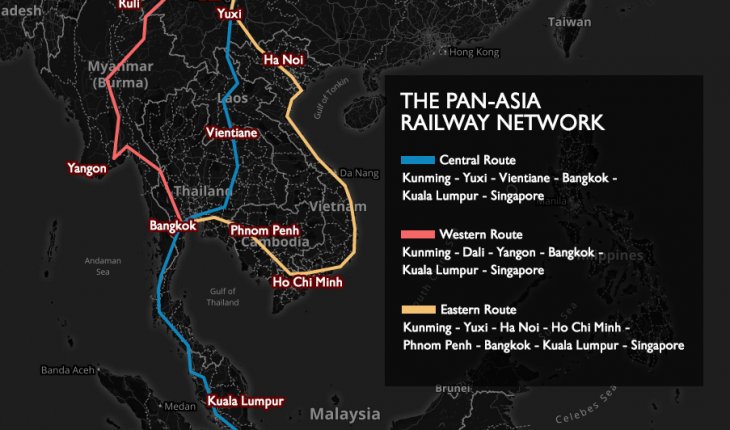
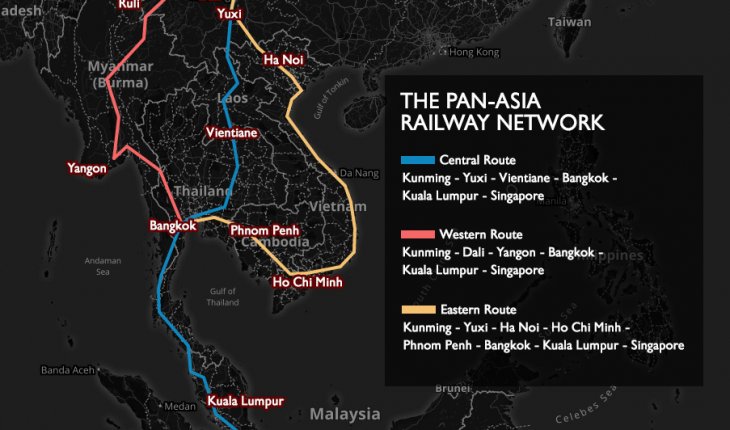
The Trans-Asian Railway is one of the key elements of the economic corridor. Three of the high-speed rail lines will converge in Bangkok.
The convergence of three railways will make Thailand the transport hub of Southeast Asia. For the first time, the high-speed rail link connects Singapore, Malaysia, Vietnam, Laos, Thailand, Cambodia, Myanmar, and of course China with Kunming.
Geographically, Thailand happens to be at the centre of this railway network and will take on the North-South railway line. Other countries connect through the East-West line.
It should be noted that the purchase of commercial and residential real estate is almost the cornerstone of every large project, whether it is a new city, a new manufacturing centre or a railway facility.
Many Chinese believe that investing in the real estate of the “Belt and Road” countries is not only a shrewd move but also a blessing from the government under the upcoming development boom.
The Number Of Chinese Travelling Overseas Is Set To Grow Further
Thailand’s proximity to China, its well-developed tourism infrastructure, reasonable housing prices and acceptable culture have attracted these first-time investors to make their first investment here.
At present, only 9% of Chinese citizens hold passports. This figure will double in 2020 to 240 million people.
Such a low passport holding rate means that many Chinese who have the ability to invest in the international real estate have not yet got into the action yet.
It is not difficult to predict that the number of overseas buyers from overseas will still increase in the next five years.
We expect this group of emerging cross-border investors to flock to markets that are both familiar and relatively low-priced to find investment opportunities. Thailand will undoubtedly be one of the easiest to meet these standards.
The Conditions For Owning Real Estate In Thailand Is Simply Attractive.
Freehold property, no estate tax, no need to pay for the public area, fully renovated apartments and no limits to purchase, not limited to loans, can flip properties, stable economic growth, low taxes and fees.
In Thailand, the Chinese investors get to own freehold properties.
Compared to countries like Singapore, the taxes are not punitive at all.
eg.
Thailand: Deed 2% (50% each for buyers and sellers)
Canada: Transaction Stamp Tax 15%
Singapore: Foreigners need to pay 3% stamp duty and an additional 15% stamp duty on overseas investors for home purchases.
In Thailand, investing in real estate is not just about buying a physical property, but it’s also buying a lifestyle.
Nowadays, Thai developers spare no effort to equipped the property with the best possible facilities. (swimming pool, gym, sauna, tennis court, sky lounge, co-kitchen, etc) It is something that has come to be expected when buying a property in Thailand.
Barring any unexpected economic or regulatory change in the investment environment, the demand for Thai real estate by individual investors in China will be expected to continue to grow.
The Ladprao – Phahon Yothin area is fast becoming a popular area of residence. There are on-going developments that will give residents in this area access to rail transport and a multitude of lifestyle offerings.
Let’s take a look at the major developments that are driving growth in Ladprao – Phahon Yothin.
Ladprao MRT Interchange
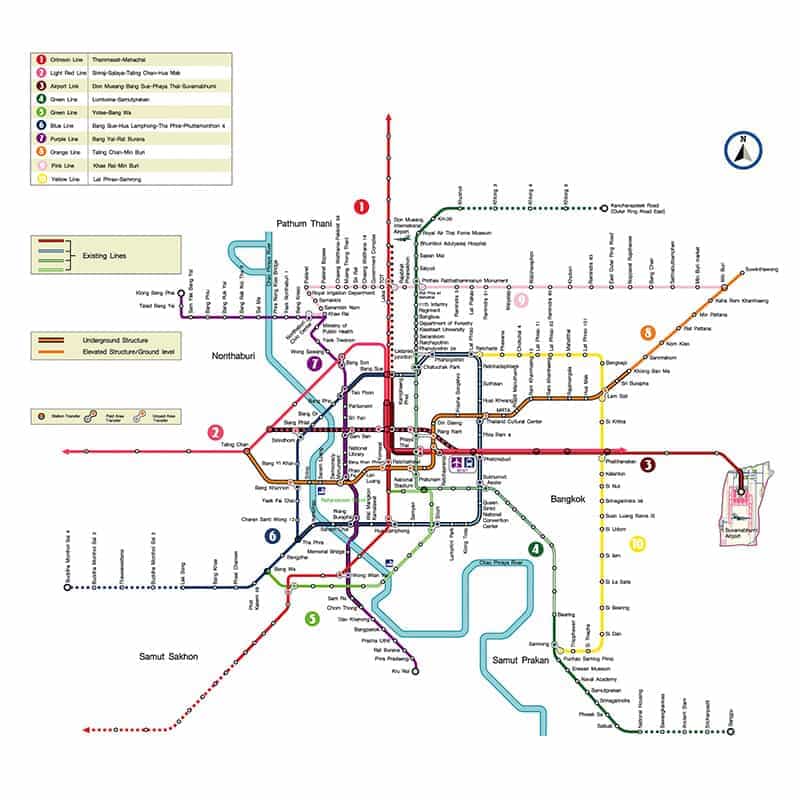
Currently, Ladprao – Phahon Yothin area is served by the Green BTS Line and MRT Blue Line, which runs to Asoke as well Bang Sue, the upcoming high-speed rail station. Many bus routes also service the area, and there are two expressways in the vicinity – Sirat Expressway and Uttraphimuk Toll Way (Don Mueang Toll Way).
Soon to be, Ladprao will be the interchange between the current Blue Line and the new Yellow Line.
The line heads east along Lat Phrao road to Bangkapi junction where it will interchange with the proposed Orange Line. The line then heads south along Srinagarindra Road to Hua Mark where it will interchange with the Airport Rail Link (Phattanakan station) (Phase I).
From Hua Mak the route continues south along Srinagarindra Road past Bangna-Trat rd all the way to Thepha Rak rd in Samut Prakhan Province. The line then heads west along Thepha Rak Road before terminating at Samrong where it will interchange with the BTS Sukhumvit Line (extension under construction) (Phase II).
We all know the positive impact transportation nodes have on property prices in the area, don’t we?
Bang Sue Grand Station
5 stops away from Ladprao along the Blue Line is Bang Sue. Bang Sue is currently undergoing a major transformation to become ASEAN’s largest rail transit hub. The Bang Sue Grand Station, a mega integrated project is being constructed. This place will be the ultimate interchange for the various rail transports as well as the highly anticipated high-speed rail, which will be running all the way up north to China.
Chatuchak Weekend Market
The global renown Chatuchak Market. The 35-acre (68-rai) area of Chatuchak is home to more than 8,000 market stalls. On a typical weekend, more than 200,000 visitors come here to sift through the goods on offer.
Central Ladprao
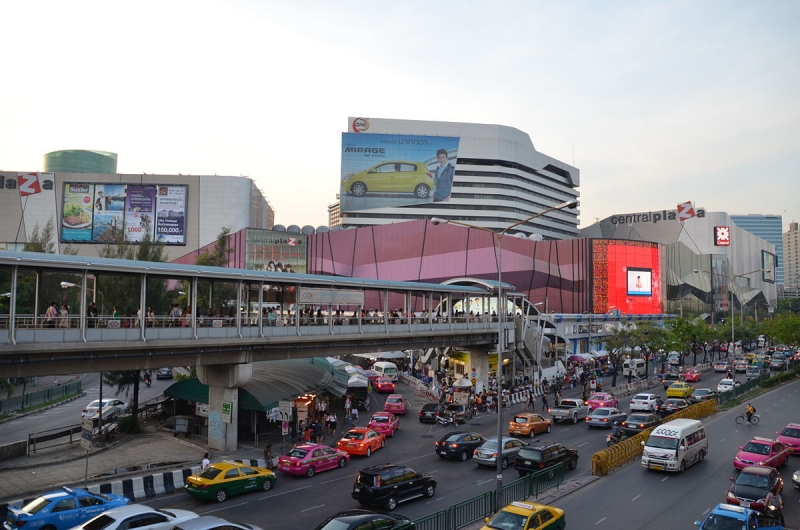
Situated next to Phahon Yothin MRT, Central Plaza Ladprao mall is one of Thailand’s largest and most popular malls. It is also directly connected to the Centara Grand Hotel.
The Potential Of Ladprao – Phahon Yothin
According to reports by PLUS Property, a leading Thai real estate agency and research firm, major developers are now snatching up good land plots in the area to launch condominiums. Resale prices have also risen 20%-40% over the last 5 years.
The rental market is also seeing strong returns of 5%.
More Grade A condominiums are being launched and prices are hitting THB180,000 per square meter and the upward trend is set to continue as demand for housing in the area increases.
From another report by Knight Frank in March 2017, all the positive developments are driving demand for housing in the area but supply is relatively low at the moment.
There is potential for real estate in the Ladprao – Phahon Yothin area. The limited available land for development means there is an opportunity for investors to buy a property, be it for investment returns or own stay.
For now, the majority of the purchasers are end users. However, the rental demand is getting stronger as the area develops. According to Plus Property, the occupancy rate is very high at 90% – 95%. Its status as a popular residential area has also meant that independent restaurants, eateries and coffee shops have mushroomed in the area.
This positive trend is likely to continue as the mega-developments come to fruition.
When it comes to buying a condominium in Bangkok, investors can also consider getting a resale condo rather than a brand new one from the developer.
There can be various reasons why one would consider buying a resale condo. It could be that a popular development is already fully sold and there are no more units for sale from the developer.
It could also be a case whereby the investor would like to start getting rental returns rather than waiting 3 years. Or it can be for practical reasons whereby the buyer needs a place to stay in the very near future.
Some people will find older condominiums represent better value as they are able to get more spacious units with the same amount of money spent and purchase a property in a more central location.
On the flip side, the buyer should also be aware that older condos could be less aesthetically pleasing and the facilities could be lacking compared to the modern ones.
If you are planning to go down the route of getting a resale condo, here are 4 things that you should take note of.
Inspecting The Property
Since the property is completed, you are able to physically inspect it. You should make a trip down personally to see the property and its surroundings.
You can judge for yourself if the particular unit is a good one to consider. As well as being able to notice if the general upkeep of the common areas is done well.
This will affect the value of your property in the long run.
Location
This is always an important consideration for both new and resale condo. Is it near public transport? Are there amenities nearby? Is this an area that will capture good tenants? Enough said.
Deed & Ownership
You need to ensure the seller is the rightful owner of the property. You must also make sure that the sale transaction is lawful.
Ask for the actual title deed to make sure, while a letter confirming the payment of the deposit must be signed and sealed.
Engage A Reliable Agent Or Representative
A good and reliable representative or agent would be able to help with all the paperwork including contracts and deed transfers.
Make the effort to work with someone who is competent and whom you can trust. This will go a long way in eliminating risk and unnecessary unpleasantness.
Ever wondered what is it really like to own a property in Bangkok?
I had the chance to visit Daryl at Circle S Sukhumvit 12, a condominium he invested in a few years ago. This property is located within walking distance from Asoke BTS. Great location, yet is quiet as it’s tucked away in a little corner.
Watch the videos below as Daryl show us around the condominium.
PS: Daryl runs an investment blog and he regularly shares his opinions and insights on various subject matters. To read up more, visit www.daryllum.com
The Bangsue station is set to become the central railway terminal for the two high-speed rail, including the northern line (to Chiang Mai) and the Bangkok-Hua Hin Line. Bangsue station will also become the centre of the Bangkok Mass Transit System (BTS).
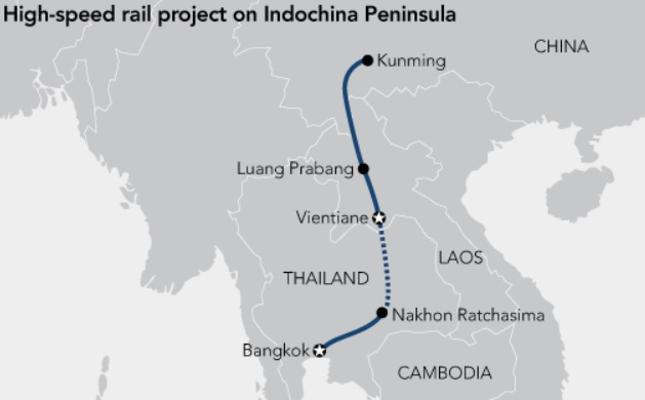
21st December 2017: The construction of high-speed rail connecting Thailand and China has officially begun. The first phase of the project will connect Bangkok to Nakhon Ratchasima via a 252-Kilometer high-speed railway link. The second phase will then connect to Nakhon Si Thammarat, northeast Thailand and Laos.
It will eventually extend from Laos to China seamlessly forming part of the China-Indochina Peninsula International High-Speed Rail Link.
Bangsue Grand Station: Asean’s Transport Hub
In time to come, the entire high-speed rail network of the Pan-Asia Railway will be brought together in Bangkok, making Bangkok the transportation hub in Southeast Asia.
This has the potential to position Thailand as a key trading hub in the heart of South East Asia.
The Ministry Of Transport of Thailand plans to transform Bangsue MRT into a transport hub that will replace the existing Bangkok Station (Hua Lamphong) and all routes will terminate at the new Bangsue Grand Station.
This is propelling Bangsue into the spotlight, with many predicting this neighborhood to experience huge growth as it transforms into a transport and commercial hub for Bangkok and Asean.
Bangsue Grand Station (Artist Impression)
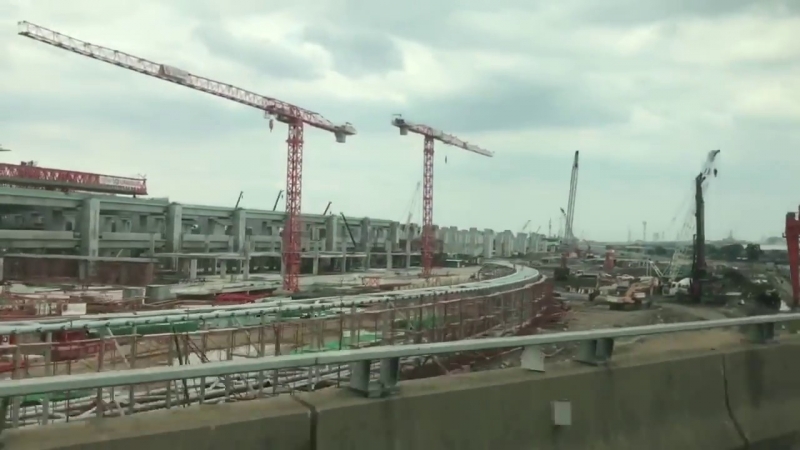
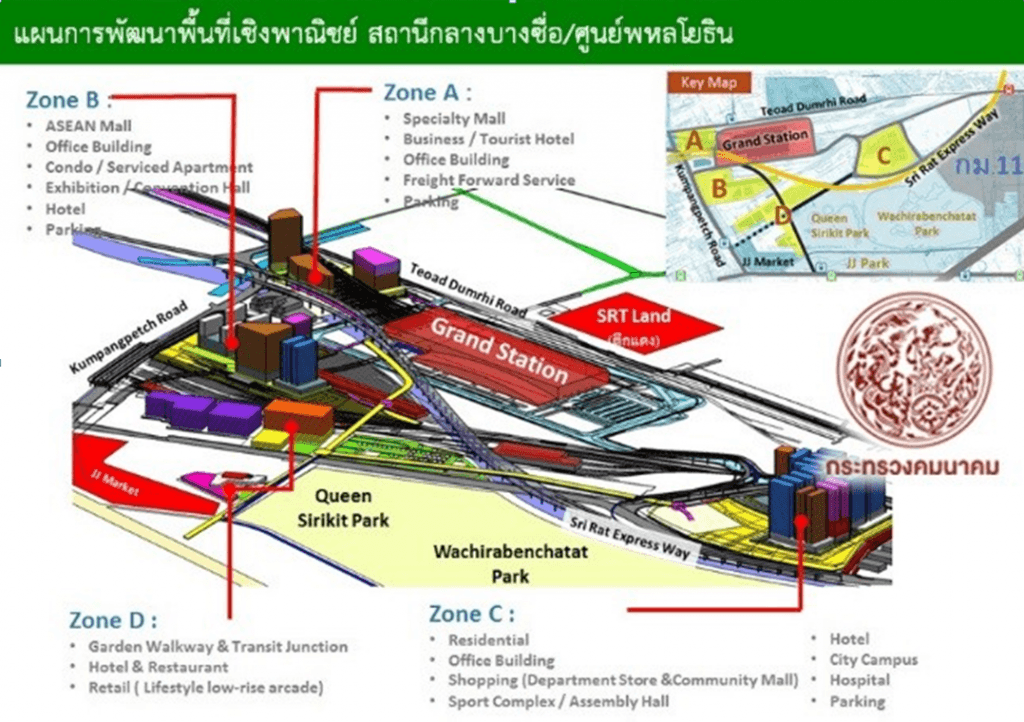
According to a report by The Nation, plans for the construction of Bang Sue Grand Station are well on track. The 218-rai (35 hectares) area surrounding the Grand Station will be developed as an Asean linkage and business hub, comprising three zones.
In Zone A, roughly 35 rai will be developed as the “Smart Business Complex”, comprising hotels, office buildings, shopping malls and parking.
Zone B will be developed as the “Asean Commercial and Business Hub”, covering a 78-rai plot within close proximity of Kamphaeng Phet Road, Bang Sue Grand Station, and Kamphaeng Phet MRT station.
Zone C will be developed as the “Smart Healthy and Vibrant Town”, occupying 105 rai at the Mo Chit 2 Bus Terminal.
Zone D (World Renowned Garden Interchange Plaza) – On 5 rai, this zone is adjacent to Chatuchak Market. It will become a large interchange zone among the transport modes, boasting retail spaces.
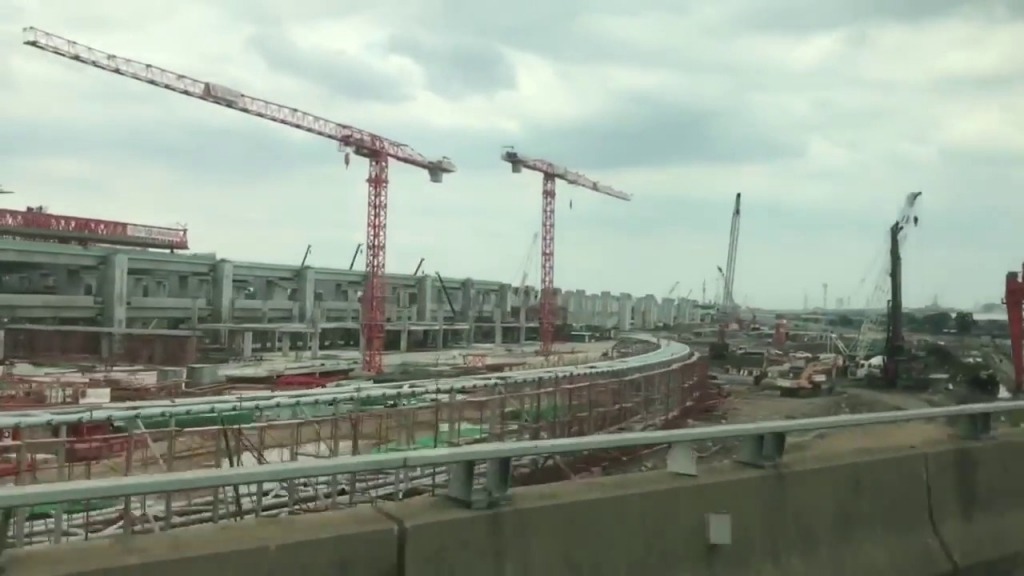
[caption id="attachment_1235" align="alignnone" width="1024"] Bangsue Grand Station (under construction)
After the completion of Bangsue Grand Station (estimated to open in 2020), it is expected to attract more than 300,000 people a day. The gathering of crowds will inevitably result in housing demand coupled with rising house prices.
From studies conducted by Knight Frank Thailand’s research department, it was found that many countries, including the United States, Canada, Brazil, France, the Netherlands, Australia, Hong Kong, and Japan, which embarked on Transit Oriented Development (TOD), were successful in raising the values of land and property around their large-scale mass transit stations.In the example of the United States, the value of such land and property increased by 150 percent. The rise in value will, of course, vary from place to place, depending on each locality’s environmental laws, city planning, and level of connectivity provided by the mass transit system. In addition, the national and regional economies at the time of development also play a role in the success.
The existing transport infrastructure in Bang Sue-Mochit is well established.
BTS Mochit Station and MRT Chatuchak Station meet at Mochit. There is Mochit2, a long-distance bus stop nearby. For Bang Sue, the formally completed MRT Purple Line and Blue Extension Line will set up a transfer station at Bang Sue, along with the existing HSR service. Therefore, Bang Sue-Mochit area will also be followed by the construction of underground shopping malls and bus rapid transit system, covering an area of more than 3720000 square meters.
Connected rail transit includes:
Blue MRT line (in operation)
Light green Sukhumvit line (in transit)
Don Mueang Airport Line (under construction)
Sino-Thai high-speed rail line (under construction)
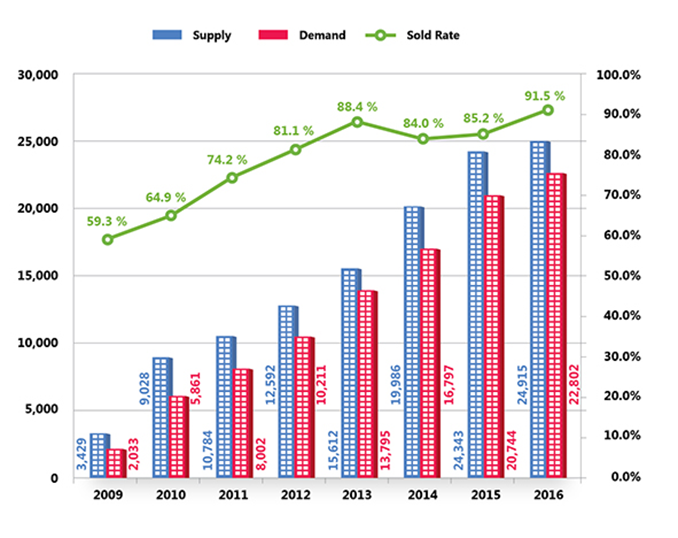
Bangsue is one of the highest densely populated areas in Bangkok. In 2016, the condominium sales rate was 91.6%, which was 10% higher than the average condominium sales rate of the whole of Bangkok.
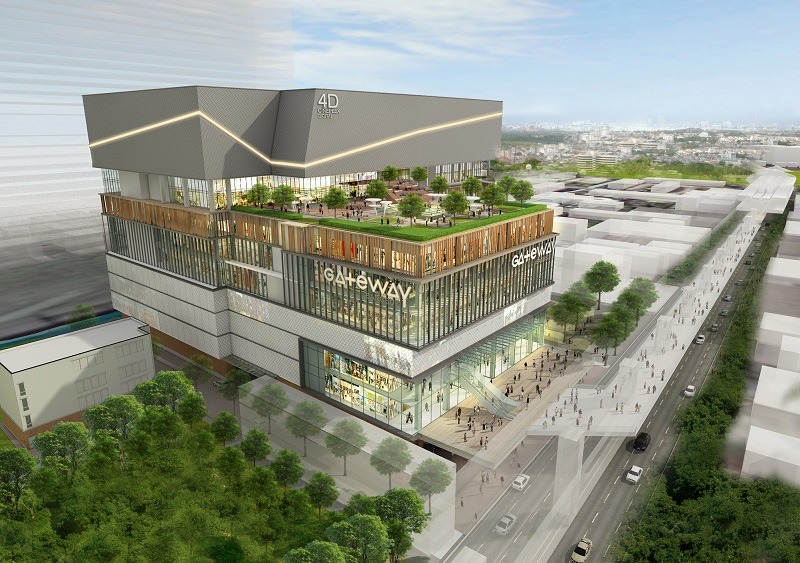
The sheer grand scale of transformation in this area has already attracted many big scale developers, including condos and commercial projects such as Gateway Bangsue from TCC Land Asset World Co., Ltd.
Gateway Bangsue
The latter is situated just 650 meters from Tao Poon Station, with an investment of over 4 billion baht and around 40,000 square meters of retail space. It is slated to open in 2018, and expected to elevate Bangsue – Tao Poon further as an area that’s worth watching from both the property investor and owner standpoints.
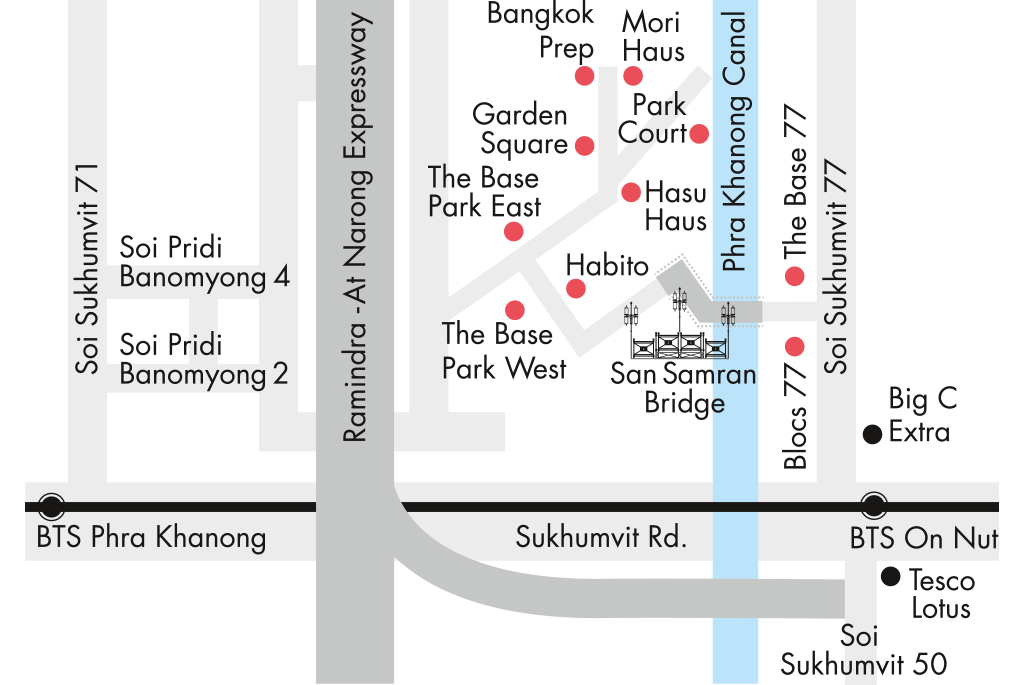
Born of Sansiri’s dream of transforming Sukhumvit 77 into a rich lifestyle hub, the company’s latest megaproject development, T77 Community, delivers in spades.
Located on an over-50-rai plot of land in the centre of Sukhumvit 77, the project and its surrounding area provide a complete array of lifestyle activities and residential options.
T77 Community is close to both the BTS station and Ramindra – At Narong Expressway.
The Allure Of T77
When I mentioned T77 to the locals, it seems like everyone knows about this place. And people do speak well of this megaproject. From speaking with the locals who stay in T77, these are some of the good things they have to say about the place.
Easy access to either On Nut or Phra Khanong
Very lush surroundings with plenty of landscaping
Double security – because one needs to pass the security of the compound and then the individual condo’s security
Big C and On Nut market are just nearby for all basic necessities
There are temples nearby to offer prayers and make merit
Beautiful and serene environment
It does sound like a good place to stay!
Exploring What’s At T77
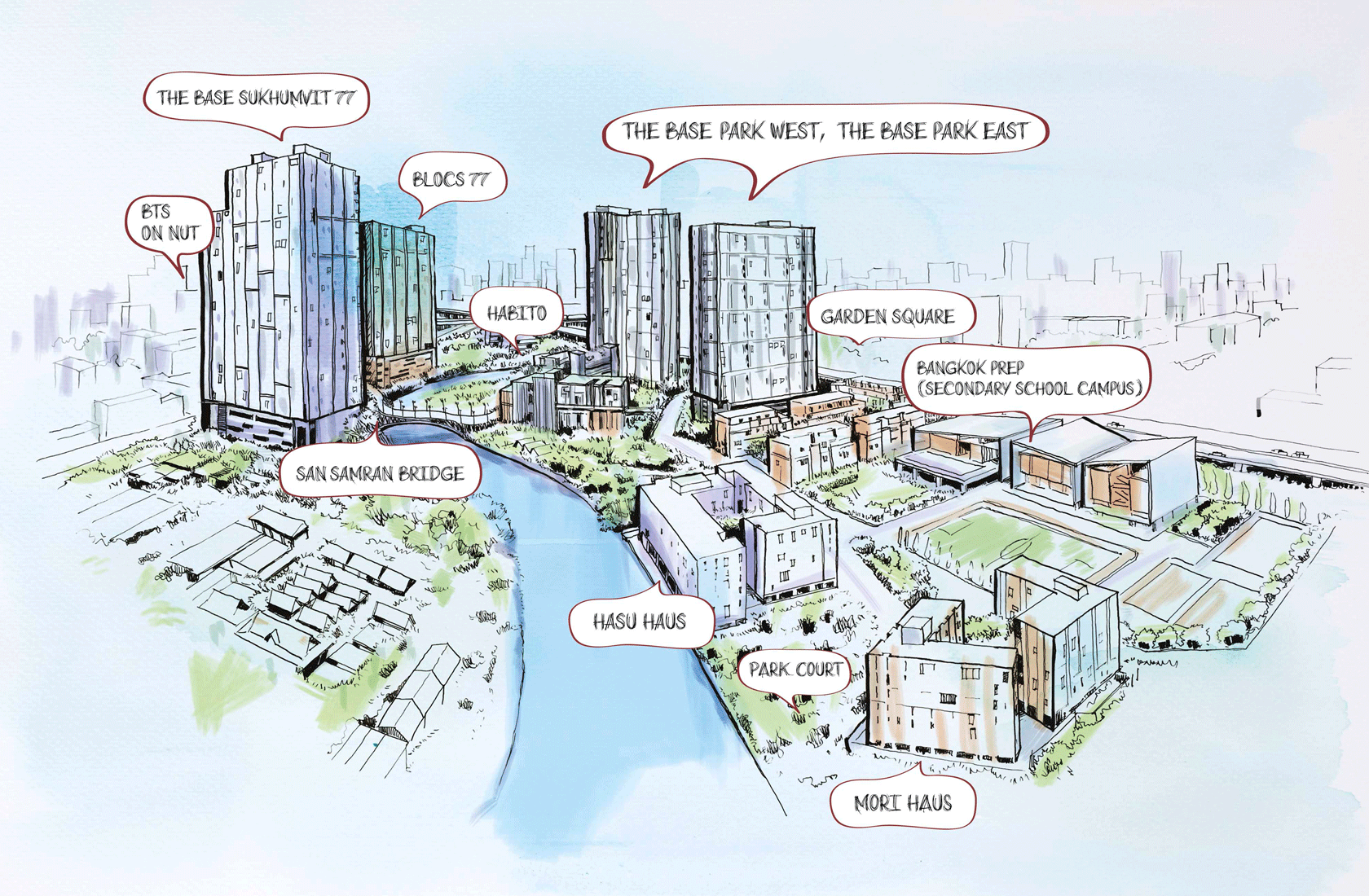
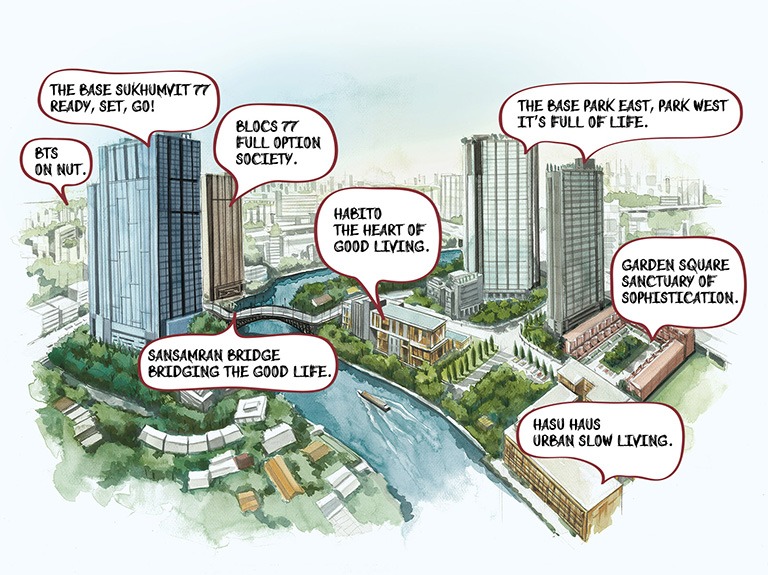
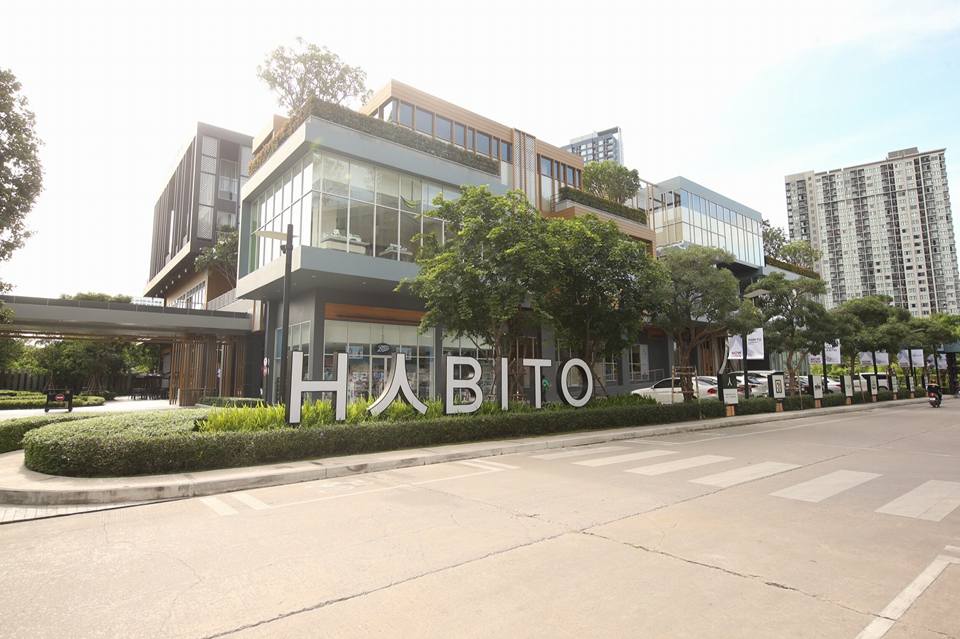
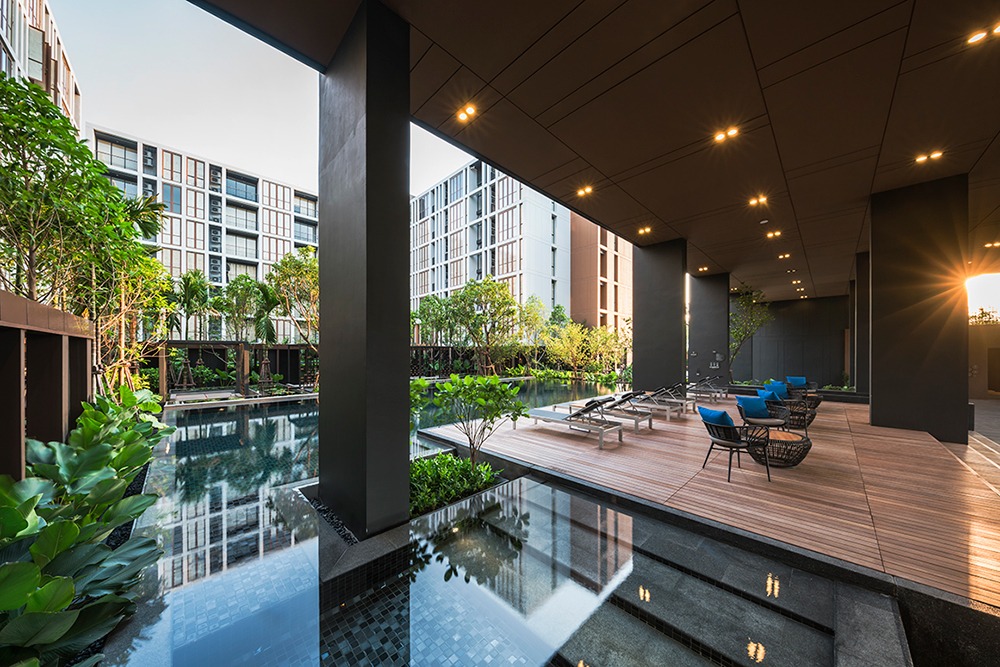
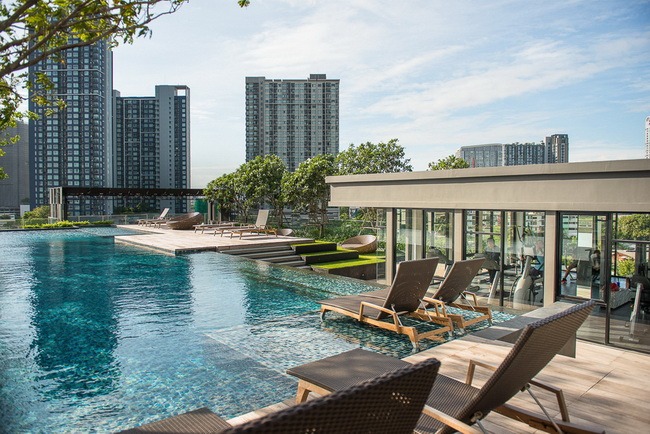
T77 is composed of as many as 5,000 residential units in six Sansiri projects, which anchor this hip mid-town First Japanese residential community with “Habito” Community Mall – Sansiri’s first mall project within the same area.The mall has been carefully and lovingly designed to address all of the lifestyle needs of residents, with a fantastic selection of shops and world-famous restaurants, as well as a modern Co-working Space that is most conducive to productivity and creative endeavors.
The “Habito” Community Mall is an upscale lifestyle mall that caters to the residents living in the T77 town as well the nearby population.
Of particular note, the retail and F&B composition will include coveted Japanese brands to entice the burgeoning Japanese population, estimated to be the largest expatriate community in Thailand with over 150,000 people. As this group of people leads fairly insular lives, their needs will be well looked after under one roof. The extensive array of Japanese- centric goods and services will further serve as a magnet for Japanese living outside the immediate catchment area.
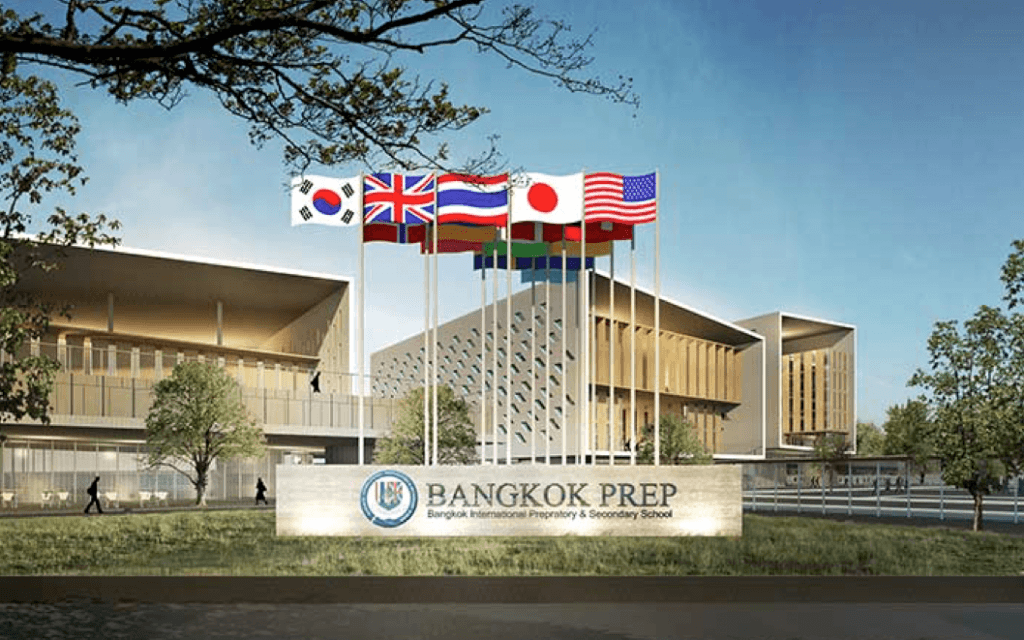
One of Thailand’s best international schools has also made a much-welcomed addition to the neighborhood.
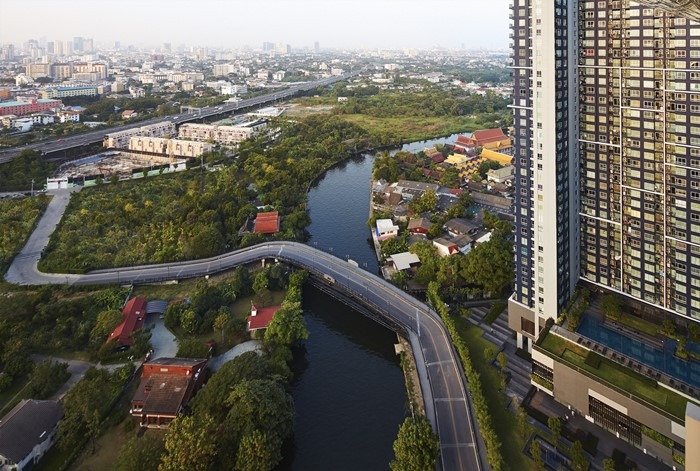
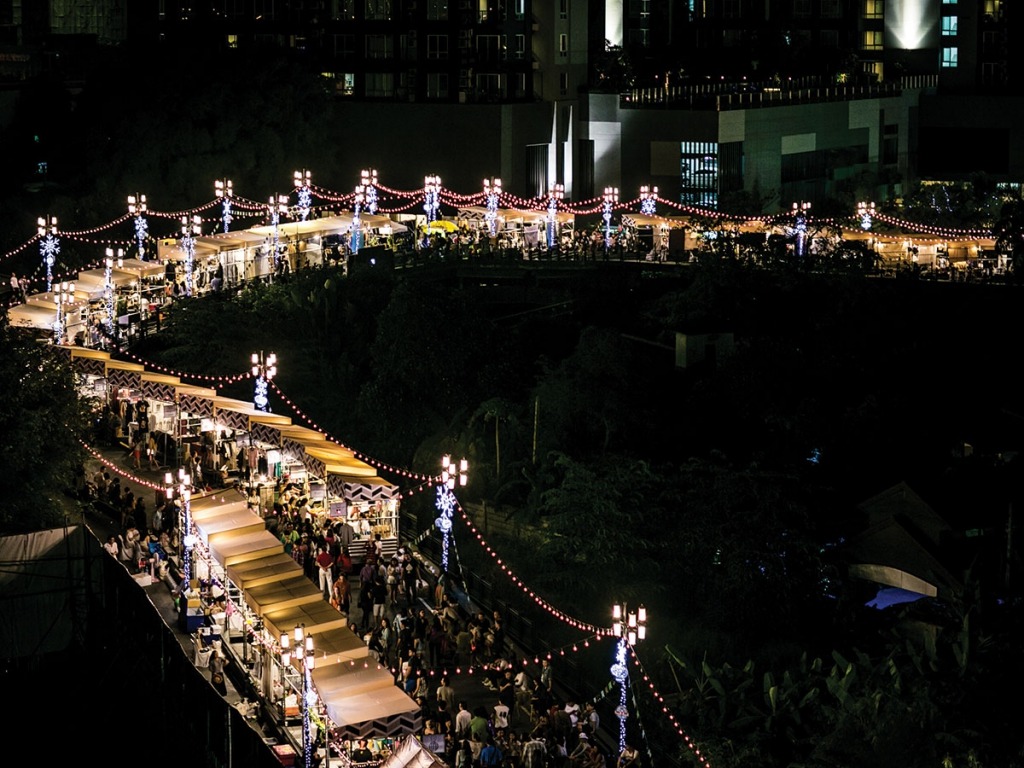
San Samran Bridge
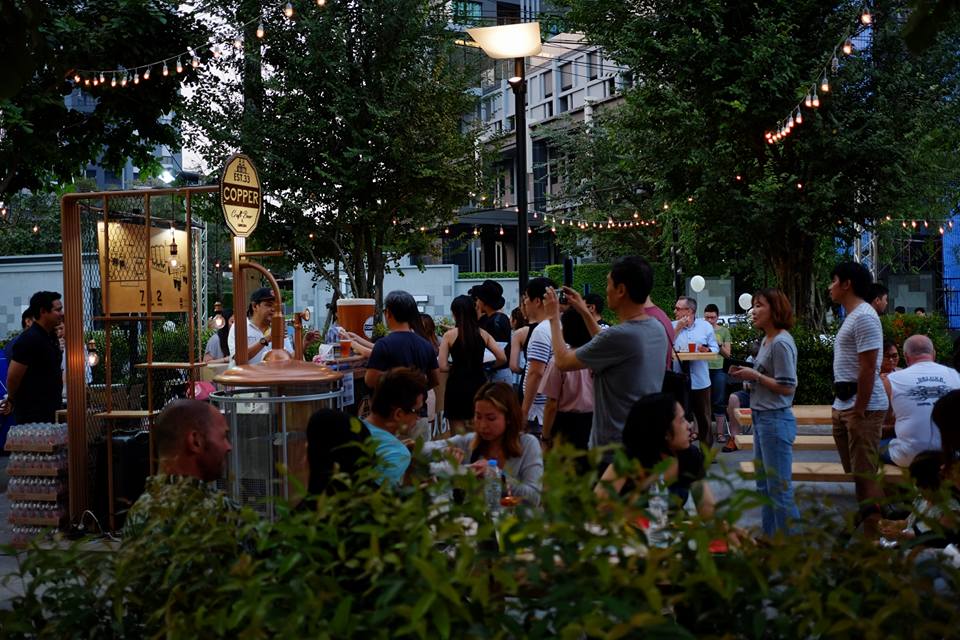
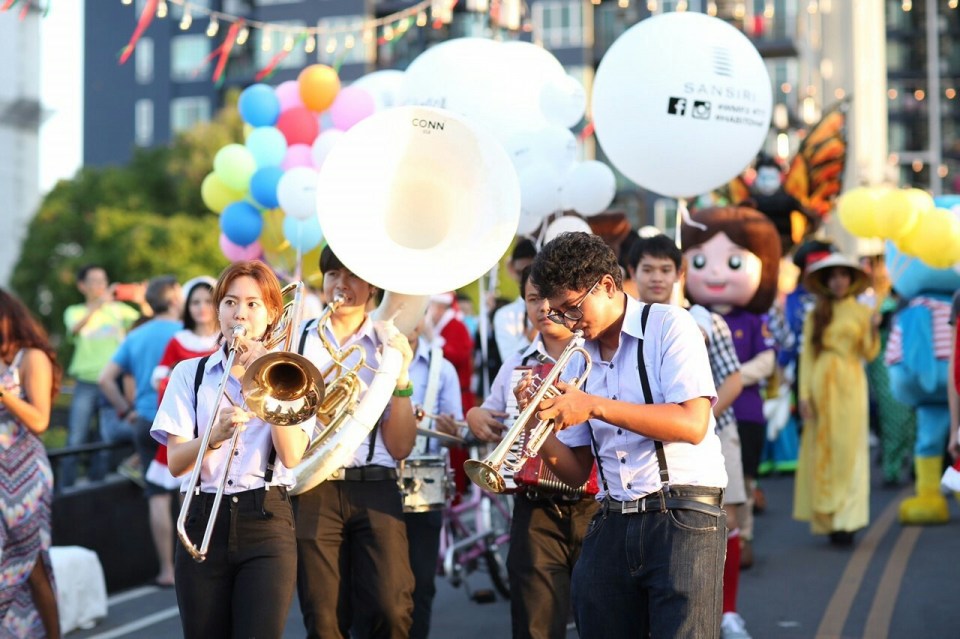
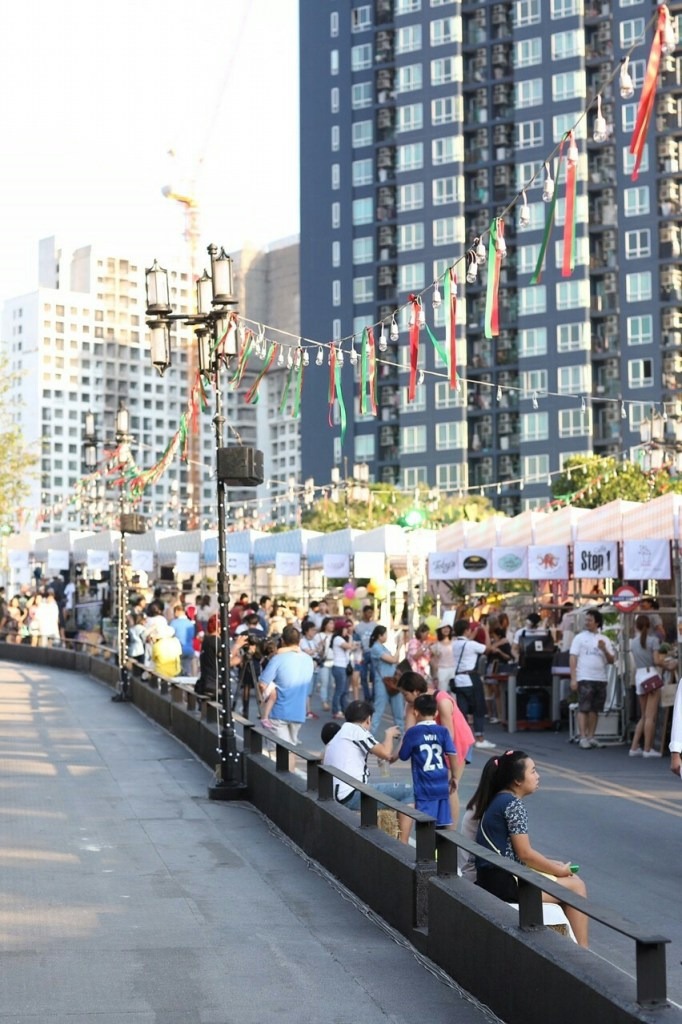
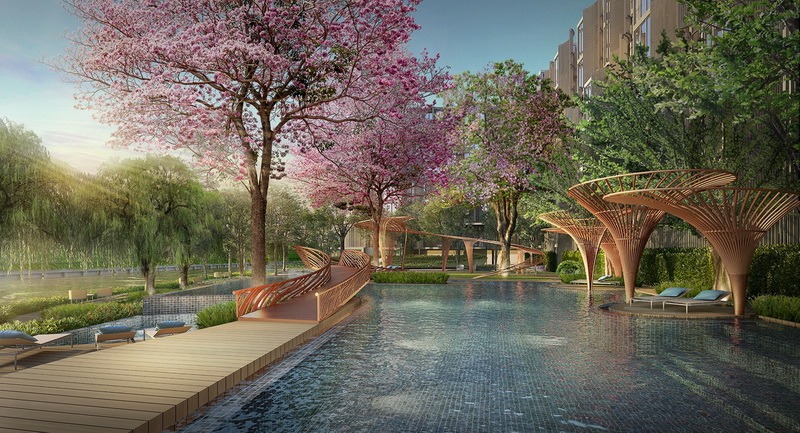
The San Samran Bridge bridges the canal that runs through T77. It is an well-known feature of the town. During festive seasons, events will be held along the bridge.
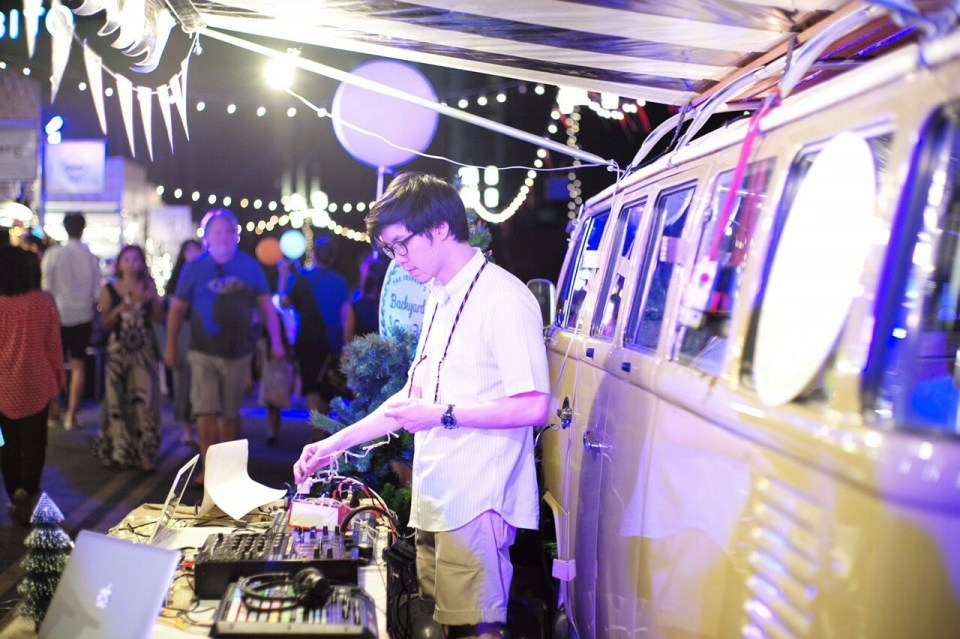
Entering into its 5th year, the winter market festival is a wildly popular event that draws larger and larger crowd as each year goes by.
Good Food and Good Fun. It’s a spectacle not to be missed!
Living In T77
In creating this community, Sansiri has also developed 6 residential projects within T77. These are all very popular with the local Thais. Over in T77 you can find a balance between quality living and not have to pay through your nose for a property in central Bangkok.
mori HAUS
hasu HAUS
THE BASE Park West Sukhumvit 77
Is T77 A Good Investment?
It will be hard to give a straight yes or no. If you have a high investment budget, if you are going for the high-end luxury segment, then you ought to be looking at developments in the core CBD of Bangkok.
I have also met my fair share of investors who no matter what I say, cannot imagine buying something that is not within immediate walking distance to the BTS or MRT.
If you belong to the above category then I say this is not for you.
Often, the biggest challenge for a developing country in South-East Asia is town planning. You may own the shiniest building in the neighborhood but if your surrounding is not well taken care of, it will certainly have an adverse effect on your property value.
That is also the reason why from my years dealing with international property, properties in the township tend to have good genuine demand. Rentability is high.
T77 is a town within a town. As someone staying inside, your immediate surroundings are planned for and taken care of by Sansiri. T77 is a private and peaceful enclave to come home to. You will love it as a holiday home and so will your prospective tenants.
The location is accessible both on Nut and Prakanong, surrounded by rich and varied food sources, both cheap and expensive.
And if you have the chance to visit T77, you will already find an increasing number of expatriates both Westerners and Japanese choosing to stay in this place.
For someone looking for a property with high genuine demand and not having an excessive budget, this is probably 1 of your best option in the vicinity.
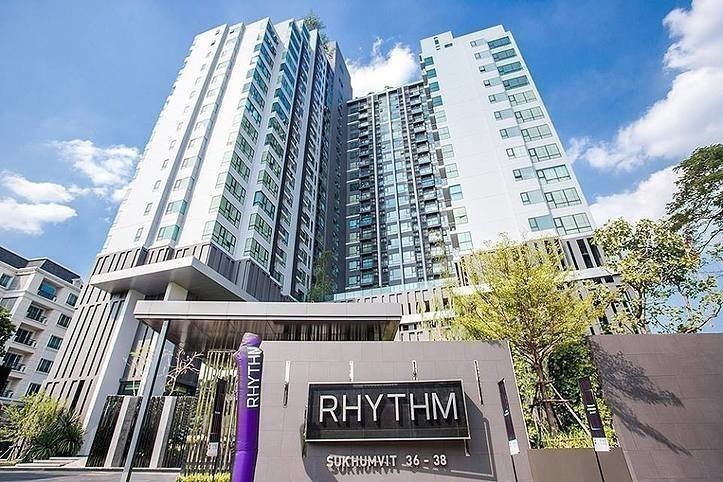
As the Thonglor area becomes saturated with residential projects, nearby Sukhumvit Soi 36 – 38 is the new choice for property firms to develop luxury condominiums as demand remained strong in this part of Bangkok.
Sukhumvit Soi 36 – 38 is opposite Soi Thonglor (Sukhumvit 55). The location offers easy access by car to Sukhumvit and Rama IV Road. The residents here enjoy similar amenities as those living in Thonglor.
Traditionally, most of the development activities have focused around Sukhumvit Soi 55, which is widely considered the prime Thonglor. However, the continued strong demand for housing in this classy neighborhood has led to a spillover effect as the property prices along Sukhumvit 55 soared. Ekamai and Sukhumvit 36 – 38 are experiencing the positive effect of this spillover of demand as land-hungry developers look for land to build condominiums.
Price Trend in Sukhumvit Soi 36 -38
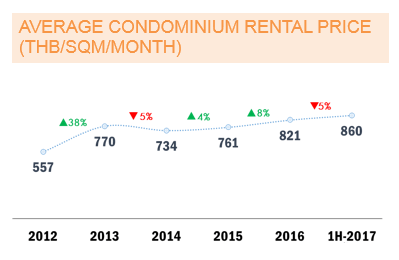
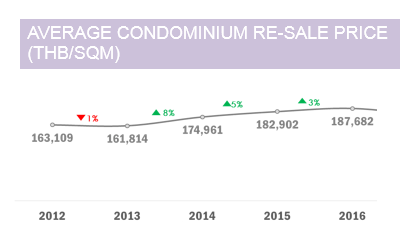
The rental and the resale market prices have generally been experiencing an uptrend since 2012. As an investor, you would be glad to know that the rental market is growing healthily and more importantly, there is a robust secondary market with a steady growth in demand for properties over the years. This signals the ability for you to execute your exit strategy when the need arises.
As it stands now, base on the average rent per square meter and the price in the area, a gross rental yield of 5-6% is achievable.
How Have The Prices Appreciated For Existing Developments?
Compared to Soi Thonglor, there really isn’t as many quality developments in this area as yet. However, this is slowly changing as major developers such as Sansiri, AP Thai and Ananda are aggressively seeking out developable land plots in this area.
Let us have a look at some existing developments and how their prices have fared since launch till now.
A Good Value Alternative To Thonglor – Ekamai For Investors
Compared to the condo prices in Soi Thonglor where it averages THB250,000 per square meter and the ultra-luxury condo breaching THB300,000 per square meter, investing in Sukhumvit Soi 36 -38 at sub THB200,000 per square meter does represent good value for investors.
There is much upside to be gained as long as the urbanization of Rama IV Road continues and gain momentum.
However, a word of caution to investors is to make the right call on the developer and quality of the project.
Let us first start by defining the boundaries of Bangkok’s CBD.
“CBRE Thailand” one of the established Property Consultancies in Bangkok, defines the boundaries of the Core Central Business District as Silom, Sathon, Rama IV Rd, Ploenchit, Wireless Rd.
Naturally, as the commercial, leisure and business centre of Bangkok, the land price is bound to be the highest which in turn leads to rising property prices.
In recent years, the high land prices have led to talks about the development of new CBD in greater Bangkok such as Rama 9 and Thonglor.
However, it is of my opinion that while it is common for sub-CBD to gain momentum and develop, the local infrastructure, office tower supply, mass transit lines, general transport links and leisure options have firmly established Bangkok’s city centre.
Here are 5 Reasons Why You Should Invest In Bangkok’s CBD – While You Can Still Afford It
1. Prime CBD Land Is Now Hard To Find
With the relentless urbanization, it is now difficult to find prime land plots for redevelopment. The lack of land supply simply means the prices of prime land in Bangkok CBD will continue to rise. Which will be a much-welcomed news for existing landlords and property owners.
Developers continue to launch high priced condos in the area. With Sansiri’s Wireless 98 reaching as high as THB 720,000 per square meter.
2. Good Investment For Landlords
Bangkok’s CBD is a little bit, unlike others. It has developed into an interesting landscape featuring a mixture of hotels, retail and residential developments and offices.
All the best of everything are within reach for someone staying here. It’s the district most highly paid expats would want to rent.
Tried and trusted location with high-quality tenants. It can’t get any better than this.
3. Luxury Condos Are Luring Asia’s Ultra-Rich To Bangkok
Developers and analysts are reporting high levels of interest in the luxury real estate in the city’s central areas, even in the light of rocketing purchase prices and low to non-existent yield potential. A trend fuelled in part by growing interest among rich Chinese, Singaporean, Japanese and Hong Kong buyers.
Even domestically, the affluent urban Thais are increasingly moving from large suburban mansions to condominiums and apartments in central Bangkok.
In Bangkok’s CBD, this is where you find the highest concentration of luxury condominiums on offer.
4. The Best Of Everything Is In Bangkok’s CBD
Living in Bangkok’s CBD, you have access to the best of everything. Minus the traffic jam to get there.
Premier office buildings such as the Empire Tower, Sathorn Square, Bangkok City Tower, Standard Chartered, AIA Sathorn, Bangkok Bank Head Quarters, UOB Bank, and many more;
5-star and top hotels such as the Dusit Thani Hotel, Mandarin Oriental, Shangri-La Hotel, Sukhothai, Banyan Tree, W Hotel Bangkok, Sofitel So Hotel and many more;
Embassies such as those from Australia, France, Malaysia and Singapore;
Top educational institutions the likes of Bangkok Christian College, St Chef on Convent, Assumption College, Shrewsbury International School and the Bangkok University;
Leading medical institutions such as Bangkok Christian Hospital, Saint Louis Hospital, Hospital Bangkok Nursing Home (BHN) and Chulalongkorn Hospital; and
Cultural establishments such as Alliance Francaise, Goethe-Institut Thailand, Sathorn Soi 1.
Shopping Belt such as Siam Paragon, Siam Centre and Central World.
5. Bangkok’s CBD Still Offers Decent Value For Money
According to globalpropertyguide.com, property prices in the world’s top real estate markets like the US, UK and other Asian hotspots like Singapore and Hong Kong are between two to six times more expensive than Thailand.
Also, the absence of punitive stamp duties for foreign nationals such as those found in Singapore and Hong Kong and the liquidity of developers and the selectivity of banks in approving mortgages as positive indicators.
And, of course, also appealing are the perks that come from living in a city with myriad lifestyle benefits and easy access to the rest of Thailand and the world.
Rama IV Road also connects Silom-Sathorn, Lumpini-Ploenchit, and Sukhumvit. 3 of Bangkok’s prime districts.
The Transformation of Rama IV Road
Despite its superior connectivity, Rama IV Road has yet to experience levels of growth similar to Sukhumvit Road.
However, that is all about to change.
As land prices in traditionally popular areas soar and land supply are hard to come by, developers have now turned their sights to areas around Rama IV. The region offers large plots of good value land available for redevelopment.
According to a report by The Nation, investments worth more than THB 100 billion are being pumped into condominiums, retail, office and hotel development on Rama IV. Transforming the road into a new landmark area of Bangkok over the next few years.
What are catalysts driving this transformation? Let us see.
One Bangkok
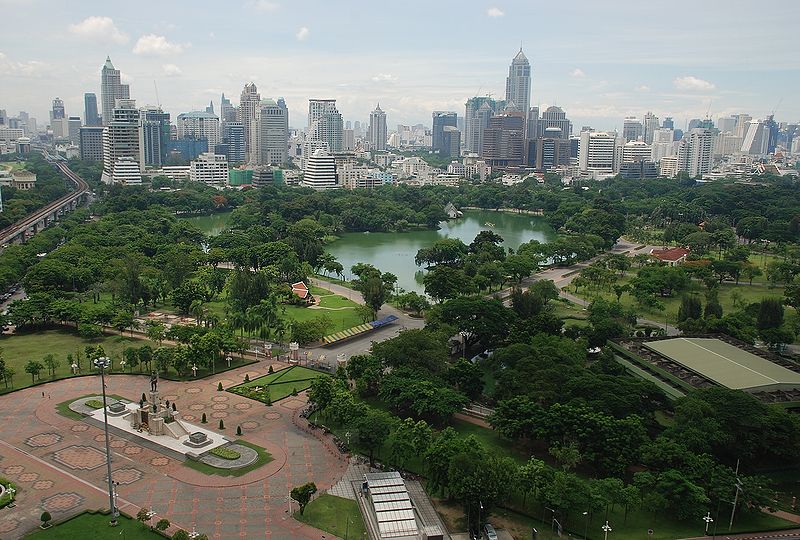
A once-in-a-generation development, One Bangkok is a fully integrated district ideally located in prime central Bangkok at the corner of Wireless Road and Rama IV, right next to Lumphini Park, with unsurpassed accessibility through direct connections to the MRT.
Spread over 41 acres, this USD 3.5B project will be a mix of office towers, hotels, residences and retail. Reports say it will include a 90-story skyscraper.
FYI Centre
Located at the corner of Rama IV Road – Ratchadapisek Road, the FYI Centre comprises of two buildings and provides over 55,000m² of office space, a 239-room hotel, and public retail and restaurant spaces. The development is completed and fully operational.
Suan Plern Market
The Athakravi Group, looking to capitalize on the 10,000 office workers in the nearby offices and local residents, has launched a 10,000 square meter Community Mall. This development dubbed “Suanplern Market” will offer an industrial loft concept and will have more than 250 Shops including a Makro Food Service.
Redevelopment of Khlong Toei
According to a report by The Nation, The Port Authority of Thailand, a state agency, hopes to develop 223 rai in Khlong Toei for a mixed-use project, comprising an office building, logistics and warehouse facilities, and a shopping complex.
The project, which has an investment budget of over THB 50 billion, is currently at the study stage, with negotiations underway with lessees about vacating the land.
Investment Opportunities
As the area urbanizes, developers are also busy snatching up good land parcels for condominium developments.
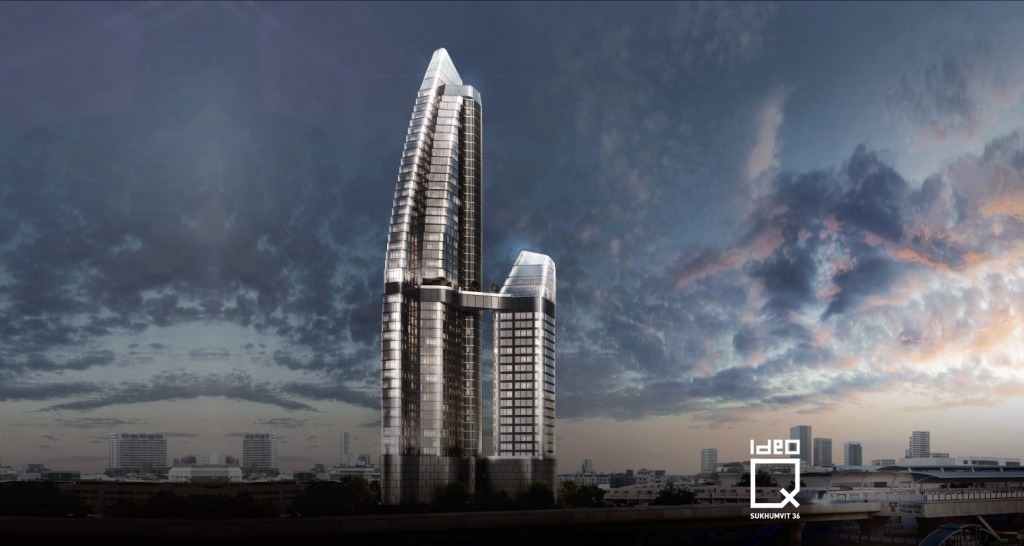
Condominium projects launched in the area since the beginning of 2014, and worth more than THB 50 billion in total, include the Condolette Pixel by Pruksa Real Estate, The Portrail RamaIV-Sukhumvit 38 by Krung Thai Land Development, The Room Rama IV by Land & Houses, the Aspire Rama IV by AP (Thailand), and Ananda Development’s THB 6.5-billion Ideo Q.
Oka Haus by Sansiri is another quality development waiting to benefit from the transformation of the Rama IV region. It is located mere minutes away from Rama IV and Sukhumvit. Oka Haus is projected to launch sometime end of this year.
When all of the new investment is complete, Rama IV will be a commercial and residential landmark in Bangkok.
![[Commentary] Why Are More And More Chinese Investing In Thailand Real Estate?](https://investbangkokproperty.com/wp-content/uploads/2018/05/sansiri-china.jpg)

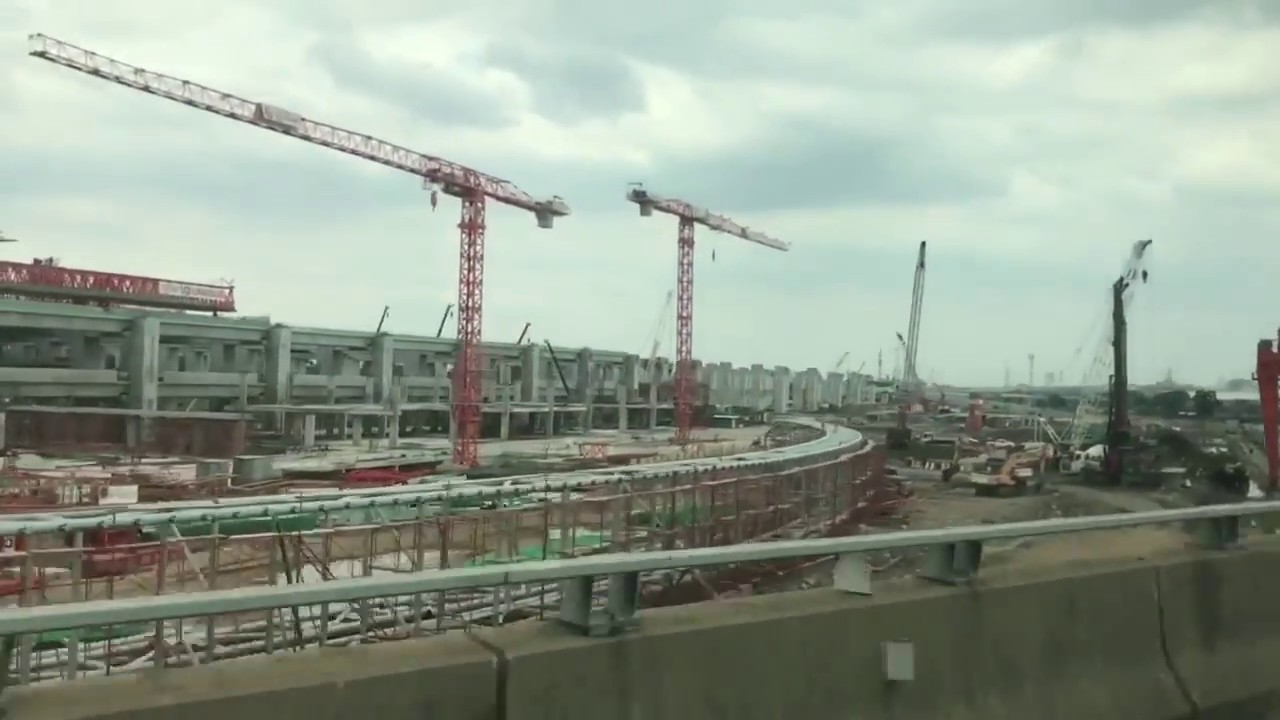

 Bangsue Grand Station (under construction)