by kevinyeo | Oct 8, 2017 | Foreign Buyer Guides
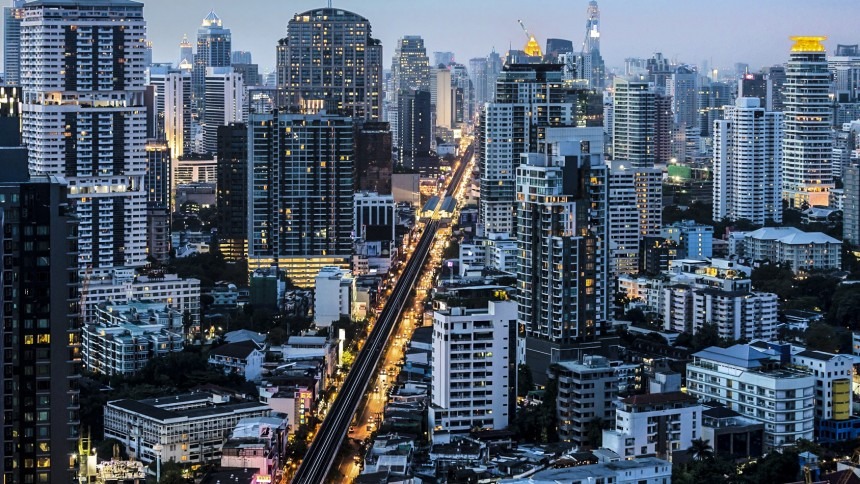
Thong Lo or Thonglor is also known as Sukhumvit Soi 55.
Thonglor is a prime residential location because it has so many lifestyle services and amenities, such as restaurants, shopping centres and hospitality venues. The area also has both day-life and night-life as it is located close to BTS, making it very convenient for people travelling between their home and place of work.
Thong Lo BTS

In recent years, Thonglor has become synonymous with the hippest night spots and most trendy restaurants in town. Popular with both local Thais and expats alike.
Octave Sky Bar

Roof Hideaway

As such, Thonglor has become 1 of the choice location for home-stay by millionaires and celebrities. This is also an area where it is highly favoured by expats, especially the Japanese. So much so that it is also known as “Little Tokyo”.
Lately, developers have shifted their focus to this Thonglor and are launching luxury projects in this area.
According to The Nation newspaper, Thonglor is about to welcome:
“…developments worth more than THB 50 billion combined this year.”
This staggering level of investment demonstrates an unprecedented level of confidence in the demand for luxury properties in Thonglor.
Condo prices have shifted upward from 120-150,000 THB Per/Sqm to an impressive 250,000+ THB Per/Sqm for some of the top projects.
Khun By Yoo Inspired By Starck (Sansiri) – Baht 15 million

The Reserve Thonglor (Pruksa Real Estate) – Baht 10 million

See Also: Another Excellent Development By Sansiri In Thonglor-Ekamai. Global Launch In September.
The area has also developed a stable rental market offering rental yields in the region of 4-6%. In terms of tenant demographics, the area attracts a mix of expats such as Japanese, Korean and European residents.
According to Plus Property, a real estate agency, the most popular units are one-bedroom condos with 50-55 square metres of space, which fetch a rental price of THB 50,000-THB 60,000 per month.
Nexus Property Market, another real-estate agency, forecasts that demand for condominiums priced between THB 200,000 and THB 360,000 per square metre in the Thonglor area will remain still strong, due to the limited availability of land for new development.
Thonglor will continue to attract quality people who desire a premium lifestyle.
by kevinyeo | Oct 8, 2017 | Foreign Buyer Guides
Lately, all the focus on Bangkok’s prime properties is in Thonglor – the latest investment hotspot.
As such condo prices in Thonglor have shifted upward from 120-150,000 THB Per/Sqm to an impressive 250,000+ THB Per/Sqm for some of the top projects.
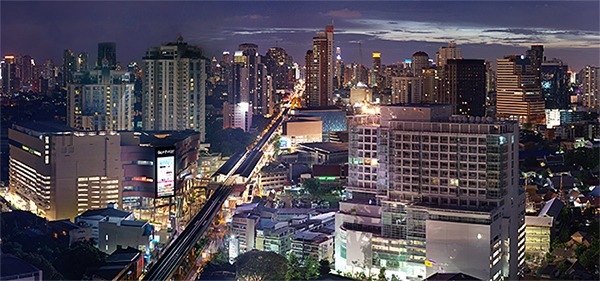
Running parallel to Thonglor, Ekkamai is benefitting from the spillover effects. And here’s the good news for investors – this neighbourhood is still pretty much under the radar!
Ekkamai – An appealing neighbourhood
While Thonglor is often seen as the flashy, high society hang-out, Ekkamai has more of an old town charm to it. It still has a good mix of day and night entertainment venues and is no less convenient than it’s neighbour.
Gateway Ekamai

Big C Ekkmai

From Ekkamai, it is only a few BTS stops away to Asoke. It is also easily accessible via Phetchaburi, Sukhumvit and Rama 4 Road.

Last but not least, for families, there’s also easy access to good international schools.

Is There An Investment Opportunity?
Yes, there certainly is. The convenience, location and trendy environment have made Ekkamai a much sought after location for young working professionals.
The location is slowly but surely gaining its reputation as a desirable residential address.
In fact, major developers are slowly making their presence felt in Ekkamai with recent launches.
The Lofts Ekkamai By Raimon Land – Fully Sold

RHYTHM Ekkmai by AP (Thailand) – Fully Sold

Taka Haus Ekamai 12 By Sansiri – Launching Soon (Read review here)

At an average price of THB180,000-THB200,000 psm, prices of condos in Ekkamai are still relatively lower compared to those in Thonglor. This means lower capital outlay for investors as well as better rental yields.
It is also worth noting that Ekkamai has yet to see as much re-development as Thonglor.
This will eventually translate into better investment upside for investors who are the early movers.
This article first featured on www.LittleBigRedDot.com
![[Interview] An Insider’s Guide To Investing In Bangkok Properties](https://investbangkokproperty.com/wp-content/uploads/2017/10/getting_a_retirement_visa_in_thailand.jpg)
by kevinyeo | Oct 8, 2017 | Foreign Buyer Guides
The recent pre-launch of Taka Haus by renowned developer Sansiri has generated a lot of buzzes. I’ve received a lot of questions about investing in Bangkok properties and I thought why not put all these questions together and have them answered – by someone who is familiar with the Bangkok property market and has got personal experience investing in Bangkok properties. So I decided to grab hold of a good friend of mine Daryl Lum to have all these questions answered. Daryl runs an investment blog at www.daryllum.com where he has also detailed his own personal experience in buying Bangkok properties.
Here is the transcript of the interview:
Kevin: Hi Daryl. Once again thank you for allowing me to do this interview with you. Before we start, could you tell us a bit more about who you are and what you do?
Daryl: I am essentially a real estate agent by trade. I also invest in some small businesses and I maintain my blog.
Kevin: When did you start dealing with Bangkok Properties?
Daryl: Back in end 2012. I was the project IC for a few projects which my company was handling back then.
Kevin: Why Bangkok and not somewhere else? Like Cambodia or Vietnam?
Daryl: Bangkok has very good infrastructure as compared to places like Cambodia and Vietnam. I do agree that Cambodia and Vietnam will eventually develop but the prices which Cambodian and Vietnamese properties are going for are almost comparable to properties in Bangkok. Do remember that Bangkok has a comprehensive rail line, two international airports and is relatively safe compared to other countries in the region. It will take places like Cambodia or Vietnam a few decades to develop the level of infrastructure that Bangkok has currently. Moreover, corruption is rife in places like Cambodia or Vietnam as compared to Bangkok.
Kevin: Versus the time when you started, how much has Bangkok changed?
Daryl: It has changed a lot. I travel up to Bangkok at least 3 times a year. Every time I am in Bangkok I see changes. For example, there was a 3-month gap between my previous 2 trips to Bangkok. In that time they built a link bridge from Central World at Chidlom to Platinum Fashion Mall. Many buildings have also been demolished to make way for new ones. Bangkok is progressing at an extremely rapid rate. There are a lot of Chinese as well.
Kevin: Tell us more about the property you invested in. What made you invest in it?
Daryl: It is a freehold studio apartment in Sukhumvit Soi 12. The closest BTS Station is Asoke. It is about 5-10 minutes walk from the BTS Station.
Kevin: Has the value gone up?
Daryl: Yes, it has.
Kevin: Mind revealing to us how much has it appreciated?
Daryl: Approximately 20-30%. Based on the price I bought it for and the current market price quoted by the property agents in Bangkok. In fact, there was a property agent who had a buyer who made me an offer on the house but I was not keen to sell.
Kevin: Did you get financing for your investment? How easy is it to do so?
Daryl: No I did not. It is not difficult to do so but because the interest rate was higher than what was in Singapore, I decided not to as the quantum of the property was not too large. It would be better to take an equity loan or “gear up” on your current Singapore property to pay for the one in Bangkok.
Kevin: One of the investors’ major concerns is managing the property after its completion. How would you advise they go about doing that?
Daryl: You should buy from a developer with good after-sales service. Most large developers have good after-sales service to manage clients’ properties. These developments may be slightly more expensive as compared to developments from smaller developers but in my opinion, this is a very small price to pay for a piece of mind. If you are looking to sell or rent the property, look for a proper real estate agent. Do not depend on the developer’s sales staff to sell or rent your property. Walk around your condominium. There should be real estate agent offices nearby.
Kevin: I’ve also had people claiming that is it very hard to sell your property in the secondary market. Is there any truth to this?
Daryl: No it is not. Some of my clients have sold their Bangkok properties.
Kevin: How do you see the Bangkok property market going forward? Is there more upside?
Daryl: I think it has run up quite a bit but then so has just about any property market due to the excess liquidity in the system. However, I do think that there is still more upside in the near term as the buying interest from the Chinese is still very strong. The rental market is very strong in downtown Bangkok. Thus if anyone wants to buy a property in Bangkok, please look at downtown Bangkok.
Kevin: For 1st-time investors, what advice would you give to them when investing in Bangkok properties?
Daryl: Buy a property from an established developer and in a very prime location.
Kevin: Before we end, anything else to add?
Daryl: Bangkok is generally a safe country. It is progressing extremely swiftly and it has a well-educated, young population. All signs point to a bright future for the country. Like all investments, investing in Bangkok comes with a certain degree of risk. Many investors want to make money but do not want to undertake risk. This is not possible. What we can do is to mitigate the risk. This is why we purchase from established developers and buy properties in downtown Bangkok. Essentially a property is a shelter. We should look at factors that would attract people to come to Bangkok to live and play. I personally find Bangkok a very liveable city. It is for this same reason that I will not buy properties in Cambodia and Vietnam.
Kevin: Thank you for your time! Appreciate your inputs.
Daryl: You are welcome.
This article first featured in www.LittleBigRedDot.com
by kevinyeo | Oct 7, 2017 | Bangkok Property Market Updates
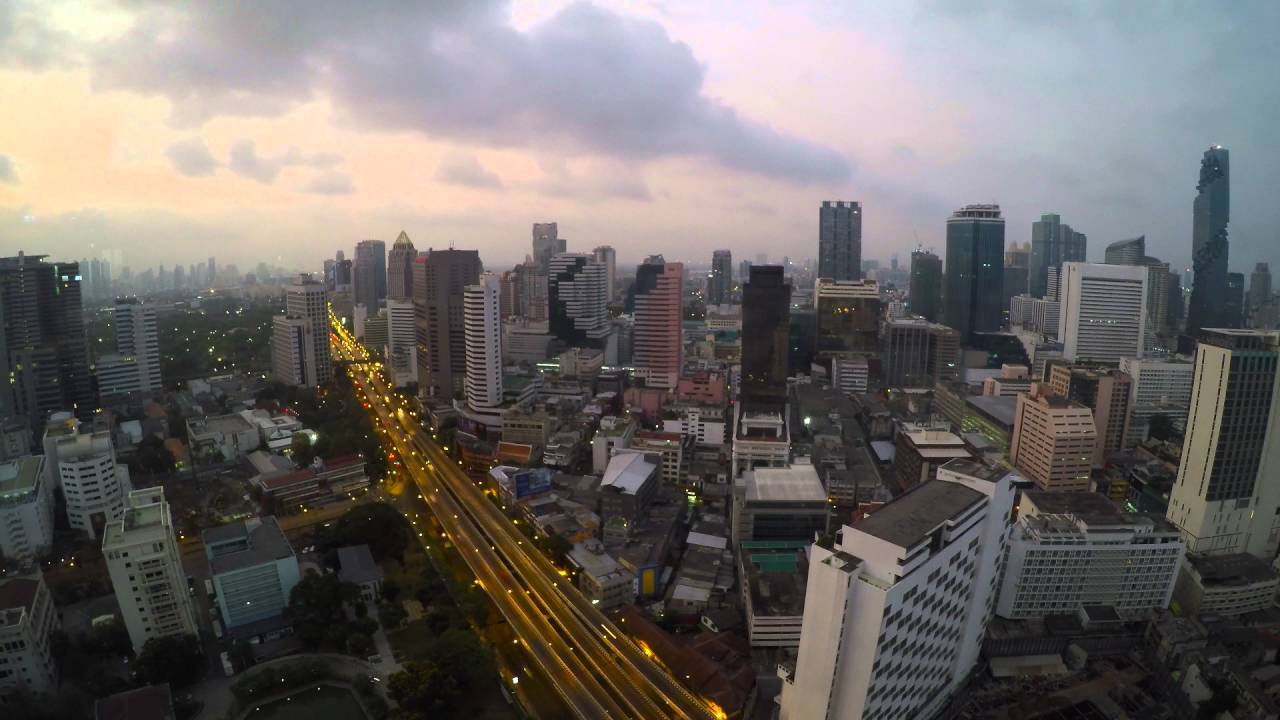
Rama IV Road is transforming into a new landmark area of Bangkok as it increasingly becomes the location of mixed-used developments combining luxury hotels, retail outlets, offices and condominiums.
According to a survey conducted by The Nation early this week, Rama IV Road from Lumpini Park to Klong Toei is witnessing an aggressive level of investment to develop both residential and commercial buildings in the area.
For example, TCC Assets Co, property arm of beverage tycoon Charoen Sirivadhanabhakdi’s empire, won the bid from the Crown Property Bureau to develop a mixed-use project worth THB 120 billion on a 104-rai (16.6-hectare) plot at the Armed Forces Academy’s Preparatory School on Rama IV.
The company announced the master plan for the development on Monday. The project will include a luxury hotel, a “green office” concept, a condominium, and retail outlets. It will be developed by a joint venture called One Bangkok Holding Co, in which TCC Assets holds an 80.1-per-cent stake and Frasers Property Holdings (Thailand) 19.9 per cent.
TCC Assets also won the bid to develop a 35-rai plot in the Thepprathan community in Klong Toei near Queen Sirikit National Convention Centre from the Crown Property Bureau. It plans to develop a mixed-used project including a hotel, retail outlets and office buildings with an investment worth more than THB 50 billion.
“We will develop both of [these projects] together to create a new era for Rama IV to be the new landmark of Bangkok by 2025,” TCC Assets chief executive officer Panote Sirivadhanabhakdi said recently.
Earlier, Golden Land Property Development, a listed subsidiary of TCC Group, invested THB 5 billion to develop a 12-storey office building, the FYI Centre, and a 239-room budget serviced hotel on Rama IV near Soi Pai Sing To, on 9 rai also owned by the Crown Property Bureau. The project has been completed and is open for rent.
TCC Group also won the bid for a 30-year leasehold on 13 rai at Sam Yan Intersection connecting Rama IV and Phaya Thai roads from Chulalongkorn University. Golden Land is developing a mixed-used project called Sam Yan Mitrtown comprising retail, office hotel and residential facilities. The project is worth more than THB 8.5 billion.
Meanwhile, the Port Authority of Thailand hopes to develop 223 rai in Klong Toei for a mixed-use project comprising an office building, logistics and warehouse facilities, and a shopping complex.
The project, which has an investment budget of more than THB 100 billion, is currently at the study stage, with negotiations under way with lessees about vacating the land. The plan for this project will be finalised this year and may be open to private companies for joint development.
Central Pattana, property arm of the Chirathivat family, has joined with Dusit Thani Group to renovate Dusit Thani Hotel at the junction of Rama IV and Silom roads, after winning a 30-year renewal contract from the Crown Property Bureau to develop a mixed-used project worth THB 36.7 billion that will comprise a condominium, offices, retail facilities and the hotel.
Pace Development Corp, meanwhile, is developing a 53-storey luxury condominium project, the THB 7.5-billion Nimit Langsuan, that will be complete next year.
Athakravi Group, developer of the Manorom Building on Rama IV, is completing construction of a THB 2-billion community mall nearby.
Other condominium projects launched in the area since the beginning of 2014, and worth more than THB 50 billion in total, include the Condolette Pixel by Pruksa Real Estate, The Portrail Rama IV-Sukhumvit 38 by Krung Thai Land Development, The Room Rama IV by Land & Houses, the Aspire Rama IV by AP (Thailand), and Ananda Development’s THB 6.5-billion Ideo Q.
Aliwassa Pathnadabutr, managing director of CB Richard Ellis (Thailand), said Rama IV Road was a new destination for commercial and residential development, with three major plots of land starting to be developed and projects due for completion between this year and 2025.
“When all of the new investment is complete, Rama IV will be a commercial and residential landmark in Bangkok,” she said.
New Launch near Rama IV
Oka Haus By Sansiri
by Daryl Lum | Oct 3, 2017 | Bangkok Property Market Updates
Hong Kong investors looking for a stable rental income instead of parking their money in a bank are setting their sights on Southeast Asian property, according to industry experts.
Demand for investment property in the region – where prices are a fraction of those in Hong Kong – has stayed firm, with total transactions of completed properties up 19 per cent year on year in the first half of 2017 to around USD 61 billion, according to Colliers International.
One such investor is Gordon Cheung, who bought a flat in Life Asoke Rama 9, a project in Bangkok jointly developed by AP (Thailand) and Japan’s Mitsubishi Estate Group.
“Bangkok’s property prices are just about a quarter of Hong Kong’s. The location is also great, at the heart of Bangkok’s central business district near the Chinese embassy,” Cheung said.
More than 95 per cent of the project’s 154 units allocated to the Hong Kong market sold out within two days of going on the market. The average price for Life Asoke units on offer was 12,542 Thai baht (HKD 2,952) per square foot, compared with the average price of HKD 11,762 per sq ft in Hong Kong.
Vittakarn Chandavimol, chief condominium officer of AP (Thailand), said they were targeting investors.
“Foreign buyers of Thai properties mostly want a stable rental income, unlike those who buy properties in Western countries for their children’s education. Average rental yield of Bangkok’s property is 5.15 per cent,” he said. “As only 49 per cent of flats can be sold to foreign buyers, the supply to each market is limited.”
Chandavimol said the company is trying to enter the Chinese market, despite the tight capital controls making it difficult to get money out of the country.
“Chinese citizens are limited to exporting USD 50,000 per person, per year. But buyers can split payments, not to mention the fact a lot of flats are cheaper than that. Prices of high-floor studios in this project start at HKD 670,000,” he said.
The focus of Chinese investment in foreign property seems to be shifting from the US to Asia, says Colliers.
“Despite capital controls, we expect continued Chinese interest in APAC [Asia Pacific] gateway cities in the near term. Thereafter we foresee material Chinese investment in Belt and Road markets in Southeast Asia. This should be a long-term trend,” it said.
Chandavimol believes Thailand is the most attractive destination for Hong Kong investors eyeing foreign property.
“Properties in developed regions like Japan, Beijing and Shanghai are too expensive. Thailand has the best infrastructure among Southeast Asian countries, whose economies are catching up fast,” he said.
Meanwhile, Kuala Lumpur’s Sentral Suites project, which is 10 minutes away from the city centre, sold more than 60 per cent of the 30 units allocated to Hongkongers.
Hong Kong people have started to notice the strong economic growth among the region’s countries, said Binoche Chan, chief operating officer of List Sotheby’s International Realty, Hong Kong.
“For Kuala Lumpur, gross rental return is about 4 per cent to 6 per cent. For Singapore it’s about 3 to 4 per cent,” Chan said.
“Malaysia is now much more popular than Singapore. This may change as we see the Singapore market touched the bottom – it can rebound at any time.
“As much as 90 per cent of Kuala Lumpur’s buyers are investors, while in Singapore it’s only 35 per cent. The rest are buying for their own use.”
But Chan also highlighted some risks.
“Malaysia has foreign exchange control so foreigners can only purchase property priced above 1 million Malaysian Ringgit (HKD 1.85 million). Malaysians have a variety of choices under 1 million Malaysian Ringgit so reselling the expensive properties to locals is difficult,” Chan said. “Meanwhile, political instability and corruption problems prevail.
“For Singapore, foreigners must pay an extra 15 per cent in stamp duty.”
Foreigners will receive a loan-to-value ratio of 60 to 70 per cent for purchasing properties in Kuala Lumpur for up to a 35-year mortgage, and a ratio of 70 per cent for Singapore and Thailand.